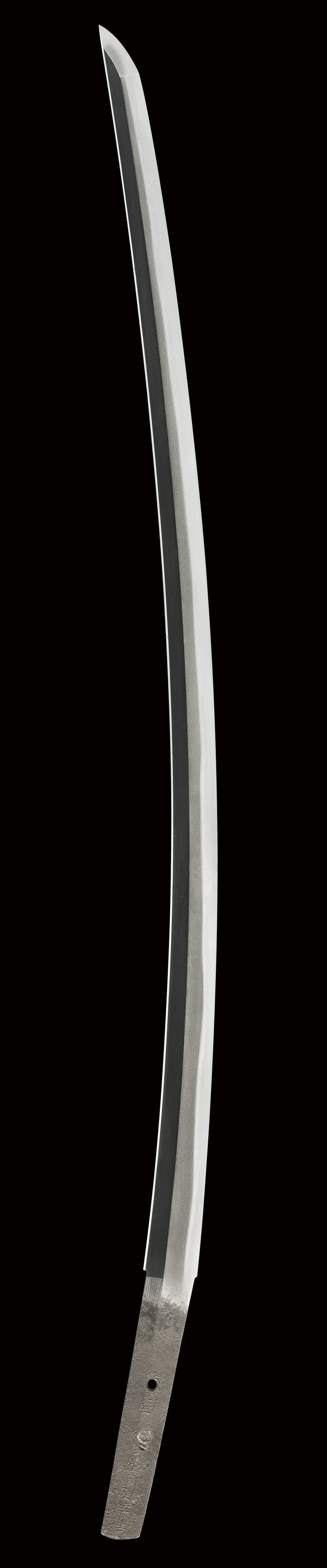
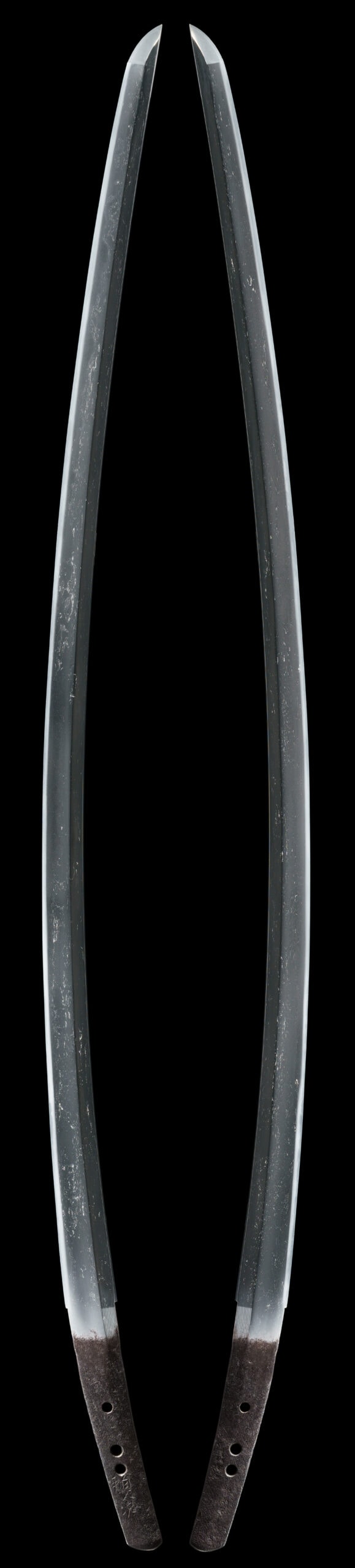
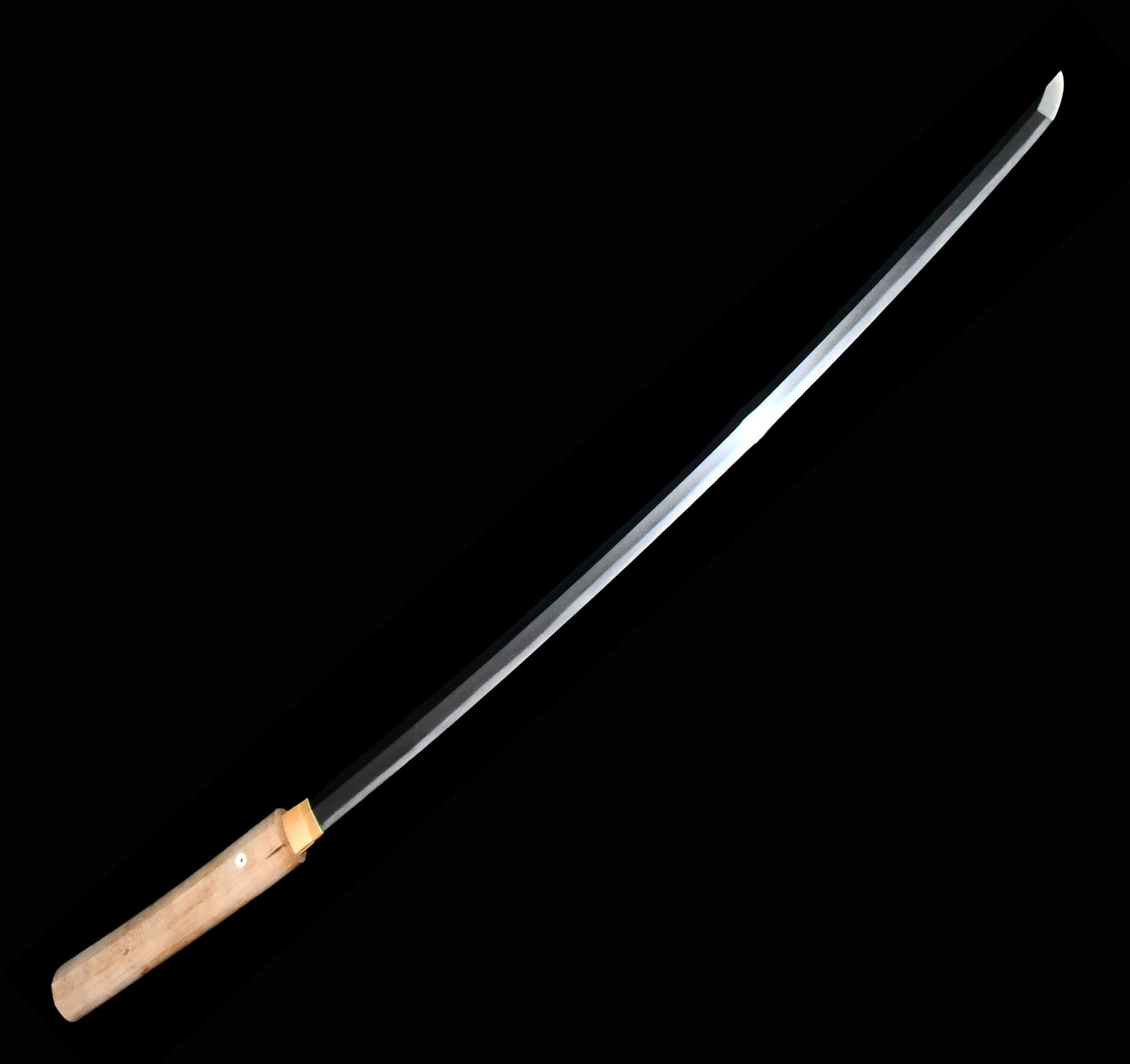
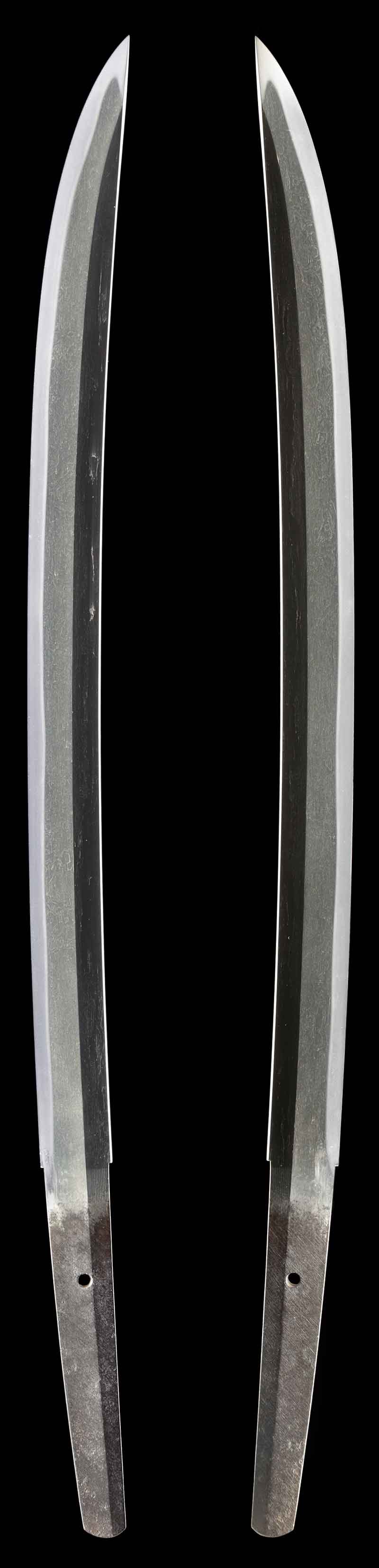
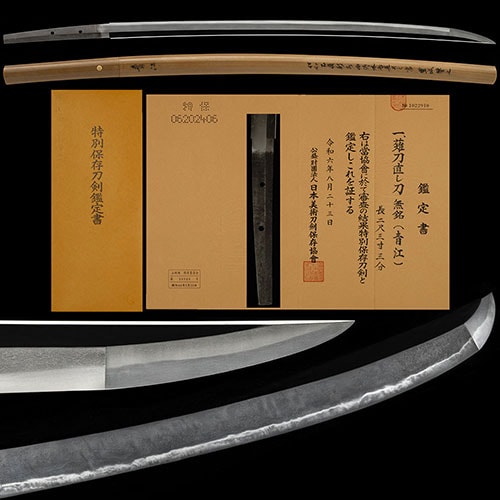
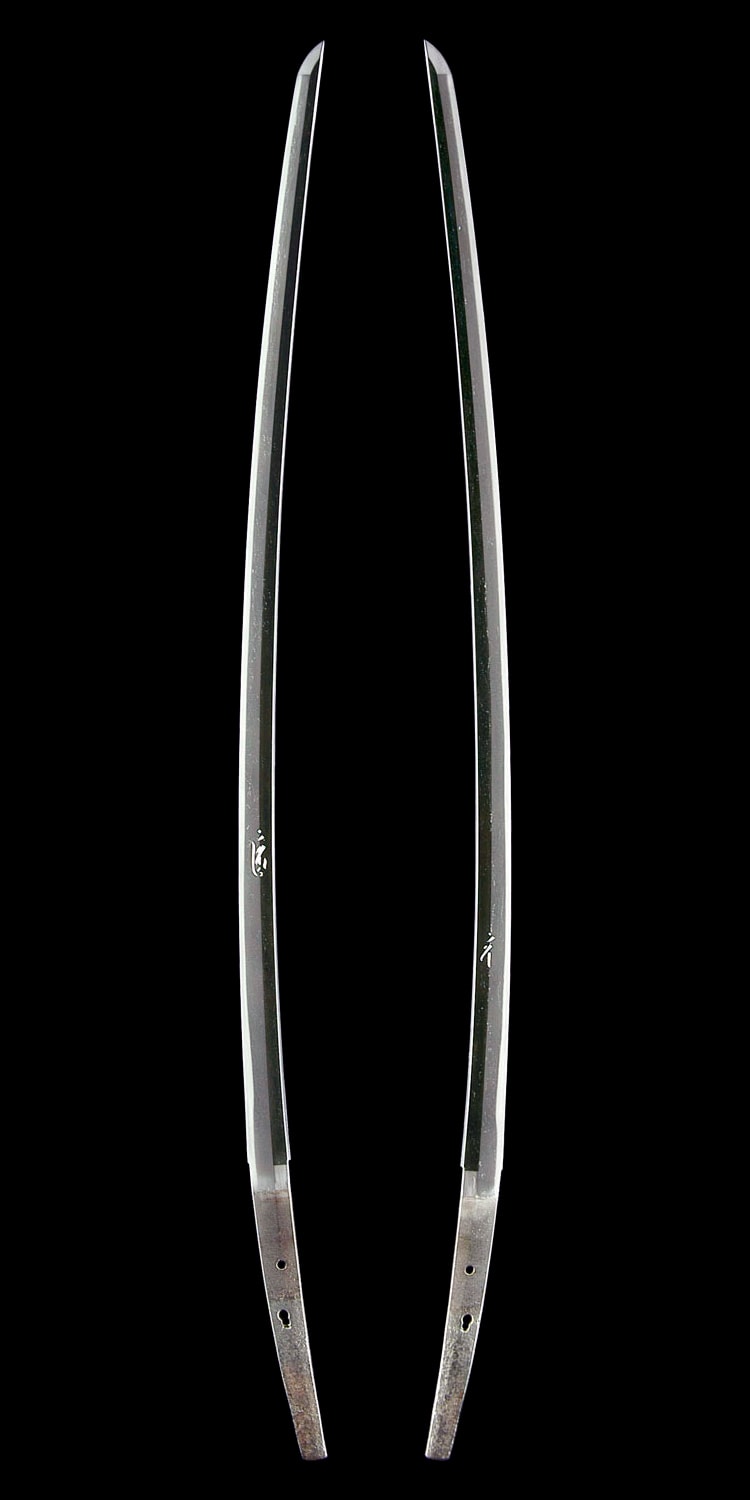
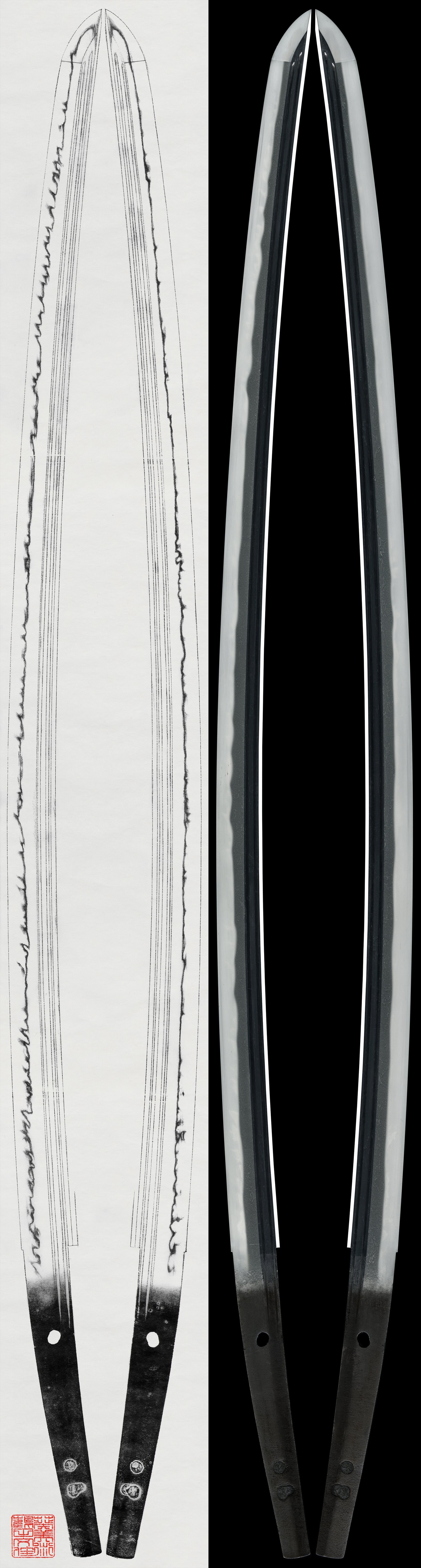
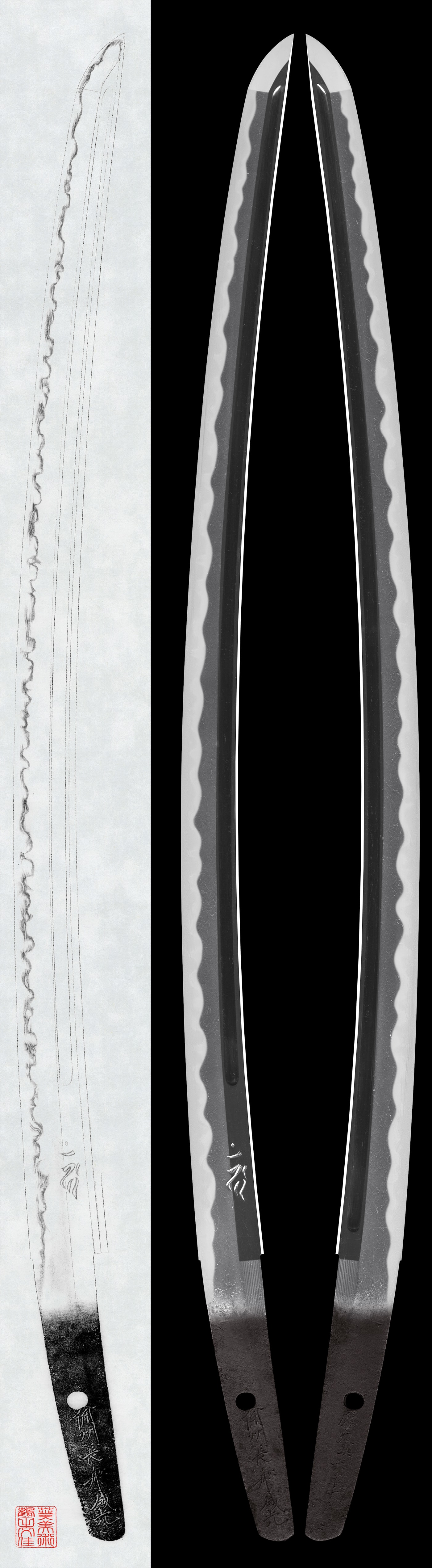
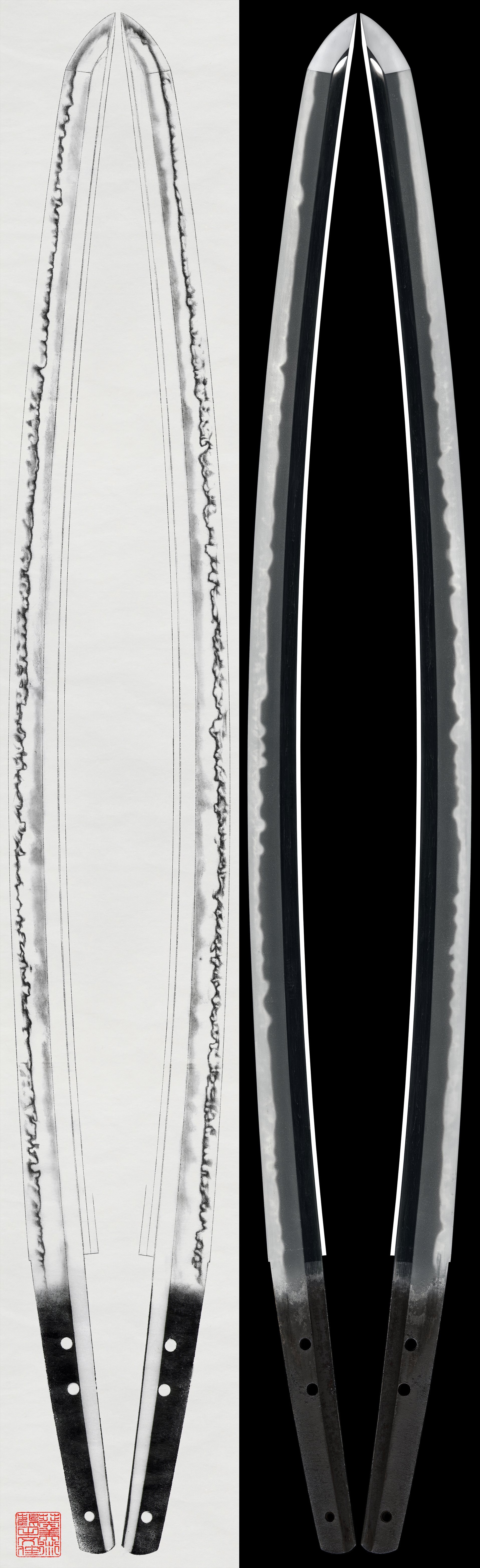
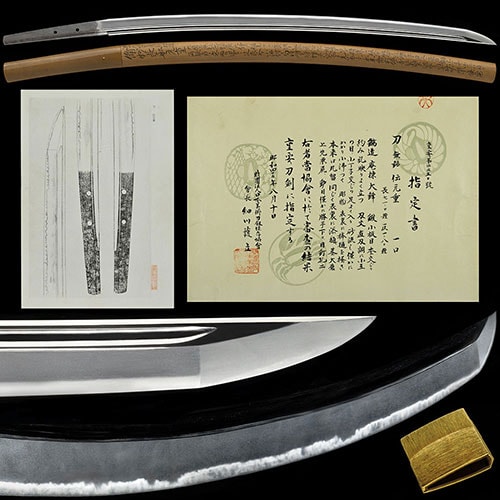
Tsunetsugu is one of the representative lineage names of the school of Province, a tradition whose renown was already attested in the early eleventh-century compendium Sarugaki-ki, which counted "the swords of " among the notable products of the provinces. The earliest and most celebrated bearer of the name is the Tsunetsugu traditionally identified as one of Retired Emperor Go-Toba's — appointed swordsmiths of the highest standing — and recorded as a son of Moritsugu. From this distinguished origin the name was inherited across a long span, from the early period through the era, with multiple generations active in the heartland along the lower reaches of the Takahashi River. One later bearer, Saemon no Jo Tsunetsugu, is documented as residing at Manjusho in and inscribed blades with his official title alongside a Enkyo 3 (1310) date, constituting valuable reference material for the school's chronology.
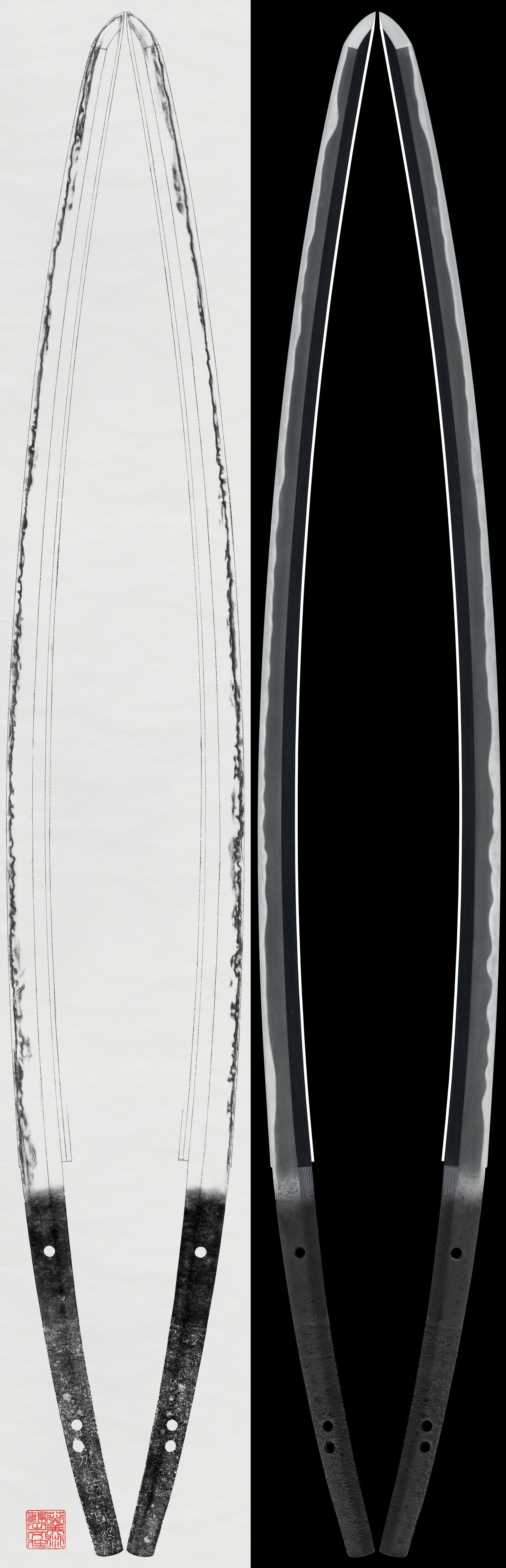
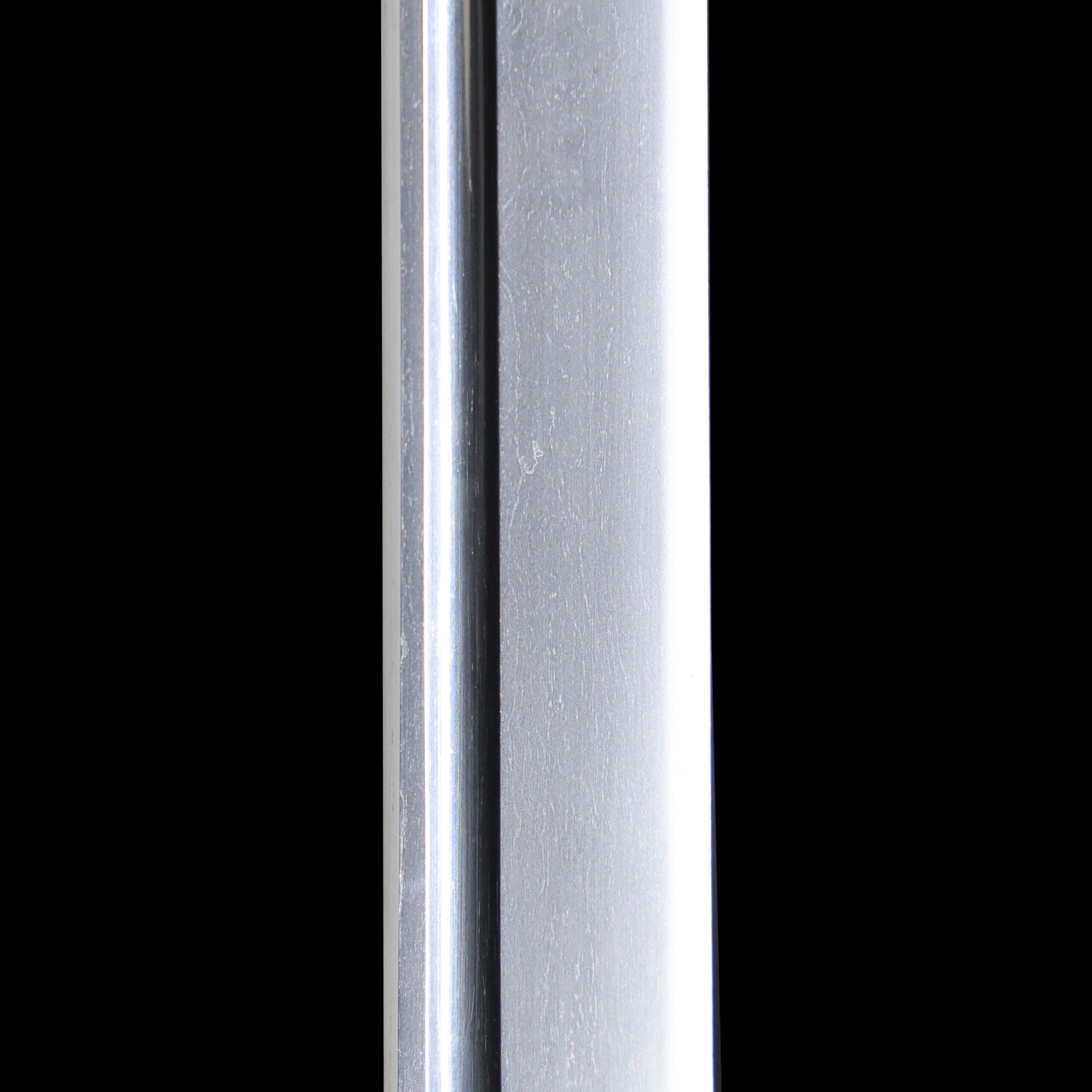
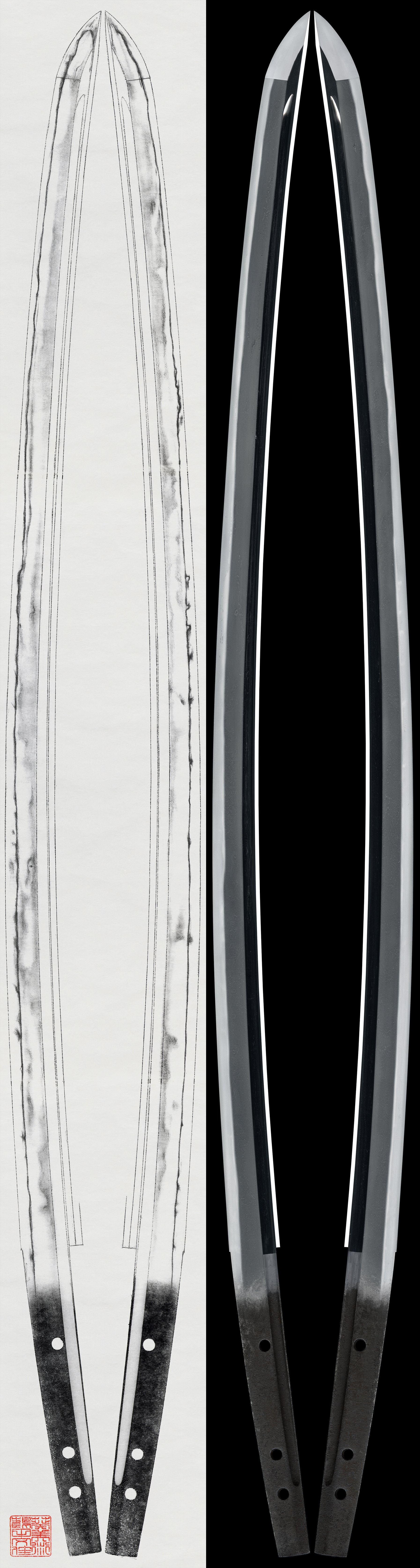
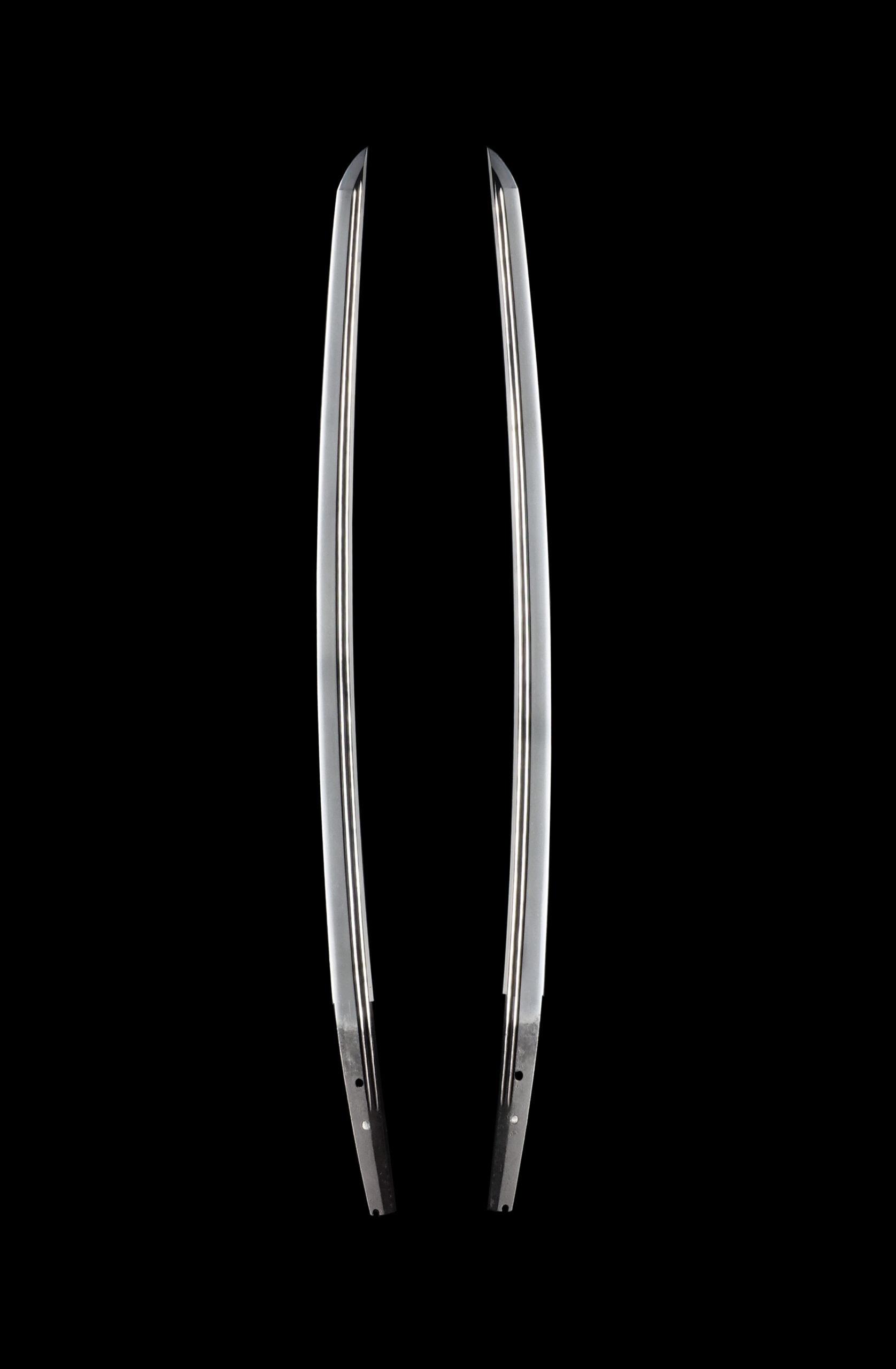
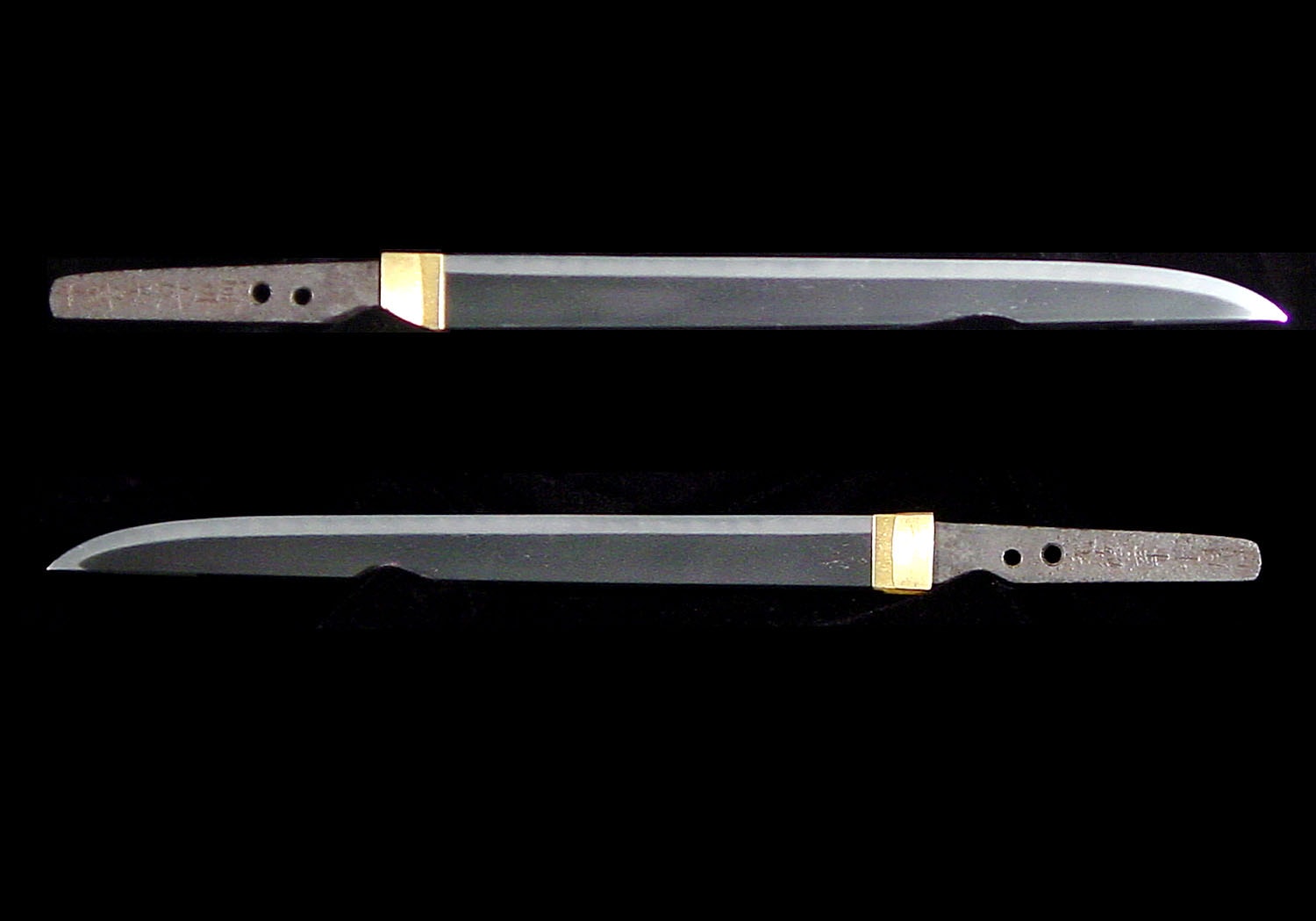
The technical character of late- Tsunetsugu work is firmly established in appraisals. The forging () shows compact mixed with , the grain standing finely to produce a — the distinctive crepe-like texture — with -like tonal areas intermixed and fine adhering closely. A hallmark of the school is the appearance of in various modes: reverse-leaning in darker bands, mottled , and the distinctive in which stands near the edge while appears toward the . The is fundamentally , into which , , and reverse-slanting elements are mixed; — the so-called — enter plentifully alongside and . The tends toward , a tightened quality, yet remains bright and clear, with predominating and adhering.
assessors consistently characterize Tsunetsugu's oeuvre as manifesting, without reservation, the aesthetic strengths and points of interest characteristic of bright, clear work. Compared with contemporary productions, these blades present a quieter, more restrained and astringent character. Appraisals recurrently note ample — excellent retention of flesh — conferring a substantial and forceful presence, and praise the dense, precise forging and the sound condition of both and as hallmarks of robust and stalwart workmanship. In these qualities the Tsunetsugu lineage stands as a pillar of the tradition at its late- zenith.