NihontoWatch MonNihontoWatchBETA
MarketEncyclopedia
NihontoWatch Mon

NihontoWatchBETA

Market
Encyclopedia
Overview·Kantei·Designations·Provenance·Work Types·Signatures·Lineage·School
OverviewKanteiDesignationsProvenanceWork TypesSignaturesLineageSchool
  1. Schools
  2. Otsuki
  3. Tokuoki

Otsuki Tokuoki

篤興

Jūyō
Vol. 34, No. 160 · Tsuba

Otsuki Tokuoki

篤興

22 ranked works

ProvinceYamashiroEraBunka-MeijiPeriodMeijiSchoolOtsukiTraditionMachiboriTypeTosogu MakerCodeOTS009
2Tokubetsu Jūyō20Jūyō Tōken

Overview

Sasayama Atsuoki (篠山篤興, 1813–1891), commonly known as Masaichirō, was born in Bunka 10 as the eldest son of Sasayama Motokichi, the haikai poetry master known as Yahanatei Gogai. At the age of fifteen he entered apprenticeship under Kawarabayashi Hideoki, the leading disciple of Ōtsuki Mitsuoki, and devoted himself to training in the Kyoto kinkō tradition of the Ōtsuki school. In Tenpō 9 (1838), at the age of twenty-five, he married his master's eldest daughter and established himself independently. In Bunkyū 2 (1862) he was commissioned by the Tokugawa shogunal house to carve fittings for the wearing sword of the fourteenth shōgun, Tokugawa Iemochi, and in recognition of his service he received the court title Ōsumi Daijō. The following year, Bunkyū 3 (1863), he was further honored with the commission to produce fittings for Emperor , upon which he adopted the art name Ichigyōsai. He also used the studio names Sensai and Shōkatei, and remained active from the Bakumatsu period through the Meiji era until his death in Meiji 24 (1891) at the age of seventy-nine. In his time the Ōtsuki school was flourishing, with such skilled artists as Ōtsuki Mitsuhiro, Kaizan Ōki, Tenkōdō Hidekuni, and Matsuo Gassan active in the circle; among them, Atsuoki enjoyed an especially high reputation as a master craftsman.

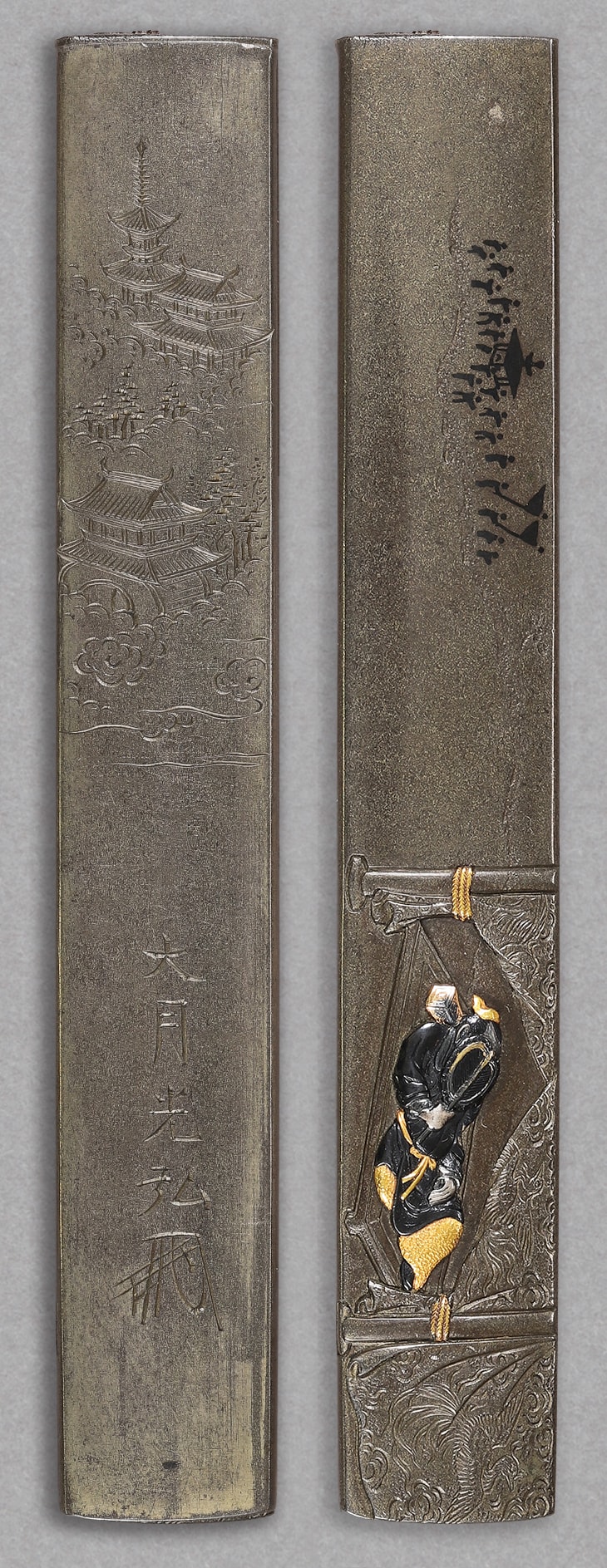
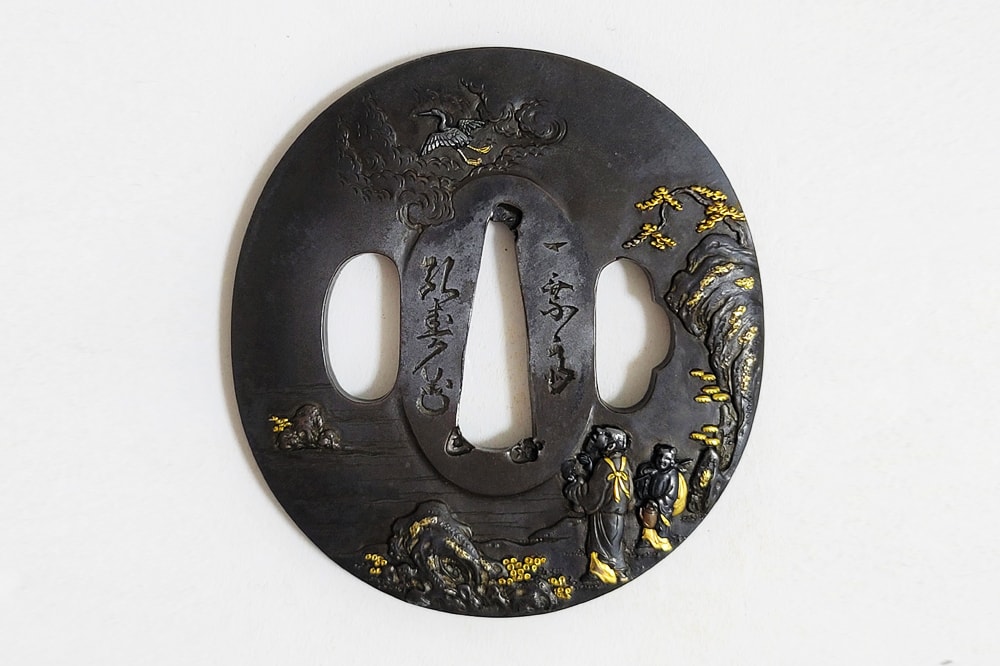
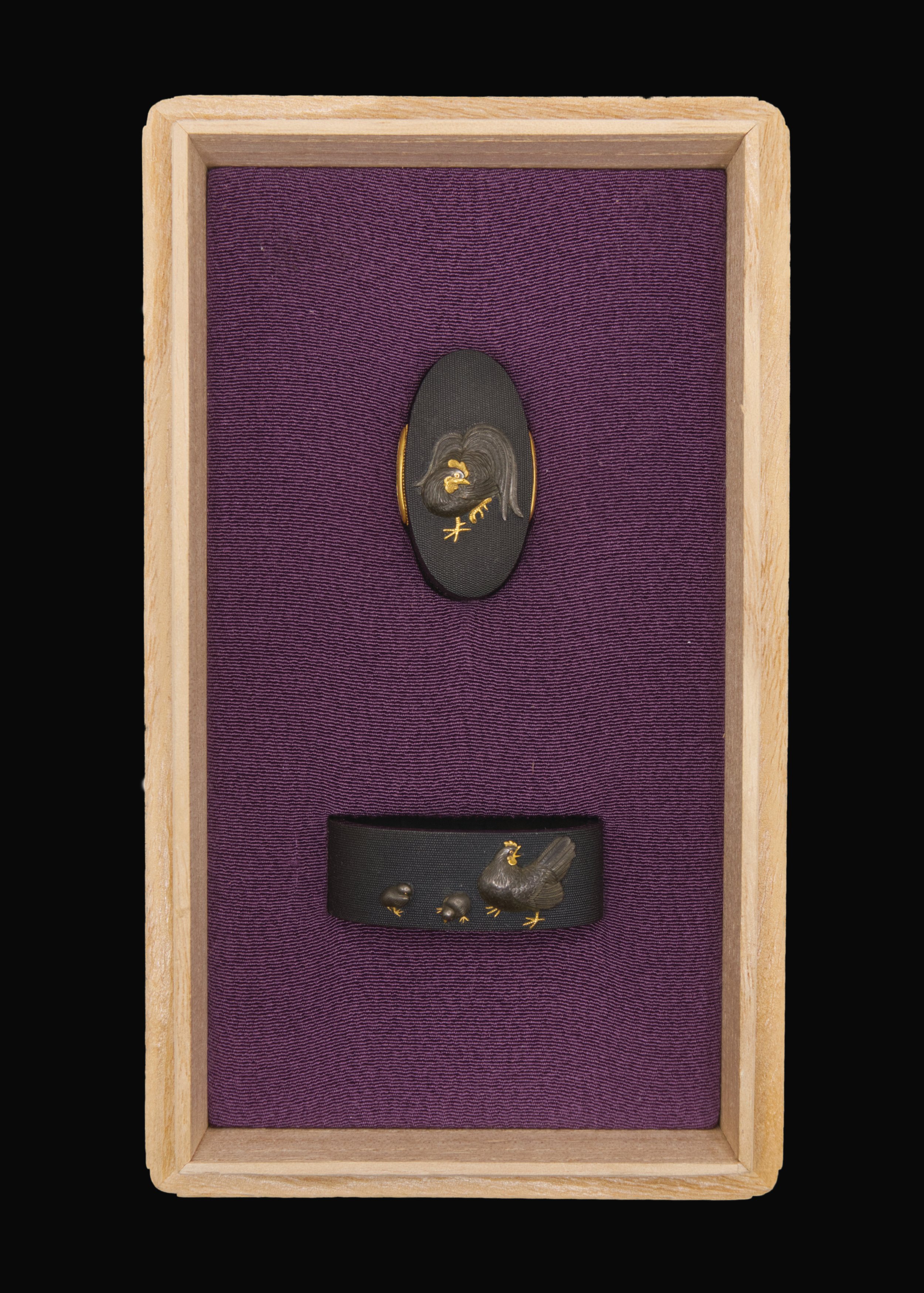
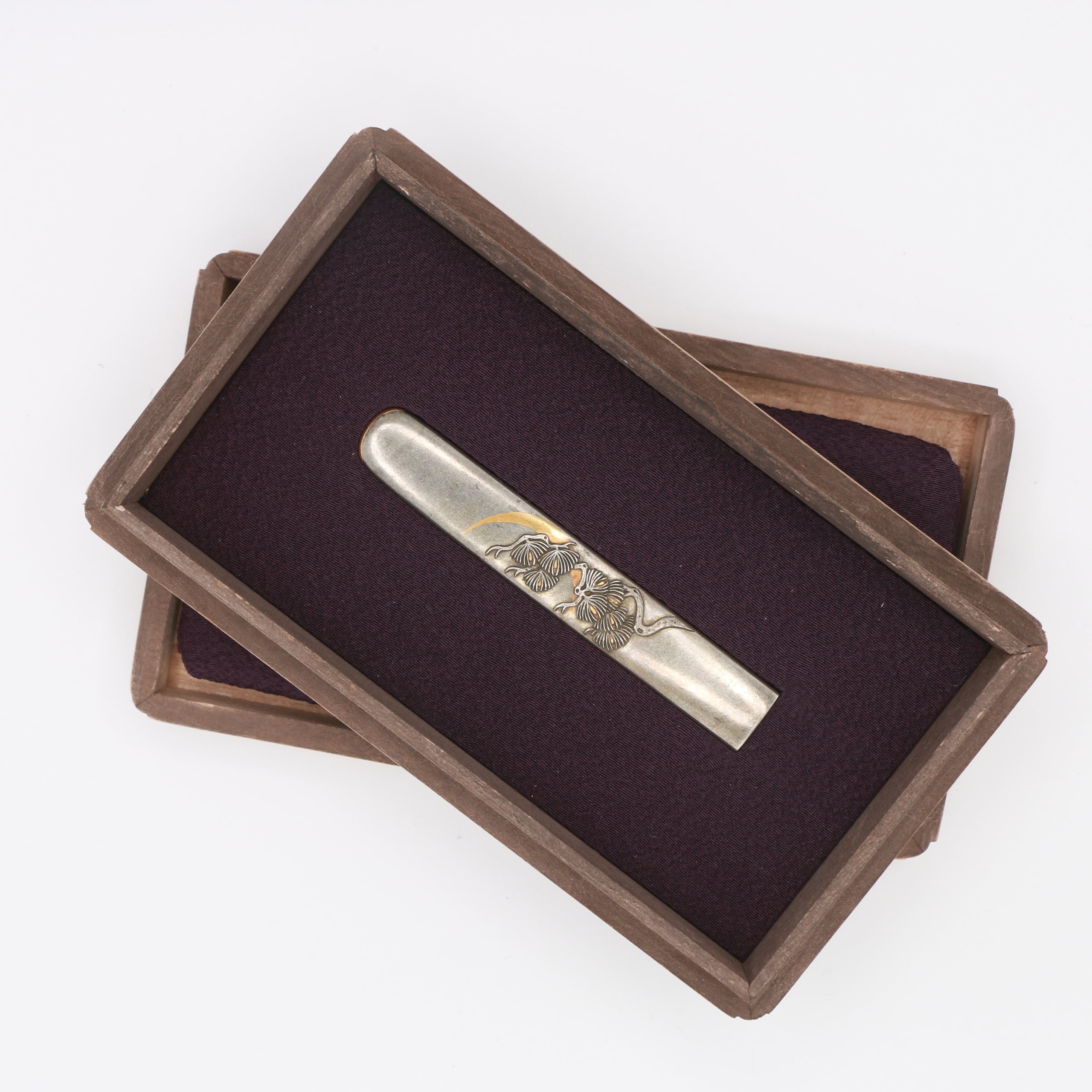
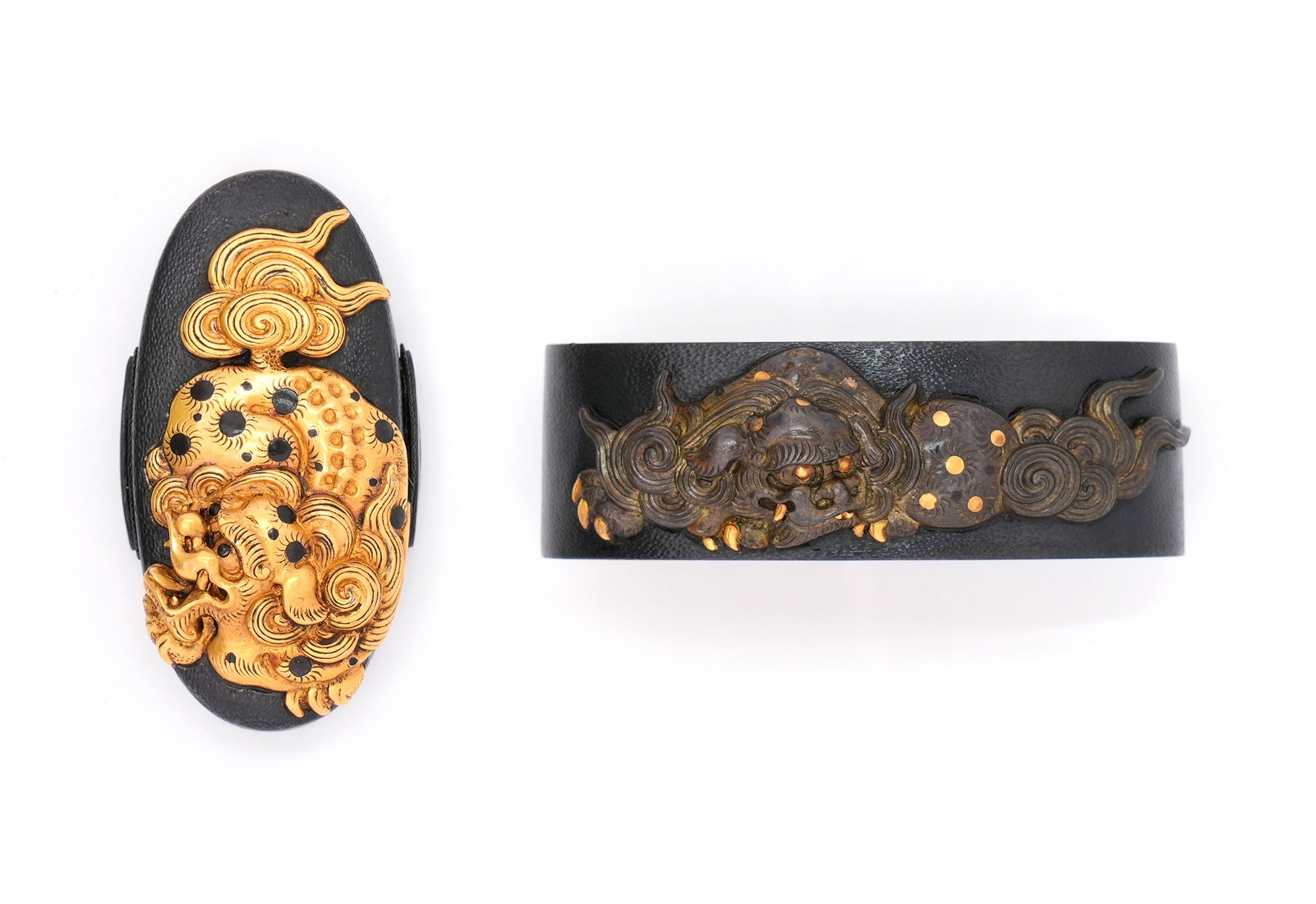
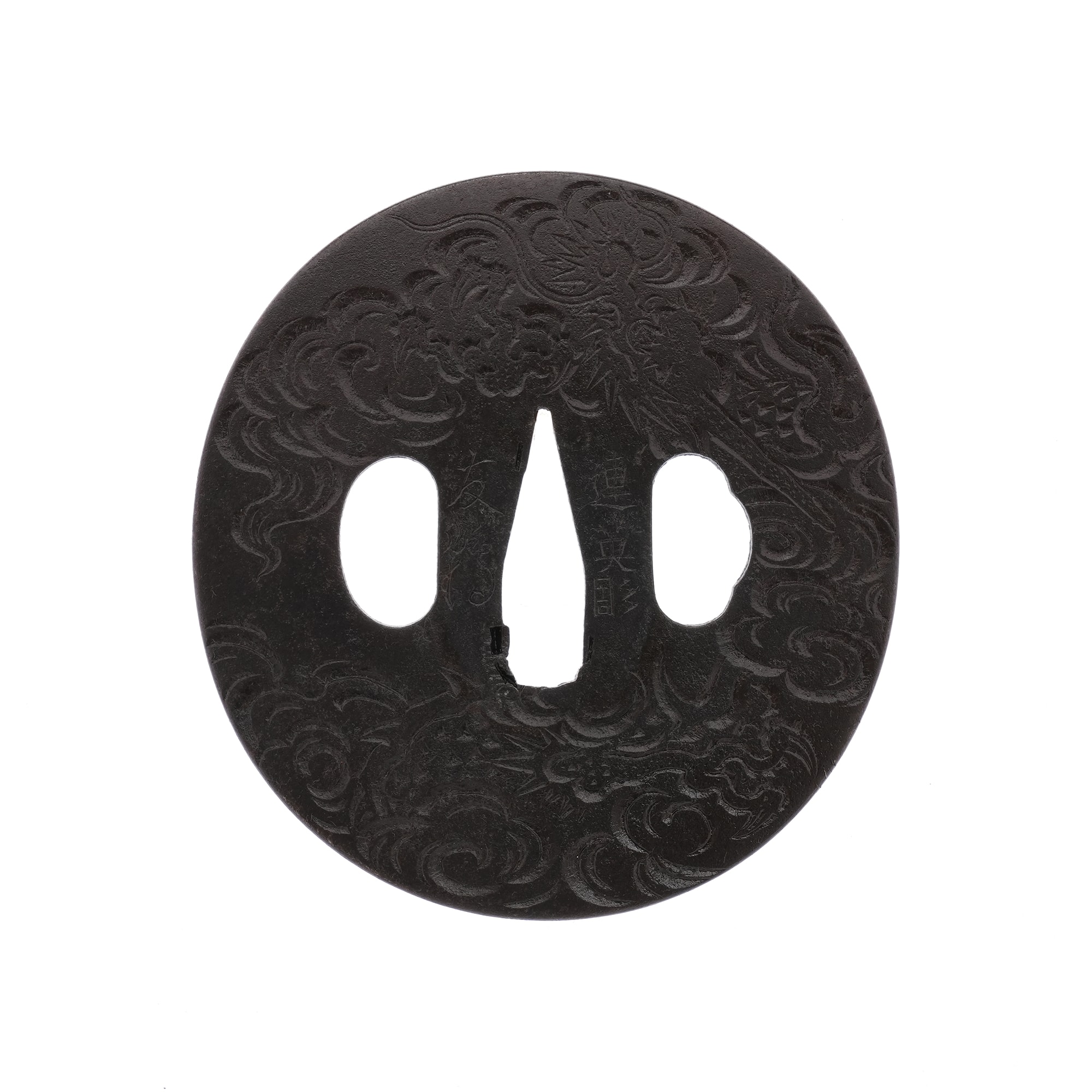
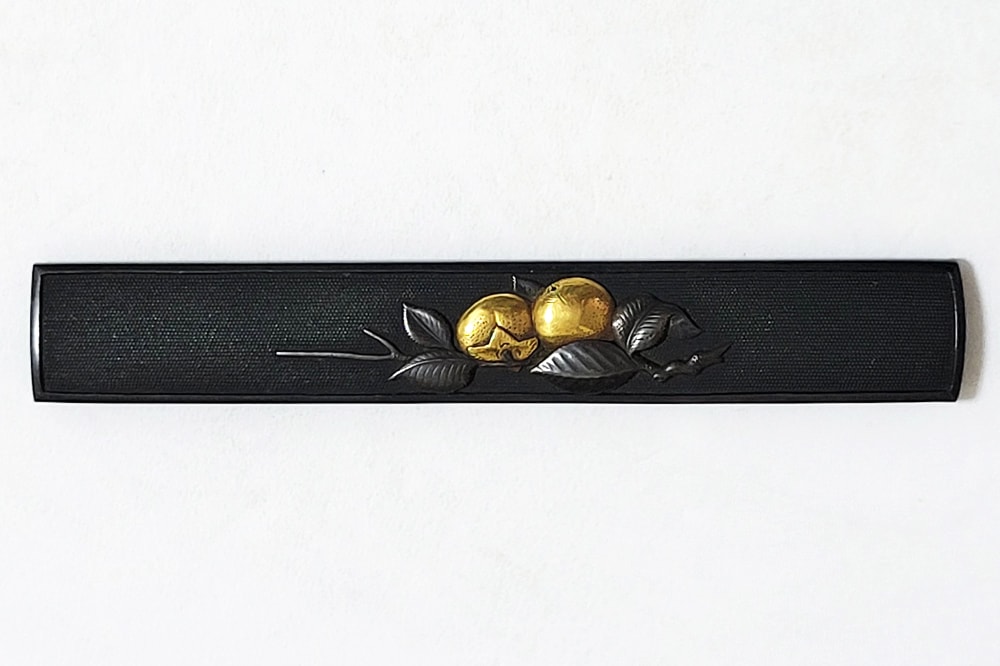
Atsuoki's style frequently renders the Ōtsuki school's characteristic pictorial, painting-like designs through (high-relief carving) with (polychrome metalwork). He skillfully employs techniques such as hira-zōgan (flat inlay), (single-chisel engraving), suemon-zōgan (applied relief inlay), and fine (hairline engraving), achieving bold compositional arrangements while maintaining an unmistakably Kyoto elegance — refined and sophisticated. His iron-plate demonstrate an especially fluent and unrestrained cutting manner: dragons rendered in high relief with gold rise amid clouds expressed in , while surging waves break apart with spray scattering outward in the sculptural, dynamic style for which the Ōtsuki school is particularly renowned. In his work, Atsuoki displays an unconventional and daring design sense, as seen in unified ensembles of solid-gold fittings (kanemuku) with grounds and fully sculpted , yielding a richly sumptuous conception distinctive to Kyoto workmanship. His figure subjects and naturalistic compositions — from the warmth of frolicking puppies rendered with living detail down to the finest fur textures, to the quiet dignity of a Sumiyoshi seascape — demonstrate his versatility across both vigorous martial themes and subjects of refined, poetic sensibility. The consistently note that his carving method displays the distinctive character of the Ōtsuki school, and that his works are outstanding in sense of color.

Atsuoki's oeuvre spans , , , , , and complete ensembles, constituting one of the most comprehensive bodies of work among late- Kyoto kinkō artists. His dual formation — the poetic sensibility inherited from his father's literary world and the rigorous metalworking discipline of the Ōtsuki lineage — produced works of a character at once bold and subtly graceful, combining daring pictorial compositions with a polished elegance rarely achieved by his contemporaries. His commissions for both the Tokugawa shogunate and the imperial household attest to the esteem in which he was held at the highest levels of patronage, and his consistent presence across decades of designation sessions confirms his enduring recognition as one of the foremost masters of the Ōtsuki school.

Kantei

3 descriptive axes: material (a broad soft-metal and iron ground palette) x technique (high relief with colour inlay and suemon, supplemented by katakiri-bori and flush inlay) x themes (pictorial e-fu landscape and figure designs in the Otsuki manner). With a thin corpus of about 22 pieces, his discriminators are scope-tight: the genuine separators are register-level, not a personal hand foreign to his school.

Sasayama Tokuoki (1813-1891), common name Masaichiro, was a leading metalwork artist of the late- and Meiji Kyoto Otsuki school, repeatedly called a man of high renown (meiko) and one of the finest hands of the school. The son of the haikai master Yahantei Gogai (Sasayama Motokichi), he entered the workshop of Kawarabayashi Hideoki, a high pupil of Otsuki Mitsuoki, at fifteen, and at twenty-five (1838) married his teacher's eldest daughter and set up on his own. In 1862 he was commissioned for the sword fittings of the fourteenth Tokugawa shogun and was raised to the honorary title Osumi-daijo for it; in 1863 he carved the fittings for a mounting of Emperor and was granted the art-name Ikkosai. He worked through the Meiji Restoration as a mainstay of the Kyoto metalwork world and died in 1891, aged 79. His manner is the Otsuki-school specialty of pictorial (e-) design rendered in high-relief carving with colour inlay, marked by bold composition and a refined, polished Kyoto elegance; he was also a haikai poet, which the records credit for the lighter, witty turn in some of his work. The records present him as a faithful and excellent continuator of the house style rather than the founder of a new one.

Diagnostic discriminators

the records make pictorial (e-fu) design composed like a painting the defining specialty of the Otsuki school, and Tokuoki one of its finest hands; it separates his school's work from the formal Goto and Nara repertoires, though within the Otsuki school it is the house register rather than a tell personal to him

drawing-from-life naturalism in animal and plant subjects, named in only two of the 22 pieces (single-source-class, scoped); the Otsuki school inherits the shasei strain of Kyoto kinko, absent from the formal house repertoire of Goto

Material (grounds)

He works across the full soft-metal palette and iron alike: and , polished ground, , , silver and a polished silver ground, gold and solid-gold () , and an ishime-textured ground; his are often worked on iron, both plain-polished and textured. A day-and-night (chuya) ground pairing with appears on one piece.

Technique

His core hand is high relief () with polychrome colour inlay (iro-e) and applied , present on essentially every piece; he commands , fully-modelled , and adds katakiri-bori, flush - and fine where the design calls for it. On iron he combines high relief with gold and silver inlay and a treatment of clouds and waves.

Themes (pictorial)

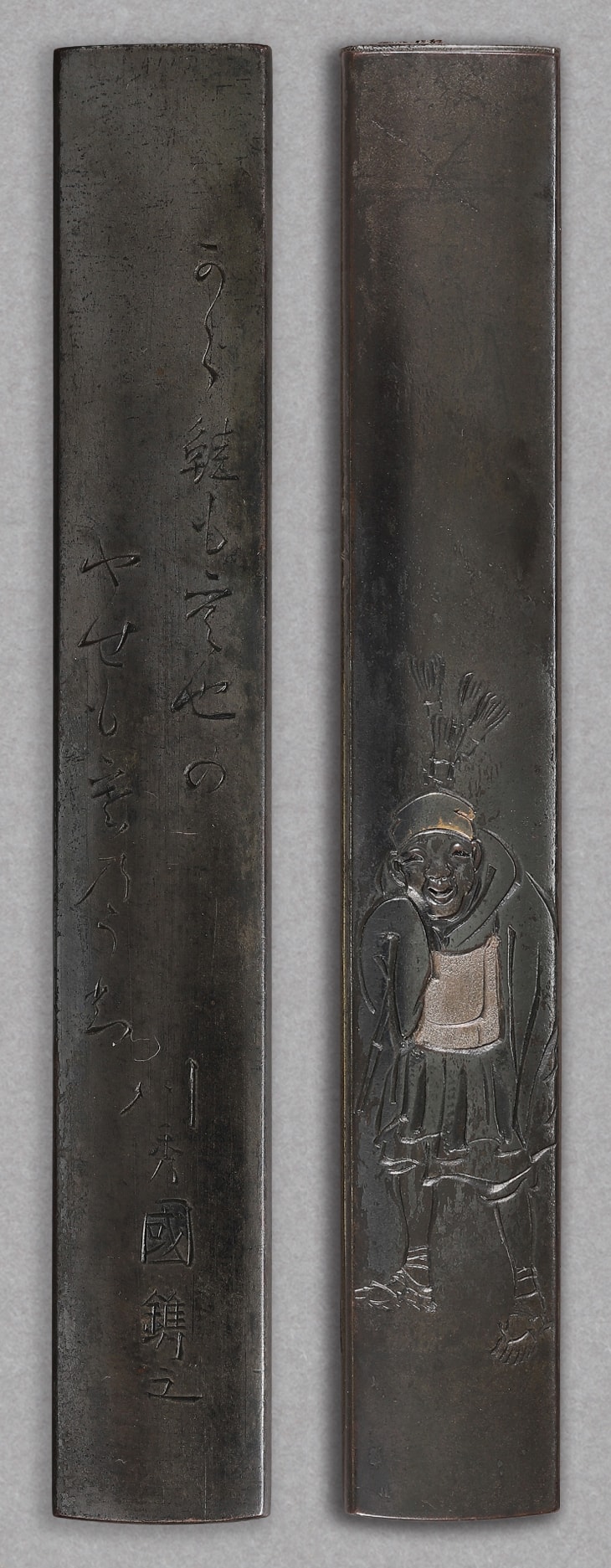
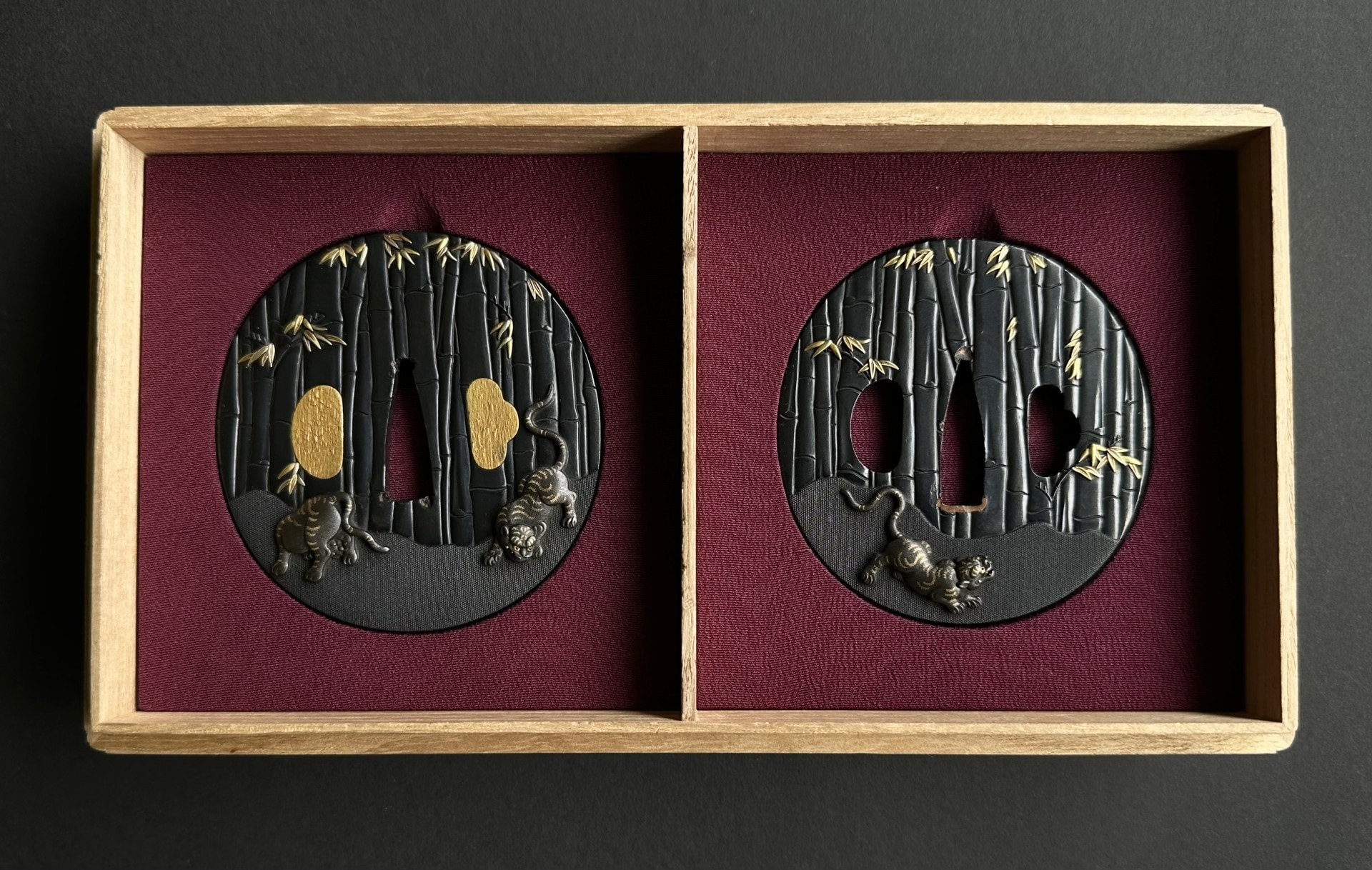
His subjects are pictorial designs composed like a painting, the Otsuki-school speciality: landscapes and famous places (the Tatsuta River in autumn, Sumiyoshi shore, Mount and the Miho pine-grove), auspicious figures (the Seven Lucky Gods, Juro, Bishamonten), and animals and plants drawn with a naturalist eye (a boar, a tiger and dragon pair, gamebirds and cranes, peony, narcissus). The records single out his command of subject-matter (gadai) and his bold yet refined Kyoto composition.

Pictorial e-fu landscape and figure design

Landscapes, famous places and figural subjects laid out across the plate like a painting, in high relief with colour inlay; the records make this pictorial design the hallmark of the Otsuki school and Tokuoki one of its finest exponents.

Naturalist shasei (drawing from life)less firmly established

Animals and plants caught with a naturalist eye, which the records twice tie to the shasei manner (a boar with autumn grasses; the Otsuki-school naturalist treatment of plants and animals). A minor, low-n register in this corpus, named in only two pieces.

Full iconography

Signature chronology

Placement
Recorded signatures

Documentary note

His signature chronology dates and authenticates the work. The real-name signature is Sasayama Tokuoki (the family name written 篠山 or 笹山), often with the Kyoto-locative prefixes , -junin or Yoshu; the go Ikkosai (granted in 1863 for the Emperor fittings) and Sensai follow the name, and the bare two characters Tokuoki are common, frequently cut without a (Tokuoki-sei, Tokuoki-zo, Tokuoki-to). On paired the signature is split across the two pieces (篤・興). Several pieces in this group are co-operative or ensemble mountings in which Tokuoki made the three-piece set () while another artist (Inoue , Wada Masaryu) signed the rest, so a foreign name in the mounting is a co-maker's mark, not Tokuoki's. The honorary rank received in 1862 was Osumi-daijo.

Scholarship

The son of the haikai master Yahantei Gogai; the records credit his poet's sensibility for the lighter, witty turn in some of his work alongside his careful, conscientious pieces.

His manner continues the Otsuki house style, the pictorial e-fu design in high relief with colour inlay, deploying flush hira-zogan and katakiri-bori within a bold yet refined Kyoto composition.

Designations

Kokuhō—
Jūyō Bunkazai—
Jūyō Bijutsuhin—
Gyobutsu—
Tokubetsu Jūyō2
Jūyō Tōken20

Elite Standing

0.13 across 22 designated works

Top 10% among makers

Provenance

4 documented provenances across certified works by Tokuoki

Provenance Standing

0 works held in elite collections across 4 documented provenances

Top 50% among makers

Raw score: 2.00 / 10

Work Types

Distribution across 22 ranked works

Other
1359%
Tsuba
941%

Signatures

Signature types across 22 ranked works

Currently Available

Lineage

TeacherHideoki
Tokuoki

Otsuki School

Other artisans of the Otsuki school

  1. 1.Mitsuoki光興11designated
  2. 2.Hidekuni秀国9designated
  3. 3.Oki/Masaoki/Minayama Oki応起7designated
  4. 4.Harutsura春貫6designated
  5. 5.Matsuo Gassan松尾月山1 for sale4designated
  6. 6.Motohiro元広1 for sale4designated
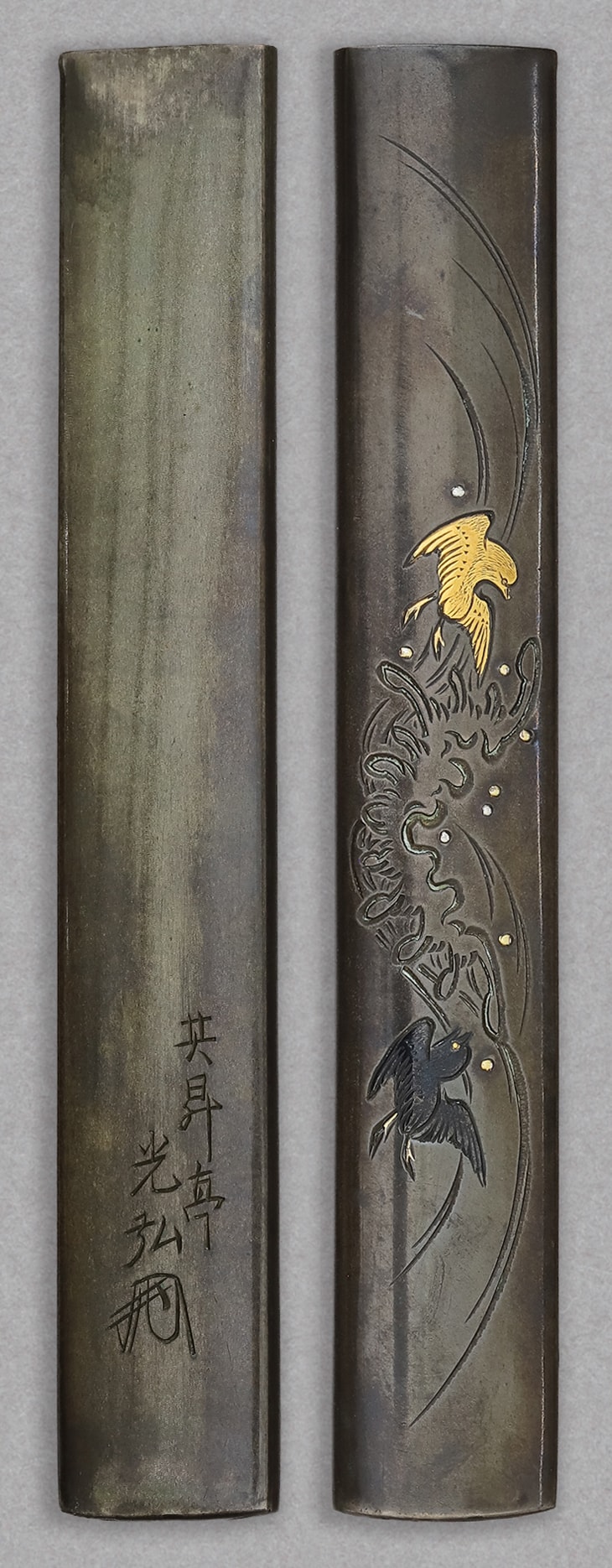
  7. 7.Mitsuhiro光弘2 for sale1designated
  8. 8.Hideoki秀興2designated

Tokuoki

Tokuoki(篤興) was a maker of Japanese sword fittings (tōsōgu) of the Otsuki school in Yamashiro province, active during the Bunka-Meiji period.

The work follows the Machibori tradition.

Designated works by Tokuoki include 2 Tokubetsu Jūyō, 20 Jūyō.