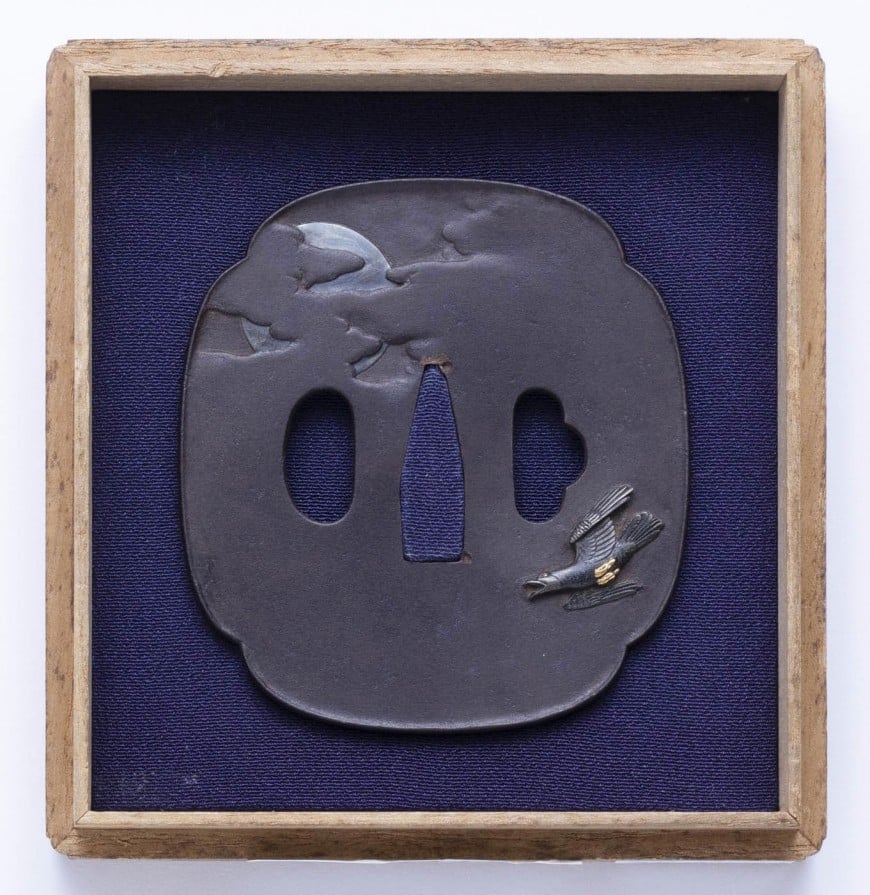
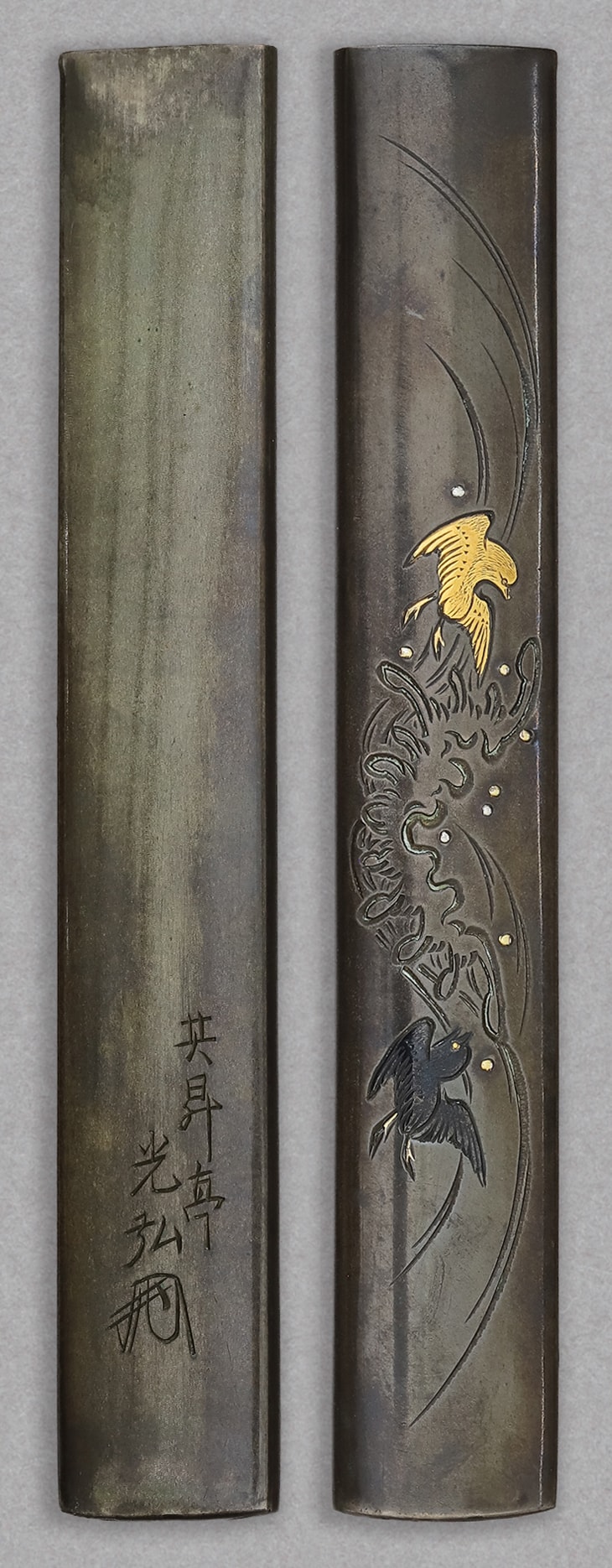
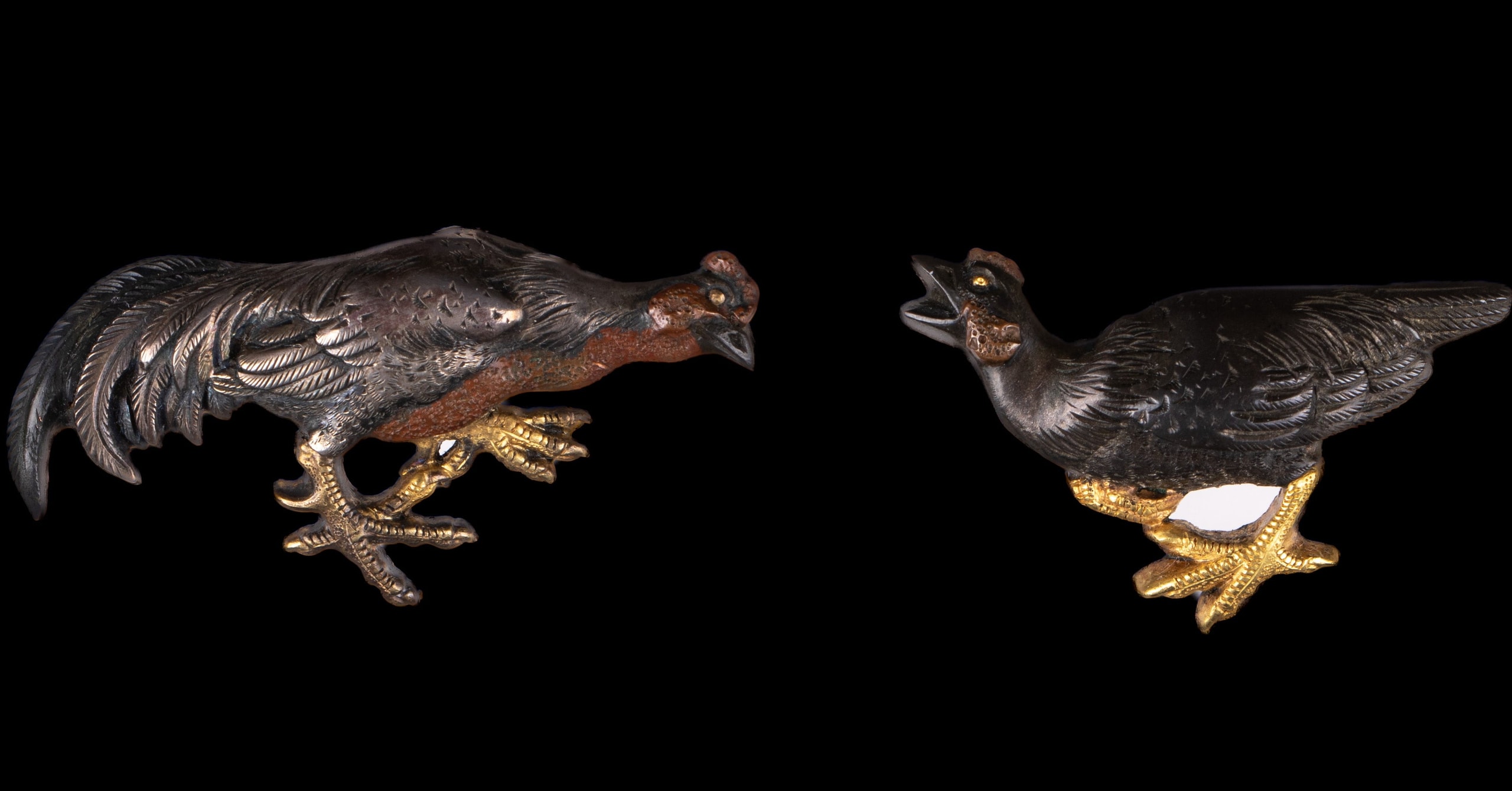
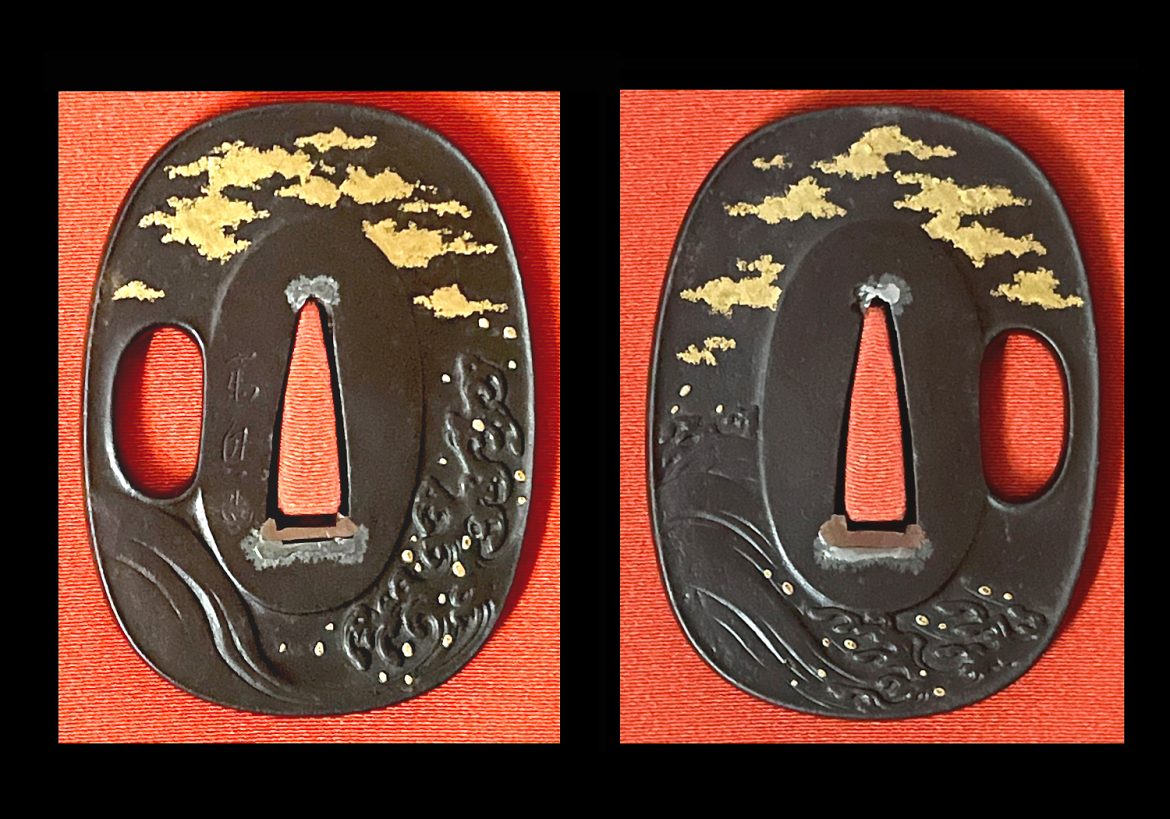
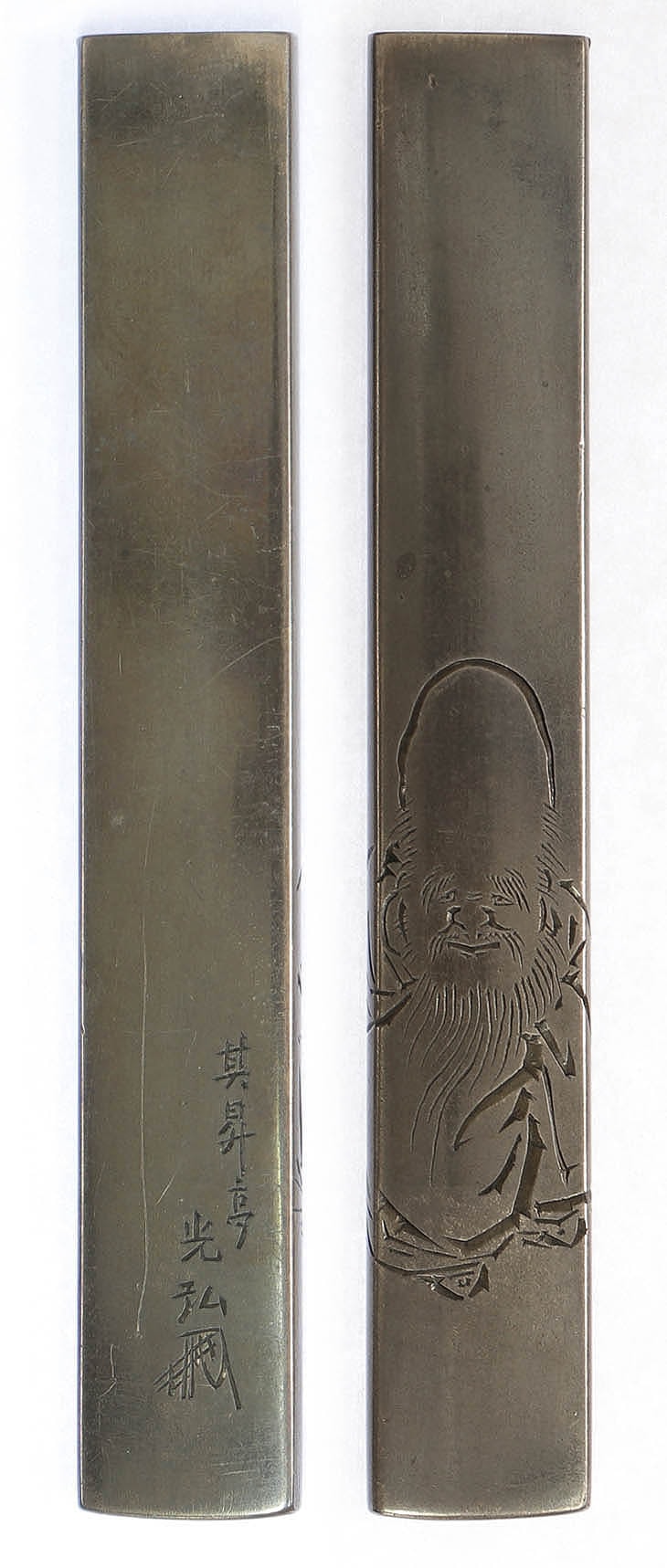
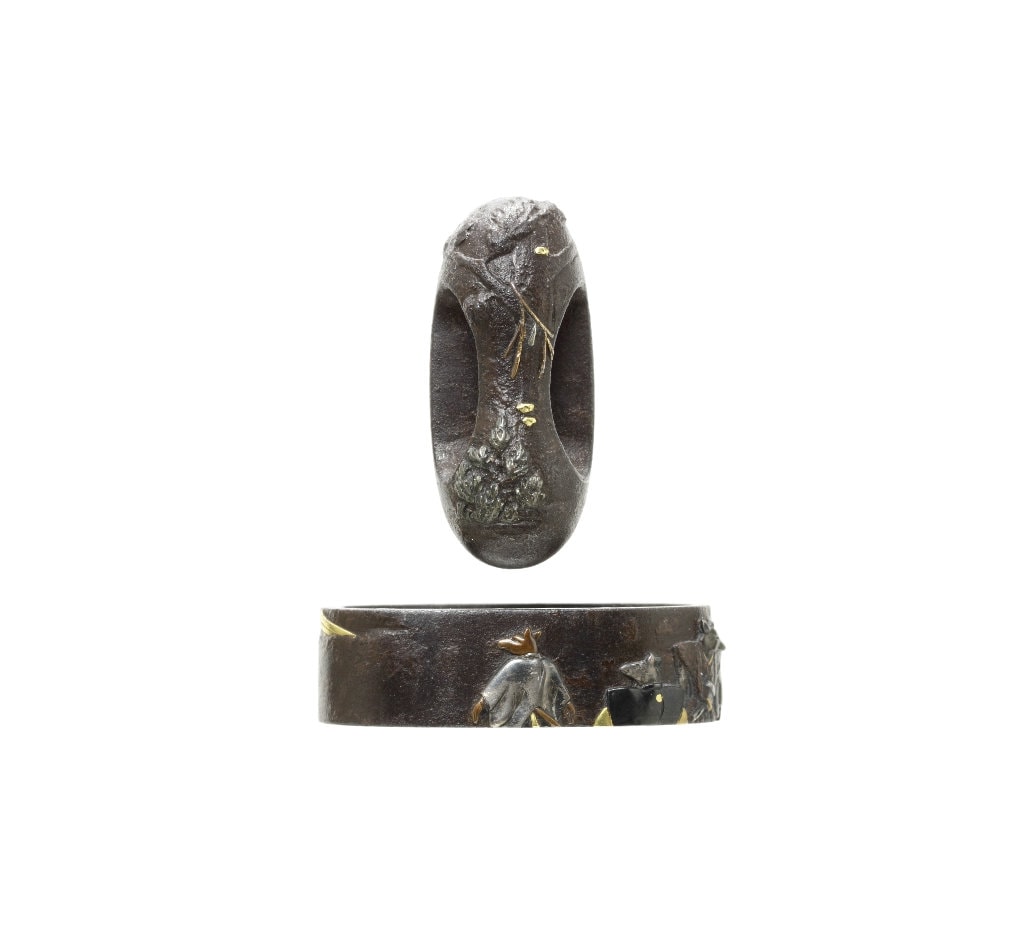
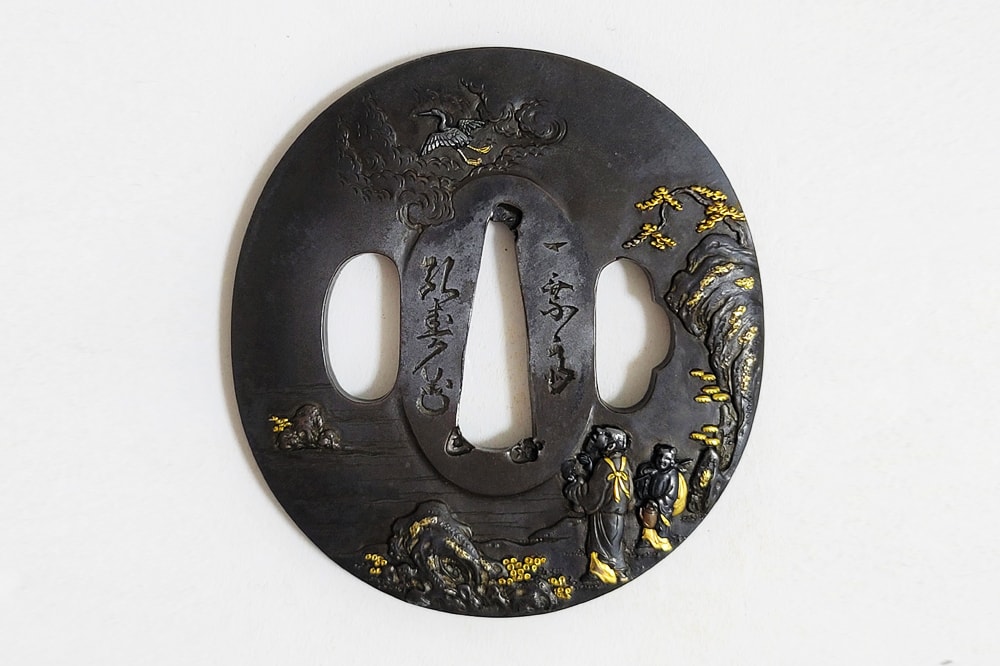
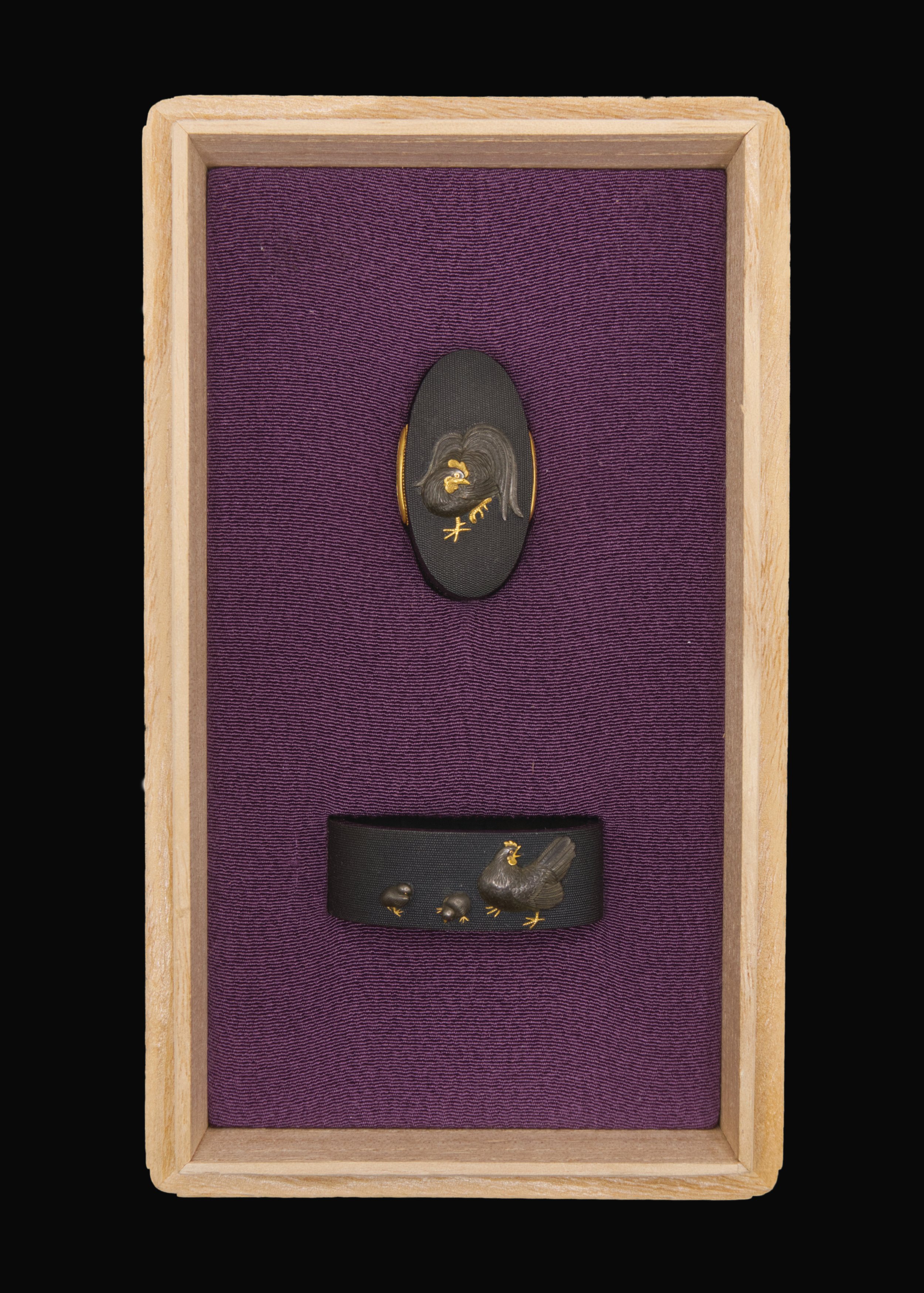
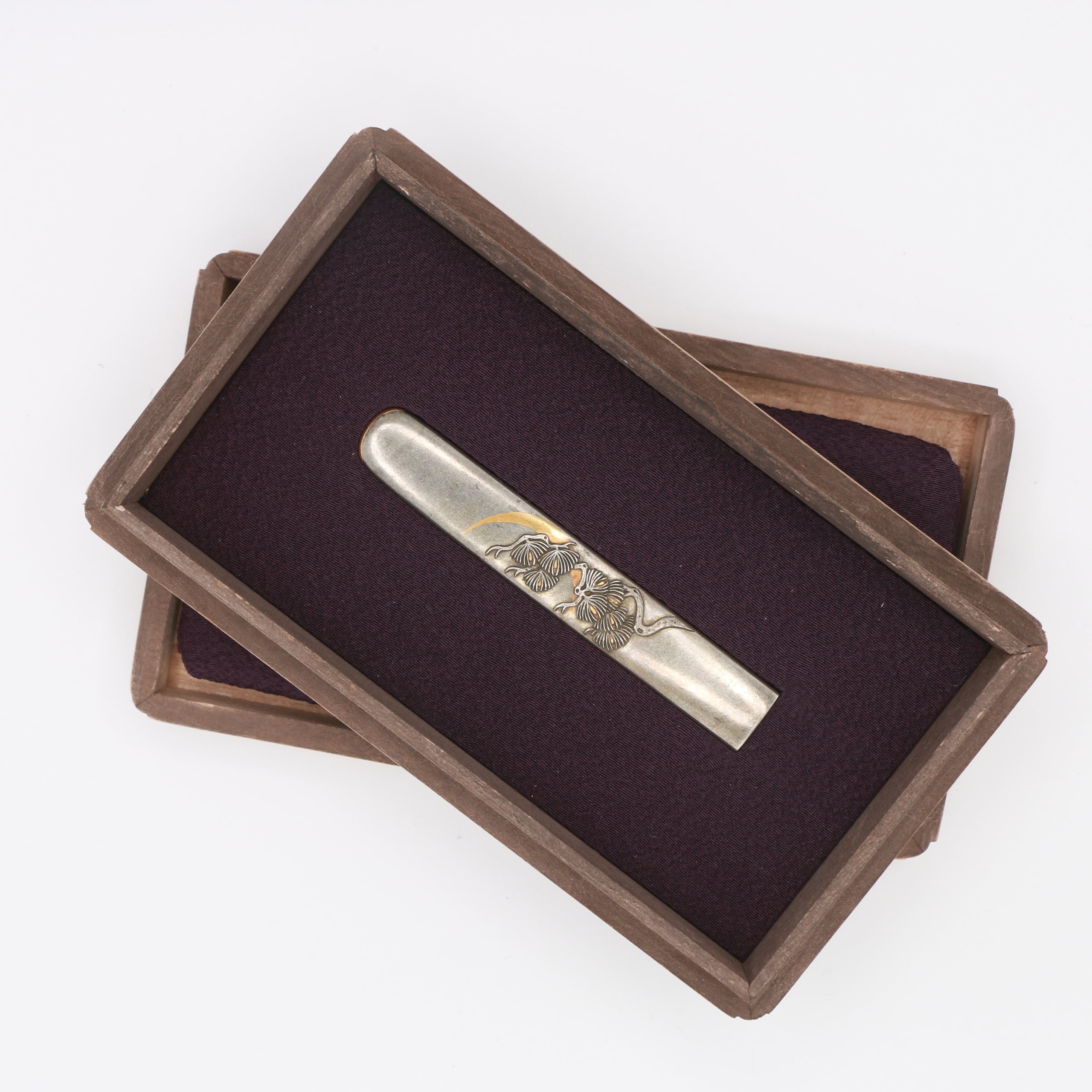
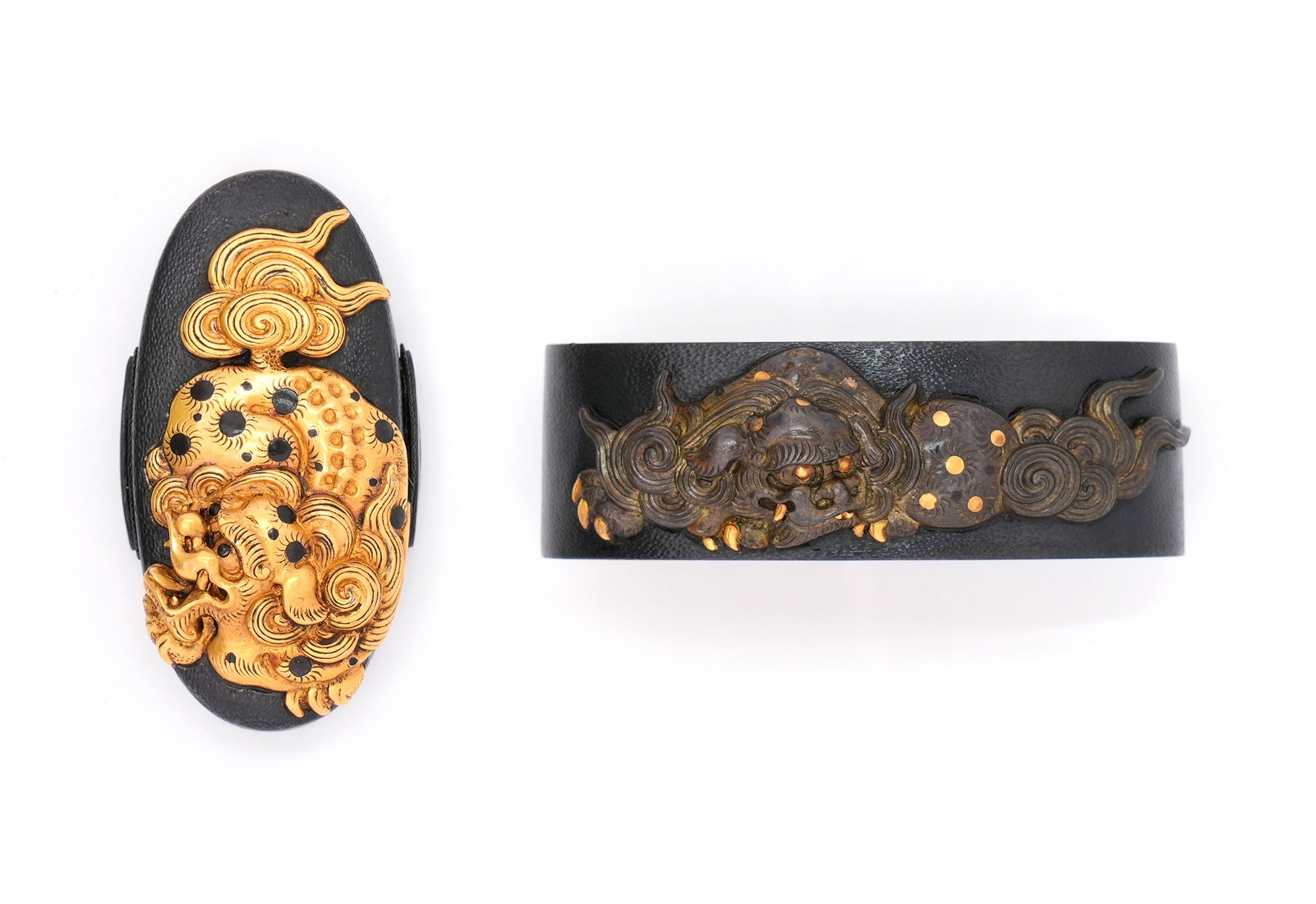
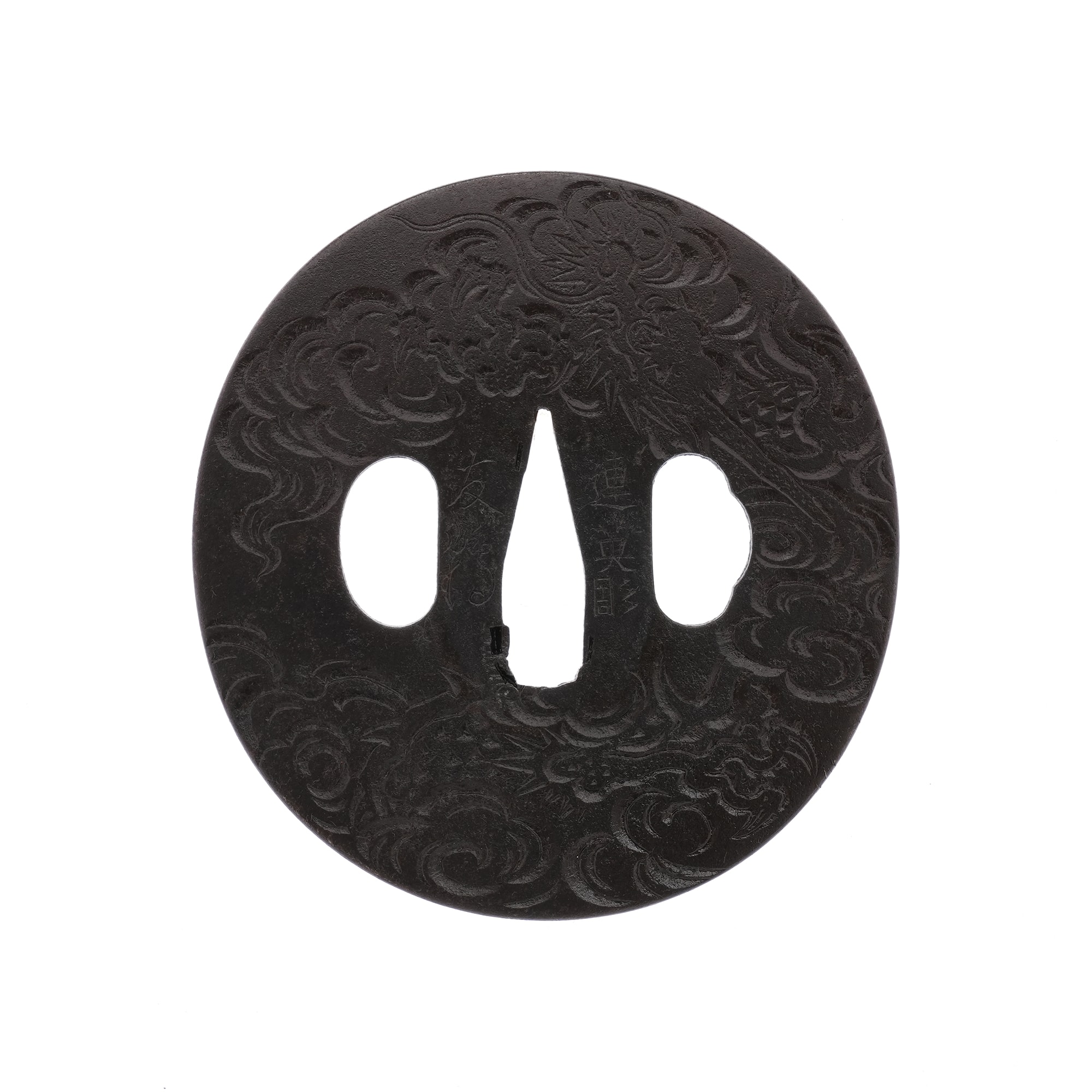
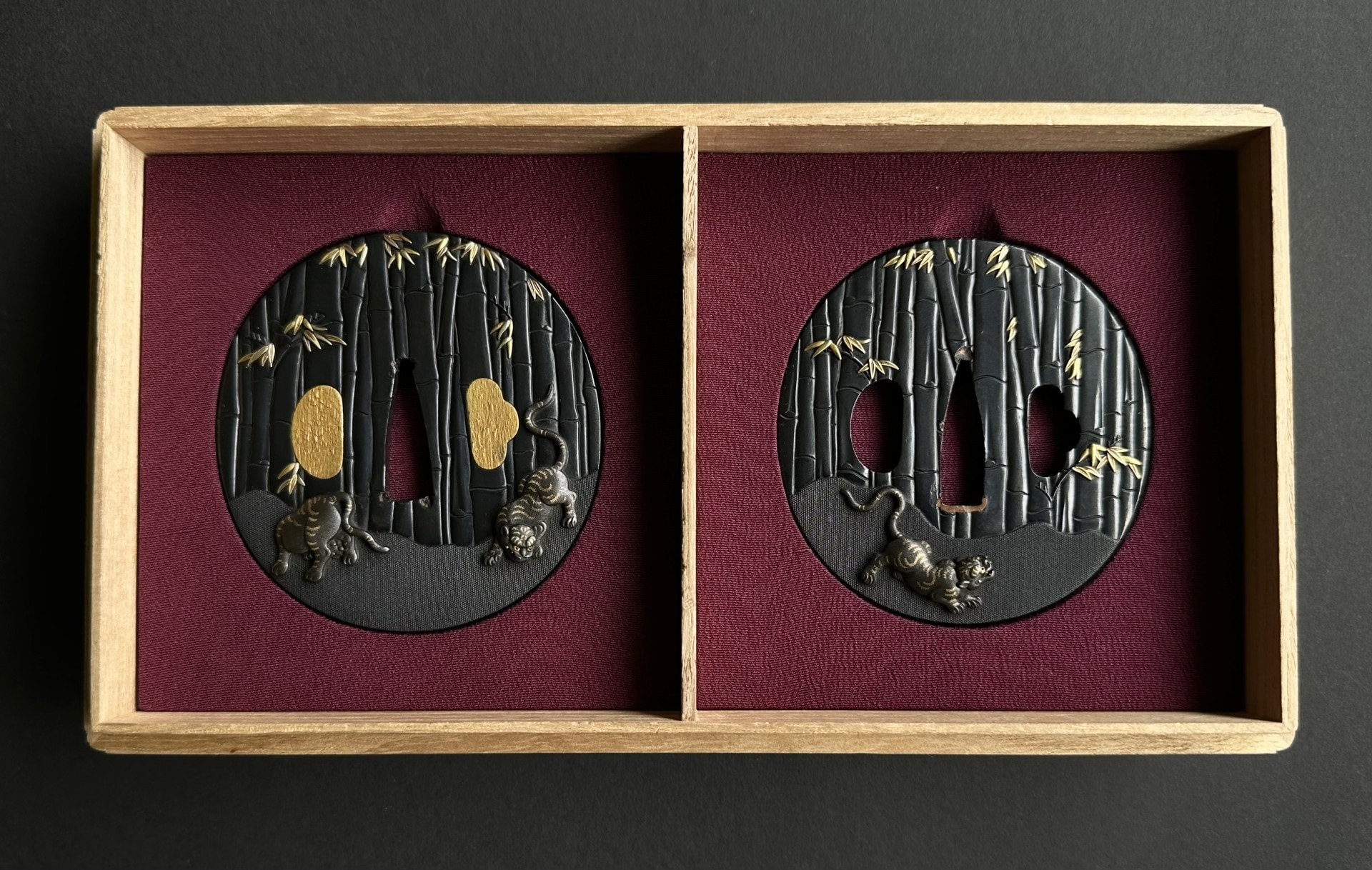
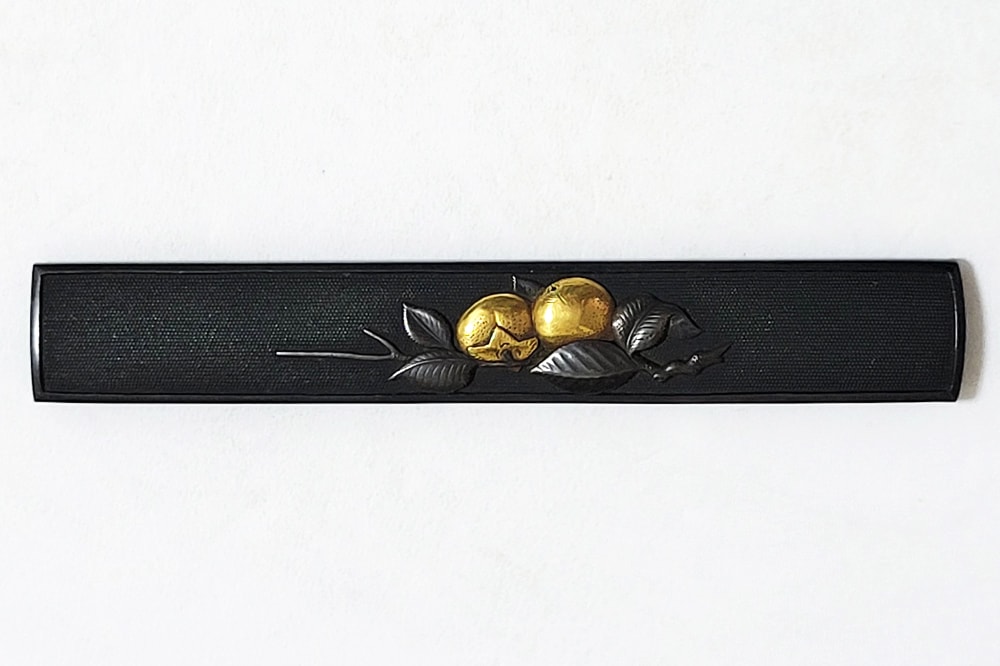
Kaizan Oki was a student of Otsuki Mitsuoki (Otsuki Koko) and a central figure in the succession of highly skilled craftsmen that the Otsuki lineage produced during the late period. His common name was Naoichi, and he lived at Nijo in Kyoto. He initially signed his works as Oko, later changing the signature to Oki, and used art-names including Reibokudo and Chikufudo. The situates him within a direct line of distinguished Kyoto metalworkers that includes Otsuki Mitsuhiro, Kawarabayashi Hideoki, Tenkodo Hidekuni, and Matsuo Gassan, a group that "enjoyed a period of great prosperity."
Oki's characteristic technique centers on yobori high-relief carving executed on solid gold () or grounds, brought to completion with oki- and polychrome metal accents in gold, silver, , and . His display what the describes as "the unrestrained, open manner characteristic of Kyoto ," marked by an "outstanding power of direct observation." His chisel control is consistently praised as "smooth and expansive," capable of rendering delicate leaf veins with crisp precision while modeling adjacent forms with "rich fullness." In his earlier works signed Oko, the carving shows earnest strength in each stroke of and , though it "has not yet reached the fluent and fully flowing manner seen in works signed Oki" — a distinction the draws to chart his artistic maturation.
Across the record, Oki's work is characterized by compositions of "elevated tone and dignity," whether treating classical literary subjects such as Monogatari or rendering mythological figures with "powerfully masculine" force. The repeatedly affirms that his pieces "fully demonstrate the high technical level" of his art, describing them as works "in which Oki fully realized his abilities." His standing is summarized as that of "a key figure among Kyoto metalworkers," and his oeuvre reaffirms the continued vitality of the Otsuki school tradition at its highest level of accomplishment.
Kantei
3 descriptive axes: material (a soft-metal ground palette led by shibuichi polished ground, with shakudo, suaka, solid gold and an ishime ground) x technique (fully-modelled katachibori and high relief finished in colour inlay, with placed-gold colour and yin-yang root posts) x themes (pictorial designs drawn from classical literature and famous places, the Otsuki-school manner carried onto the fitting). With a thin corpus of seven pieces his discriminators are scope-tight and low-n: the Otsuki pictorial register is the foundation his work rests on but the literal e-fu wording is absent from this corpus, so the citable separators are register-level (drawing-from-life shasei, absent from the formal Goto repertoire) and subject-level (the Narihira-and-Fuji famous-place pictorialism), each named in only one or two of the seven records and flagged accordingly.
Minayama Oki, common name Naoichi, was a late- Kyoto metalwork artist of the Otsuki school, a pupil of the school's founder Otsuki Mitsuoki. The records say he lived in Nijo in Kyoto; that his first signature was the young-name Oki written 応興, which he later changed to 応起 (also read Oki); and that he used the studio-go Reibokudo and Chikufudo. One record sets him among the leading hands the Otsuki school produced after Mitsuoki, alongside Otsuki Mitsuhiro, Kawarabayashi Hideoki, Tenkodo Hidekuni and Matsuo Gassan, when the house was at its height. His manner is the pictorial design of the Otsuki school carried onto the small field of the sword fitting, his core hand fully-modelled and high relief finished in colour inlay; his subjects are pictorial and drawn from the classics, above all the eastward-journey scene of Ariwara no Narihira with Mount from the Tales of , and famous-place landscapes (the cherry-blossom of Arashiyama, the maples of Takao). The records praise his command of composition, his fluent chisel and a naturalist drawing-from-life (shasei) the freedom of the town-carving () tradition allows. With only seven pieces this is a thin corpus, all Important (), and the genuine separators from the broader field are scope-tight and register-level. This profile reads his identity, biography and signature chronology from the catalog records only.
Diagnostic discriminators
the literary-pictorial famous-place subject, the eastward-journey scene from the ninth chapter of the Tales of Ise, which the records say depicts Ariwara no Narihira looking back at what must be snow-capped Mount Fuji, repeated on paired menuki (named in two of the seven pieces); it is the concrete Otsuki picture-design subject, foreign (rate 0) to the formal Goto okite-mono repertoire, though within the Otsuki school it is the house pictorial register rather than a tell personal to him. Low-n (2/7) and so scope-tight
drawing-from-life naturalism, which one record (the gourd menuki) makes explicit, crediting his outstanding shasei to the freedom of the town-carving tradition; named in only one of the seven pieces, so single-source-class and scoped. The Otsuki school inherits the shasei strain of Kyoto kinko, absent (rate 0) from the formal house repertoire of Goto, so it separates the school's work from the formal field rather than marking him personally
Material (grounds)
He works the soft-metal palette: a polished ground is the most frequent here (on the fittings and matched sets), with , an ishime-textured ground, refined copper (), and solid gold () for the most lavish ; one is worked on a gold ground. The grounds are kept plain or textured rather than the Goto field, suiting his pictorial relief.
Technique
His core hand is fully-modelled (the idiom) and high relief, finished in colour inlay, present across the corpus; he adds placed-gold colour ( iro-e), thin relief (usuniku-bori) and flat relief where the design calls for it, and the are mounted with yin-yang root posts. On the wind-and-thunder-god he carries the relief up in gold, silver, and inlay on an ishime ground, and on the famous-place he builds a deep, far-and-near landscape with a meticulous high relief.
Themes (pictorial)
His subjects are pictorial and drawn from classical literature and famous places, the Otsuki-school manner: the eastward journey of Ariwara no Narihira gazing back at snow-capped Mount , taken from the ninth chapter of the Tales of (twice in this group, on paired ); the wind god and thunder god combined across a ; the cherry-blossom of Arashiyama and the maples of Takao with flowing water on a famous-place ; a gourd worked in fine detail; and the setsubun demon-expelling scene. The records praise the depth and breadth of his composition and the poetic feeling he carries onto the small field of the fitting.
Pictorial Otsuki-manner design from the classics and famous places
Figures and landscapes drawn from classical literature and famous places, laid out across the fitting like a painting and worked in and high relief with colour inlay. The literal e- wording does not appear in this seven-piece corpus, so this register is described from the subjects and composition the records do name (the Narihira-and- scene, the Arashiyama-and-Takao famous places) rather than asserted as a cited keyword.
Naturalist shasei (drawing from life)less firmly established
Drawing-from-life naturalism, which one record ties explicitly to the shasei manner: on the gourd it calls his command of drawing-from-life outstanding, the veins of the leaves cut sharply with a fluent chisel, and credits the free, unconstrained design to the town-carving () tradition. A minor, single-piece register in this thin corpus.
Full iconography
Signature chronology
Placement
Recorded signatures
Documentary note
His signature chronology dates and authenticates the work, and the records state it explicitly: his first signature was the young-name Oki written 応興, later changed to 応起 (both read Oki), and one set carries the early 応興 under the studio-go Chikuho and Reiyodo (Chikuho Oki, Reiyodo Oki). The records read the early 応興 pieces as not yet reaching the fluent chisel of the later 応起 work, so the two signatures help date a piece within his career. His mature real-name signature is Minayama Oki (皆山応起), cut with a or, on paired , split across the two pieces (応・起, and on the early set 応・興). The studio-go the prose recites as his (Reibokudo, Chikufudo) differ from the go that appear on the actual early signatures (Reiyodo, Chikuho) and are not themselves transcribed signatures here. The common name Naoichi is a biography-only name, never cut as a signature.
Scholarship
His pictorial subjects are drawn from the classics, above all the eastward-journey scene of Ariwara no Narihira and Mount Fuji taken from the ninth chapter of the Tales of Ise, which the records quote and tie to his menuki.