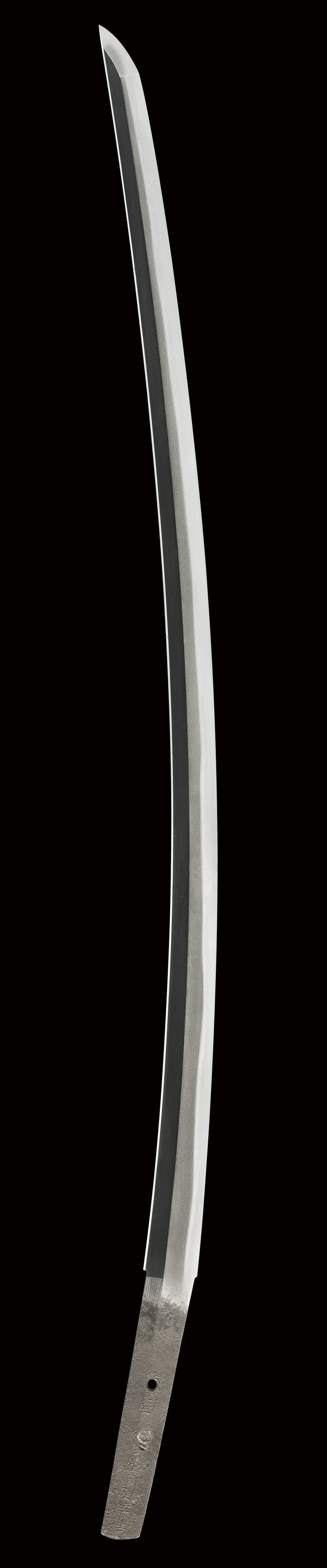
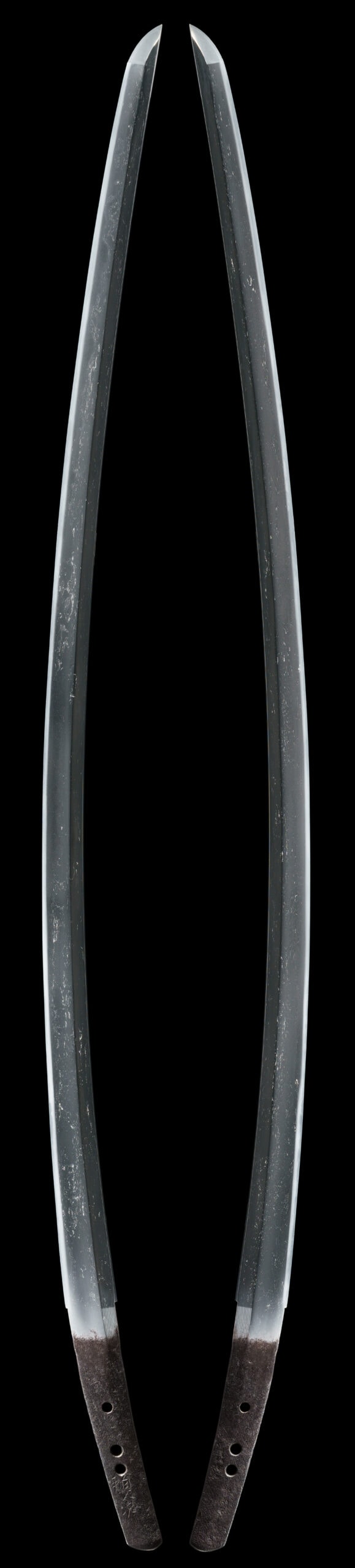
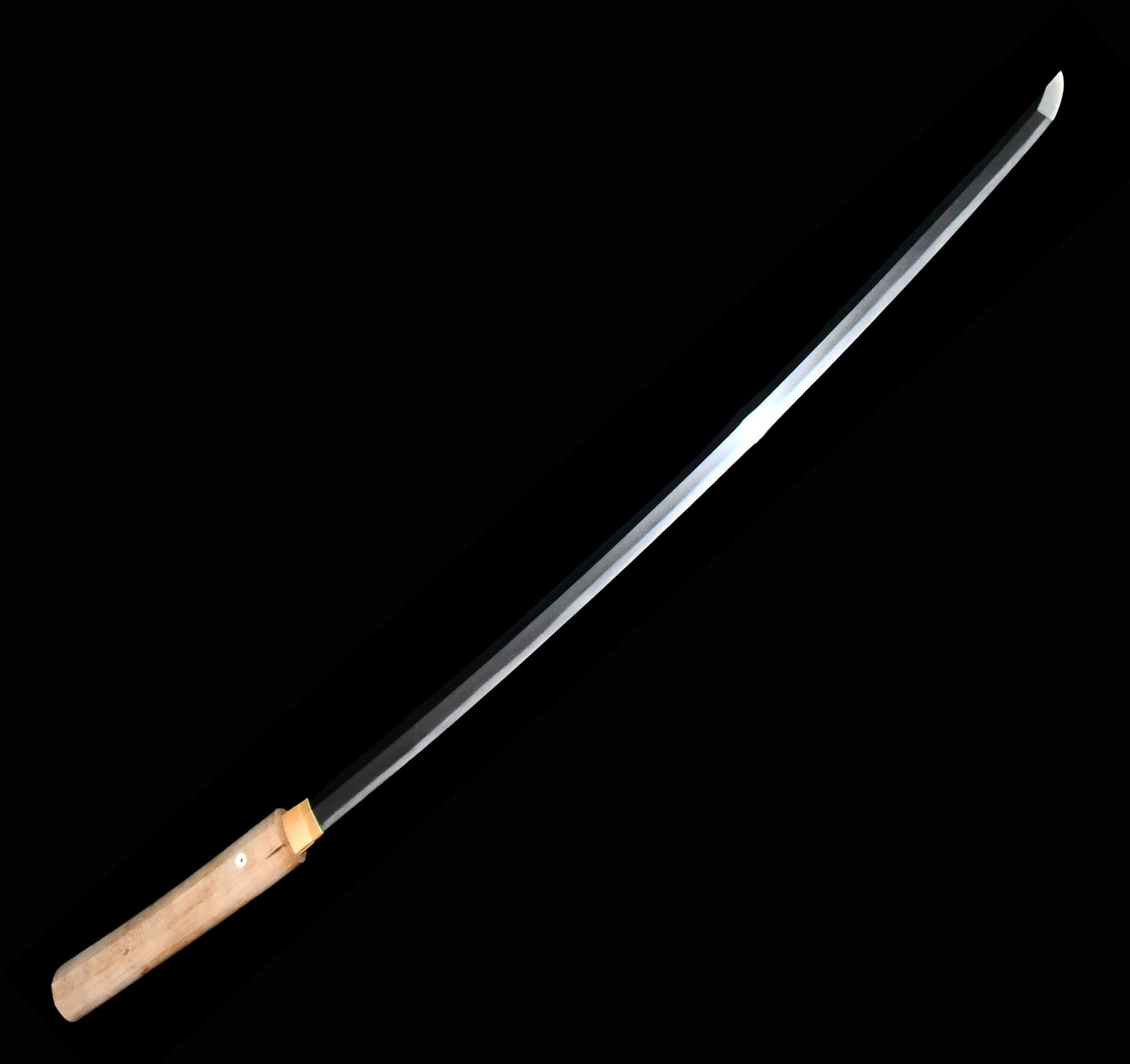
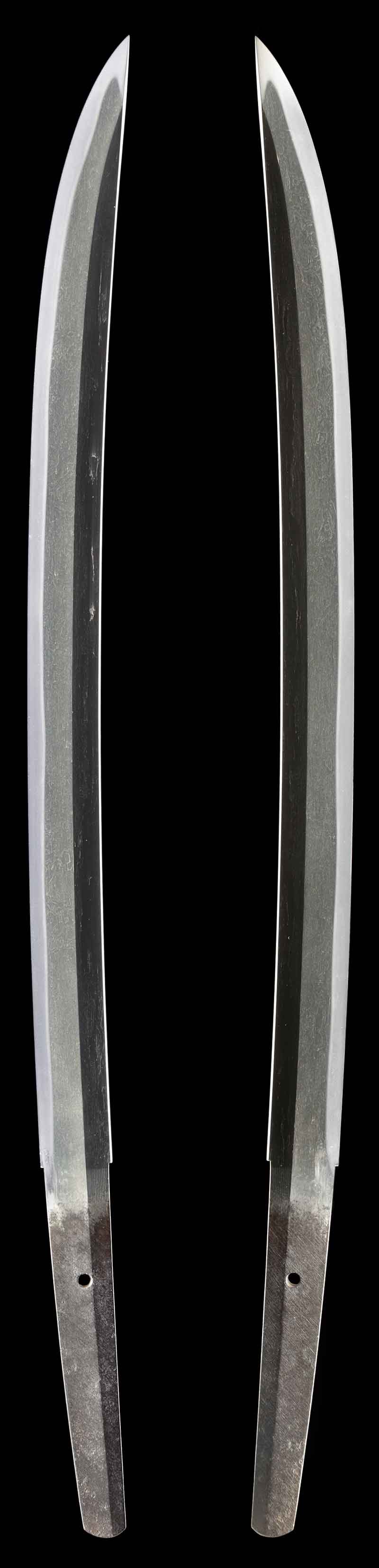
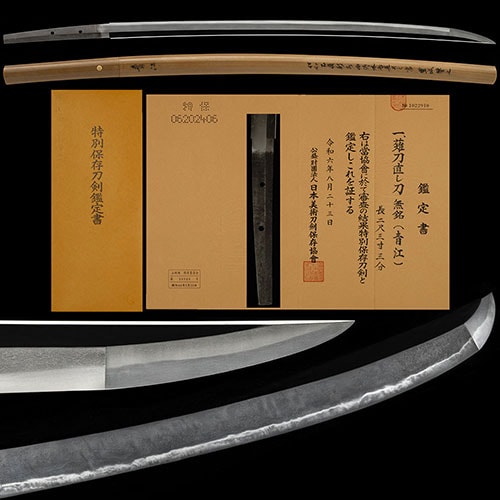
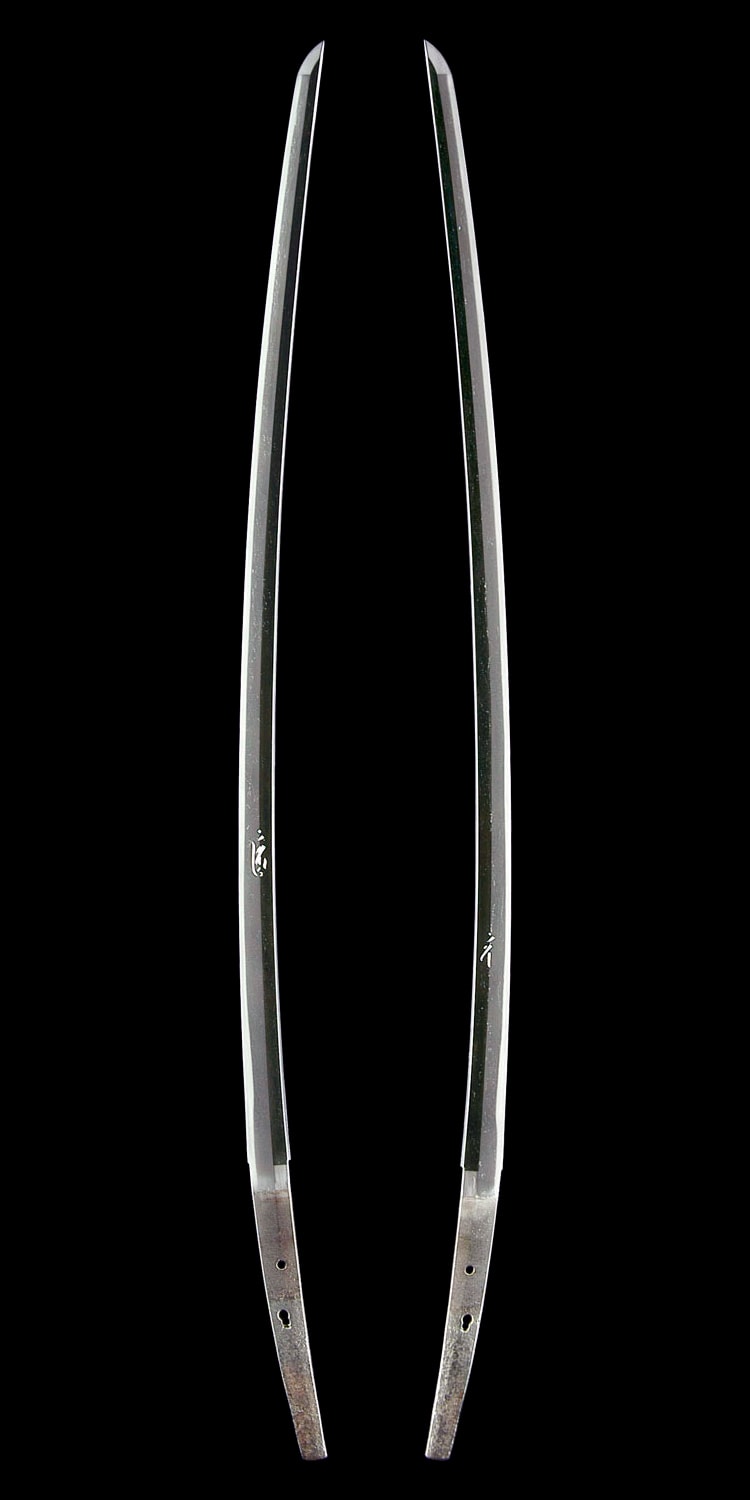
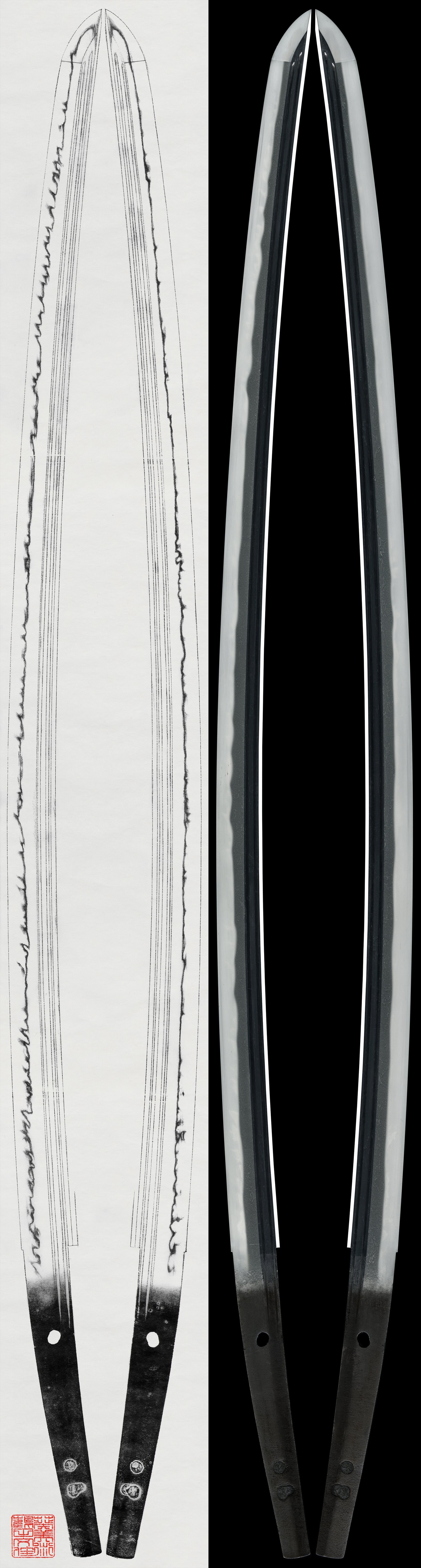
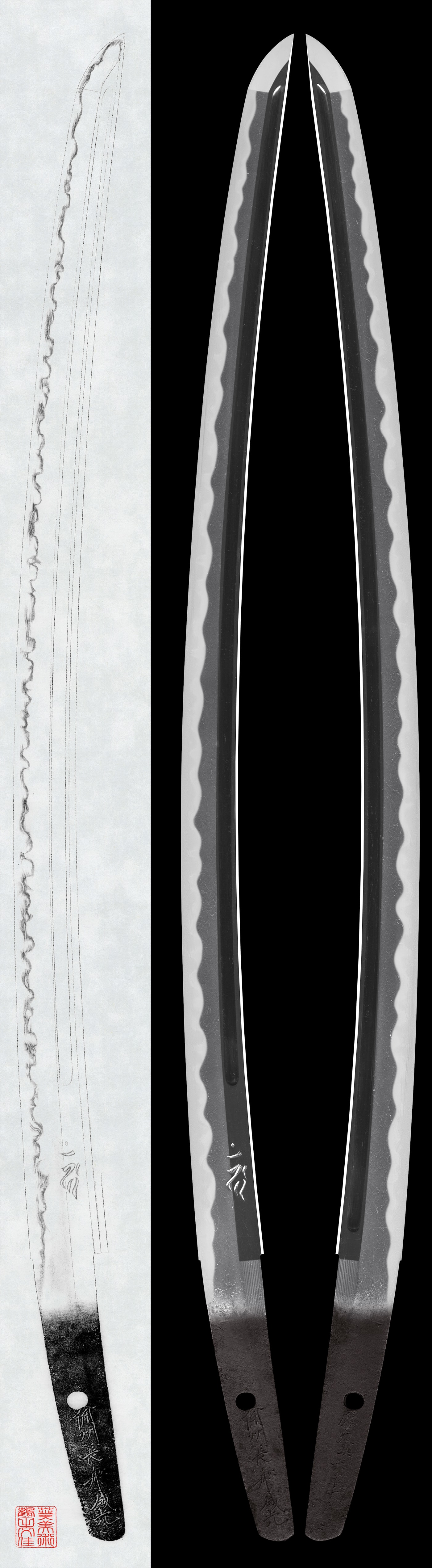
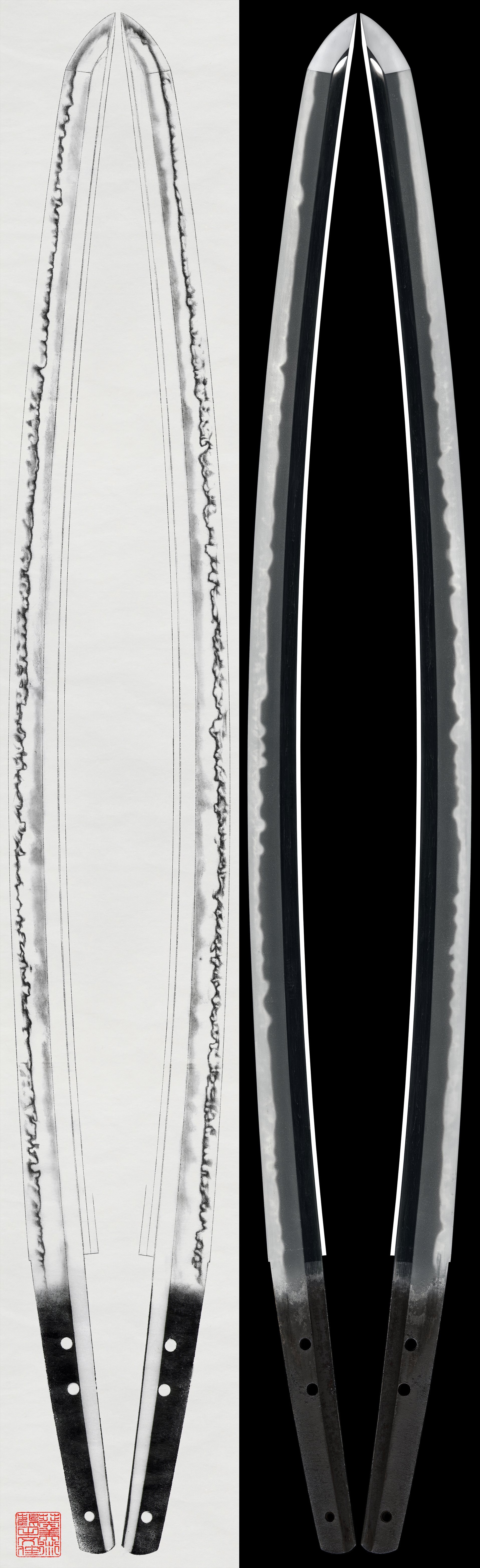
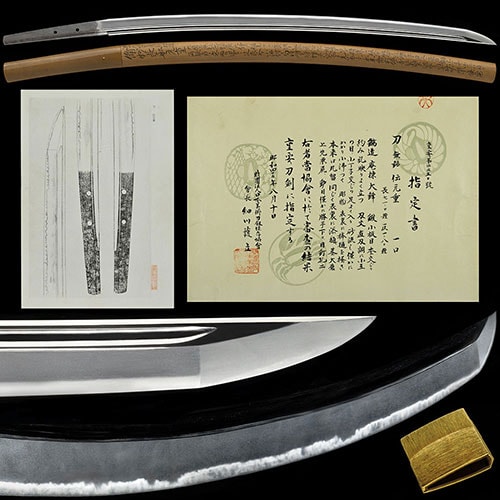
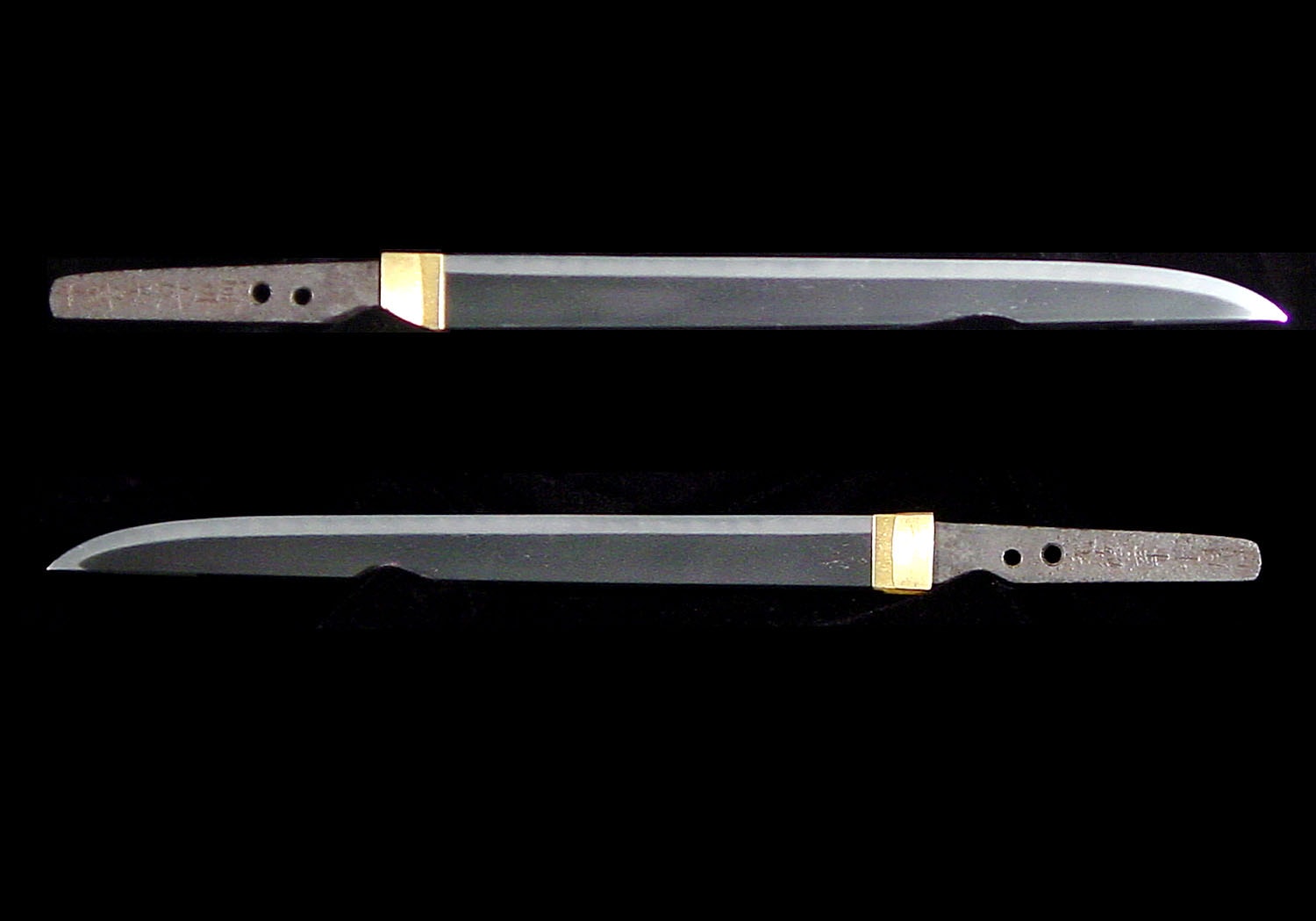
Suketsugu is traditionally said to have been the son of Toshitsugu, and the succession of this name extends across a broad span from the early period through the period. According to reference works on signatures, there were at least three generations of smiths using the name, with activity recorded across the eras of Jokyu, Showa, Enbun, Eitoku, and Oei. The smith of the late period, active around Showa 1 (1312), is identified as belonging to and is the most prominently represented in designated works. His signed pieces bear long inscriptions cut with a thick chisel in large, boldly formed characters, sometimes including the place-name designation "Ko'i Toshosho" and the notation "resident of Senoo," establishing that the Senoo smiths and the smiths, once thought distinct, had by the period merged into a single tradition centered in the lower basin of the Takahashi River.
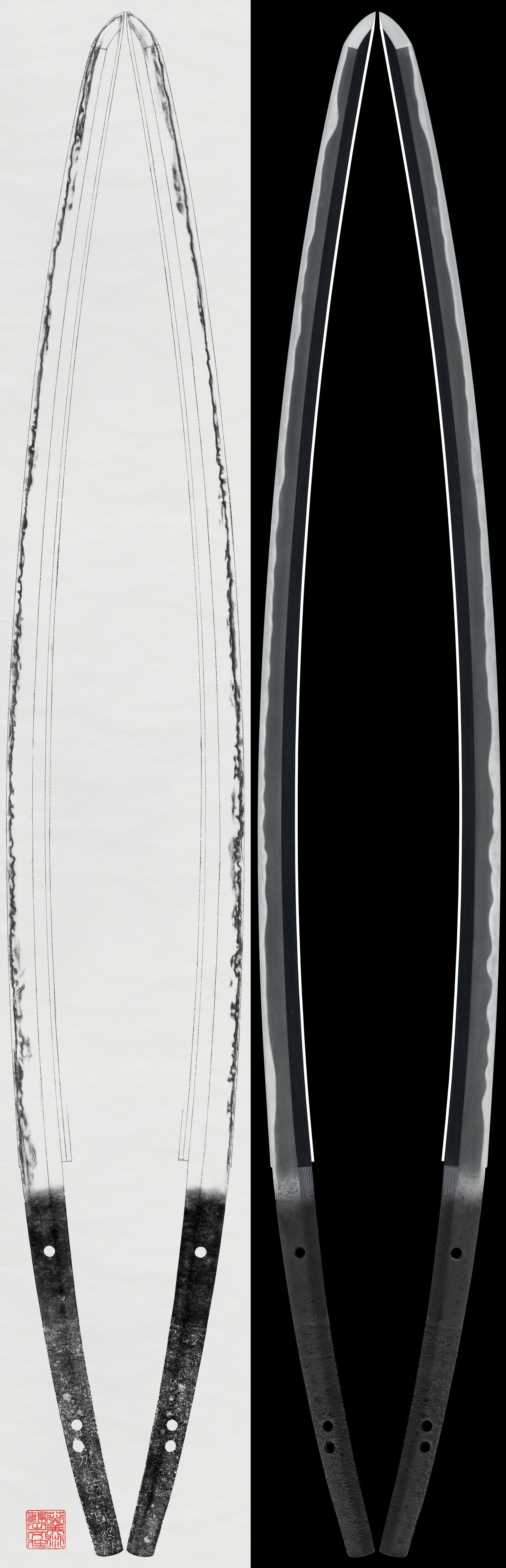
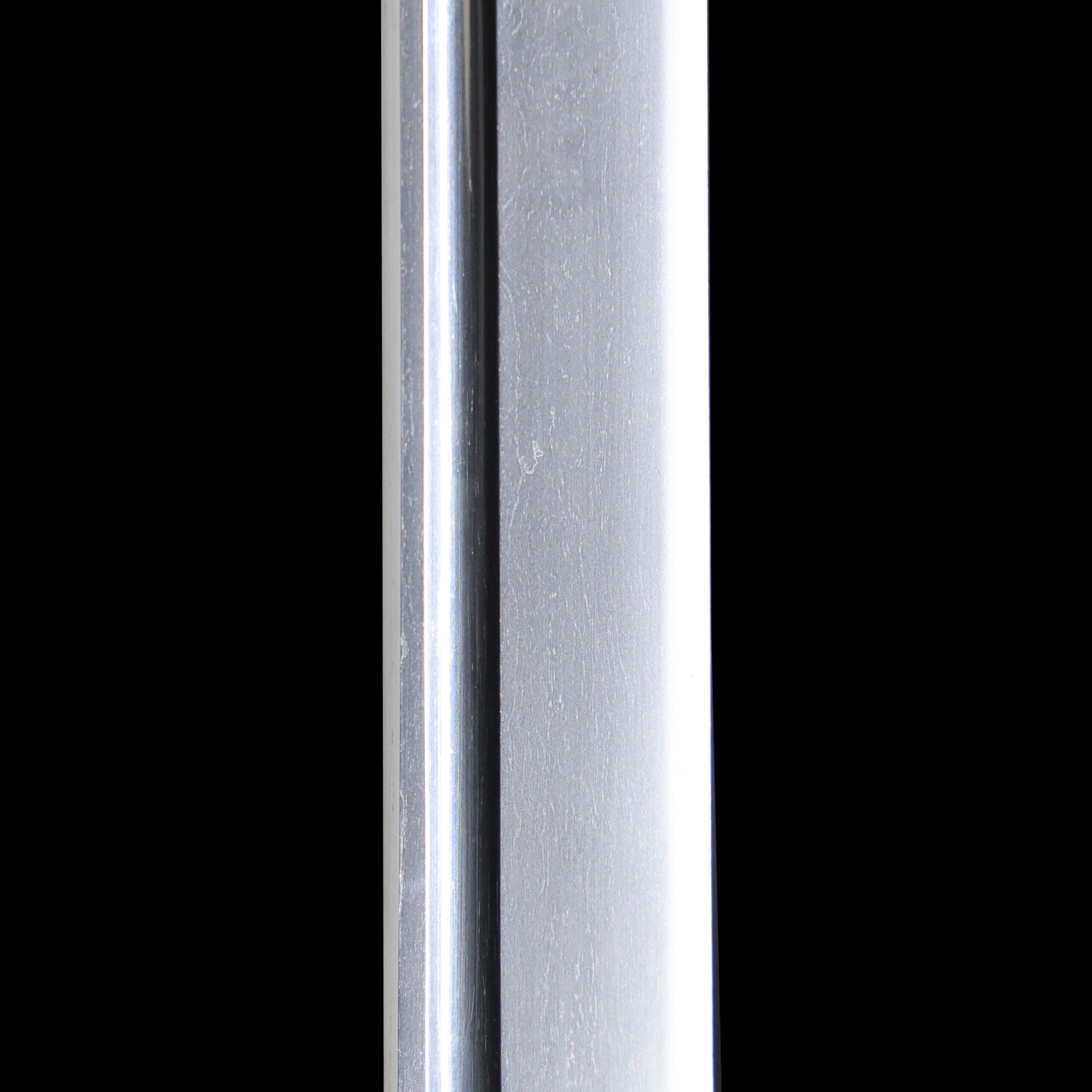
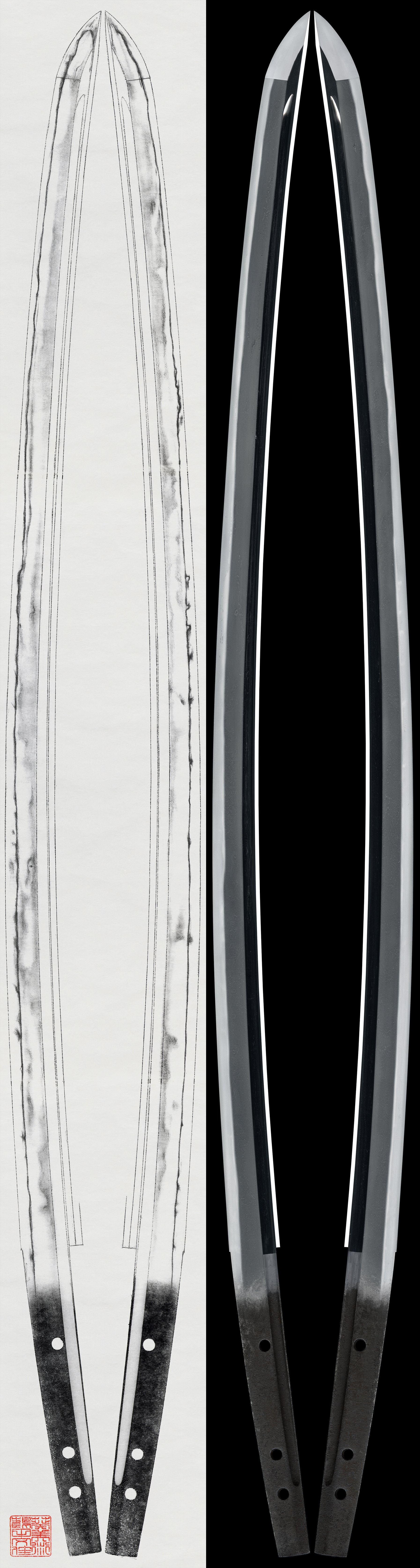
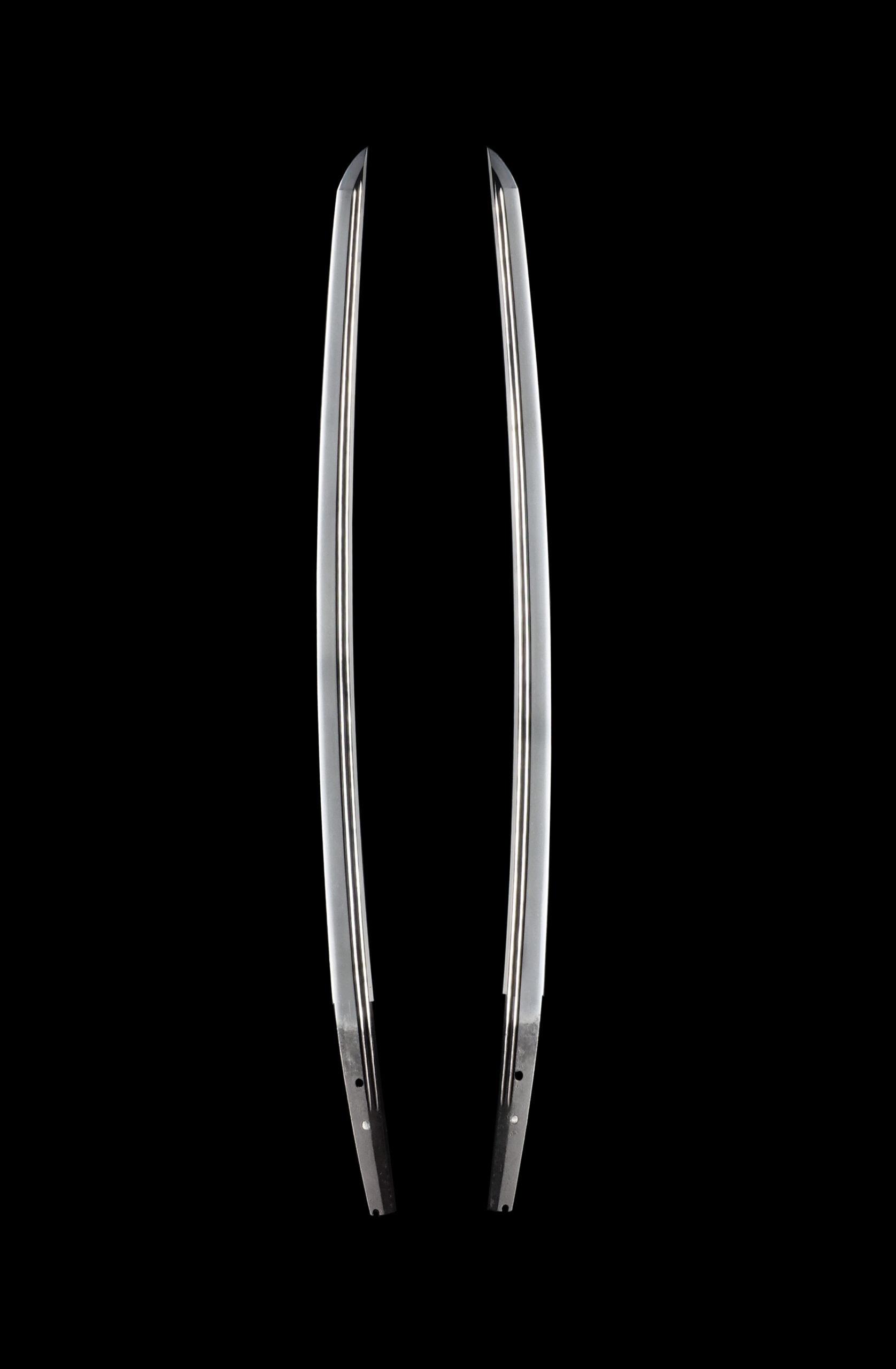
The technical hallmarks of Suketsugu's work are firmly grounded in the school's characteristic idiom. The forging presents mixed with , sometimes tending toward , with the grain standing out; fine adheres densely, appear, and emerges in forms ranging from faint streaks to . The is -based with a shallow tone, mixed with , -, and pointed ; and enter, and adheres well with running through. The is typically straight, turning back in or , sometimes with . In certain works the is rather thick and the construction bold and powerful, while later-period examples show the with reversed-slant that clearly exhibits the style of .
Works by Suketsugu occupy a position of particular documentary and scholarly importance within the tradition. The Showa 1 date appearing on multiple pieces represents the earliest known date among extant -made swords, and the long inscriptions, including the "Gyobu no Jo" title and age inscription on the Bunpo 2 (1318) , constitute invaluable source material for the study of medieval swordsmithing. The has noted that although individual pieces may show a slight suggestion of in the , the works overall preserve an archaic and elegant taste while clearly expressing the characteristic features of workmanship, presenting a representative archetype of production of this period.