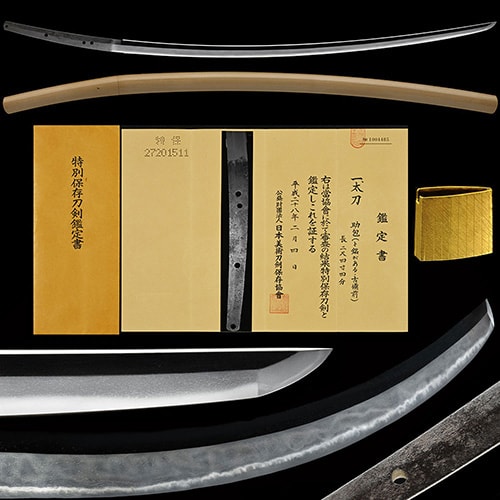
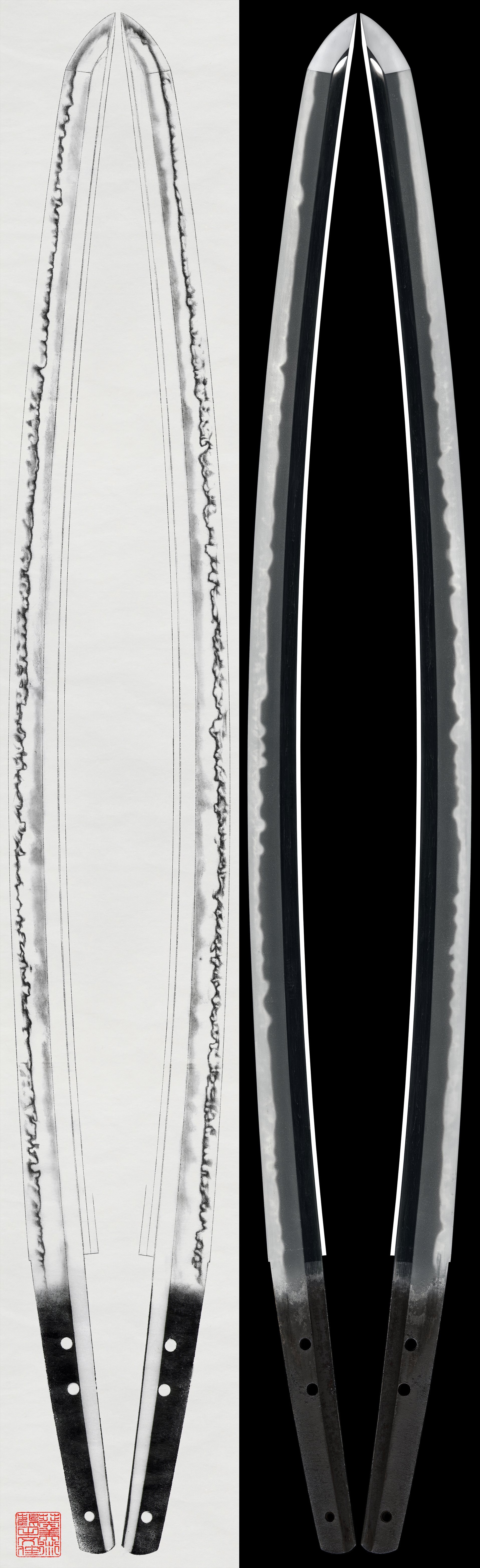
Sukemori is a swordsmith of the late into the early period, known today only by a small body of signed , each bearing a bold, large two-character cut with a thick chisel. His name is one of the standing attribution problems. The reference works enter a smith called Sukemori among the Fukuoka group, but the published sources hold that a clearly distinct, older Sukemori works in a manner, and that it is to this archaic hand that his recognized signed blades belong. The point is made plainly on his Jūyō Bijutsuhin : although the list an Sukemori, "there exists a Sukemori clearly different from that one, and this blade is likely his". His signature style, the source adds, is more old-fashioned than that of the Sukemori, so even the name on the tang reads as the older hand.
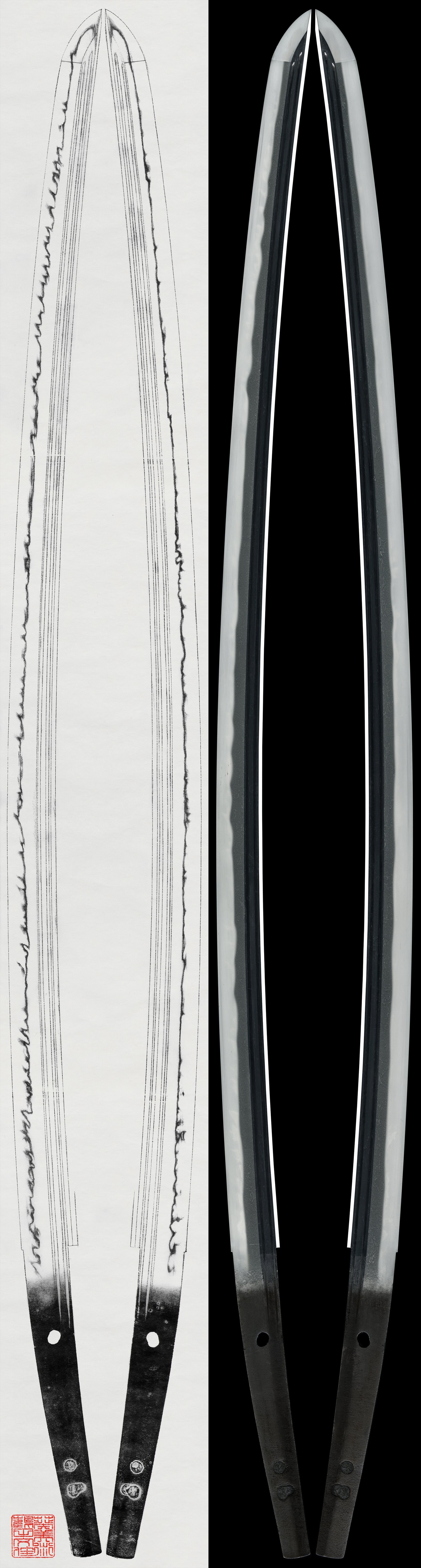
The temper is the tell of his work. Over a of he sets a broad -tone that undulates gently and becomes "wet" in feeling, mixing and into the line, with entering abundantly. What separates him from his namesakes is the strength of the : it adheres heavily through both and , runs frequently along the temper, and the tends to , a subdued depth rather than a bright clove-flower. The published sources, weighing the several Sukemori smiths they have examined, judge this one "the strongest in and the most archaic in tone". The flaring and high clove heads of the mature Fukuoka school are absent; in their place is the quieter, -laden of an older generation.
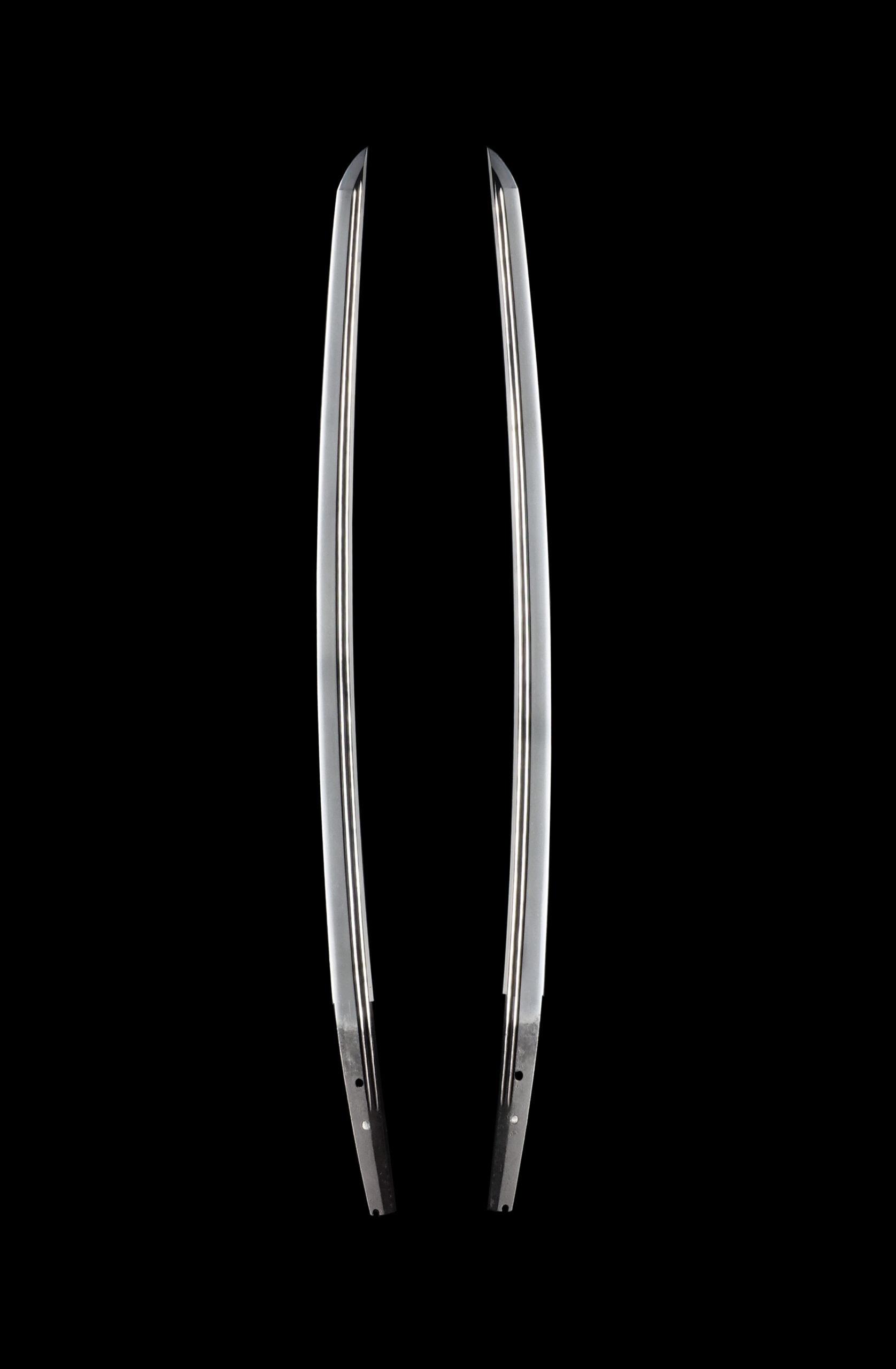
The carries that archaic character. The is dense, thickly covered with and entered by fine , standing a little in places and admixed on one blade with a touch of along the . The shape agrees with the dating: slender in build, the set at the waist and retained even after shortening, running to a , the dignified bearing of the early . The runs in a and turns back with a tendency. Taken together, the published sources read the whole "as more archaic than Fukuoka , a work of around the early ".
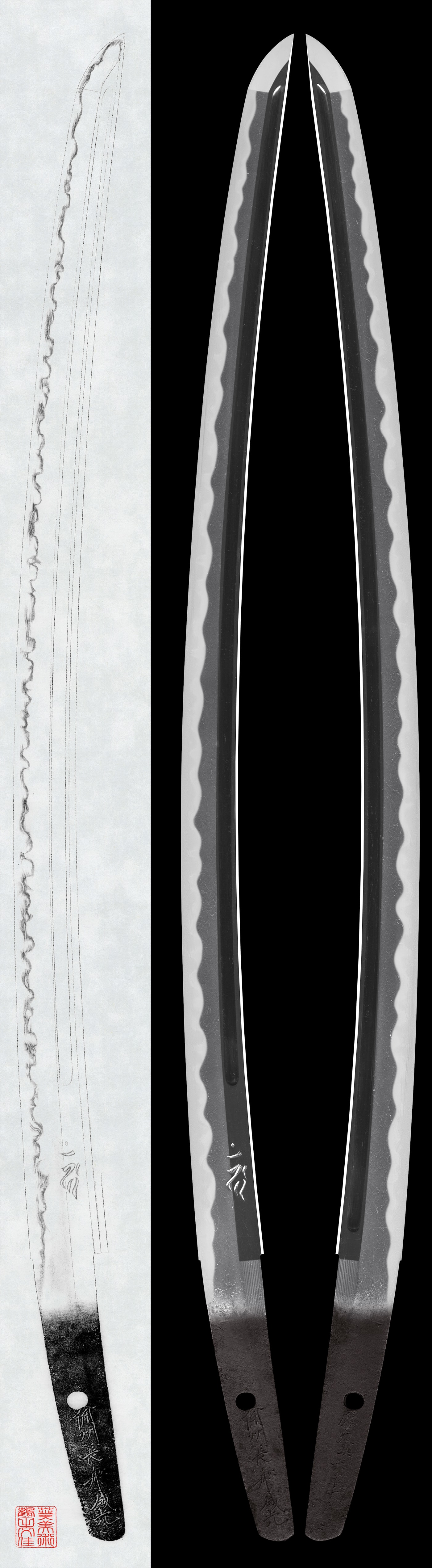
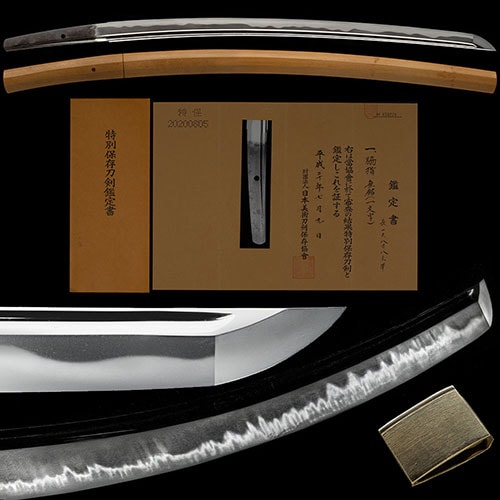
Within his small surviving group the degree of flamboyance varies, and the variation is itself instructive. His more decorative , an blade keeping its three-character though the inscription is corroded, widens the body and raises the line into a mixed with and small , the deep with and running through. Yet even there the judges place him by style and signature in the group rather than the . The name recurs, the published sources note, in both the and the lineages with differing workmanship and differing manners of signing, so several smiths used it across both schools, from the very end of into the period; this Sukemori is held the most archaic of them.
What sets his hand apart from both its neighbours is exactly what the judges name. He is held apart from the flamboyant of the mid- by the calm of his -toned line and the depth of its , his "signature style older than the Sukemori"; and he is distinguished from the plainer old- hands by the strength of that and the that enlivens it. He stands before the school's great flowering at Fukuoka, one of the quiet archaic roots from which the brightest of the traditions would grow.
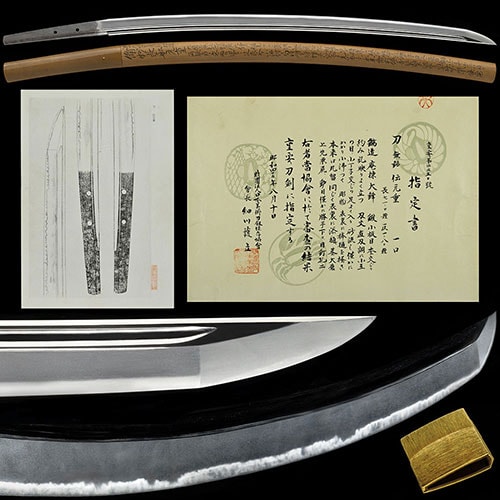
For the collector he is a rare early name carried by a slight but high record. He has no National Treasures; his designations run instead through an Important Cultural Property held at Kitano Tenmangū Shrine in Kyoto, a prewar Jūyō Bijutsuhin published in the Kōzan , the Kantō Zuiroku and the Nihontō Taikan, a , and two , the Jūyō Bijutsuhin piece having descended through Shigetaka Kinkyō of Toyama. The published commentary calls his finest signed "sound in both and , a well-made example", and holds the signed blade valuable as reference material for the school. These are designated cultural property and long-held heritage, not blades that pass through the market; the few in the and tiers come to light only seldom. A signed Sukemori in private hands is among the rarer things a collector of early could hope to encounter, and a document, when one appears, of how the line stood before .