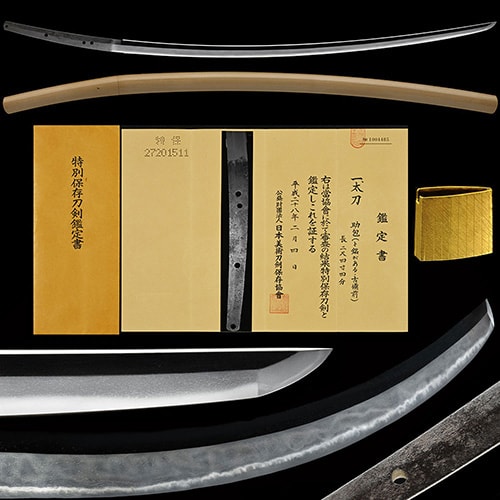
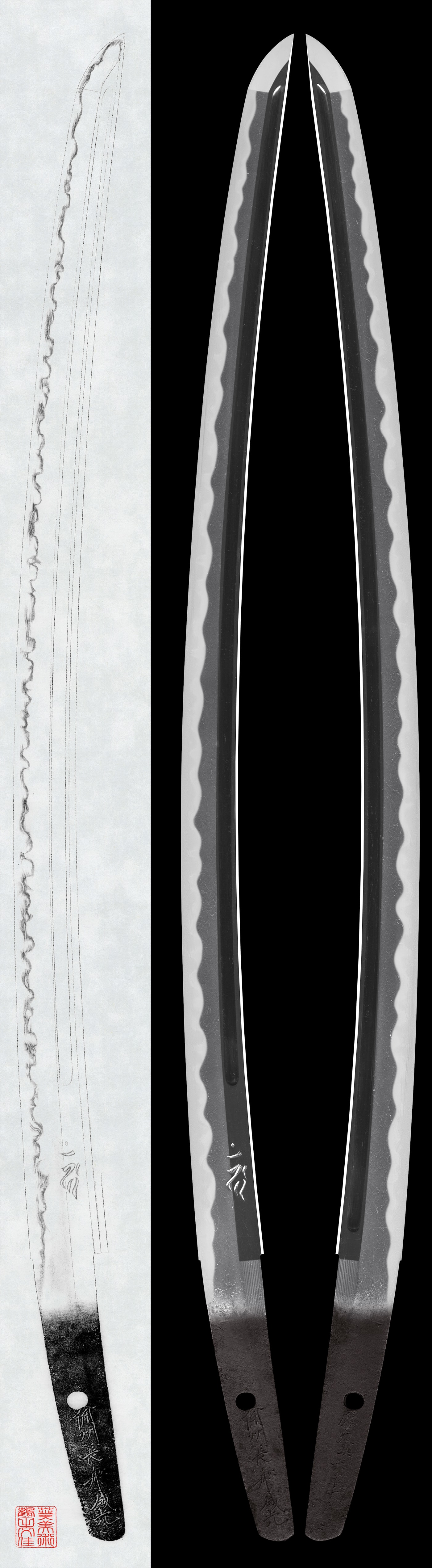
The record Kageyasu (景安) under ", around Genryaku", the era of 1184 to 1185, and the counts him among the smiths of the stream at the opening of the period. His record divides into two signature registers: a rare group cut with the small, long signature no Kageyasu, and a comparatively numerous group signed with two large characters in a thick chisel. The Kokon Meizukushi (古今銘尽) makes him an smith and a son of Kagehide, but the published sources reject the claim on the work itself, finding that the and the manner of the are in the mode, so that the theory does not hold. Whether he belongs to or to the earliest is left open; that he does not descend later than the early period is held firm. One tradition makes him a pupil of Yoshinori (義憲の門).
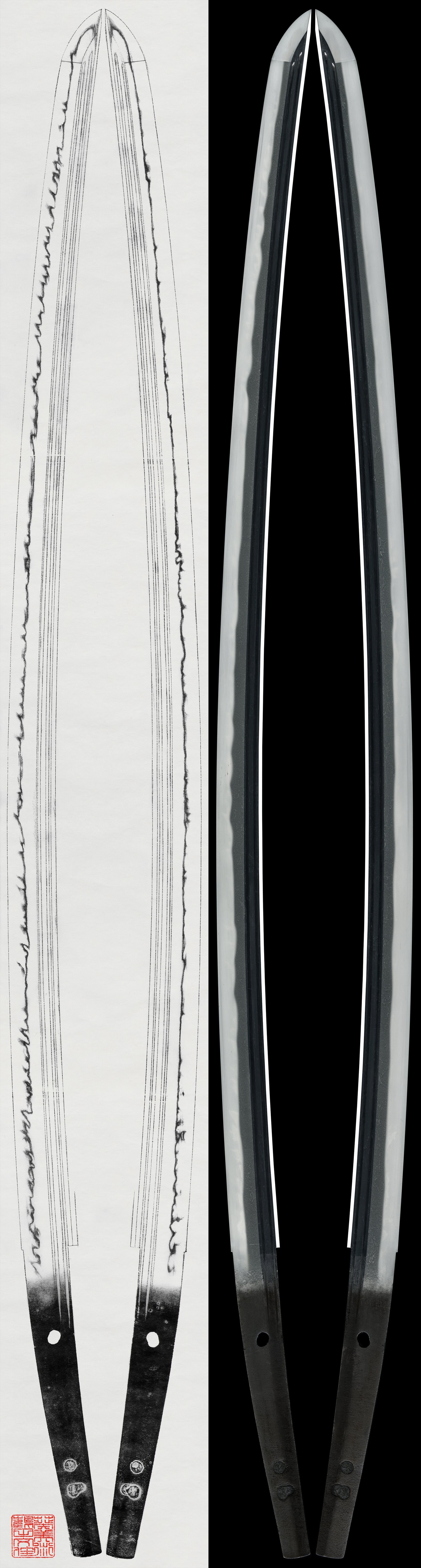
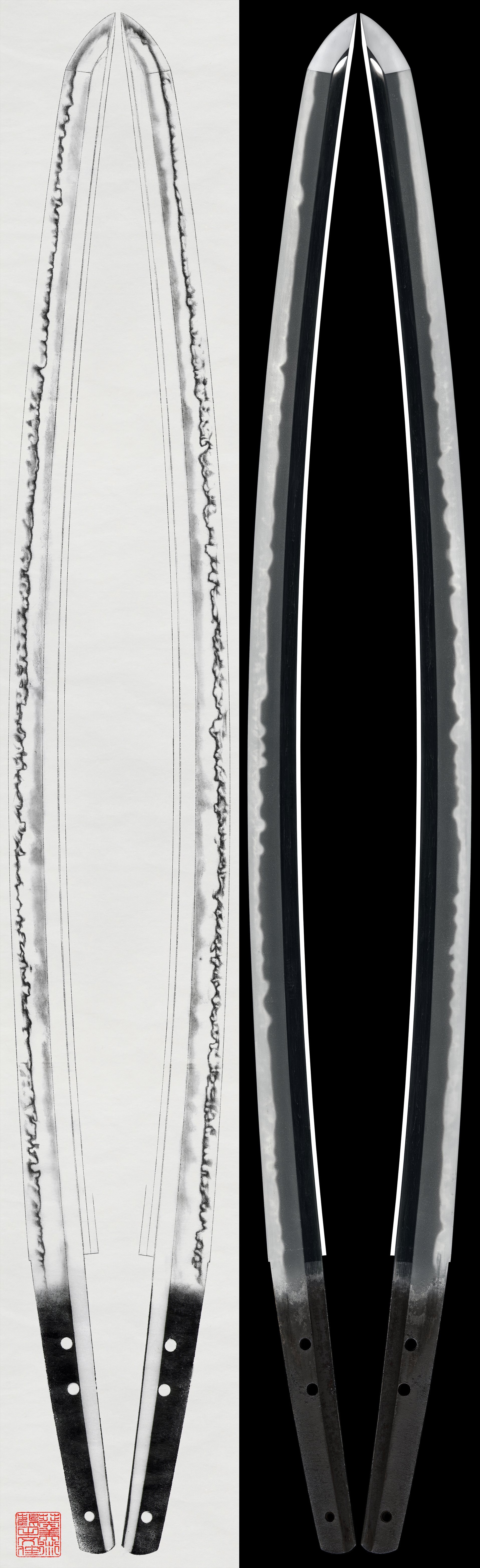
His hallmark the names outright. The mixes, somewhere within an overall -toned line, angular of character, and between widely spaced and it shows and , traits the published sources call clearly distinctive. The commentary on his presses the point, observing that in most of the surviving works angular elements invariably accompany the temper somewhere along the edge. Honma Junji adds that even in the flamboyant pieces "an angular mixes in somewhere in almost every case". The squared edge is matched by an unusual weighting of the temper. Where the habit of the old masters is , leads in his work, and stands further forward in his than in the peers Tomonari, Masatsune and Kanehira, in whose recorded blades the squared does not appear at all.
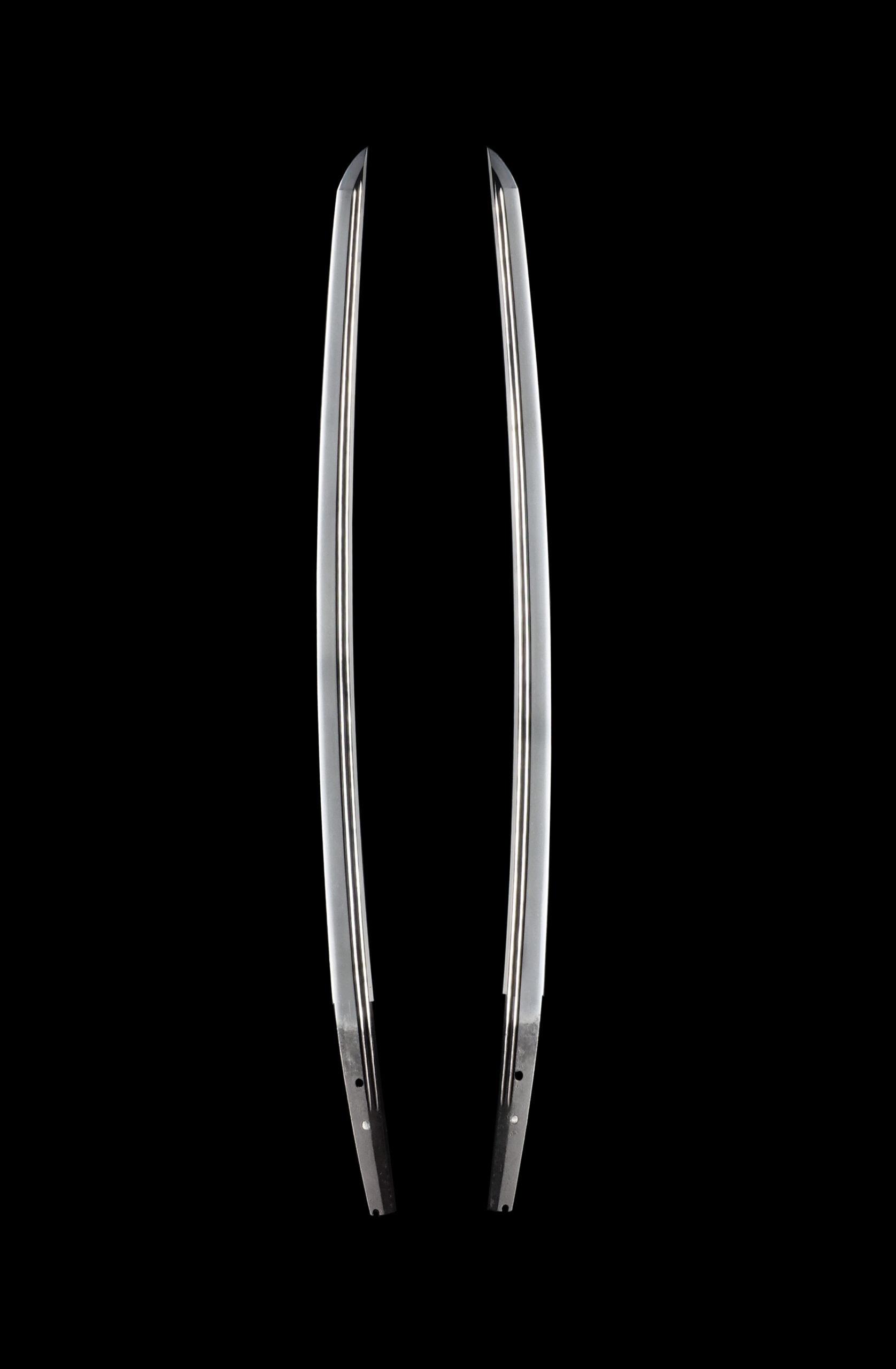
The form is slender, the high with pronounced , the blade gathered into a ; of one long-signed the published sources write that the figure is "beautiful and unmistakably refined". The is , mixed in places with and flowing , with a slight tendency to stand. adheres well, enter, and a rises, with mixing on some blades. The temper works in , either a -toned or a mixed with . and enter well, and appear, and the runs deep on some blades while tightening in places on others. The as a rule runs to a small round turnback, and the published record notes the habit that even where the lower half runs to , "the tends to settle large and straight". On one the emerges only partially in fashion, and the commentary reads that technically unfinished rendering as an archaic charm, strengthening a date before the middle period.
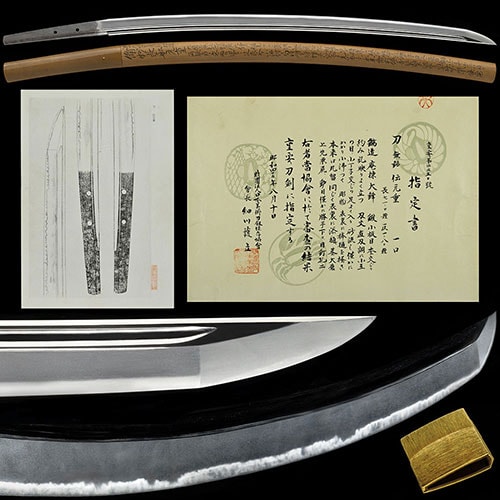
The two registers carry the scholarship. The long-signature group, few in number, is judged correctly , and in the comparison "the long signature shows the more archaic air, and the characters of the signature are somewhat more naive"; whether the difference from the two-character group is one of production date or of different men is, the published sources say, a matter requiring further study. Within the two-character signature itself a bold thick-chisel hand and a finer chisel are distinguished, so several smiths of the name are considered to have existed, the workmanship supporting the view; later homonyms worked in the Fukuoka and Yoshioka , the and the Yoshii lines. One preserving only the character on its shortened carries a of 1688 appraising it to Kageyasu at thirteen gold pieces, and Honma observes that its angular carries even a sealed-bid appraisal straight to Kageyasu, taking the blade as evidence that the smith stands in the line.
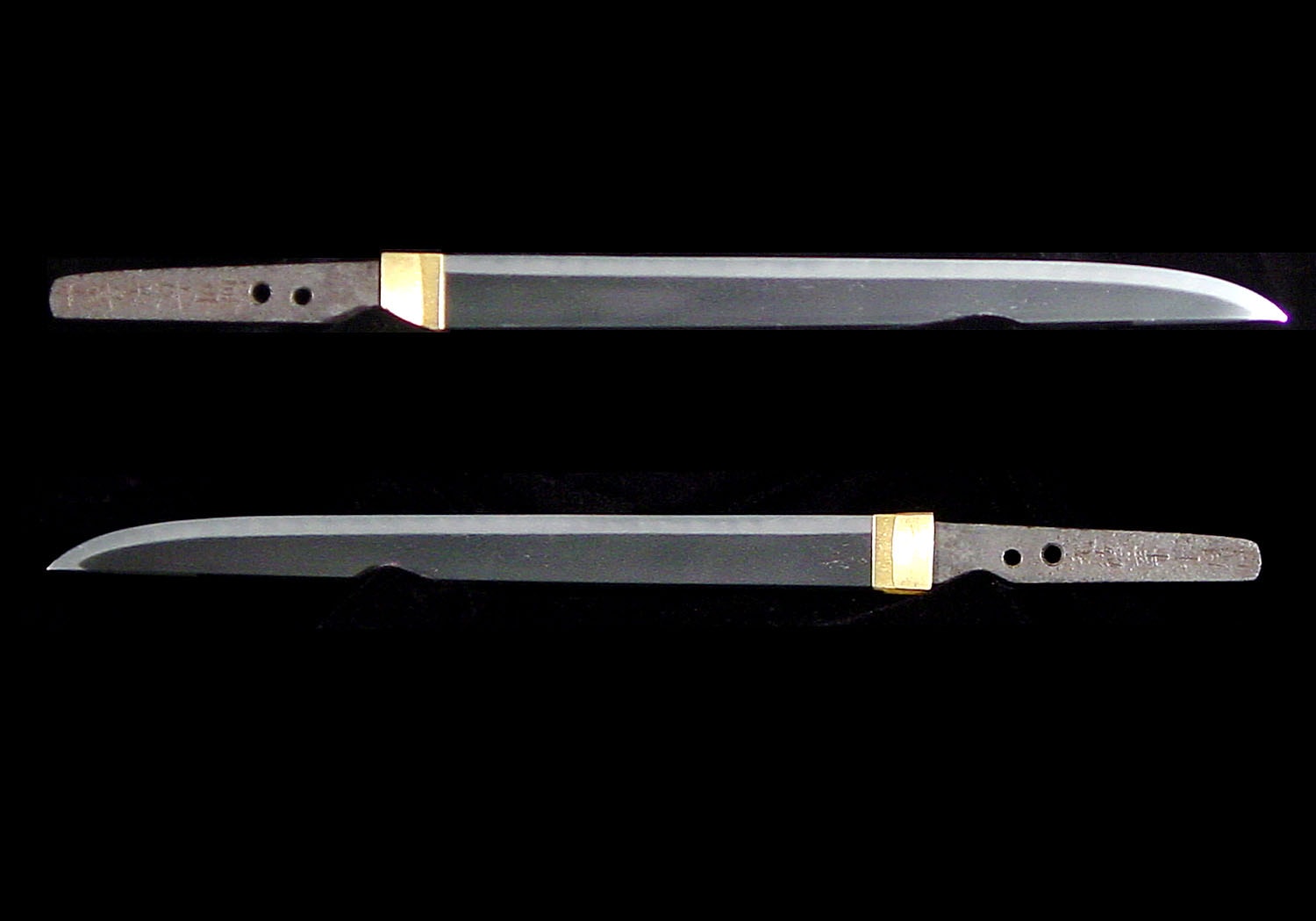
That bridge position defines his school role. The standing forward in his small irregular temper is read as the manner the earliest inherit, the published sources writing of one that "it seems that this manner of workmanship was later carried forward into Ko-". For so early a smith the works survive in relative number, and the Bijutsuhin commentary rates the hand plainly: his works are "comparatively numerous, and skilled". The record holds one singular document of form as well. Extant begin with the smiths of the early period, and the signed by Kageyasu, an blade of 53.5 cm with and , is likely the only one from his hand.
Twenty-seven designated works stand on record, and against the habit of so early an age the record is overwhelmingly signed, twenty-three signed blades against four unsigned. One blade holds Important Cultural Property rank, one is recorded in the Imperial collection, and eight are Bijutsuhin, certified across the 1930s and 1940s. The tier a private collector may realistically encounter is the six and eleven , though blades of this age are held long, and a signed reaching the open market is a rare event. Of recorded whereabouts, his blades rest at Kashima Jingu, the Tsuchiura City Museum, the Sano Art Museum and the Samurai Art Museum in Berlin. Eleven blades carry recorded provenance, and the roll is distinguished: the 'in-no-miya house, whose Prince Haruhito held the signed ; the Date of Sendai, with whom a remained from early times; a branch of the Yonezawa Uesugi, in whose line the descended; the Migita Mori; and the Yanagisawa, whose blade came as a grant from the shogunal house and carries an old of 1661.