NihontoWatch MonNihontoWatchBETA
MarketEncyclopedia
NihontoWatch Mon

NihontoWatchBETA

Market
Encyclopedia
Overview·Kantei·Dated Works·Designations·Provenance·Blade Forms·Signatures·School
OverviewKanteiDated WorksDesignationsProvenanceBlade FormsSignaturesSchool
  1. Schools
  2. Osafune
  3. Sōden-Bizen
  4. Shigezane

Osafune Shigezane

重眞

Tokujū
Vol. 2, No. 19 · Katana

Osafune Shigezane

重眞

45 ranked works

ProvinceBizenEraKenmu (1334–1338)PeriodNanbokuchōSchoolOsafuneTraditionBizen-denGeneration1stFujishiroJo-jo sakuToko Taikan900(top 10%)TypeSwordsmithCodeSHI458
1Tokubetsu Jūyō44Jūyō Tōken

Overview

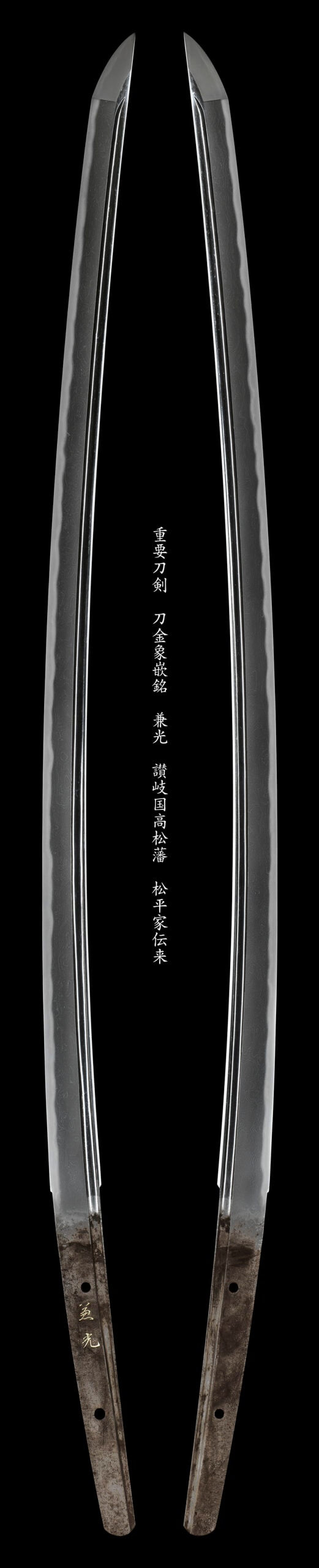
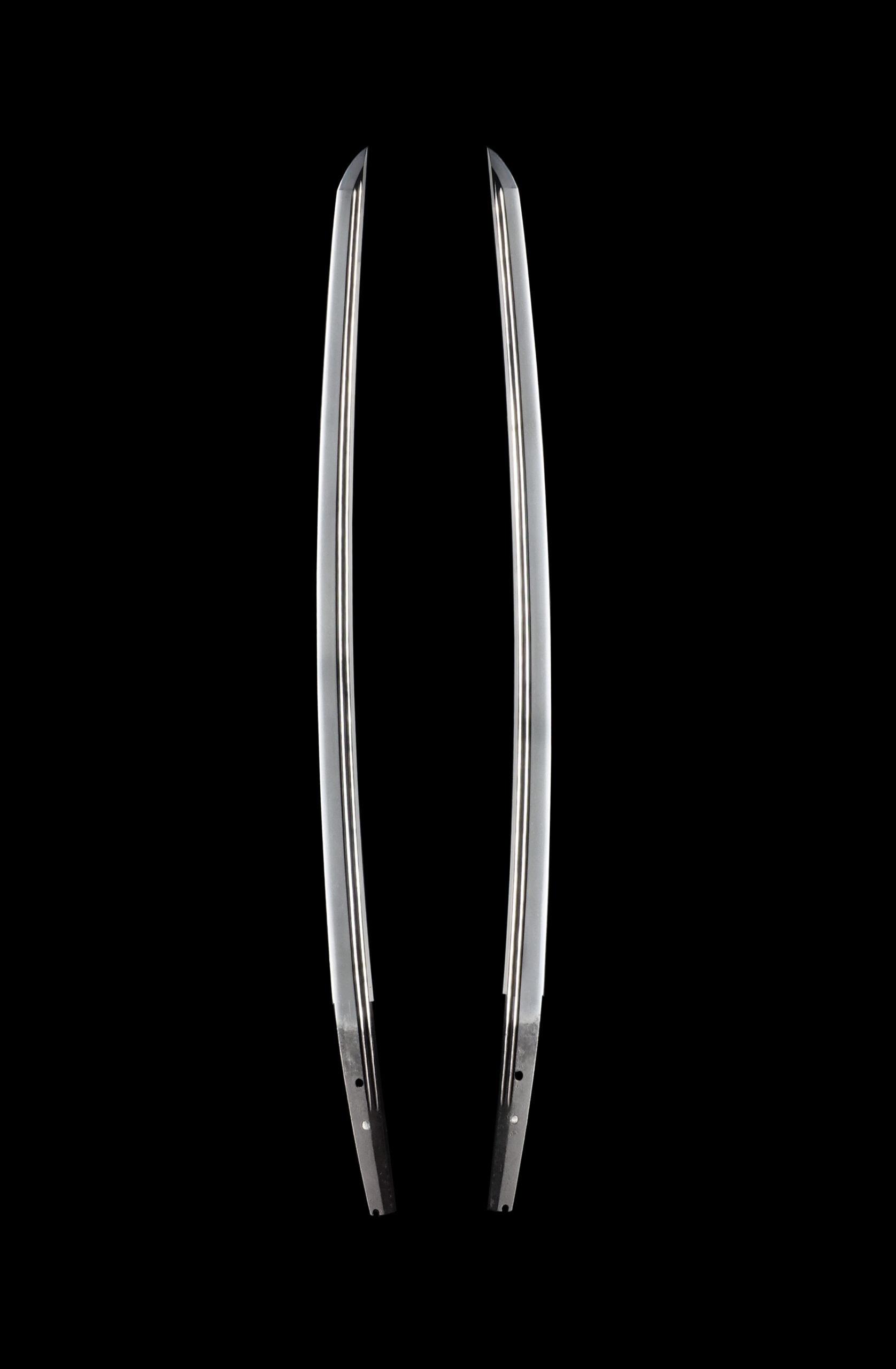
Shigezane is an swordsmith of the Motoshige line, working from the close of the period into the , whose earliest dated work is a slightly elongated of Karyaku 2 (1327) and whose latest reaches Enbun 4 of the , a documented span of thirty-three years. The published sources record him by old tradition as the younger brother, or in another account a pupil, of the first-generation Motoshige, and they place his hand squarely within the Soden- of the late workshop. His is not the brilliant clove-flower of the older ; it is the quieter, more angular manner of the Motoshige group, read by the published commentary as close to Motoshige with the character of mixed in. Authenticated signed examples are exceedingly few, so much of what survives under his name is judged from the bearing of the blade and the structure of its temper rather than from a signature.

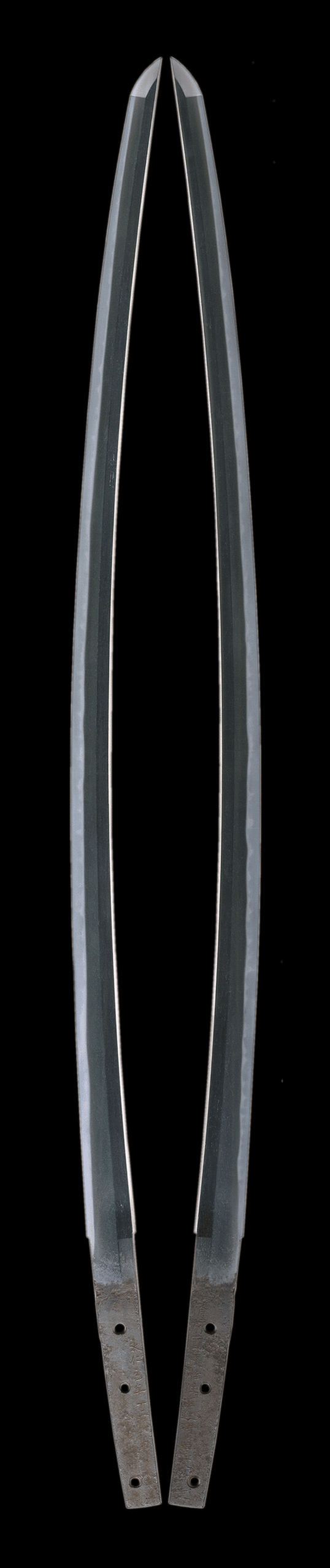
The feature that most distinguishes his work is the temper. Over a -toned base he sets angular , the squared shoulder that reads as Motoshige-line rather than the rounded clove of Fukuoka, joined by the that is the structural tell of the group, the asymmetric saw-tooth slanting toward the base. The line frequently leans , the elements inclining in reverse, and into it run and with gathering and fine and passing through. The tends to sink to a subdued , the calm, slightly dimmed temper that the published sources name again and again as the mark of the Motoshige hand. The enters in and turns back pointed, at times a or a sweep.

The keeps the attribution in even where the temper alone might read as Soden. He forges a standing , often run through with and mixed with and patches of , the thick and entering, the grain a little raised. Across it rises a clear , the bright reflection of old steel, sometimes a fainter along the edge. The steel on his finest pieces takes a bluish-black tonality with a cold clarity, the bright and the activity within the abundant, with places where coarse glitters strongly.

His record divides into three registers. The mainstream is the -toned, angular- work that the published sources read as close to Motoshige, the manner that anchors his many attributions. Against it stands a rare exception, the signed dated Enbun 3, of which the commentary remarks that the workmanship 'is not in a Motoshige-like manner' (作風は元重風ではなく), opening instead into a frank with pointed at the . The third register is the body of his surviving work, the greatly shortened , several originally large exceeding three , wide in body and shallow in in the mode. As with Motoshige, the published sources propose a first and a second generation across his dated span, the bold two-character signature taken for the first and the smaller signature cut 'Saemon-no-jo Shigezane' (左兵衛尉重真) for the second, a question still left for further study.

What sets him apart within the late is exactly what the judges name. His angular and , his temper and subdued , and the bright over his standing place him with Motoshige and apart from the rounder, showier of Fukuoka and Yoshioka, while the published sources read into his forging a manner that incorporates the character of , the workmanship they call 'a hand with character mixed in' (青江気質を混在させた出来口). On a judged to him the commentary allows that views of 'Unrui or Chikakage' (雲類、近景) are possible, the panel narrowing it to Shigezane only on close reading of the whole together with the detail of and , the clear leaving no doubt of .

For the collector Shigezane is a scarce signed name. Fujishiro grades him Jo-jo , and his record runs not through National Treasures or Important Cultural Properties, of which he has none, but through a single and many , forty-five blades across the two tiers. The value of his best pieces lies in their documentary weight: the with its folded-back long signature, called 'a representative work of this smith' (同工の代表作); the Karyaku 2 , the earliest of his dated works and a foothold for his study; and a preserved in its original form, 'a precious example that survives as a without having been reshaped into a sword' (薙刀のままで現存した貴重な作). Of recorded whereabouts a few are held in public collections, among them the Hayashibara Museum of Art and the Sword Museum, and the of his blades passes through and old houses, the Matsudaira family with Matsudaira Ukon-no- Terusada and the Takasaki domain, and the Niwa family on to Tokugawa Yoshinobu. A signed Shigezane comes to light only seldom, and a privately held example, especially an or dated one, is a notable thing for a collector to encounter, a document of how the Motoshige hand carried into the .
Kantei

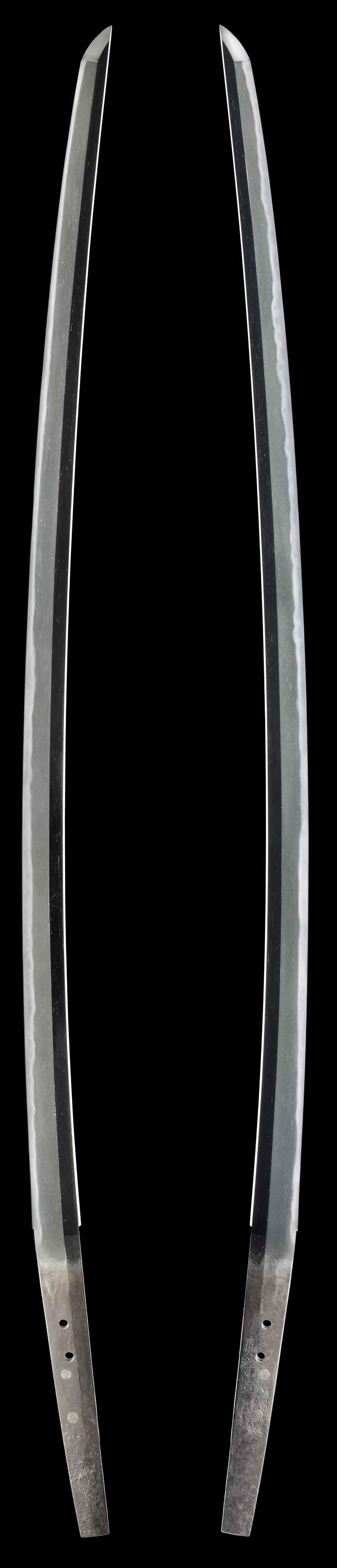
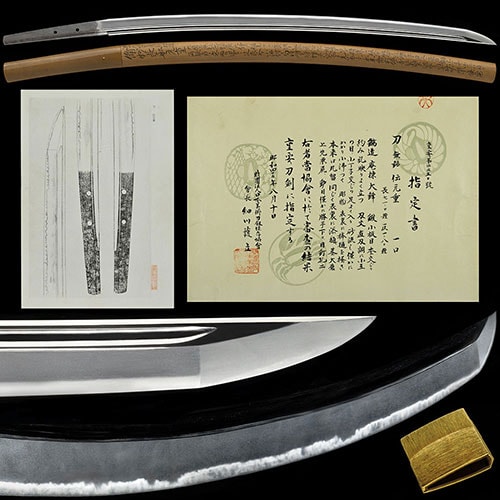
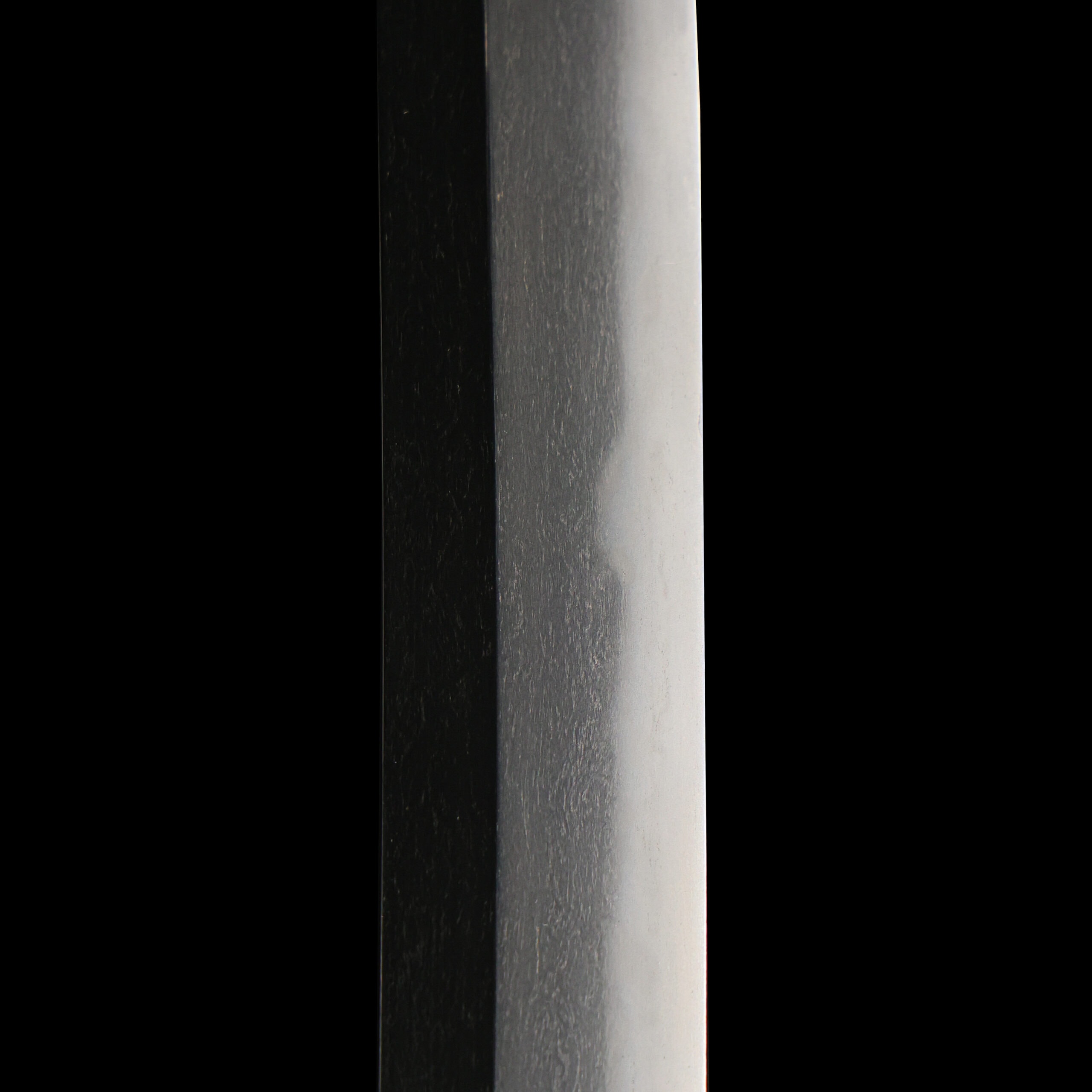
one Motoshige-line Osafune hand seen in three registers: the signed, dated mainstream in suguha-toned angular gunome and kataochi-gunome over a standing itame with midare-utsuri; the rare ubu tachi that opens into a frank choji-midare; and the o-suriage mumei katana attributed to him by era, school and the kataochi-gunome tell

Shigezane is an smith of the Motoshige line, traditionally recorded as the younger brother or pupil of the first-generation Motoshige, his dated work running from Karyaku 2 in the late period to Enbun 4 in the , so that the published sources, as with Motoshige, propose a first and second generation across that span. His recognized manner follows Motoshige closely: a standing mixed with and , thick with , a clear , over which he sets a -toned temper in which angular and the of the Motoshige group run, often turning , and well in, gathering, the tending to a subdued , the turning back pointed. The published sources read this Soden- workmanship as close to Motoshige with the character of mixed in. Signed and dated pieces are exceedingly few, so most of his record is the attributed to him by era, school and that tell, while one dated steps out of the Motoshige idiom into a frank . A slightly elongated dated Karyaku 2 is the earliest of his dated works and a documentary foothold for his study.

Diagnostic discriminators

unique vs Bizen choji-midare baseline (Fukuoka/Osafune mainstream)

unique vs his own choji-midare exception

Observation by phase

The Motoshige-line mainstream (signed and attributed)

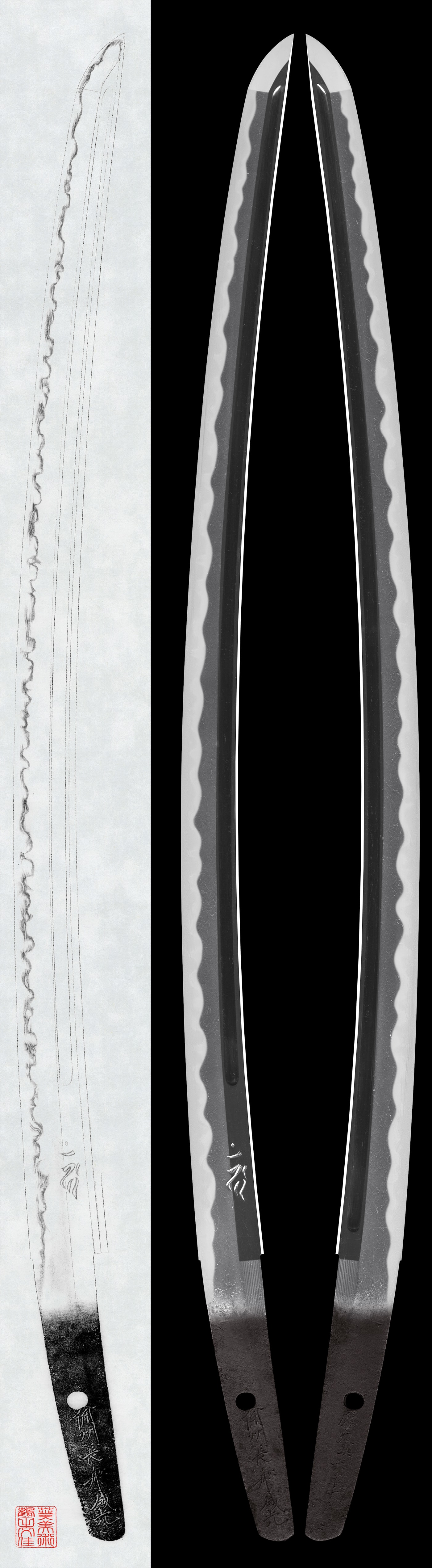
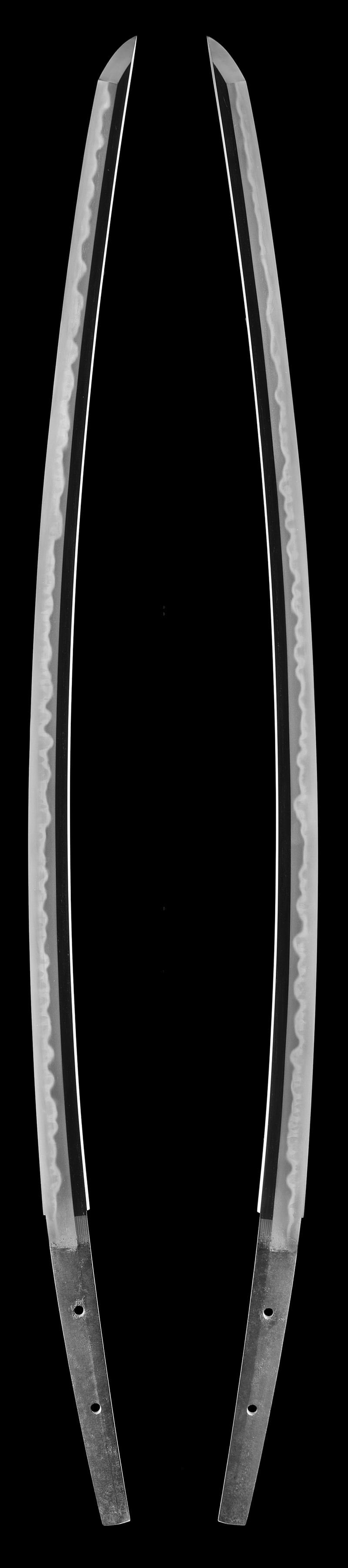
His central manner is the one the published sources call close to Motoshige. The ground is an , often standing and run through with , mixed with , thick and entering, over which a rises clearly. The temper sits in a tone but is built from : angular and the that is the Motoshige-group tell, run in linked series, with small and small mixed, and entering, gathering, and an overall reverse inclination. The tends to sink to a subdued , with fine and passing through. The enters and turns back pointed, at times a or a sweep. The published sources read the whole as Soden- of the Motoshige line with the character of mixed in.

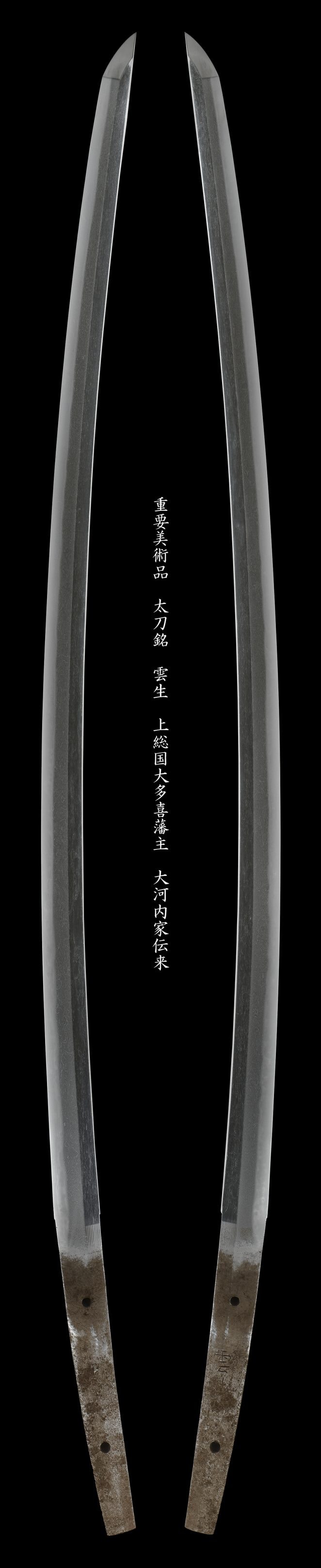
Sugata 姿
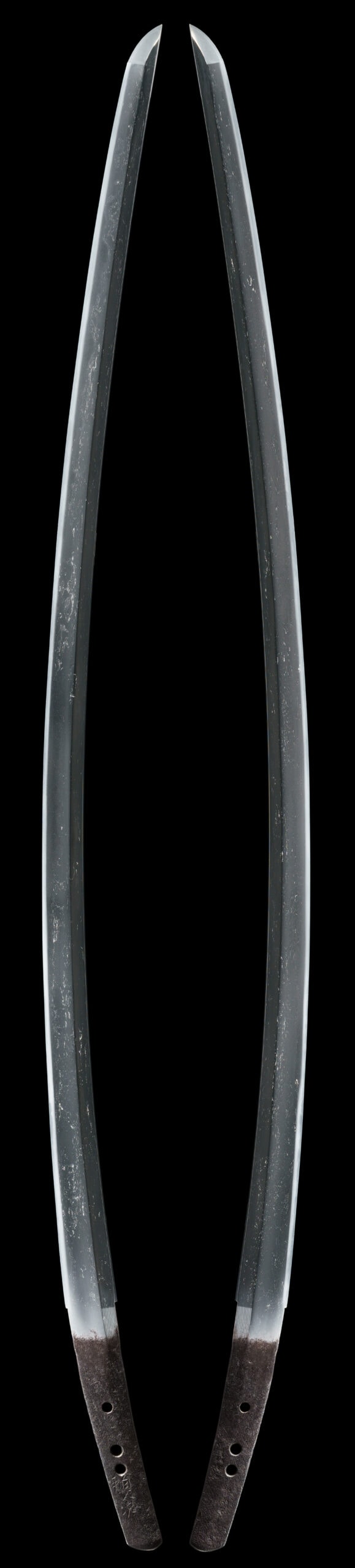
Jigane 地鉄
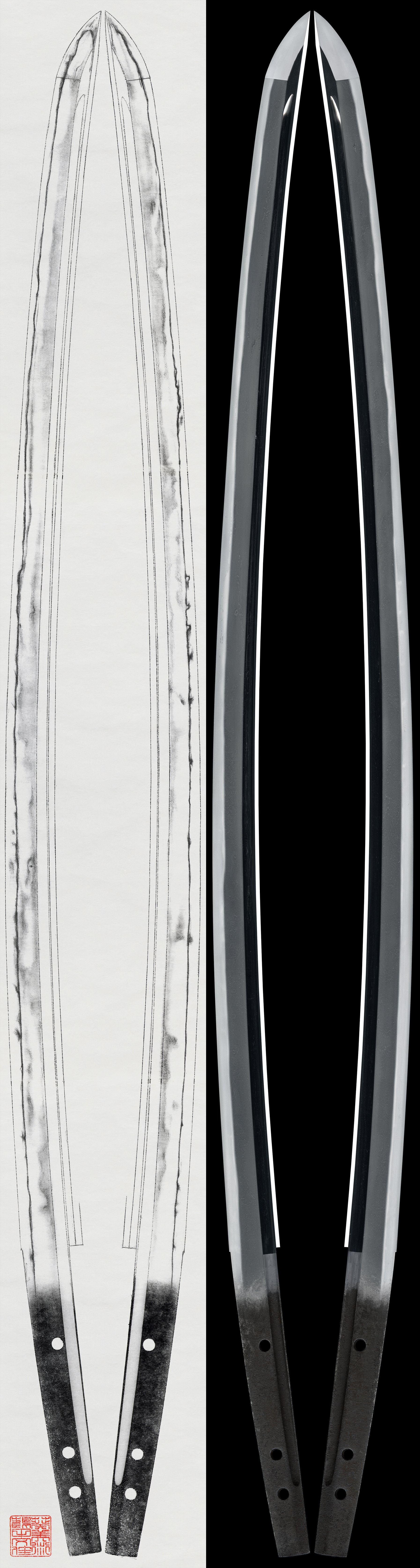
Hamon 刃文
Bōshi 帽子

The ubu dated tachi (the choji-midare exception)

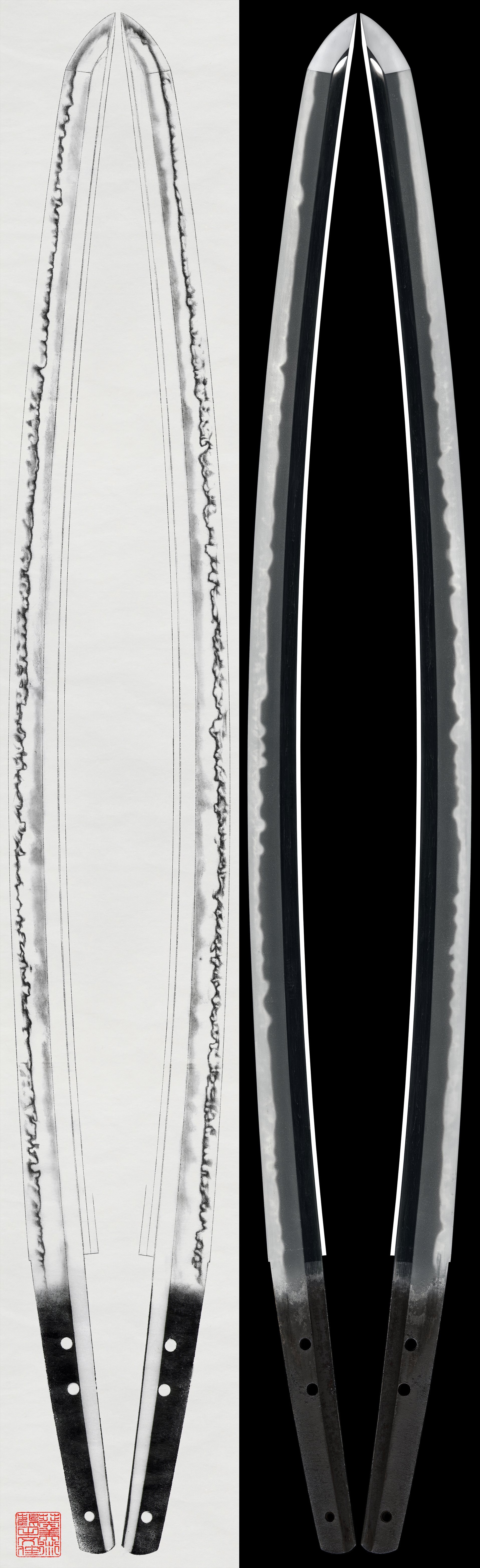
One , signed and dated of Enbun 3 steps out of the Motoshige idiom. Over a standing with the published sources find a workmanship that is expressly not Motoshige-like: a mixed with , and entering frequently, , and at the pointed are tempered, gathering in places, the with . It is held a rare and well-ordered piece, the signature with its dated reverse giving it high documentary value and showing that this hand could leave the base for a frank .

Jigane 地鉄
Hamon 刃文
Bōshi 帽子

The o-suriage mumei katana (attributed by era and the kataochi tell)

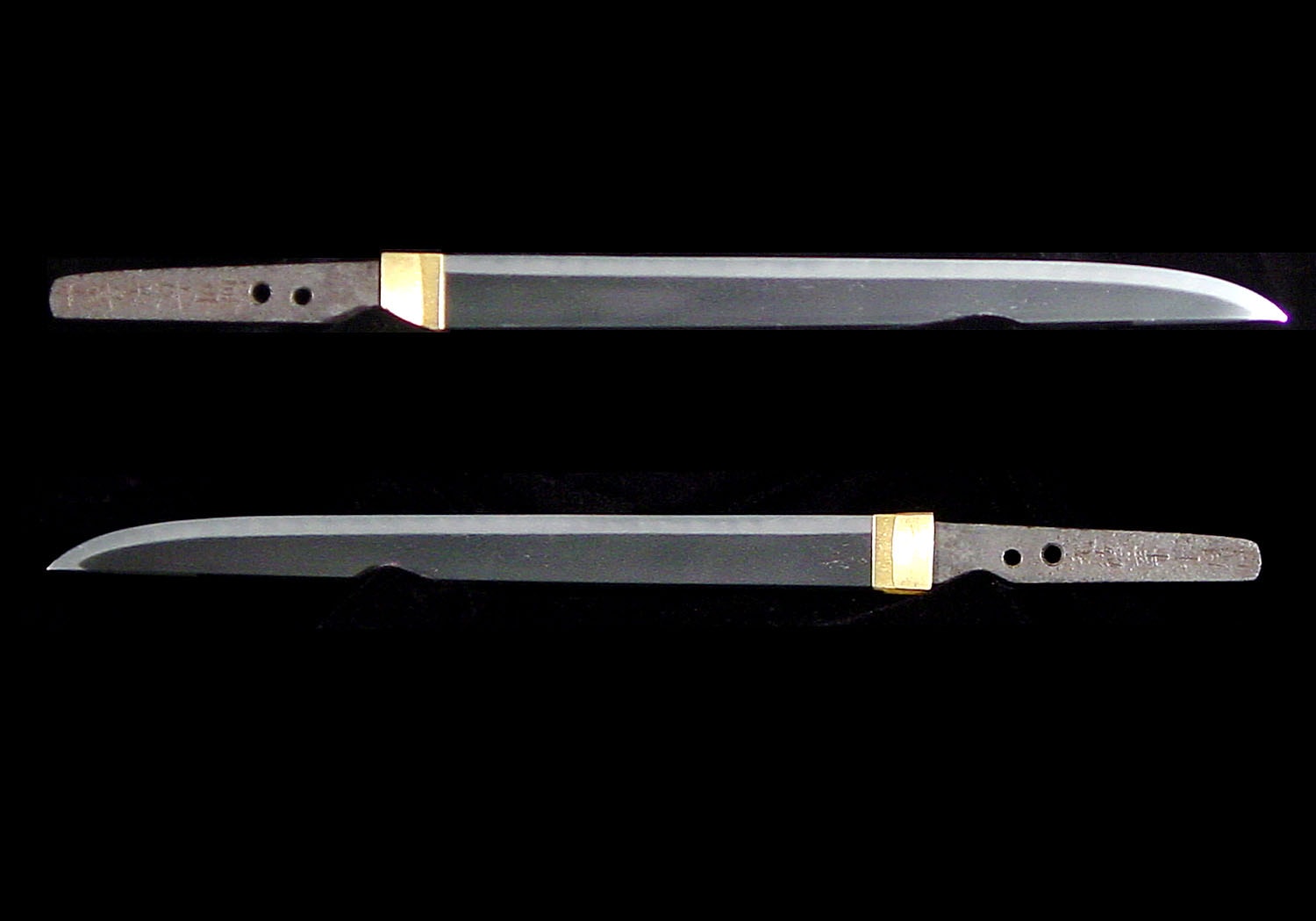
Because signed pieces are so few, most of his record is the , several originally large exceeding three . They are wide in body, shallow in , with an extended or large in the mode. Over a standing with the temper is a base in which and angular run, adhering, the subdued, the pointed in its turnback. The published sources affirm the attribution from the bearing and the Motoshige-group manner of the , while granting on one piece that views of Unrui or Chikakage are possible, the panel narrowing it to Shigezane on the whole and the detail of and .

Sugata 姿
Jigane 地鉄
Hamon 刃文
Bōshi 帽子
Scholarship

The published sources record that Shigezane's surviving dated works span thirty-three years, from Karyaku 2 in the late Kamakura to Enbun 4 in the Nanbokucho, and that, as with Motoshige, a first-and-second-generation theory is proposed across that span, the bold two-character signature taken for the first generation and the smaller Saemon-no-jo Shigezane signature for the second, a matter still awaiting study.

On one o-suriage mumei katana the published sources note that views of Unrui or Chikakage are possible, the panel determining Shigezane by close examination of the whole taihai together with the detailed workmanship of ji and ha, the clear midare-utsuri leaving no doubt of Bizen.

Dated Works

Years he was demonstrably active, proven by signed-and-dated blades

Active period
1327–1358
3 of 9 designated works carry a date
13201360
  1. 1327
    嘉暦二年Juyo session 34, item 61
  2. 1334
    建武元年Juyo session 46, item 93
  3. 1358
    延文三年Juyo session 15, item 163

Designations

Kokuhō—
Jūyō Bunkazai—
Jūyō Bijutsuhin—
Gyobutsu—
Tokubetsu Jūyō1
Jūyō Tōken44

Elite Standing

0.16 across 45 designated works

Top 13% among smiths

Provenance

5 documented provenances across certified works by Shigezane

Provenance Standing

1 works held in elite collections across 5 documented provenances

Top 77% among smiths

Raw score: 1.88 / 10

Blade Forms

Distribution across 45 ranked works

Signatures

Signature types across 45 ranked works

Currently Available

Osafune School

Other artisans of the Osafune school

  1. 1.Mitsutada光忠61designated
  2. 2.Nagamitsu長光2 for sale253designated
  3. 3.Kagemitsu景光2 for sale146designated
  4. 4.Kanemitsu兼光4 for sale237designated
  5. 5.Sanenaga眞長1 for sale64designated
  6. 6.Chikakage近景4 for sale86designated
  7. 7.Tomomitsu倫光1 for sale64designated
  8. 8.Kagemasa景政2 for sale22designated
  9. 9.Masamitsu政光4 for sale84designated
  10. 10.Motomitsu基光3 for sale41designated
  11. 11.Kagehide景秀23designated
  12. 12.Yoshimitsu義光35designated

Shigezane

Shigezane(重眞) was a Japanese swordsmith of the Osafune school in Bizen province, active during the Kenmu (1334-1338) ND period.

The work follows the Bizen-den tradition.

Designated works by Shigezane include 1 Tokubetsu Jūyō, 44 Jūyō.