NihontoWatch MonNihontoWatchBETA
MarketEncyclopedia
NihontoWatch Mon

NihontoWatchBETA

Market
Encyclopedia
Overview·Kantei·Honors·Designations·Provenance·Blade Forms·Signatures·Lineage·School
OverviewKanteiHonorsDesignationsProvenanceBlade FormsSignaturesLineageSchool
  1. Schools
  2. Ichimonji
  3. Fukuoka Ichimonji
  4. Nobufusa

Fukuoka Ichimonji Nobufusa

延房

Tokujū
Vol. 26, No. 19 · Tachi

Fukuoka Ichimonji Nobufusa

延房

5 ranked works

御番鍛冶
ProvinceBizenEraGenkyu (1204–1206)PeriodKamakuraSchoolIchimonji>Fukuoka IchimonjiTraditionBizen-denFujishiroJo-jo sakuToko Taikan2,500(top 1%)TypeSwordsmithCodeNOB9
2Jūyō Bijutsuhin
1Tokubetsu Jūyō2Jūyō Tōken

Overview

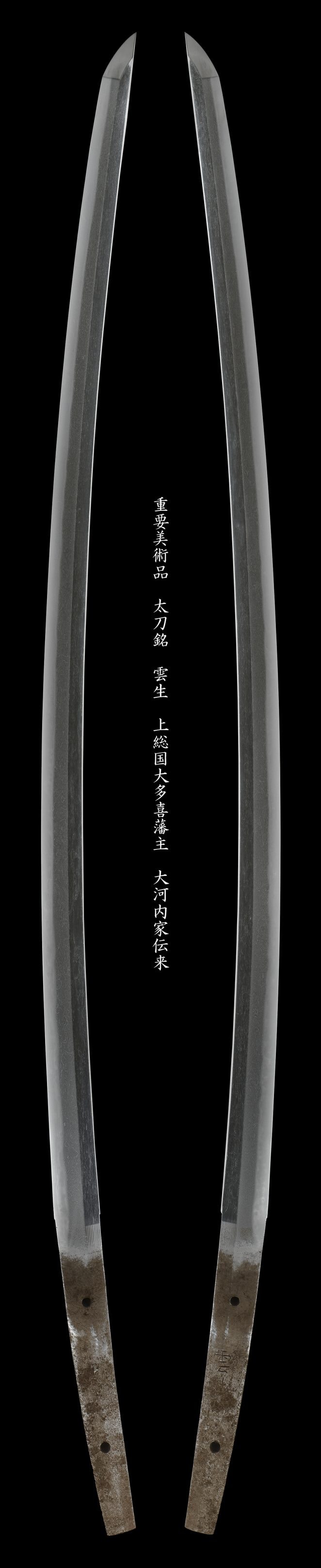
Nobufusa is an early smith of the Fukuoka school in , working in the opening decades of the period. The published sources count him among the , the swordsmiths who served Retired Emperor Go-Toba in monthly rotation, and place his activity around the Kenpō era. They are candid about how little survives: reliably signed works are exceedingly few, and the published record names only the at Hie Shrine, the formerly in the Imperial collection now in the Tokyo National Museum, and the Hayashibara beside a small number of others. The enters the name under both , around the Genryaku era, and Fukuoka , around the Kenpō era, and the published sources read the signed survivals as the Fukuoka hand, of the Ko- generation that followed Norimune. His is one of the first hands to carry the manner forward, and the survival of even a handful of signed blades makes him a document of how the school began.

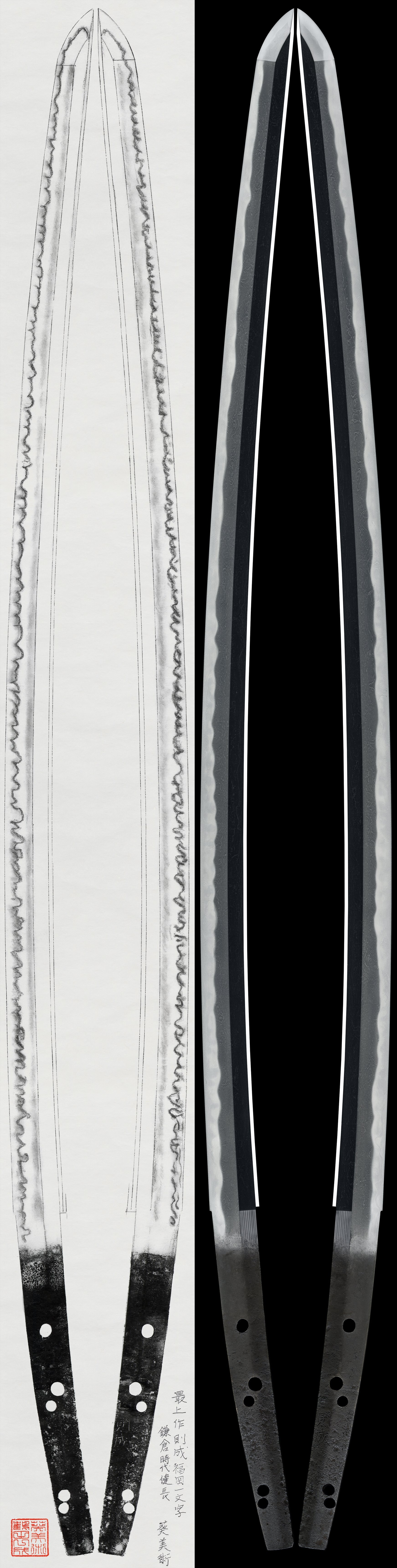
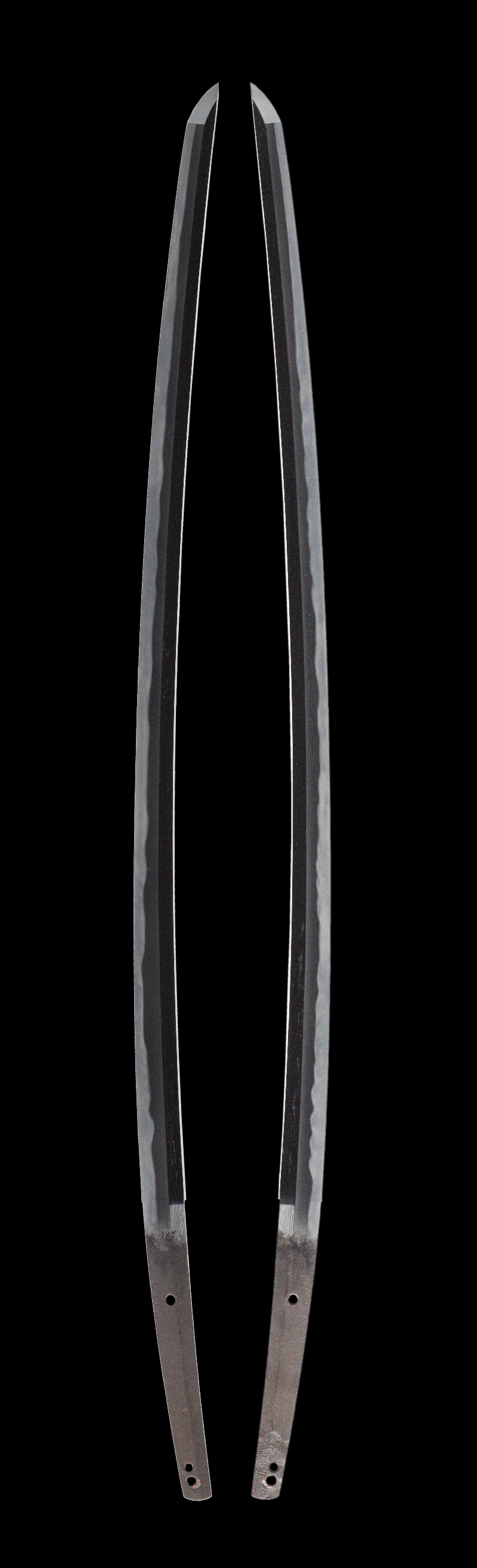
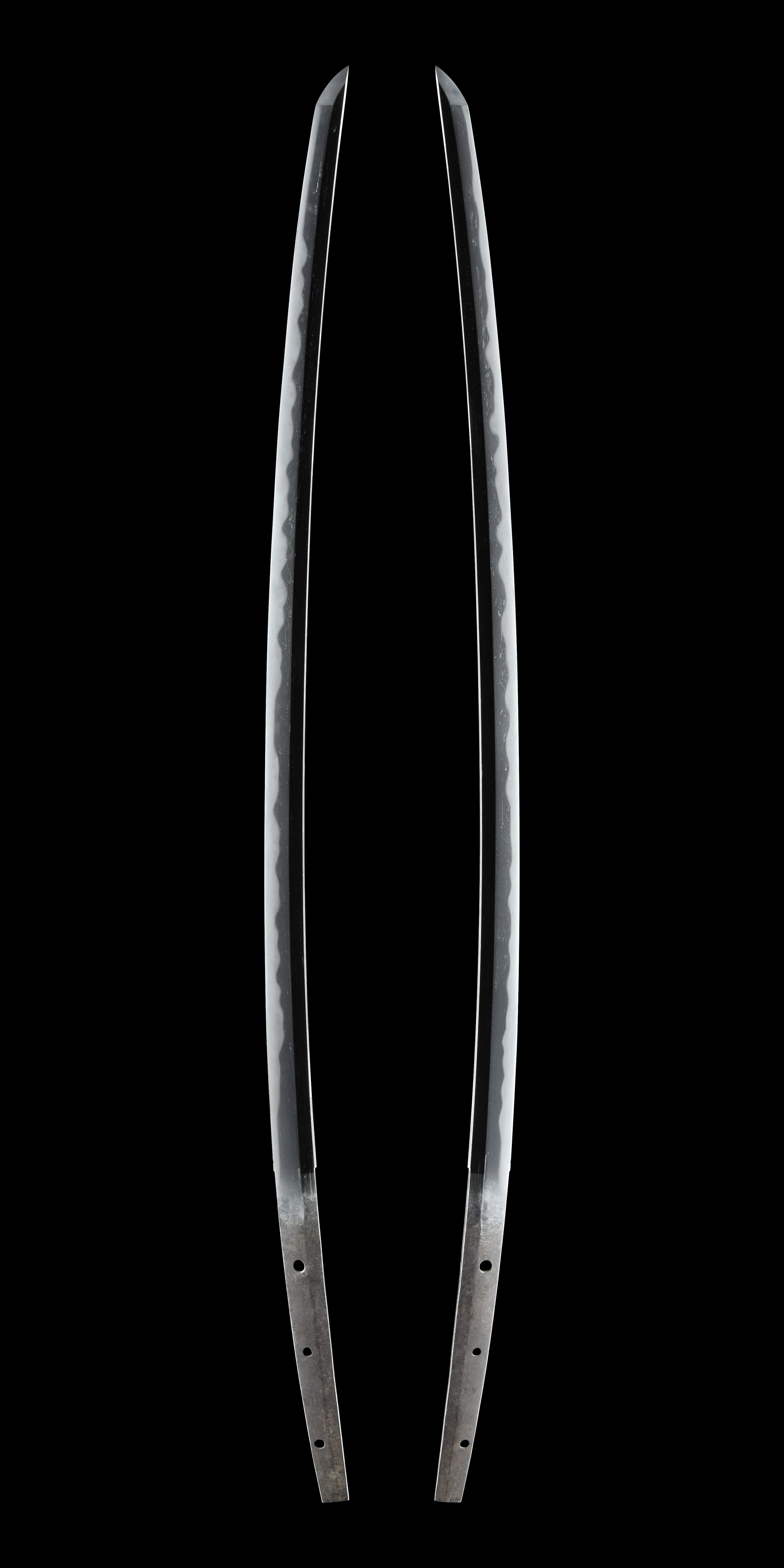
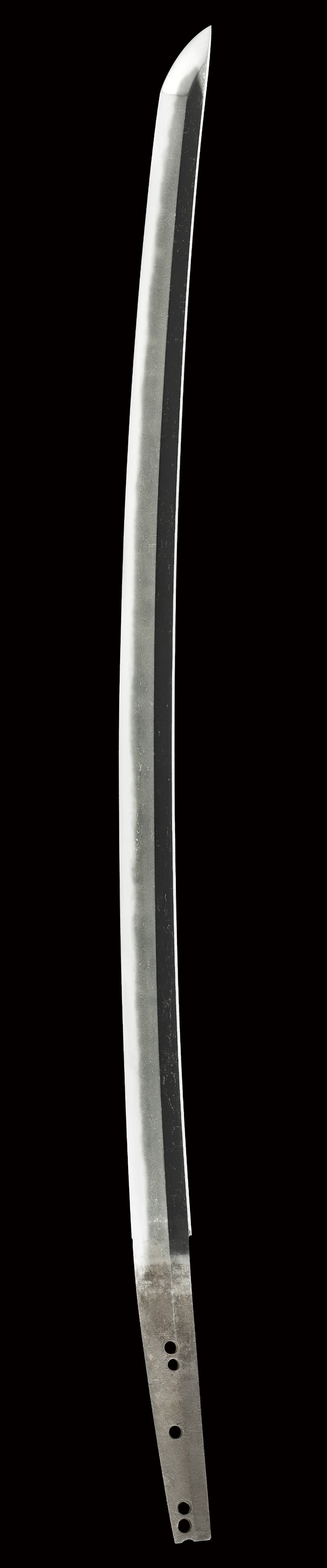
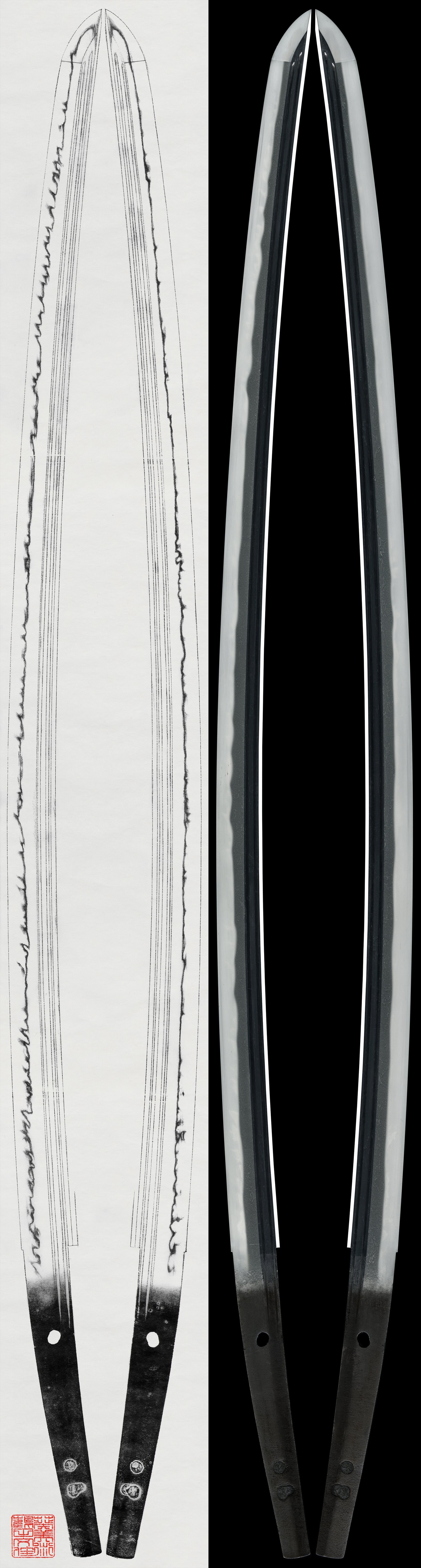
His recognized work is a slender of high , made and kept , the width narrowing toward a with the upper half inclining gently forward, an elegant shape the published sources read as the period's own. The hand itself is the tell. Over the he sets a -toned temper, calm rather than flamboyant, into which , and small are mixed, with and entering well, the -dominant and carrying only a little , at times subdued. This is the quiet, archaic register the published sources hold apart from the showy of the mid- school, and on one they appraise the and together and conclude the blade is "to be judged the work of a smith of the Ko- lineage" (古一文字派の刀工と鑑せられる). The runs straight to a small round, on one finishing in a .

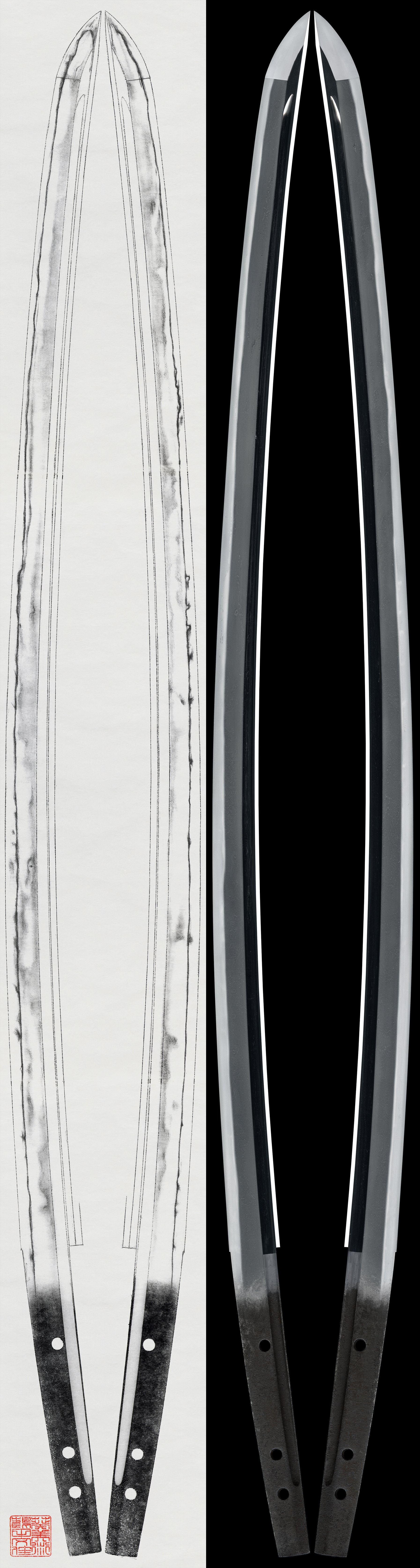
The is the constant beneath that quiet temper. It is an , well forged and at times mixing , packing into a dense where the forging tightens, with and and an that stands clearly on every example. On the the reflection comes as a , rising from dark patches in the steel, which the published sources say demonstrates the height of his forging technique; on the Kujō-family pair it stands as a . This is the old- he shares with the school, but the brightness of the reflection and the gathering of small on his edge set him apart from the plainer smiths around him. The activity is carried in the and rather than in towering clusters, the whole reading archaic and graceful rather than ornamental.

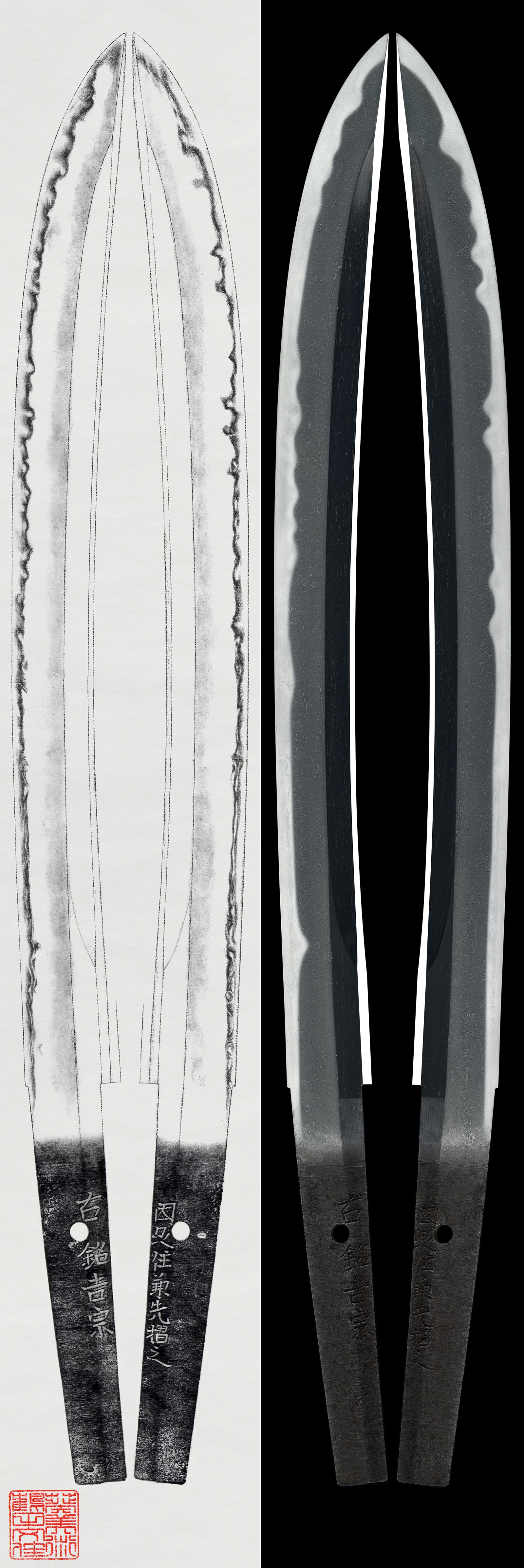
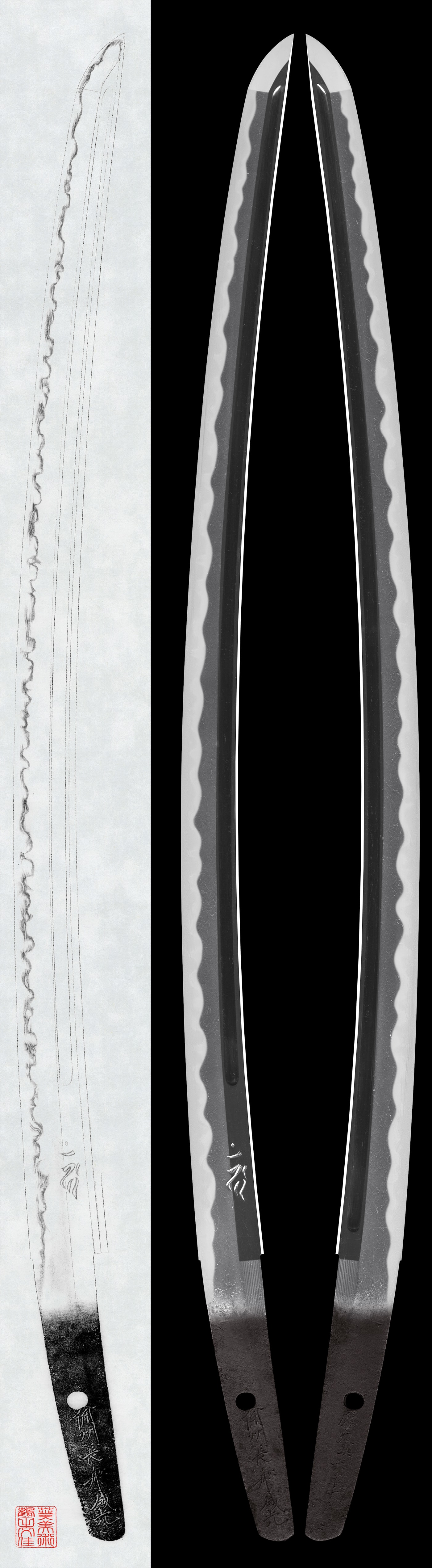
Within the signed work the published sources draw a careful internal distinction. The body of it is the -toned just described, but the pair of Important Art Objects long held in the Kujō family open into something fuller: there the temper begins from a at the base and proceeds as a , and entering abundantly, one of the two worked in with and . The published sources hold the two by the hand and call it one of their highlights that "the rises at the boundary" (焼出しが区際). The remaining face of his record is the whose original signature was preserved as a ; there the becomes a packed with the standing, the base mixing with abundant internal activity, and the published sources prize it as a scarce signed example, accompanied by a Kōchū of Kyōhō 1, in which "the archaic virtues of early are well displayed in the and " (古雅な美点がよく表示されている).

What separates the early Nobufusa from his neighbours is exactly what the judges name. He stands at the threshold of the school, before its great flowering into the flamboyant of the mid- Fukuoka, Yoshioka and Katayama hands; his temper is read instead in the older, calmer key, the bright with and the edge gathering only small . The published sources also record the old dispute over whether the smith writing 延房 is the as the one signing 信房, and follow the view, dominant today, that they are separate individuals of the early Fukuoka group. On the they note that the signature closely resembles that of the Kujō-family Important Art Object, a kinship of that makes the blade, in their words, "a sword of high documentary value" (資料的価値の高い一口).

For the collector he is a rare early name rather than a market presence. Fujishiro grades him Jō-jō , and the Tōkō Taikan places his work high among hands. He has no National Treasures and no Important Cultural Properties of his own on record; his surviving designated work runs instead through the and tiers and the prewar Jūyō Bijutsuhin, only a few designated blades in all, and the is one the published sources call "among the foremost works by the smith" (同工屈指の作). His blades are preserved in institutions and long-held collections grounded in their own provenance: the Tokyo National Museum and the Hayashibara Museum of Art hold by him, the Okayama Museum of Art Foundation another, and the recorded provenance runs through the Kujō family, the Kishū Tokugawa, the Ōmura house, and the Shōwa collector Kazama Yōkichi. With so few signed pieces in existence and most held rather than traded, a signed Nobufusa comes to light only rarely; a privately held example is among the more notable things an early- collector could hope to encounter.

Kantei

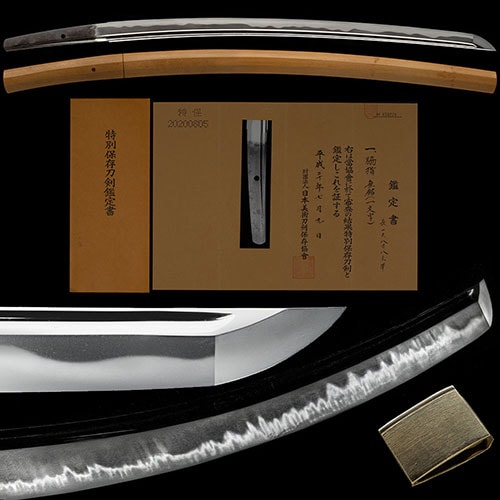
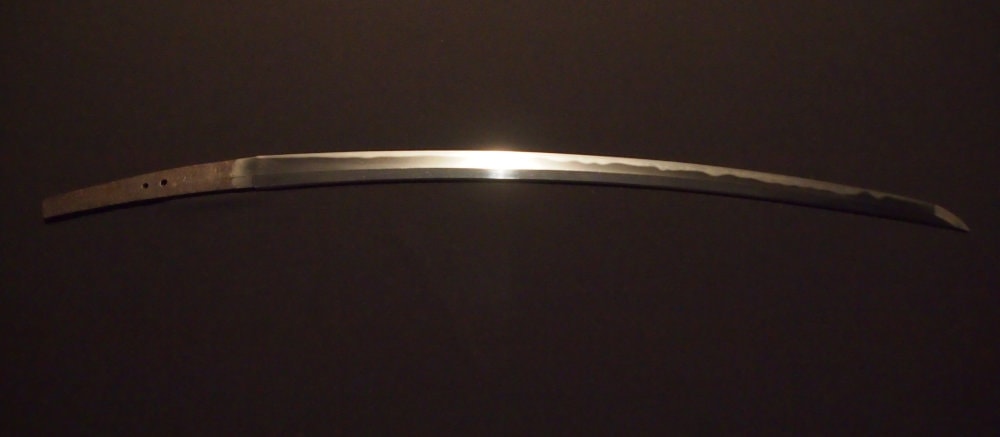
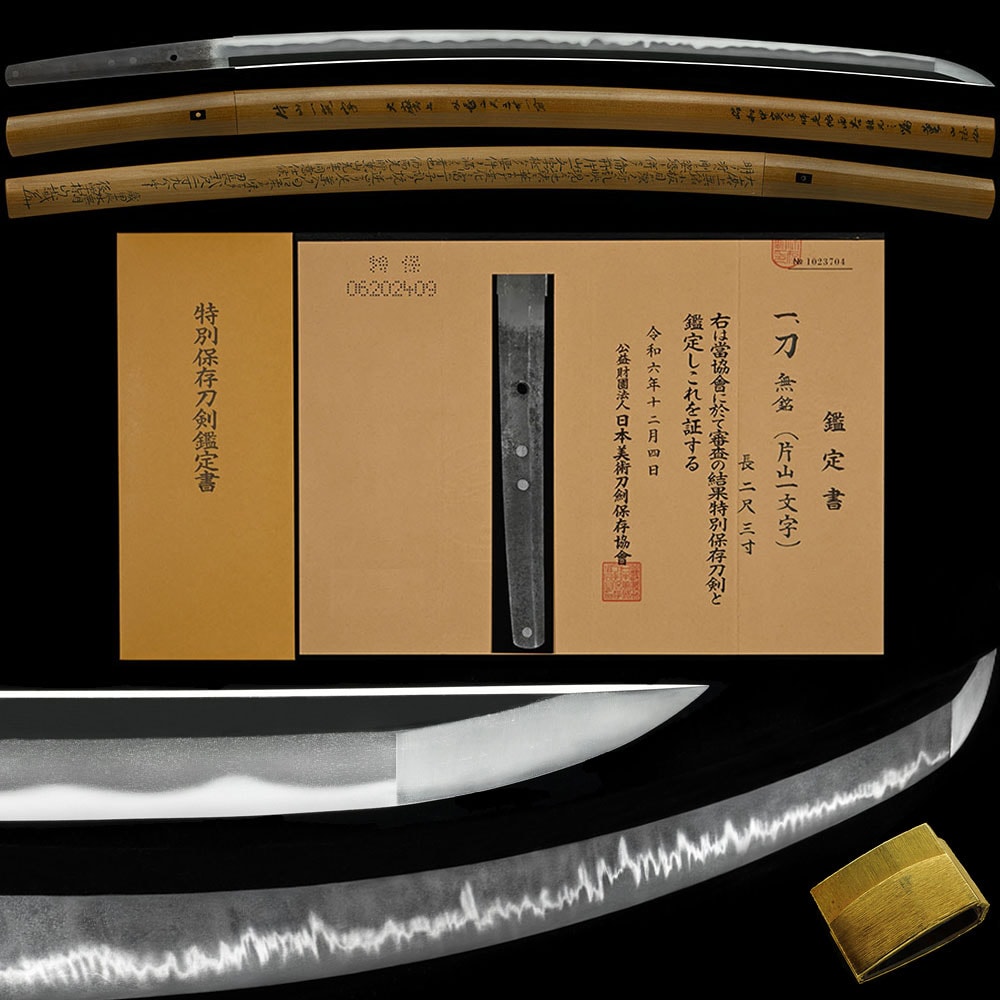
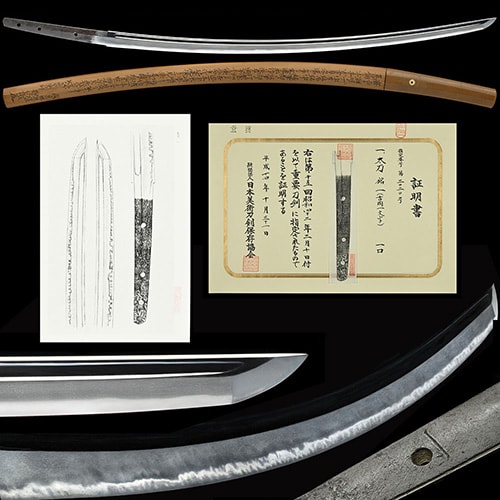
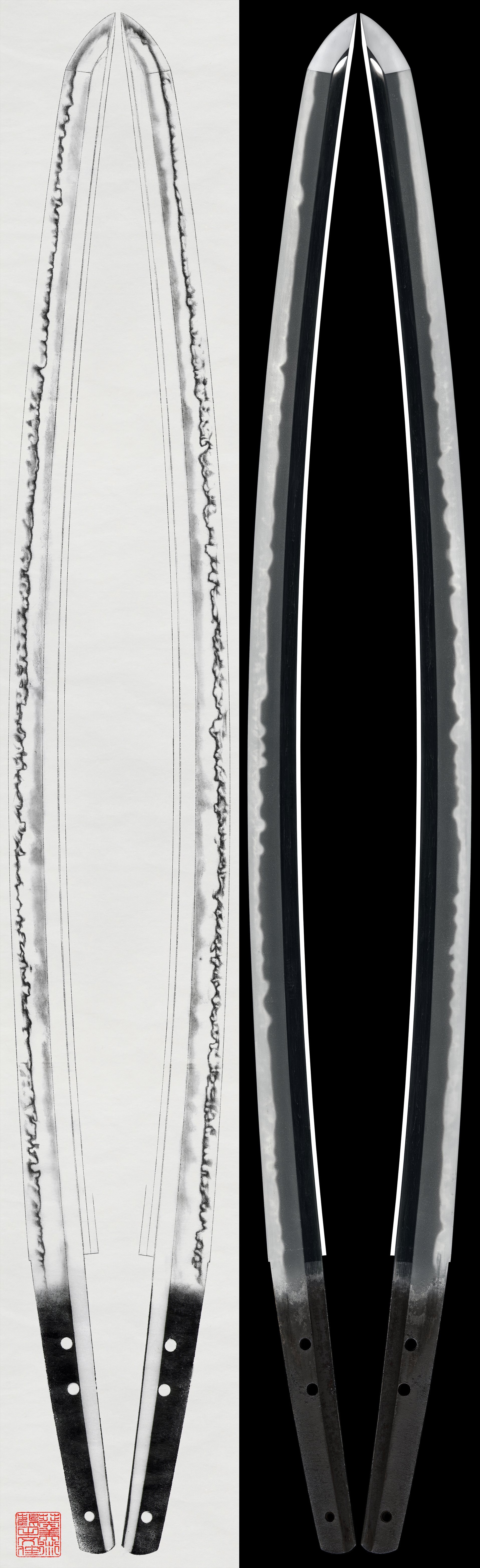
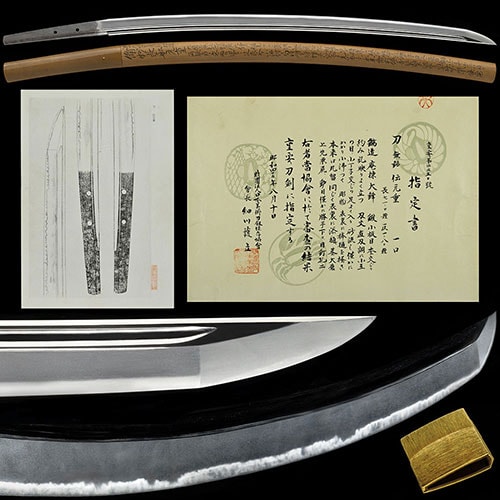
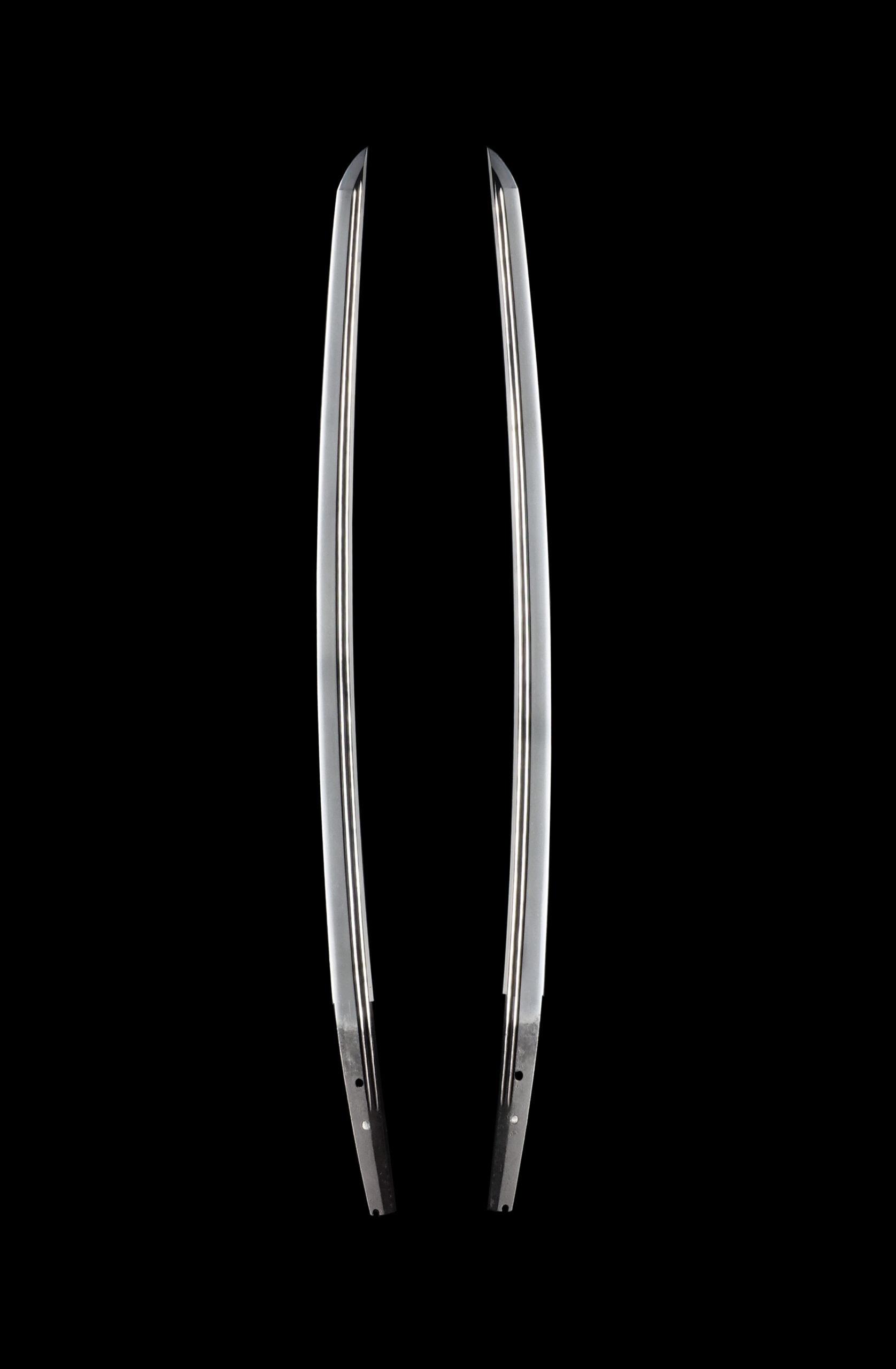
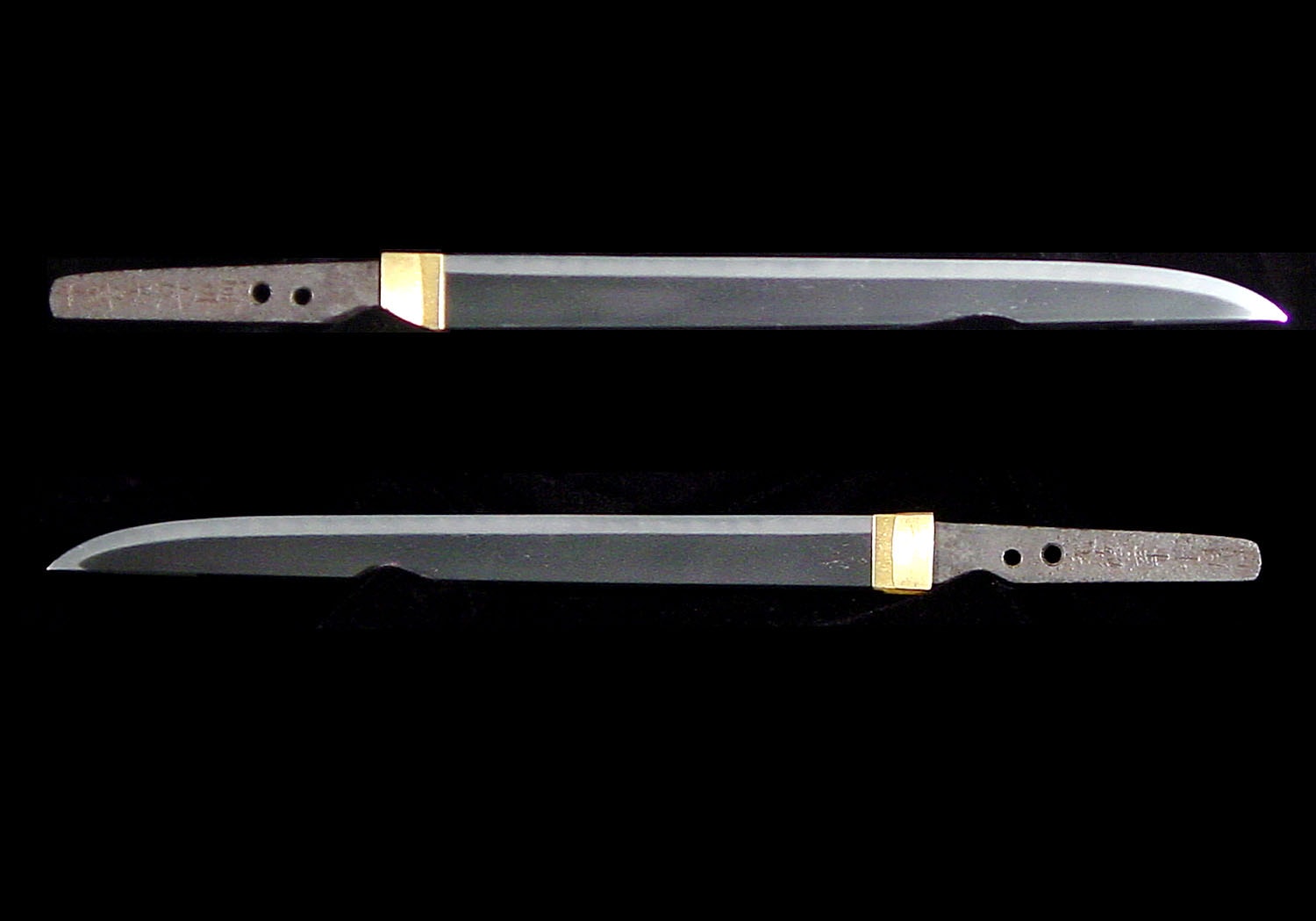
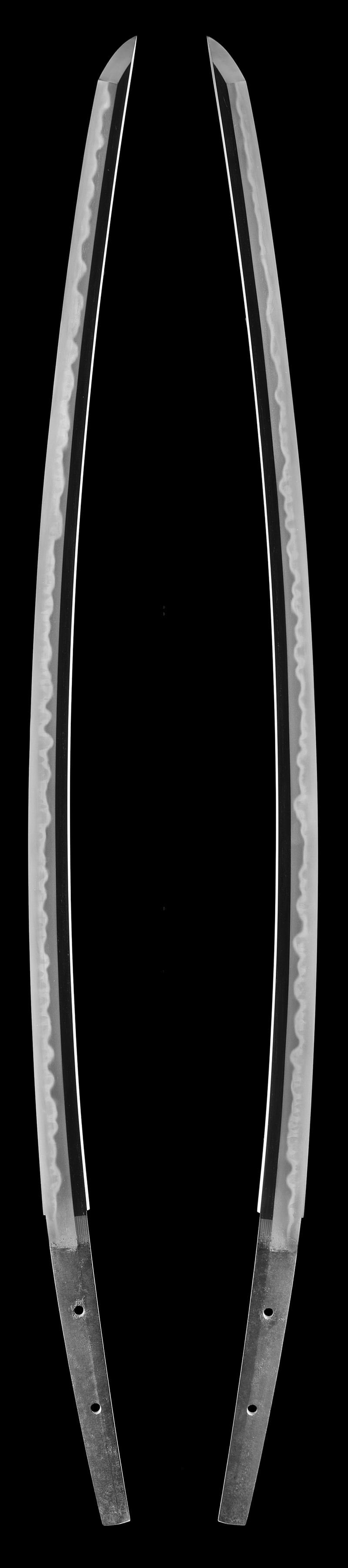
two faces of one scarce Ko-Ichimonji hand: the ubu, signed slender tachi of high koshizori with its archaic suguha-toned temper of ko-midare and ko-choji over a refined itame and standing utsuri, set against the o-suriage gaku-mei katana attributed to him as early Fukuoka Ichimonji

Nobufusa is an early Fukuoka smith of , counted among the who served Retired Emperor Go-Toba, his period of activity placed by the around the Kenpo era. Reliably signed works are exceedingly few, the published sources naming only the at Hie Shrine (Important Cultural Property), the formerly in the Imperial collection now in the Tokyo National Museum, and the Hayashibara (Important Art Object) beside a small number of others, so a signed Nobufusa is among the scarcest of the early names. His recognized hand is an elegant, slender of high running to a , made and kept : over an ground, well forged and packed, with , and an that stands clearly, he sets a -toned temper into which , and small are mixed, and entering well, -dominant with a little , the straight to a small round or a sweep. The published sources read this archaic, graceful manner as the work of the Ko- lineage, and call one signed among the foremost works by the smith. The other face of his thin record is the , attributed to him as early Fukuoka and carrying a Kochu .

Diagnostic discriminators

67% of his works · 6.7× vs mid-Kamakura Fukuoka Ichimonji (the flamboyant choji-midare hand)

unique vs later Ichimonji juka-choji (the showy clove)

Observation by phase

The ubu signed tachi (his recognized prime)

His finest record is the , signed kept in its original form: slender in build, the width difference between base and tip opening, high in with , the upper half inclining forward to a , an elegant archaic shape that the published sources read as the period's own. The ground is a well-forged , in one Tokuju mixing closely and packing, with , entering, and an standing clearly, the Tokuju piece carrying a grown out of dark patches that displays the height of his forging. Over it the temper is -toned, calm rather than flamboyant, mixing , and small , and entering well, -dominant with a little adhering, the at times subdued. The runs straight to a small round, on one a . The published sources call the Tokuju one of the foremost works by the smith, its close to the Kujo-house Important Art Object, and a document of high value.

Sugata 姿
Jigane 地鉄
Hamon 刃文
Bōshi 帽子

The more decorative signed tachi (the Kujo Jubi pair)

A second, more decorative register stands within the signed body of work, recorded on the pair of Important Art Objects long held in the Kujo family. Here the mixes and is well refined, the present and the standing, but the temper opens from a at the base into a fuller , and entering abundantly, on one of the pair worked in with and . The published sources hold the two by the hand, both showing a rising at the boundary as one of their highlights, and an early Fukuoka work. They note the old dispute over whether the smith writing 延房 is the as the one writing 信房, and follow the view that they are separate hands.

Jigane 地鉄
Hamon 刃文

The o-suriage gaku-mei katana (early Fukuoka attribution)

The remaining face of his record is the whose original signature was preserved as a , slender with somewhat applied and a . The ground is mixed with , becoming overall a packed , with and the standing. The temper is -toned with mixed in, and entering thickly, adhering well, the internal activity within the temper abundant, the straight to a small round. The published sources affirm it as early , the and clearly presenting the archaic virtues of the school, and prize it as a scarce signed example carrying a Kochu of Kyoho 1.

Sugata 姿
Jigane 地鉄
Hamon 刃文
Bōshi 帽子
Scholarship

The published sources record that the Nobufusa name appears in the Meikan under both Ko-Bizen, about the Genryaku era, and Fukuoka Ichimonji, about the Kenpo era, and read the signed survivals as the Fukuoka Ichimonji hand. They note the old dispute over whether the smith writing 延房 is the same as the one writing 信房 and follow the view, dominant today, that they are separate individuals of the early Fukuoka Ichimonji group.

On the Kujo-house Important Art Object pair the published sources hold the two tachi by the same hand, both showing a yakidashi rising at the machi boundary as one of their highlights, and judge them early Fukuoka Ichimonji work.

Honors

御番鍛冶Goban Kaji (Go-Toba's Imperial Forging Rotation)

March rotation

Master smiths summoned by Retired Emperor Go-Toba (後鳥羽上皇) to serve monthly rotations forging swords at the imperial court, ca. Jōgen–Jōkyū (1208–1221). A cross-school honor: each smith retains his own school (, Fukuoka , , etc.). The linked school NS- holds only Go-Toba's own Kiku gyōsaku blades.

View full roster→

Designations

Kokuhō—
Jūyō Bunkazai—
Jūyō Bijutsuhin2
Gyobutsu—
Tokubetsu Jūyō1
Jūyō Tōken2

Elite Standing

0.12 across 5 designated works

Top 16% among smiths

Provenance

5 documented provenances across certified works by Nobufusa

Provenance Standing

1 works held in elite collections across 5 documented provenances

Top 78% among smiths

Raw score: 1.85 / 10

Blade Forms

Distribution across 5 ranked works

Signatures

Signature types across 5 ranked works

Currently Available

Lineage

Nobufusa
Students (3)
  1. 1.Muneyoshi宗吉12designated
  2. 2.Nobumasa信正4designated
  3. 3.Nobumasa延正1designated

Fukuoka Ichimonji School

Other artisans of the Fukuoka Ichimonji school

  1. 1.Sukezane助眞44designated
  2. 2.Yoshifusa吉房1 for sale46designated
  3. 3.Norimune則宗8designated
  4. 4.Yoshihira吉平17designated
  5. 5.Sukekane助包6designated
  6. 6.Norikane則包7designated
  7. 7.Tamekiyo爲清5designated
  8. 8.Yoshimochi吉用10designated
  9. 9.Tameto爲遠5designated
  10. 10.Yoshimune吉宗6designated
  11. 11.Naganori長則17designated
  12. 12.Ichi一7designated

Nobufusa

Nobufusa(延房) was a Japanese swordsmith of the Fukuoka Ichimonji school in Bizen province, active during the Genkyu (1204-1206) period.

The work follows the Bizen-den tradition.

Designated works by Nobufusa include 1 Tokubetsu Jūyō, 2 Jūyō.