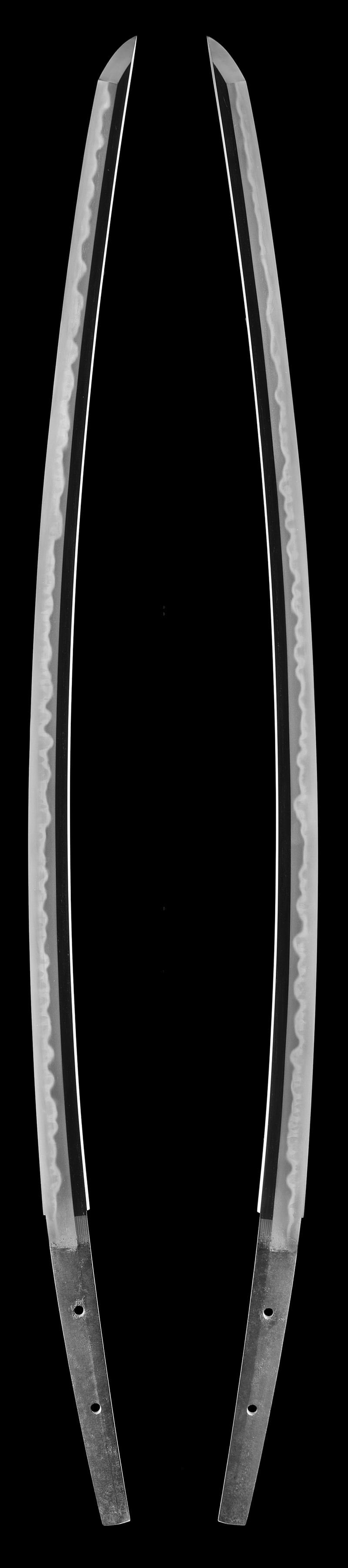
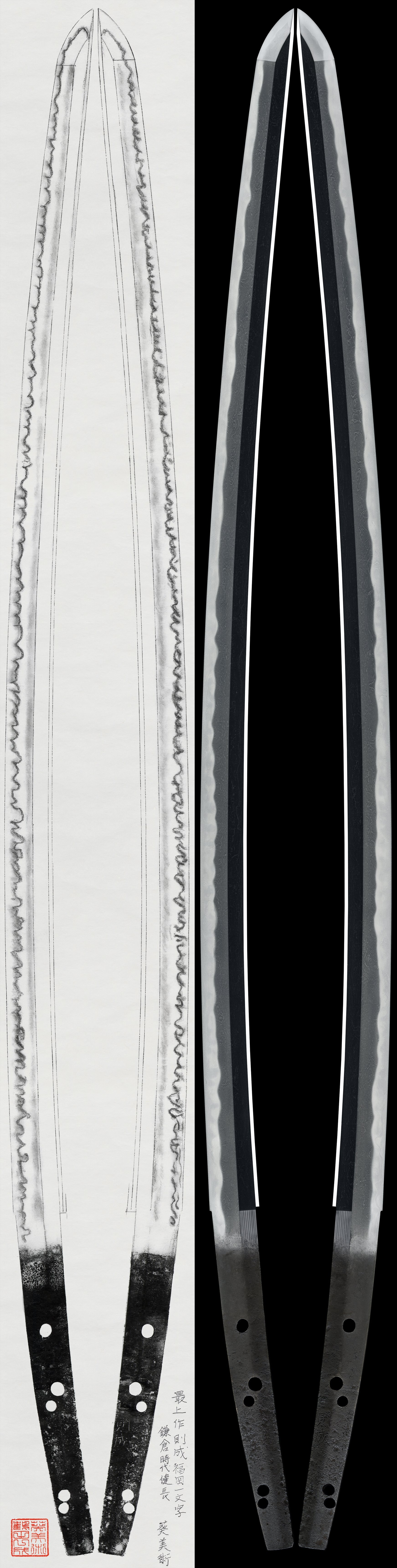
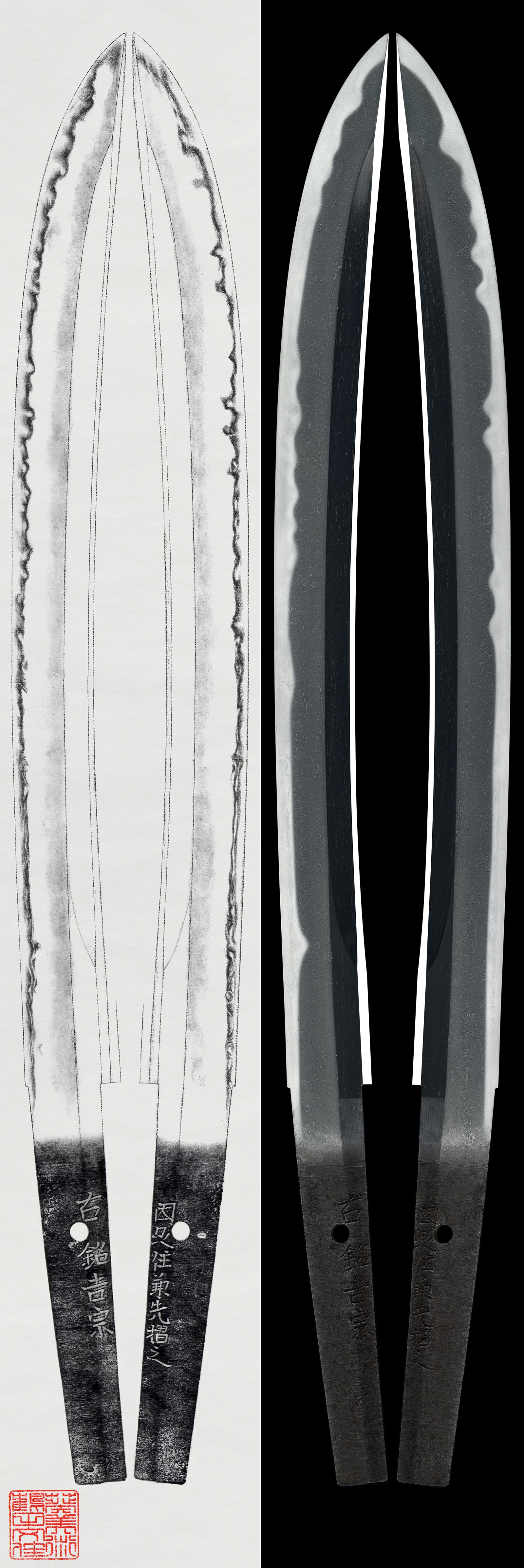
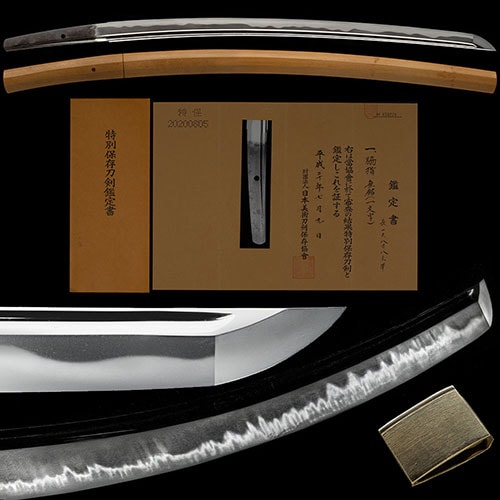
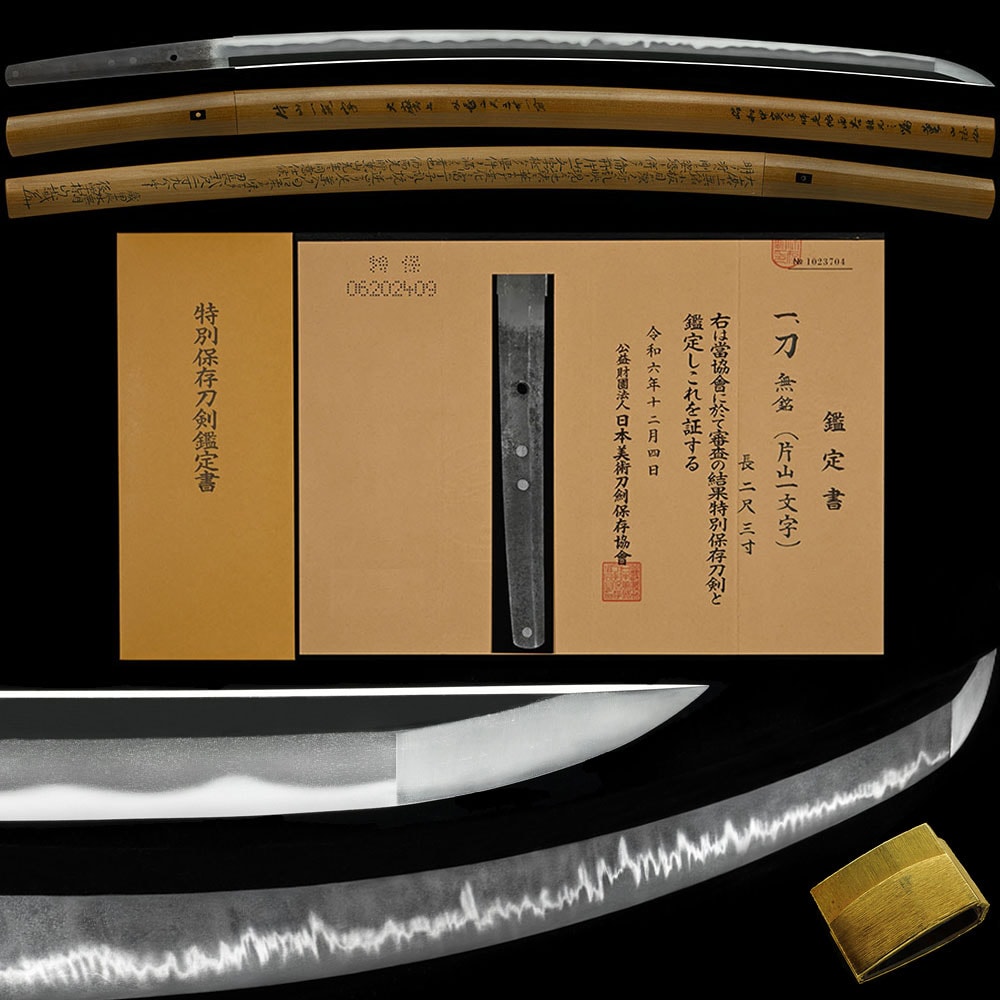
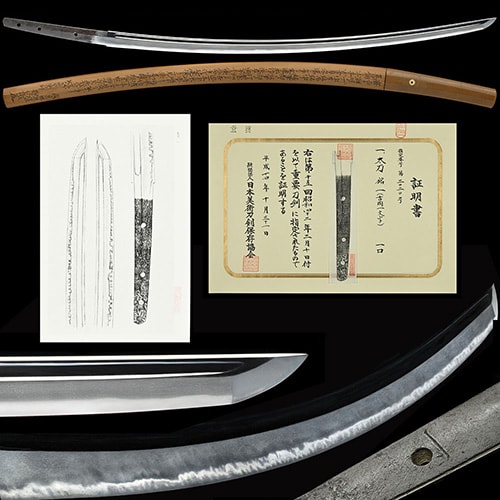
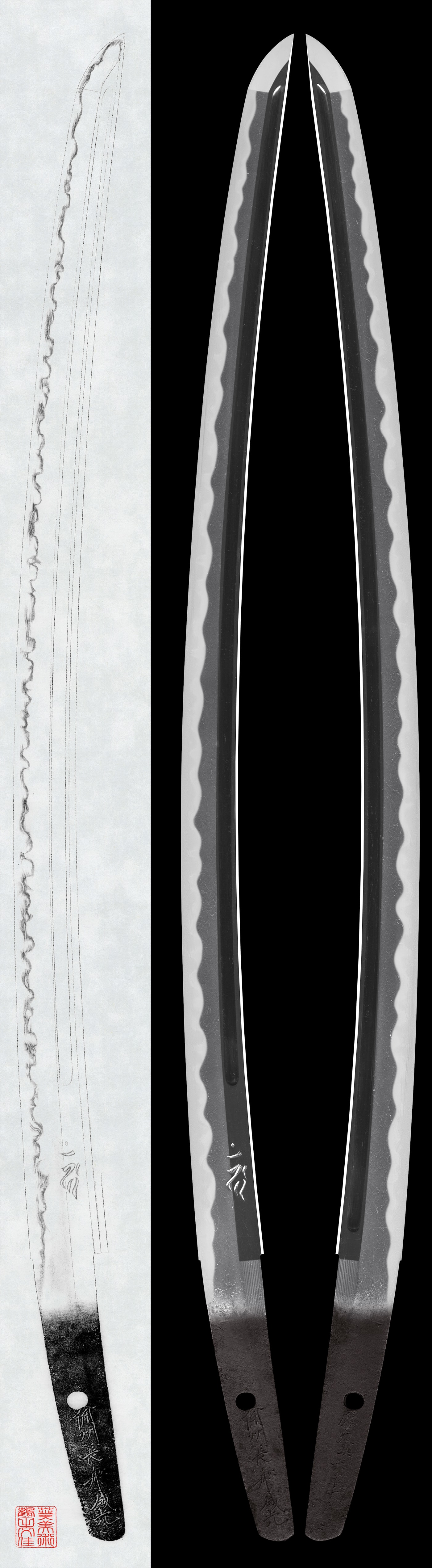
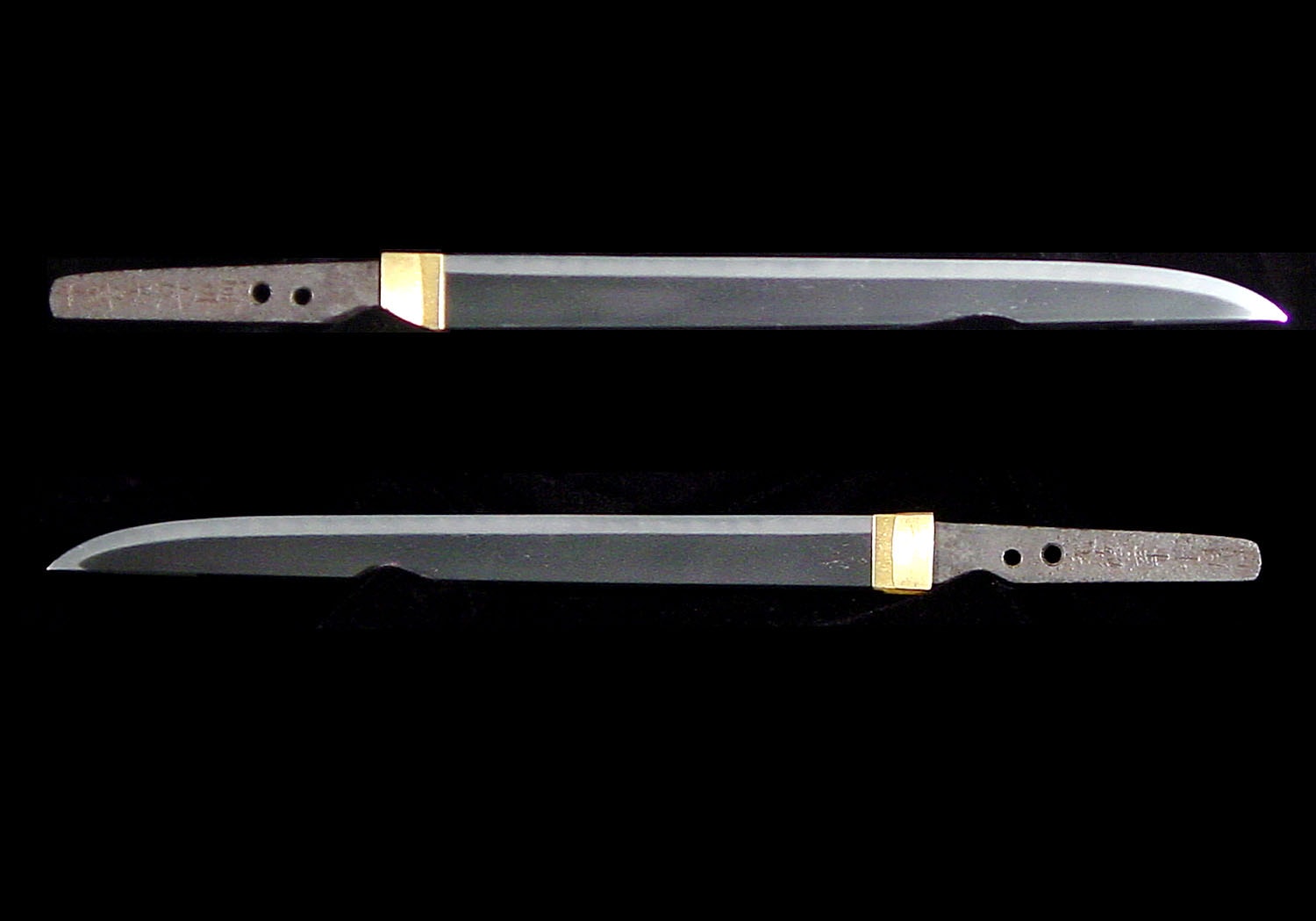
Tameto is a late- swordsmith of Karakawa, a locality on the border with , who is attached to the Fukuoka line. He is one of the comparatively few early names whose place is fixed by a signed and dated work: a reading no Karakawa-jū Saemon no Jō Fujiwara Tametō, with the reverse dated the first year of Bunpō, 1317. The published sources note that the Meizukushi treats him 'as drawing on the line of Fukuoka Korekuni', while adding in the breath that this is not in fact clearly established. What is certain is the steel itself, and the small body of his work agrees with itself closely enough that a single hand can be read across it.
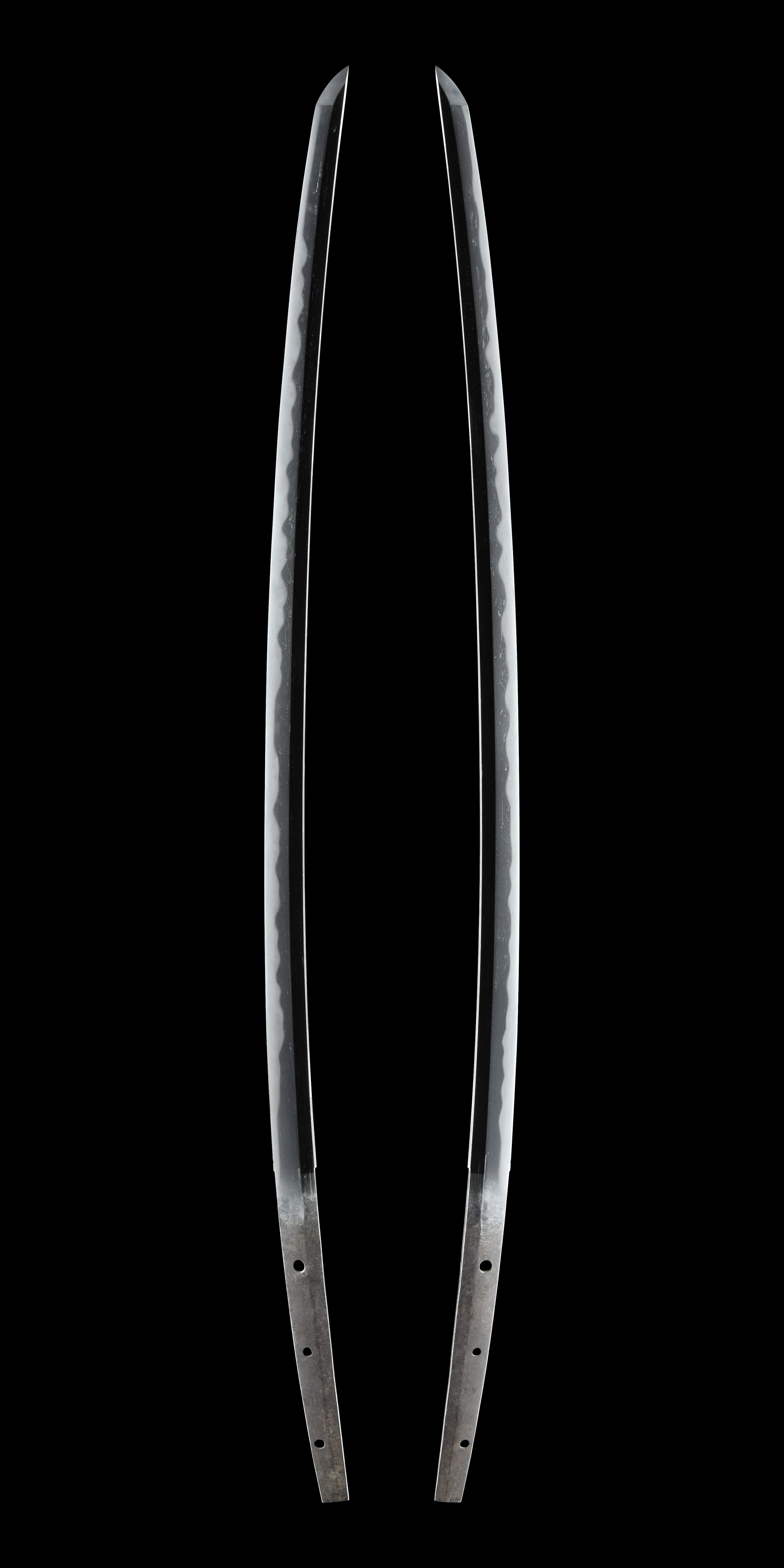
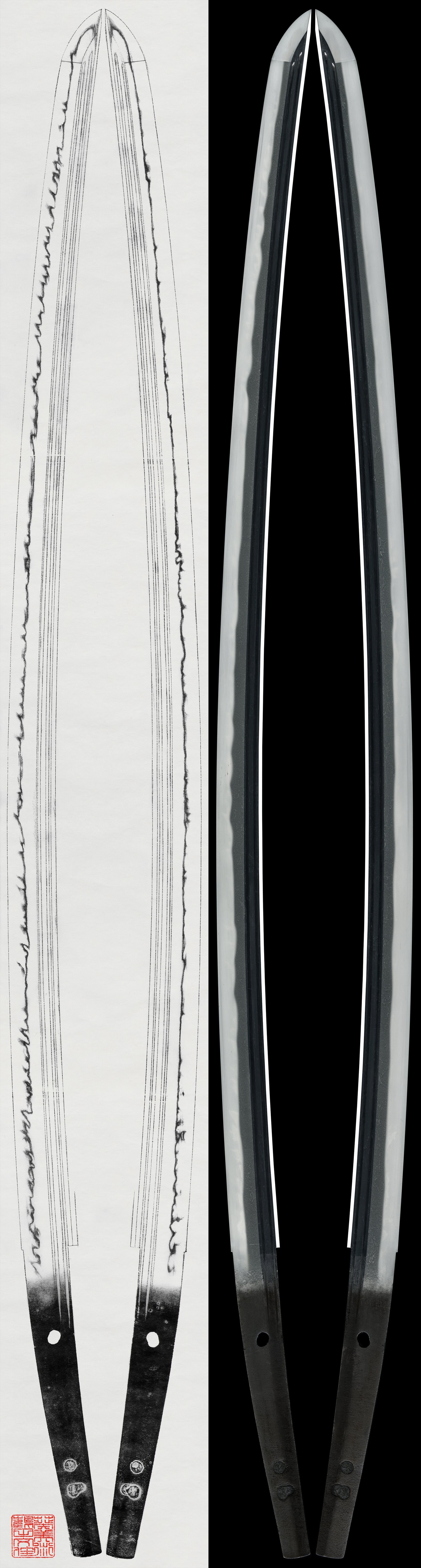
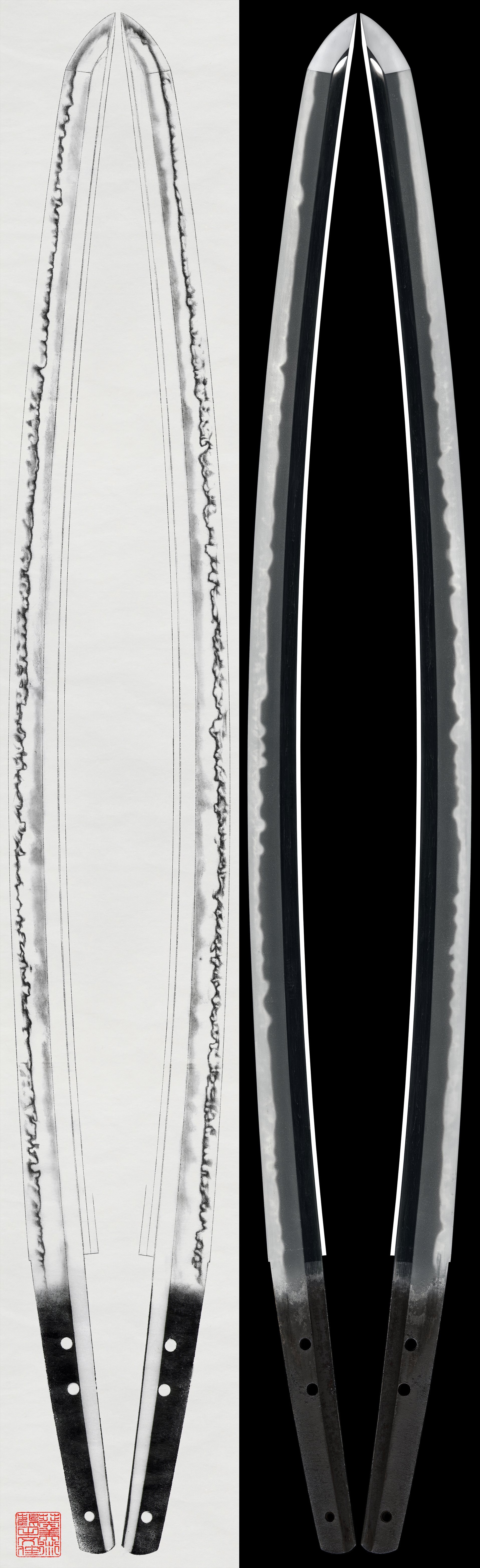
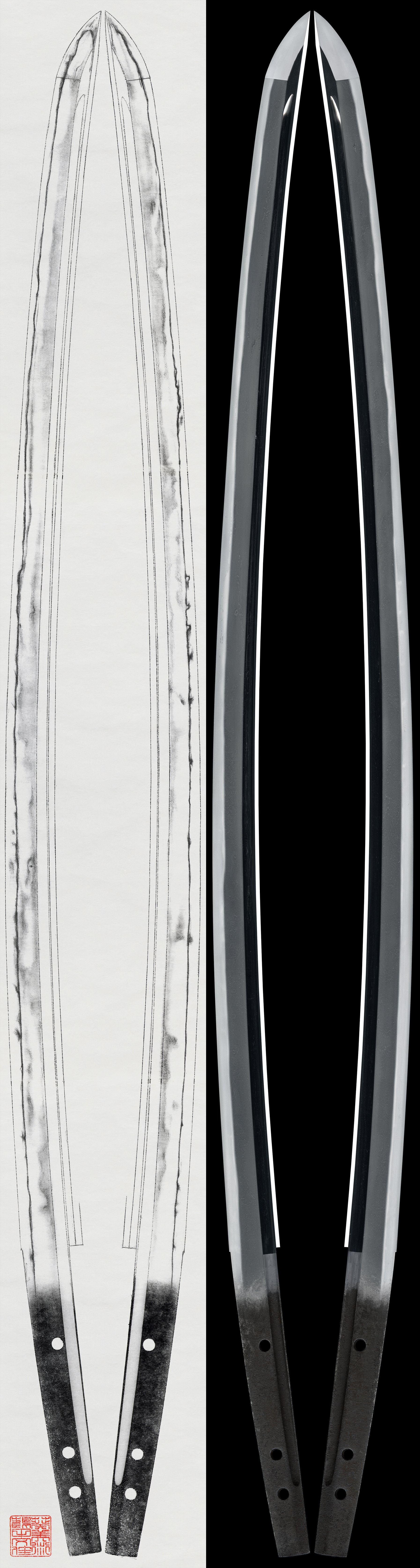
His is a quiet hand within a flamboyant school. Where the mid- Fukuoka is the high clove-flower temper, Tametō works a , and his is never plain. On the dated the published sources describe a temper of built in a - manner, the carrying a moist quality, 'a in the manner, moist, with small mixed in and entering'. The small and the set within an essentially straight line are the constant of his work, the activity that keeps the alive without ever opening into the showy of his schoolmates.
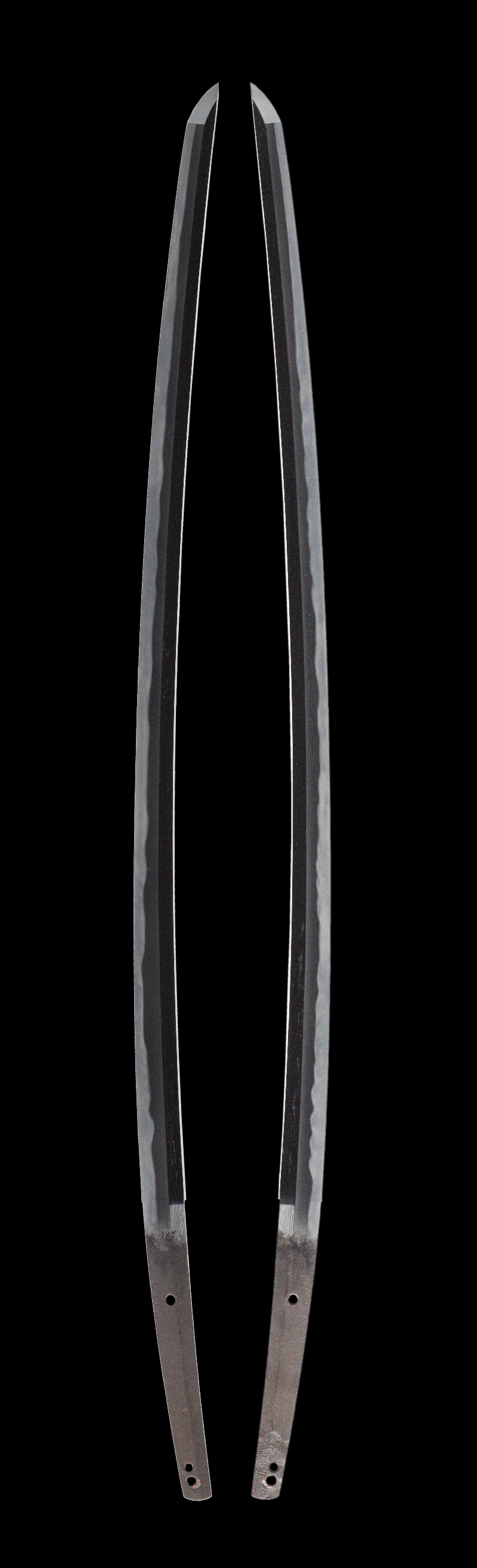
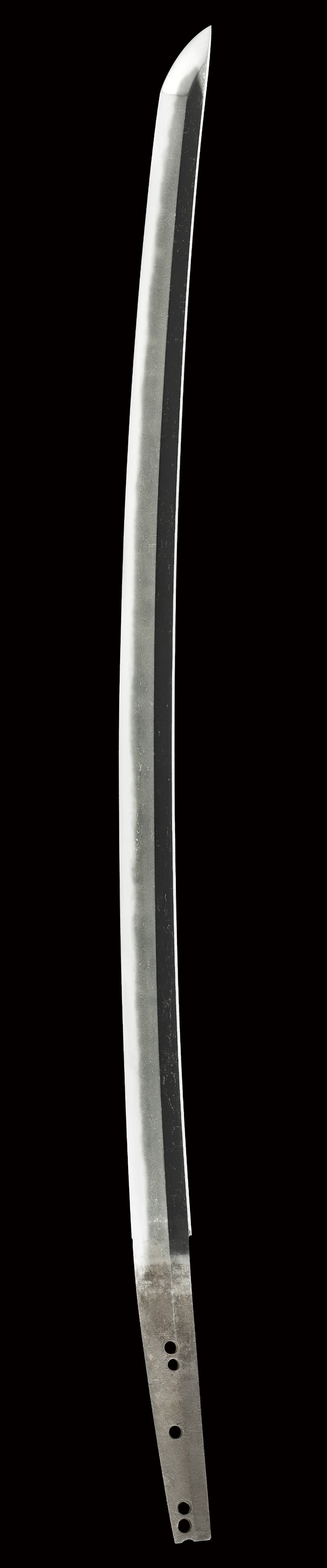
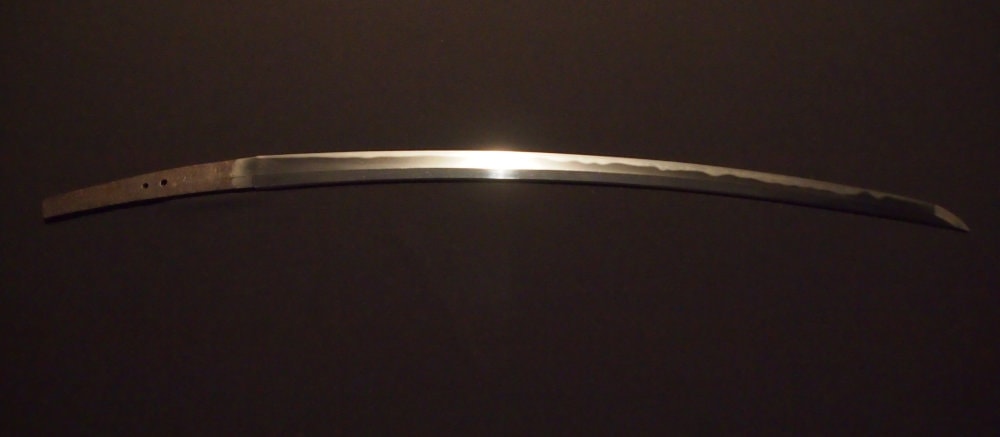
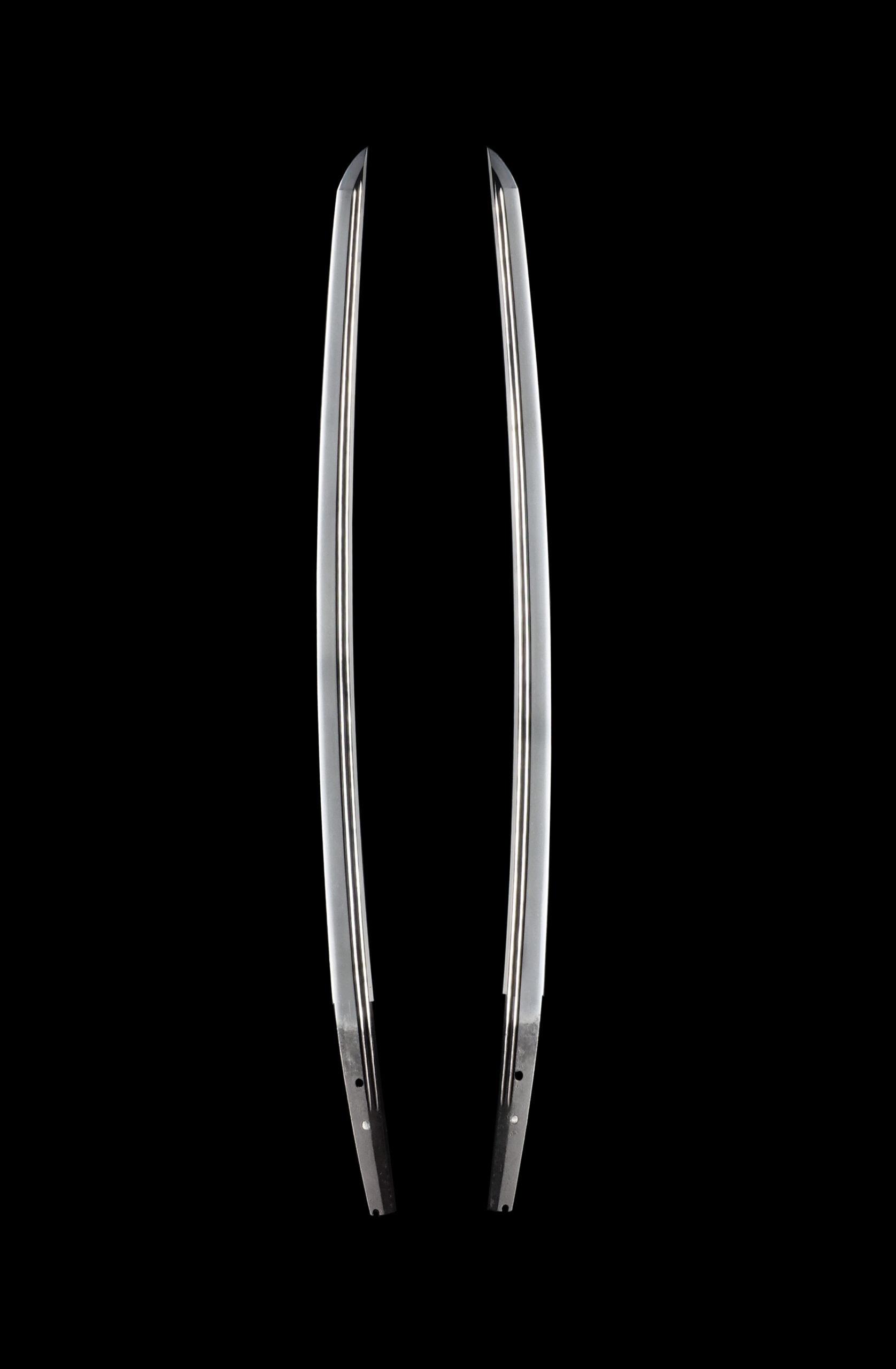
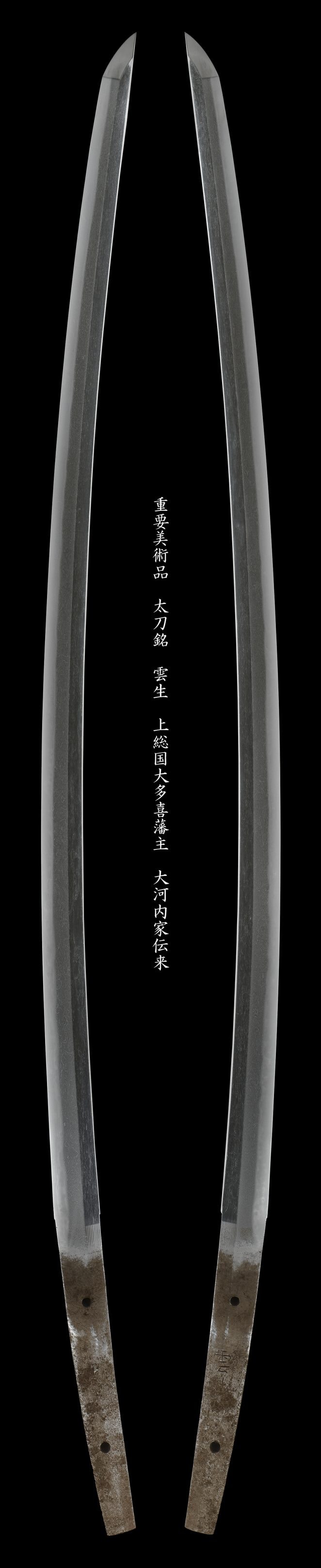
The is the other half of the reading. Over a tightly packed an rises clearly, the bright reflection of old steel, and the published commentary returns to it on each signed blade in the plain phrase, 'forged in , tightly packed, with rising'. The shape carries its weight: one of the , though shortened, keeps 'a somewhat broad and a healthy figure', while its sibling, judged the hand, survives and slender with a slightly extended point and a pleasing . The forging is fine and the vivid; the temper sits quiet above it.
The other face of his record is the attributed to him. Here the is mixed with a -tendency and stands a little overall, the now faint rather than bright, and the slender undulates shallowly, mixing , and , entering well, running and adhering, the straight to a small round. The published sources accept the attribution on exactly the basis the signed work establishes: 'extant signed works by him are extremely few', and they are 'for the most part with an admixture of and ', so that in this sense, the published record holds, 'the traditional attribution may be accepted'. With this smith it is the manner of the temper, not a personal flourish, that carries his hand into the unsigned blades.
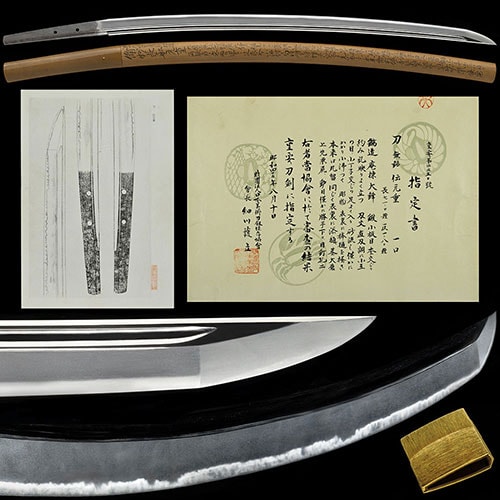
For the collector he is a rare and quietly documented early name. The Fujishiro appraisers place him at the jō- level, and the Tōkō Taikan values him in the upper-middle range of the smiths. His survival is slight: no National Treasures and no Important Cultural Properties stand to his name, his record running instead through the prewar Bijutsuhin and a single , with a handful of further signed pieces known. The two closely related signed , judged the hand and one of them the dated 1317 blade, were certified Bijutsuhin before the war; of recorded whereabouts, one descended to Nomura Hisatsuna of Kagawa and the other to Ninomiya Kōjun of Niigata, while the was held in Yamaguchi. These are designated cultural property and long-held heritage rather than blades that pass readily through the market. A signed Tametō in private hands is among the rarer things a student of early could hope to encounter, a documented and dated link in the Karakawa branch of the , and one comes to light, when it does, only with patience.