NihontoWatch MonNihontoWatchBETA
MarketEncyclopedia
NihontoWatch Mon

NihontoWatchBETA

Market
Encyclopedia
Overview·Kantei·Designations·Provenance·Blade Forms·Signatures·School
OverviewKanteiDesignationsProvenanceBlade FormsSignaturesSchool
  1. Schools
  2. Ichimonji
  3. Fukuoka Ichimonji
  4. Sukemori

Fukuoka Ichimonji Sukemori

助守

Tokujū
Vol. 21, No. 14 · Tachi

Fukuoka Ichimonji Sukemori

助守

4 ranked works

ProvinceBizenEraTenpuku (1233–1234)PeriodKamakuraSchoolIchimonji>Fukuoka IchimonjiTraditionBizen-denFujishiroJo sakuToko Taikan1,500(top 5%)TypeSwordsmithCodeSUK251
1Jūyō Bijutsuhin
2Tokubetsu Jūyō1Jūyō Tōken

Overview

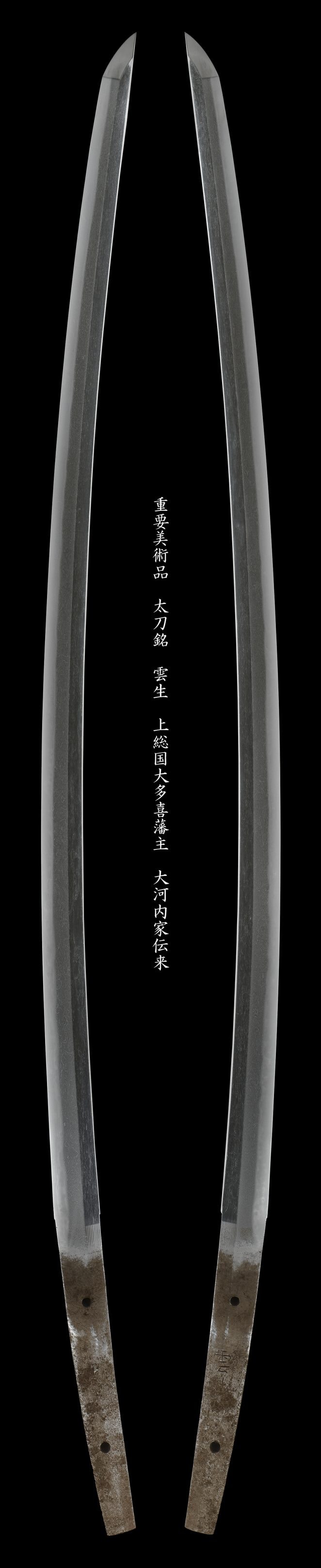
Sukemori is a Fukuoka smith of the middle period, signing the bare two characters of his name on the that carry it, and one of these the published sources call "one of the foremost superior works among Sukemori's pieces" (助守中の屈指の優品). He worked in within the school that arose in the early under Norimune, when the school had already moved past its classical opening into the broad, robust for which it is remembered. The published record is careful with his name from the outset, for the carries a Sukemori under , under Ko- and under the Fukuoka , and the manner of signing differs from blade to blade. From this the judges conclude that "it is thought there were multiple smiths working under the name" (同名複数工の存在が考えられている), so what survives under the one signature is read as the output of more than one hand across two or three generations.

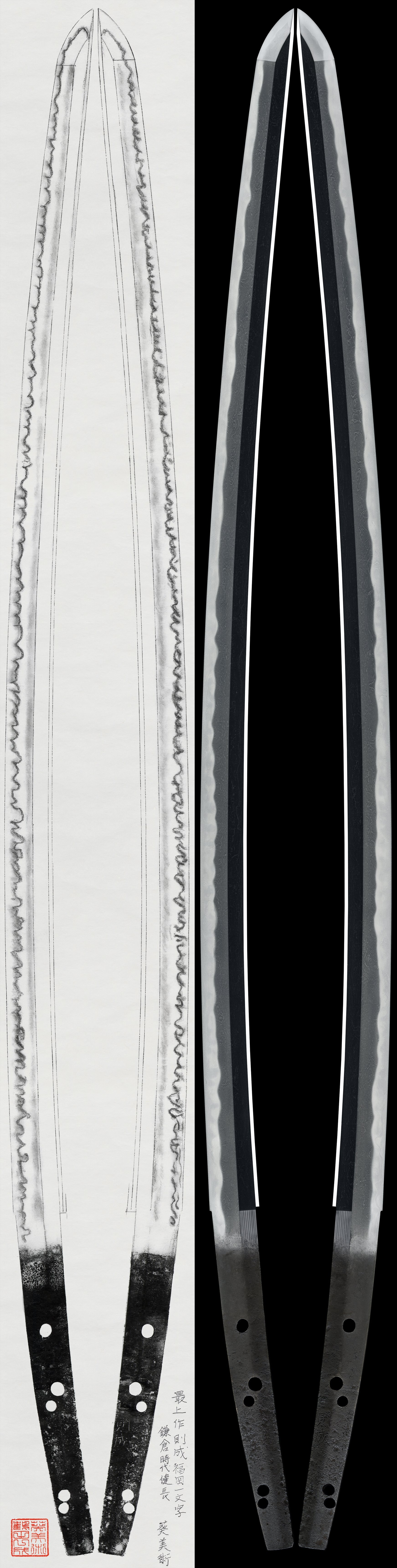
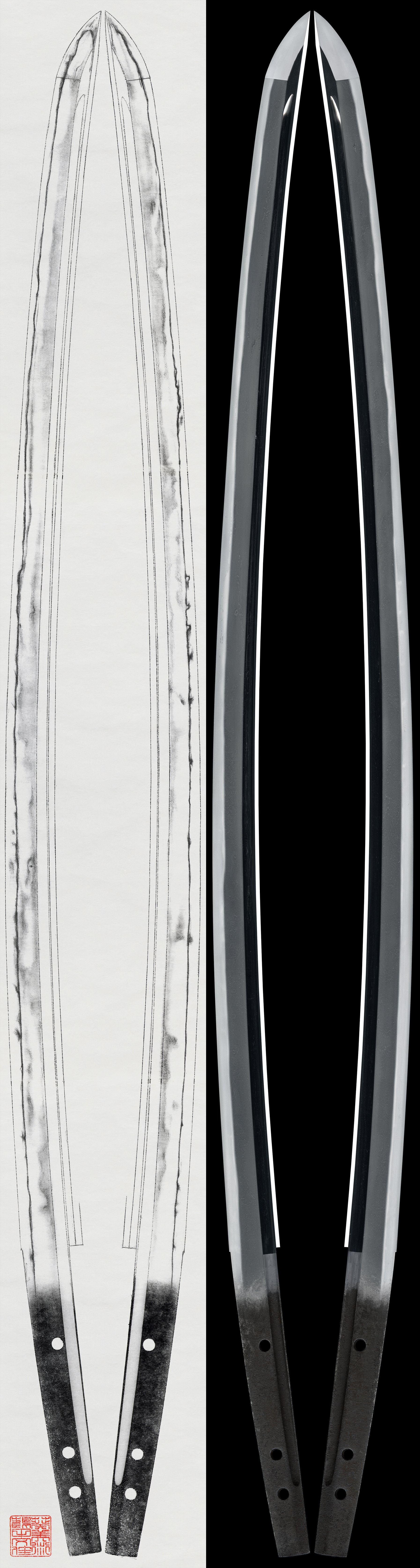
His recognized prime is the two-character signed of mid- shape, the body of standard width, the high and carried on toward the point, ending in a . Over a of that mixes in a flowing tendency and stands a little in places, with and a clear , he forges an extremely brilliant into which enter , and angular elements. The and are abundant, the deep and -dominant with gathering unevenly, and in the lower half a runs; on one the whole pattern leans into a reverse slant. It is this florid temper that the judges measure against the school's best, finding his finest "extremely brilliant and gorgeous" and holding that it "connects to the quality seen in the line as Yoshifusa" (一脈吉房の出来に通じる). The runs and turns in a small , at the point, one example finishing pointed.

The is the constant beneath the flame. On the prime the is read as standing a little, the grain tending toward , with and the bright over which the temper sits; one piece mixes into the . Where the forging is allowed to tighten, as on his slender early work, it closes into a well-packed with and the grows quieter. The over it on those early pieces is correspondingly restrained, a wind-swept mixing in , deep in with well adhered, entering well, running and seen here and there, with a carved through both faces. So the name spans a wide under a brilliant temper on one side and a tight under a calm on the other.

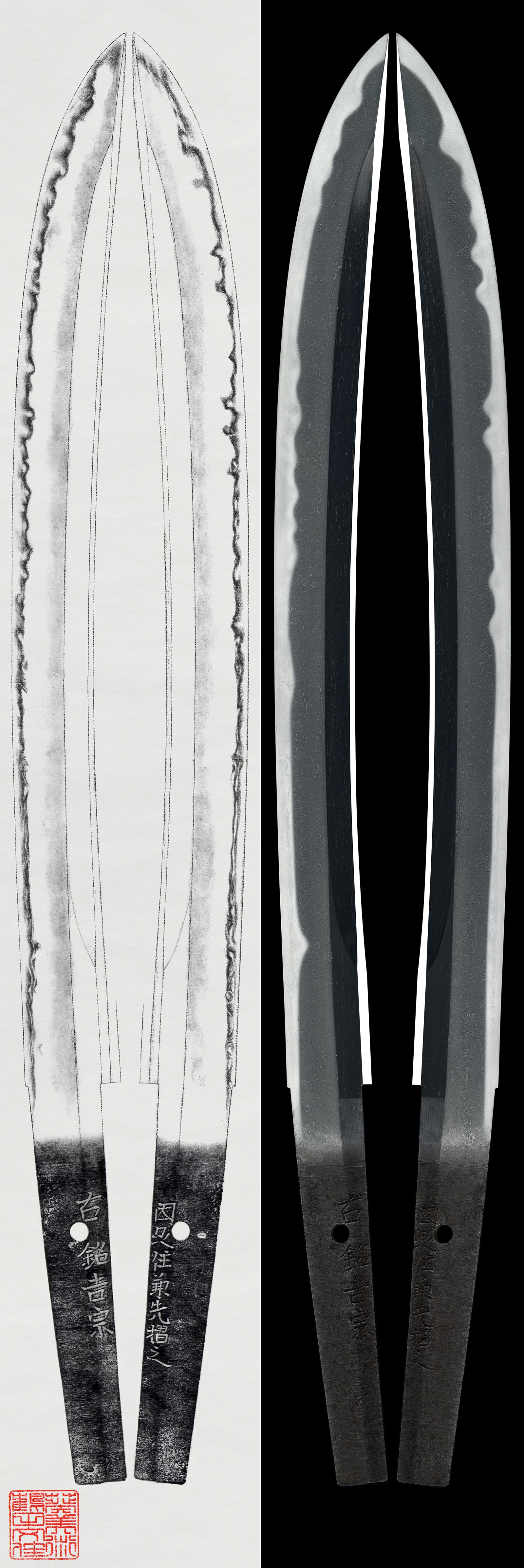
These are the two faces of his record. The first is the broad mid- , but keeping a high , in the flamboyant the published sources tie to Yoshifusa. The second is the slender, small-built early signed , , with high and pronounced and a , which the judges appraise as an early- work close to the manner. They note of these early pieces that the name and workmanship are "so similar in both signature manner and style" (銘振、作風ともに相似) to that a given blade cannot always be assigned at a glance, and that with extant works few and none dated, the question is the harder. The two-character signature itself becomes part of the : on the mid- it is boldly cut with a fine chisel toward the near the tang, a manner the published sources record as "without other example" (この手の銘振りは他に例がない).

What sets Sukemori within his school is exactly what the judges name. His brilliant over a standing and a clear places him in the mainstream Fukuoka manner of the mid-, the school then forging its splendid large-clove-flower in ; his finest is set beside Yoshifusa, and his early slender pieces look back to the classical from which the school grew. He is held apart from the plainer smiths by the brightness of his and the gathering of on his edge, and apart from his own quiet early register by the flame of his prime. The published sources judge both and intact, and of one shortened they write that "its form with pronounced combines elegance and strength" (腰反りのついた太刀姿は優美さと力強さを併せ持ち).

For the collector Sukemori is a rare and problematic early name. Fujishiro grades him Jo , and the Toko Taikan values his work in the middle range. He has no National Treasures and no Important Cultural Properties; his record runs instead through two blades at the rank, three at , and a folded- at the prewar Bijutsuhin. Of recorded whereabouts his blades sit in long-held collections grounded in their own provenance: the transmitted in the Wakisaka family of Tatsuno in Harima, and the Bijutsuhin that passed from Kurokawa Fukusaburo to the Kurokawa Institute of Ancient Cultures, with a piece recorded at Jingu. Only a small number fall in the tradeable tiers, and most designated blades, in private hands or not, are held rather than traded; a signed Sukemori comes to light only seldom, so a privately held example is a notable thing for a collector to encounter, a document of how brilliantly, and how variously, the one name was worked.

Kantei

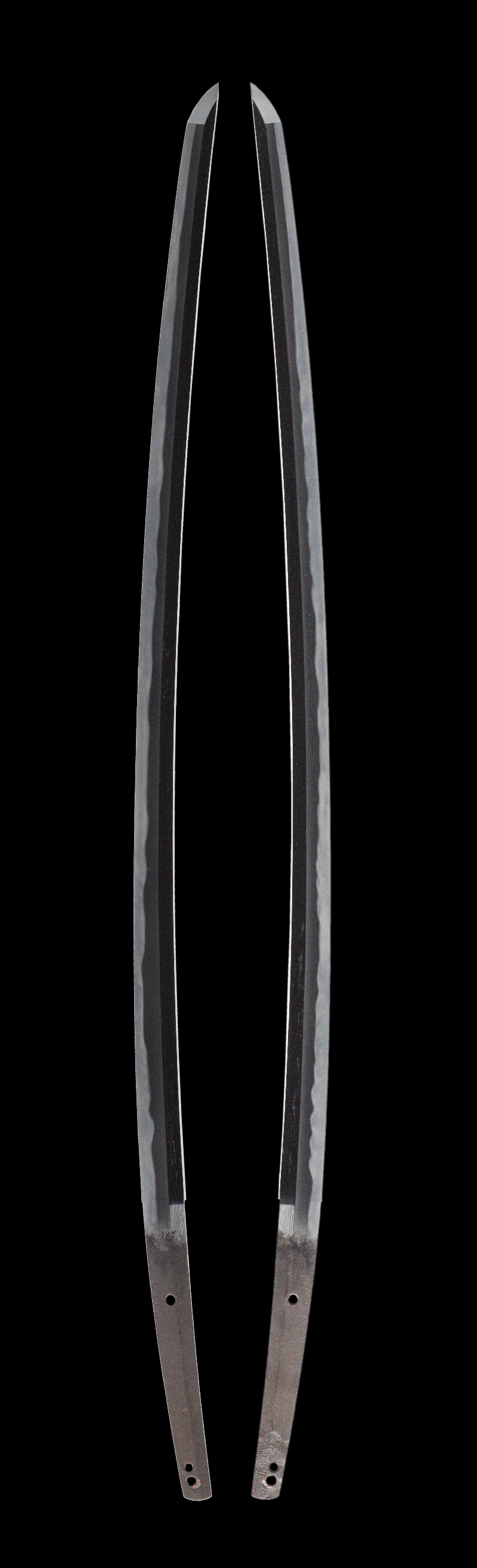
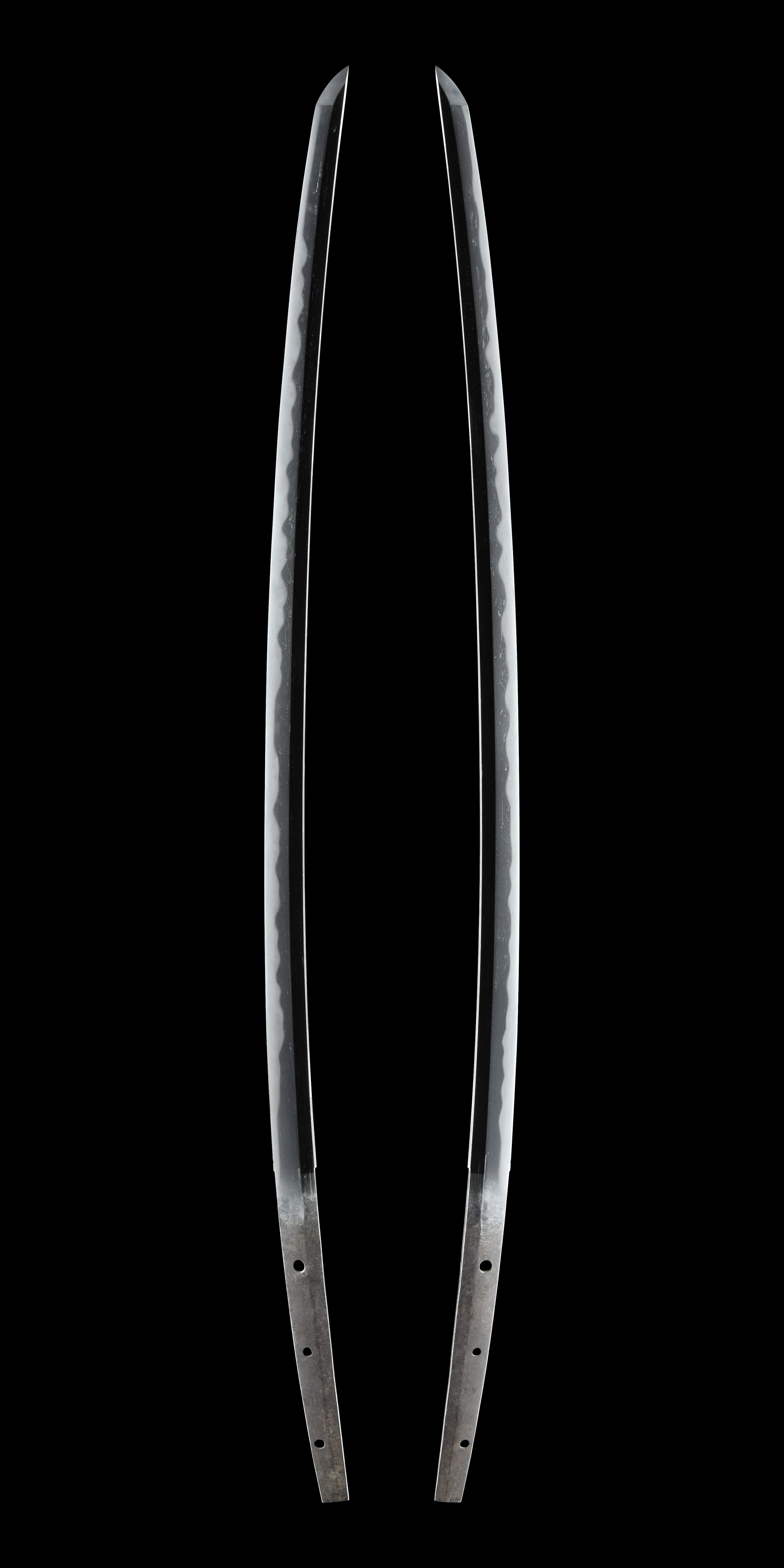
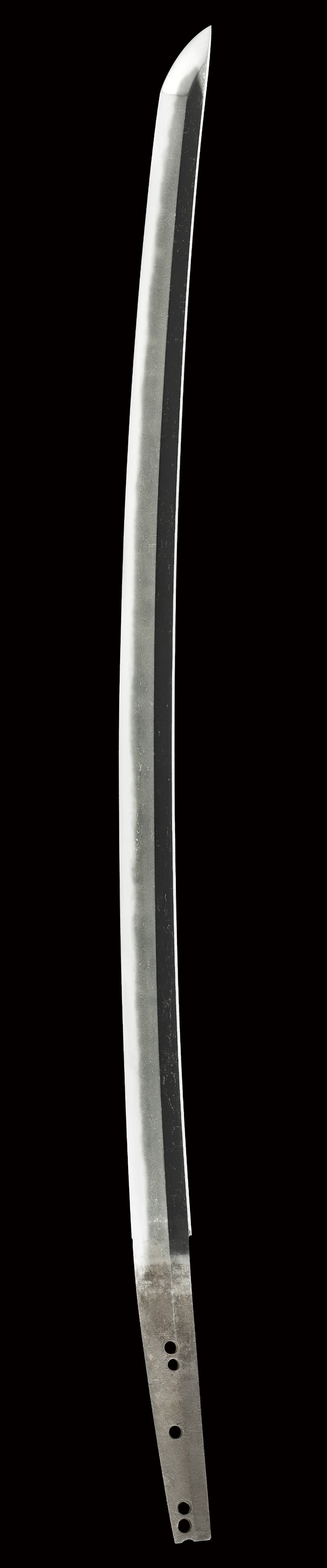
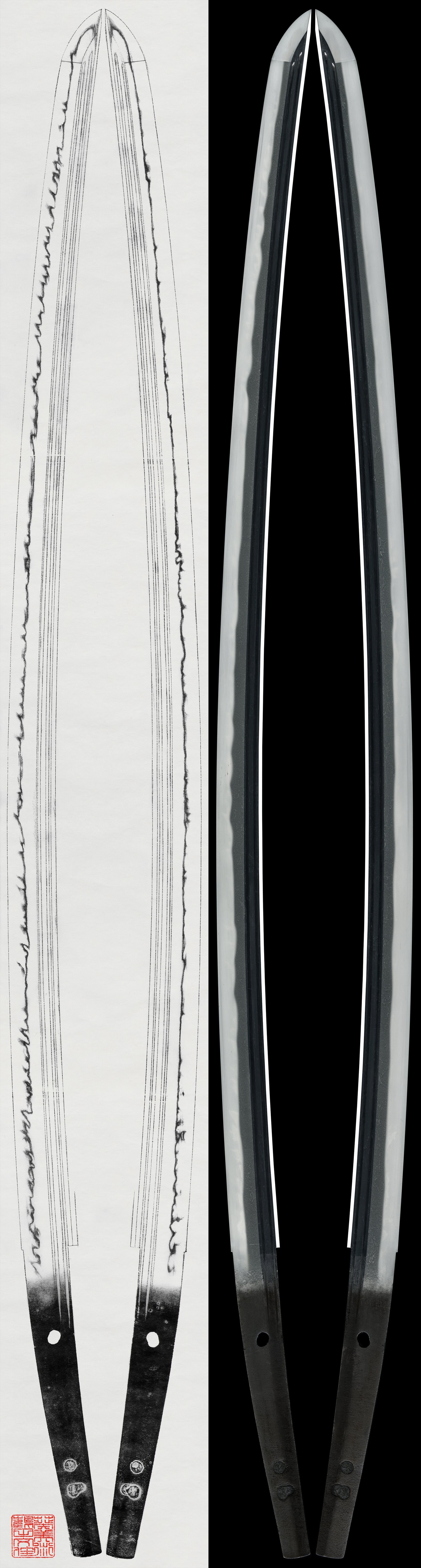
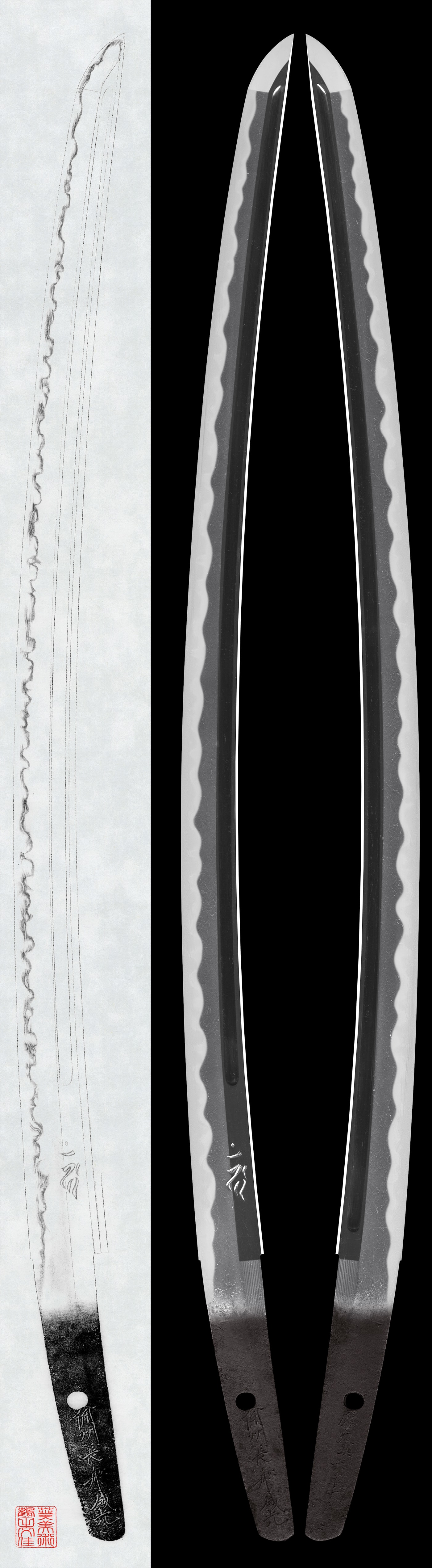
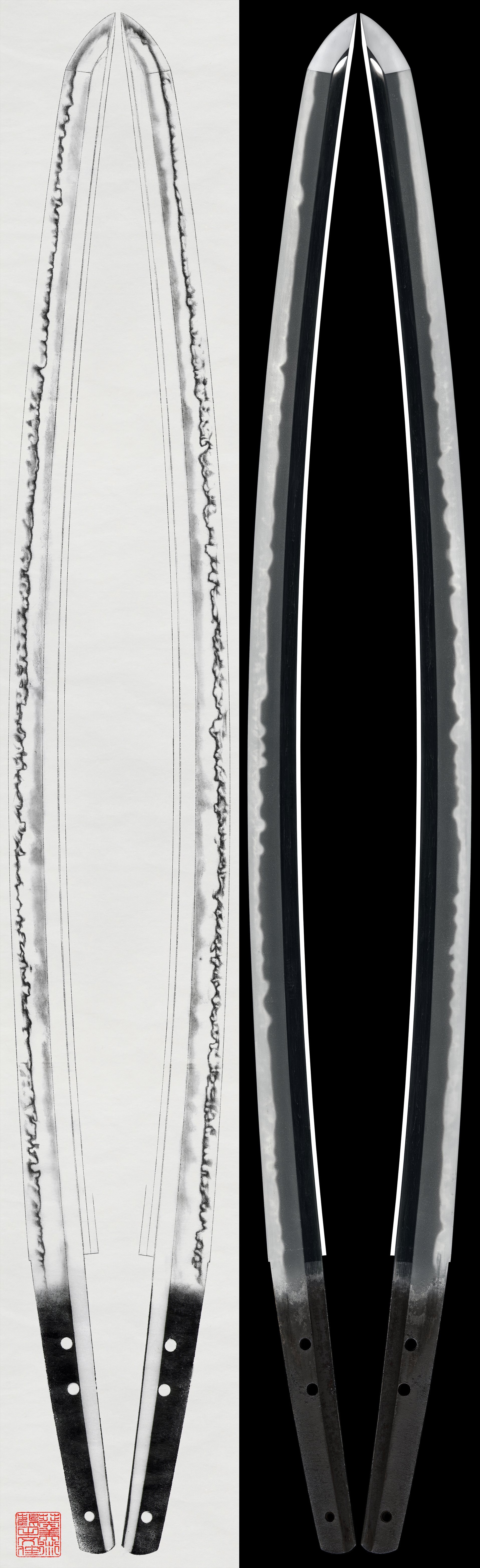
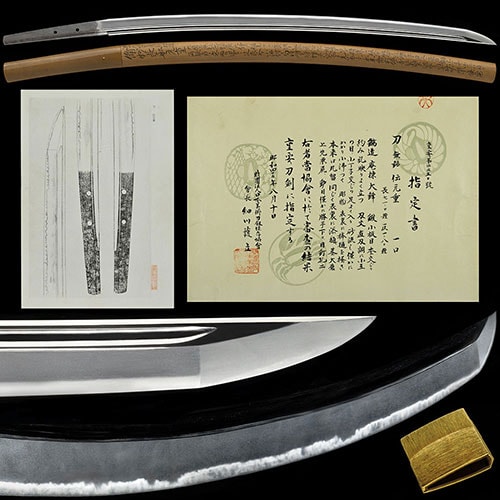
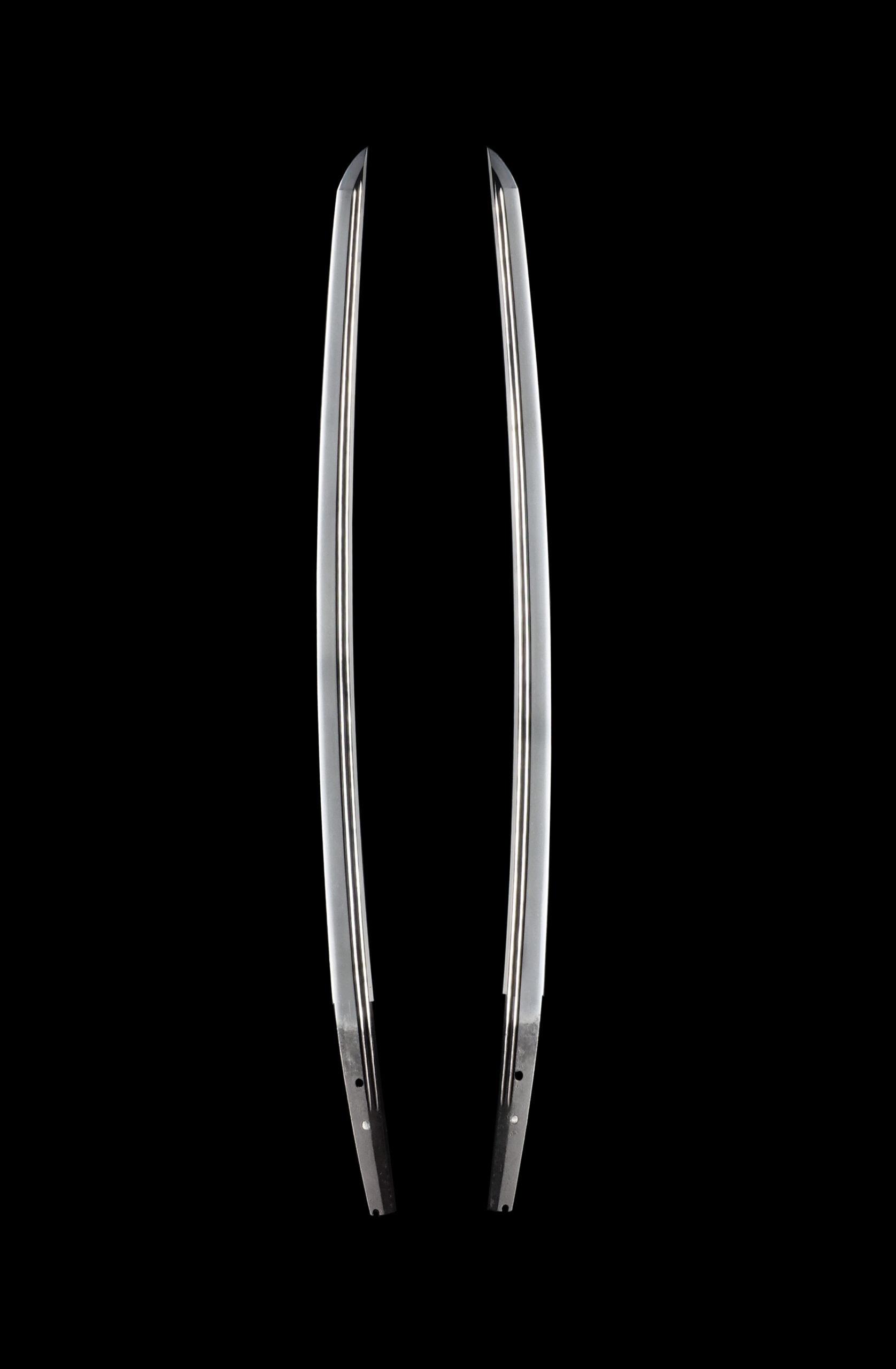
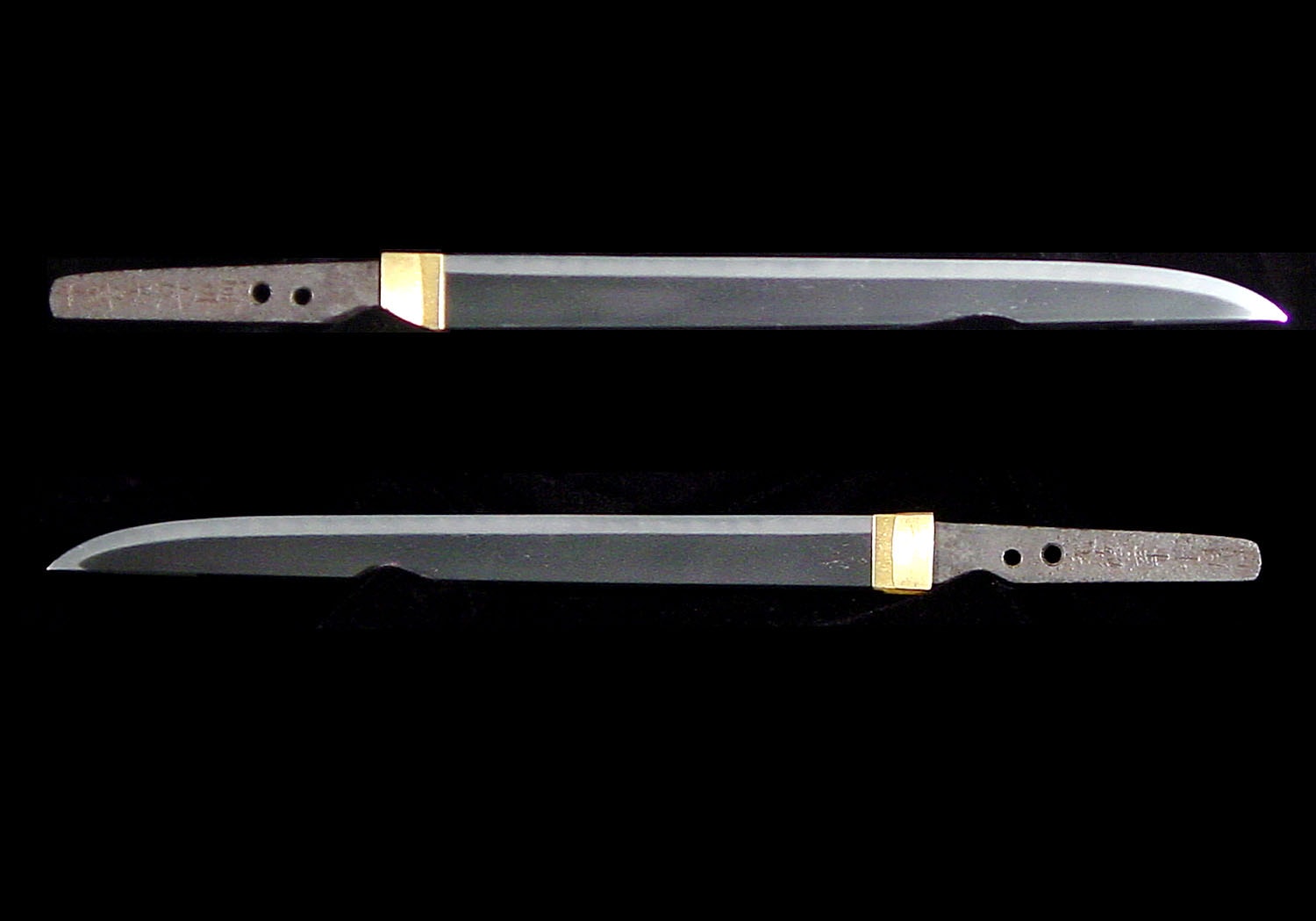
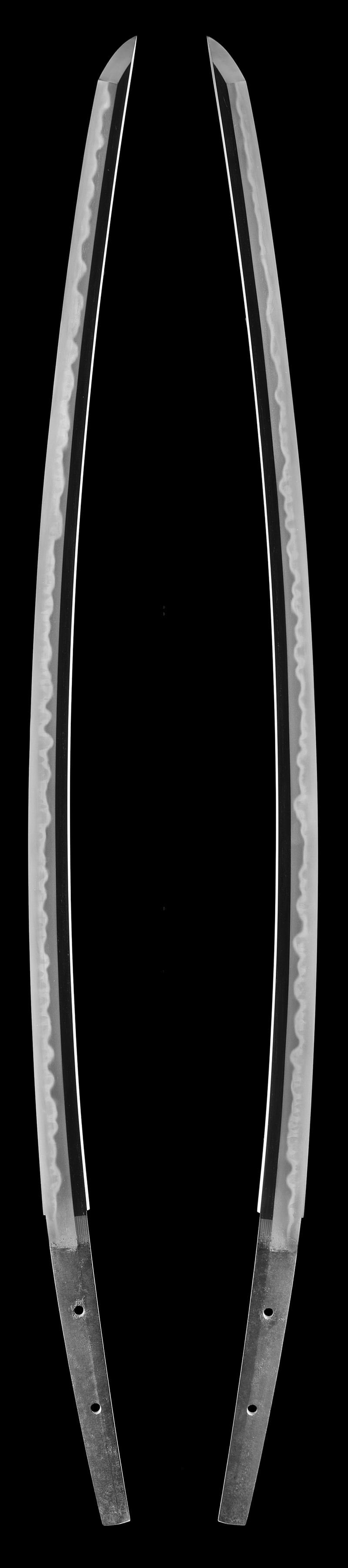
two faces of the Sukemori name: the o-suriage signed tachi with its brilliant choji-midare over a standing itame and midare-utsuri, the showy mid-Kamakura Fukuoka manner the sources tie to Yoshifusa, set against the slender small early signed tachi in a quiet ko-midare over ko-itame, read as early-Kamakura Ichimonji close to Ko-Bizen

Sukemori is a Fukuoka smith of the middle period whose name sits at one of the school's lasting problems: the carries a Sukemori under , under Ko- and under Fukuoka , the signature comes in several manners, and the published sources hold that there were multiple smiths working the one name. His finest recognized work is the two-character signed of mid- proportions, body of standard width with high carried toward the point and a , over an ground tending to stand with and a clear , into which he sets an extremely brilliant mixing , and angular , and abundant, deep in with gathering unevenly, in the lower half, the to a small round with . The published sources rank the flamboyance of his best signed alongside the work of Yoshifusa and call it one of the foremost among Sukemori's pieces. The other face of his record is the slender, small early signed , a quiet with over a well-packed , that the judges read as an early- work close to the manner.

Diagnostic discriminators

unique vs his early slender tachi (quiet ko-midare)

unique vs Ko-Bizen / Ko-Ichimonji namesakes (signature manner debated)

Observation by phase

The mid-Kamakura flamboyant tachi (his recognized prime)

His finest record is the two-character signed of mid- proportions, surviving yet keeping a high carried toward the point and a , the body of standard width. The ground is an mixing in a flowing tendency and standing in places, with and a clear . Over it the temper is high and brilliant, a mixing , and angular , and entering well, the deep and -dominant with gathering unevenly, running in the lower half. The is turning in a small round with at the point, one example becoming pointed. The published sources call this work close to the quality of Yoshifusa, its extremely brilliant and gorgeous, and one of the foremost superior works among Sukemori's pieces. The two-character signature, boldly cut with a fine chisel toward the near the tang, is itself noted as a manner without other example.

Sugata 姿
Jigane 地鉄
Hamon 刃文
Bōshi 帽子

The slender early signed tachi (Ko-Bizen-leaning)

The other face of his record is the slender, small-built early signed , , with a high and pronounced and a . The ground is a tightly packed with . The temper is a quiet wind-swept mixing in , deep in with well adhered, entering well, running and seen here and there, the to a small round; a is carved through on both faces. The published sources read this as an early- work, small in scale but of excellent workmanship, noting that the Sukemori name and manner are so close to that a single example cannot always be assigned with confidence. The held in the Kurokawa collection, with its conspicuous , clear and a on a base, extends the quieter, classical register.

Sugata 姿
Jigane 地鉄
Hamon 刃文
Bōshi 帽子
Scholarship

The published sources record that the Sukemori name appears in the Meikan within Ko-Bizen, Ko-Ichimonji and Fukuoka Ichimonji, that the signature manner comes in several varieties, and that for these reasons multiple smiths are thought to have worked under the one name; with extant works few and no dated examples, the manner and workmanship can be so close to Ko-Bizen that a given blade cannot always be assigned at a glance.

On the mid-Kamakura prime tachi the published sources praise an extremely brilliant choji-midare connecting to the quality of Yoshifusa and call one of them one of the foremost among Sukemori's works, while noting the bold fine-chisel two-character signature toward the mune is a manner without other example.

Designations

Kokuhō—
Jūyō Bunkazai—
Jūyō Bijutsuhin1
Gyobutsu—
Tokubetsu Jūyō2
Jūyō Tōken1

Elite Standing

0.11 across 4 designated works

Top 18% among smiths

Provenance

2 documented provenances across certified works by Sukemori

Provenance Standing

0 works held in elite collections across 2 documented provenances

Top 52% among smiths

Raw score: 1.97 / 10

Blade Forms

Distribution across 4 ranked works

Signatures

Signature types across 4 ranked works

Currently Available

Fukuoka Ichimonji School

Other artisans of the Fukuoka Ichimonji school

  1. 1.Sukezane助眞44designated
  2. 2.Yoshifusa吉房1 for sale46designated
  3. 3.Norimune則宗8designated
  4. 4.Yoshihira吉平17designated
  5. 5.Sukekane助包6designated
  6. 6.Norikane則包7designated
  7. 7.Tamekiyo爲清5designated
  8. 8.Yoshimochi吉用10designated
  9. 9.Yoshimune吉宗6designated
  10. 10.Tameto爲遠5designated
  11. 11.Naganori長則17designated
  12. 12.Ichi一7designated

Sukemori

Sukemori(助守) was a Japanese swordsmith of the Fukuoka Ichimonji school in Bizen province, active during the Tenpuku (1233-1234) period.

The work follows the Bizen-den tradition.

Designated works by Sukemori include 2 Tokubetsu Jūyō, 1 Jūyō.