NihontoWatch MonNihontoWatch
MarketEncyclopediaKantei
NihontoWatch MonNihontoWatch
Market
Encyclopedia
Kantei
Overview·Historical importance·Designations·Provenance·School
OverviewHistorical importanceDesignationsProvenanceSchool
  1. Schools
  2. Awataguchi
  3. Kunisada

Awataguchi Kunisada

國定

Jūyō Bijutsuhin
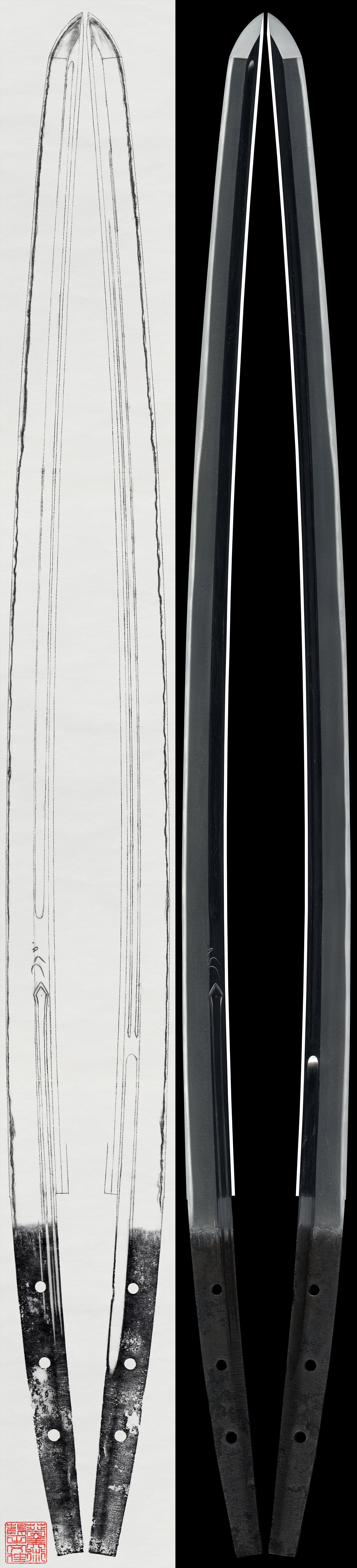
Vol. 3, No. 294 · Tachi

Awataguchi Kunisada

國定

2 ranked works

Notable smith
ProvinceYamashiroEraNinji (1240–1243)PeriodKamakuraSchoolAwataguchiTraditionYamashiro-denTypeSwordsmithCodeKUN907
2Jūyō Bijutsuhin

Overview

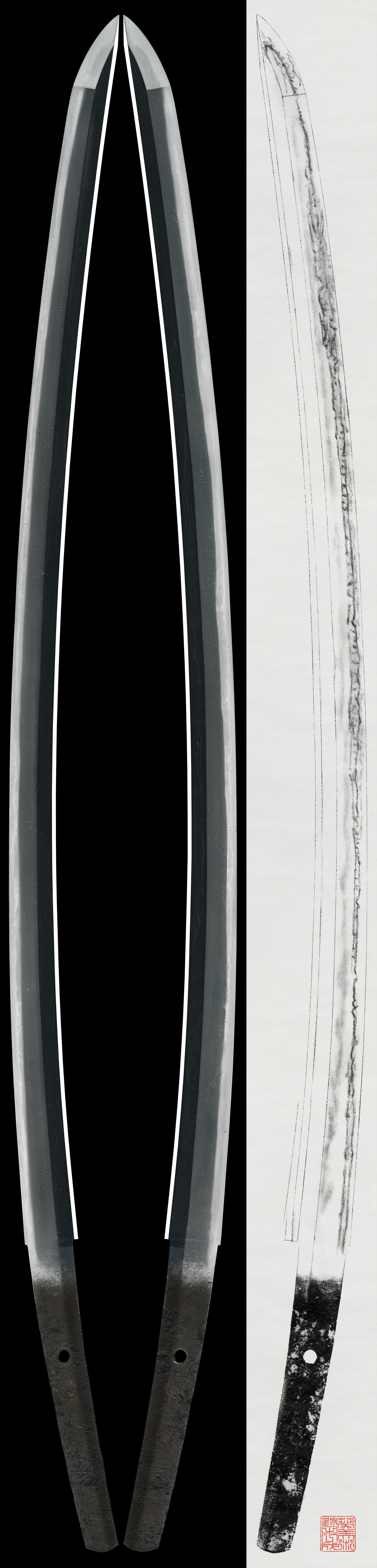
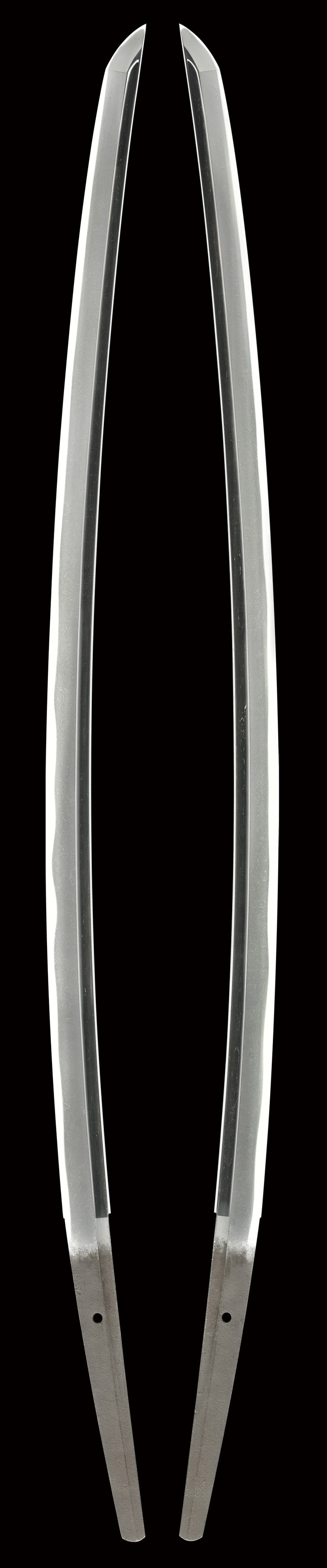
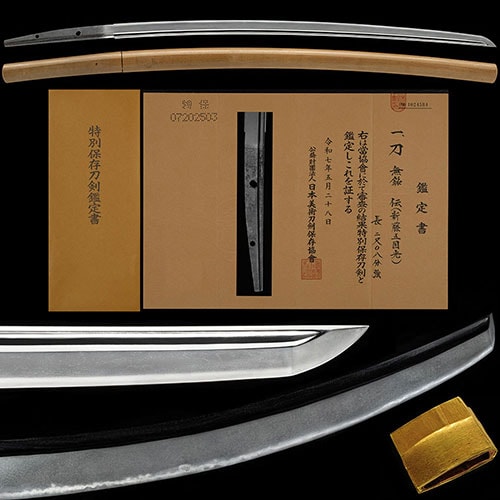
Kunisada (国定) is traditionally identified as a disciple of Kuninobu of the Yamashiro school, and it is transmitted that around the Bun'ei era (1264–1275) he relocated to Tanba Province. His workmanship continues the tradition, and his blades at first glance possess what the describes as "the dignified quality characteristic of Kyo work." A separate line of attribution links the name to the school under the reading Kunisada, recorded in sword catalogs as a student of Kunitoshi, though the relationship between the two lineages remains a subject for further research.

In his -line , the forging shows with plentiful , and the temper is fundamentally mixed with small , into which and enter strongly. A recurring feature across these works is a feeling of nijubba — a doubled or layered effect in the hardened edge — intermingled within the temper pattern. One displays a -like intent recalling Ayakoji Sadatoshi together with a pronounced jubba tendency. Works attributed to the school line show a markedly different character: with thin and wide in proportions, well-forged with , and a of with intermixed that becomes in the upper half — characteristics described as typical of period workmanship and comparable in style to Hasebe Kunishige.

The 's assessments emphasize the continuity of school aesthetics in the attributed to this smith, noting in particular the dignified quality of Kyoto tradition forging and the distinctive nijubba character of the temper. The presence of works in the Imperial Household collection and transmission through the Tayasu Tokugawa family attests to the historical esteem in which blades bearing this name have been held. Published references include the Kozan , Kanto Zuiroku, and Kusanagi no Ya .
Historical importance

Where Kunisada stands among comparable artisans: across all of nihontō, and within tradition, era, and period. The tiers (Foremost · Leading · Major · Notable) weigh official designations from the NBTHK and Japan's Agency for Cultural Affairs, together with historical honors of lasting repute such as the Sansaku and Meibutsu-chō.

随一
Foremost
屈指
Leading
有数
Major
著名
Notable

Select a lens to see how it's measured.

Designations

Kokuhō—
Jūyō Bunkazai—
Jūyō Bijutsuhin2
Gyobutsu—
Tokubetsu Jūyō—
Jūyō Tōken—

Elite Standing

Provenance

Currently Available

Awataguchi School

Other artisans of the Awataguchi school

  1. 1.Yoshimitsu吉光44designated
  2. 2.Kuniyoshi國吉1 for sale51designated
  3. 3.Kunitsuna國綱18designated
  4. 4.Hisakuni久國21designated
  5. 5.Norikuni則國15designated
  6. 6.Kuniyasu國安22designated
  7. 7.Kunitomo國友4designated
  8. 8.Kunikiyo國清4designated
  9. 9.Arikuni有國2designated
  10. 10.Kagehisa景久1designated
  11. 11.Kunitsuna國綱1designated
  12. 12.Kunimitsu國光4designated

More from the Awataguchi school

View all →
Samurai Nippon
Tokujū
Katana - Tokuju - by Awataguchi Kuniyoshi - Mumei (Attributed to Awataguchi Kuniyoshi)Katana - Tokuju - by Awataguchi Kuniyoshi - Mumei (Attributed to Awataguchi Kuniyoshi)

Katana

ByAwataguchi Kuniyoshi
Ask
Eirakudo
Tokuho
Katana - Tokuho - by Shintogo Kunimitsu - Shintogo Kunimitsu - Tokubetsu Hozon TokenKatana - Tokuho - by Shintogo Kunimitsu - Shintogo Kunimitsu - Tokubetsu Hozon Token

Katana

ByShintogo Kunimitsu
¥7,500,000
Aoi Art
Tokuho
Katana - Tokuho - by Shintogo Kunimitsu - Unsigned (Attributed to Shintogo)Katana - Tokuho - by Shintogo Kunimitsu - Unsigned (Attributed to Shintogo)

Katana

ByShintogo Kunimitsu
¥7,800,000
Kusanagi
Tokuho
Tanto - Tokuho - by Awataguchi School - Supreme Masterpiece Nihonto, Kamakura Period Awataguchi, Flawless, Superb Work, Tokubetsu Hozon CertificateTanto - Tokuho - by Awataguchi School - Supreme Masterpiece Nihonto, Kamakura Period Awataguchi, Flawless, Superb Work, Tokubetsu Hozon Certificate

Tantō

ByAwataguchi School
¥5,800,000

More from the Yamashiro tradition

View all →
Eirakudo
Jūyō
Katana - Jūyō - by Rai Kunimitsu - Rai Kunimitsu - Juyo TokenKatana - Jūyō - by Rai Kunimitsu - Rai Kunimitsu - Juyo Token

Katana

ByRai Kunimitsu
Ask
Hyozaemon
Jūyō
Tachi - Jūyō - by Ayanokoji Sadatoshi - Ayanokoji SadatoshiTachi - Jūyō - by Ayanokoji Sadatoshi - Ayanokoji Sadatoshi

Tachi

ByAyanokoji Sadatoshi
¥4,800,000
Aoi Art
Tokuho
Katana - Tokuho - by Ayanokoji School - Mumei (Attributed to Ayanokoji)Katana - Tokuho - by Ayanokoji School - Mumei (Attributed to Ayanokoji)

Katana

ByAyanokoji School
Starting Bid¥1,750,000
Winners Auction
Tokuho
Tachi - Tokuho - by Fujishima Tomoshige - TomoshigeTachi - Tokuho - by Fujishima Tomoshige - Tomoshige

Tachi

ByFujishima Tomoshige
Starting Bid¥600,000
Eirakudo
Jūyō
Katana - Jūyō - by Rai Kunimitsu - Rai Kunimitsu - Juyo TokenKatana - Jūyō - by Rai Kunimitsu - Rai Kunimitsu - Juyo Token

Katana

ByRai Kunimitsu
Ask
Yazawa Shokai
Tokuho
Tachi - Tokuho - by Rai Kuniyuki - Consignment: Rai Kuniyuki Mid-Kamakura Period, Blade Length 69.7cm, Sori 1.9cm, in Shirasaya with Tachi KoshiraeTachi - Tokuho - by Rai Kuniyuki - Consignment: Rai Kuniyuki Mid-Kamakura Period, Blade Length 69.7cm, Sori 1.9cm, in Shirasaya with Tachi Koshirae

Tachi

ByRai Kuniyuki
¥3,000,000
Eirakudo
Tokuho
Katana - Tokuho - by Nakajima Rai School - Nakajima Rai - Tokubetsu Hozon TokenKatana - Tokuho - by Nakajima Rai School - Nakajima Rai - Tokubetsu Hozon Token

Katana

ByNakajima Rai School
¥2,300,000
Choshuya
Tokuho
Tanto - Tokuho - by Rai Kunitoshi - Rai KunitoshiTanto - Tokuho - by Rai Kunitoshi - Rai Kunitoshi

Tantō

ByRai Kunitoshi
¥4,300,000

Kunisada

Kunisada(國定) was a Japanese swordsmith of the Awataguchi school in Yamashiro province, active during the Ninji (1240-1243) period.

The work follows the Yamashiro-den tradition.