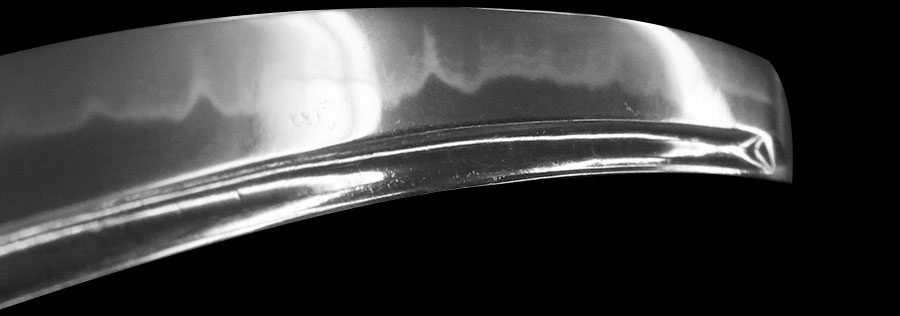
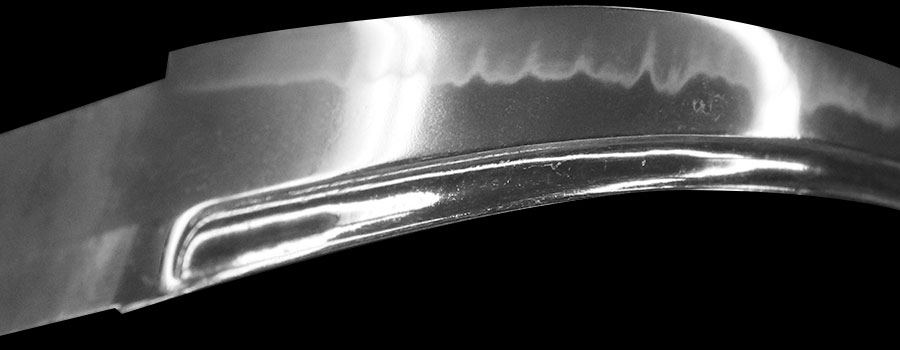
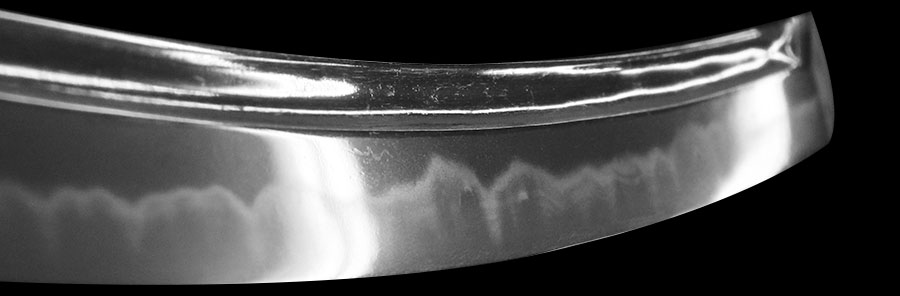
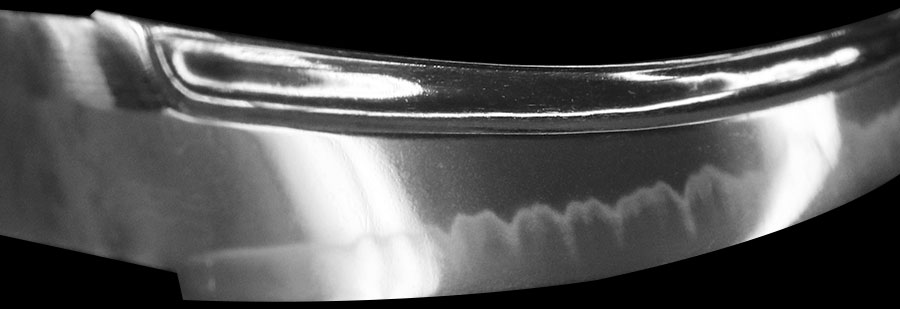
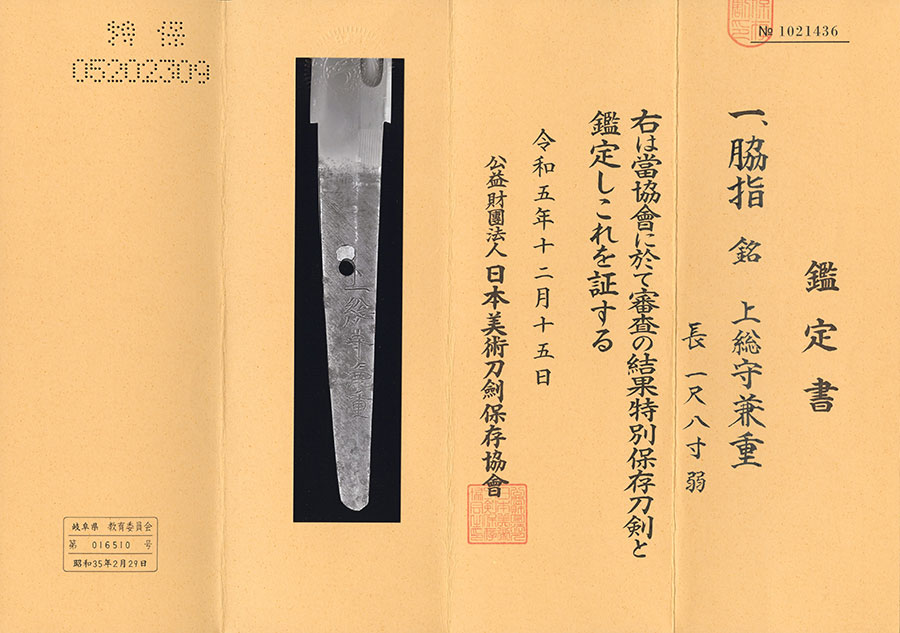
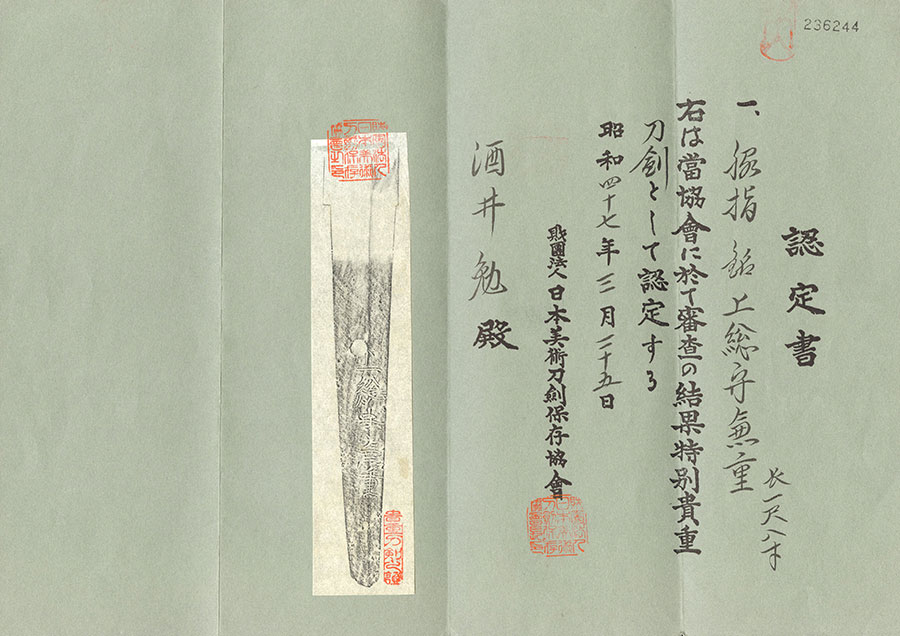
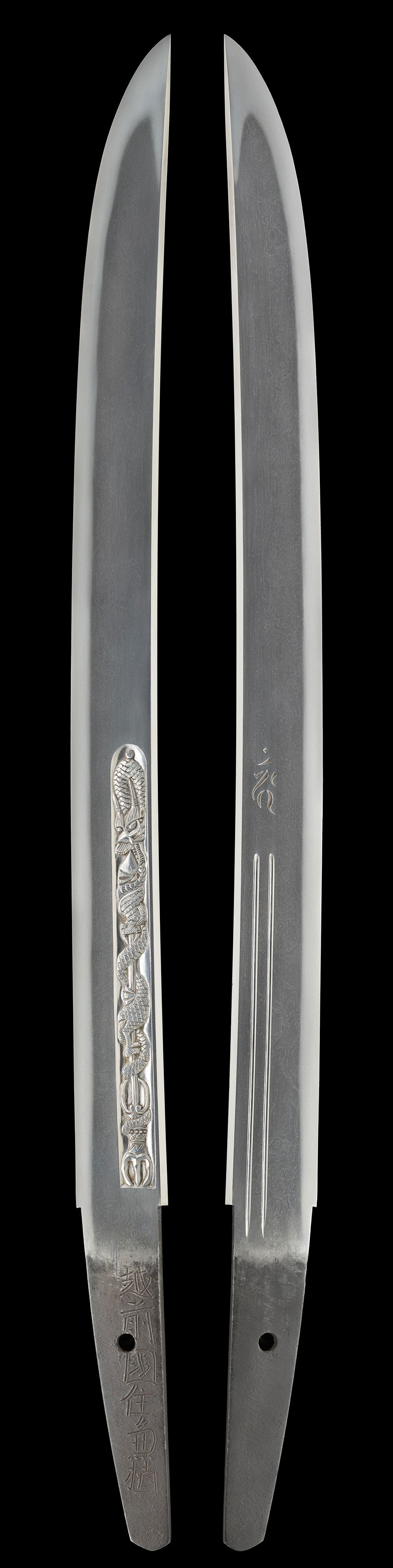
Edo was the base of the Kaneshige line, whose first master, Izumi no Kami Fujiwara Kaneshige, emerged among the city's swordsmiths after the shodai Yasutsugu and Hankei. The setsumei follow the account in the Kokon Kajibikō that he began as an arrowhead smith (yanone-kaji) in Echizen, then moved to Edo and turned to forging blades; his earliest dated work is a naginata inscribed Kan'ei 2 (1625), with dated pieces running into the Meireki era. A second smith signing Kazusa no Suke (and at times Kazusa no Kami) Fujiwara Kaneshige, whose common name is given as Tsuji Sukeemon, is treated as the son or pupil of the first and the second generation, born in Kan'ei 3 (1626) and most active in the Kanbun and Enpō years. The two were long held to be one man, the story being that, retained by the Tōdō house under Izumi no Kami, he changed his title to avoid sharing his lord's court designation; signed and age-dated works by Tsuji Kazusa no Suke alongside Yasutsugu and Shimosaka Ichinojō have since shown them to be separate individuals. The second generation also worked Ise pieces inscribed "made at Anotsu in Seshū," and recent comparison of the signatures has raised the possibility of substitute signing by Sukekurō Kanetsune. Recognition of the hand rests on a small set of recurring traits. The jihada is a tight ko-itame, sometimes standing or flowing toward masame, with fine ji-nie densely applied and chikei entering.
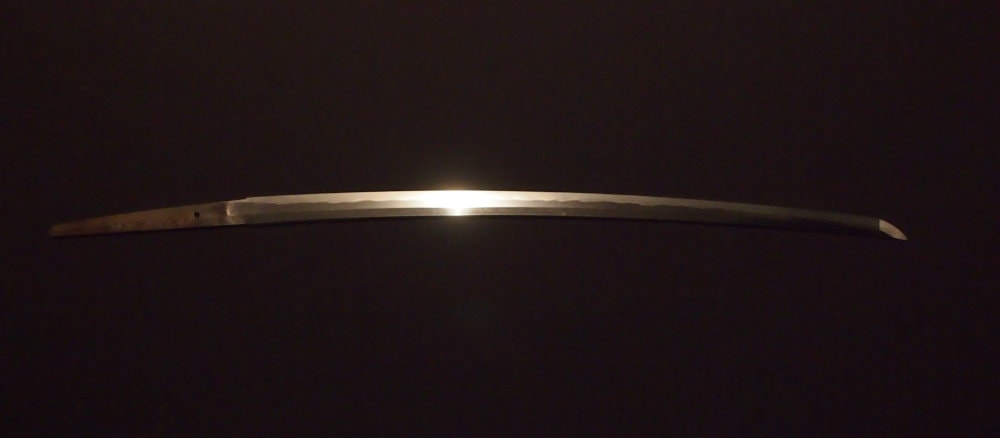
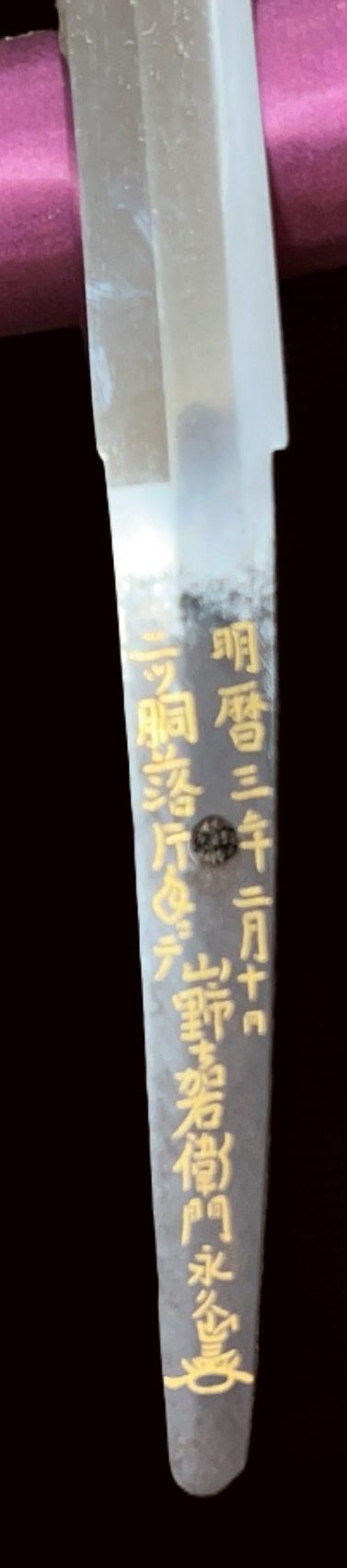
The first generation divides into two modes: a notare base carrying linked gunome and entering ashi, and a wide suguha bearing shallow notare in which the nioi is deep, the nie thick, and the nioiguchi bright and saeru, with kinsuji and sunagashi. The second generation concentrates on juzu-ba, a suguha-toned temper of linked gunome with aligned heads; the setsumei single out a fixed one-two rhythm, in which a single gunome is followed by two, as a principal point of appreciation, together with thick ashi, deep nioi, abundant nie, and fine kinsuji and sunagashi. Across both hands the sugata is the standard width with marked taper, shallow sori, and a compact chū-kissaki of the Kanbun shintō period, the bōshi mostly sugu with ko-maru and hakikake, and the long signature cut in a reishō clerical script with sujikai keshō-tending file marks read as an early form of the later decorative finish. The setsumei repeatedly place Kaneshige beside Nagasone Kotetsu, rendered also as Tōru, Batetsu, and Matetsu in these records, and beside the Hōjōji group of the same Edo circle; one notes the tradition that the second generation was Kotetsu's teacher, and a wakizashi with a Yamano cutting-test inscription dated Manji 4 (1661) carries a fully realized juzu-ba held to precede Kotetsu's own. Cutting-test inscriptions are a frequent feature of the line: gold-inlaid setsudan-mei by Yamano Ka'emon no Jō Nagahisa appear often, with Yamano Kanjūrō named as Ka'emon's earlier form before the Shōhō era, alongside mitsudō and stacked-body tests by Shibasaki Denzaemon Masatsugu and Maejima Hachirō Tomotsugu. The dated and provenanced blades in the NBTHK register, signed Izumi no Kami, Kazusa no Suke, and Kazusa no Kami, document a coherent two-generation Edo workshop whose juzu-ba and bright nie secured its standing among the leading shinto smiths of Musashi. Learn more →