Description

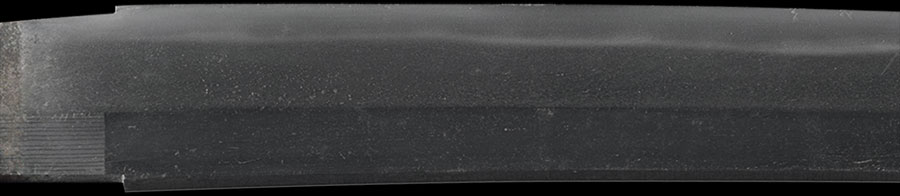
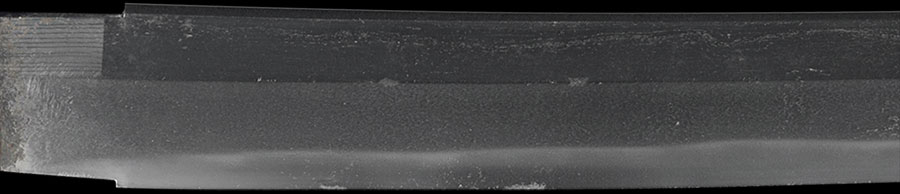
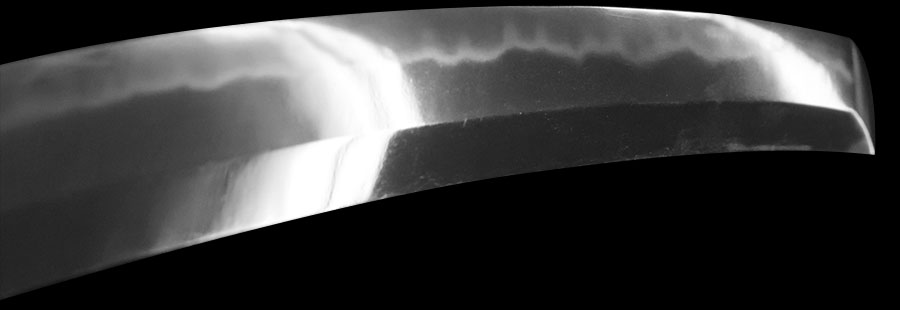
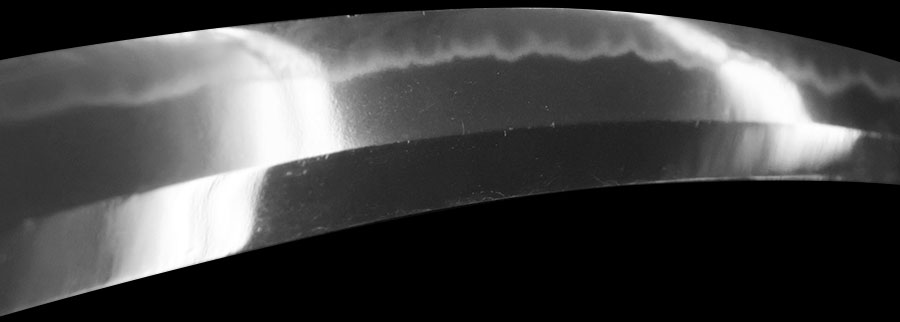
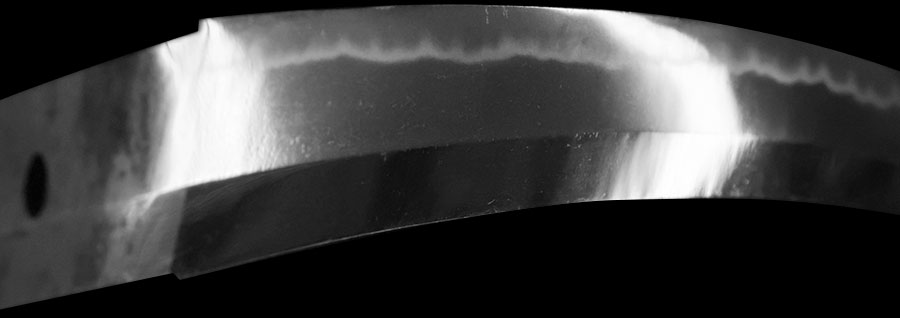
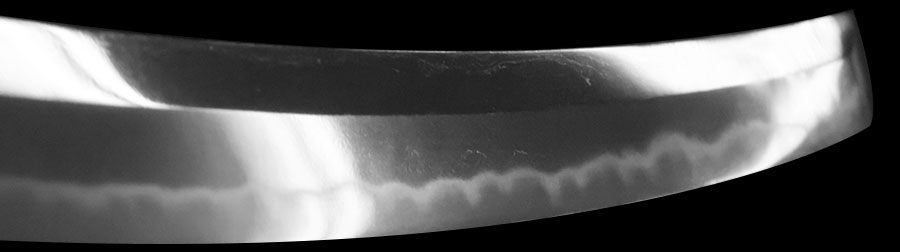
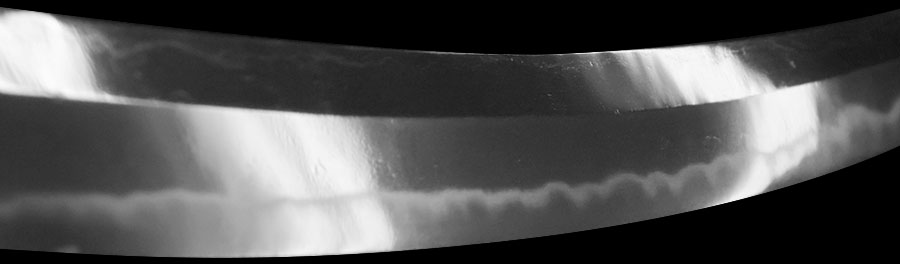
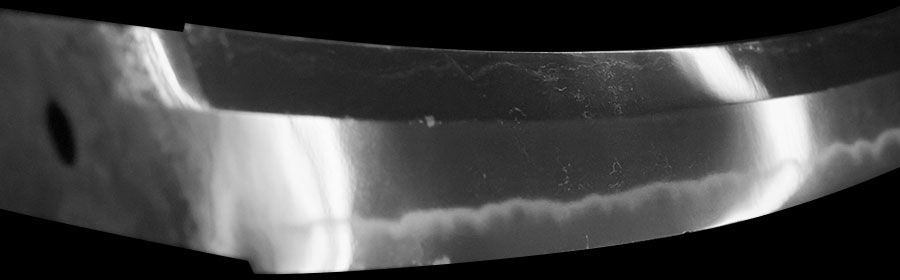
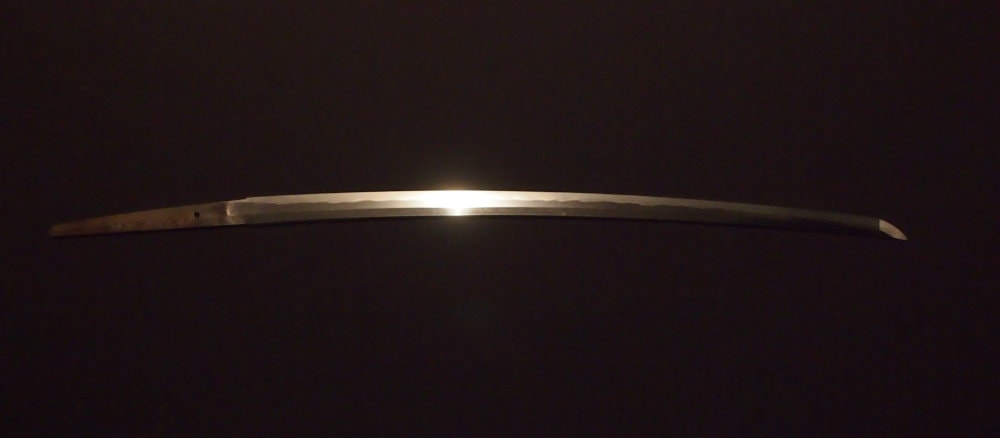
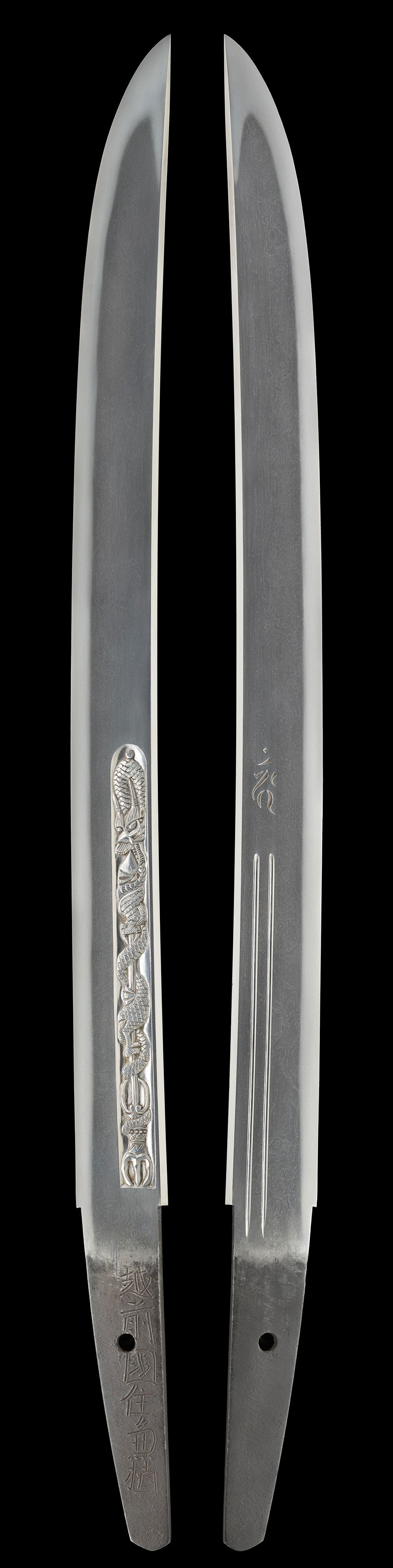
It has arrived, it has arrived—a precious *meito* *wakizashi* by Kazusa no Suke Fujiwara Kaneshige, which bears a striking resemblance to the masterpieces of Kotetsu. He is famous as the *saryo* of Todo Heisuke, the captain of the Shinsengumi's 8th unit. Todo Heisuke possessed a brave and daring character; in the Ikedaya Incident and other Shinsengumi battles in Kyoto, his nature of being the first to charge in earned him the nickname "Sakigake Sensei" (Master Pioneer). His skill with the sword reached the *mokuroku* level in Hokushin Itto-ryu, and he was counted among the Shinsengumi Shitenno (Four Heavenly Kings) alongside Okita Soji, Nagakura Shinpachi, and Saito Hajime. A handsome man who was well-educated, he was an Edokko accomplished in both literary and military arts, beloved by Kondo Isami and Hijikata Toshizo. It is said that Todo Heisuke was an illegitimate child of the Todo family, which is why he was able to carry a *meito* by Kazusa no Suke Kaneshige, which was among the most expensive blades at the time. Works by Kazusa no Suke Kaneshige are rarely seen today; it has long been said this is because they so closely resemble the work of Kotetsu that many had Kotetsu *mei* added to them in later generations. Kotetsu's teacher's father, Izumi no Kami Kaneshige, was active as an arrowhead smith during the Echizen era, later moving to Edo to become a swordsmith and flourishing as the *kakae-kaji* (retained smith) for Todo Takatora. The *mei* of Kotetsu was initially carved as "Kotetsu" (Old Iron), but he later adopted the character "Ko" (Tiger) from Lord Todo Takatora out of respect. It was once said that Todo Takatora, famous as a master castle builder favored by Toyotomi Hideyoshi and Tokugawa Ieyasu, received the title Izumi no Kami, and thus Kaneshige changed his name from Izumi no Kami to Kazusa no Suke out of deference to Takatora. However, subsequent research shows that this Kazusa no Suke Kaneshige was the son of Izumi no Kami Kaneshige and the senior apprentice to Nagasone Okisato Nyudo Kotetsu, teaching Kotetsu forging techniques while the two greatly refined their skills together. This *wakizashi* exhibits the *Kanbun Shinto* *sugata* identical to Kotetsu, with a distinct difference between the *moto-mihaba* and *saki-mihaba* and shallow *sori*. The *jigane* is forged in *ko-itame hada*, revealing a bright, fine, and powerful steel. The *hamon* is in *nioi-deki* with abundant *nie*, featuring a *notare-ba* mixed with *gunome-ba*. The *ashi* of the *gunome* are thick, and the *gunome* are continuous, forming a *juzu-ba*. It is a magnificent *wakizashi* where one can see the masterpiece style of Nagasone Okisato Nyudo Kotetsu. One can only be grateful that it survived without having its *mei* changed to Kotetsu. This time, we received this from an old family of the Kishu Domain who said, "We have grown old; this is a *wakizashi* we have cherished as a Kotetsu, but please pass it on at a low price to someone who will treasure it." Because there is some slight wear due to age, we are offering it at a special bargain price. If polished and submitted for *Tokubetsu Hozon Token* certification, one can expect it to rise even further in status. Please enjoy this masterpiece *wakizashi* that rivals Kotetsu.

上総介藤原兼重(虎鉄の兄弟子)(新撰組八番隊組長藤堂平助の差料としても有名) Kazusanosuke Fujiwara Kaneshige
Tokuho

上総介藤原兼重(虎鉄の兄弟子)(新撰組八番隊組長藤堂平助の差料としても有名) Kazusanosuke Fujiwara Kaneshige

Wakizashi

¥580,000

Tracked across 81 dealers worldwide · price history · sold archive

Specifications

Nagasa

55.4 cm

Sori

1.3 cm

Motohaba

3.06 cm

Sakihaba

1.9 cm

About the school

Edo Kaneshige School和泉守兼重派

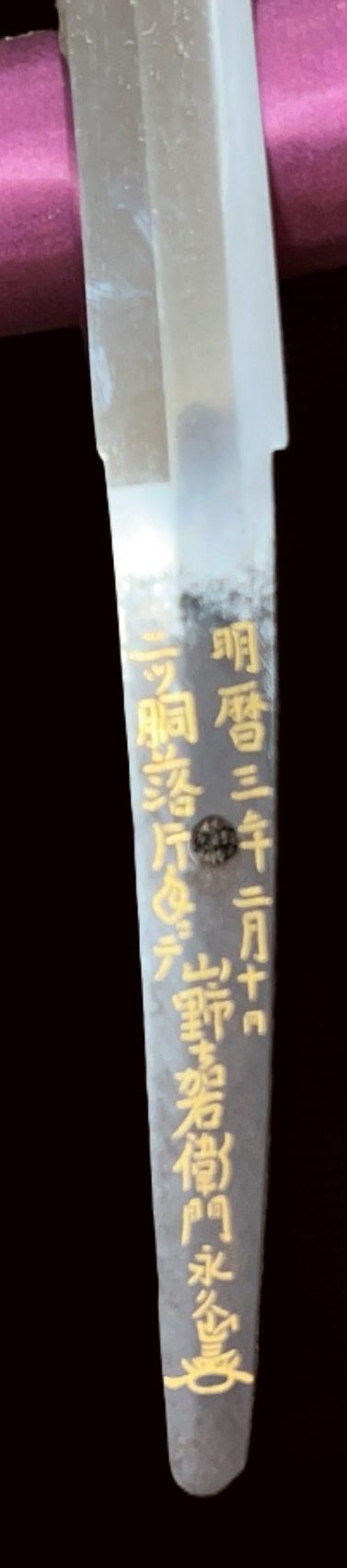
Edo was the base of the Kaneshige line, whose first master, Izumi no Kami Fujiwara Kaneshige, emerged among the city's swordsmiths after the shodai Yasutsugu and Hankei. The setsumei follow the account in the *Kokon Kajibikō* that he began as an arrowhead smith (*yanone-kaji*) in Echizen, then moved to Edo and turned to forging blades; his earliest dated work is a *naginata* inscribed Kan'ei 2 (1625), with dated pieces running into the Meireki era. A second smith signing Kazusa no Suke (and at times Kazusa no Kami) Fujiwara Kaneshige, whose common name is given as Tsuji Sukeemon, is treated as the son or pupil of the first and the second generation, born in Kan'ei 3 (1626) and most active in the Kanbun and Enpō years. The two were long held to be one man, the story being that, retained by the Tōdō house under Izumi no Kami, he changed his title to avoid sharing his lord's court designation; signed and age-dated works by Tsuji Kazusa no Suke alongside Yasutsugu and Shimosaka Ichinojō have since shown them to be separate individuals. The second generation also worked Ise pieces inscribed "made at Anotsu in Seshū," and recent comparison of the signatures has raised the possibility of substitute signing by Sukekurō Kanetsune. Recognition of the hand rests on a small set of recurring traits. The *jihada* is a tight *ko-itame*, sometimes standing or flowing toward *masame*, with fine *ji-nie* densely applied and *chikei* entering. The first generation divides into two modes: a *notare* base carrying linked *gunome* and entering *ashi*, and a wide *suguha* bearing shallow *notare* in which the *nioi* is deep, the *nie* thick, and the *nioiguchi* bright and *saeru*, with *kinsuji* and *sunagashi*. The second generation concentrates on *juzu-ba*, a *suguha*-toned temper of linked *gunome* with aligned heads; the setsumei single out a fixed one-two rhythm, in which a single *gunome* is followed by two, as a principal point of appreciation, together with thick *ashi*, deep *nioi*, abundant *nie*, and fine *kinsuji* and *sunagashi*. Across both hands the *sugata* is the standard width with marked taper, shallow *sori*, and a compact *chū-kissaki* of the Kanbun *shintō* period, the *bōshi* mostly *sugu* with *ko-maru* and *hakikake*, and the long signature cut in a *reishō* clerical script with *sujikai* *keshō*-tending file marks read as an early form of the later decorative finish. The setsumei repeatedly place Kaneshige beside Nagasone Kotetsu, rendered also as Tōru, Batetsu, and Matetsu in these records, and beside the Hōjōji group of the same Edo circle; one notes the tradition that the second generation was Kotetsu's teacher, and a *wakizashi* with a Yamano cutting-test inscription dated Manji 4 (1661) carries a fully realized *juzu-ba* held to precede Kotetsu's own. Cutting-test inscriptions are a frequent feature of the line: gold-inlaid *setsudan-mei* by Yamano Ka'emon no Jō Nagahisa appear often, with Yamano Kanjūrō named as Ka'emon's earlier form before the Shōhō era, alongside *mitsudō* and stacked-body tests by Shibasaki Denzaemon Masatsugu and Maejima Hachirō Tomotsugu. The dated and provenanced blades in the NBTHK register, signed Izumi no Kami, Kazusa no Suke, and Kazusa no Kami, document a coherent two-generation Edo workshop whose *juzu-ba* and bright *nie* secured its standing among the leading shinto smiths of Musashi.

Dealer

Nipponto

nipponto.co.jp

¥580,000

View on Nipponto