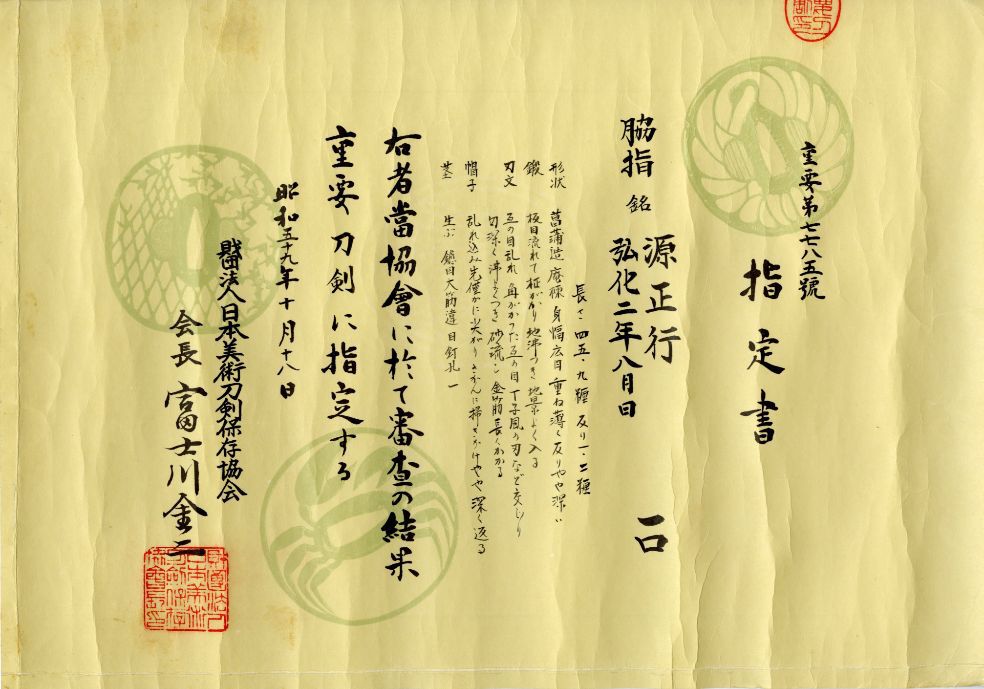
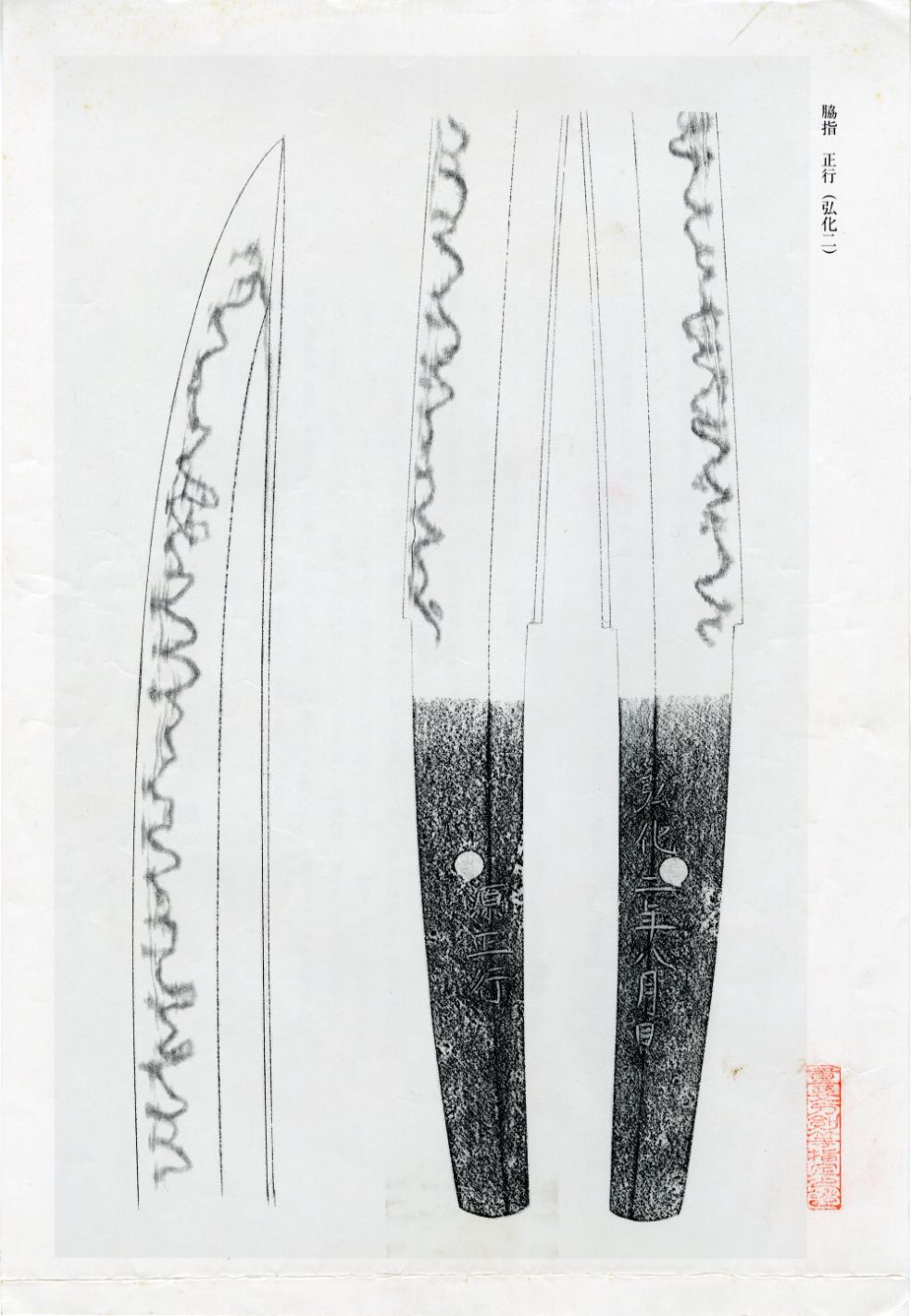
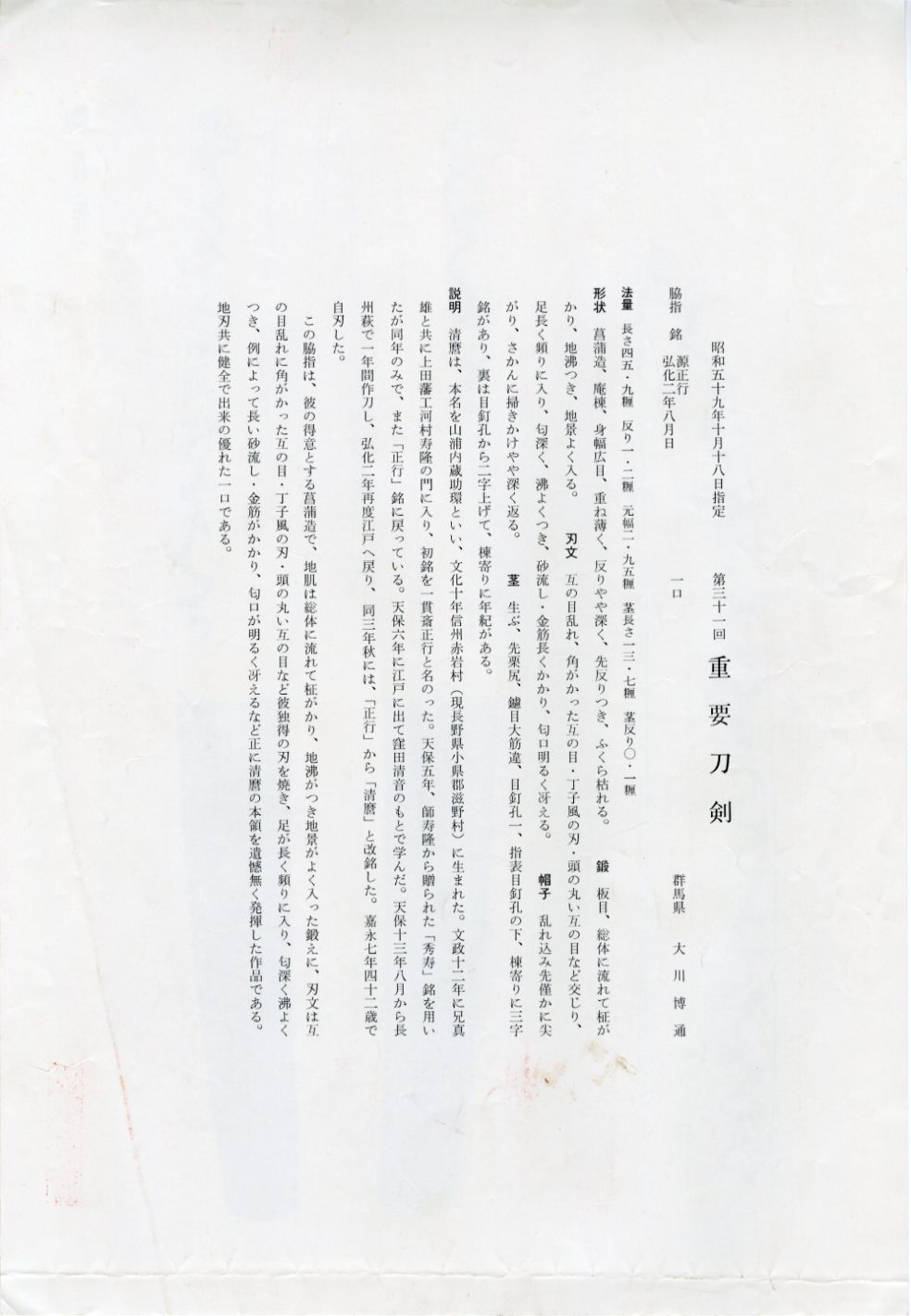
Masayuki is the early signature of Yamaura Naizōsuke Tamaki, the smith who in Kōka 3 took the name Kiyomaro and came to be called the Yotsuya Masamune, the foremost master of the shinshintō. The published sources put the identity beyond doubt: of one Tenpō 11 katana they write that "Yamaura Masayuki is, needless to say, the later Hara Kiyomaro"[[c:1]], and of another that "Minamoto Masayuki is the signature Kiyomaro used before Kōka 3"[[c:2]]. He was born in Bunka 10 as the second son of the gōshi Yamaura Nobukaze of Akaiwa village in Komoro, Shinshū, studied forging first with his elder brother Saneo under the Ueda-domain smith Kawamura Toshitaka, and went to Edo in Tenpō 5 under the patronage of the bakufu military scholar Kubota Seion. Looking past the Bizen and Kotetsu copying of his contemporaries, he reached back to the Sōshū masters and perfected himself in their transmission, the Shizu manner above all. The blades of this group belong entirely to that Masayuki period, before the change of name.
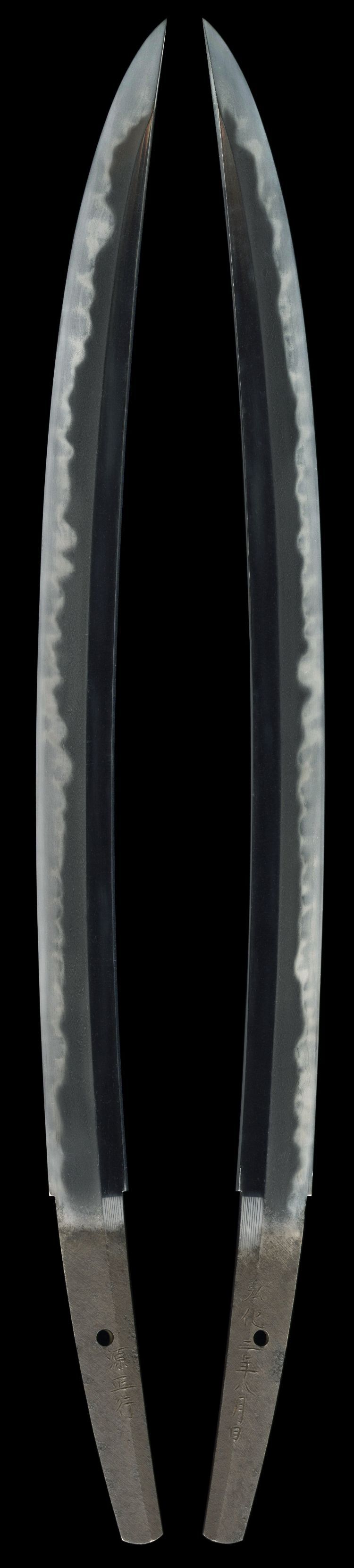
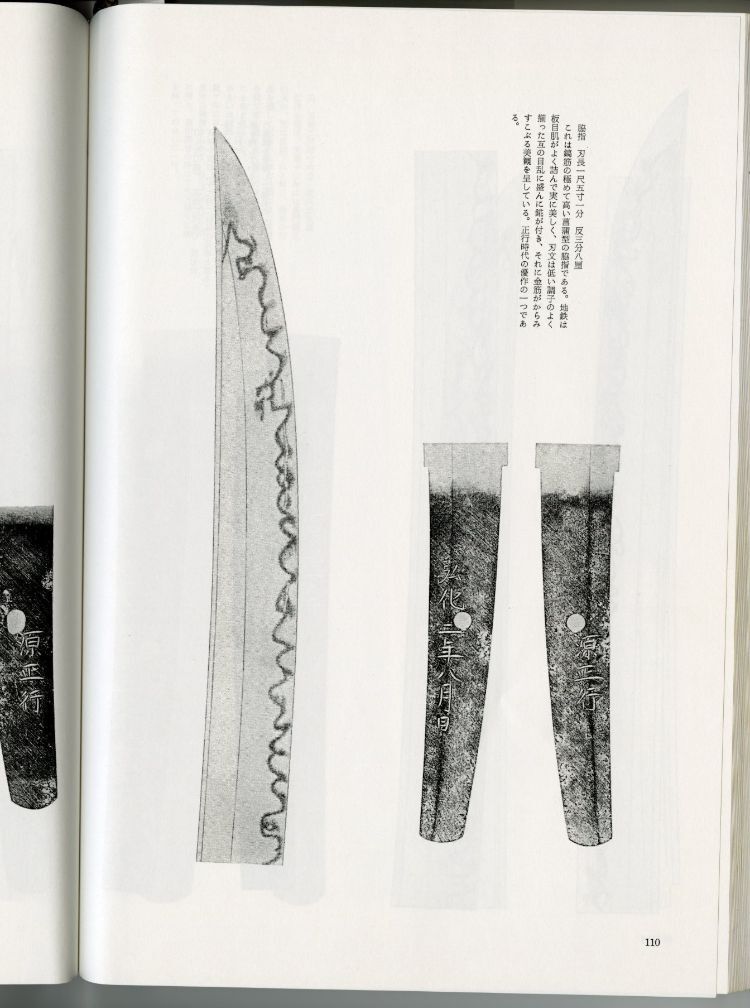
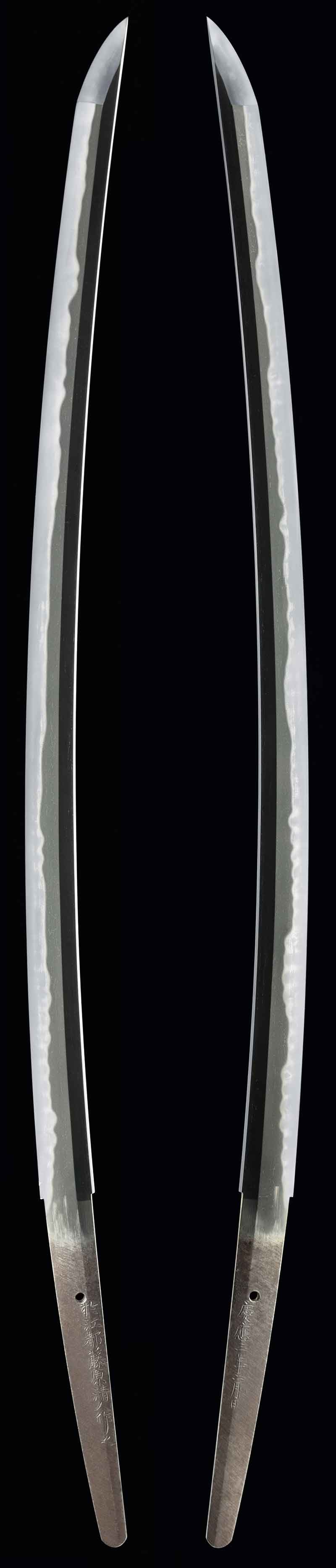
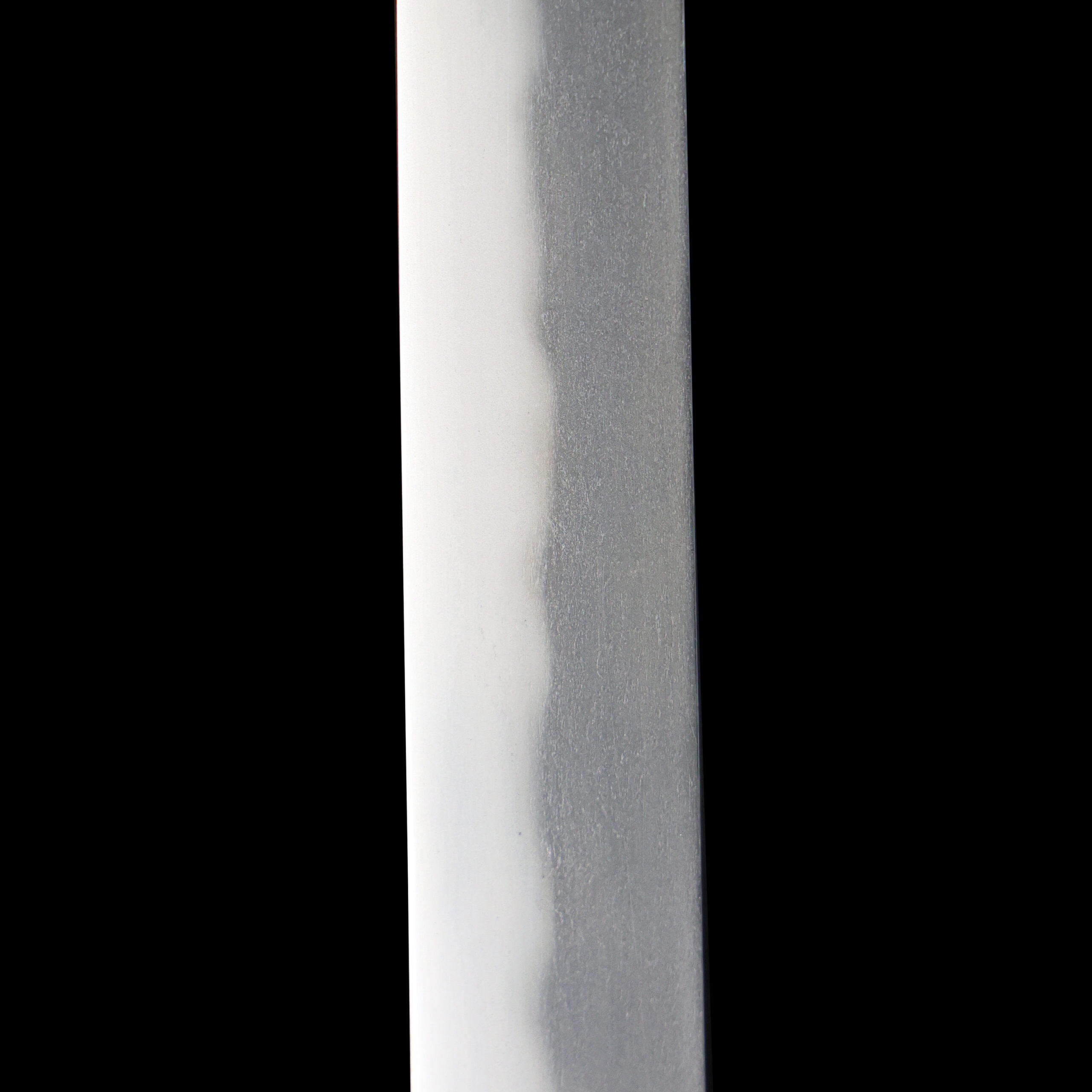
The hand is read in the temper. Over the body of his work runs a gunome-midare, and into it he sets a pointed togari-ba, the angular Shizu accent that distinguishes him where the bare gunome shared with every smith does not. With it go a ko-notare and ko-gunome, ashi entering long, the nioi deep and ko-nie attaching, the nie in places coarse and gathering, with yubashiri and tobiyaki on his most vigorous pieces. Through the temper run long kinsuji and frequent sunagashi, the conspicuous activity of his Sōshū-aimed ha, present on most of the corpus and singled out by the published record as remarkable even on the smaller blades. The nioiguchi is clear, at times somewhat blurred, the line restless rather than composed. The bōshi answers the edge: midare-komi, thrusting up pointed with hakikake, now and then a small round.
The jigane is worked in the Shizu manner. He forges an itame that flows, and in a good third of his blades it tends openly to masame, the make the published sources tie directly to his study of the Sōshū transmission. Ji-nie lies over it and chikei enter frequently, the grain standing a little; on the tighter pieces it draws into a ko-itame. There is no utsuri, for this is a shinshintō hand reaching back to Sōshū rather than a koto Bizen one, and the absence is itself part of the reading. The construction is imposing: the shinogi-zukuri katana wide or standard in body, the sori high or running toward the point, the chū-kissaki extended or a full ō-kissaki, several made in kanmuri-otoshi, the fukura withered for a keen impression.
Within the one Masayuki period the work falls into two registers. The first is the imposing Shizu-den katana, signed in the long forms Yamaura Tamaki Masayuki and Yamaura Tamaki Gen Masayuki, on which he carves twin grooves or gomabashi at the base; of a Tenpō 11 example made at twenty-eight the published sources say it "is filled with commanding spirit"[[c:3]], the vigorous construction one of his particular strengths. The second is the smaller-scale work, the shōbu-zukuri wakizashi and hira-zukuri tanto, a tighter ko-itame under a small midare with ko-gunome, cut with a thick-chisel two-character mei and, on one rare blade, a cutting-test inscription; the published commentary notes that in these years his manner of signing was not yet fixed, with unusual character forms and varied file marks on the tang. A Tenpō 11 katana subdued in impression is still called a masterpiece in the Shizu-den.
What sets the work apart is the very thing the judges name. His is the Sōshū aim worked out in Shinshū and on the road, the flowing masame-leaning itame and the pointed togari in a nie-laden gunome-midare, with the long kinsuji and sunagashi of a hand reaching for Shizu Saburō, set against the Bizen and Kotetsu imitation of the smiths around him. The published sources call Kiyomaro the foremost smith of the shinshintō, displaying technique in both ji and ha that surpasses others, and read even these early blades as already directed at the Sōshū upper reaches. He is the open record of how that mastery was reached: the Edo apprenticeship, the flight, the Nagato-uchi years at Hagi and the Komoro castle work, all documented in the signatures themselves.
For the collector he is a signed and fully knowable name from a short, dramatic life. The works on record run across tanto, wakizashi, katana, yari and naginata, nineteen of them in the Jūyō tier and all signed; he has no National Treasures and no Important Cultural Properties, his standing carried instead by that Jūyō body and by the documentary weight of the Masayuki signatures. The provenance is sparse but apt: one blade descends from Kubota Kiyone, the patron under whom he learned at Edo. One tantō, presented to the Hagi-domain retainer Seigai Fukuda, the published sources call "a work executed to the maker's full satisfaction"[[c:4]], and one wakizashi carries the uncommon cutting-test inscription Tata Dōdanbarai. Because none of these can ever leave the designated tiers freely, a signed Yamaura Masayuki reaches the market only seldom and at the top of it; a privately held example is a notable thing for a collector to encounter, a document of the early hand of the man who would become the Yotsuya Masamune.