Mino was founded, tradition holds, by immigrants: Kaneuji of the Yamato Tegai line settled at Shizu to work in the new Sōshū manner, so persuasively that later appraisers judged his best blades the closest of any to Masamune.
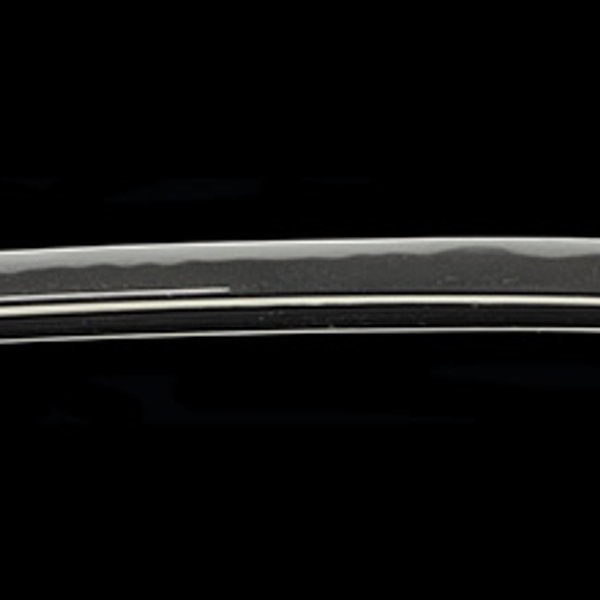
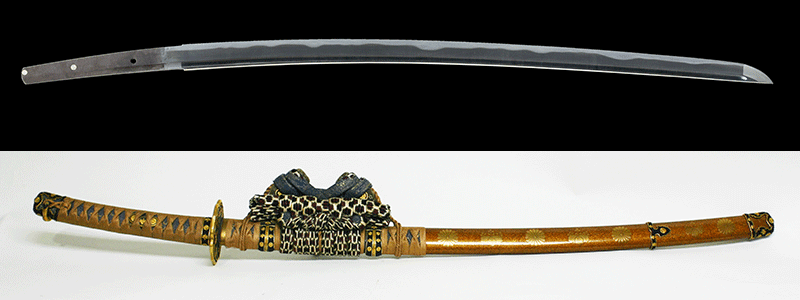
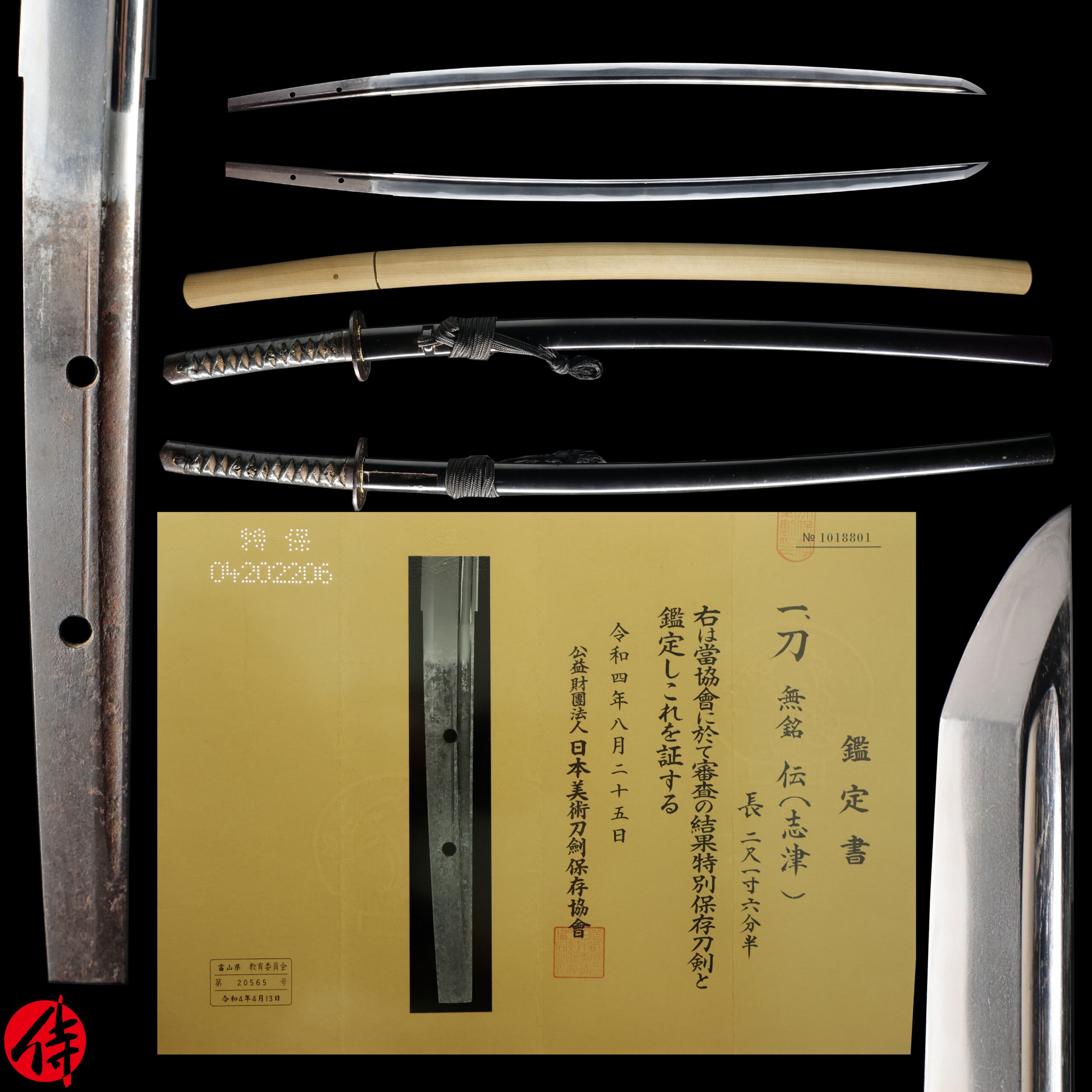
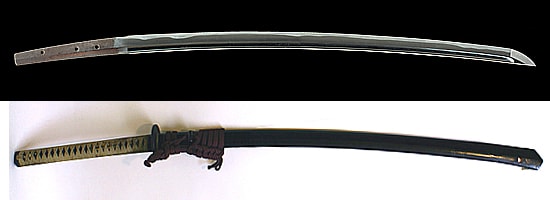
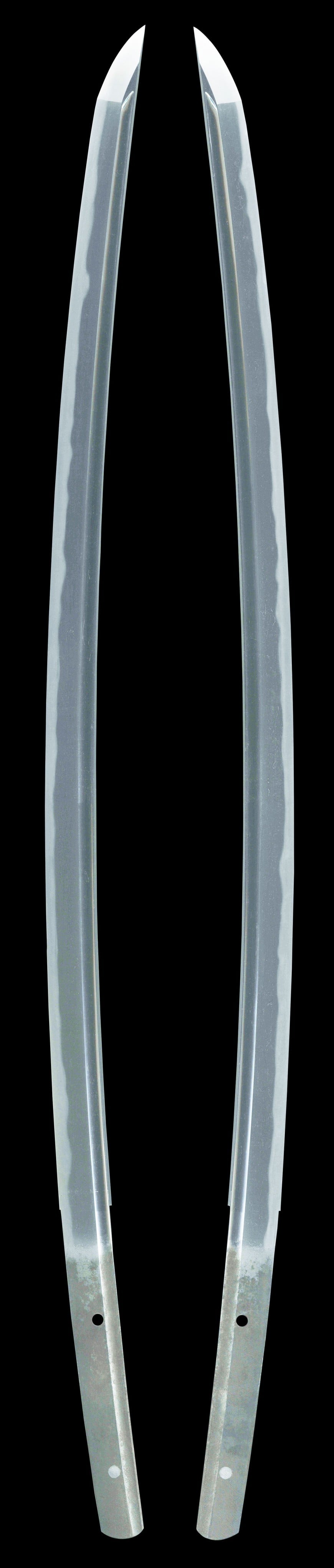
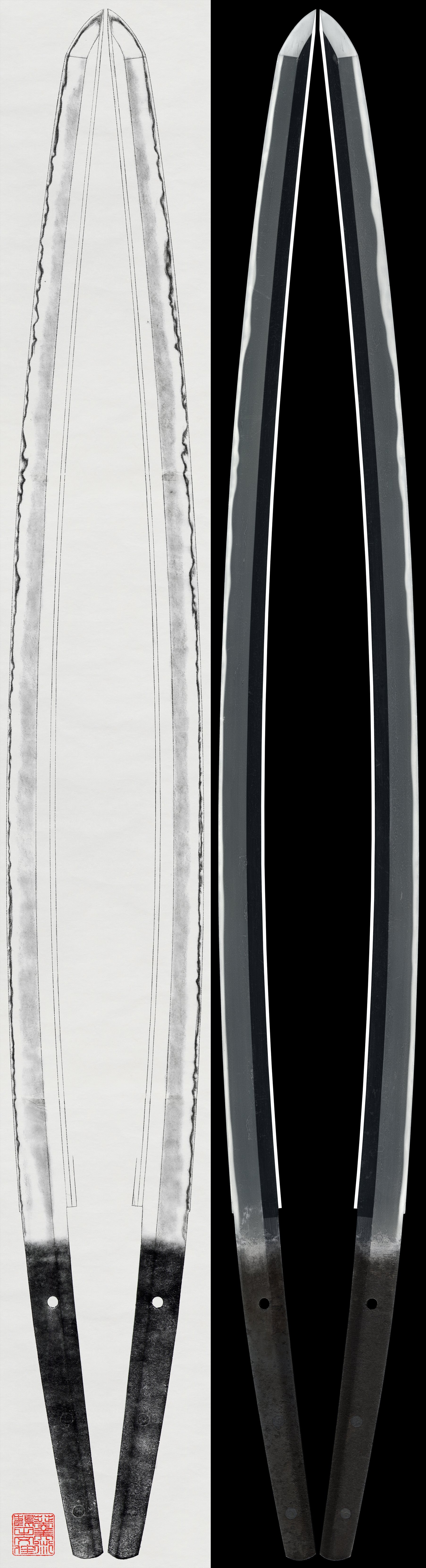
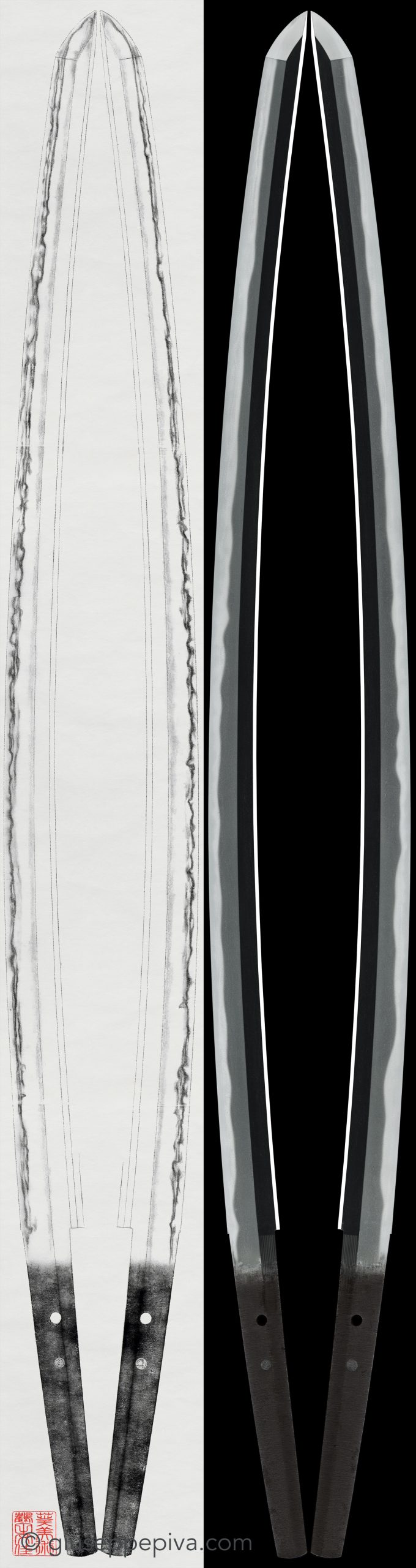
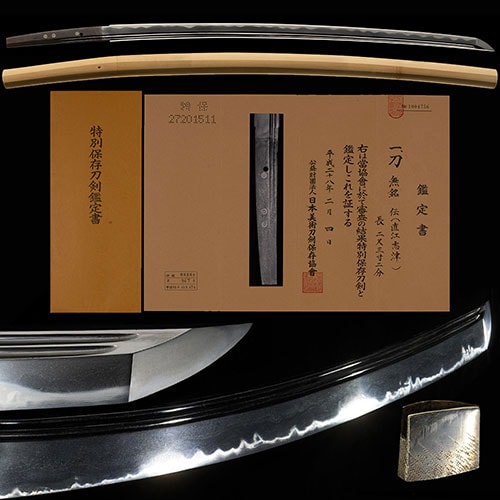
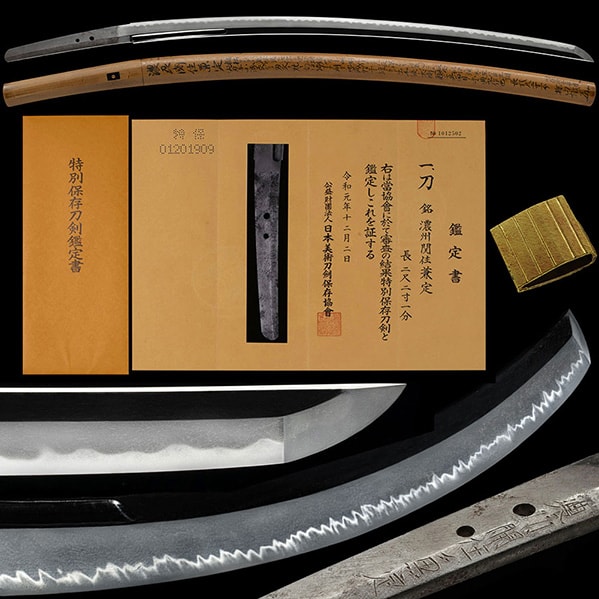
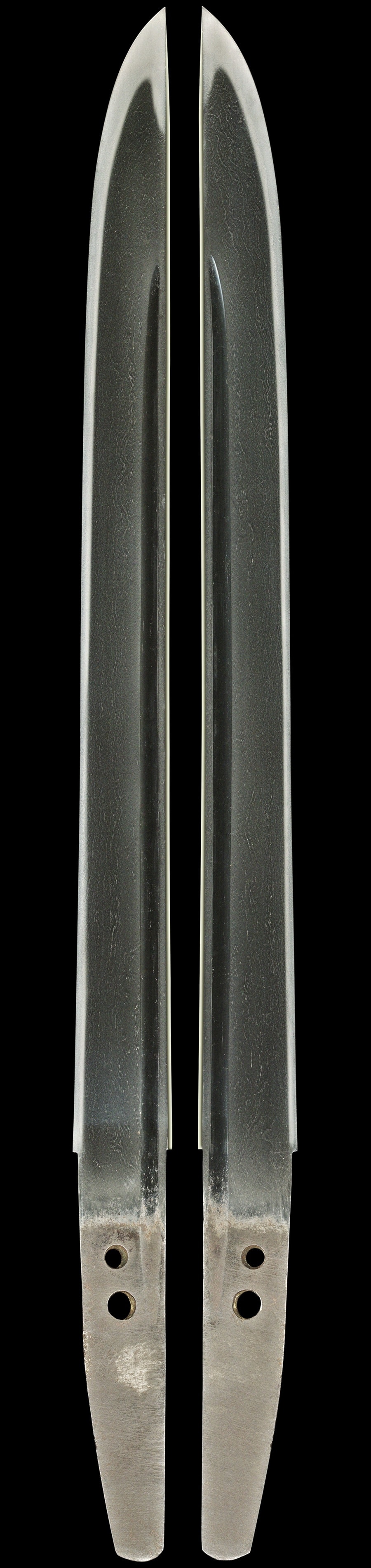
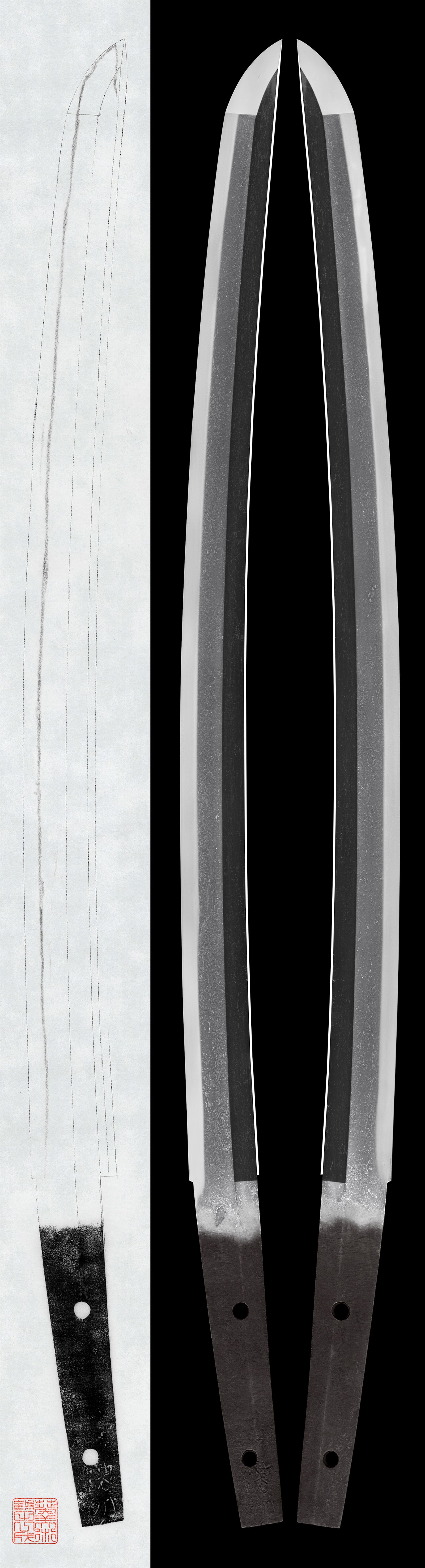
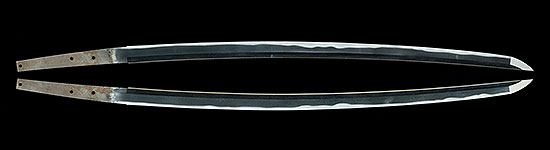
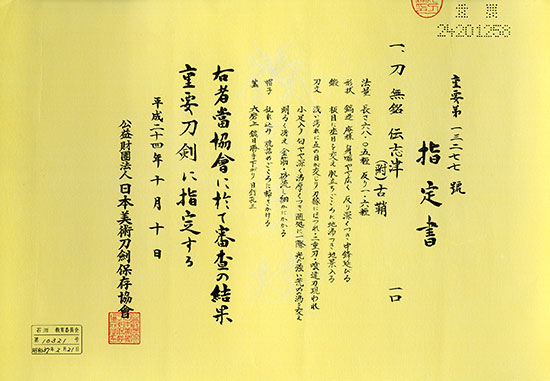
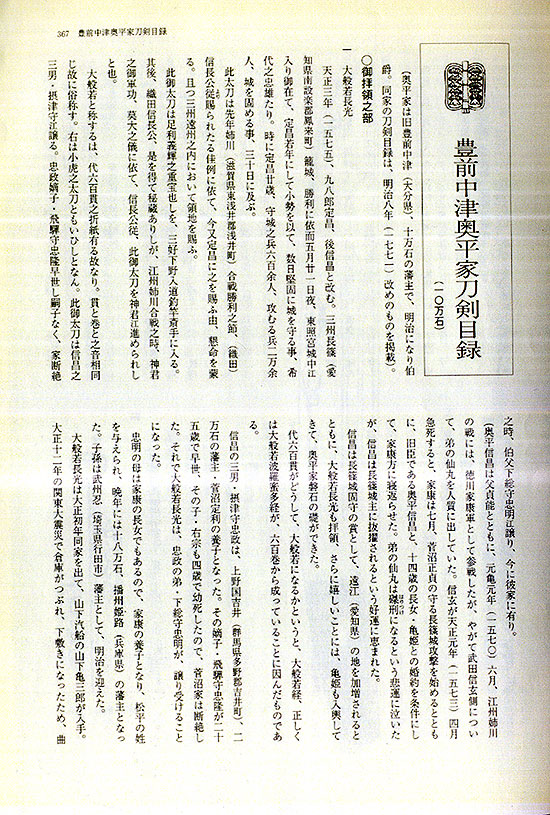
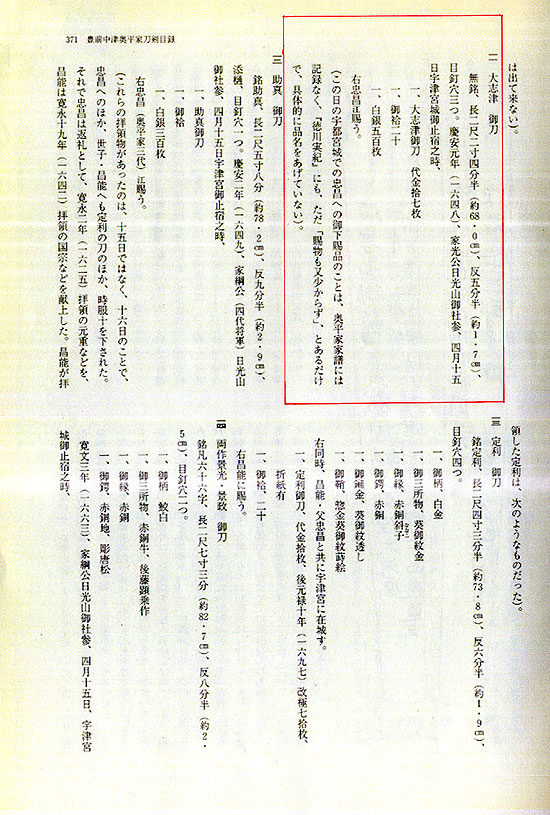
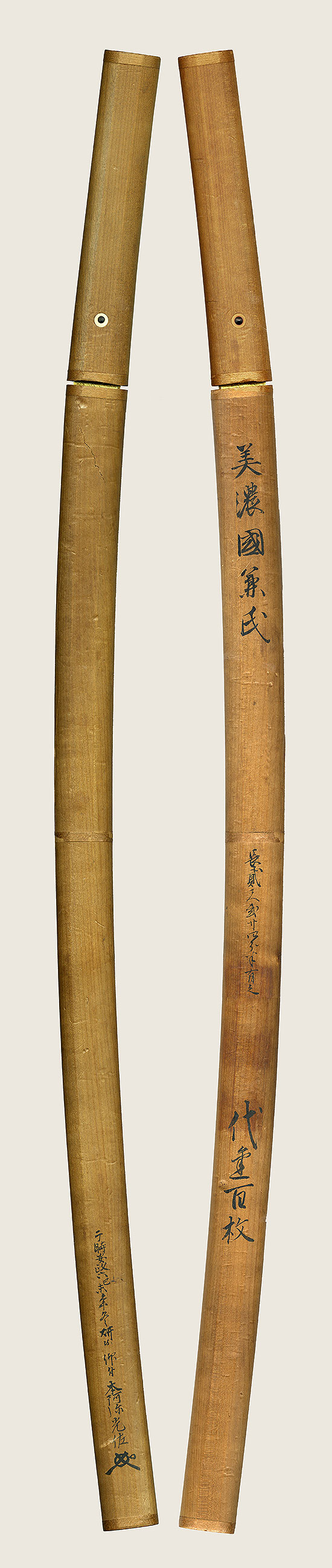
This is a Koto period katana, attributed to O-Shizu, the founder of the Mino tradition, Kanemitsu. It is a mumei (unsigned) blade, deeply curved with a thin kasane and a magnificent o-kissaki, showing the typical features of a Soshu masterwork from the Nanbokucho period. The blade comes with an NBTHK Juyo Token certification (58th session) and has a distinguished provenance from the Tokugawa Shogunate and the Okudaira family.
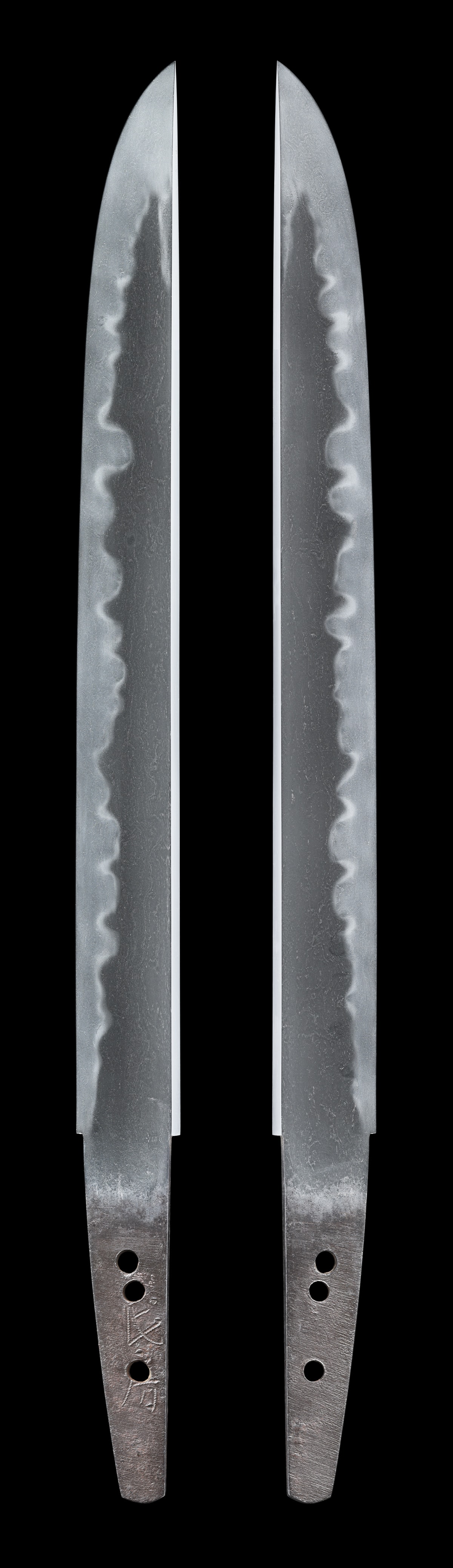
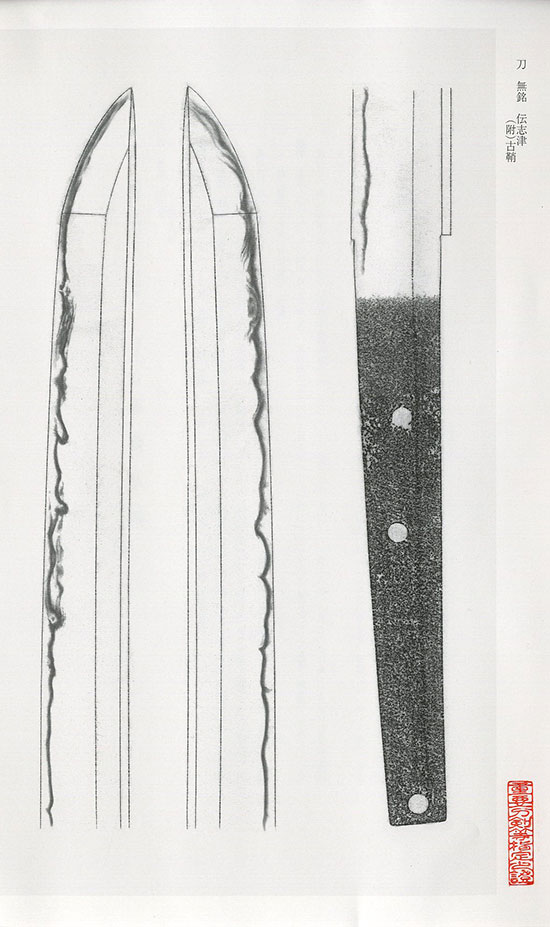
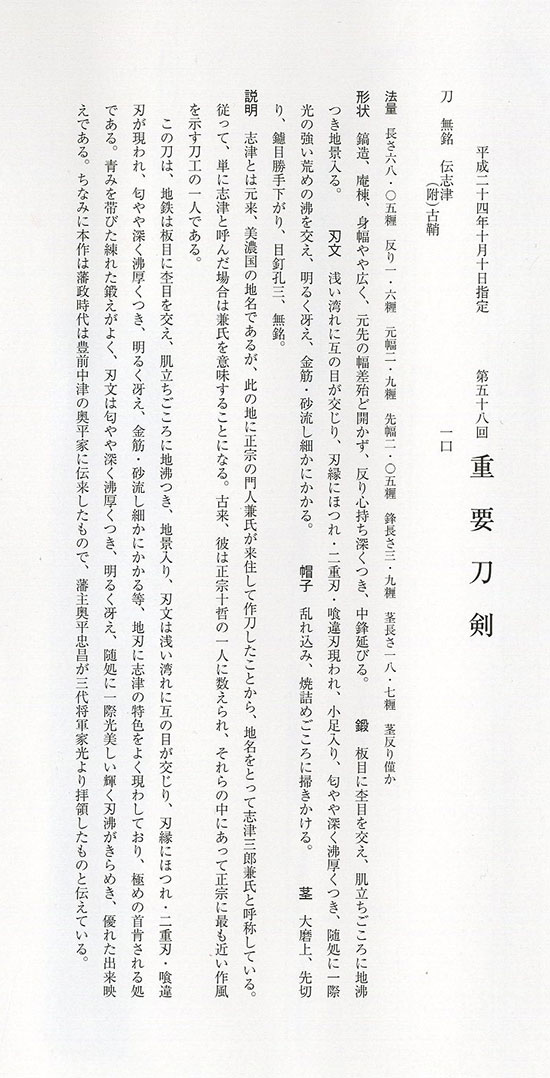
志津とは元来、美濃国の地名であるが、此の地に正宗の門人兼氏が来住して作刀したことから、地名をとって志津三郎兼氏と呼称している。 従って、単に志津と呼んだ場合は兼氏を意味することになる。古来、彼は正宗十哲の一人に数えられ、それらの中にあって正宗に最も近い作風 を示す刀工の一人である。 この刀は、地鉄は板目に杢目を交え、肌立ちごころに地沸つき、地景入り、刃文は浅い湾れに互の目が交じり、刃縁にほつれ・二重刃・喰違 刃が現われ、匂やや深く沸厚くつき、明るく冴え、金筋・砂流し細かにかかる等、地刃に志津の特色をよく現わしており、極めの首肯される処 である。青みを帯びた練れた鍛えがよく、刃文は匂やや深く沸厚くつき、明るく冴え、随処に一際光美しい輝く刃沸がきらめき、優れた出来映 えである。ちなみに本作は藩政時代は豊前中津の奥平家に伝来したもので、藩主奥平忠昌が三代将軍家光より拝領したものと伝えている。
 NihontoWatch
mumei · Mino · Nanbokucho · nagasa 68cm · sori 1.7cm

Mino-den · Mino
25 pieces on the market now
The Shizu tradition originated in Mino Province during the late Kamakura period when Kaneuji—originally of the Yamato Tegai school—relocated from his studies under Masamune of Sagami to the village of Shizu in Tagai District. Taking the place-name as his appellation, he became known as Shizu Saburō Kaneuji, and established a lineage that would become one of the most celebrated branches among the so-called Masamune Jittetsu (Ten Great Disciples of Masamune). While Kaneuji himself is often considered the paramount master of this group, the designation "Shizu" came to be applied broadly to unsigned works displaying the characteristic manner of this school, encompassing not only Kaneuji but also his contemporaries and successors working within the same stylistic orbit. A related category, Yamato Shizu, refers either to Kaneuji's early production before settling in Mino—when his work retained stronger Yamato Tegai characteristics—or to smiths of the Kanetsugu lineage who remained in Yamato rather than migrating to Mino. The collective hallmarks of Shizu workmanship reveal a distinctive synthesis of Sōshū-den brilliance and Yamato structural sensibilities. The forging typically displays flowing itame-hada mixed with mokume, frequently tending toward hada-dachi (standing grain), with areas where masame inclinations appear along the edge. A defining feature is the dense application of fine ji-nie, often described as thickly adhering, accompanied by abundant chikei that enter repeatedly to produce a notably clear and bright appearance. The hamon favors shallow notare as a foundation, mixed with gunome, ko-gunome, and pointed elements (togariba), forming compositions that range from gentle undulations to boldly disturbed patterns.
The temper is richly nie-based, with vigorous sunagashi streaming through the pattern, frequent kinsuji, and in many examples a "wet" quality (nureba) within the tempered area. Characteristic activities include hotsure along the habuchi, occasional nijūba (double-temper) effects that recall Yamato influence, and in some works the presence of linked gunome sequences. The bōshi commonly enters in midare-komi or notare-komi, turning back with pointed or rounded forms, and frequently displays hakikake at the tip. Among the upper tier of Sōshū-den productions, works attributed to the Shizu lineage are particularly valued for the way their gleaming ha-nie activities create patterns that are both vigorous and refined. The thick ji-nie and prominent chikei in the forging, combined with the bright, clear nioiguchi in the temper, result in blades that are described as saeru—possessing a luminous clarity that distinguishes superior examples. While the style stands closest to Masamune among his disciples, the Shizu manner retains its own individuality: the blending of Yamato characteristics into the Sōshū tradition produces a distinctive temperament in both ji and ha that connoisseurs recognize at a glance. Many extant examples survive only as greatly shortened (ō-suriage) and unsigned (mumei) blades, yet the workmanship in such pieces typically remains sound and well-preserved (kenzen), testifying to the fundamental excellence of forging and tempering that defines this celebrated school. Learn more →
| Smith | Era | Designated |
|---|---|---|
| Kaneuji兼氏 | 1319-1321 | 156 |
| Naoshizu直鎭 | 1532-1555 | 0 |
Mino in the Nanbokuchō period
Mino was founded, tradition holds, by immigrants: Kaneuji of the Yamato Tegai line settled at Shizu to work in the new Sōshū manner, so persuasively that later appraisers judged his best blades the closest of any to Masamune.
A blade of top-grade workmanship and condition, formally judged to rank with a nationally recognized Important Art Object (Jūyō Bijutsuhin). Awarded only at the NBTHK’s competitive annual examination.
Of Japan’s roughly 2.5 million registered swords, only 12,307 (about 1 in 203) have ever attained Jūyō.
The NBTHK (Nihon Bijutsu Tōken Hozon Kyōkai, the Society for the Preservation of Japanese Art Swords) is a public-interest incorporated foundation founded in 1948 and supervised by Japan’s Agency for Cultural Affairs (Bunkachō); it is based at the Japanese Sword Museum in Tokyo. Its expert panels physically examine each submitted work (shinsa) and issue a certificate (kanteishō) ranking it by artistic and historical merit. NBTHK papers are the most widely recognized standard of authentication for Japanese swords and fittings.
NBTHK official siteCustomer-initiated returns accepted within two days of arrival; return shipping paid by customer and fees non-refundable. Returns/refunds unavailable for overseas deliveries.
This is a Koto period katana, attributed to O-Shizu, the founder of the Mino tradition, Kanemitsu. It is a mumei (unsigned) blade, deeply curved with a thin kasane and a magnificent o-kissaki, showing the typical features of a Soshu masterwork from the Nanbokucho period. The blade comes with an NBTHK Juyo Token certification (58th session) and has a distinguished provenance from the Tokugawa Shogunate and the Okudaira family.
志津とは元来、美濃国の地名であるが、此の地に正宗の門人兼氏が来住して作刀したことから、地名をとって志津三郎兼氏と呼称している。 従って、単に志津と呼んだ場合は兼氏を意味することになる。古来、彼は正宗十哲の一人に数えられ、それらの中にあって正宗に最も近い作風 を示す刀工の一人である。 この刀は、地鉄は板目に杢目を交え、肌立ちごころに地沸つき、地景入り、刃文は浅い湾れに互の目が交じり、刃縁にほつれ・二重刃・喰違 刃が現われ、匂やや深く沸厚くつき、明るく冴え、金筋・砂流し細かにかかる等、地刃に志津の特色をよく現わしており、極めの首肯される処 である。青みを帯びた練れた鍛えがよく、刃文は匂やや深く沸厚くつき、明るく冴え、随処に一際光美しい輝く刃沸がきらめき、優れた出来映 えである。ちなみに本作は藩政時代は豊前中津の奥平家に伝来したもので、藩主奥平忠昌が三代将軍家光より拝領したものと伝えている。
NihontoWatchmumei · Mino · Nanbokucho · nagasa 68cm · sori 1.7cm
Mino-den · Mino
25 pieces on the market now
The Shizu tradition originated in Mino Province during the late Kamakura period when Kaneuji—originally of the Yamato Tegai school—relocated from his studies under Masamune of Sagami to the village of Shizu in Tagai District. Taking the place-name as his appellation, he became known as Shizu Saburō Kaneuji, and established a lineage that would become one of the most celebrated branches among the so-called Masamune Jittetsu (Ten Great Disciples of Masamune). While Kaneuji himself is often considered the paramount master of this group, the designation "Shizu" came to be applied broadly to unsigned works displaying the characteristic manner of this school, encompassing not only Kaneuji but also his contemporaries and successors working within the same stylistic orbit. A related category, Yamato Shizu, refers either to Kaneuji's early production before settling in Mino—when his work retained stronger Yamato Tegai characteristics—or to smiths of the Kanetsugu lineage who remained in Yamato rather than migrating to Mino. The collective hallmarks of Shizu workmanship reveal a distinctive synthesis of Sōshū-den brilliance and Yamato structural sensibilities. The forging typically displays flowing itame-hada mixed with mokume, frequently tending toward hada-dachi (standing grain), with areas where masame inclinations appear along the edge. A defining feature is the dense application of fine ji-nie, often described as thickly adhering, accompanied by abundant chikei that enter repeatedly to produce a notably clear and bright appearance. The hamon favors shallow notare as a foundation, mixed with gunome, ko-gunome, and pointed elements (togariba), forming compositions that range from gentle undulations to boldly disturbed patterns.
The temper is richly nie-based, with vigorous sunagashi streaming through the pattern, frequent kinsuji, and in many examples a "wet" quality (nureba) within the tempered area. Characteristic activities include hotsure along the habuchi, occasional nijūba (double-temper) effects that recall Yamato influence, and in some works the presence of linked gunome sequences. The bōshi commonly enters in midare-komi or notare-komi, turning back with pointed or rounded forms, and frequently displays hakikake at the tip. Among the upper tier of Sōshū-den productions, works attributed to the Shizu lineage are particularly valued for the way their gleaming ha-nie activities create patterns that are both vigorous and refined. The thick ji-nie and prominent chikei in the forging, combined with the bright, clear nioiguchi in the temper, result in blades that are described as saeru—possessing a luminous clarity that distinguishes superior examples. While the style stands closest to Masamune among his disciples, the Shizu manner retains its own individuality: the blending of Yamato characteristics into the Sōshū tradition produces a distinctive temperament in both ji and ha that connoisseurs recognize at a glance. Many extant examples survive only as greatly shortened (ō-suriage) and unsigned (mumei) blades, yet the workmanship in such pieces typically remains sound and well-preserved (kenzen), testifying to the fundamental excellence of forging and tempering that defines this celebrated school. Learn more →
| Smith | Era | Designated |
|---|---|---|
| Kaneuji兼氏 | 1319-1321 | 156 |
| Naoshizu直鎭 | 1532-1555 | 0 |
Mino in the Nanbokuchō period
Mino was founded, tradition holds, by immigrants: Kaneuji of the Yamato Tegai line settled at Shizu to work in the new Sōshū manner, so persuasively that later appraisers judged his best blades the closest of any to Masamune.
A blade of top-grade workmanship and condition, formally judged to rank with a nationally recognized Important Art Object (Jūyō Bijutsuhin). Awarded only at the NBTHK’s competitive annual examination.
Of Japan’s roughly 2.5 million registered swords, only 12,307 (about 1 in 203) have ever attained Jūyō.
The NBTHK (Nihon Bijutsu Tōken Hozon Kyōkai, the Society for the Preservation of Japanese Art Swords) is a public-interest incorporated foundation founded in 1948 and supervised by Japan’s Agency for Cultural Affairs (Bunkachō); it is based at the Japanese Sword Museum in Tokyo. Its expert panels physically examine each submitted work (shinsa) and issue a certificate (kanteishō) ranking it by artistic and historical merit. NBTHK papers are the most widely recognized standard of authentication for Japanese swords and fittings.
NBTHK official siteCustomer-initiated returns accepted within two days of arrival; return shipping paid by customer and fees non-refundable. Returns/refunds unavailable for overseas deliveries.