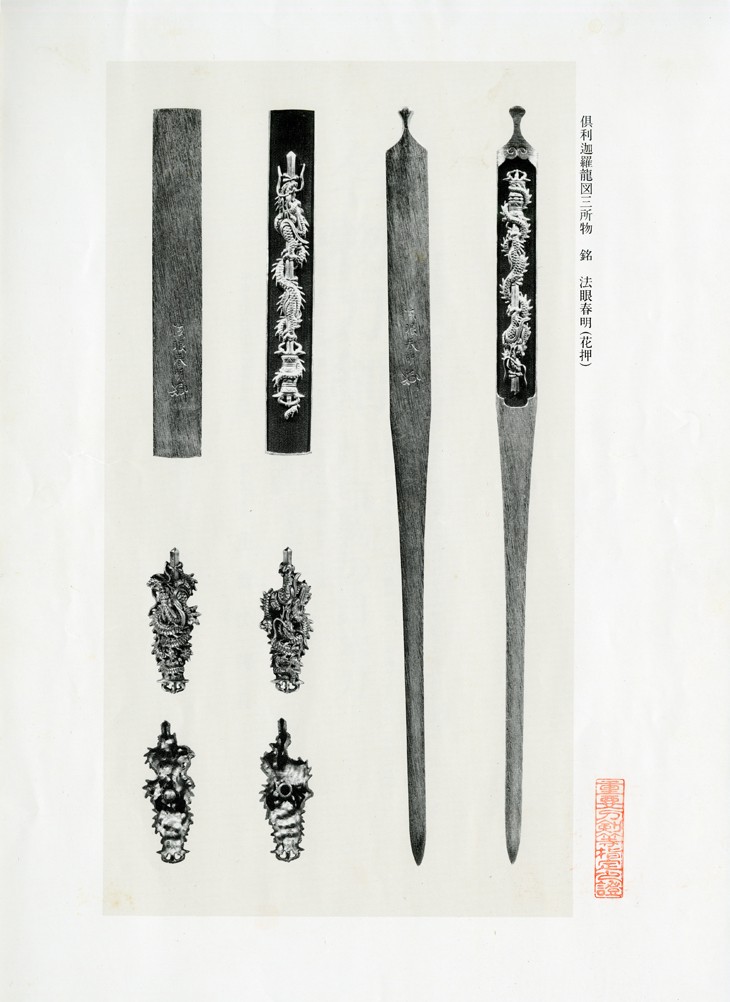
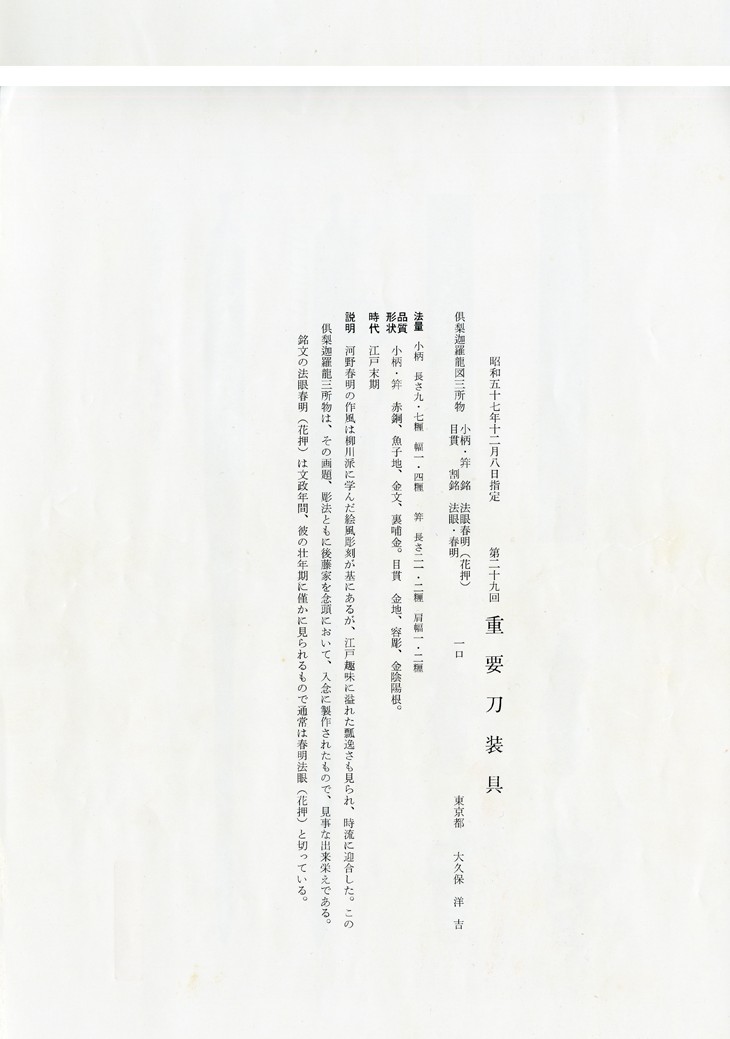
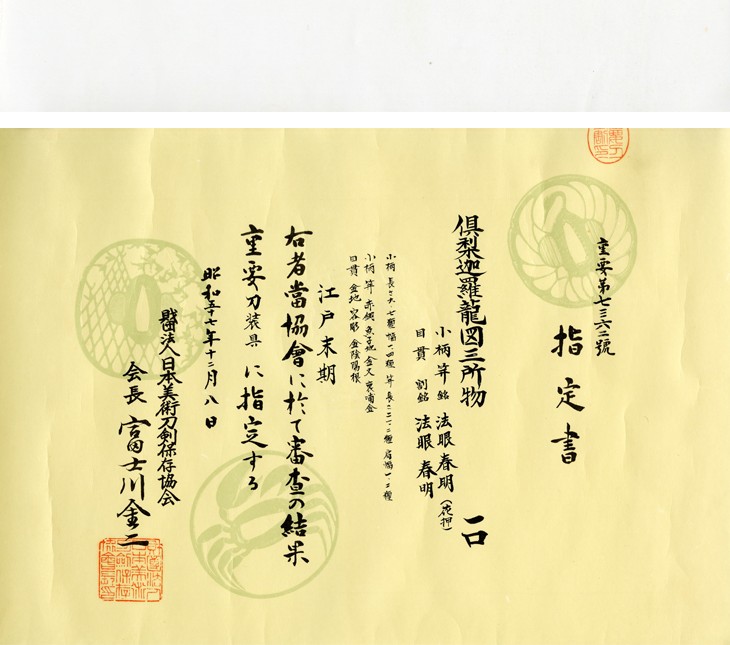
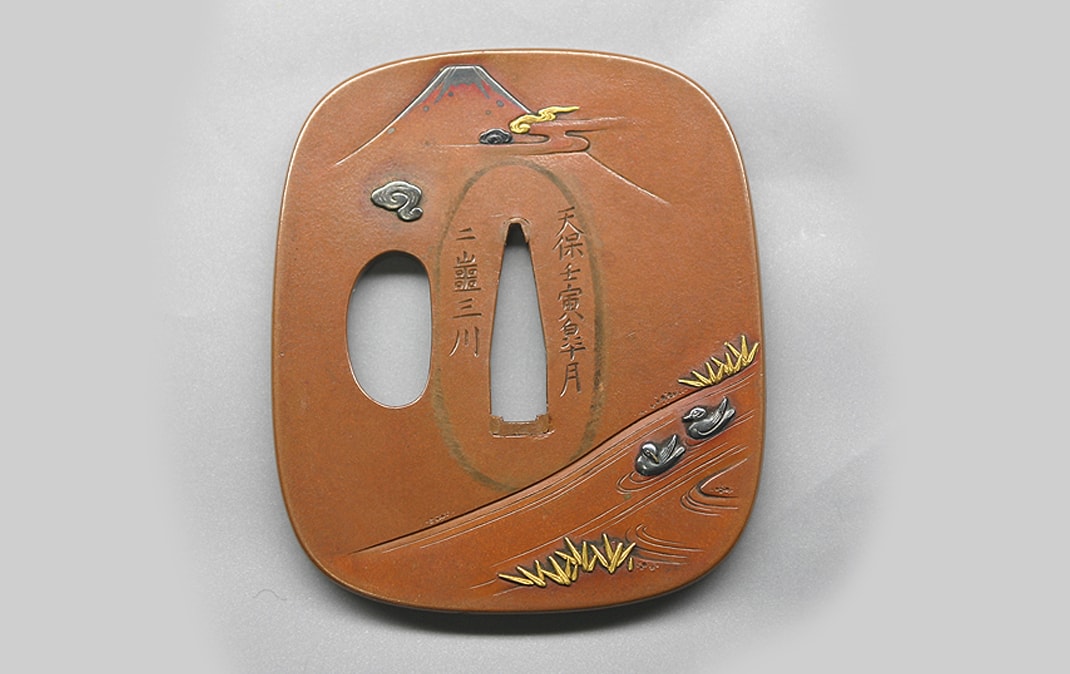
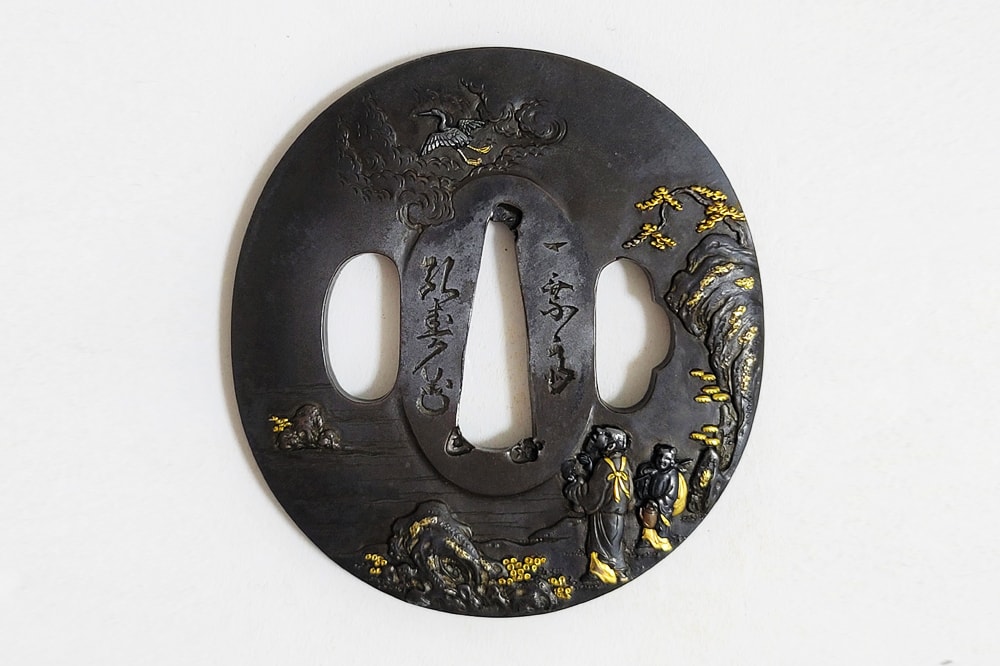
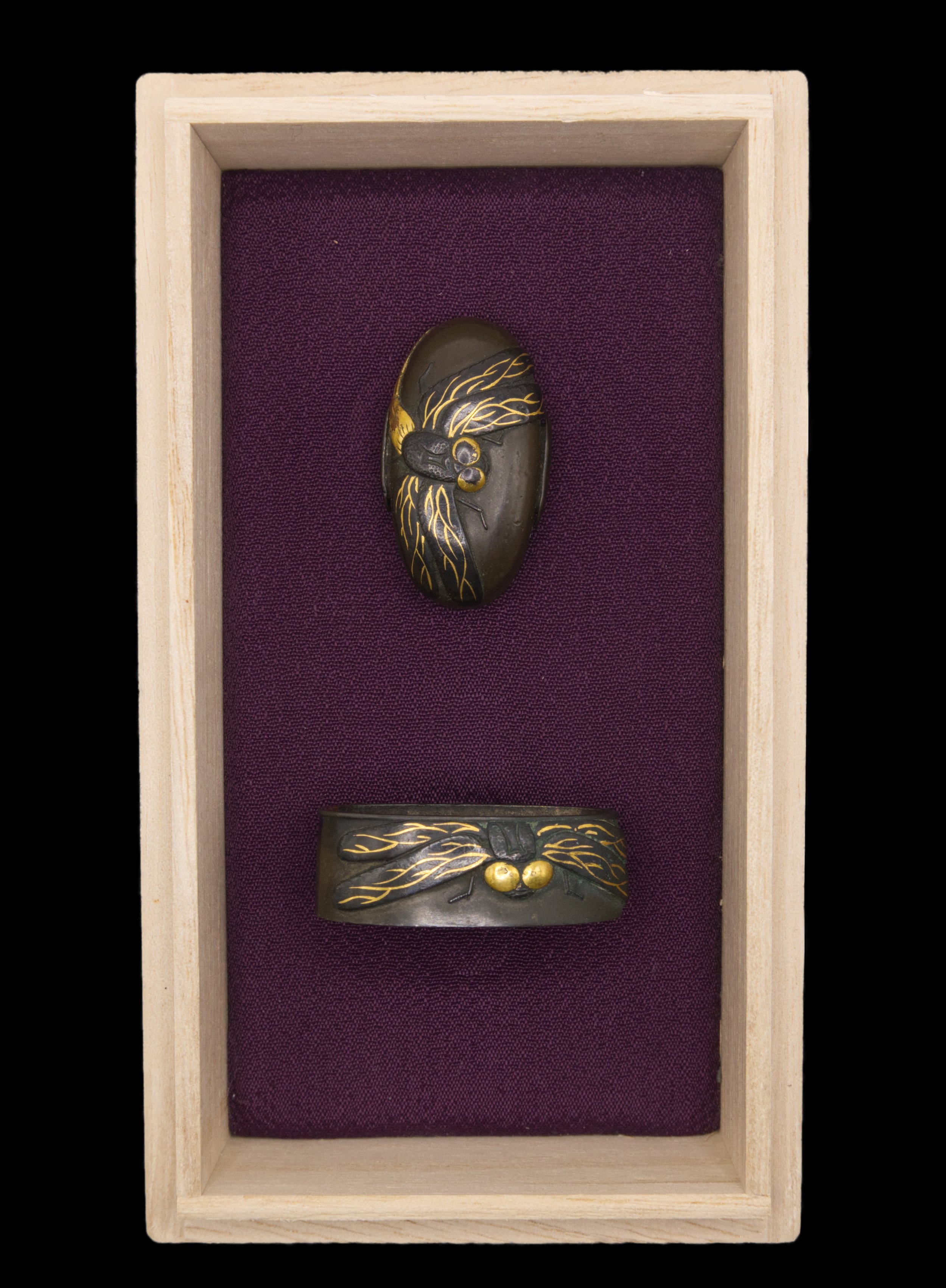
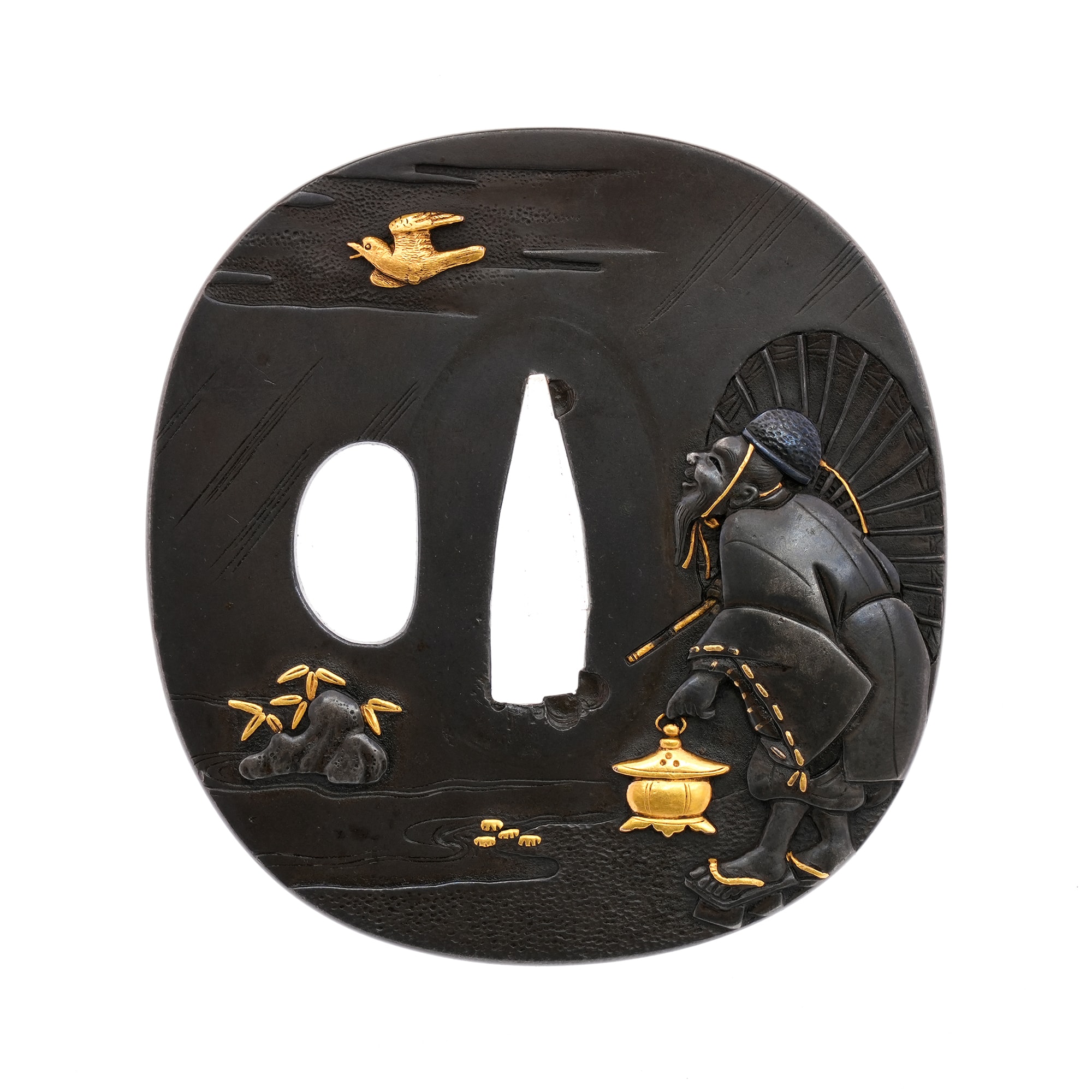
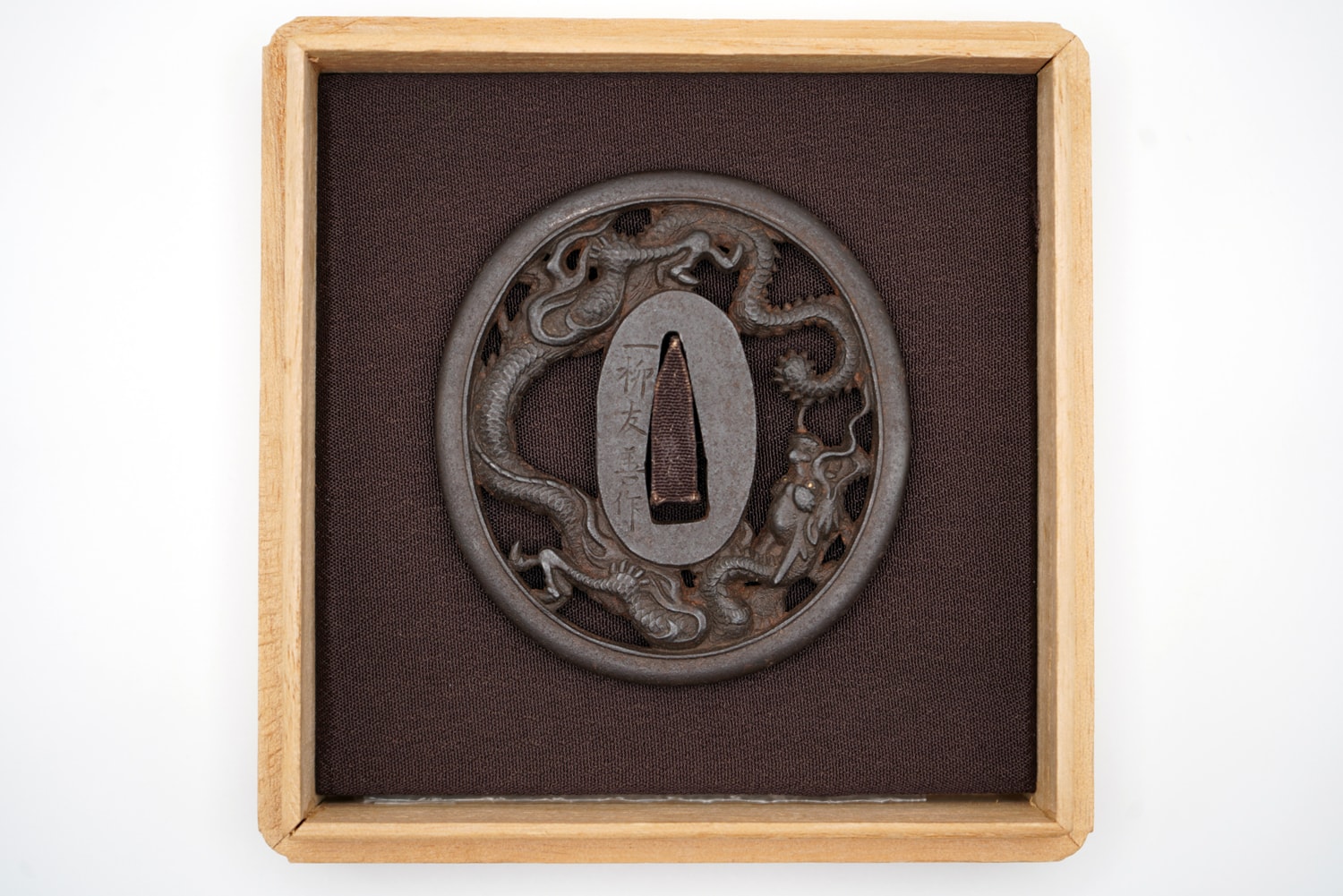
Kono Shunmei (1787--1857) was born in Edo and entered the studio of Yanagawa Naoharu of the Yokoya lineage at the age of fifteen, in Kyowa 2 (1802). He initially signed his work Haruto, but during the Bunka era changed his art name to Shunmei. In the early Bunsei era he was appointed Hokyo, and before long advanced to the rank of Hogen. Active in the same period as Goto Ichijo, Shunmei is regarded as one of the representative Edo metalworkers of his day. His sphere of activity, however, was not confined to the capital: around the Bunsei era he traveled extensively through the Tohoku region and northern Kanto, producing works on commission for wealthy patrons and prosperous farming families, and leaving behind several notable masterpieces in Sendai and at Kamegasaki in Tou. In his later years, during the Ka'ei and Ansei eras, he journeyed to the Echigo region, where he ultimately died. Works from these itinerant periods bear supplementary inscriptions recording their place of execution, and he also adopted the go Jippo-o ("Old Man of Ten Directions"), a name reflective of his wide-ranging travels.
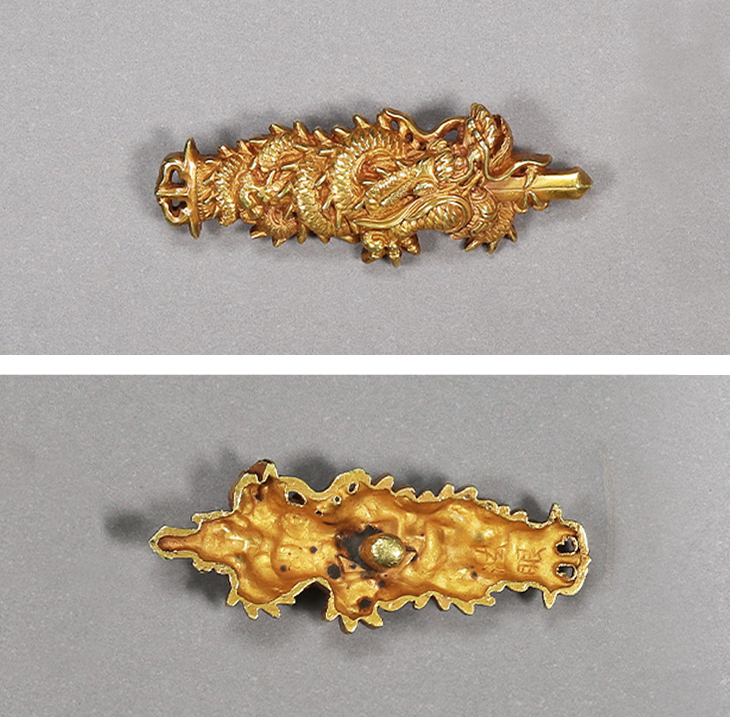
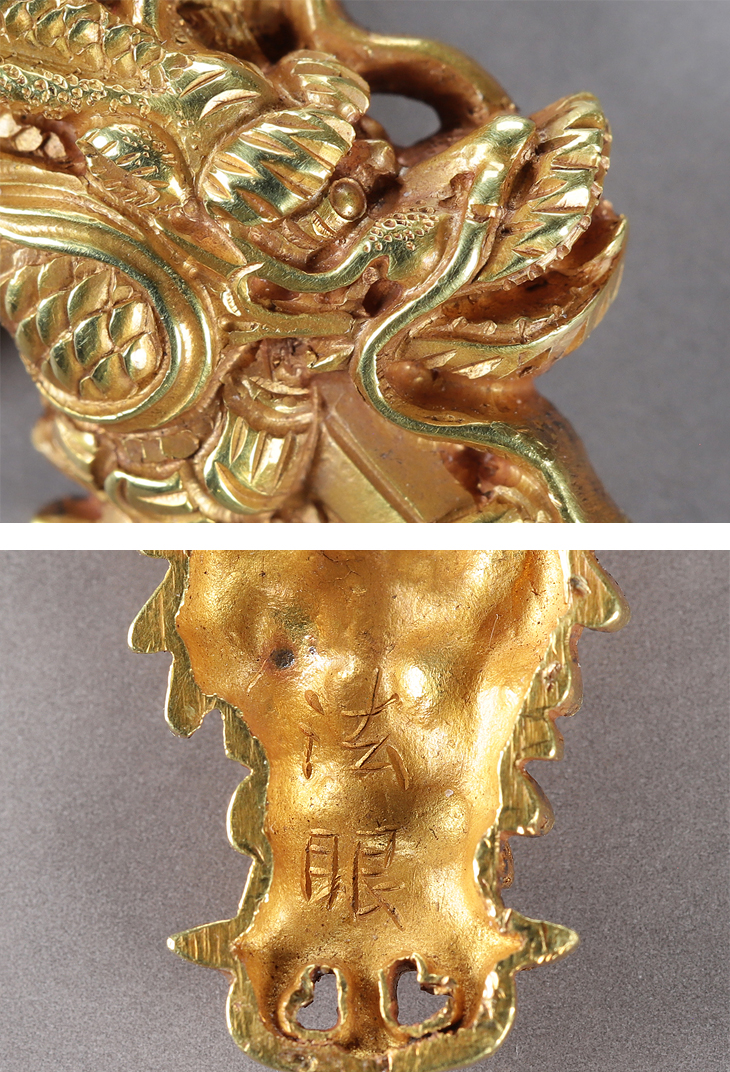
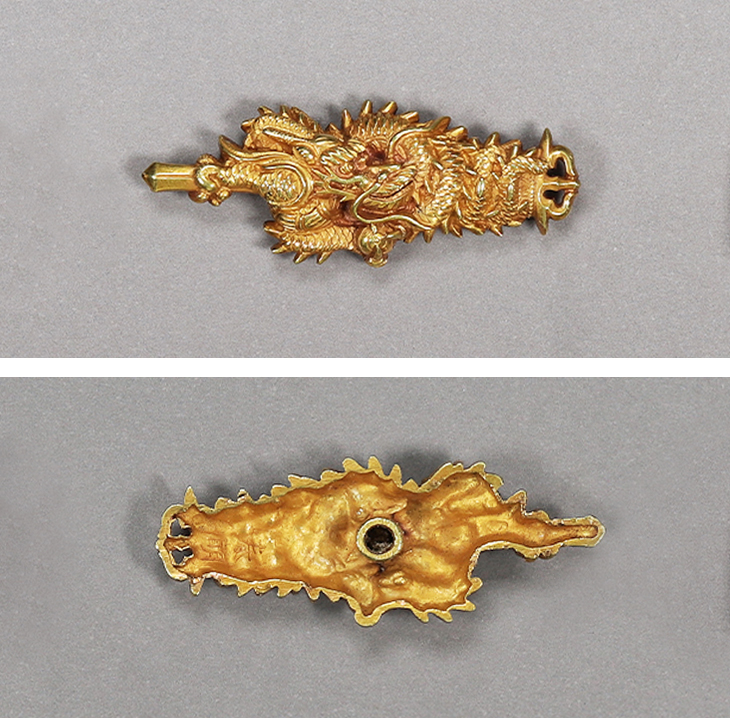
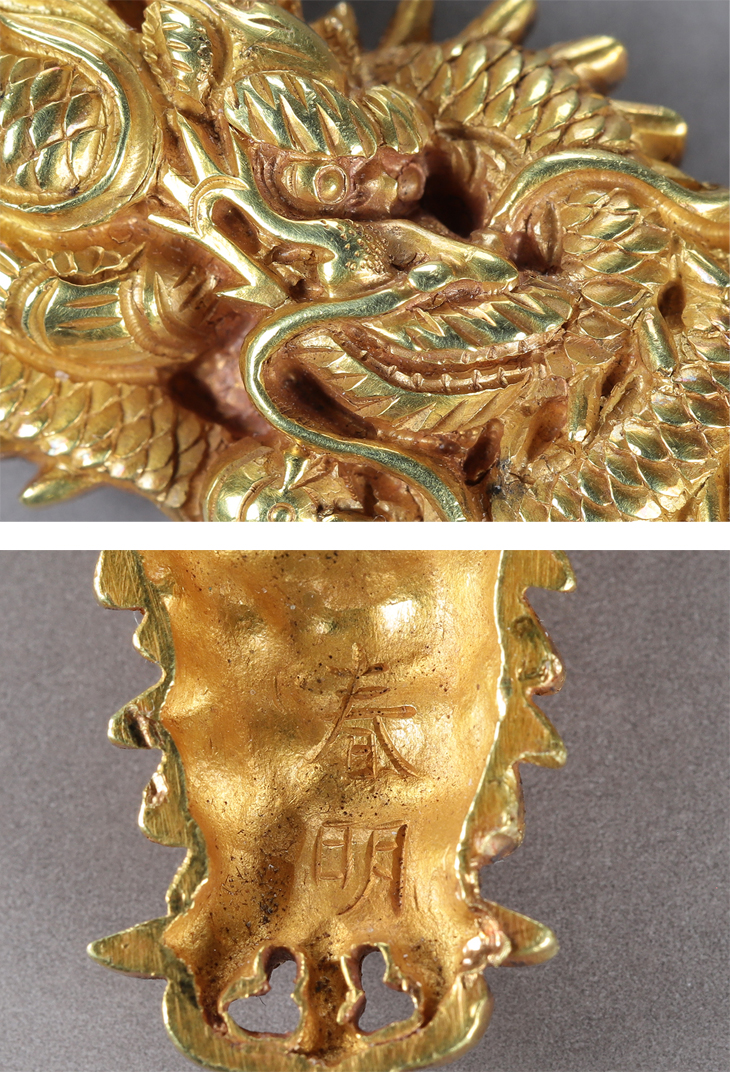
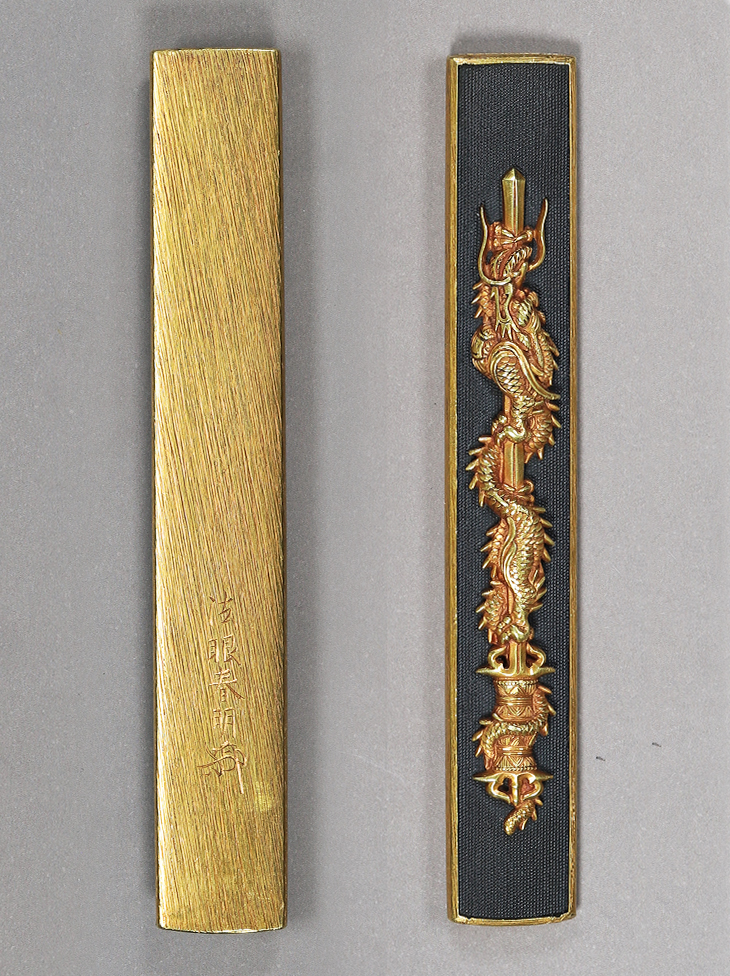
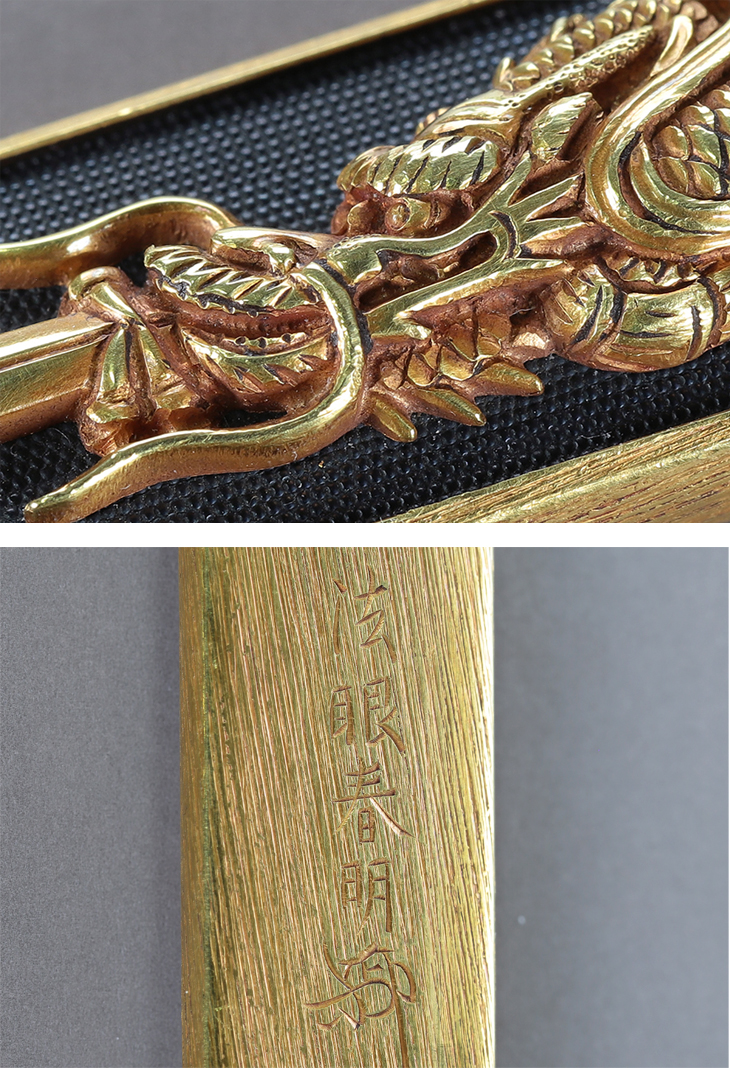
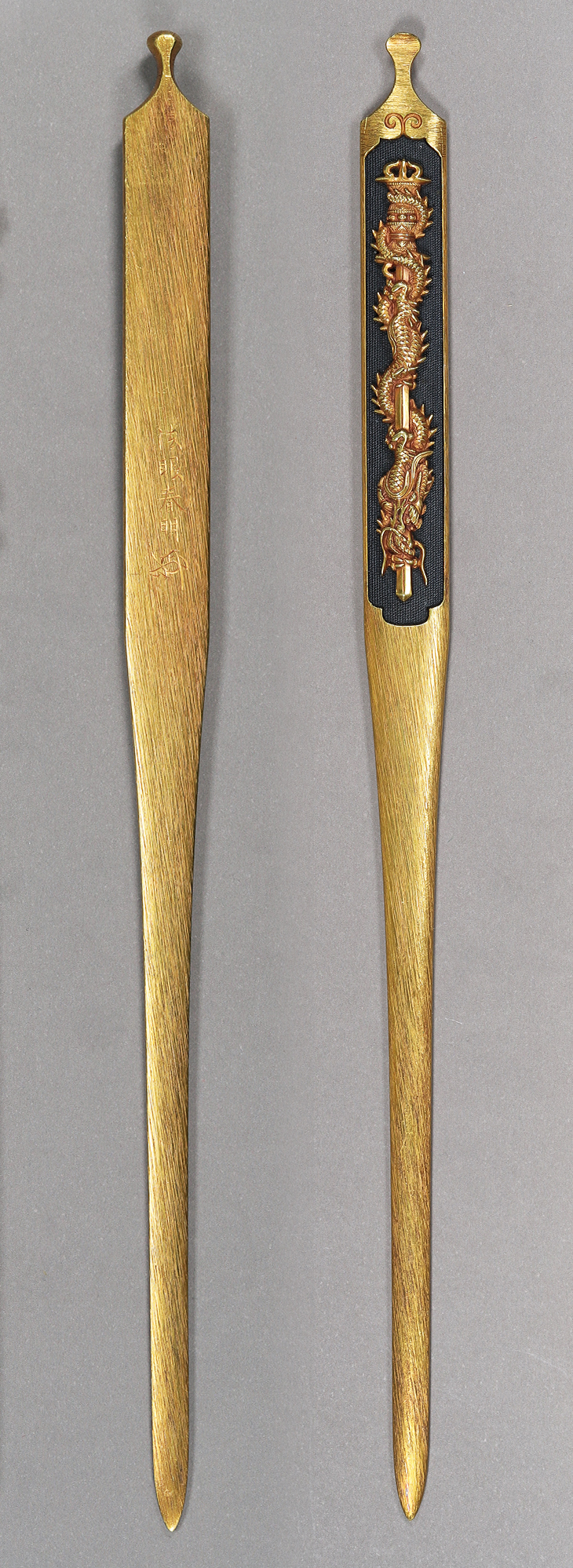
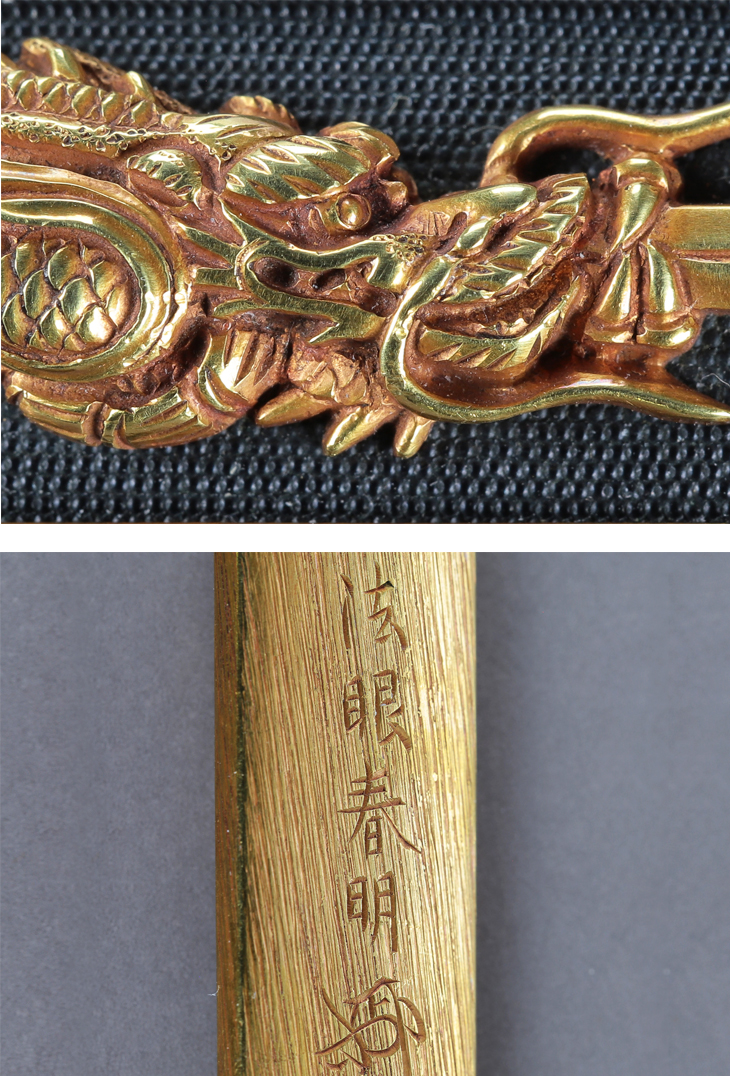
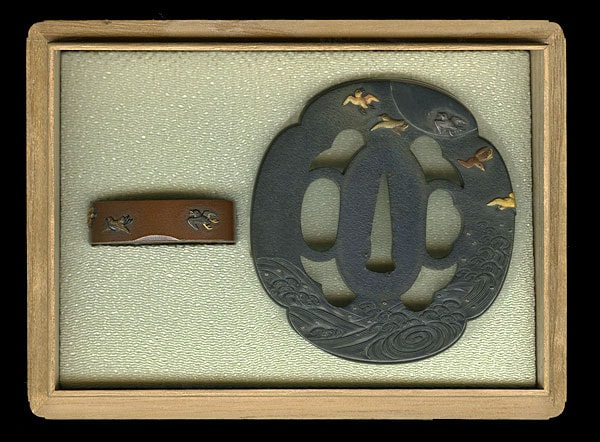
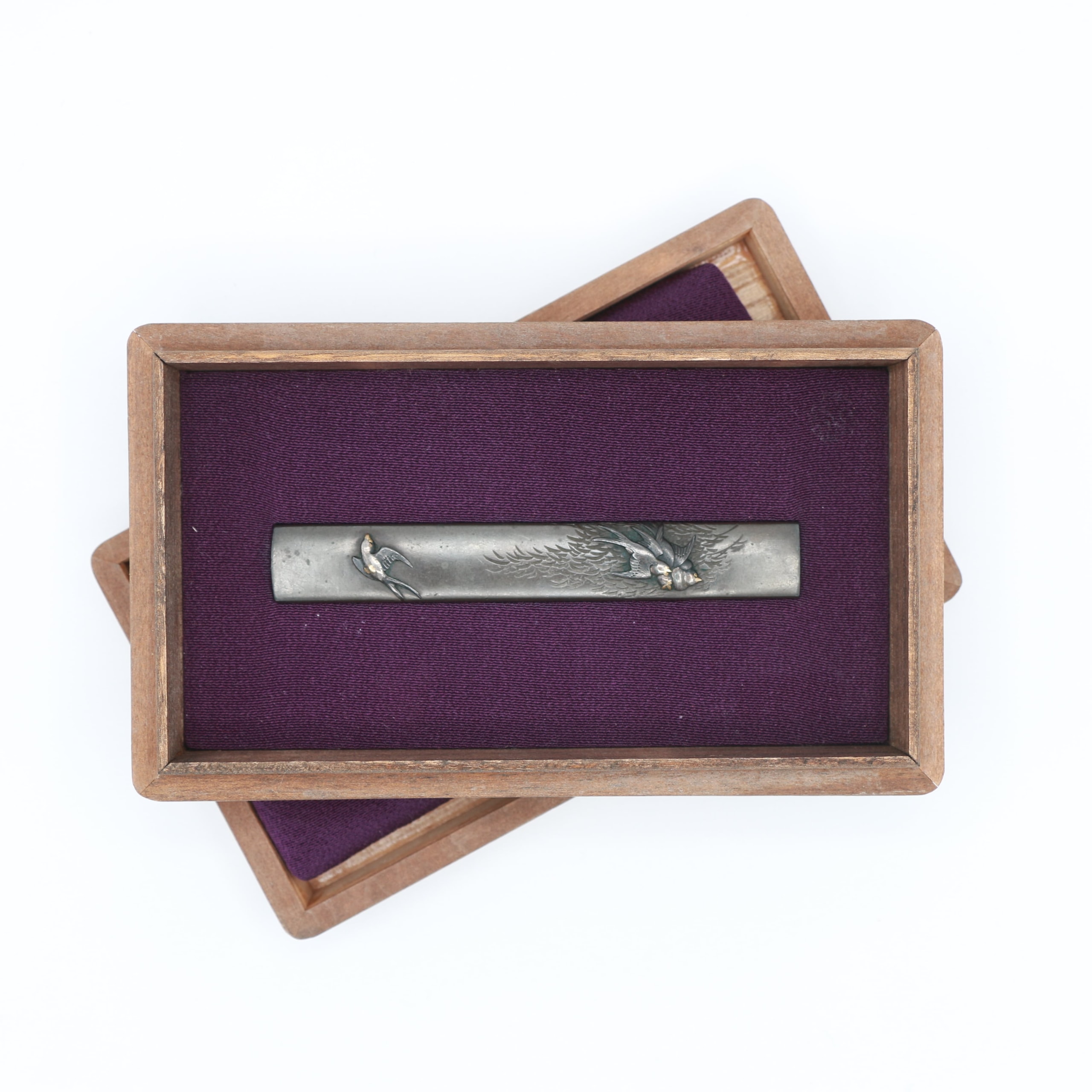
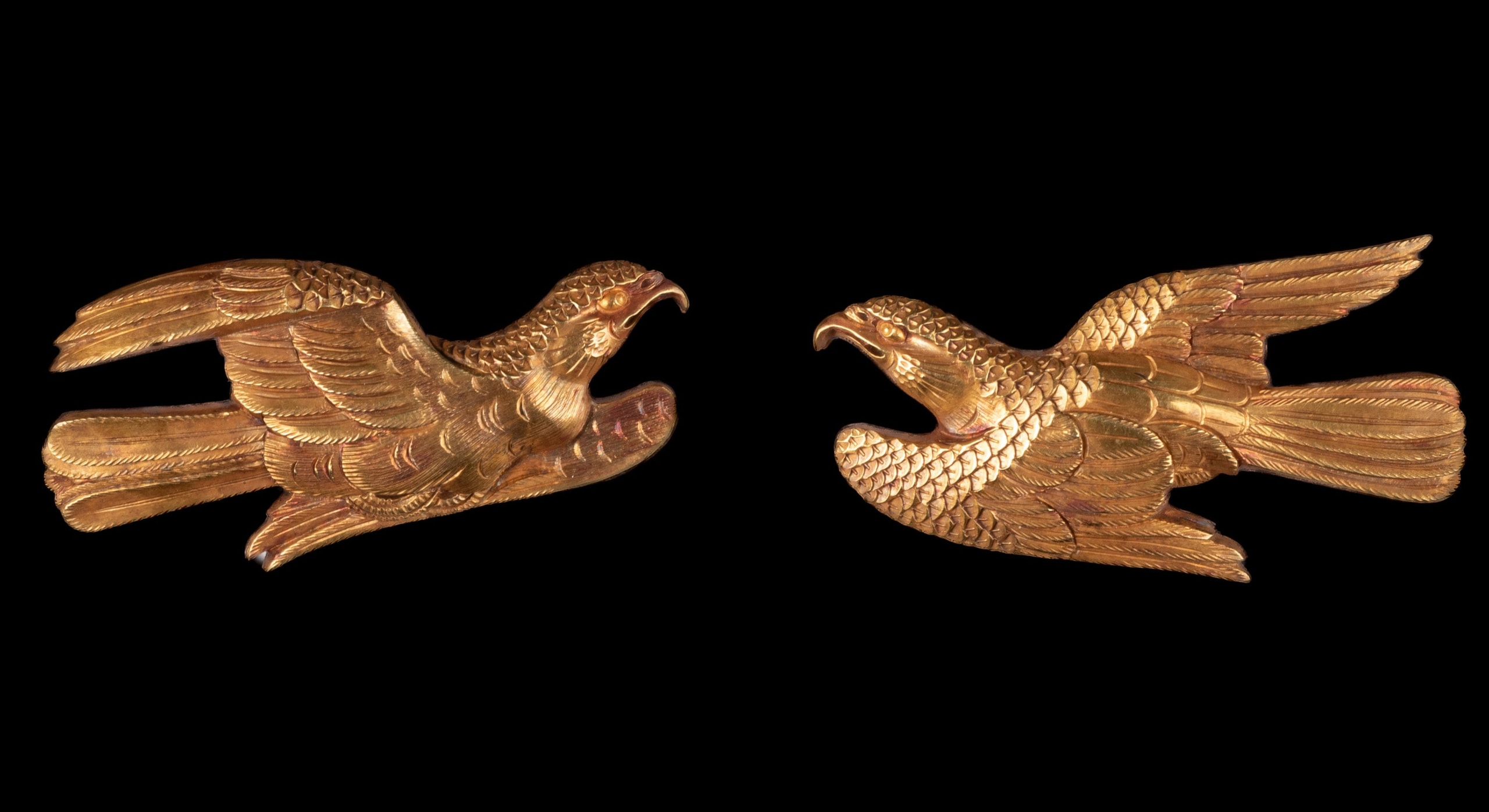
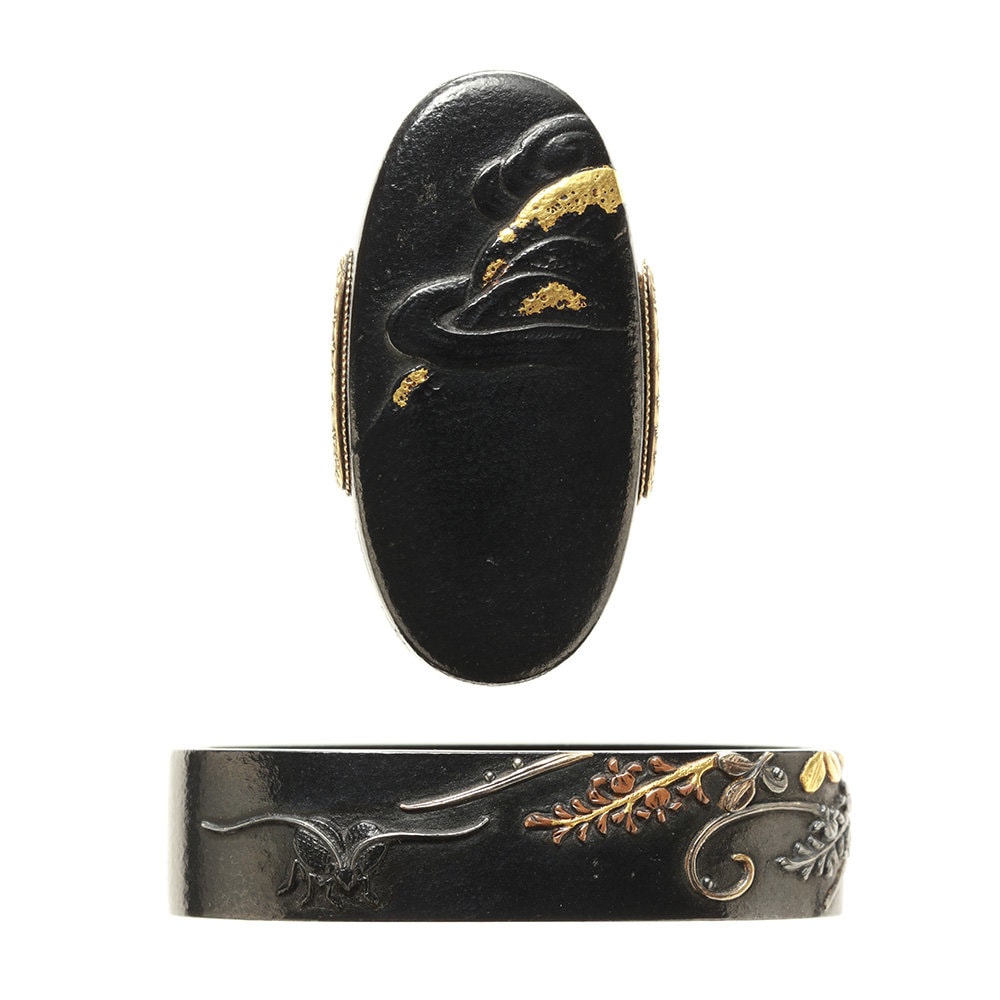
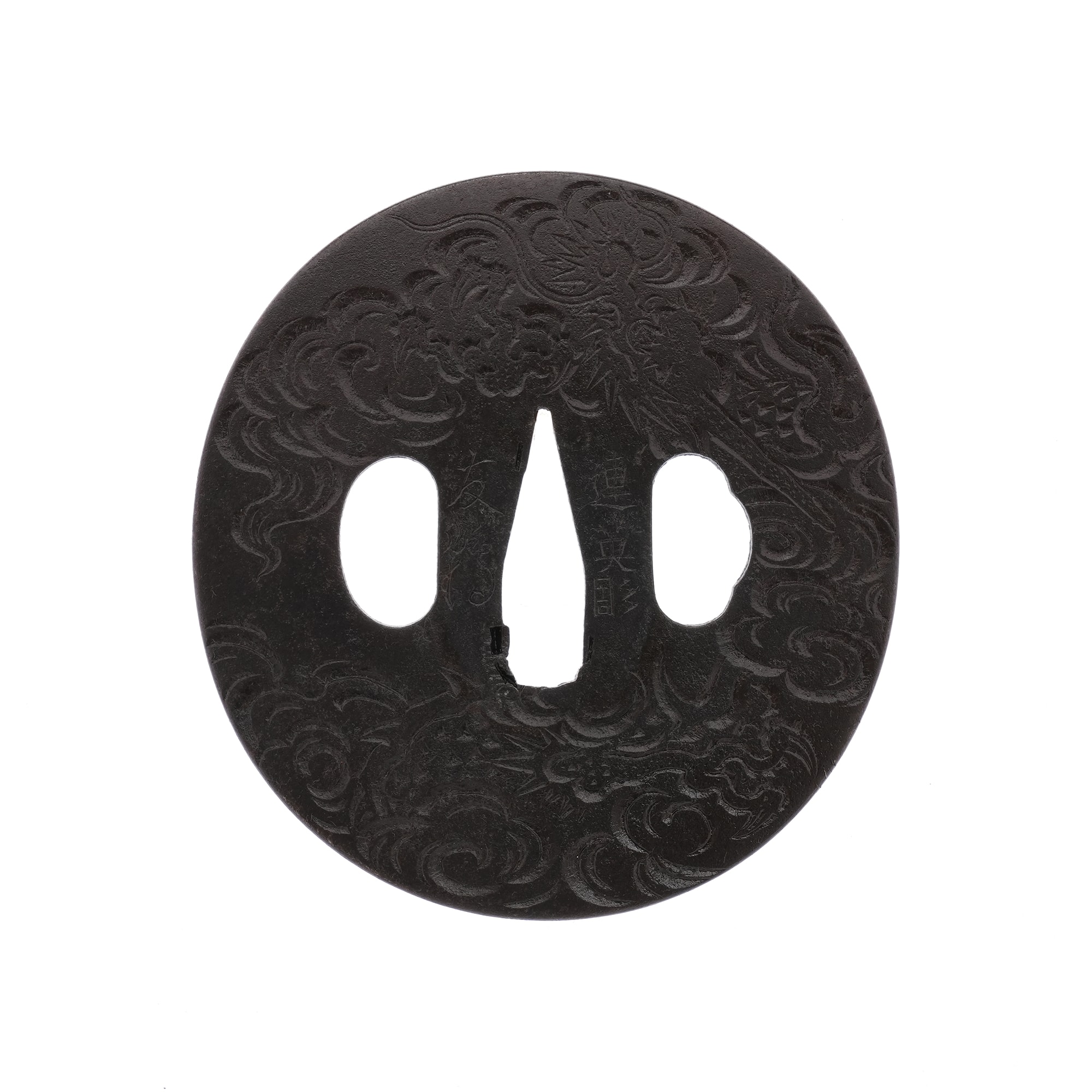
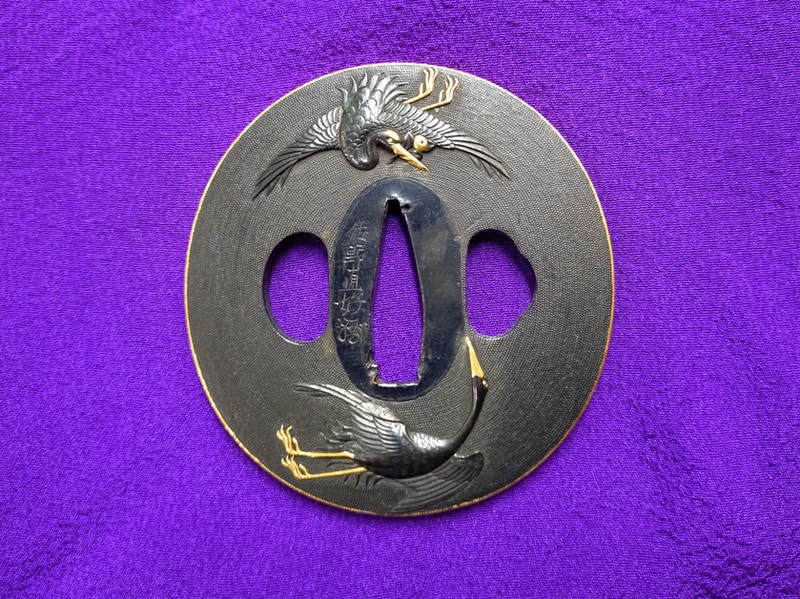
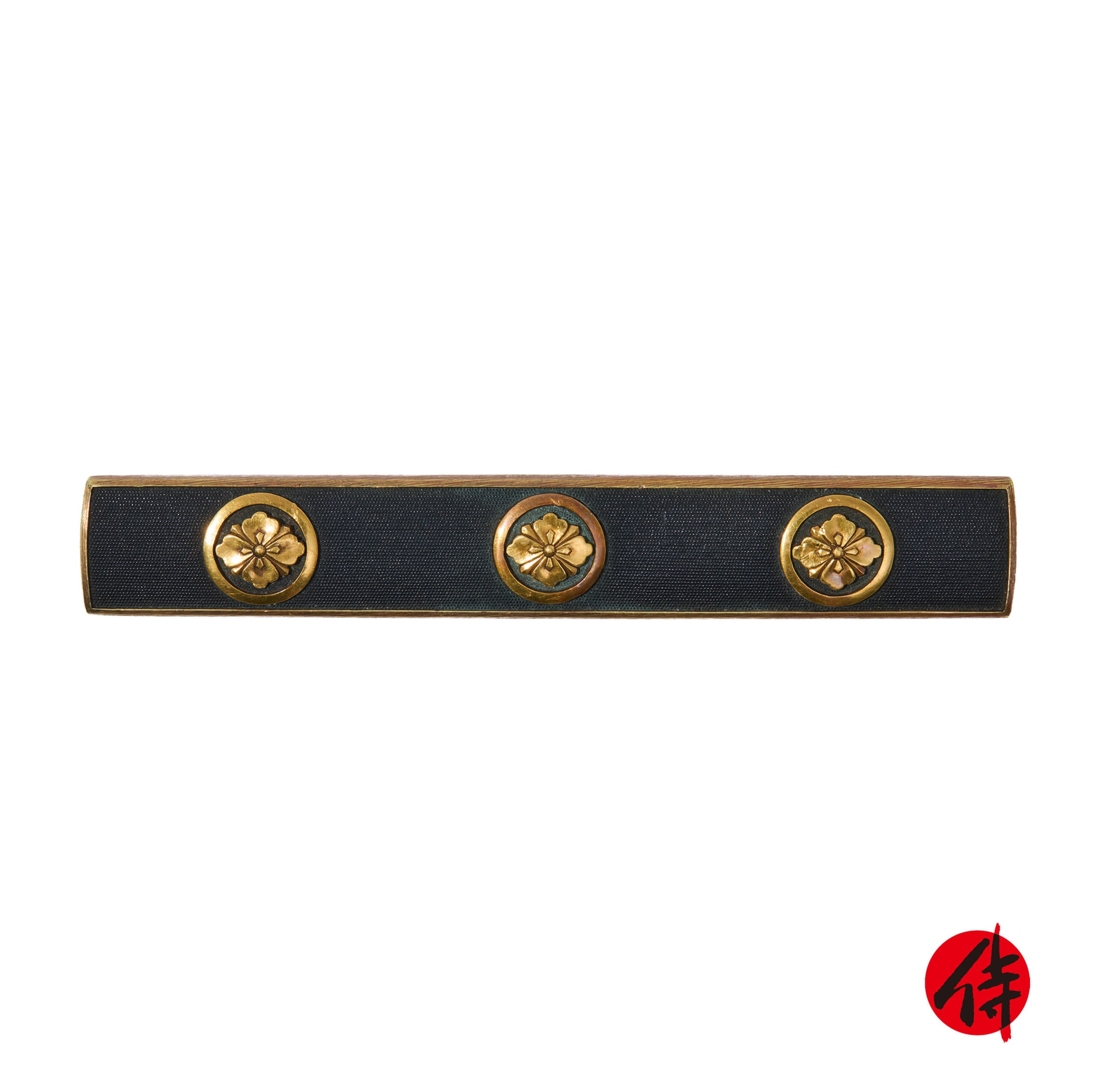
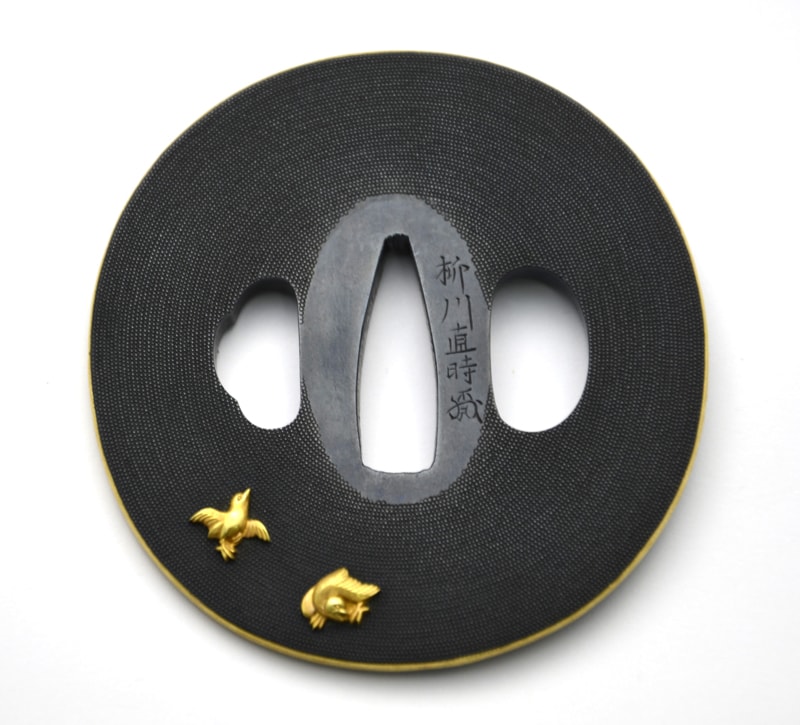
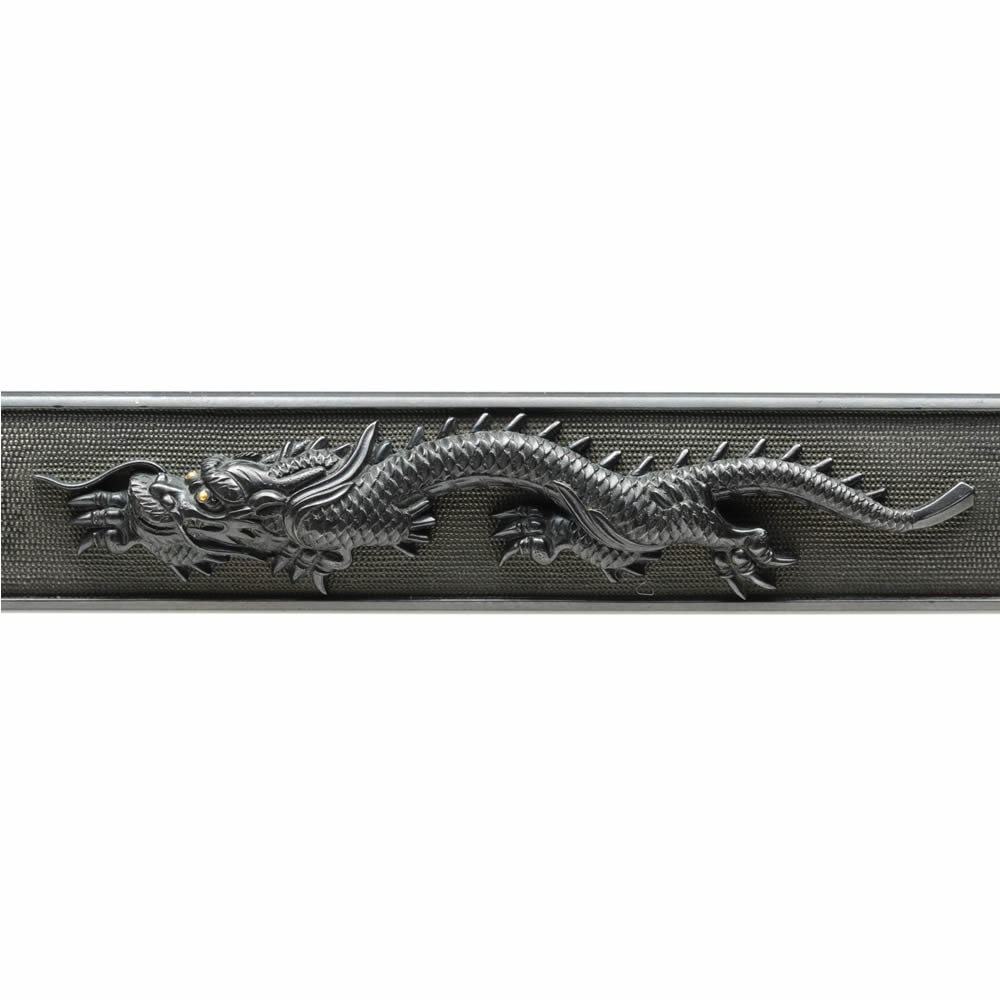
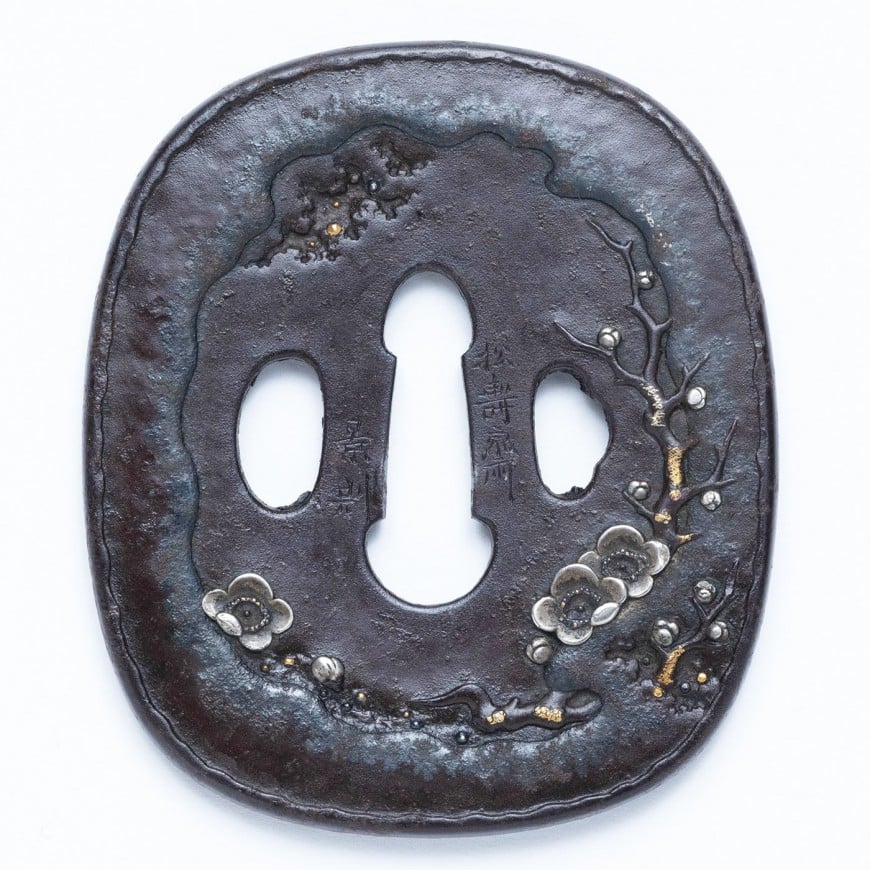
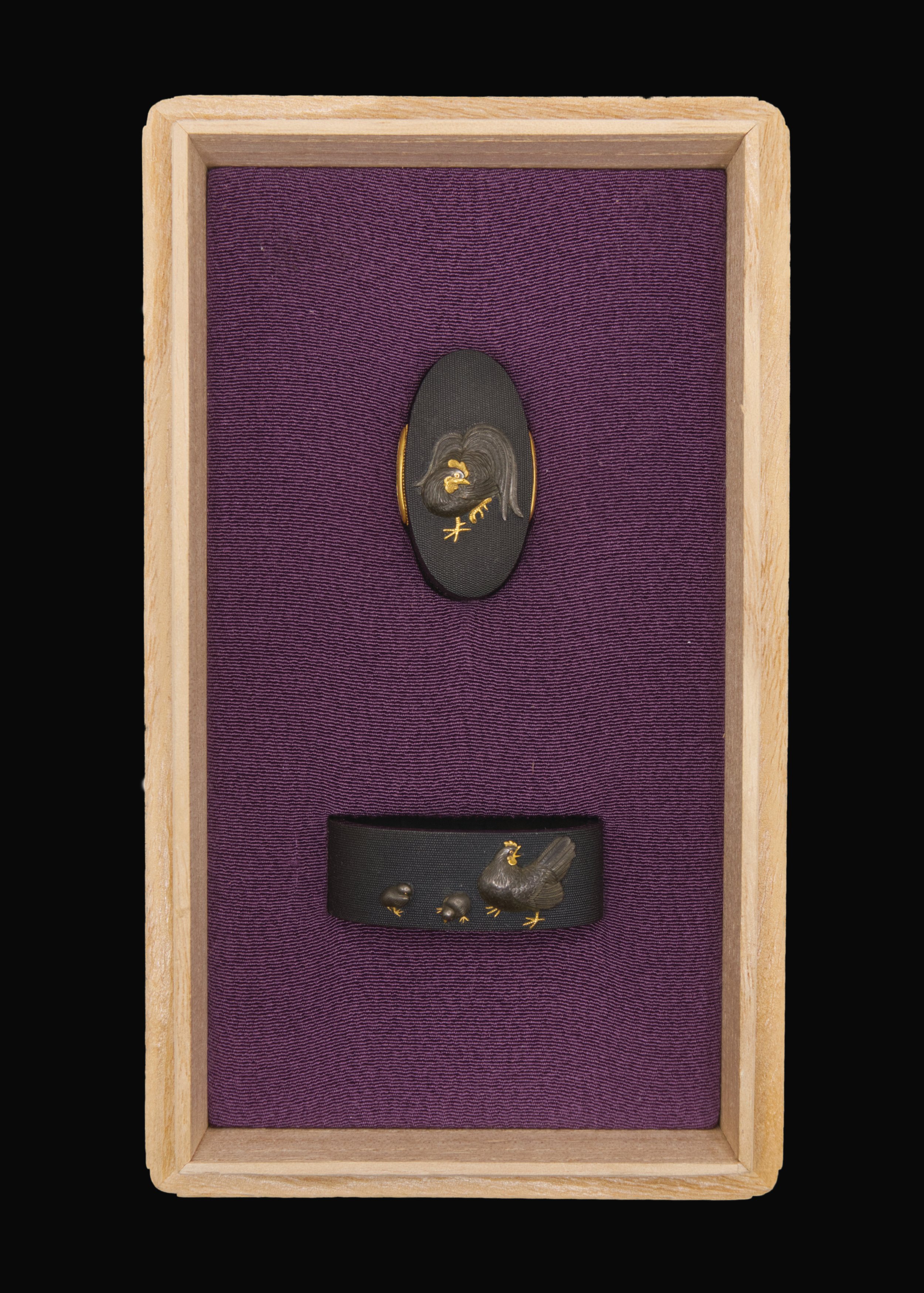
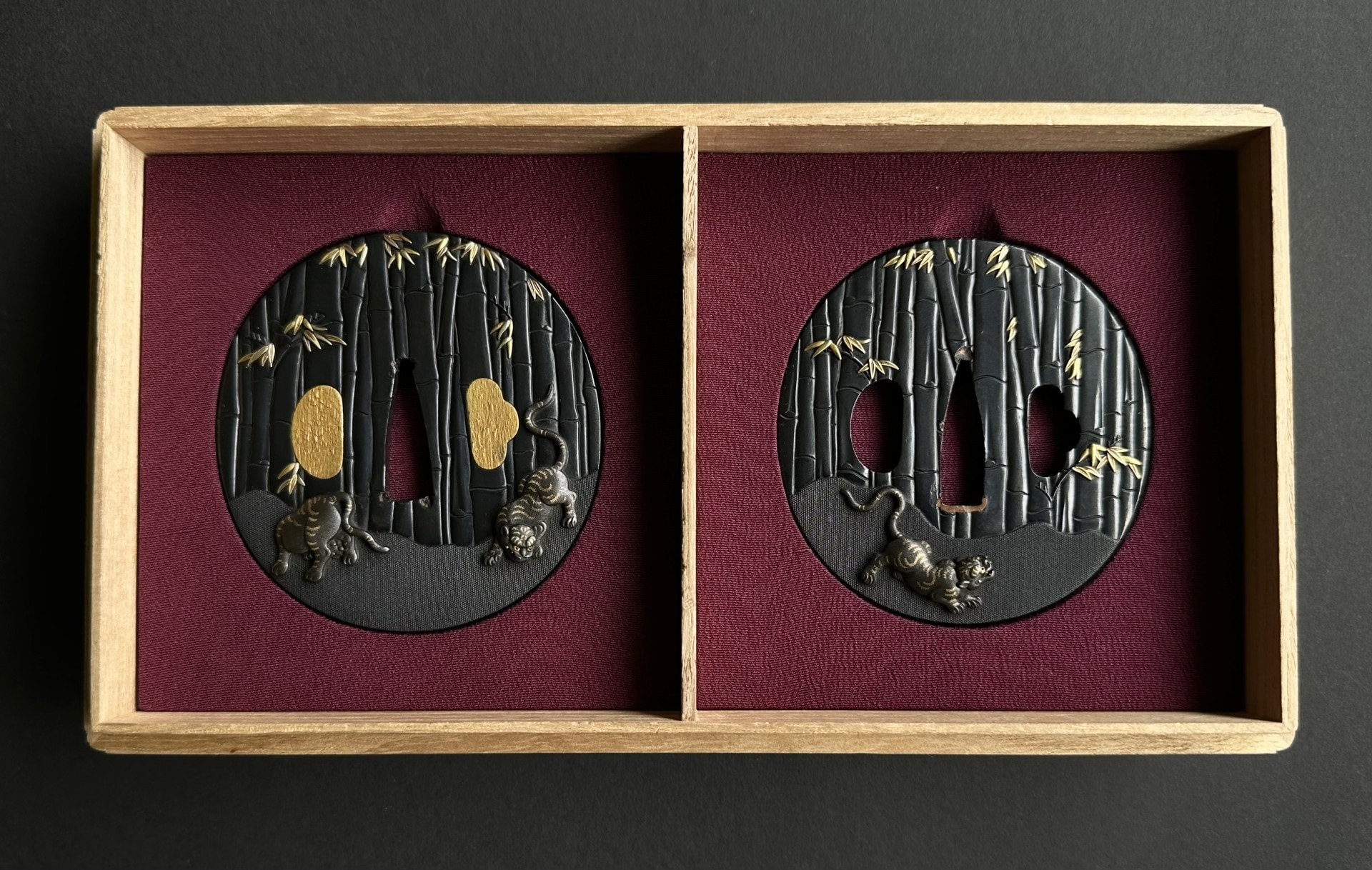
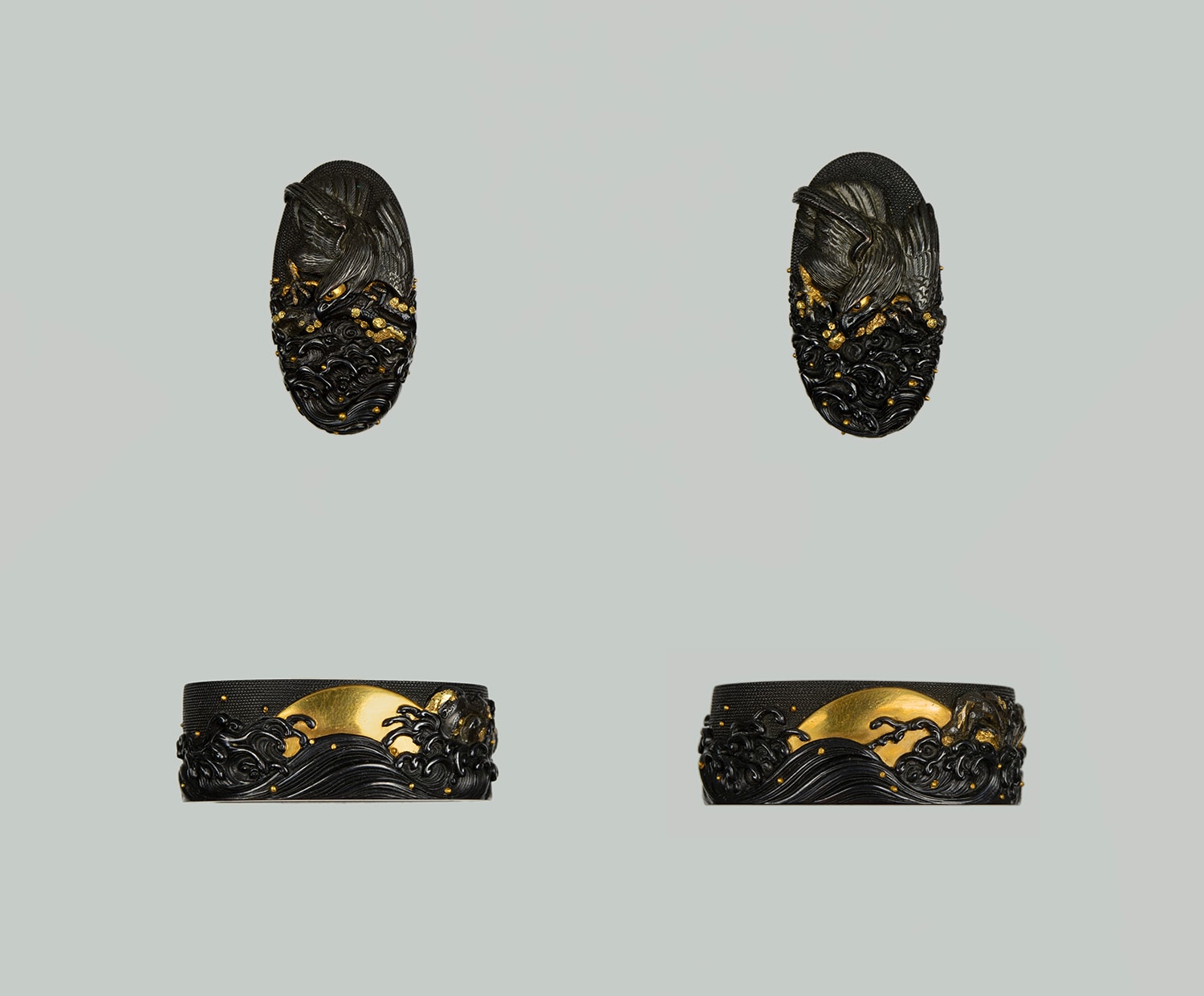
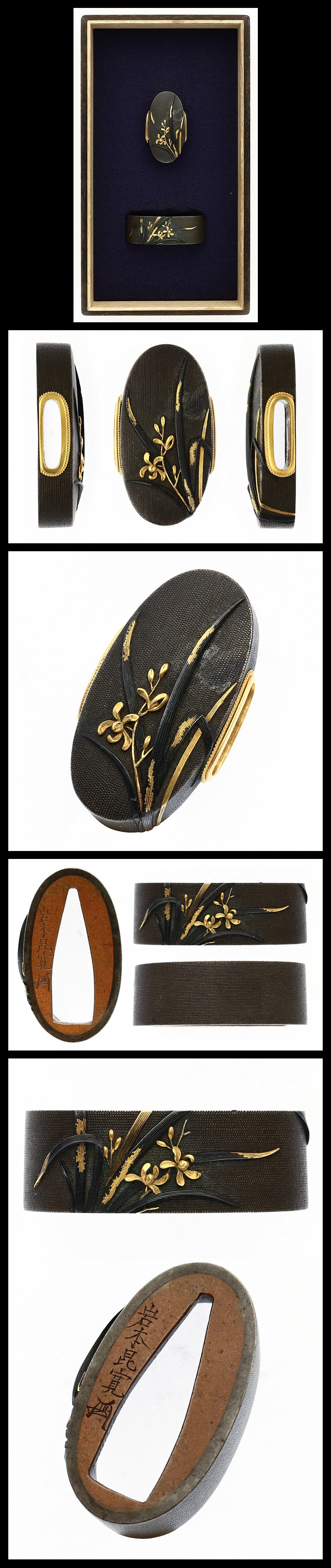
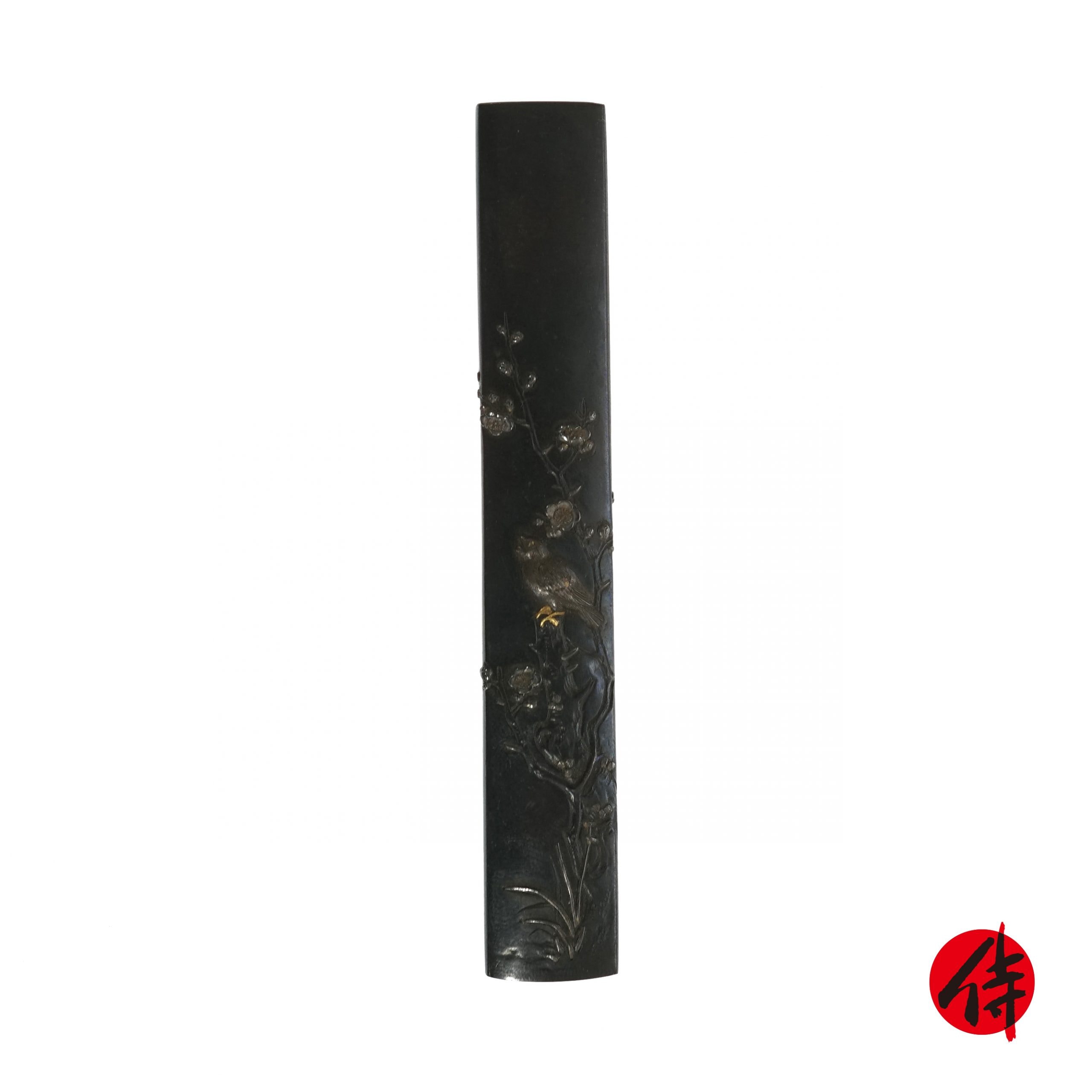
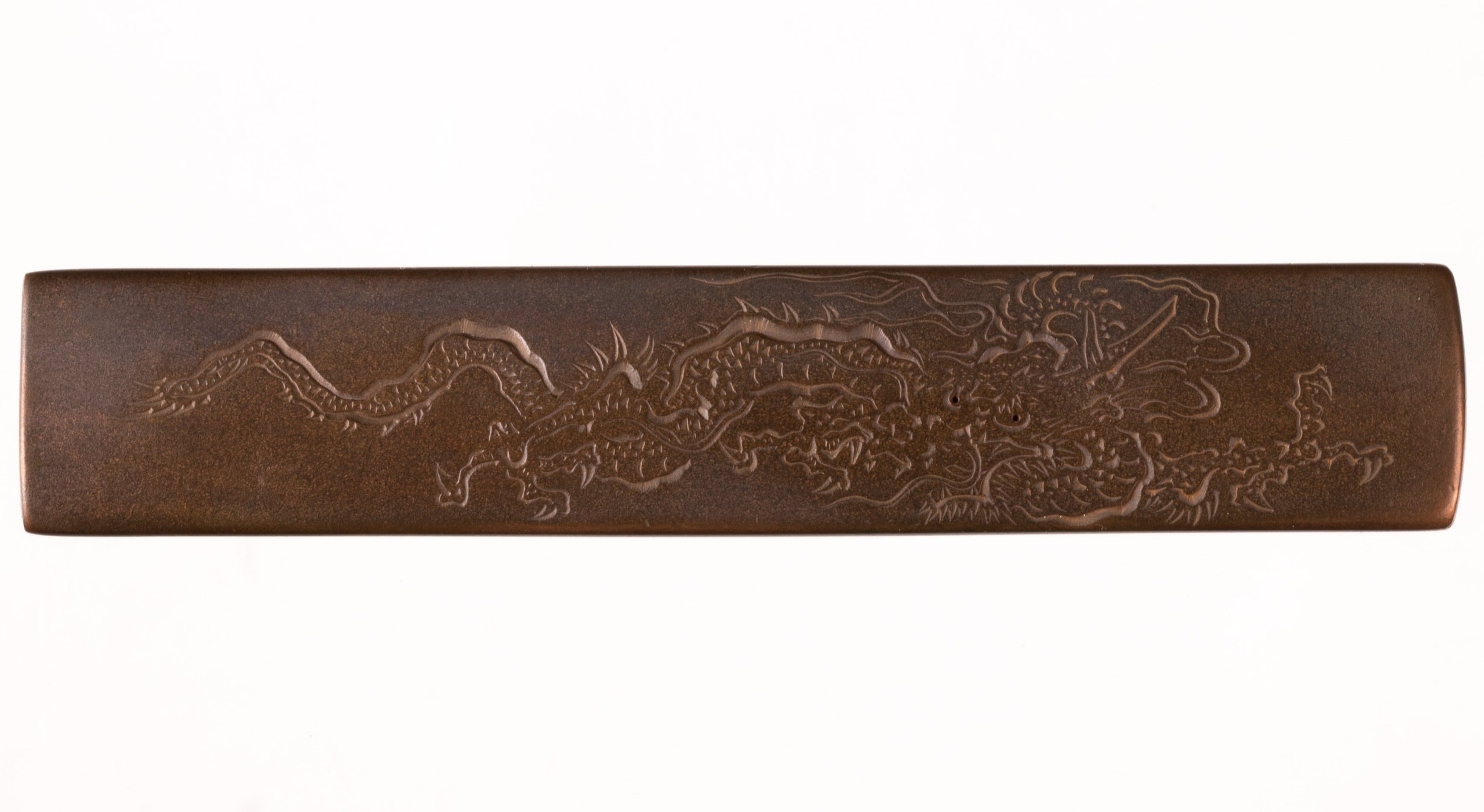
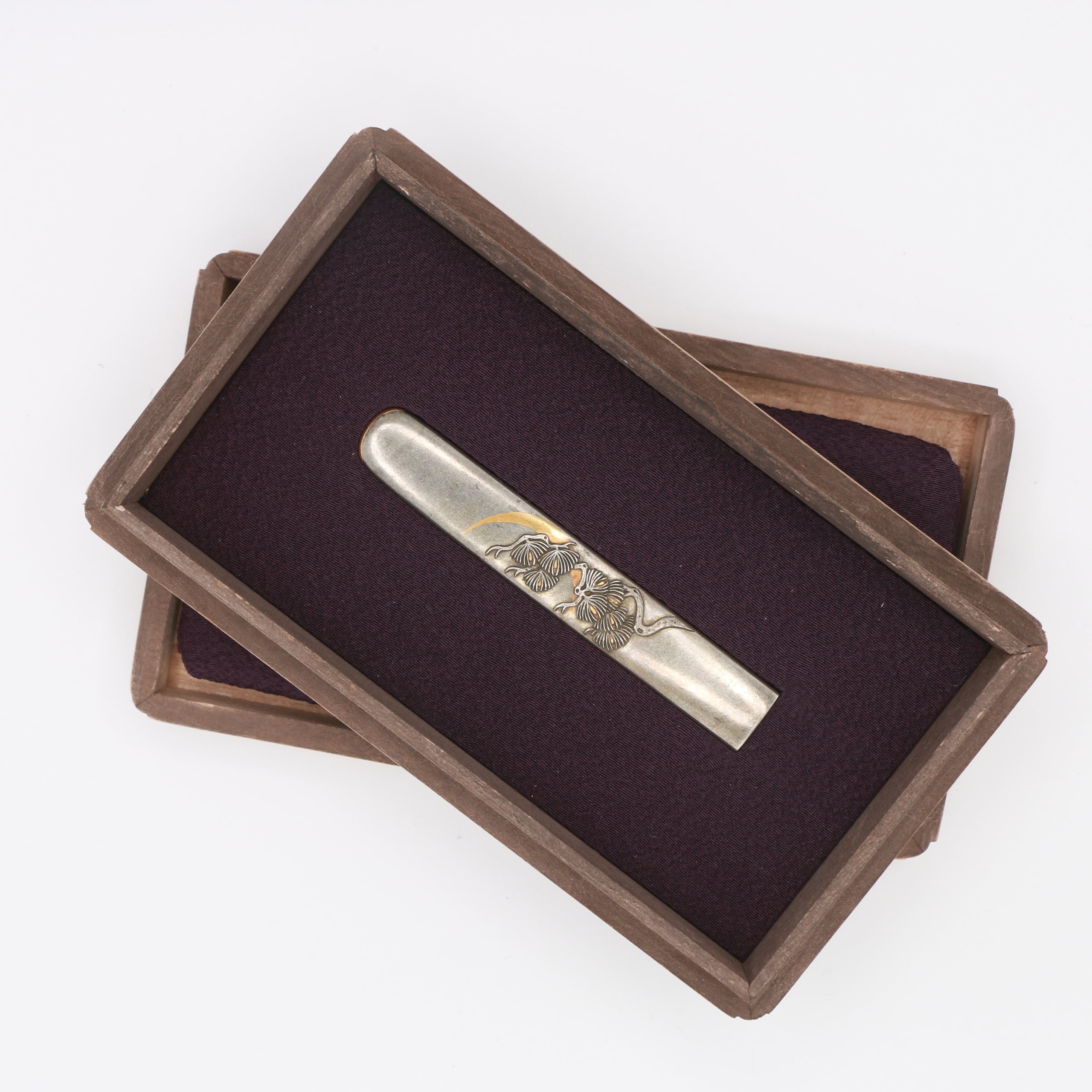
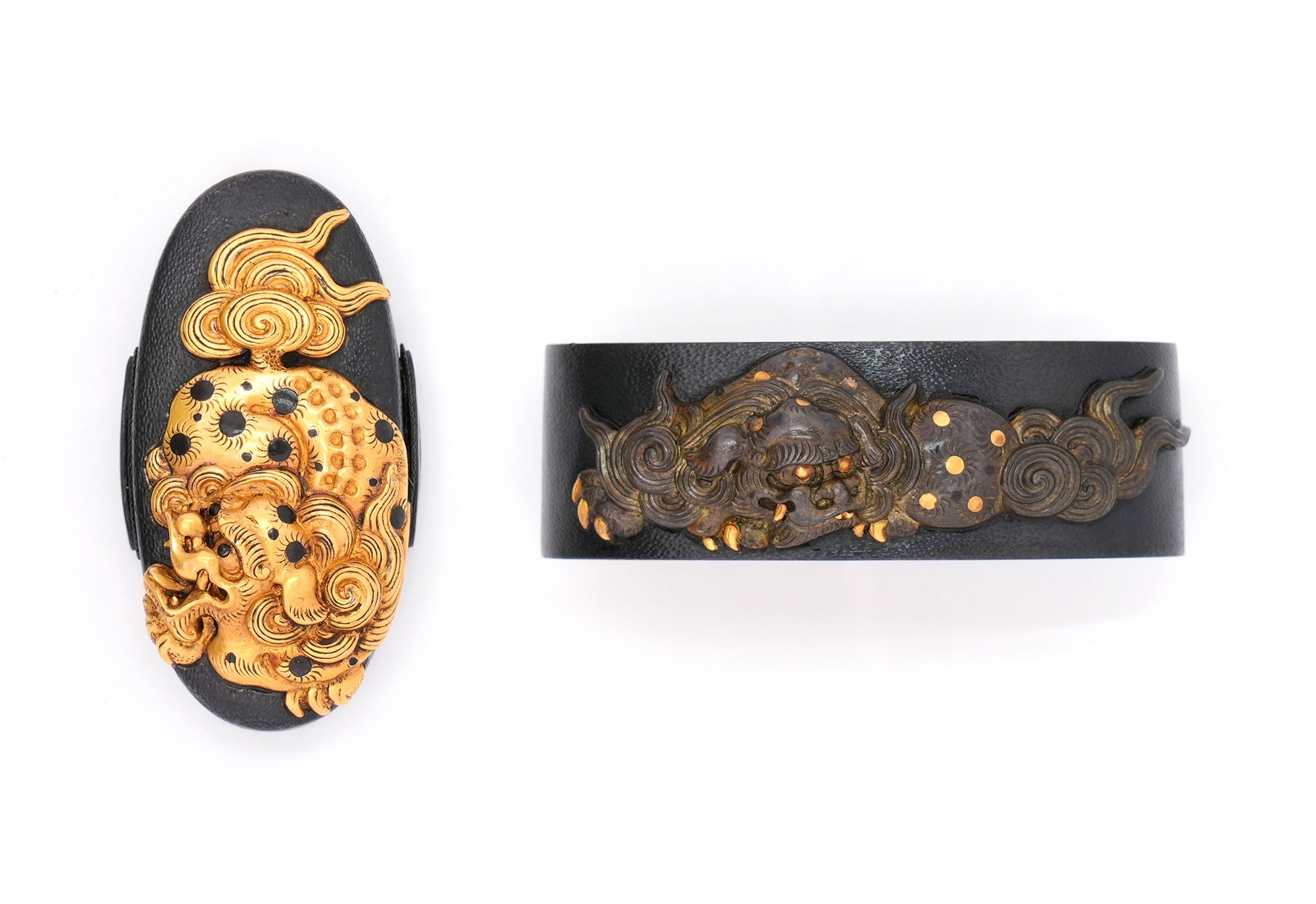
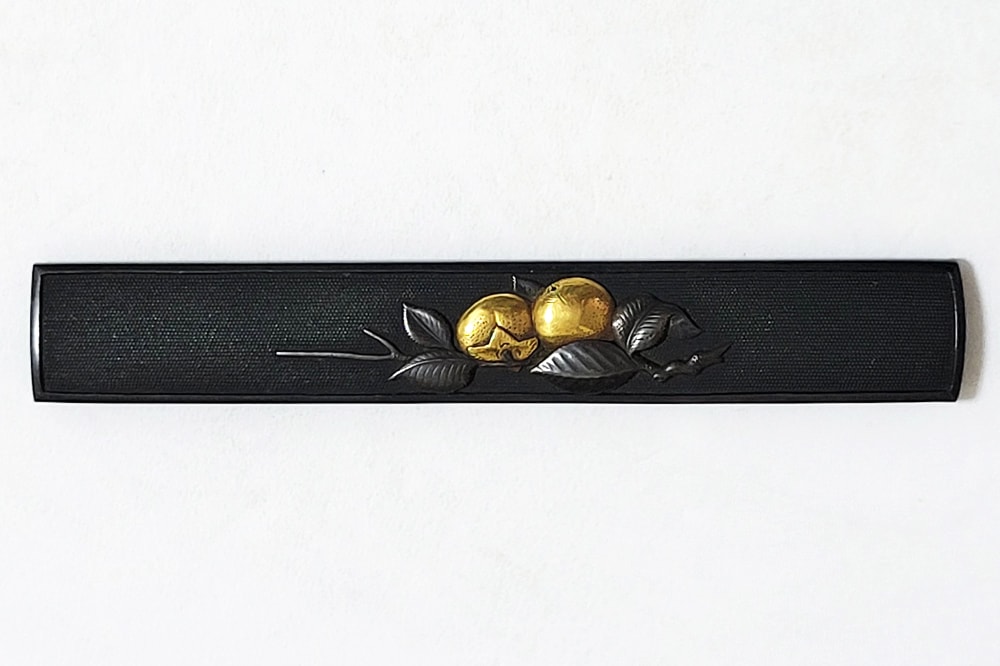
Shunmei's style is founded upon the illustrative e-fu carving manner of the Yanagawa school, yet his artistic ideal rested with the Goto house, and his work carries the weighty chisel manner associated with that tradition. His shakudo is of exceptional quality, often described as possessing the lustrous "wet crow-feather" (tori no nureba-iro) coloration, and he deployed dazzling gold alongside a wide palette of irogane---shibuichi, suaka, silver, and hi-irodo---to create elegant, realistically conceived pictorial scenes. His mastery of takabori with iroe is outstanding: deeply dimensional high relief, frequently of striking mass and volume, is enriched with lavish polychrome inlay in which every detail of chisel work and color placement is finished with exceptional care. He commanded the full range of metalworking techniques, from nanako-ji grounds and hira-zogan flat inlay to sukidashi-bori, katakiribori, and the delicate shigure hairline engraving used for flowing water. His subjects encompass literary and mythological themes---the Kurikara Dragon, Gama and Tekkai, Yoshiie observing disordered geese---as well as nature studies of chrysanthemums, peonies, and spring landscapes with swallows, all handled with an undercurrent of wit and urbane humor that is distinctly his own.
Shunmei stands as one of the great late-Edo kinko masters. Praised in his own time as "Shunmei of the East" in counterpoint to Ichijo of the West, he occupies a position of the first rank among Bakumatsu-era metalworkers. While grounded in the techniques and traditions of his teacher Naoharu, as well as in the legacy of Yokoya Somin and the Goto house, Shunmei further developed an individual artistic domain distinguished by its dignity of style, its richness of coloristic sense, and its characteristic lyrical sensibility. His extensive travels through the provinces ensured that his influence extended well beyond Edo, and the body of work he left behind---from sumptuous mitokoromono to large-format tsuba of striking vitality---fully demonstrates the breadth and assurance of his art.