NihontoWatch MonNihontoWatchBETA
MarketEncyclopedia
NihontoWatch Mon

NihontoWatchBETA

Market
Encyclopedia
Overview·Kantei·Designations·Provenance·Work Types·Signatures·Lineage·School
OverviewKanteiDesignationsProvenanceWork TypesSignaturesLineageSchool
  1. Schools
  2. Yokoya
  3. Yanagawa
  4. Haruaki

Yanagawa Haruaki

春明

Jūyō
Vol. 26, No. 407 · Kozuka

Yanagawa Haruaki

春明

18 ranked works

ProvinceMusashiEraTenmei-Ansei (1787–1857)SchoolYokoya>YanagawaTraditionMachiboriTeacherYanagawa Naoharu (柳川直春, 3rd gen Yanagawa)Specialtiestsuba, kozuka, fuchi-kashira, menuki, kogai, mitokoromono, inlayTypeTosogu MakerCodeKON001
18Jūyō Tōken

Overview

Kono Shunmei (1787--1857) was born in and entered the studio of Yanagawa Naoharu of the Yokoya lineage at the age of fifteen, in Kyowa 2 (1802). He initially signed his work Haruto, but during the Bunka era changed his art name to Shunmei. In the early Bunsei era he was appointed Hokyo, and before long advanced to the rank of Hogen. Active in the period as Goto Ichijo, Shunmei is regarded as one of the representative metalworkers of his day. His sphere of activity, however, was not confined to the capital: around the Bunsei era he traveled extensively through the Tohoku region and northern Kanto, producing works on commission for wealthy patrons and prosperous farming families, and leaving behind several notable masterpieces in Sendai and at Kamegasaki in Tou. In his later years, during the Ka'ei and Ansei eras, he journeyed to the Echigo region, where he ultimately died. Works from these itinerant periods bear supplementary inscriptions recording their place of execution, and he also adopted the go Jippo-o ("Old Man of Ten Directions"), a name reflective of his wide-ranging travels.

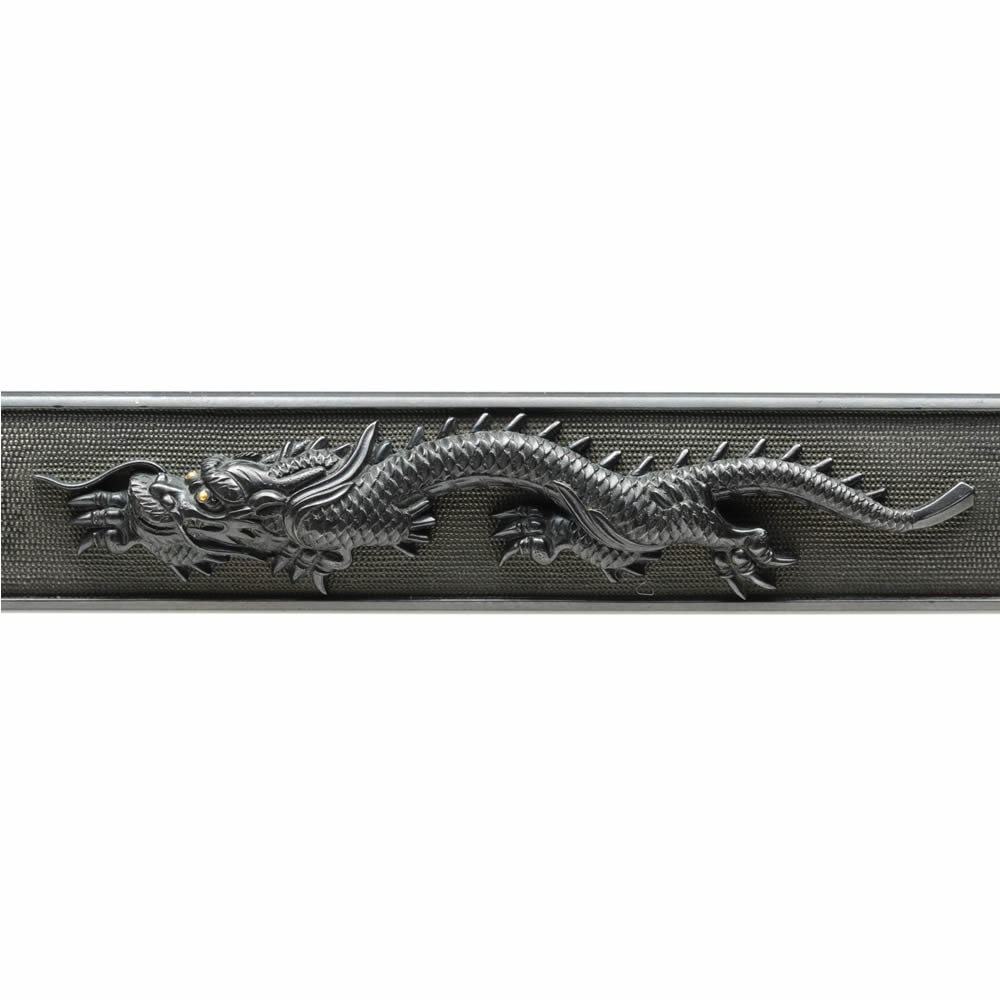
Shunmei's style is founded upon the illustrative e- carving manner of the Yanagawa school, yet his artistic ideal rested with the Goto house, and his work carries the weighty chisel manner associated with that tradition. His is of exceptional quality, often described as possessing the lustrous "wet crow-feather" (tori no -iro) coloration, and he deployed dazzling gold alongside a wide palette of ---, , silver, and hi-irodo---to create elegant, realistically conceived pictorial scenes. His mastery of with is outstanding: deeply dimensional high relief, frequently of striking mass and volume, is enriched with lavish polychrome inlay in which every detail of chisel work and color placement is finished with exceptional care. He commanded the full range of metalworking techniques, from grounds and - flat inlay to , , and the delicate shigure hairline engraving used for flowing water. His subjects encompass literary and mythological themes---the Dragon, Gama and Tekkai, Yoshiie observing disordered geese---as well as nature studies of chrysanthemums, peonies, and spring landscapes with swallows, all handled with an undercurrent of wit and urbane humor that is distinctly his own.

Shunmei stands as one of the great late- kinko masters. Praised in his own time as "Shunmei of the East" in counterpoint to Ichijo of the West, he occupies a position of the first rank among Bakumatsu-era metalworkers. While grounded in the techniques and traditions of his teacher Naoharu, as well as in the legacy of Yokoya Somin and the Goto house, Shunmei further developed an individual artistic domain distinguished by its dignity of style, its richness of coloristic sense, and its characteristic lyrical sensibility. His extensive travels through the provinces ensured that his influence extended well beyond , and the body of work he left behind---from sumptuous to large-format of striking vitality---fully demonstrates the breadth and assurance of his art.
Kantei

3 descriptive axes: material (a fine raven-wing-black shakudo nanako above all, with shibuichi, suaka and solid gold) x technique (masterful high-relief with rich colour-metal iro-e, applied suemon and inlay, with sukidashi-takabori and katakiri detail) x themes (a broad painterly repertoire, no one eponymous subject, ranging across flowers, birds, dragons, figures and witty genre and immortal subjects). His load-bearing distinguishers are not a single motif but his synthesis of the Yanagawa, Yokoya-Somin and Goto sources into a domain of his own with the Goto house as his ideal, and his praised colour-sense and realist painterly hand.

Kono Haruaki (1787-1857), common name Kono Bunzo, is a bakumatsu metalwork artist of the Yanagawa school, a branch of the Yokoya line. He entered the house of Yanagawa Naoharu at about fourteen or fifteen, first signed Haruto, and changed his name to Haruaki in the Bunka era; he was appointed Hokyo around 1821 to 1822 and soon raised to Hogen. Active in the age as Goto Ichijo, he was paired with him as Ichijo in the west and Haruaki in the east, and counts among the metalwork artists who represent late- kinko. Though he learned the Yanagawa carving, the records say his ideal lay with the Goto house: taking his teacher Naoharu together with Yokoya Somin and the Goto house as the wellspring of his method, he showed a domain of his own. His hand is a painterly realism of outstanding colour-sense, set in masterful high-relief colour iro-e on a fine raven-wing-black . A restless traveller, he worked across Tohoku and the northern Kanto in the Bunsei years and in his late Kaei and Ansei years in Echigo, where he died.

Diagnostic discriminators

two setsumei make this distinguishing claim: one (Juyo 26) says that though he learned the Yanagawa carving his ideal lay with the Goto house and he had a refinement of his own (独自の品格), and one (Juyo 38) says he took his teacher Naoharu together with Yokoya Somin and the Goto house as the wellspring of his method and showed a domain of his own (独自の作域); the synthesis-into-his-own-domain claim is thus single-source per exact phrase, n=2 across the two phrasings, and rated on that, not on the bio boilerplate that pairs him with Goto Ichijo in nearly every record

two setsumei (Juyo 38 pair) single out his colour-sense as outstanding (色彩感覚が抜群) and his picture-plane as a refined realism (写実風の端麗な画面) on the raven-wing-black good-quality shakudo (鳥の濡れ羽色と称された良質の赤銅); a praise of his personal hand rather than a school ground, rated on those two assessing texts, not on the high-relief colour iro-e he shares with every machibori worker

Material (grounds)

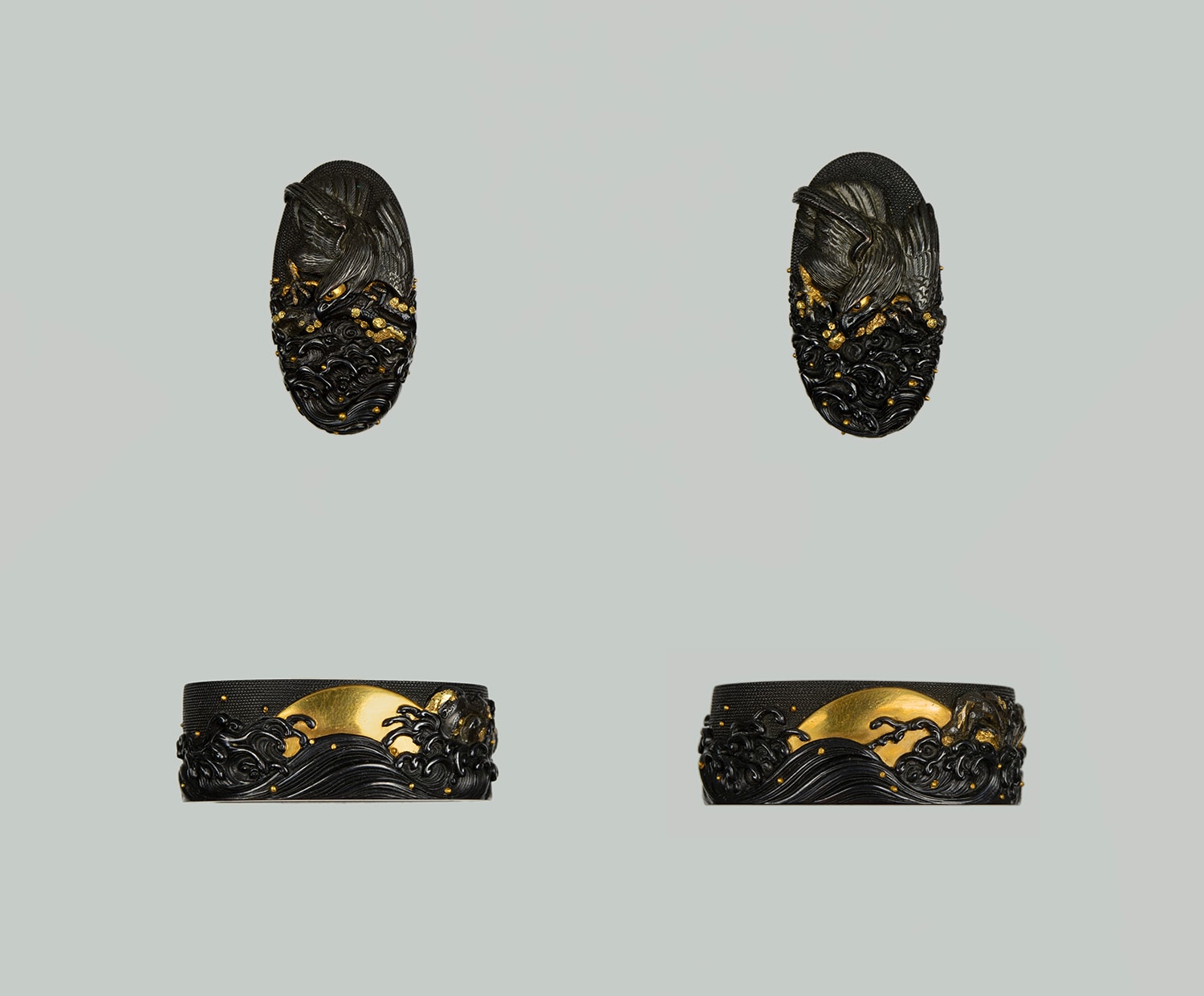
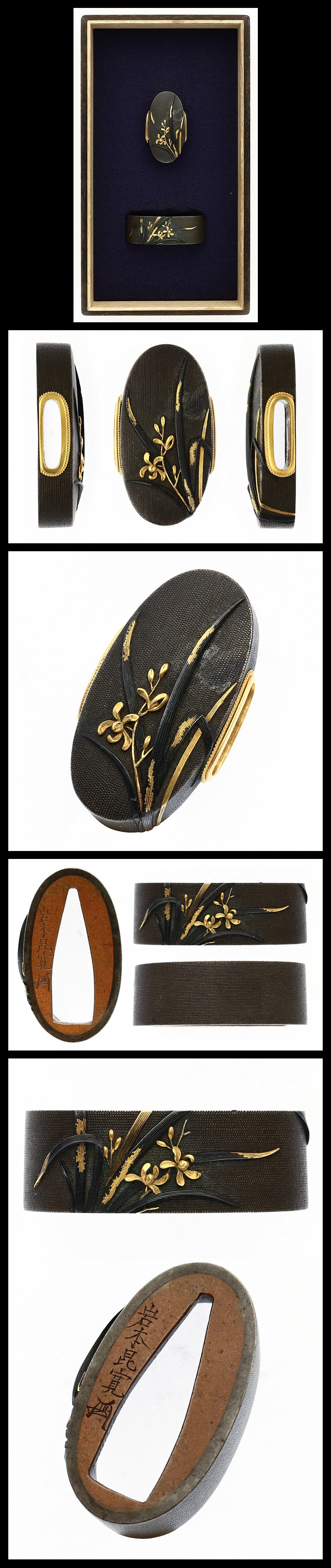
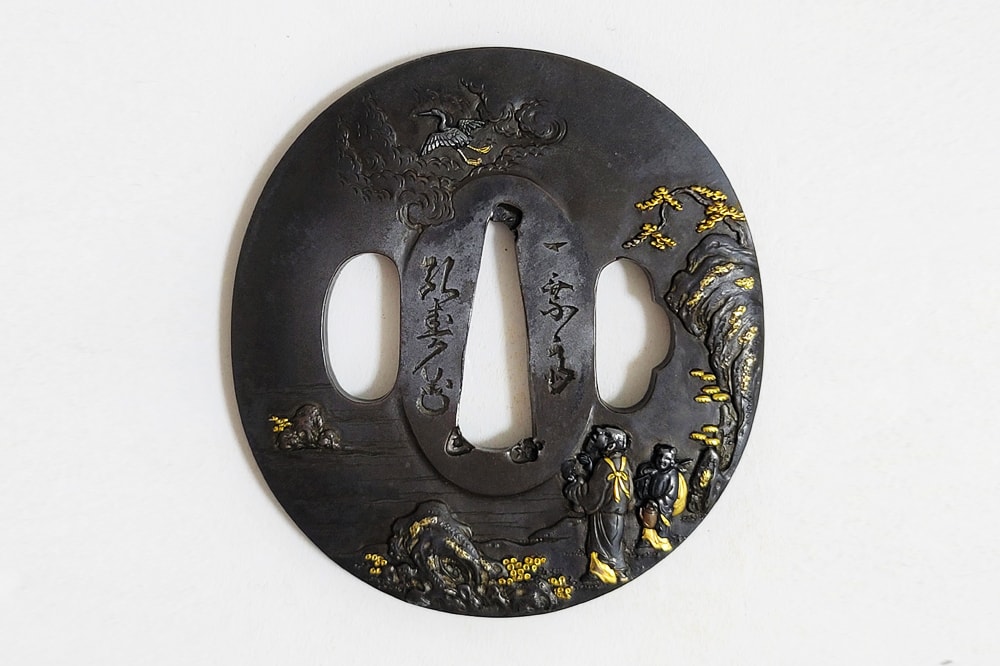
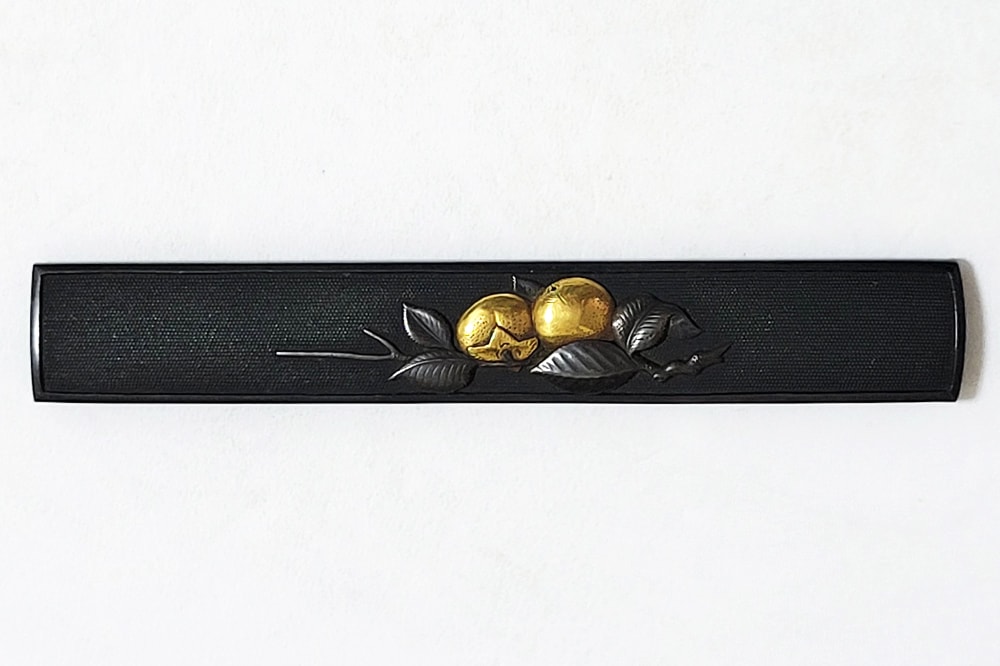
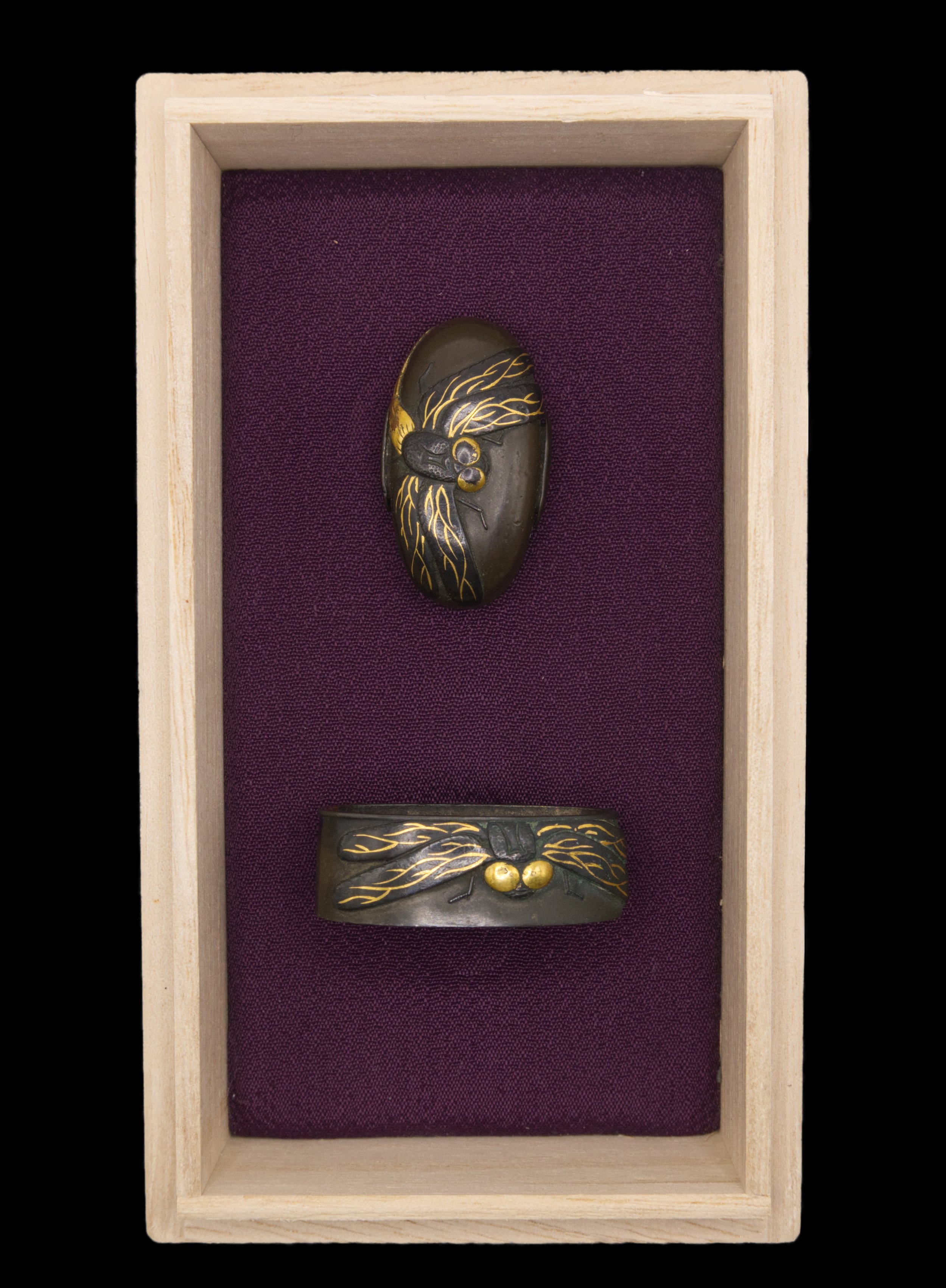
A fine, high-quality , the raven-wing black praised in the records, worked in orderly above all; with (including a roughened ishime ground and a black ), , solid gold and an occasional ishime, and an iron ground on one . Among the colour-metals he reaches for copper-red -iro and the colour-golds.

Technique

Masterful high relief carrying rich colour-metal iro-e, with applied , flat and gold inlay, and the in ; he reaches besides for , a ko-suki chisel, and fine and katakiri-bori line in the details. The records repeatedly call his pieces nyunen-, painstaking work.

Themes (a broad painterly repertoire)

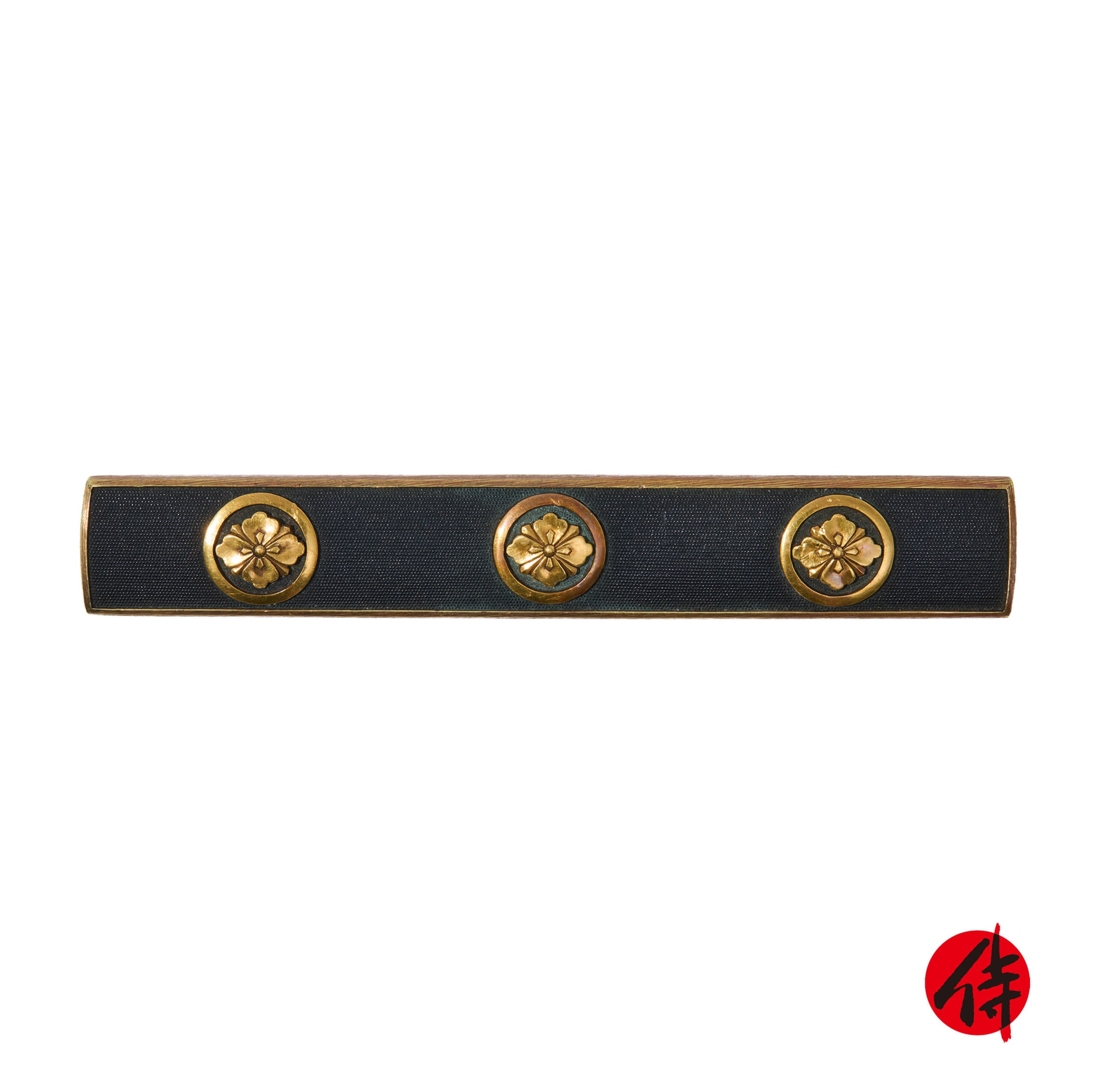
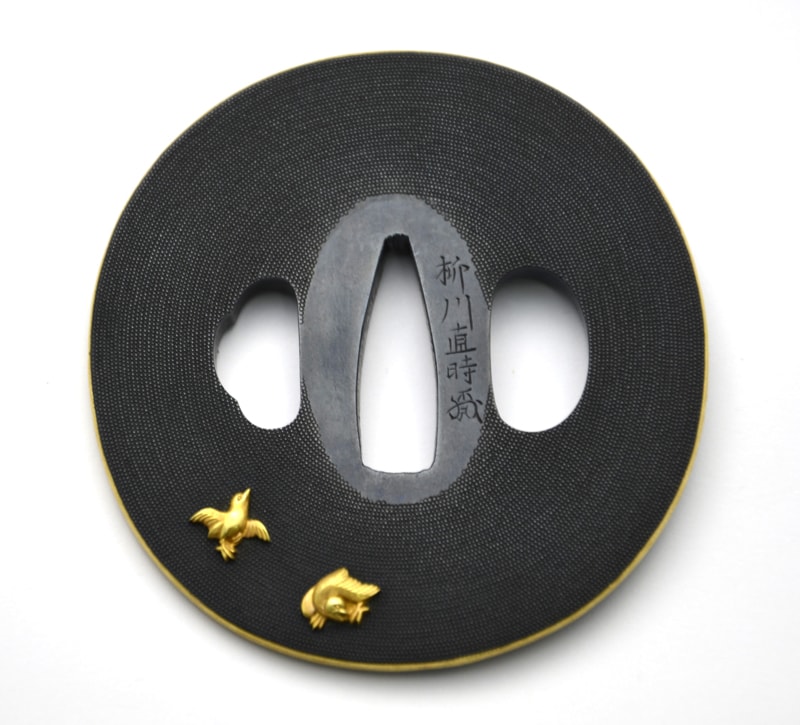
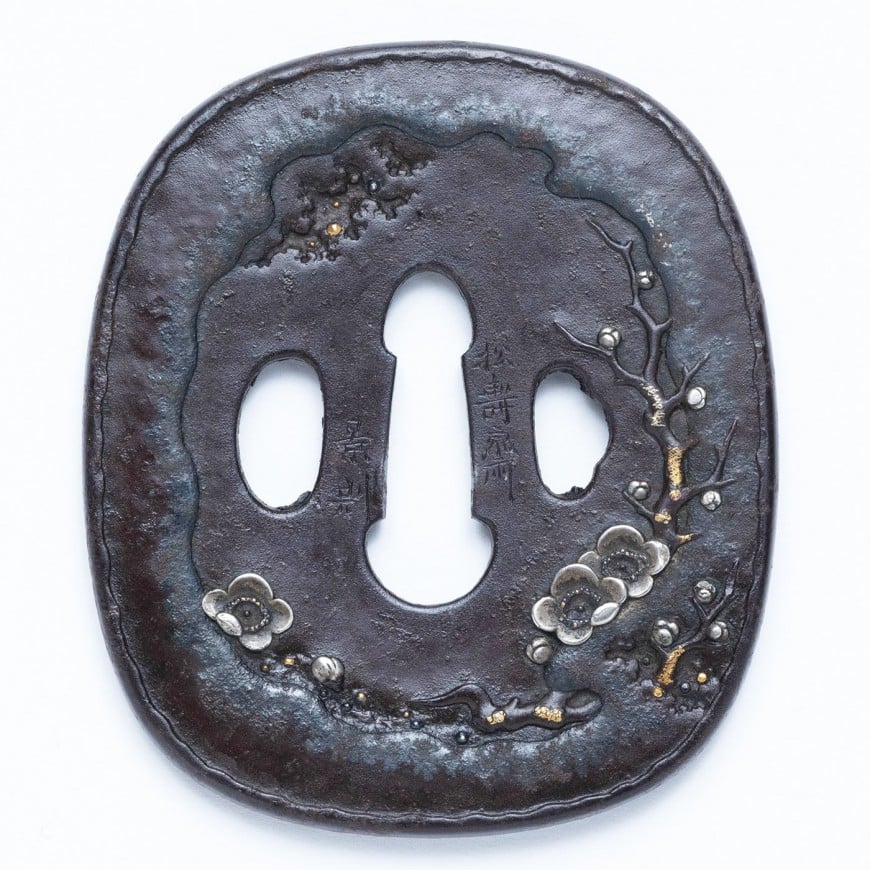
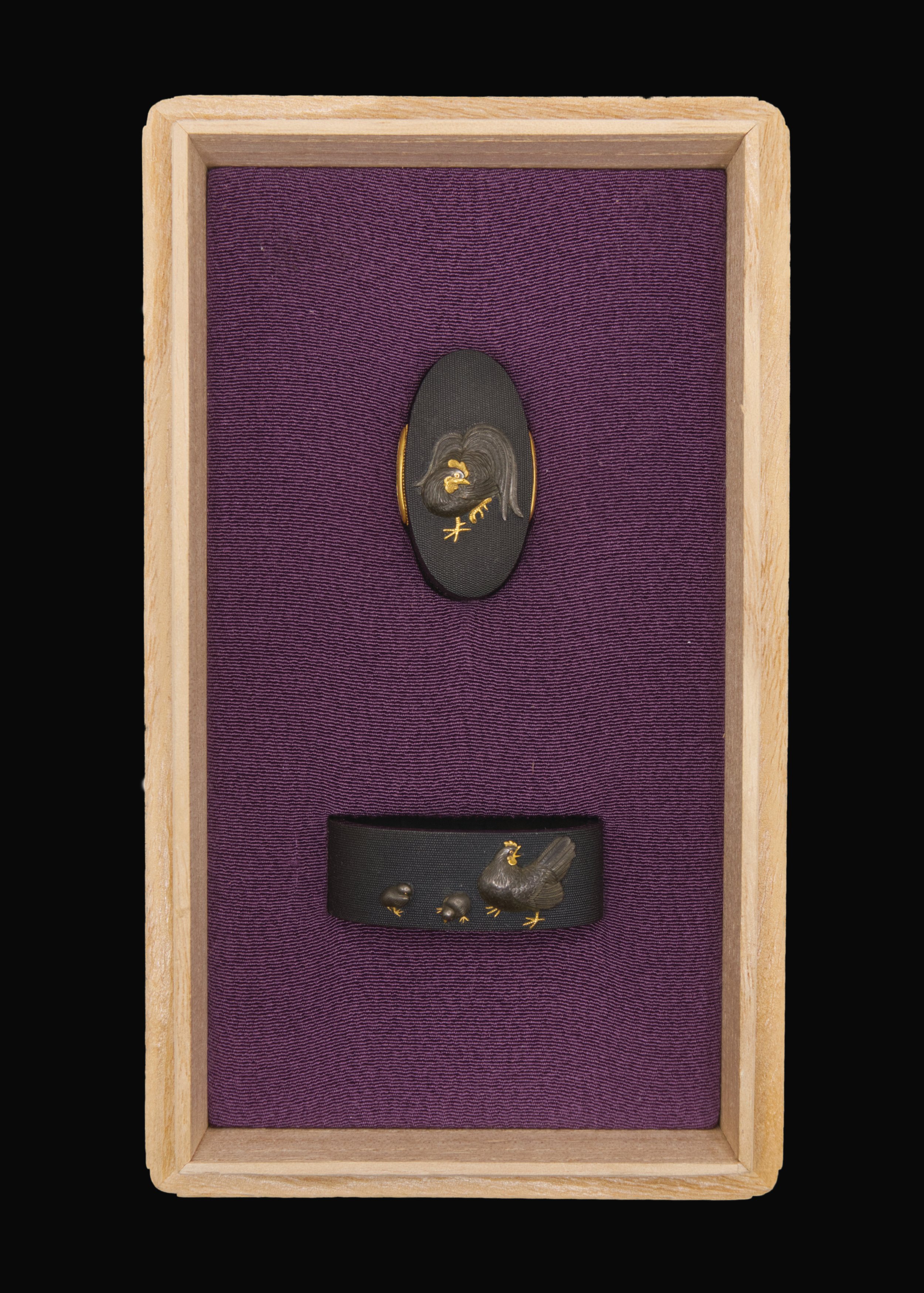
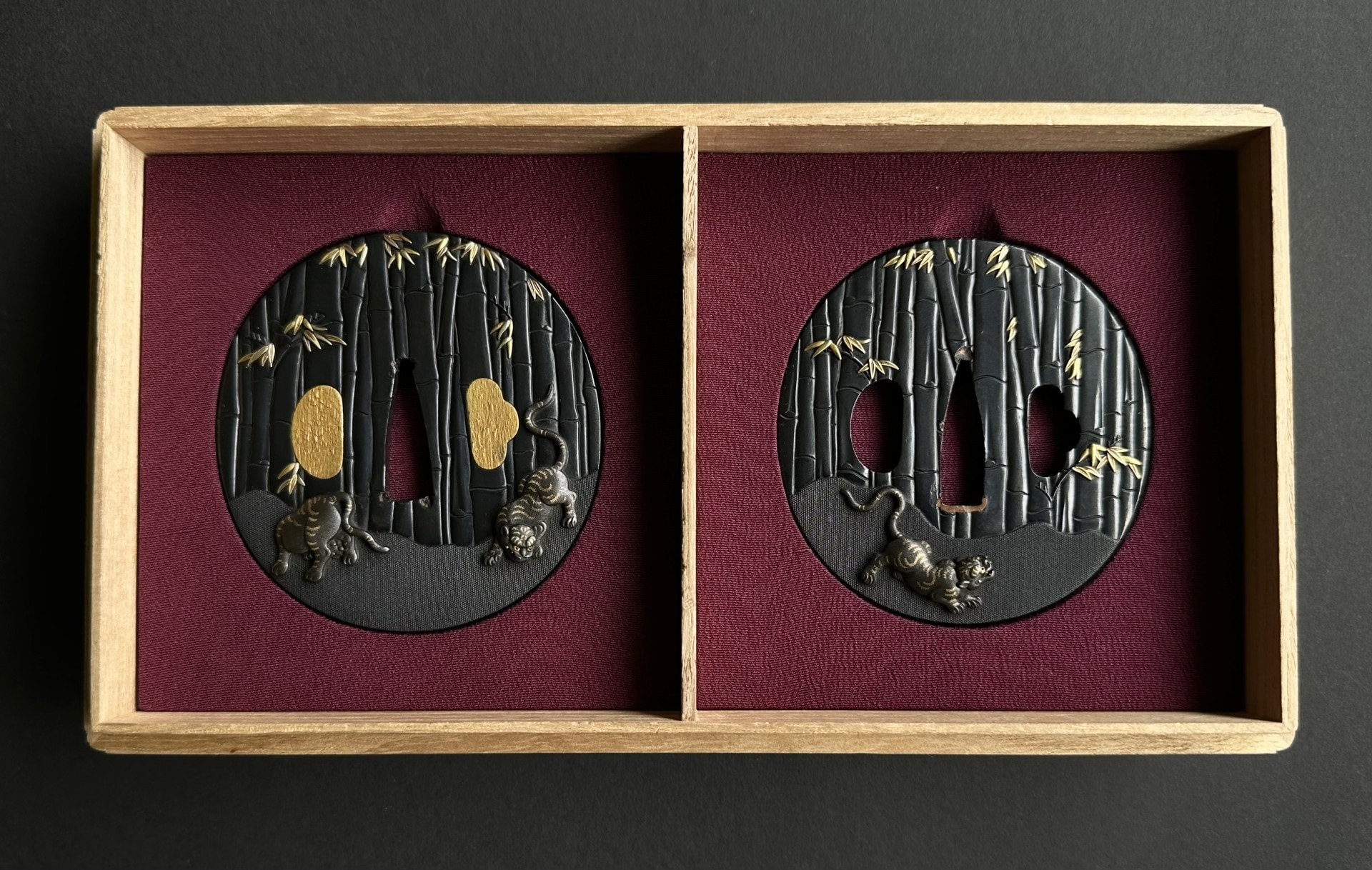
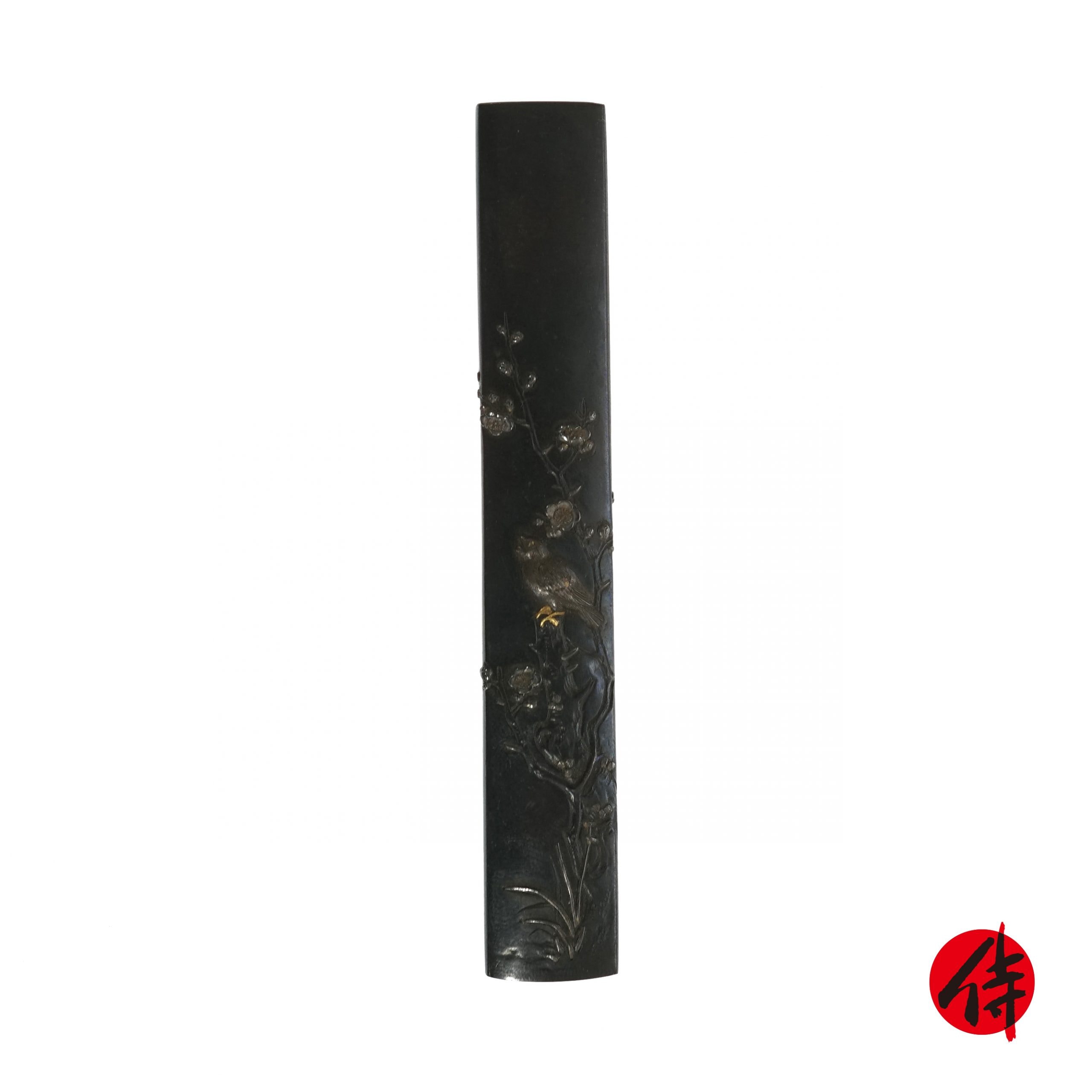
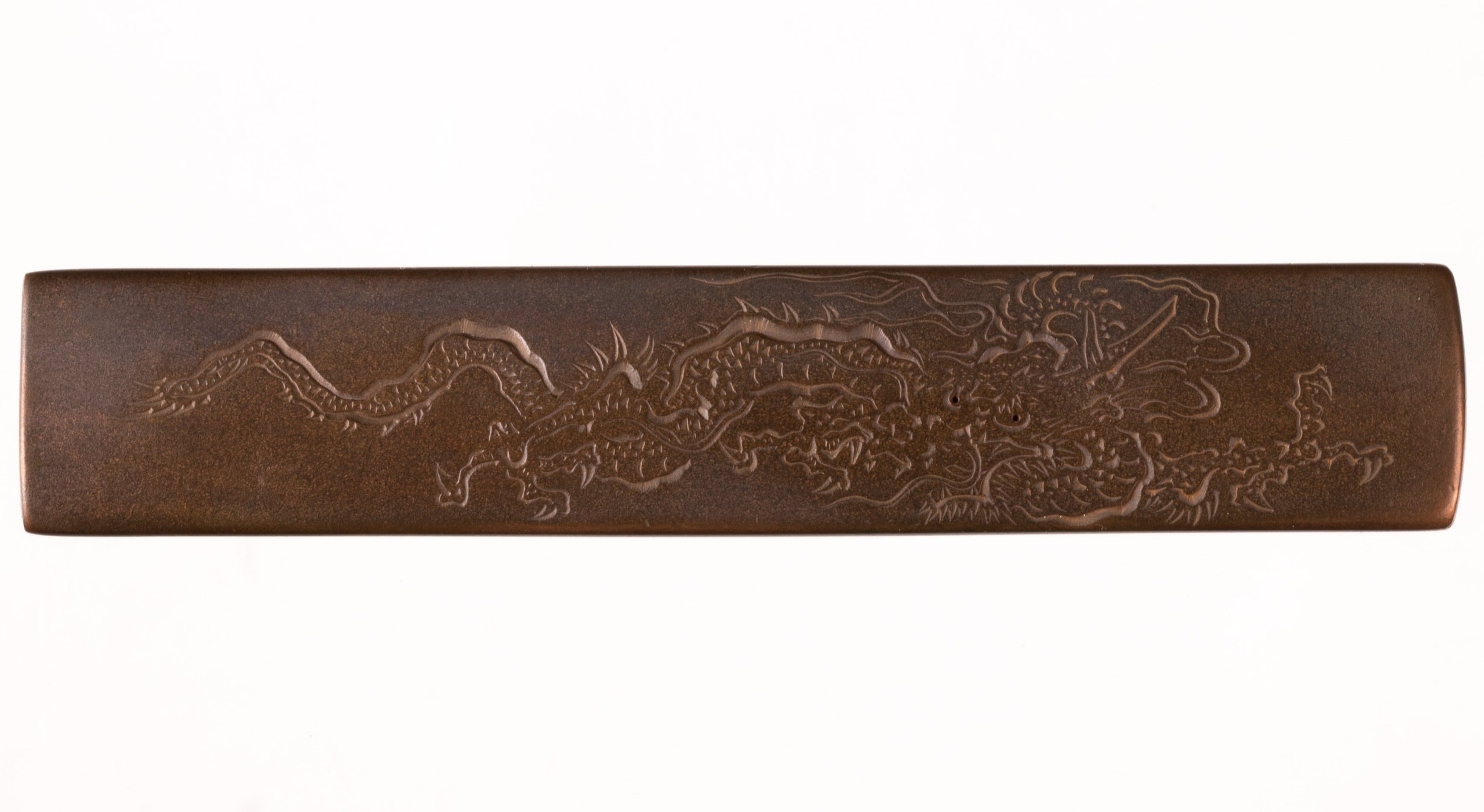
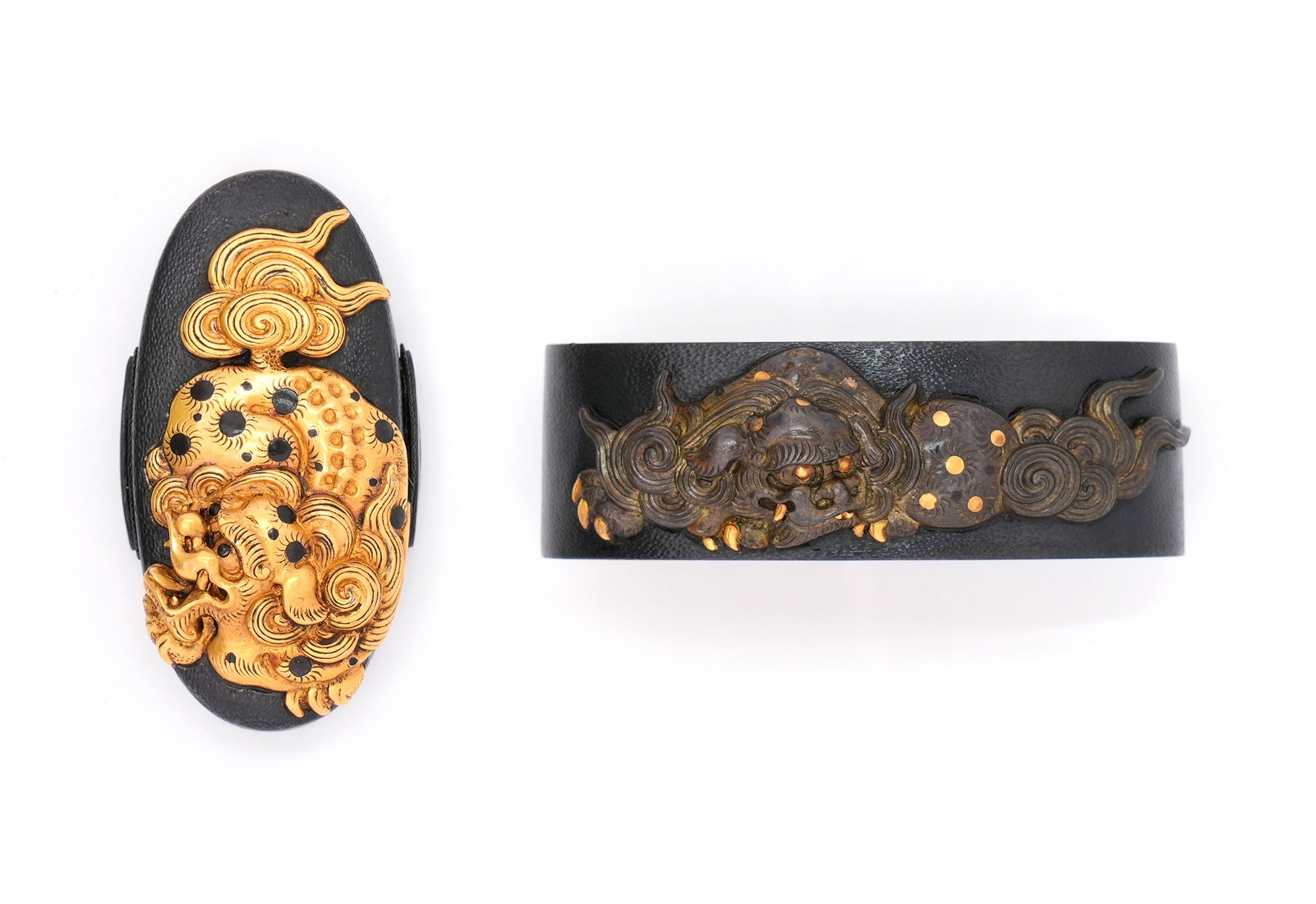
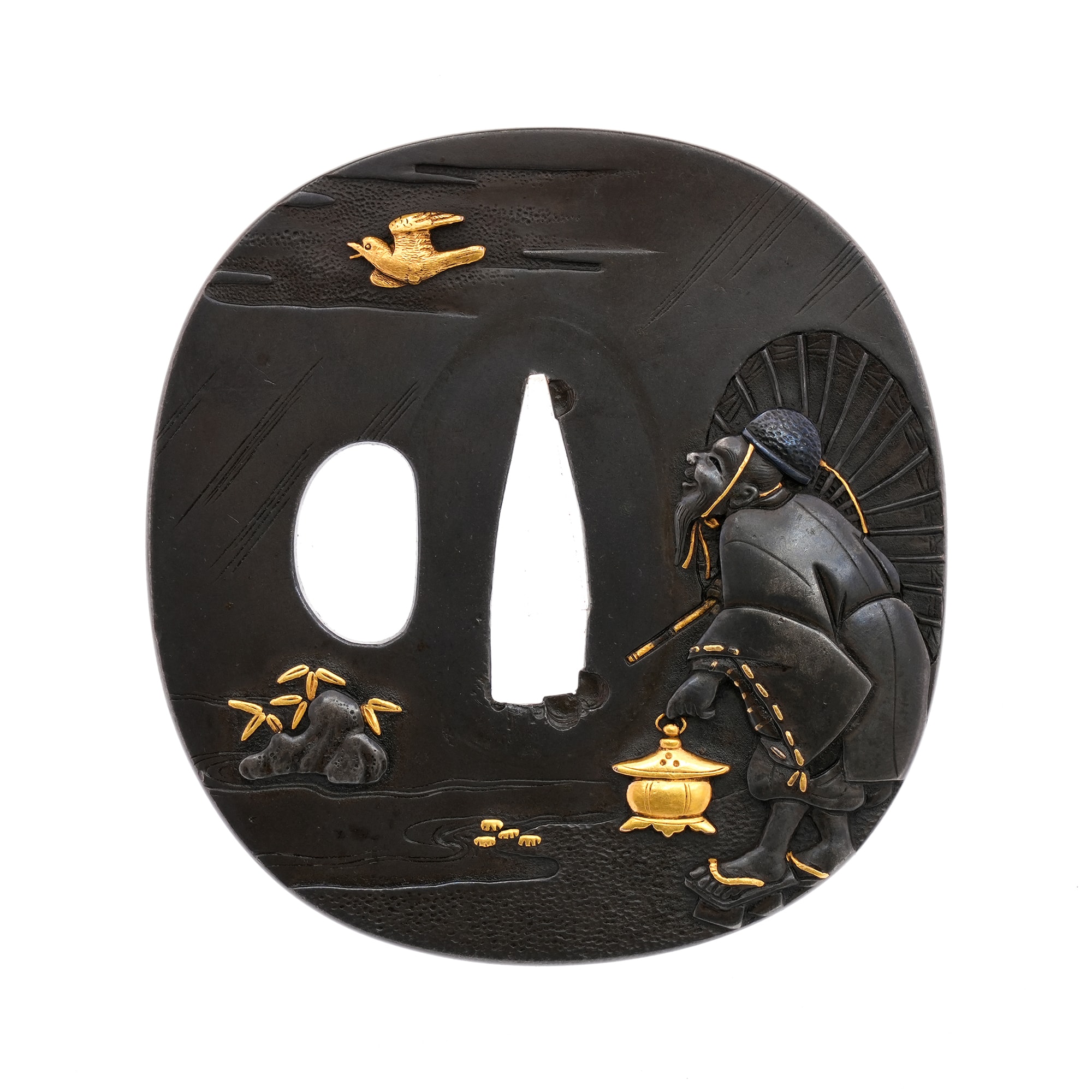
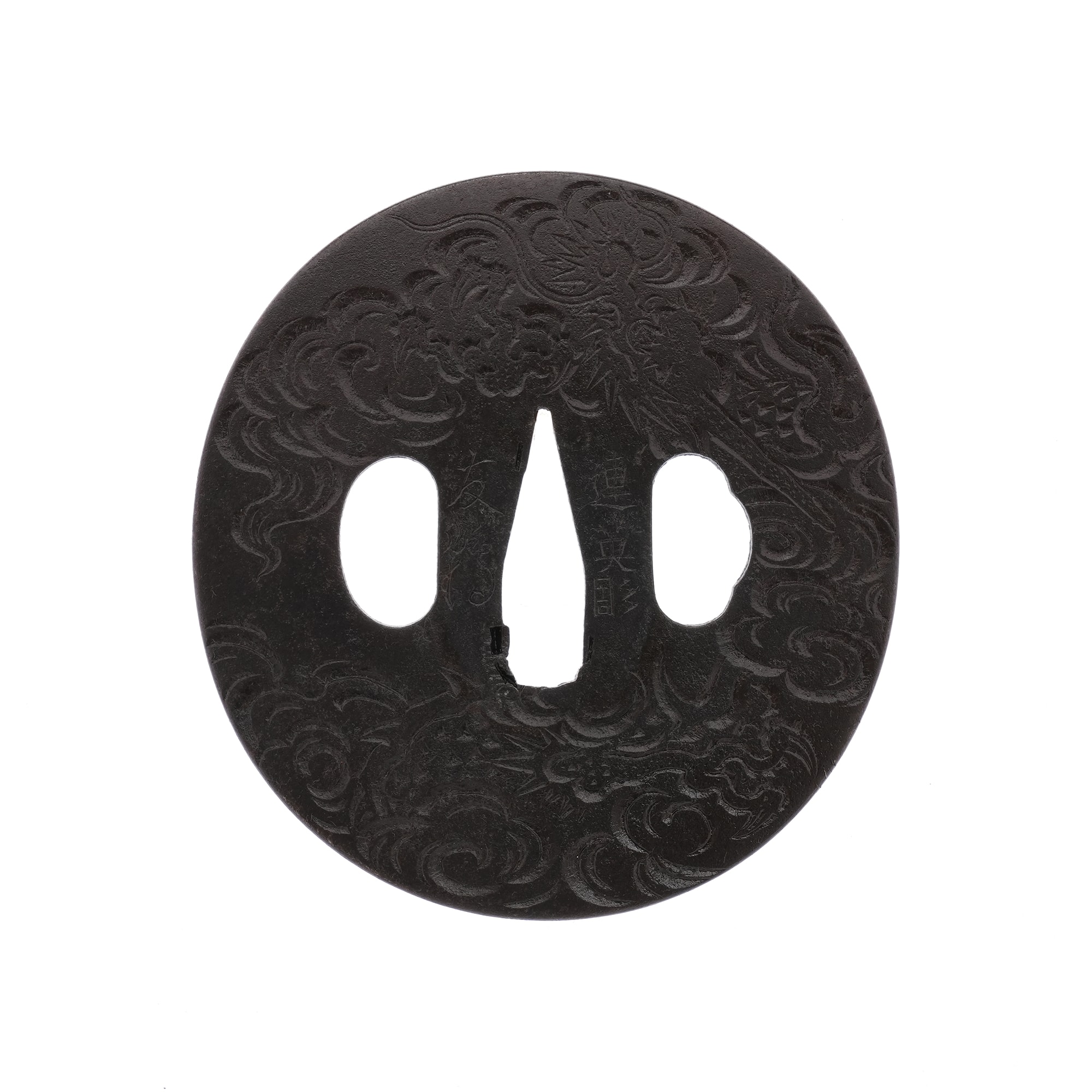
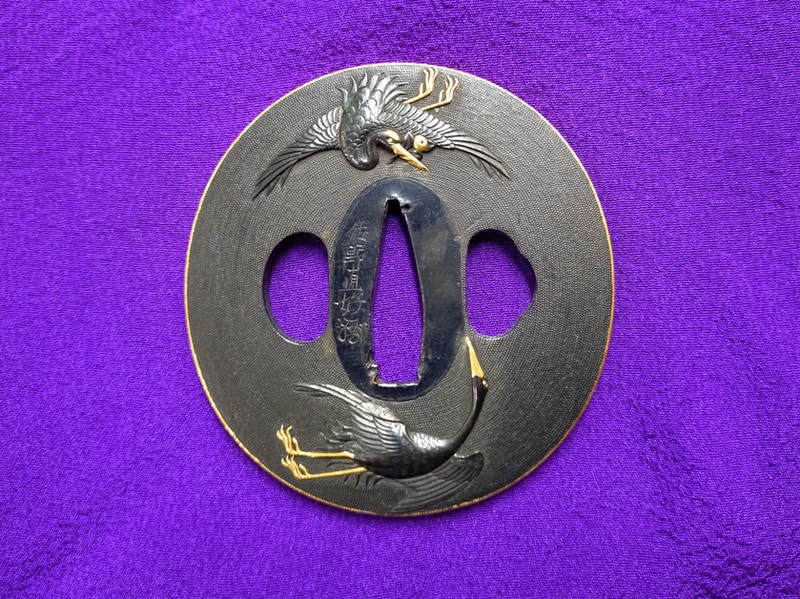
No single eponymous subject: the corpus spreads thinly and widely, a painterly oeuvre of flowers and plants (peony, plum, chrysanthemum, bamboo, pampas grass), birds (geese), the dragon and Mt- dragon, figures and warrior scenes (Yoshiie reading the broken geese-line, a mounted officer, the Nio guardian), and witty genre and Chinese-immortal subjects (the toad-and-Tekkai immortals, a kappa, the star-festival kikoden). Vertical (-zu) framing and leave-out (rusu-moyo) compositions recur.

Flowers, plants and birds

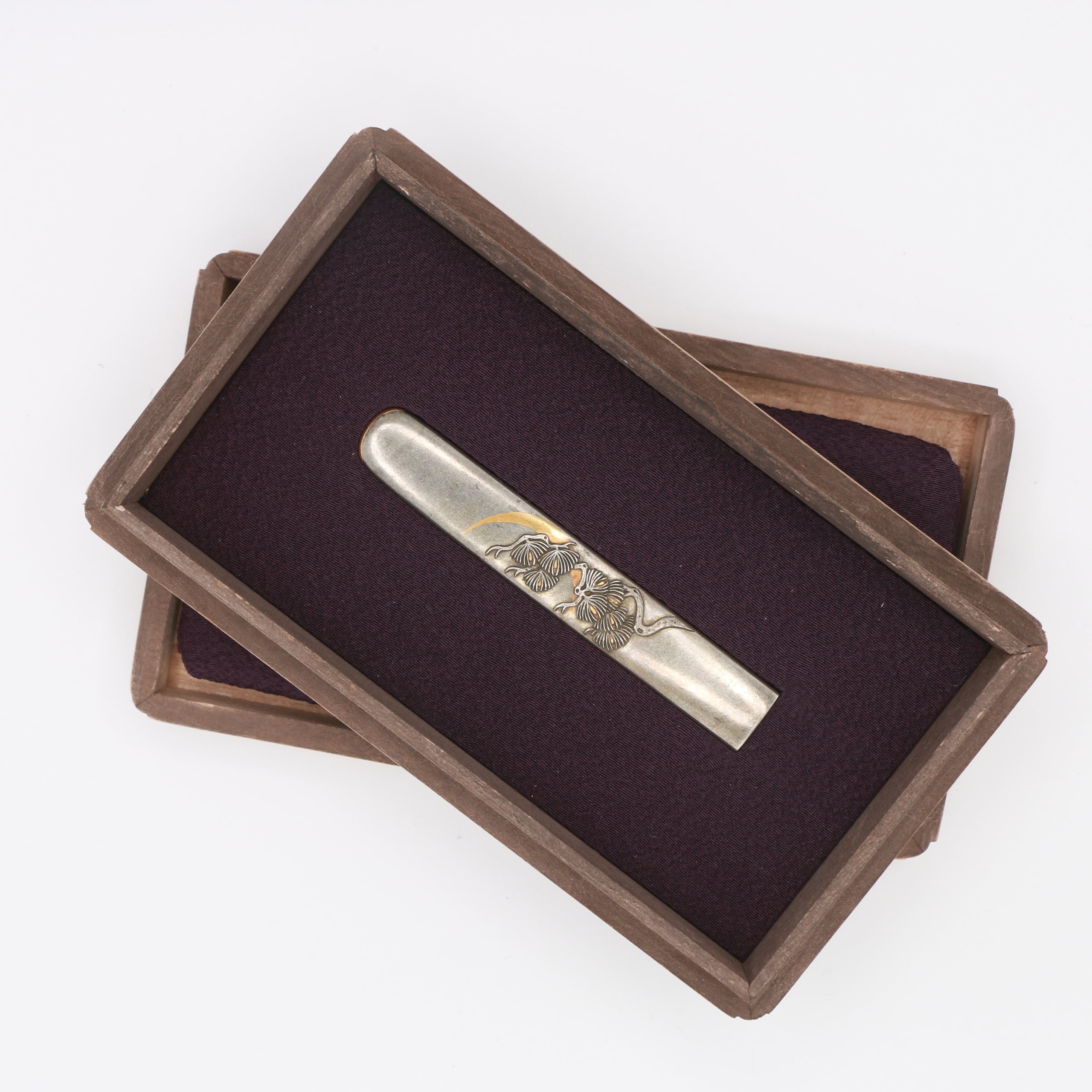
Branch-peony, plum under moonlight, blooming chrysanthemum, young bamboo and pampas grass, and wild geese, rendered with dense colour iro-e on orderly .

Figures, warriors and immortals

Warrior and figure scenes (Yoshiie and the geese, a mounted officer, the Nio) and the dragon, beside witty Chinese-immortal and genre subjects (the toad-and-Tekkai pair, a kappa), often in leave-out composition.

Full iconography

Signature chronology

Placement
Dated signatures
Recorded signatures

Documentary note

He signs Haruaki Hogen with a throughout his mature period, the dominant form; the inverted Hogen Haruaki is a documented exception that the records say is seen only rarely in the Bunsei years of his prime, normally cut Haruaki Hogen. The late literati go Jippo-o and Jippo-kusha prefix the signature (with one-off go such as Tetsuwo-zan and date-place added marks like at Higashi- Wa Kamegasaki and travelling in Hokuetsu), and the carry the bare Haruaki as a split (Haru / Aki). His pre-rename first name Haruto is named only in the biography, with no Haruto-signed piece in this corpus, so it is not treated as a signature here. The records give his birth in Tenmei 7 (1787) and death in Ansei 4 (1857), his common name Kono Bunzo, and his entry into the Yanagawa Naoharu house at about fourteen or fifteen.

Scholarship

The records say that though he learned the Yanagawa carving his ideal lay with the Goto house, and that he took his teacher Naoharu, Yokoya Somin and the Goto house as the wellspring of his method to show a domain of his own.

Designations

Kokuhō—
Jūyō Bunkazai—
Jūyō Bijutsuhin—
Gyobutsu—
Tokubetsu Jūyō—
Jūyō Tōken18

Elite Standing

0.11 across 18 designated works

Top 12% among makers

Provenance

2 documented provenances across certified works by Haruaki

Provenance Standing

0 works held in elite collections across 2 documented provenances

Top 50% among makers

Raw score: 2.00 / 10

Work Types

Distribution across 18 ranked works

Kozuka
633%
Other
422%
Tsuba
422%
Fuchi-Kashira
211%
Menuki
16%
Mitokoromono
16%

Signatures

Signature types across 18 ranked works

Currently Available

Lineage

Haruaki
Students (3)
  1. 1.Kiyotoshi清寿40designated
  2. 2.Akichika明親1designated
  3. 3.Akishige明重1 for sale1designated

Yanagawa School

Other artisans of the Yanagawa school

  1. 1.Naoharu直春7designated
  2. 2.Naomasa直政1 for sale5designated
  3. 3.Naoyoshi直好3 for sale2designated
  4. 4.Akichika明親1designated
  5. 5.Akishige明重1 for sale1designated
  6. 6.Naomitsu直光2designated
  7. 7.Mōri Mitsunori毛利光則1designated

Haruaki

Haruaki(春明) was a maker of Japanese sword fittings (tōsōgu) of the Yanagawa school in Musashi province, active during the Tenmei-Ansei (1787-1857) period.

The work follows the Machibori tradition.

Designated works by Haruaki include 18 Jūyō.