NihontoWatch MonNihontoWatchBETA
MarketEncyclopedia
NihontoWatch Mon

NihontoWatchBETA

Market
Encyclopedia
Overview·Kantei·Designations·Work Types·Signatures·Lineage·School
OverviewKanteiDesignationsWork TypesSignaturesLineageSchool
  1. Schools
  2. Yokoya
  3. Yanagawa
  4. Naomasa

Yanagawa Naomasa

直政

Jūyō
Vol. 25, No. 413 · Kozuka

Yanagawa Naomasa

直政

5 ranked works

ProvinceMusashiEra1692–1757 (Genroku 5 - Horeki 7)SchoolYokoya>YanagawaTraditionMachiboriGenerationfounder (2nd head of Yanagawa family)Specialtieskozuka, kogai, fuchi-kashira, menuki, tsubaTypeTosogu MakerCodeYAN001
5Jūyō Tōken

Overview

Yanagawa Naomasa was born in in Genroku 5 (1692) and initially bore the common name Heijiro, later changed to Sanzaemon. He entered the workshop of Yokoya Somin and quickly distinguished himself as an outstanding talent within that circle. Through establishing his own following, Naomasa founded what became known as the Yanagawa school, a lineage that carried forward the Yokoya manner into the mid- period and beyond. Beginning with his adopted heir, the second-generation Naomitsu, and the third-generation Naoharu, and with the emergence of figures such as Yanagawa Naokatsu and Kikuchi Jokatsu, the prosperity of the Yanagawa line was remarkable. Naomasa remained active until Horeki 7 (1757).

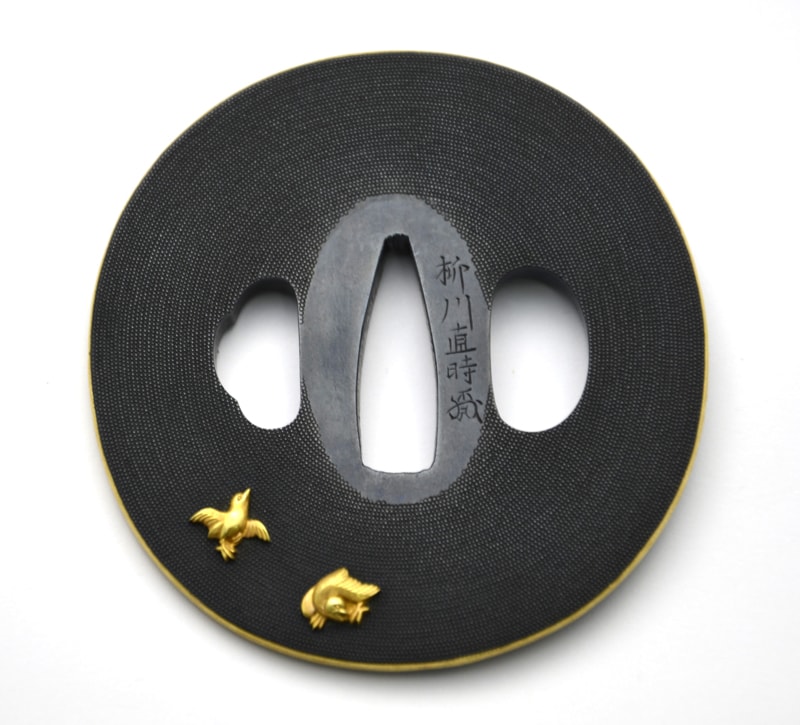
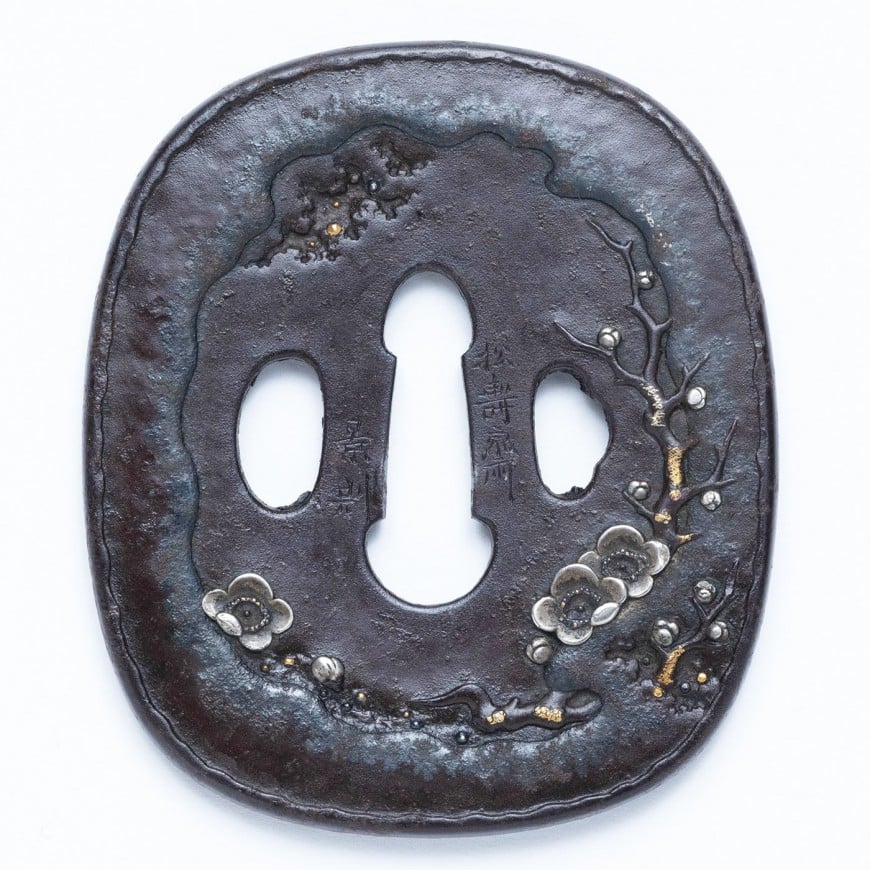
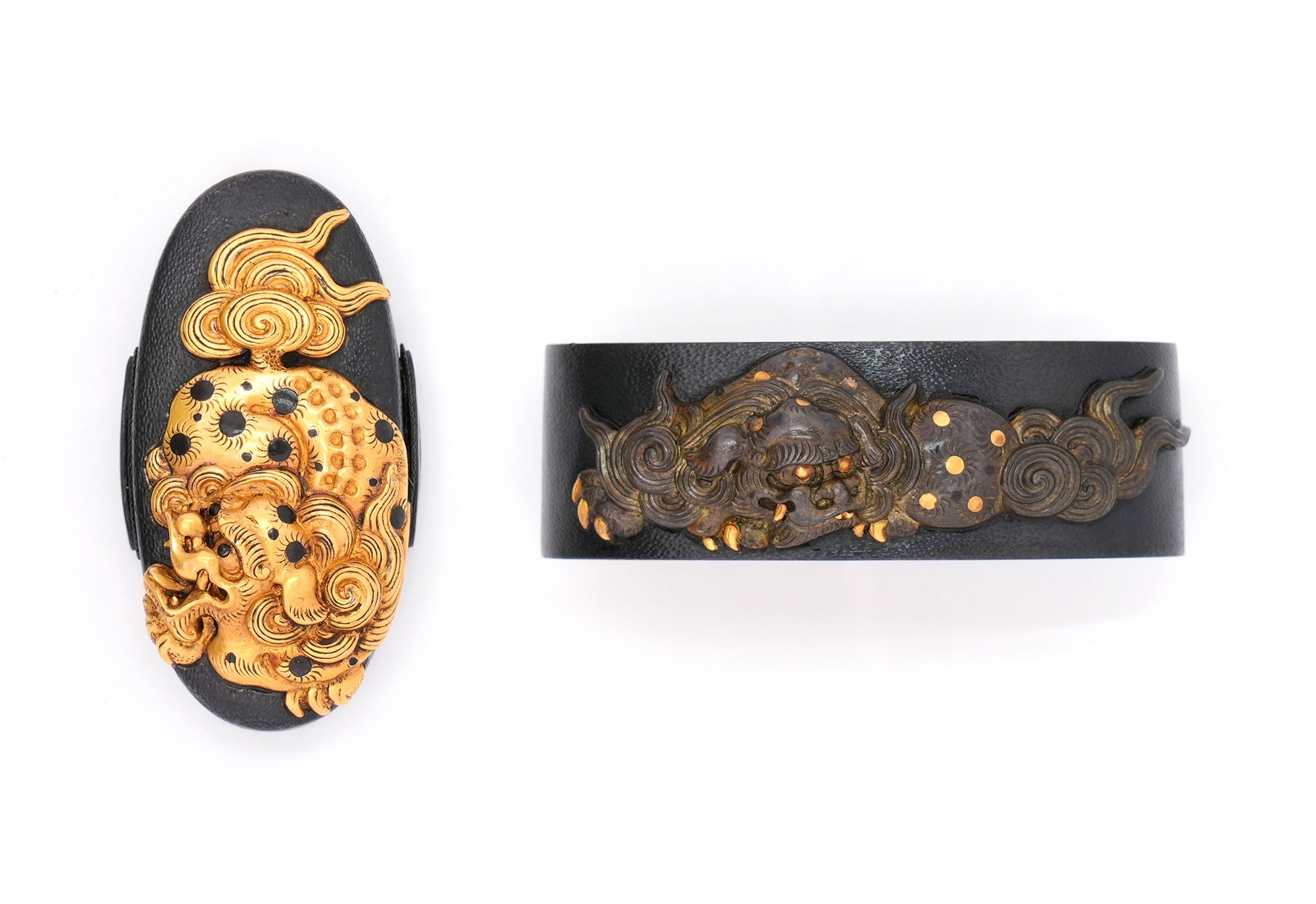
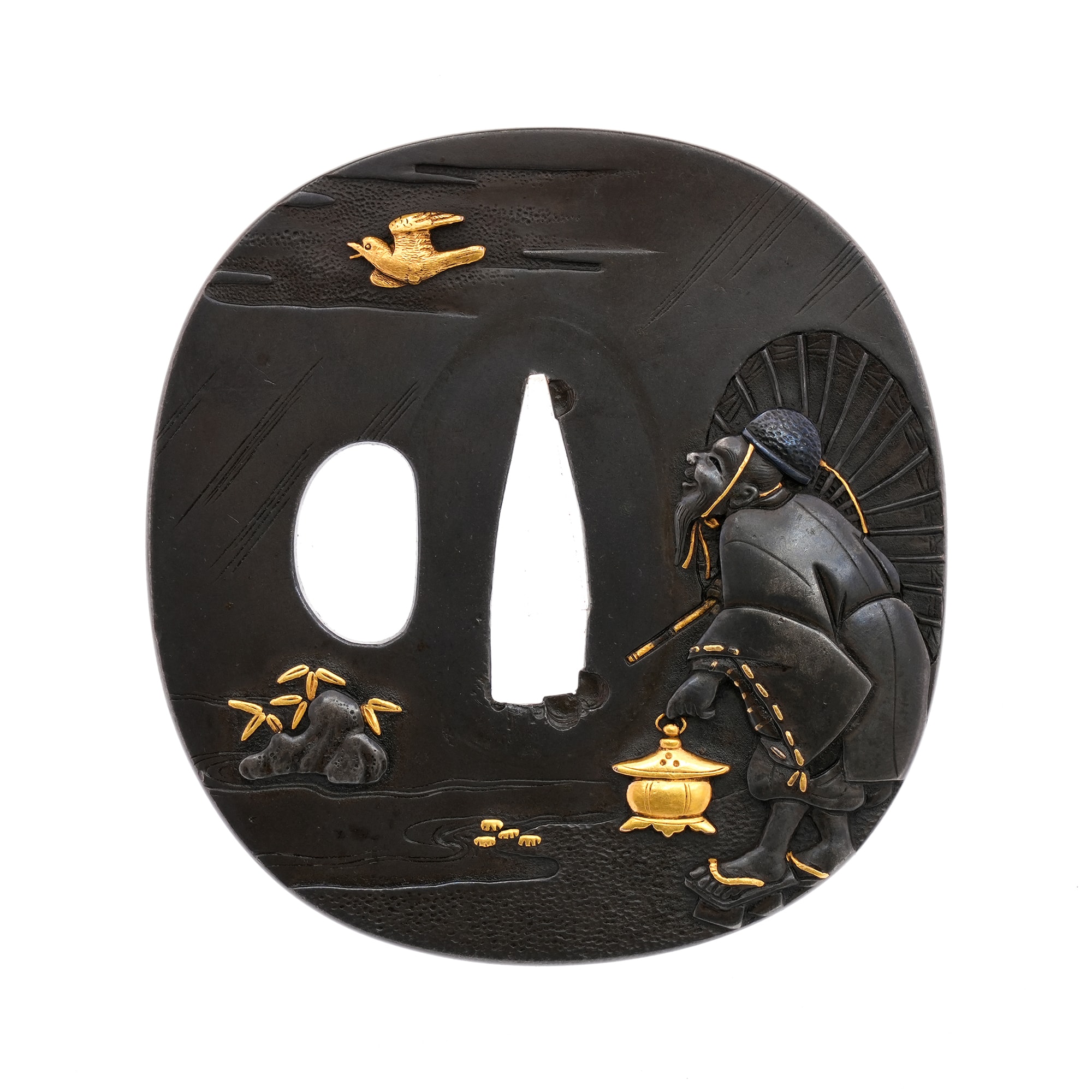
The Yanagawa school inherited and perpetuated the characteristic Yokoya-style methods: grounds worked in with polychrome metalwork (). Naomasa's works often call to mind his teacher and are characterized by a powerful and dignified presence. His carving employs a thickly modeled technique — what the describes as richly modeled high-relief carving (-bori) — together with gold and silver , achieving compositions that brim with martial spirit and authority. He is known to have worked after Somin's own compositions, and while the notes that the placement of flesh () in such works occasionally lacks the force of the originals, Naomasa's distinctive carving manner brings these pieces close to their models.

Naomasa occupies a position of singular importance as the founder of one of the principal lineages of the period. The consistently recognizes works in which "Naomasa's true merits are fully brought to the fore" and praises pieces where "the Yanagawa-school manner is displayed without reservation." Signed works bearing the explicit inscription "disciple of Somin" are noted as being of particular value and importance. Surviving matched sets from his hand are comparatively few, lending additional significance to such examples. As the artist who established the Yanagawa school and achieved renown in his own right, Naomasa's legacy resides in the enduring vitality of the tradition he founded.
Kantei

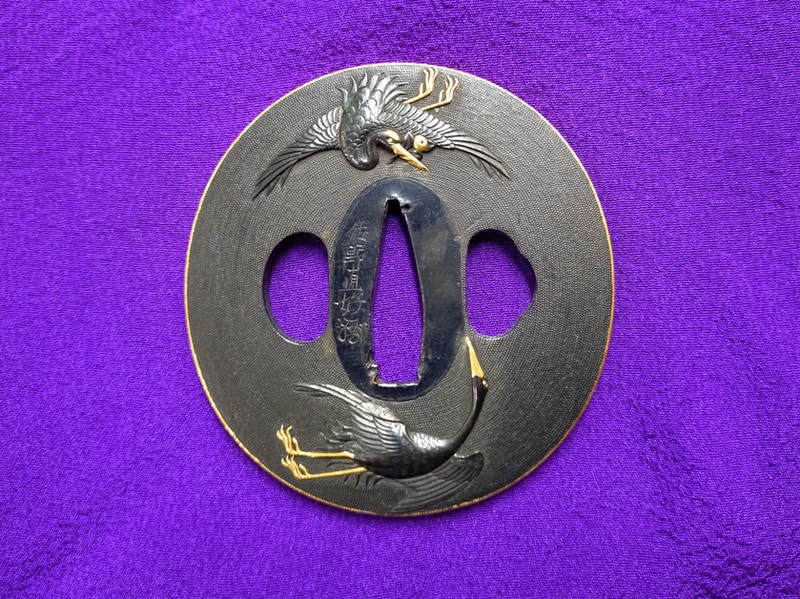
3 descriptive axes: material (the Yokoya-derived shakudo nanako ground, with the ura backing-plate on his kozuka and koshirae) x technique (high relief carried in colour iro-e, with applied suemon-zogan inlay and his noted high-flesh carving on tsuba) x themes (the inherited Yokoya animal-and-figure menagerie, the front-facing lion above all, with tiger, horse and dragon). As founder, his load-bearing distinguishers are not the inherited house idiom but the founding of the Yanagawa school itself and the own-carving-method the records grant him within Somin's models.

Yanagawa Naomasa (1692-1757), common name first Heijiro and later Sanzaemon, is the founder of the Yanagawa school of and a leading pupil of Yokoya Somin. Born in in Genroku 5, he studied under Somin and worked as an outstanding talent of that gate, then founded a line of his own. From that founding the Yanagawa manner inherits the Yokoya method, the ground worked in high relief with colour iro-e, and his pieces are said to call his teacher to mind, strong and dignified. He modelled Somin's own designs, the front-facing lion above all, so that the inherited Yokoya animal menagerie of lions, tiger, horse and dragon is his repertoire; yet within those models the records credit him with a carving method of his own that approaches the original. His adopted son the second Naomitsu and the third Naoharu continued the house, and with the school-mates Yanagawa Naokatsu and Kikuchi Joketsu the Yanagawa school flourished remarkably.

Diagnostic discriminators

unique vs the Yokoya house he came from, and the later Yanagawa generations who inherited (not founded) the manner

a single setsumei (Juyo 25-413) says that on his copy of Somin's front-facing lion the modelling of face and posture slightly lacks power, yet he deploys a carving method of his own and approaches the original (独自の彫法を駆使しており、本歌に迫るものがある); this is the one place the corpus separates his hand from Somin's within the shared design, so it is single-source (n=1) and scoped to his lion copies, not asserted of his whole oeuvre

Material (grounds)

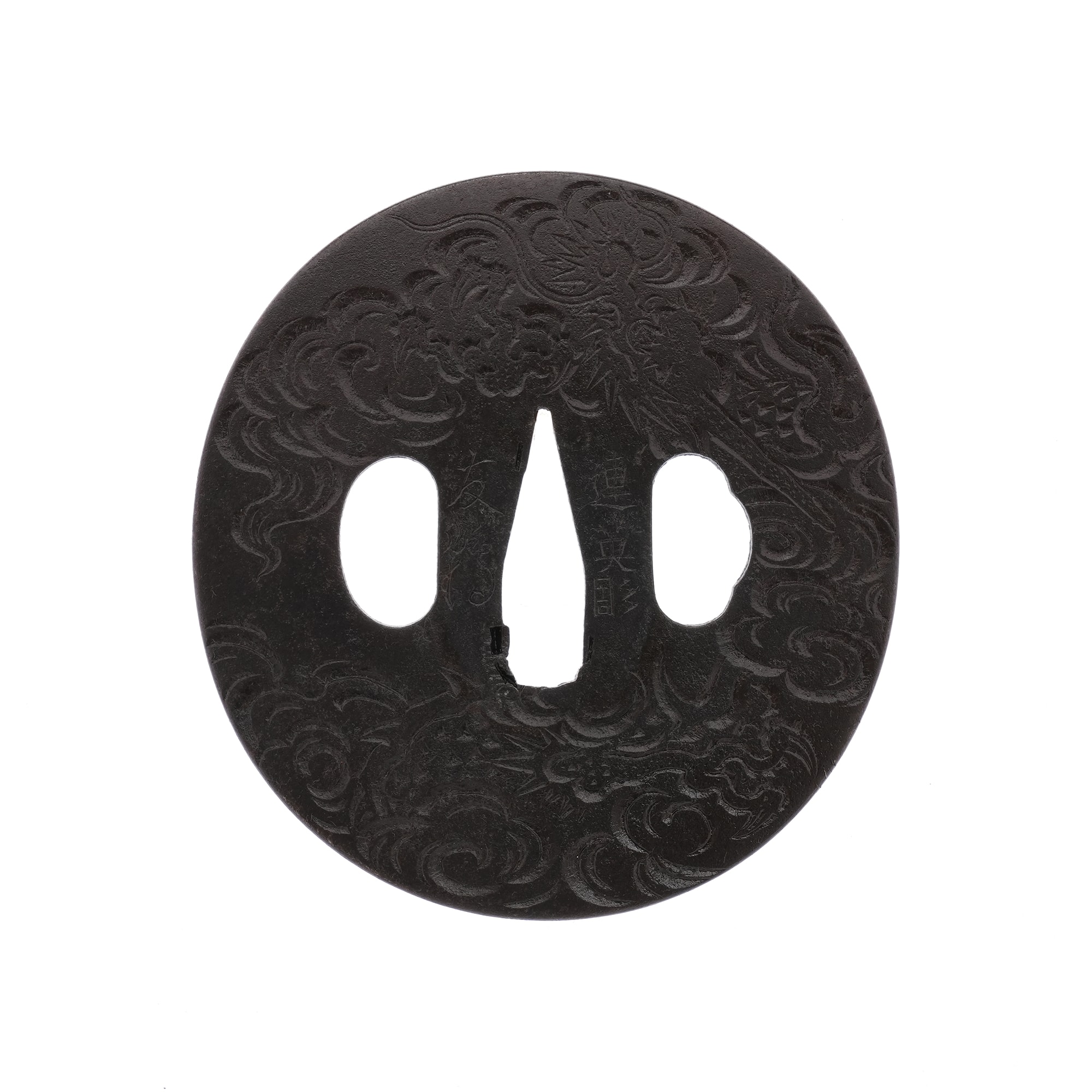
The Yokoya-derived ground throughout: worked in fine , the and backed with an plate (ita-gane), and the cut in with hidden roots. The continuity of ground with his teacher Somin is deliberate, the Yanagawa manner inheriting the Yokoya method.

Technique

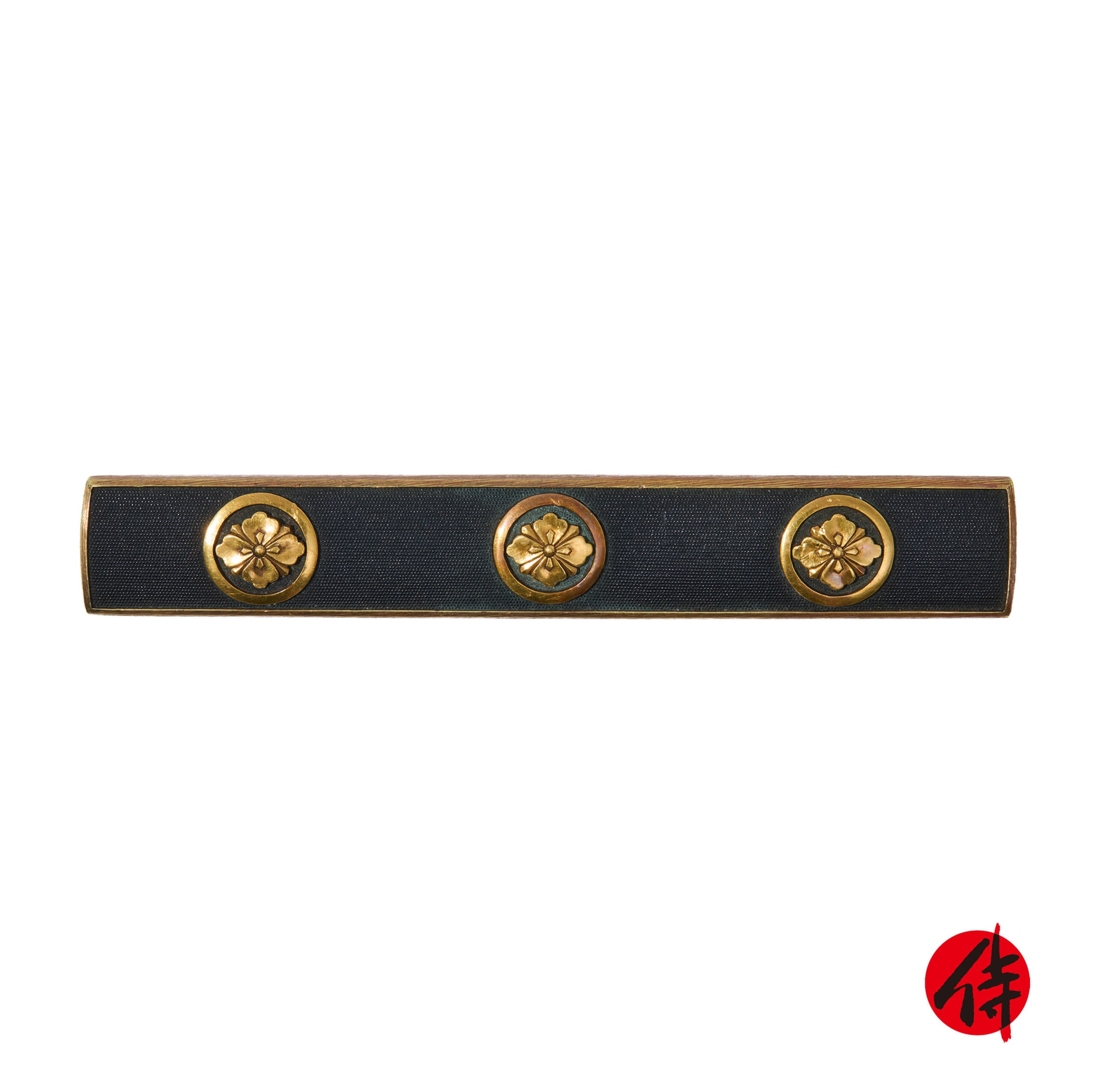
High relief carried in colour iro-e and gold iro-e is his main hand, the in ; on his paired he deploys, as his noted forte, a high-flesh carving and applied - colour iro-e, the chisel cut fine and meticulous. The records call a three-piece set nyunen-, painstaking work.

Themes (the inherited Yokoya menagerie)

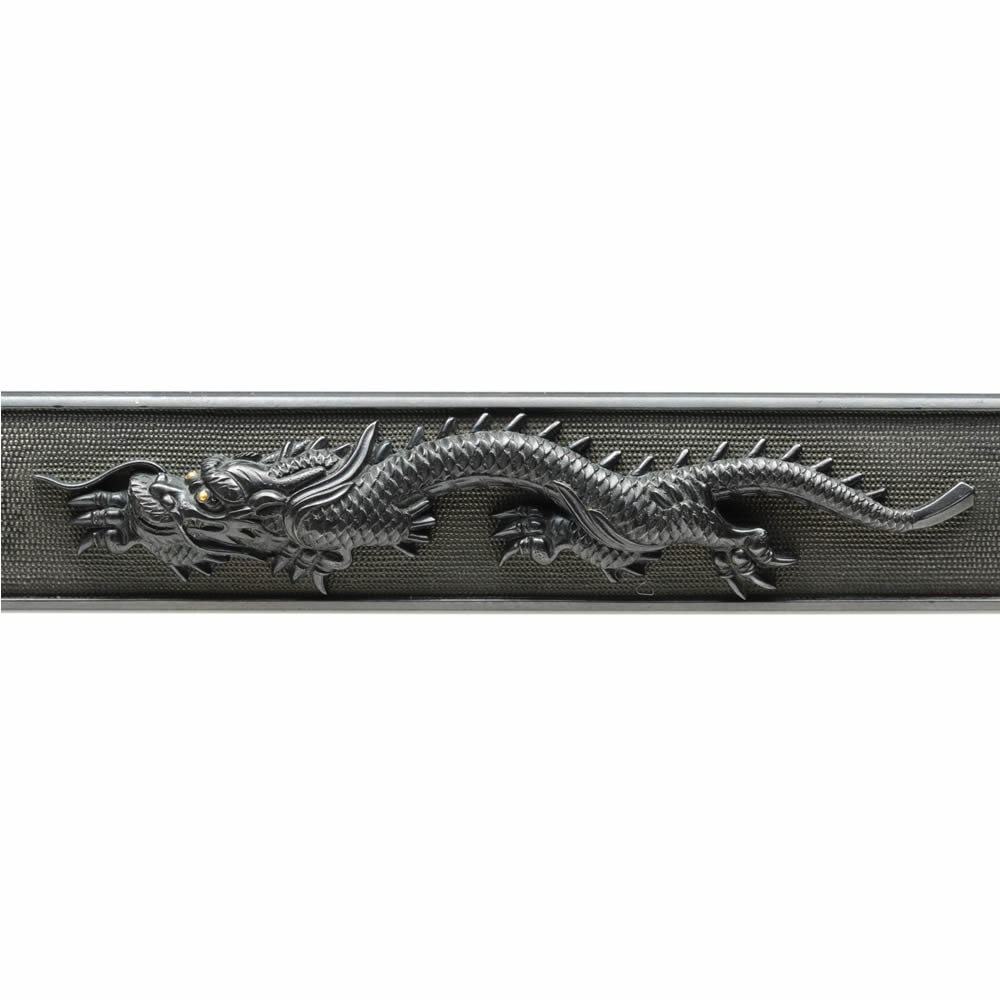
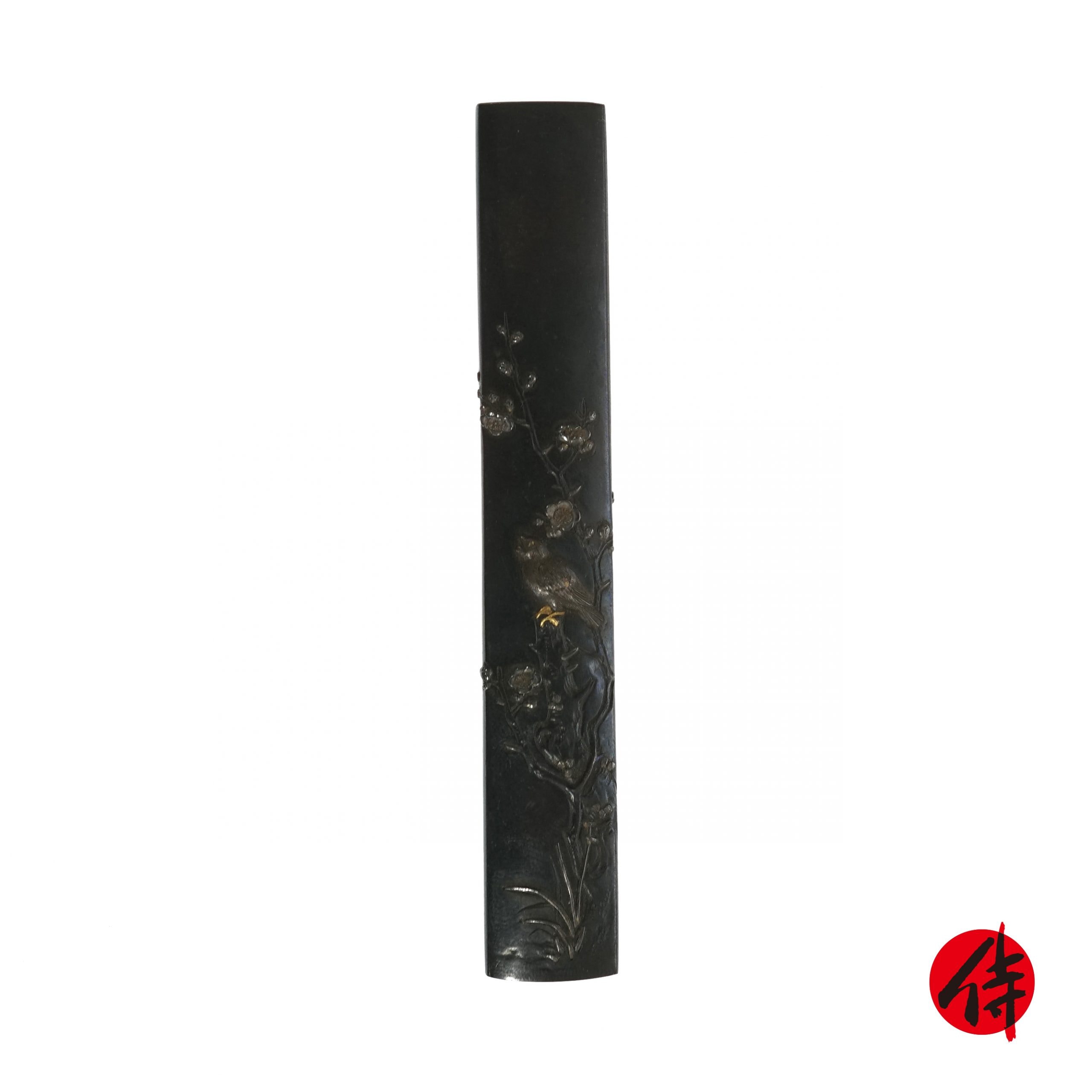
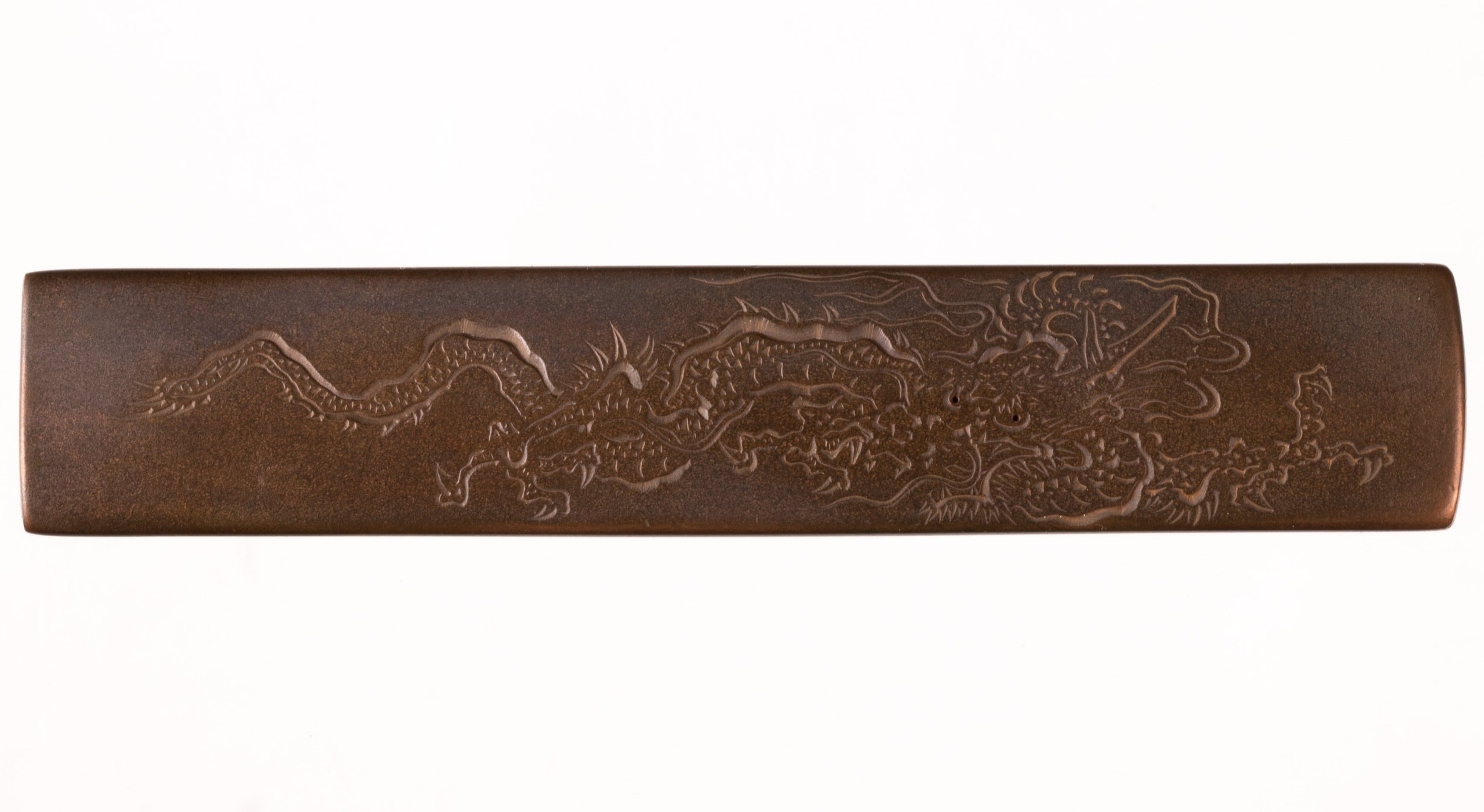
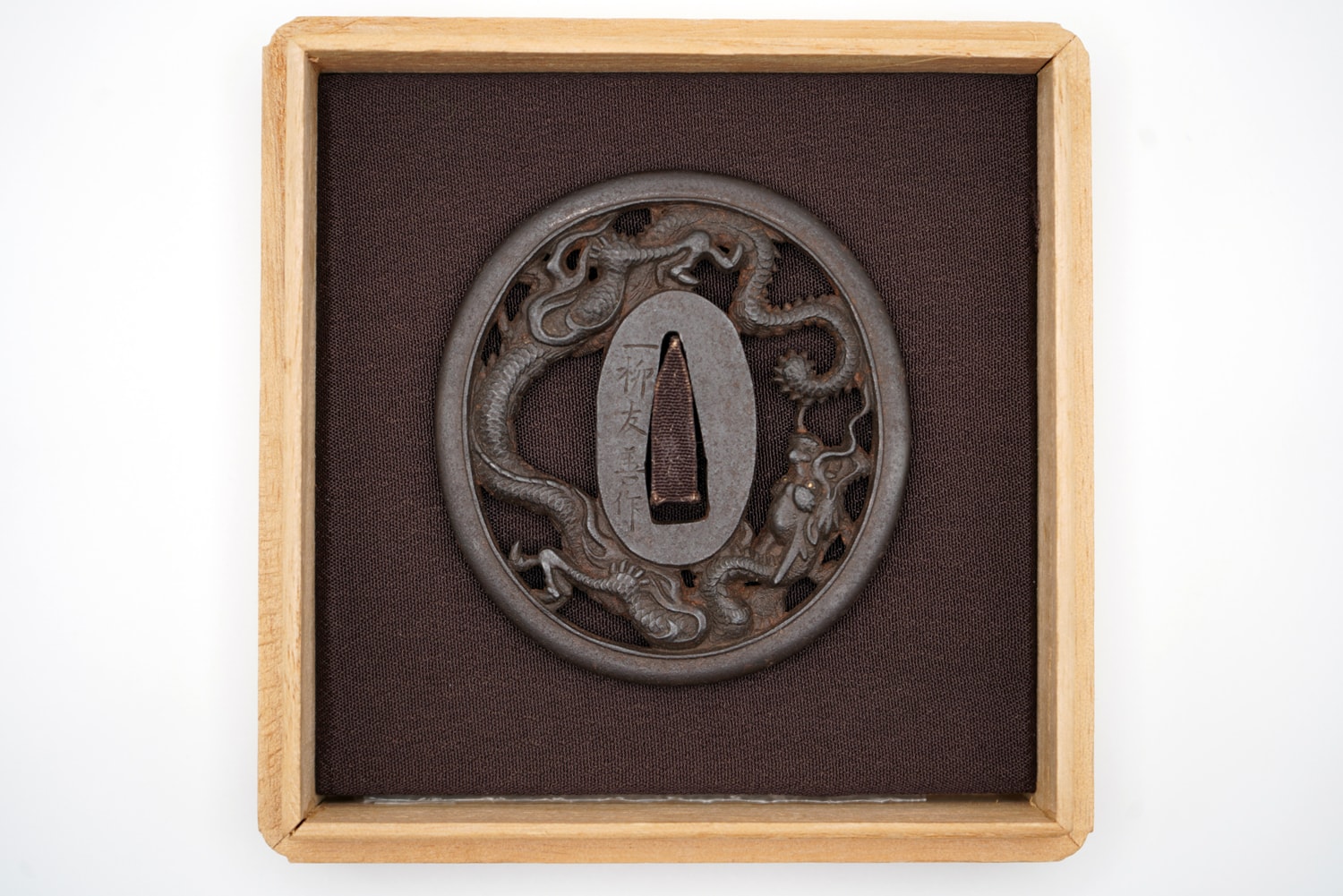
The repertoire is the Yokoya animal-and-figure menagerie inherited from Somin, the front-facing lion above all, which he took directly from his teacher's designs; with the fierce tiger, the running horse paired with pine, and the dragon of a three-piece set. The subjects are not his invention but Somin's models, rendered strong and dignified in the inherited manner.

The Yokoya animal-and-figure menagerie

The front-facing lion modelled from Somin's design above all, with the fierce tiger, the running horse against pine, and the dragon, all in the inherited Yokoya high relief with colour iro-e.

Full iconography

Signature chronology

Recorded signatures

Documentary note

He signs Yanagawa Naomasa with a throughout, no rank progression; on one the signature is preceded by the Goto-Yujo homage legend carved after a Yujo design (祐乗以作形彫之), a commission inscription naming the first Goto head whose okite-mono the piece imitates, not a name of his own, and that record adds that the work looks thoroughly Goto in manner. On one the signature is appended with the note Somin's pupil (宗弟子), a precious attestation of his discipleship. The records give his birth in Genroku 5 (1692) in and death in Horeki 7 (1757), his common name first Heijiro then changed to Sanzaemon, and the bun-of-the-school as his adopted son the second Naomitsu and the third Naoharu, with the school-mates Naokatsu and Kikuchi Joketsu.

Scholarship

The records say that, founding his own line out of the Somin gate, the Yanagawa manner inherits the Yokoya method of shakudo nanako worked in high relief with colour iro-e, and that his pieces call his teacher to mind, strong and dignified.

Designations

Kokuhō—
Jūyō Bunkazai—
Jūyō Bijutsuhin—
Gyobutsu—
Tokubetsu Jūyō—
Jūyō Tōken5

Elite Standing

0.03 across 5 designated works

Top 28% among makers

Work Types

Distribution across 5 ranked works

Kozuka
120%
Tsuba
120%
Other
120%
Fuchi-Kashira
120%
Mitokoromono
120%

Signatures

Signature types across 5 ranked works

Currently Available

Lineage

Naomasa
Student
  1. 1.Naomitsu直光2designated

Yanagawa School

Other artisans of the Yanagawa school

  1. 1.Haruaki春明3 for sale18designated
  2. 2.Naoharu直春7designated
  3. 3.Naoyoshi直好3 for sale2designated
  4. 4.Akichika明親1designated
  5. 5.Akishige明重1 for sale1designated
  6. 6.Naomitsu直光2designated
  7. 7.Mōri Mitsunori毛利光則1designated

Naomasa

Naomasa(直政) was a maker of Japanese sword fittings (tōsōgu) of the Yanagawa school in Musashi province, active during the 1692-1757 (Genroku 5 - Horeki 7) period.

The work follows the Machibori tradition.

Designated works by Naomasa include 5 Jūyō.