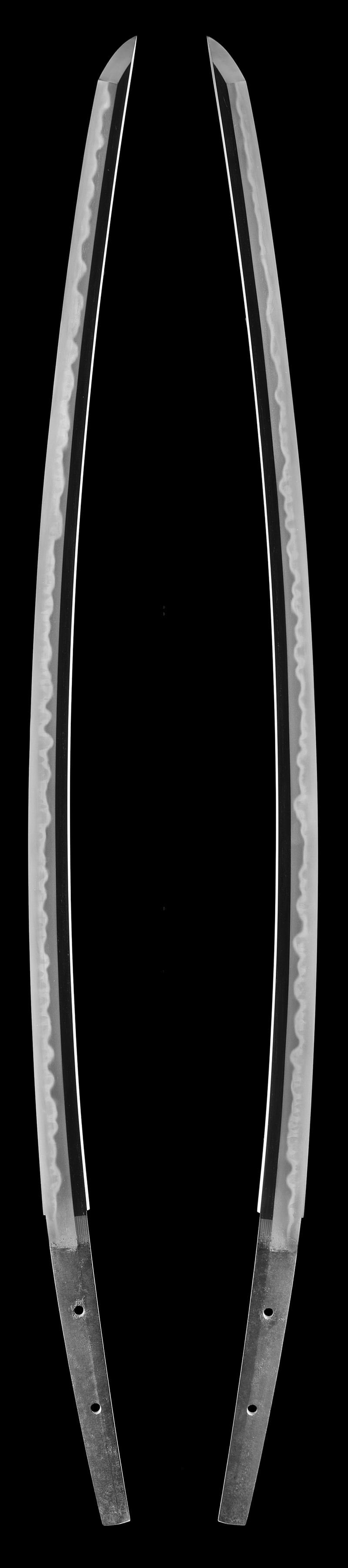
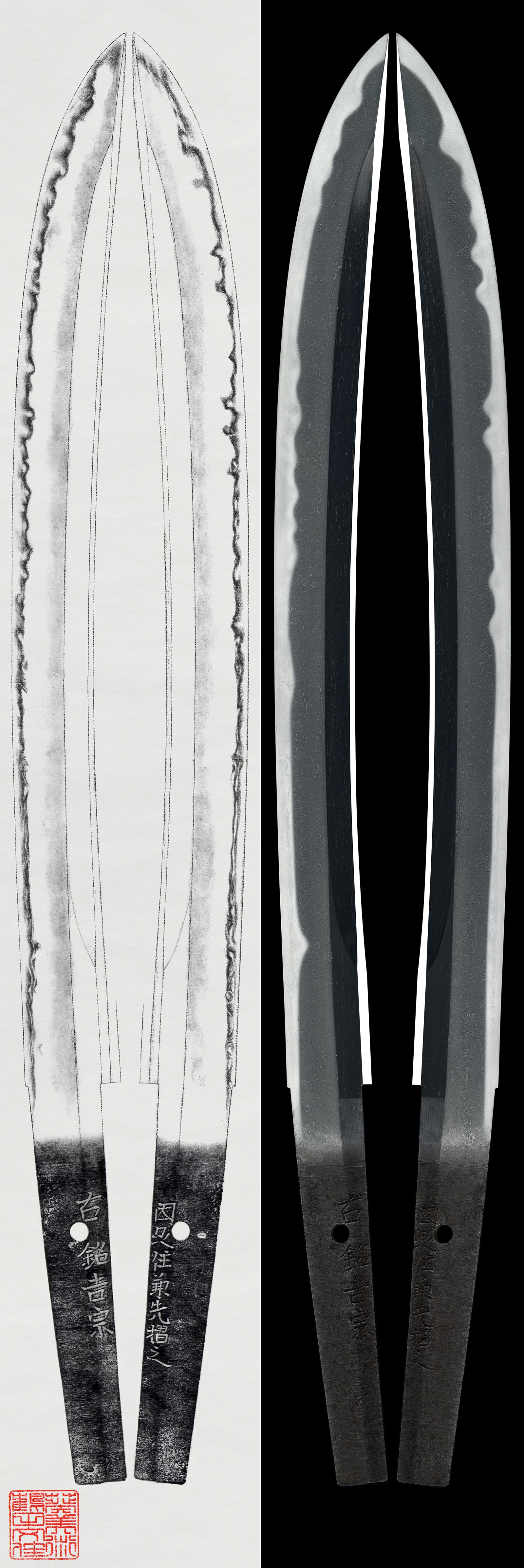
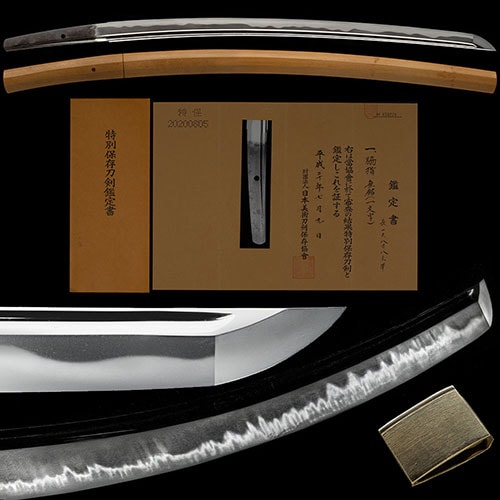
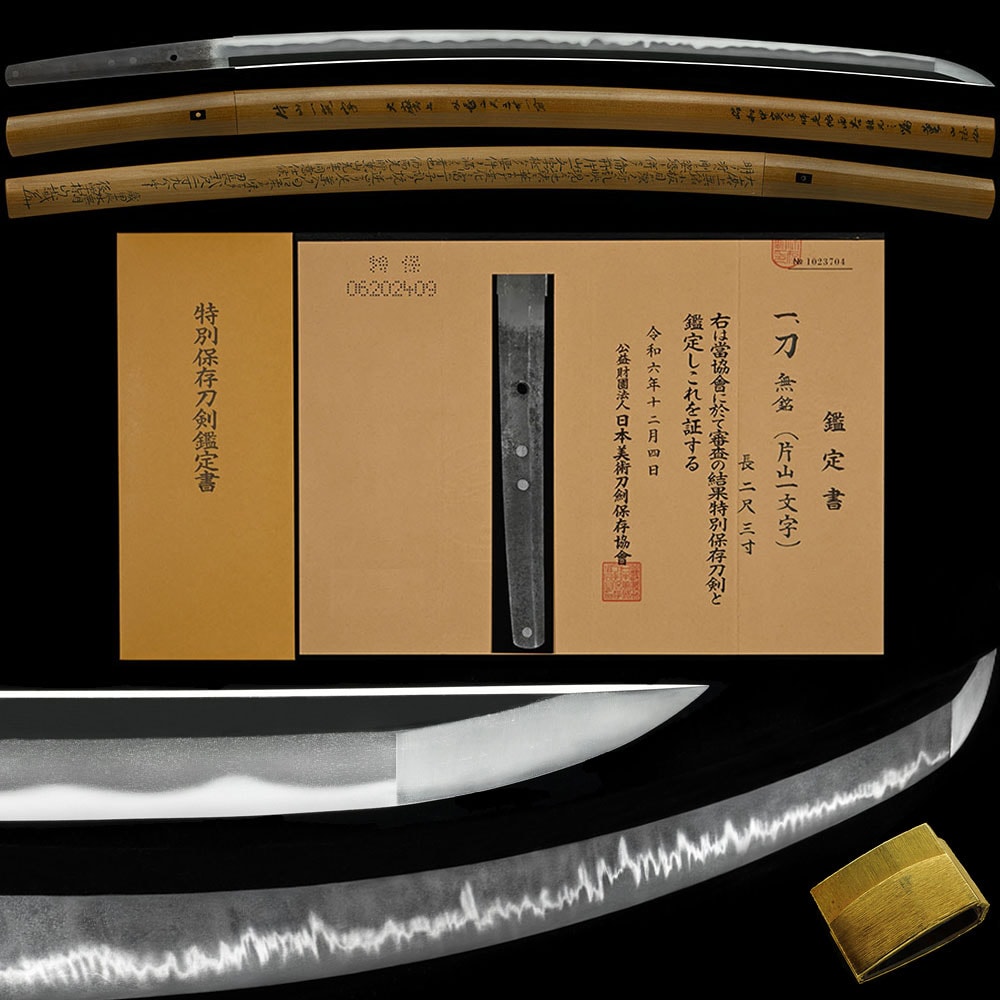
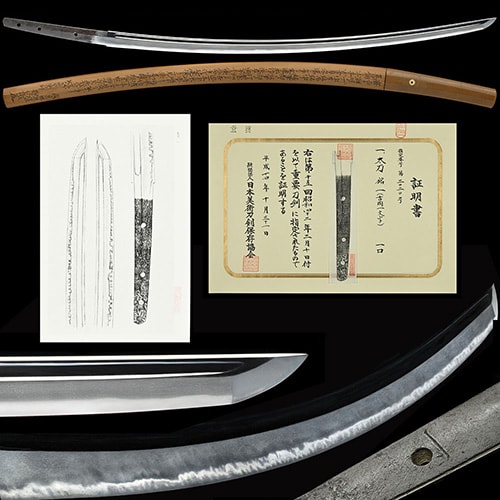
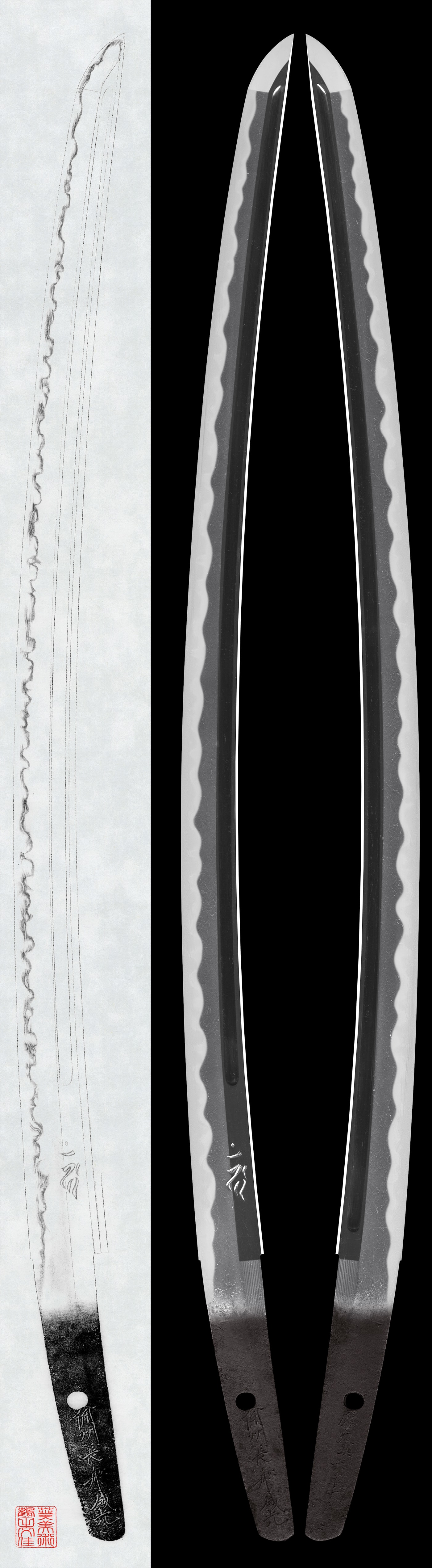
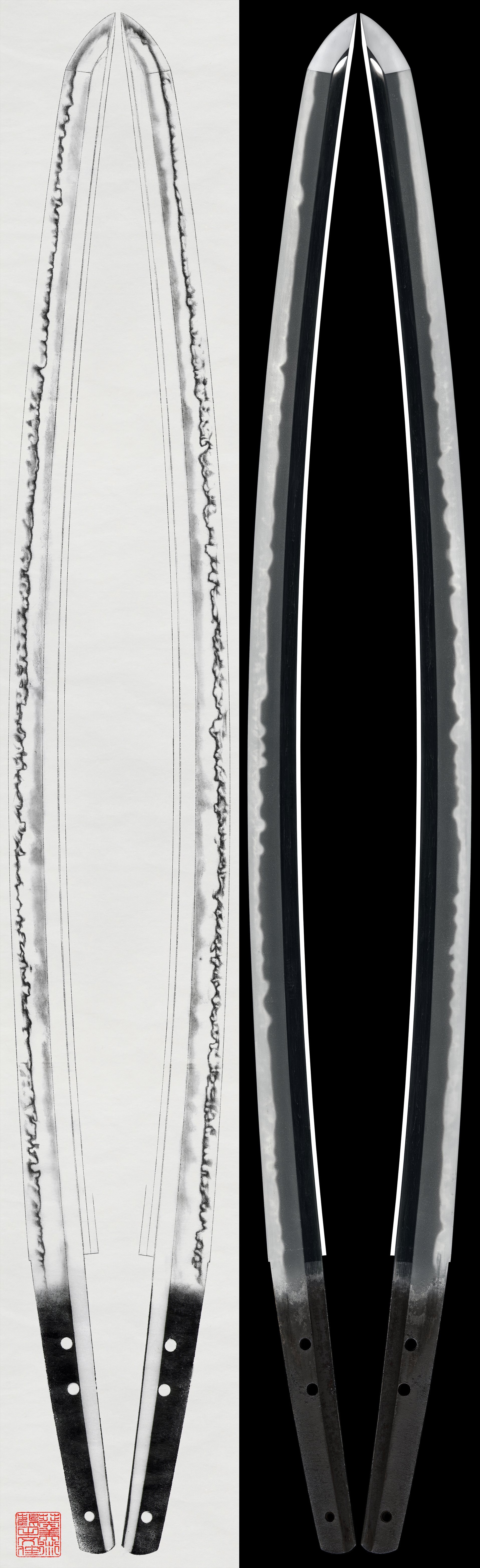
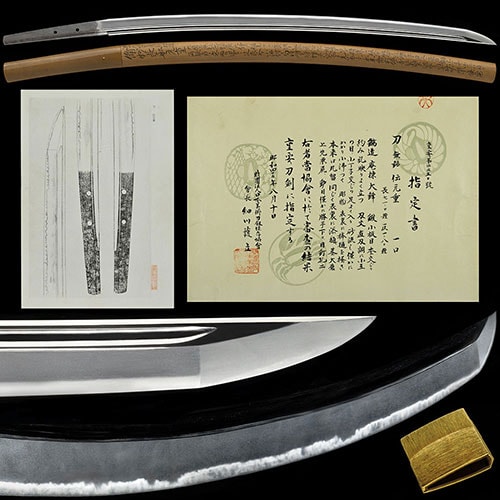
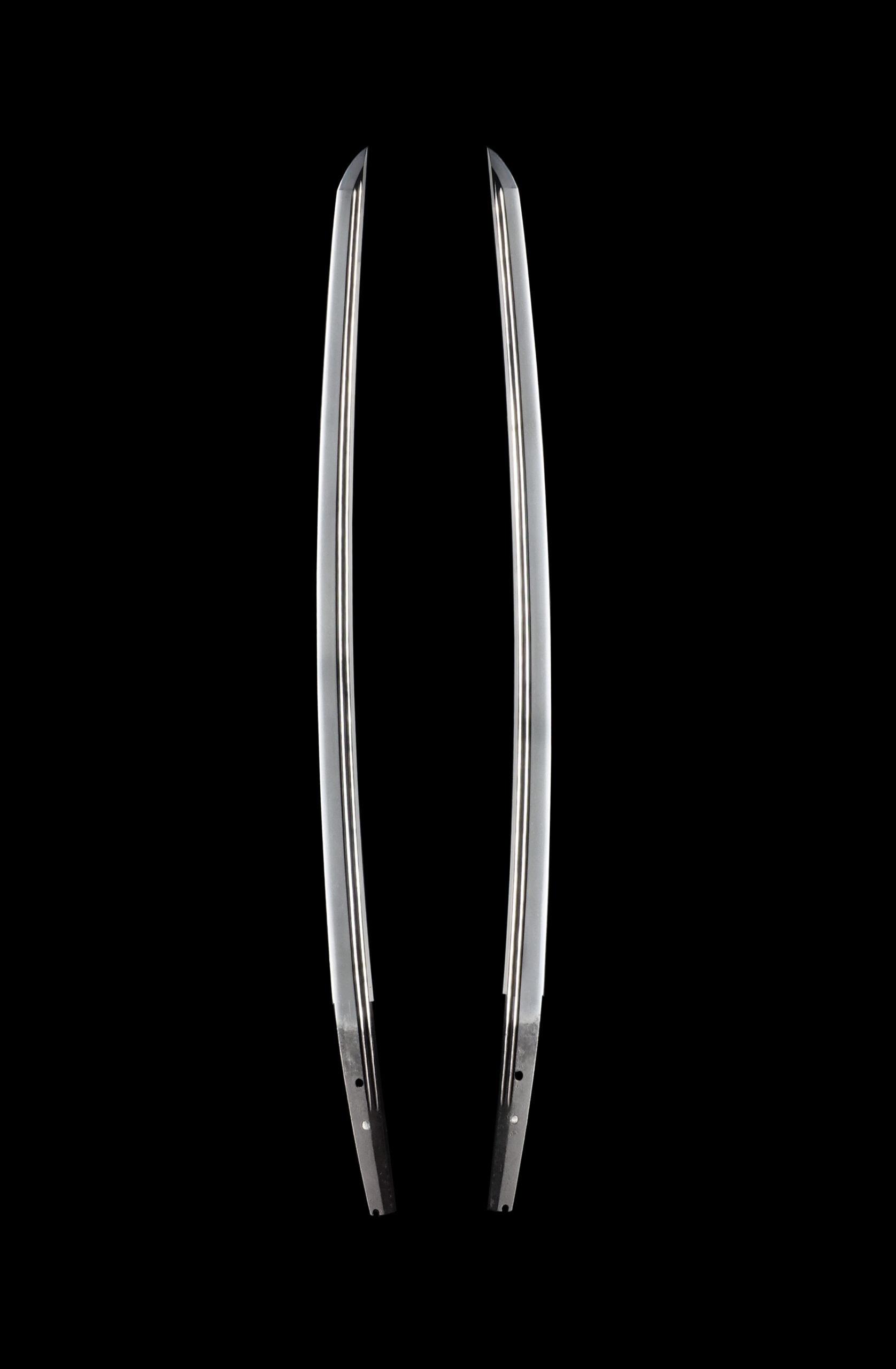
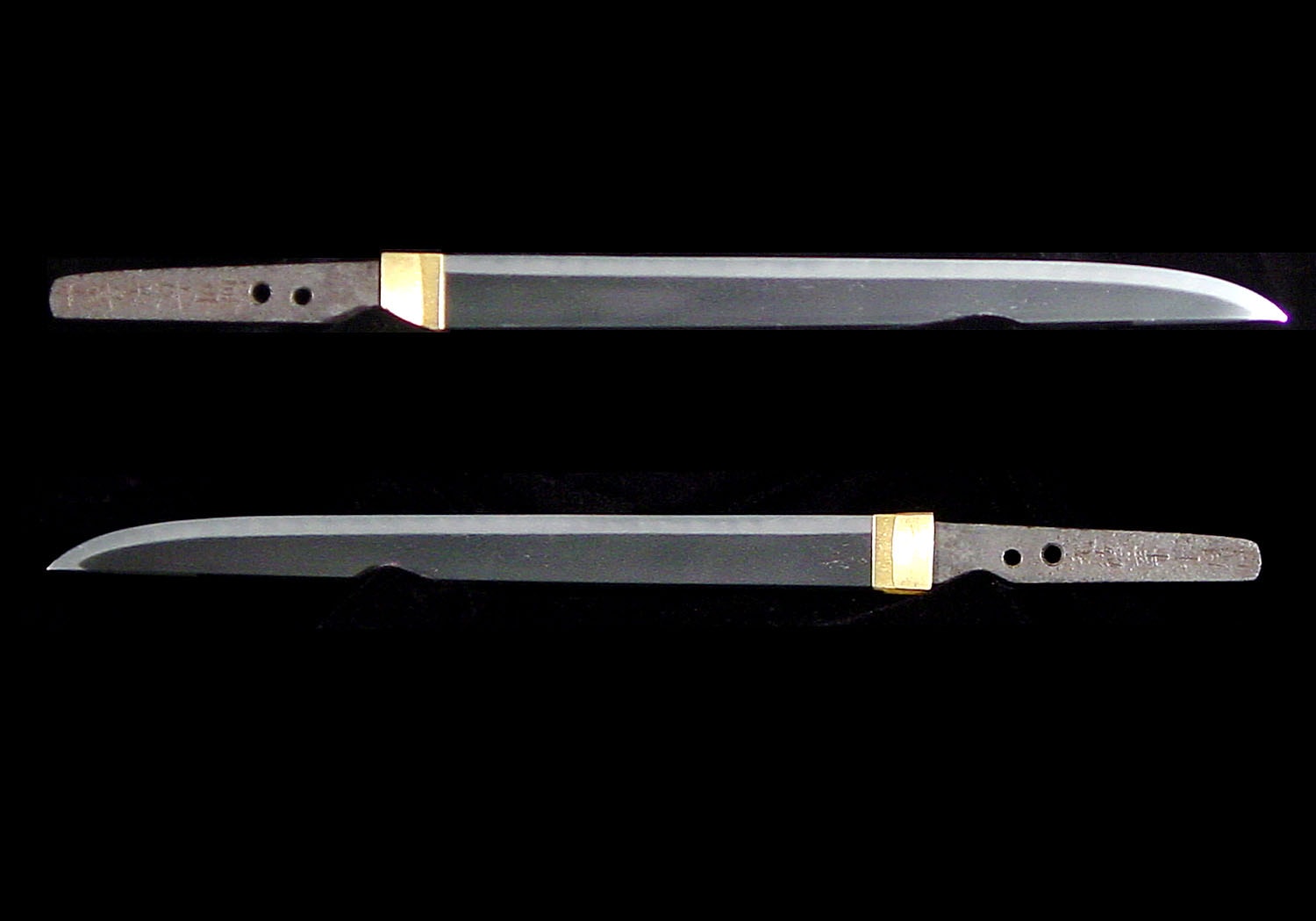
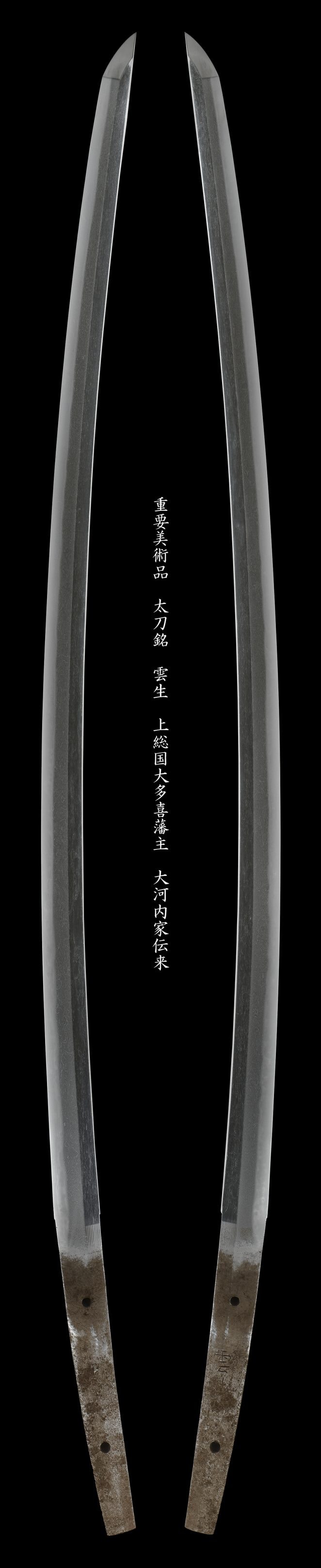
Sanetoshi, the name read Mari and cut as the two characters 真利, is a swordsmith of the early period, placed by the published sources among the Ko-, the founding generation of the Fukuoka that the school's progenitor Norimune leads. The that is the centre of his record carries that two-character signature on an almost untouched tang, cut with a somewhat thick chisel above the original hole, and the judges read it from form and steel as a Ko- work of the period's first decades. The published commentary describes these earliest hands as standing apart from the school's later splendour, holding instead 'an old character strongly preserved' in both shape and the workmanship of and . Sanetoshi belongs at that root, before the great flowering of the school at Fukuoka.
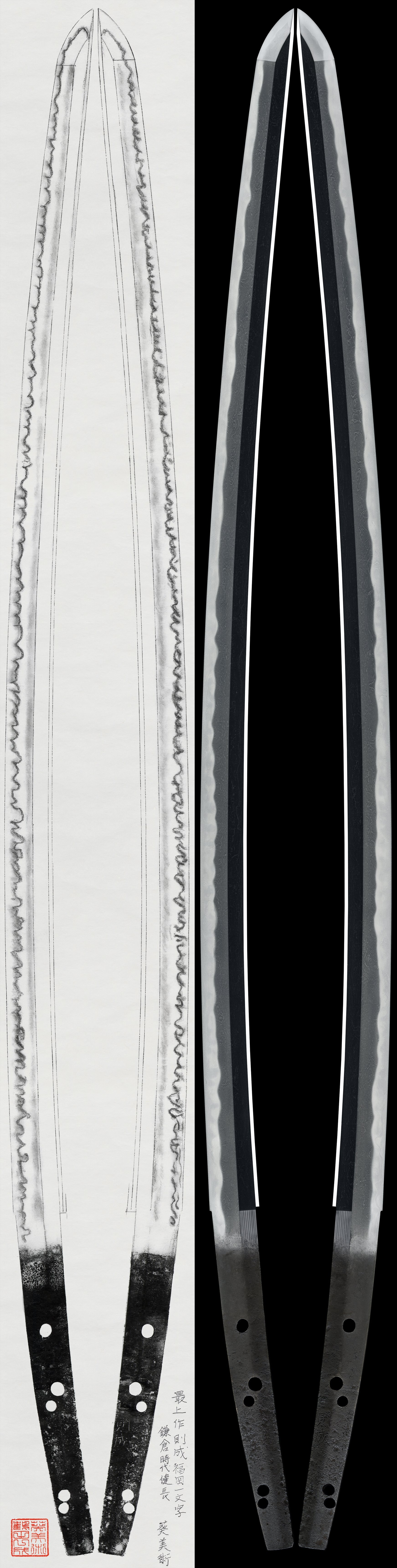
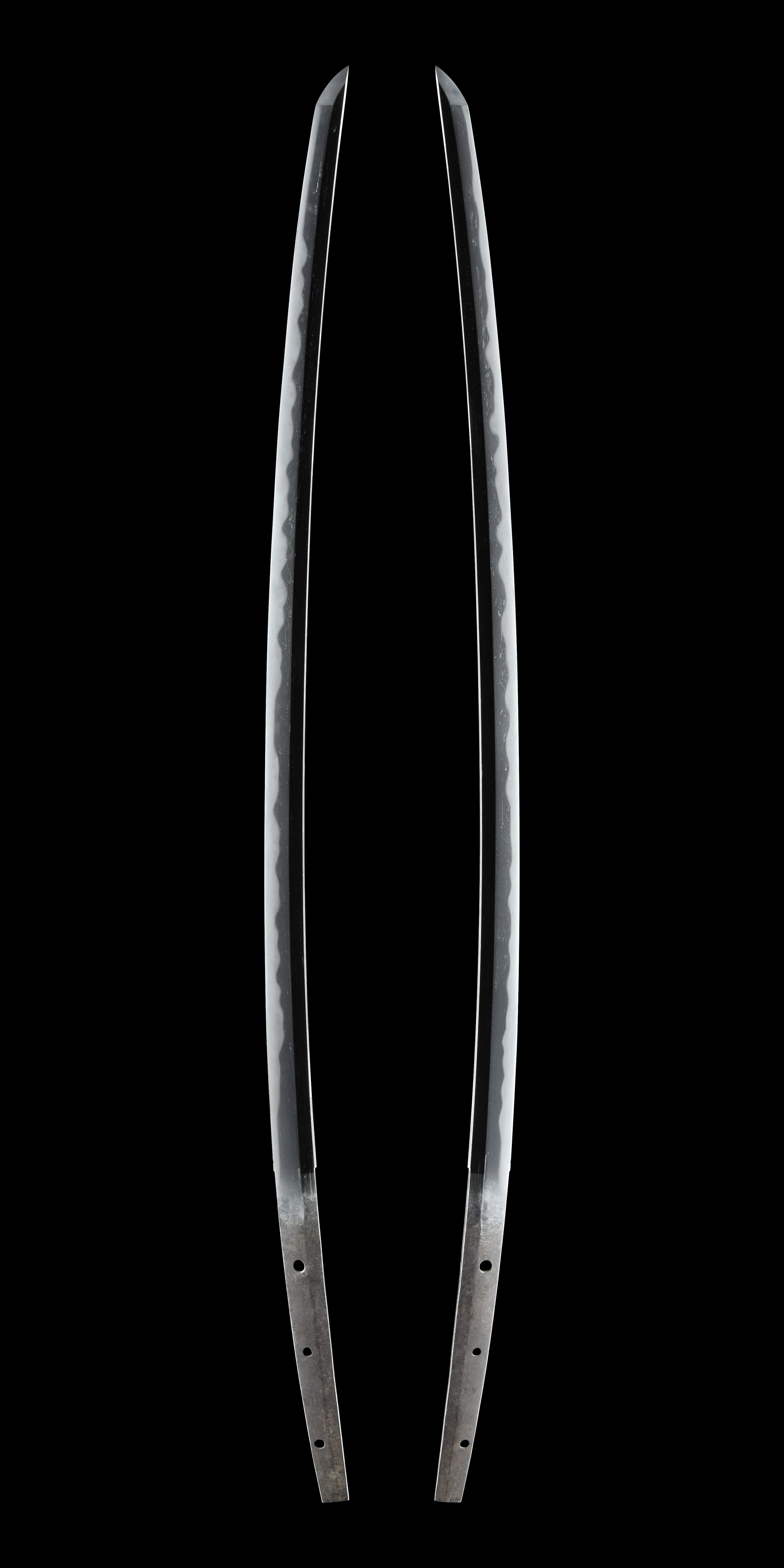
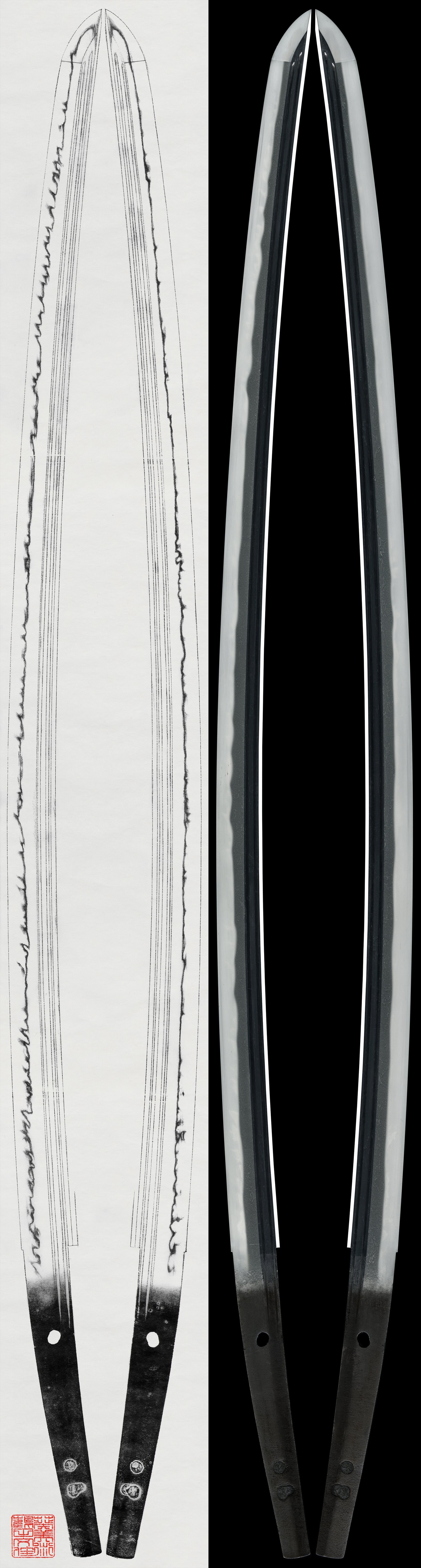
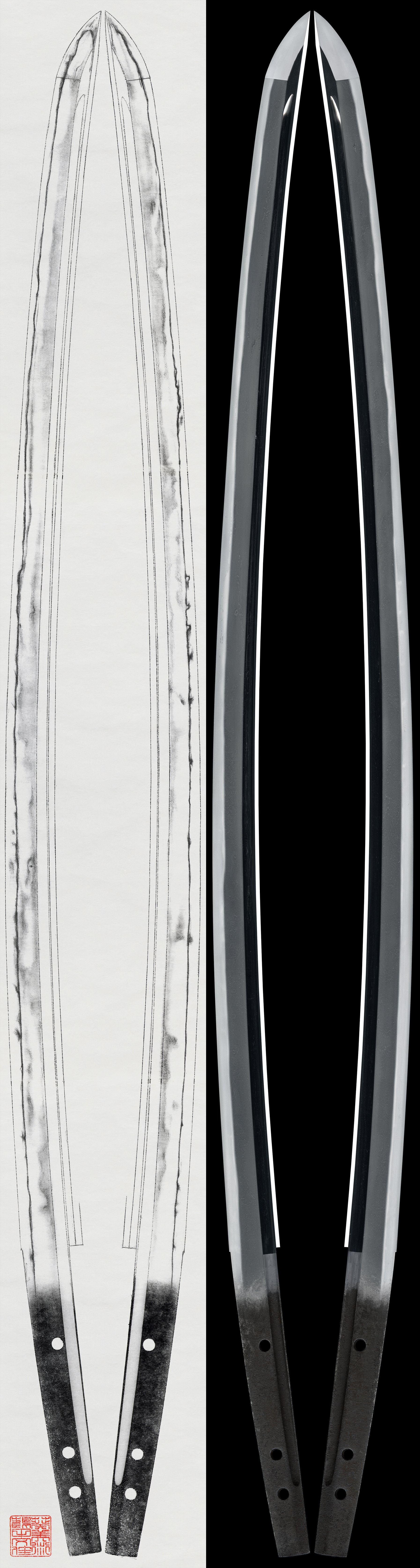
The characteristic hand sits deliberately between two poles. Over an mixed with , the grain standing a little toward , he lays a temper that is no longer the plain of old yet not the high clove-flower of the mid- school: a and a -toned into which he mixes and , and entering well, adhering, with fine and threading through. The published sources name this balance exactly. Set beside , they write, 'the stands out more and shows a slight air of technical sophistication'; set beside the mid- , the work 'is calmer, presenting an archaic and elegant taste'. The conspicuous on a quiet base is the tell of the hand.
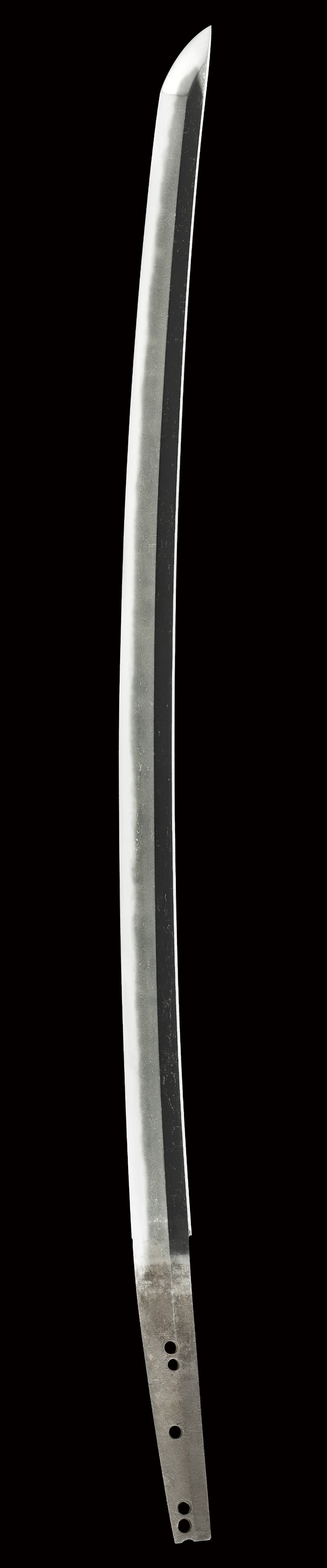
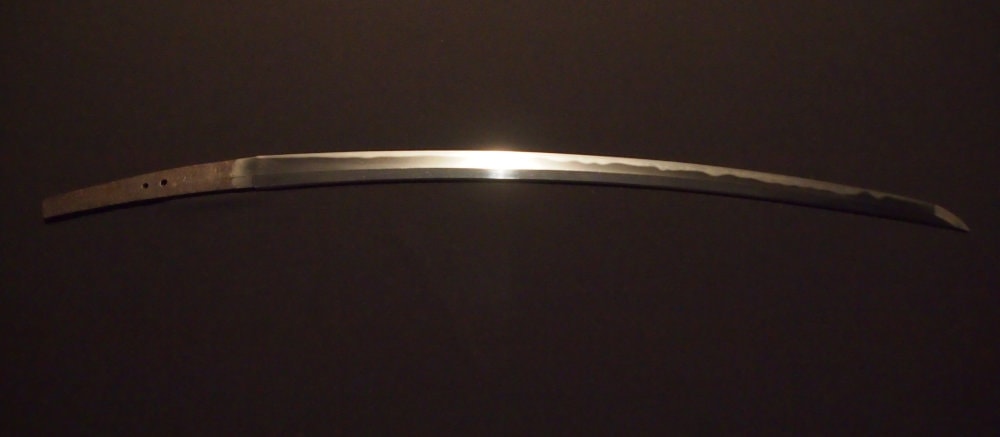
The is the constant beneath that temper. On the signed the and carry fine and , and a stands out clearly across the ; on the the gathers dust-fine and thick and the rises a little fainter; on the terser early the reads as a soft over a compact . The vivid reflection of old steel is the feature he keeps from one blade to the next, the Fukuoka he shares with the school. The runs nearly straight to a , on the finishing as a with on one face, a quiet ending that suits the archaic register.
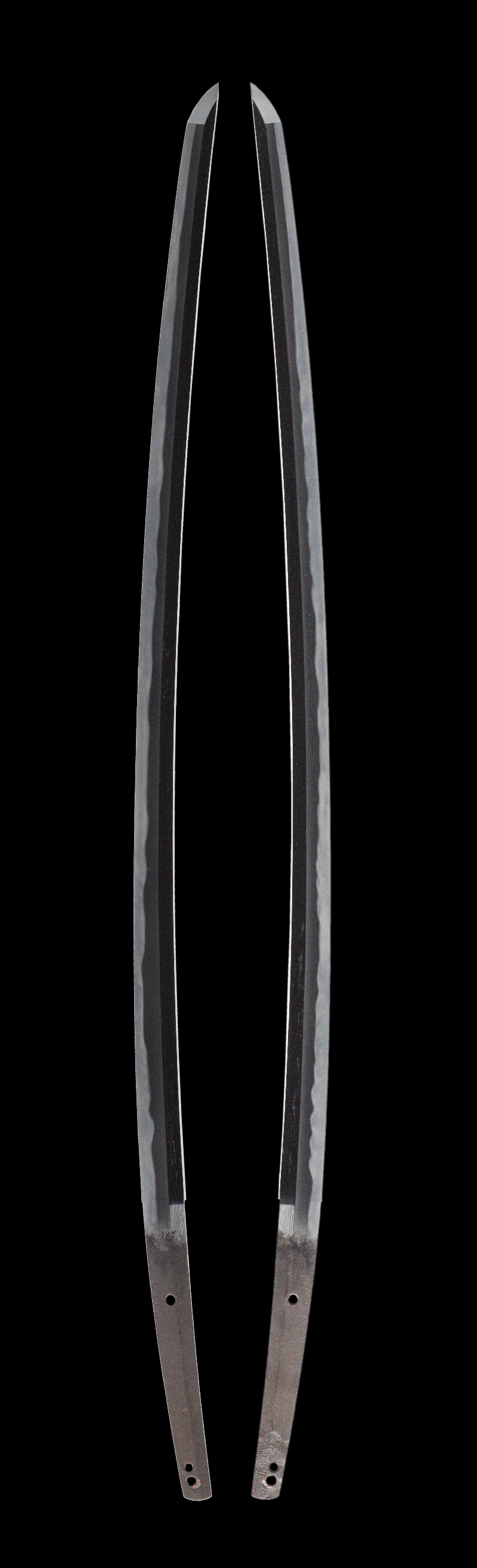
His surviving work divides into two manners that the judges read as one hand's range rather than two careers. The prime is the , two-character signed , dignified and rather wide, the at its most pronounced over the standing ; the piece, its signature clear and its and sound, the commentary calls 'a fine work, rich in points of appreciation'. The other manner is the quieter, more classical work: the slender , fundamentally a with and and frequent and , and the two prewar-designated , whose -toned the sources call old in character. The the judges find 'appropriate to appraise as the work of Mari of Ko-', a particularly distinguished piece for the strength of its and the variety of its activity.
The central scholarly question is the name itself. The records 真利 across four groups, , Fukuoka , Katayama and the line, and a comparatively substantial number of works survive, yet the published sources caution that 'it is difficult to distinguish these clearly on the basis of signature style alone'. One signed in his record is in fact carried to the Mari of the Bun'ei era, identified by a companion blade whose inscription reads no ; his Ko- attributions therefore rest on era and school manner, on the and the , not on the shared . The judges set him apart from the later school by exactly the words they use of the early generation, that their work, 'unlike the splendid style of the mid- period', keeps 'an old character strongly preserved'; and apart from the plainer smiths by the brightness of his and the gathering of on his edge.
For the collector he is a rare early name. Fujishiro grades him Jō-jō , and the Tōkō Taikan value of 900 places him among the well-regarded Ko- hands. He has no National Treasures and no Important Cultural Properties; his record runs instead through one , a pair of and the prewar Jūyō Bijutsuhin, three blades on the and tiers in all, with five carrying an official record. His provenance reaches into the great northern house: one of the designated descends from a branch family of the Yonezawa Uesugi count household, and the Uesugi name recurs in the , with the prewar pieces recorded to the Saitō and Kazama collections. No current institutional holder is on record. A signed Ko- Mari comes to light only seldom, and most of what survives is held rather than traded; a privately held example is a notable thing for a collector to encounter, a document of how the began.