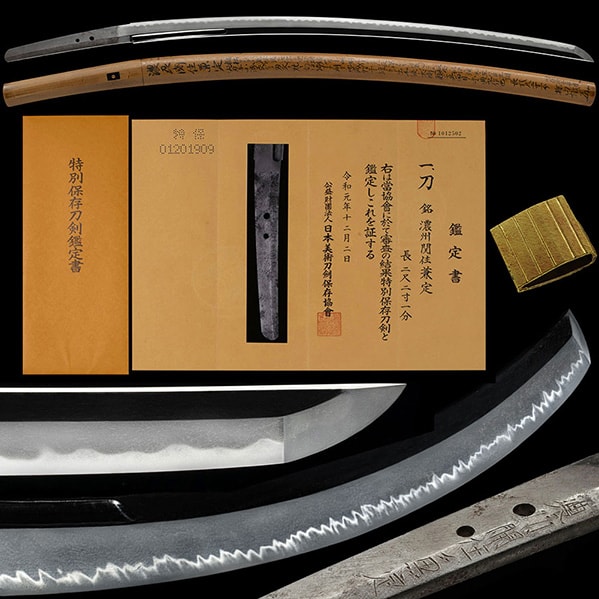
Kaneyuki of Seki, the smith the published commentary calls , is one of the two masters by whom the tradition is remembered at the close of the period, the other being Kanemoto. He is recorded as the son of the first-generation Hiki-, and the two names that divide the Kanesada line describe nothing more than the way each cut the character (定): carved the element beneath the roof-radical as the form 之, the Hiki- group as 疋. A long signature on one of his , dated Eisho 1 (1504), and another dated Daiei 6 (1526), fix the span of his recorded career, and the commentary places the use of his honorary title Izumi no Kami between Eisho 7 (1510) and that Daiei 6. That title is itself worth pausing on, for the published sources note that a smith of the old-sword period receiving a court rank is unusual, a measure of the standing the held within Seki.
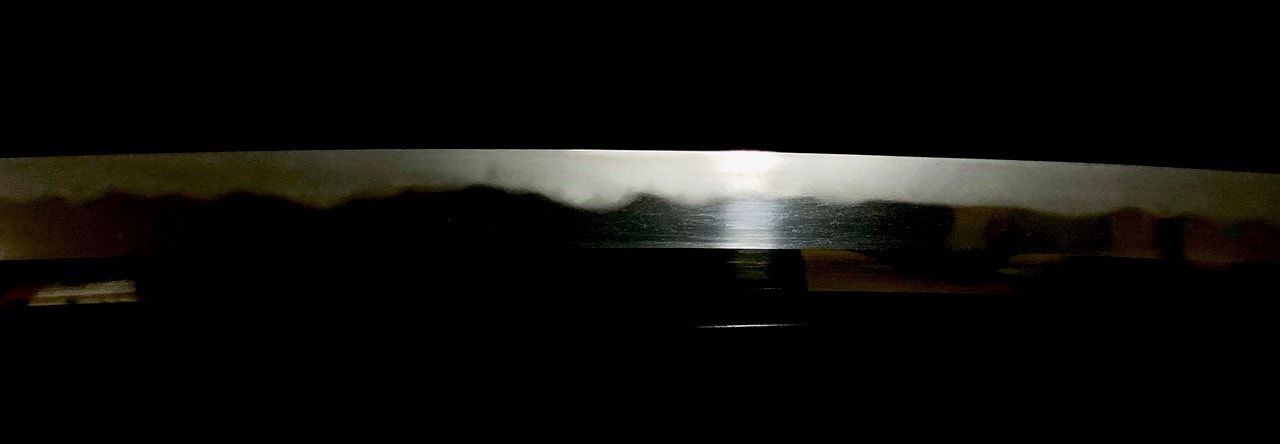
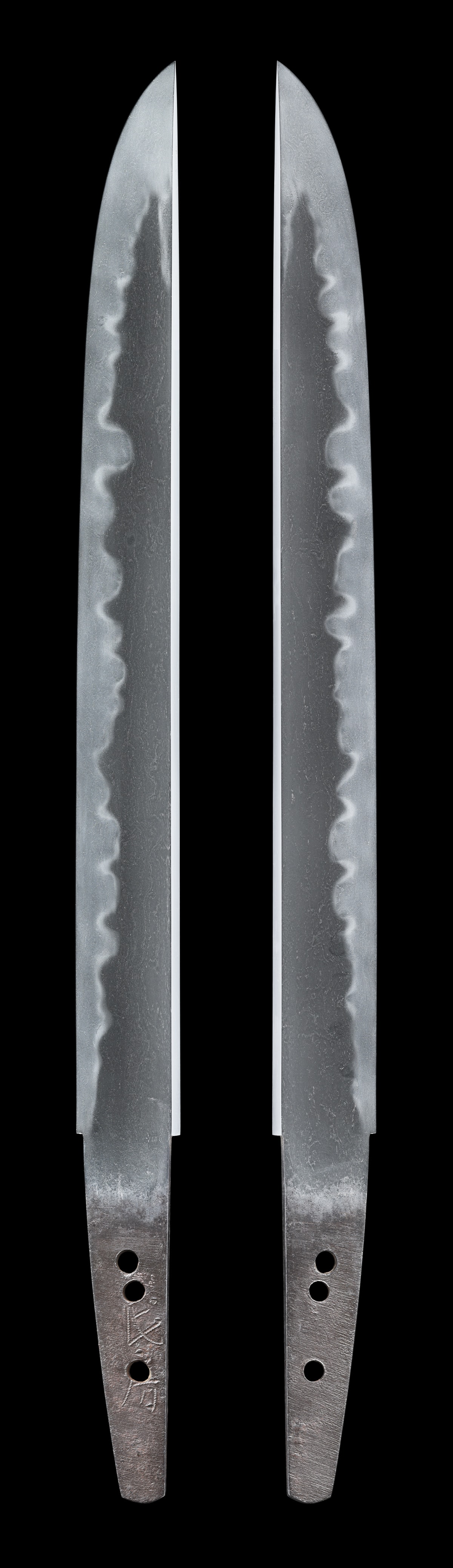
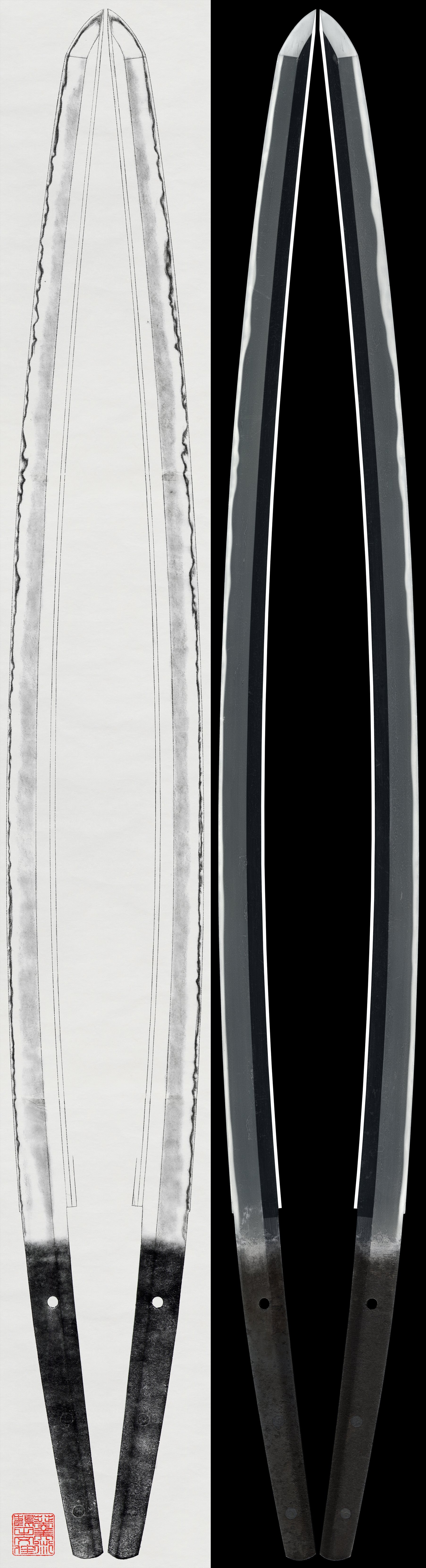
The hand by which he is known is the manner held at a high level of finish. Over an that flows and in places runs to he tempers a into which pointed , round-headed , - and small enter, and running into the temper, the tending tight with clinging to it. The runs and turns back in a small , on some blades pointed at the tip, on others rounded short into a Jizo cast, the often brushed with . What sets this apart from the rest of Seki is named in the commentary as a matter of contrast. Kanemoto built his fame on the , the regular three-cedar file of pointed teeth, and the published sources judge it candidly: 「やや一片倒で変化に乏しい憾があり、兼定はそれに比して作域が広い」, a temper somewhat one-sided and short on variety, against which Kaneyuki's range is the broader. His is one element woven among rounder forms, not the whole pattern, and it is that variety, rather than any single flourish, that the eye is meant to settle on.
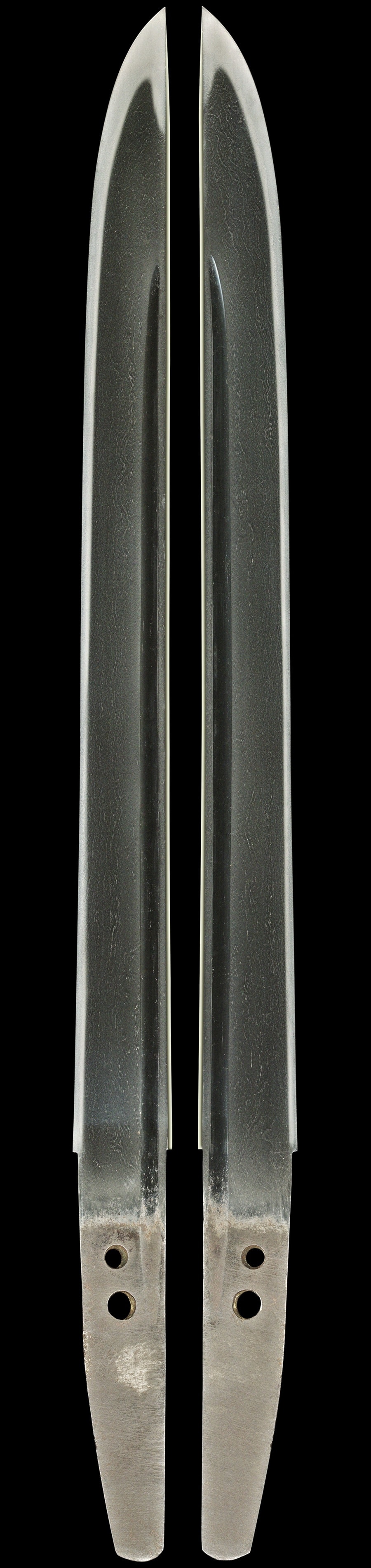
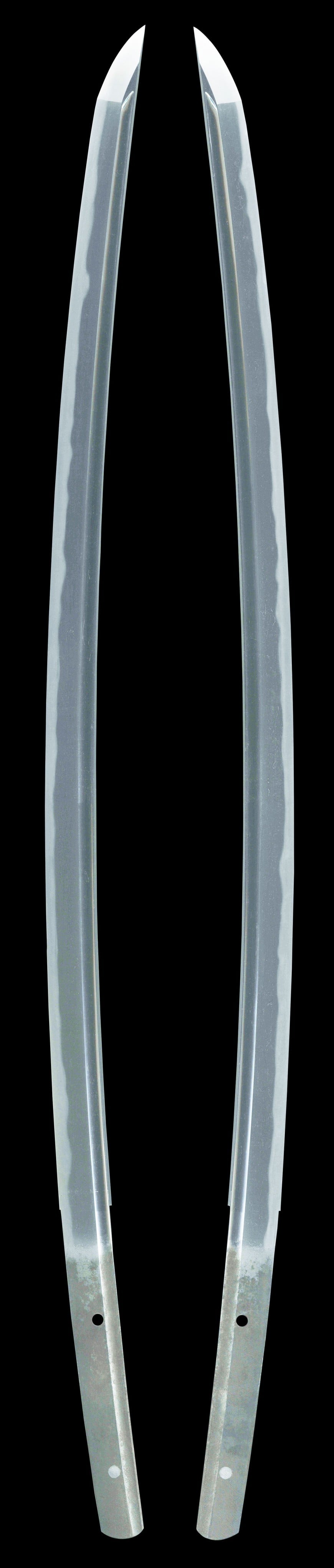
The is where the published record places his quality. The flows and carries , gathers finely across the surface, and over it stands a faint , the cool whitish reflection of refined steel of his date. On the of the 32nd session the commentary states the point plainly, that he 「末関中最もよく練れた鍛え」, the most thoroughly worked forging among the smiths, and the blade is praised for showing the distinguishing points of Kaneyuki well in both and . On the dated of Eisho 1 the steel is called clear and bright, the standing distinct over a closely worked mixed with . The temper on these pieces keeps to the tight, controlled with that runs through almost the whole of his recorded work, so that the and the edge read as parts of one disciplined manner rather than as separate effects.
Within that one manner the published sources read a more flamboyant register, and they use the word for it. On a portion of his blades the opens out, the temper widens, and large , angular teeth and -like forms enter alongside -; coarse appears here and there, fine streams in the temper, and drift into the , and runs along the back, the at times rounding to its Jizo cast and joining the . The of the 49th session, appraised as a late work of the latter Daiei years, is read as belonging to this part of his range, its tempered area called full of power and its broad magnificent overflowing with vigor; the commentary on the of 1985 frames the breadth as exactly what divides him from Kanemoto, for there he 「頭の丸い互の目やのたれ・互の目丁子などの目立つ刃文を焼いて華やか」, tempering conspicuous round-headed , and - in a flamboyant manner. This is a register of one hand, not a separate period, the broad end of the workmanship.
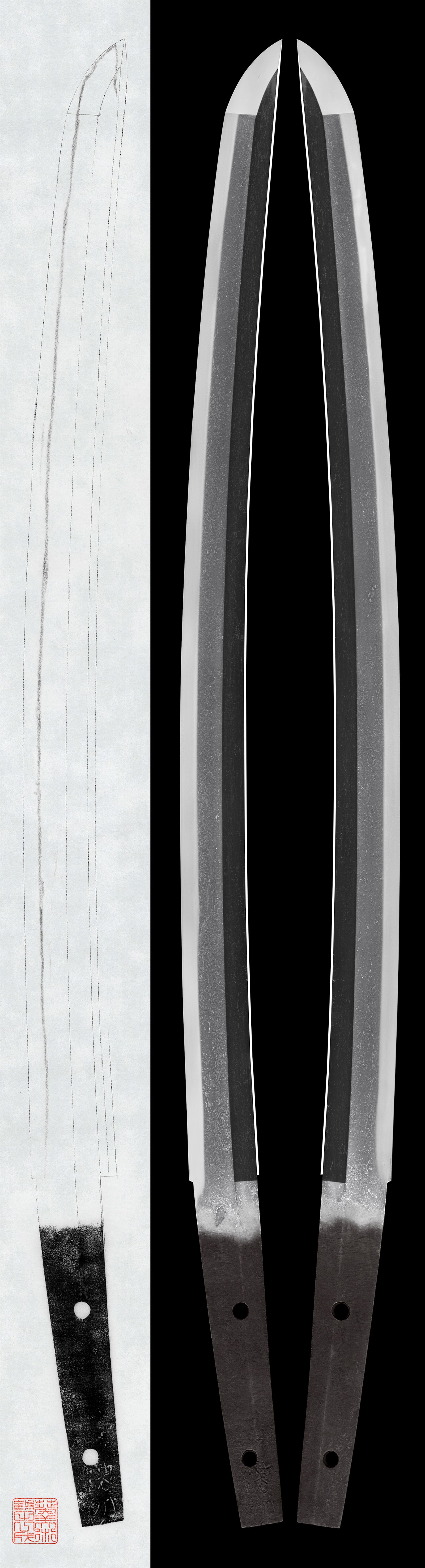
Kaneyuki is, by the standard of old-sword , well dated, and the published sources record that the tang itself moves with his career: through the early and middle-to-late phases the file marks are taka-no- and the tip a , and in his later years they shift to sujikai file marks and an tip, a progression the appraisers use together with the manner of the signature to place a blade. The eight-character Izumi no Kami Fujiwara Kaneyuki signature, cut large and in a distinctive hand, is named more than once as a recognition point in its own right. Several of his blades survive with their dates intact, while two of the have been slightly shortened, one cut from the middle of the character in the signature, which the commentary calls regrettable while judging the blade nonetheless among his finest. He stands within Seki not as an innovator of a single pattern in Kanemoto's way but as the broader and more finished hand, and the manner he carried became one of the most widely imitated styles of the late old-sword and early new-sword periods.
His surviving record, as it reaches the present through the designation system, is modest in number and high in consistency: seven of his works hold the rank of Important Sword, all of them signed, and none carries a higher designation. They are not, in the main, blades that move, and the standing of a is such that a privately held example reaches the market only from time to time and rarely more than one at once. Provenance on these pieces is thin in the record, but it is not absent: one of the designated at the 50th session is set down as formerly in the collection of Kuroda Kiyotaka and is published in the Tsuchiya , the commentary noting 「黒田清隆旧蔵の一口で、『土屋押形』に所載されている」. The published sources frame the whole of the legacy in a single judgment that has held for centuries, that among the several generations and several smiths who bore the Kanesada name, the of the Eisho and Daiei years 「永正・大永頃のノサダが最も技術も優れ」, the most accomplished in skill and long the most admired. For a collector, a sound and dated Kaneyuki is among the most rewarding ways to hold the tradition at its height, a Seki blade in which the breadth the commentary prizes, the refined flowing and the bright varied temper, are present together.