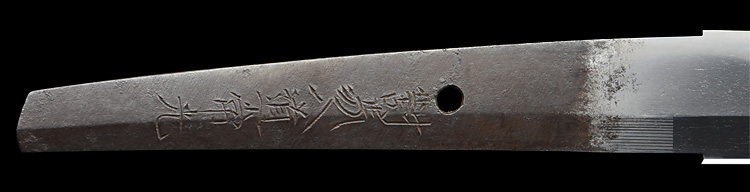
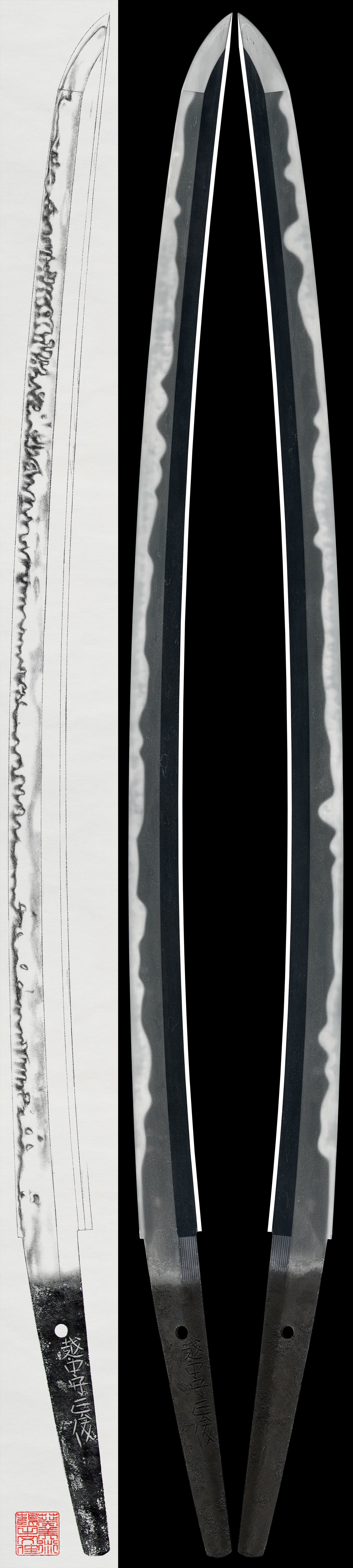
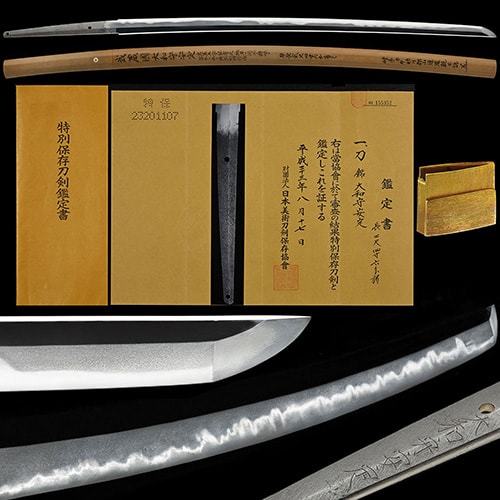
A katana on this record signed Tsushima Nyudo Tachibana Tsunemitsu and dated Genroku 11 (1698) gives the smith's age as seventy-three, and from that one inscription his long working life can be reckoned back to a birth around Kan'ei 3. Tsunemitsu was surnamed Hioki, used the common name Ichinojo and later styled himself Saburozaemon, and was born in Gamo District of Omi Province. He belonged to the Ishido line, the early-Edo school that set out to revive the clove-flower chOji of old Ichimonji and Ko-Bizen, complete with the utsuri the medieval Bizen masters had carried in their steel. With Dewa no Kami Mitsuhira and Echizen no Kami Munehiro he went up from Omi to Kyoto and afterward down to Edo, where these makers became known as the Edo Ishido. He took the Tachibana name where Mitsuhira used Minamoto, and the published sources name him, with Mitsuhira, a representative smith of the Edo Ishido group[[c:1]].
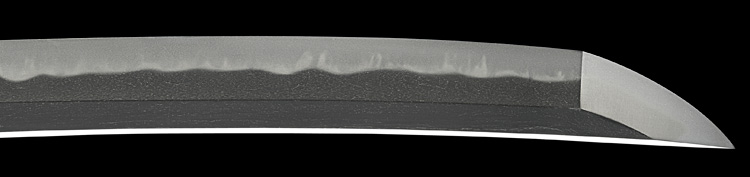
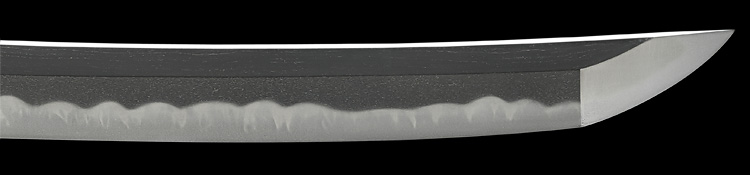
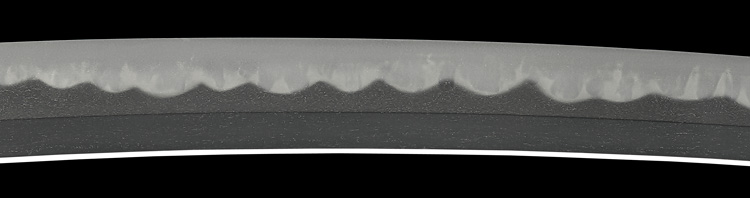
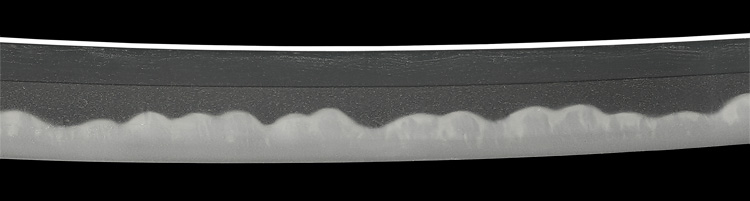
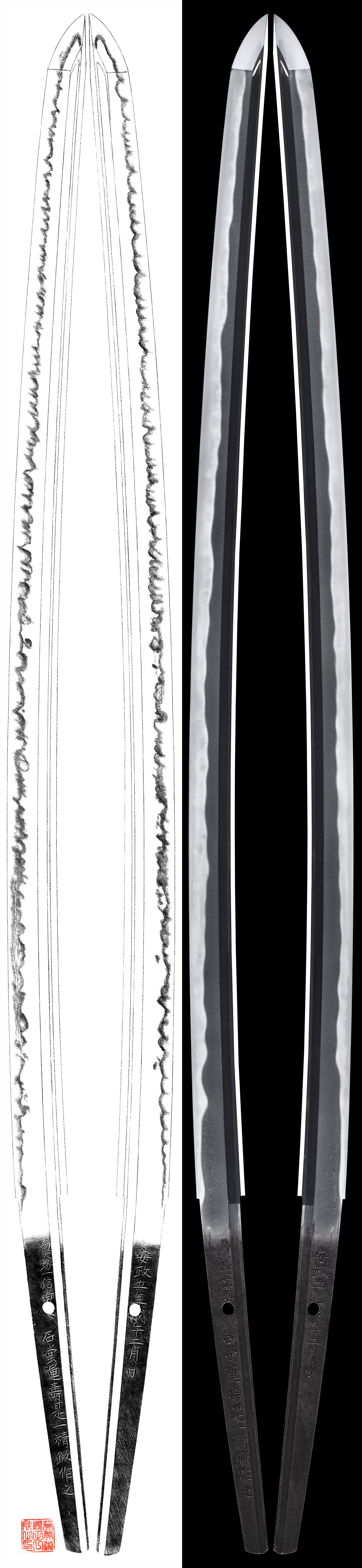
His hand is a single flamboyant manner held at full power across every blade on record. Over a tightly forged itame, often a well-packed ko-itame mixing mokume and a little nagare-hada, he tempers a chOji-midare crowded with double-flower jUka-chOji, large and small chOji, round-headed chOji, gunome and small gunome, with pointed elements set among them, so the temper line shows pronounced height as it crests and falls. Ashi and yO enter in profusion and the work turns showy, nioi-dominant with attached ko-nie, fine sunagashi running through and kinsuji appearing here and there. The published sources call one such katana a work in which his true strengths are fully realized[[c:2]] and another, of large-pattern jUka-chOji with ashi and yO entering thickly, the piece that should be regarded as his finest[[c:3]]. The dense, height-varied clove temper, not the bare clove root that every Bizen-descended smith shares, is what makes his chOji his own.
The jigane beneath is the surer half of the recognition. It is a well-forged itame, on his calmer pieces a ko-itame that packs down finely, carrying ji-nie that gathers in minute particles, and across it stands a midare-utsuri. Utsuri on a new-sword blade is rare and deliberate, and its recovery was the Ishido school's whole purpose, so a flamboyant chOji standing over a clear irregular reflection is the first thing that separates an Ishido katana from any other Shinto chOji. The published sources describe the reflection in his most vivid pieces as standing brilliantly[[c:4]], the clove temper bright above it. The boshi enters midare-komi and turns back in ko-maru, at times running straight on the omote with a constriction at the point, occasionally with a little hakikake; the sugata is the broad mid-Edo katana, wide in mihaba with a noticeable taper, thick in kasane, the chu-kissaki sometimes compact and sometimes tending to extend.
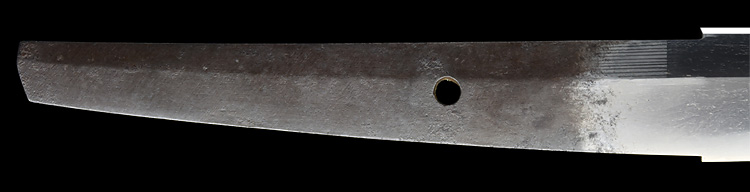
The published sources draw him not as a sequence of style periods but as one accomplished manner, and the only axis they trace is read off the nakago. The nakago is ubu, the signature cut centrally below the mekugi-ana in a large, thickly chiseled six-character mei, with a long full signature and date on the most completely inscribed pieces. Some of the works carry the title Tsushima no Jo and others Tsushima no Kami, and a minority view has held the Tsushima no Jo blades to be a separate second generation. The judges rather find that in the overall tone of the inscription and the manner of chisel work the Tsushima no Jo signatures share much with the Tsushima no Kami ones, and prefer to read the former as works made before he received the higher Tsushima no Kami rank, one such katana viewed as a piece made prior to that promotion[[c:5]], the matter left open for new evidence. The signature thus carries the only temporal information in an oeuvre whose hand does not otherwise change, and a related question hangs over his very kinship: he was long held to be Mitsuhira's elder brother, but extant dated signatures, calculated backward, show Mitsuhira the elder by six years, and the difference of Tachibana against Minamoto has brought even the brother theory into doubt.
Within the Edo Ishido group Tsunemitsu and Mitsuhira are the two by whom the branch is known, and what sets Tsunemitsu apart is grounded in his own steel rather than in any borrowed comparison. His bright, height-varied chOji-midare with jUka-chOji and his standing midare-utsuri are the features the judges return to, and the recurring verdict is that his work recalls the old Ichimonji of classical times, described on the JUyO katana of the fiftieth and thirty-fourth sessions as bringing old Ichimonji to mind[[c:6]] and on the twenty-second session piece as calling it vividly to memory[[c:7]]. That recovered Bizen idiom, tempered in new-sword steel and carried on an utsuri the medieval smiths would have recognized, is the manner the Edo branch is remembered for, and one katana is singled out simply as a typical work that clearly displays his distinctive characteristics[[c:8]]. Where the Tsushima no Jo and Tsushima no Kami generation debate, if ever resolved toward two hands, would extend his line, the published sources keep it as one hand whose signature alone moved with his rank.
For the collector Tsunemitsu is a first-rank name of the Edo Ishido, and Fujishiro grades him Jo saku. He has no National Treasures and no Important Cultural Properties; his record on this account runs entirely through the JUyO tier, where seven of his works are held, every one of them an ubu, signed katana or wakizashi cut with the large six-character mei, several carrying dates across the Kanbun, Enpo and Genroku years that make the chronology of his long career legible. None of the seven carries a recorded former owner, so no daimyo provenance or holding institution can honestly be named for them; what can be said is that they are designated works held in public and long-private collections, more often kept than traded. A signed Tsunemitsu of his flamboyant chOji manner is among the more attainable of the Ishido swords precisely because so much of his record sits in the tradeable JUyO tier rather than locked as national heritage, yet a fine one reaches the market only from time to time and with patience, and a dated katana showing the bright jUka-chOji over a standing utsuri remains a substantial acquisition, a document of how the Edo Ishido brought the old Ichimonji clove back to life in a Shinto blade.