
Description

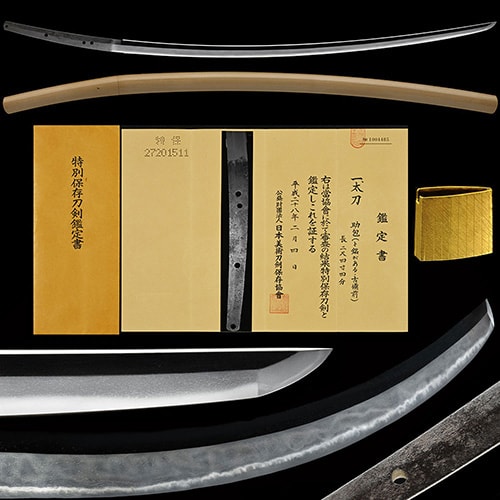
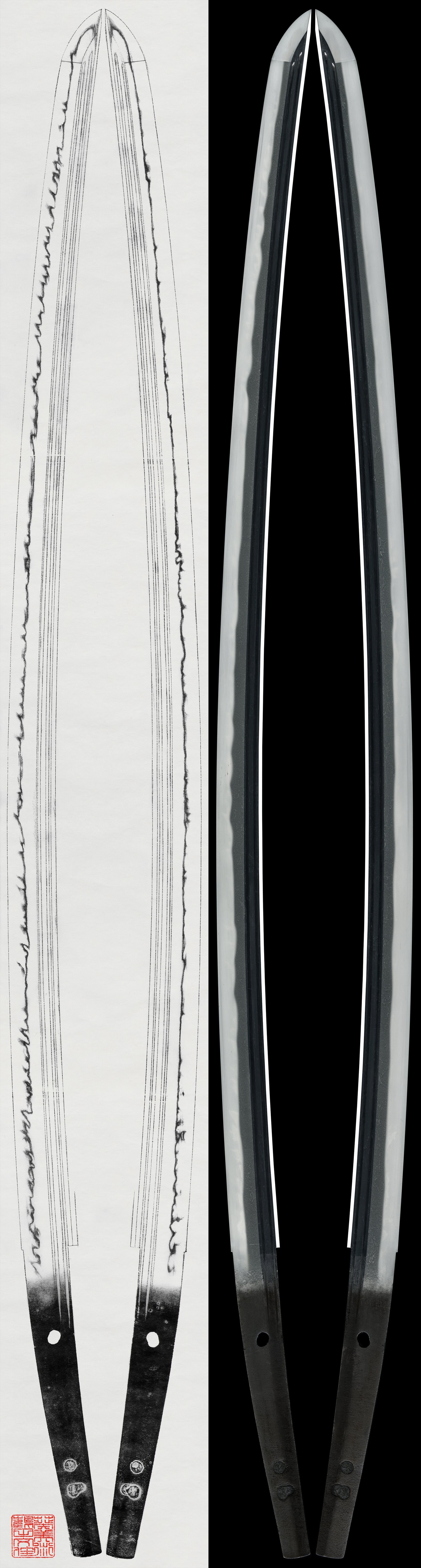
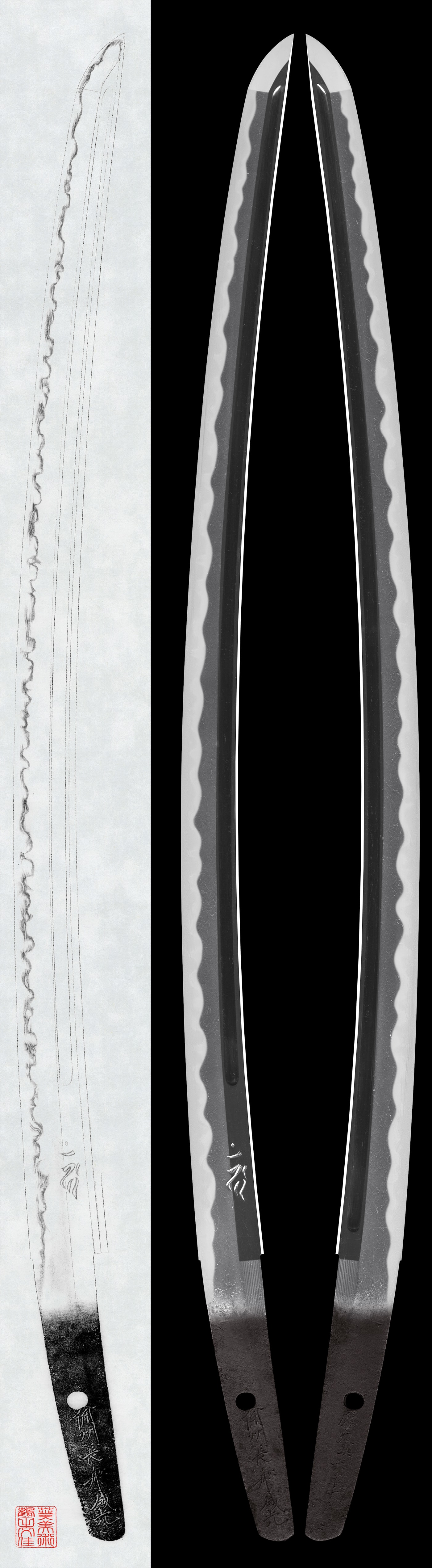
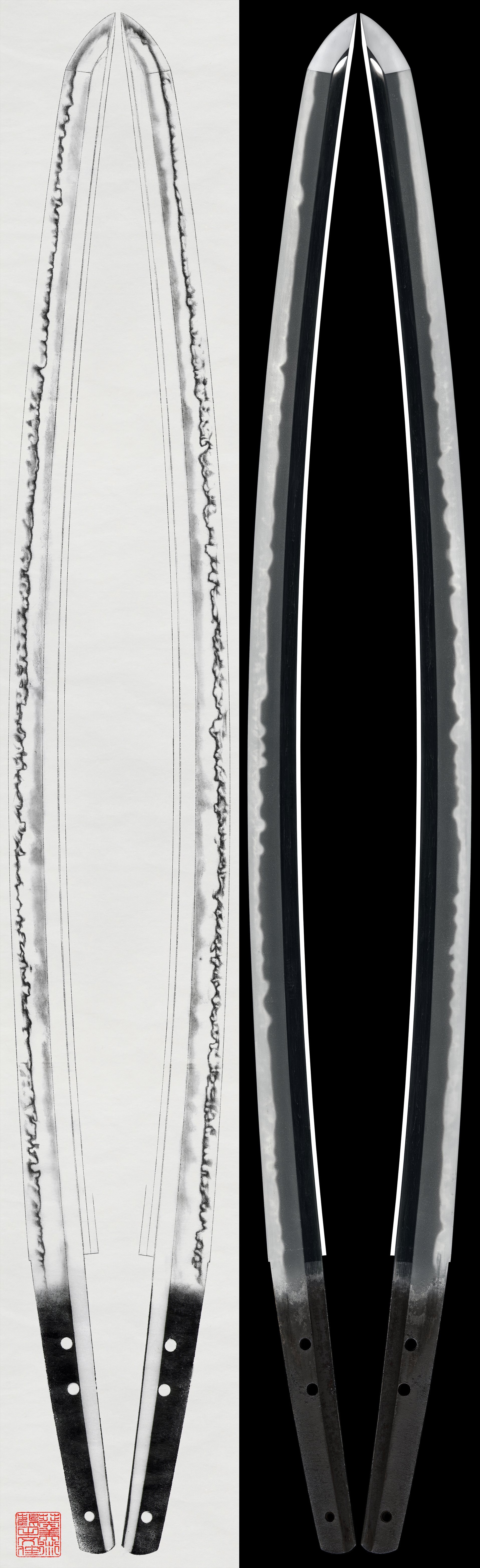
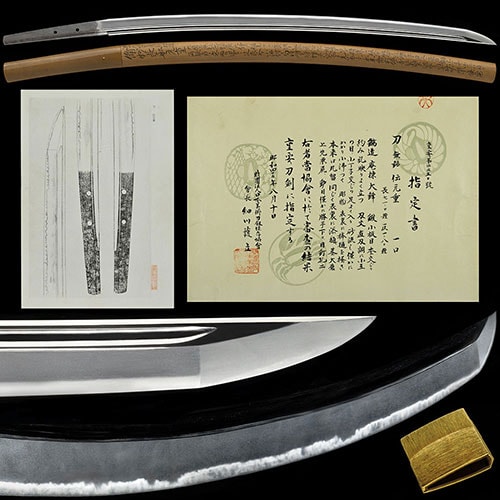
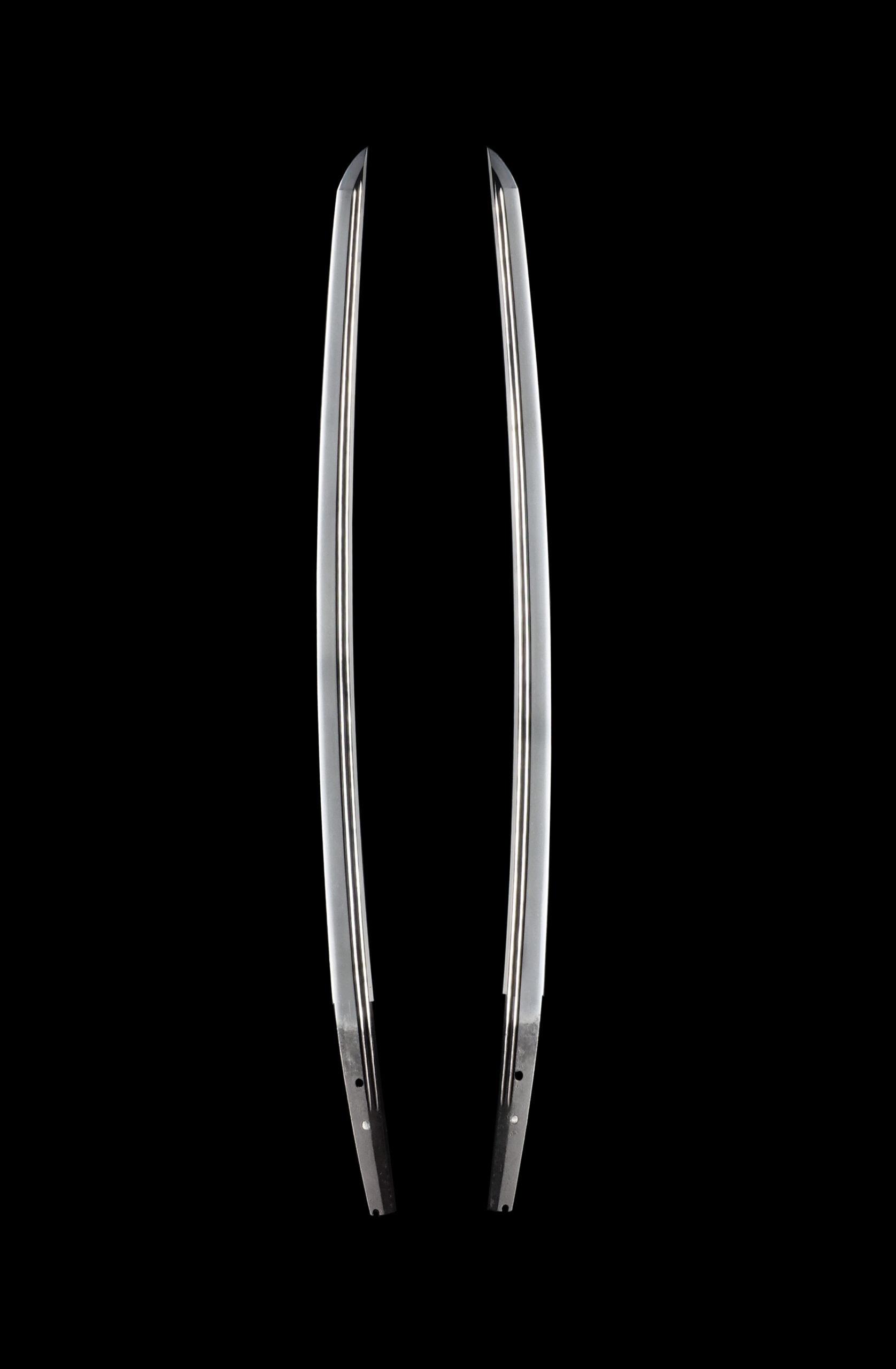
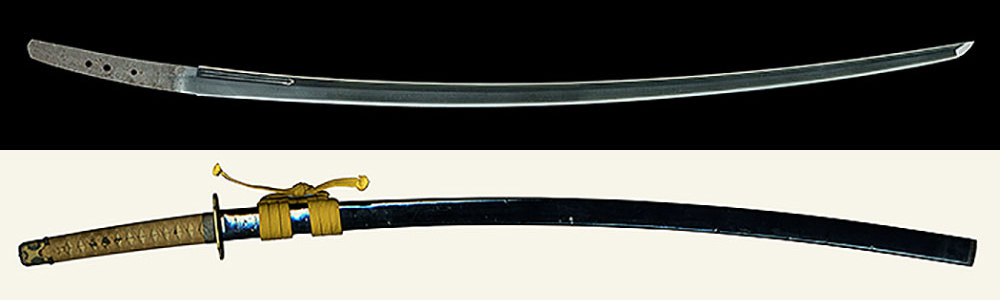
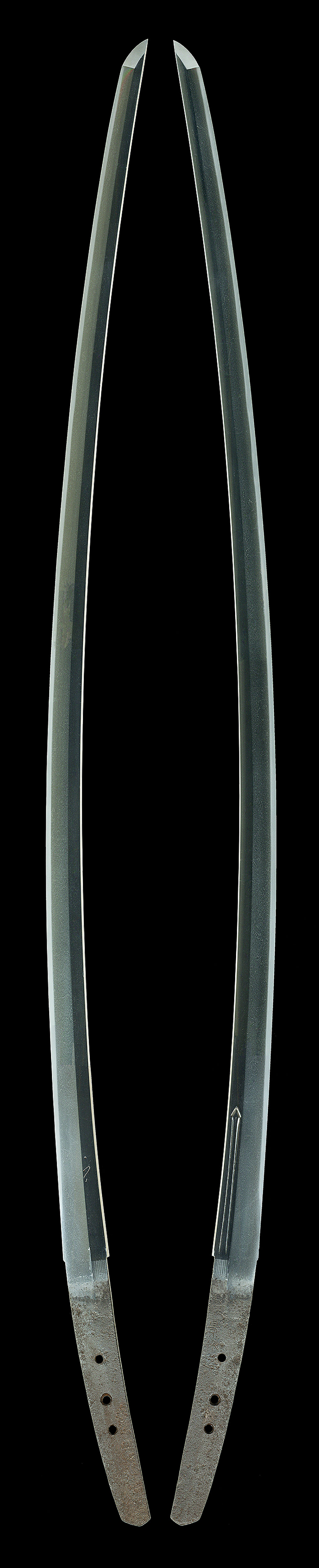
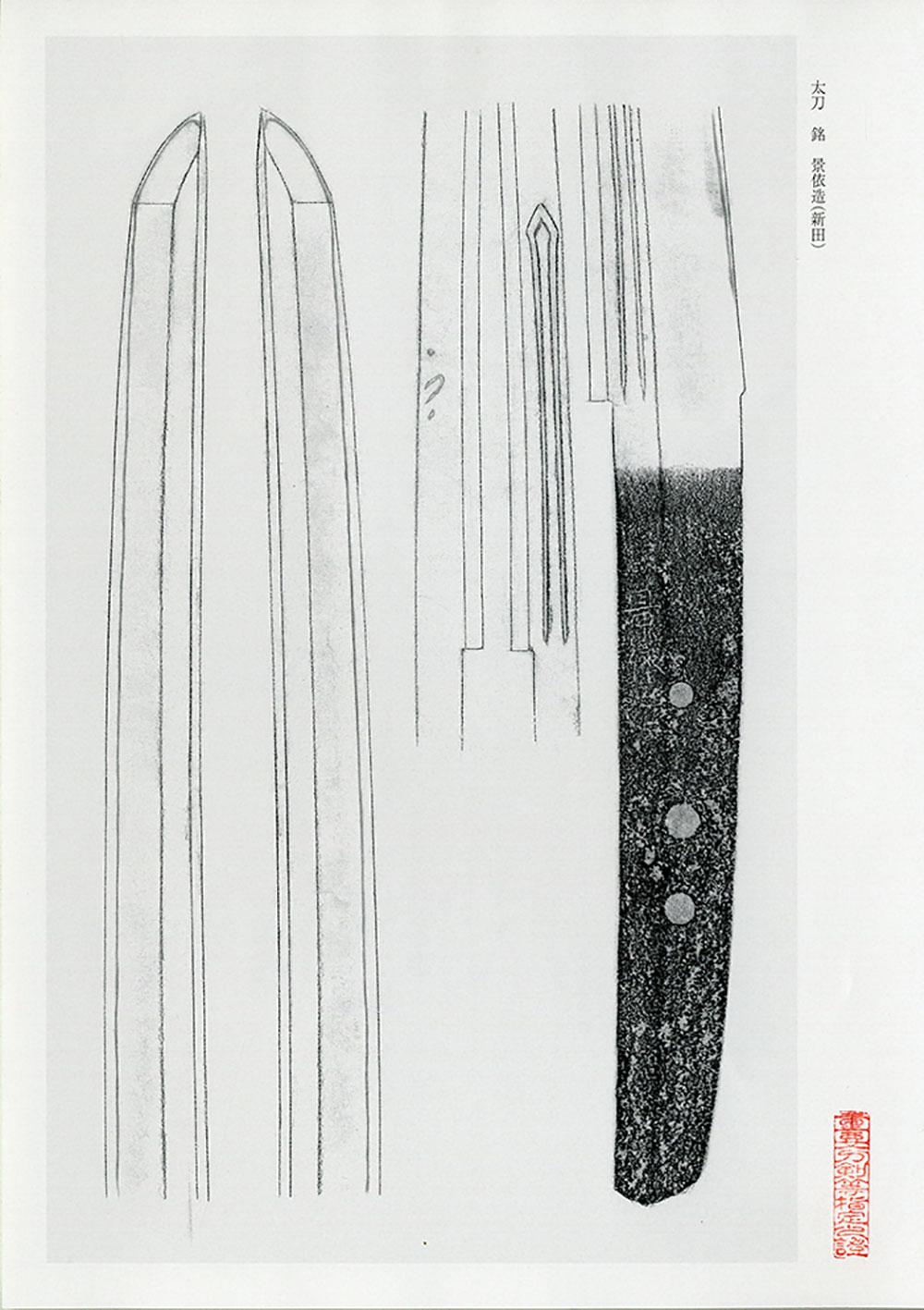
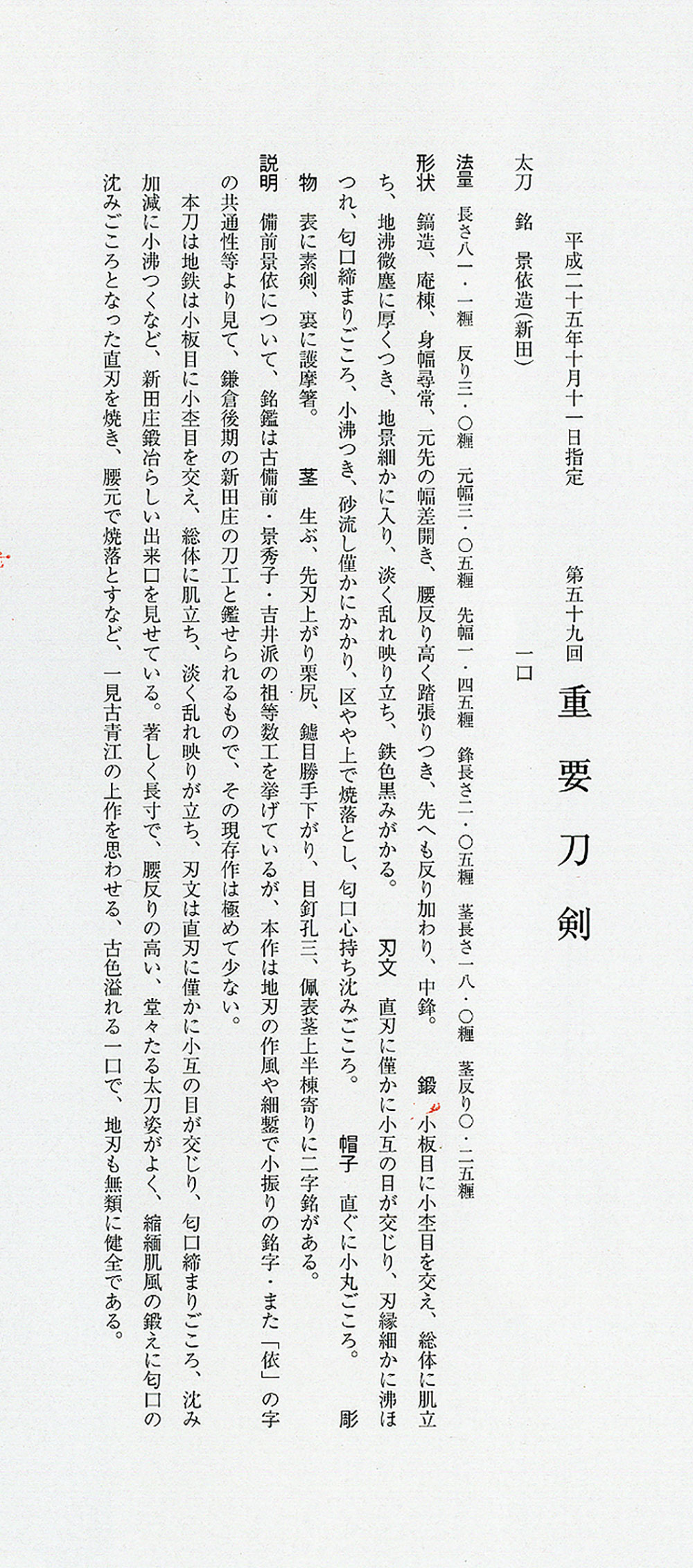
This is a Juyo Token designated tachi by Kageyori, active in Bizen Province during the late Kamakura period. The blade features a strong koshi-zori and a small kissaki, with a straight hamon mixed with small gunome. The jigane shows ko-itame mixed with mokume, and a midare-utsuri, giving it an antique feel reminiscent of Ko-Bizen or Ko-Aoe works. The signed ubu-nakago adds to its distinguished character.

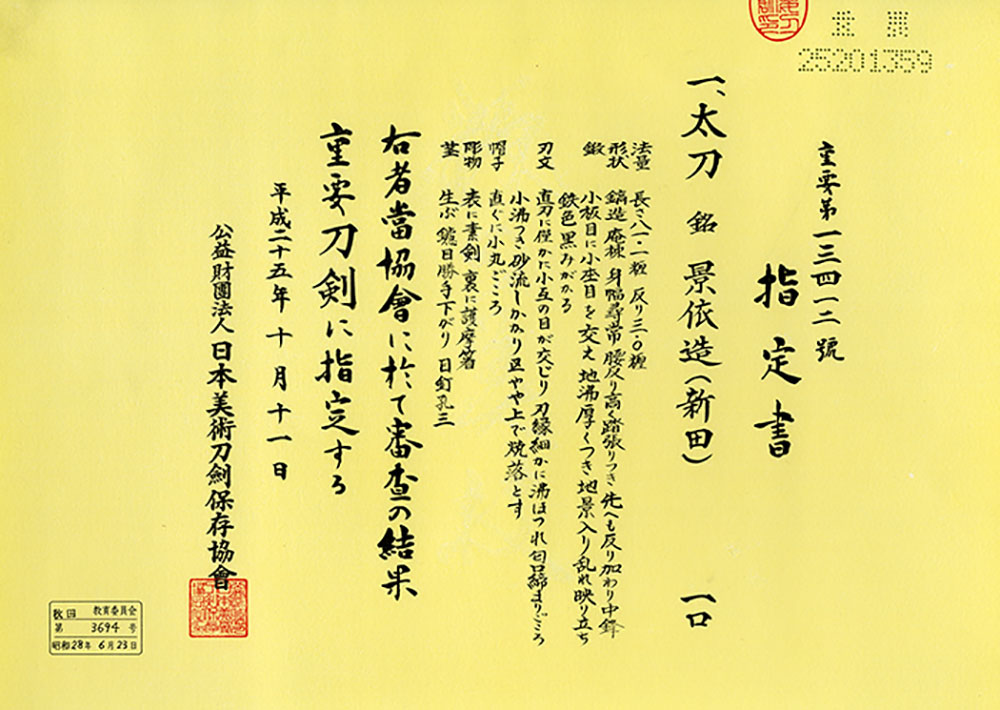
古刀 鑑定書内容:財)日本美術刀剣保存協会 重要刀剣[N.B.T.H.K]Jyuyo Token NO.595 銘文:景依造
Sold
JūyōSold

古刀 鑑定書内容:財)日本美術刀剣保存協会 重要刀剣[N.B.T.H.K]Jyuyo Token NO.595 銘文:景依造

Tachi

SOLD

Tracked across 81 dealers worldwide · price history · sold archive

Specifications

Nagasa

81.1 cm

Sori

3 cm

Motohaba

3 cm

Sakihaba

1.4 cm

About the maker

Ko-Bizen Kageyori景依

3 Jūyō Bunkazai2 Jūyō Tōken

Kageyori is a Bizen swordsmith of the Ko-Bizen group, known today by a small number of signed two-character *tachi* spanning the Kamakura period. His name is one of the kantei problems of old Bizen. Examining the surviving signatures, the published sources hold that 'it appears there were roughly three smiths using the name Kageyori in Bizen Province' (景依は備前国に同名が三人程存在するようである): the oldest is the hand with 'a boldly cut, large two-character signature' (太鏨大振の二字銘が最も古く), the latest is the one prefixing Bizen no Kuni Osafune at the close of the Kamakura period, and works of the Kōan and Einin years of a somewhat older manner lie between. A second strand, the published sources note, carries the title Sakon-Shōgen and is dated to the Einin era, so that 'beyond the Ko-Bizen group there are pieces titled Sakon-Shōgen and dated to Einin' (備前景依には古備前派の他に左近将監を冠する永仁年紀のものがある) whose lineage is not clearly established. Each blade is therefore placed by its own *ji* and *ha* before it is assigned a generation. His readable hand is a slender *tachi*, the *sori* high at the waist and carried even where the tang has been shortened, the *kissaki* small, the dignified bearing of Kamakura Bizen. The temper is the calm one of old Bizen, not the flamboyant *chōji* of the contemporaneous Fukuoka Ichimonji: a *suguha*-toned line, a *chū-suguha* or *suguha* base into which he works *ko-chōji* and *ko-gunome*, with *chōji-ashi* and small *ashi* entering. The *suguha* field is never bare. On the shortened Jūyō *tachi* small *gunome* mix in over a *bō-hi*, *ko-nie* adhere, and the *nioiguchi* tends tight; on the *ubu* Jūyō *tachi* the *nie* gather well, with *sunagashi* and *kinsuji* running and the *bōshi* going straight into a *ko-maru*. The *jigane* is old Bizen through and through. Over a well-packed *ko-itame* on the one blade rises a clear *midare-utsuri*, the steel the published sources read as one stylistic mode of late-Kamakura Bizen; on the other the forging runs to an *itame* inclining to stand a little, with *ji-nie* well developed. From that slender form and the well-worked *nie* of *ji* and *ha*, the published sources judge the second blade 'a Kamakura-period work appraised as of the Ko-Bizen lineage' (古備系の鎌倉期のものと鑑せられる). The two together show one quiet manner read across a small spread of quality, the *utsuri*-bearing *ko-itame* and the *suguha*-based clove the constant tells. What sets him apart from his Bizen neighbours is exactly this restraint. Where the Fukuoka Ichimonji of the same decades raise a high, showy *chōji-midare*, Kageyori keeps a *suguha*-toned *ko-midare*, the *chōji* present only as *ashi* and small clusters in the line, the *utsuri* of old Bizen standing in the *ji*. He belongs among the old-Bizen hands who worked before and beside the Ichimonji flowering, his attribution resting on era and the old-Bizen character of his steel rather than on a fixed descent. Kageyori survives in a small but high designated record. Fujishiro assigns him no grade, and the *Tōkō Taikan* values his work in the mid range. Three signed *tachi* are designated Important Cultural Property: one at the Tokyo National Museum, one at the Kishū Tōshō-gū in Wakayama bearing a Sakon-Shōgen signature dated to the second year of Shōō, and one at Inaba Jinja in Gifu. These are designated cultural property, patrimony held in museums and shrines, not blades that come to market. Two further signed *tachi* are designated Jūyō Tōken, one shortened and formerly in a Tokyo collection, one *ubu* in Hyōgo, with a blade of his recorded in the old Arima daimyō holdings. Across the Tokubetsu Jūyō and Jūyō tiers only the two are recorded, so a signed Kageyori in private hands is among the rarer things a collector of early Bizen could hope to encounter, and one appears, when it does, only with patience.

Dealer

Iida Koendo

iidakoendo.com

Sold