-Tōsōgu, 58th Session — Designated October 10, 2012
Category: ** Tōsōgu 23
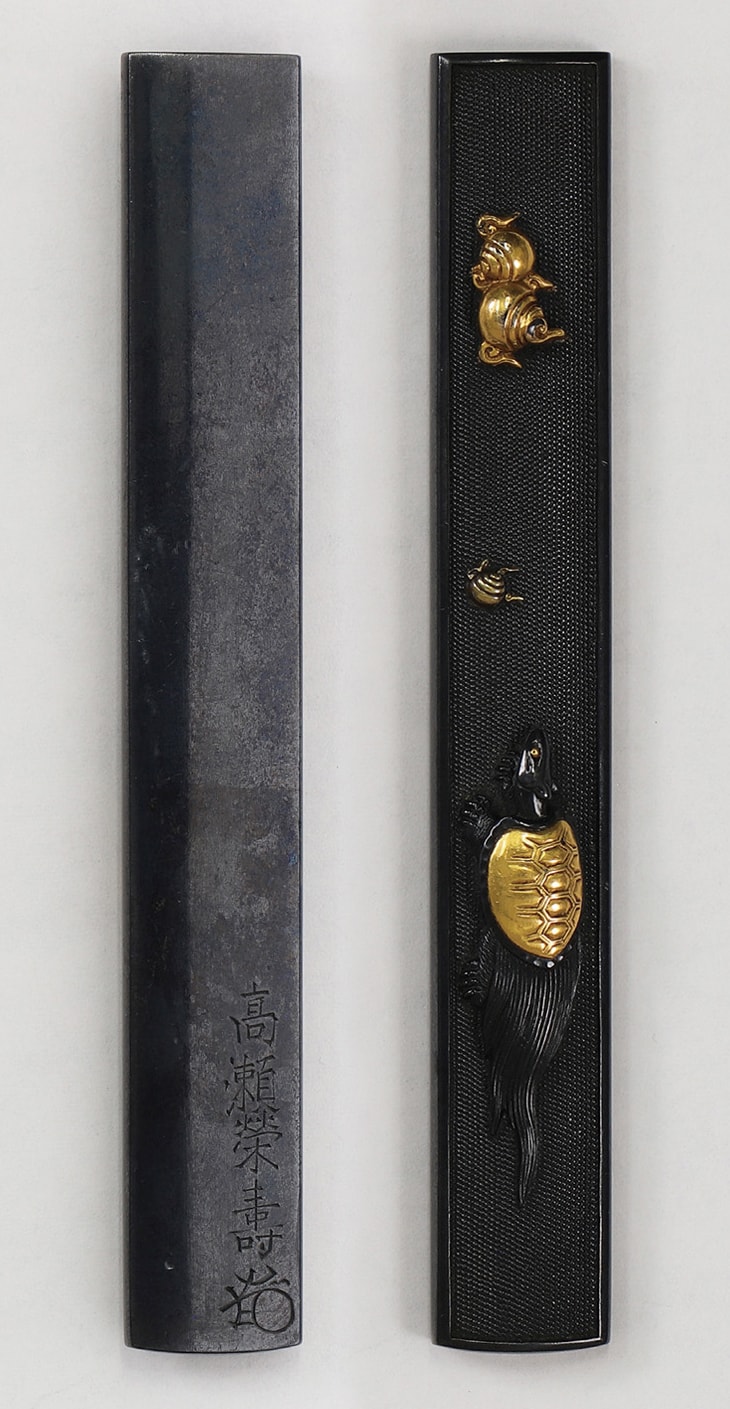
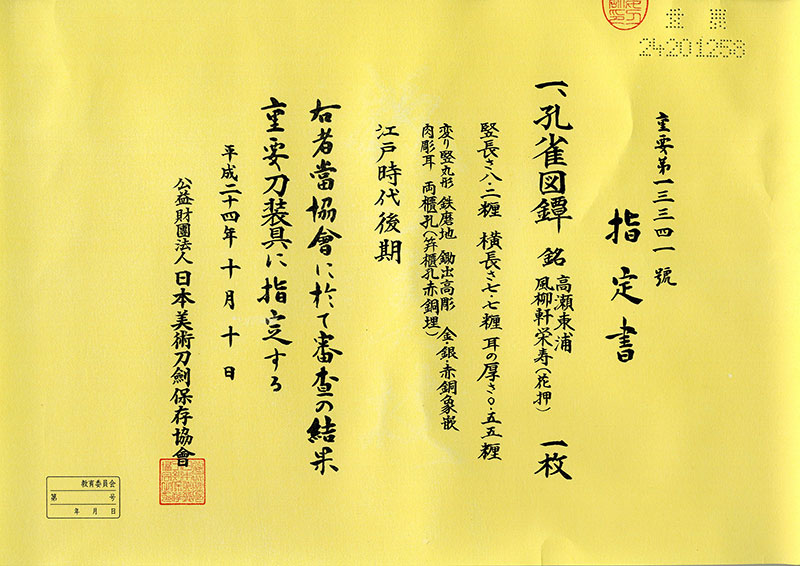
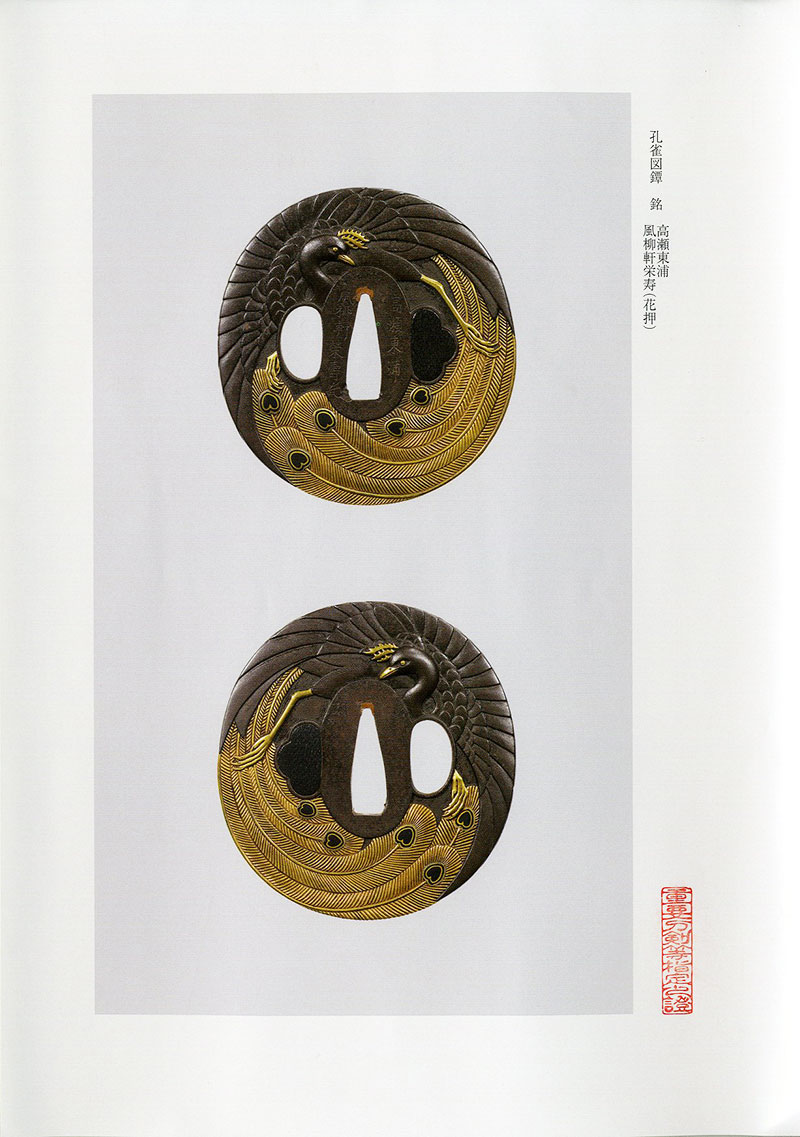
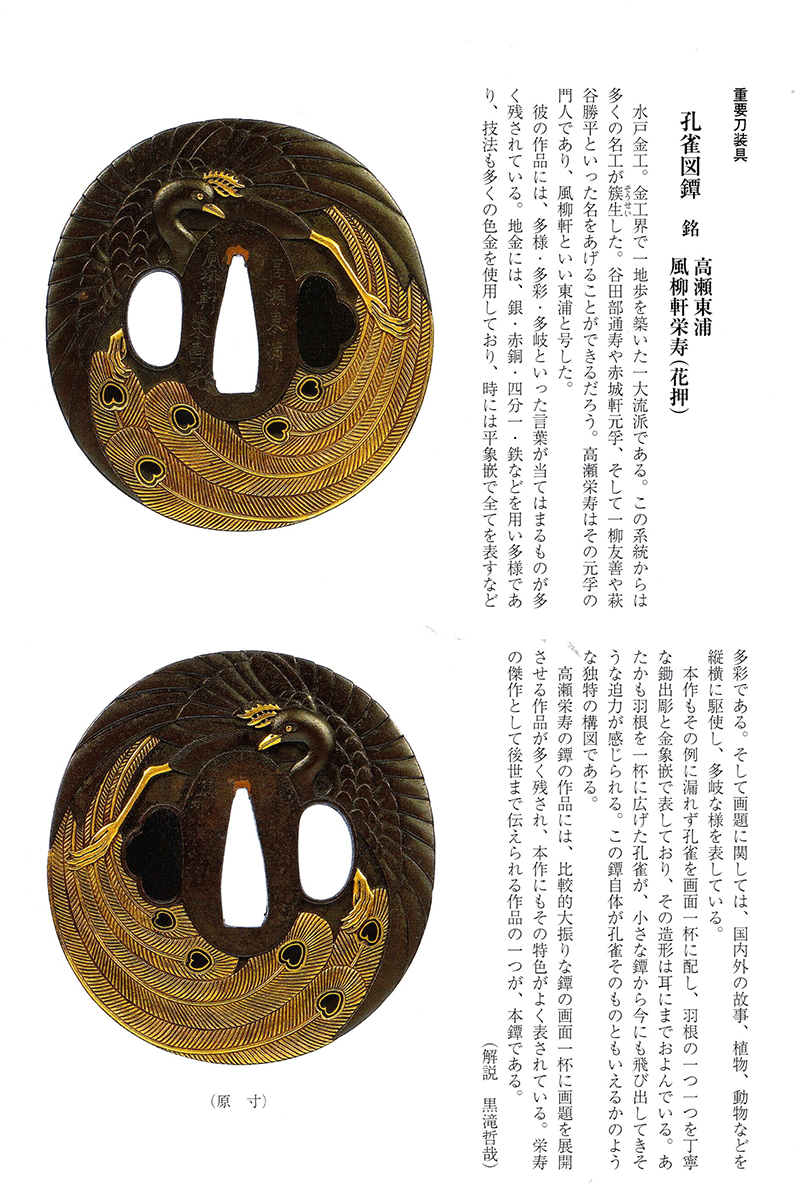
, : Takase Tōho, Furyūken Eiju (花押) (高瀬東浦 風柳軒栄寿)
Measurements (height): 8.2 cm (width): 7.7 cm Mimi thickness: 0.55 cm
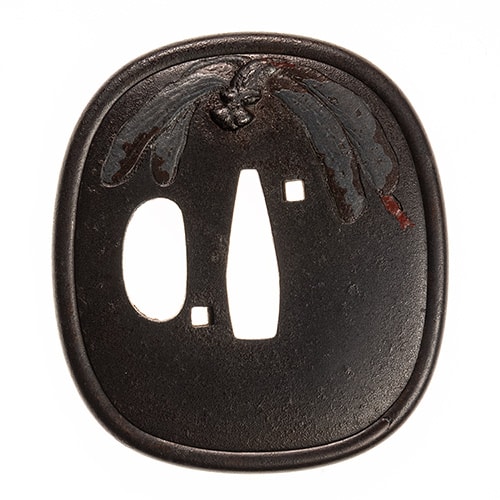
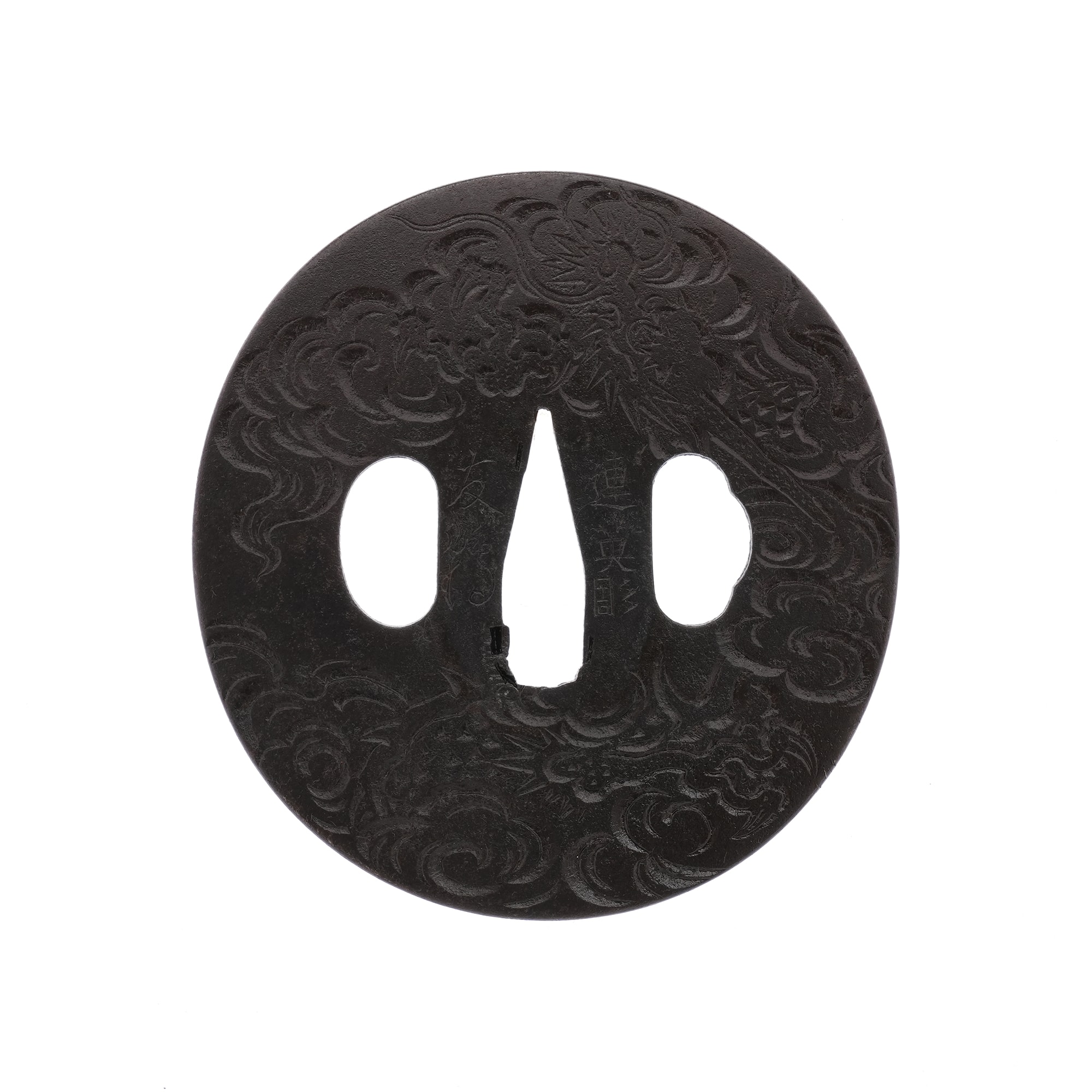
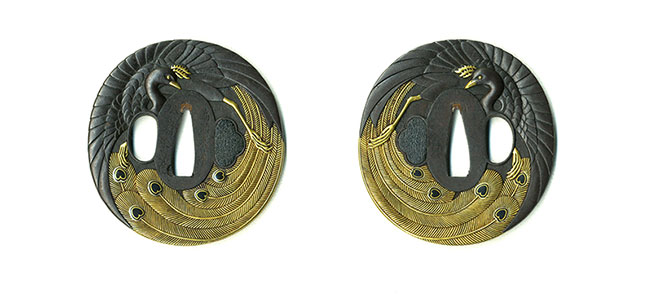
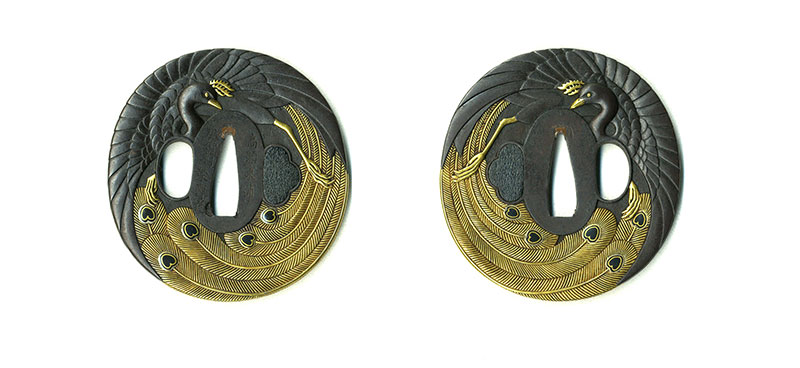
Description Form: kawari (variant vertical-round form) Material: iron, polished ground (tetsu ) Construction: (single-plate) Design: peacock Decoration: in high relief (), with inlay () in gold, silver, and Rim: -bori mimi (rounded, carved rim) : two; plugged with Signature: “Takase Tōho” and “Furyūken Eiju” with
Artisan Takase Eiju, art name Furyūken—Mito metalworker; pupil of Akagiken Motogaku, second-generation master of the Taizan family line.
Era Late period.
Explanation Takase Eiju was a Mito metalsmith. He studied under Akagiken Motogaku, the second-generation master of the Taizan family, and used the art name Furyūken. Mito metalworkers incorporated a variety of styles—such as those of the Ishiguro, Hamano, and Nara schools—yet in Eiju’s work one often finds Gotō-inspired pieces: figures and bird-and-flower subjects rendered in high relief on a ground of .
This , however, is made with iron as the base metal, and it is a work that conveys the splendor of the peacock by fully exploiting the circular pictorial field itself. Even among Eiju’s output, it represents an unusual area of expression. The of the feathers, spreading in layered bands, is graceful and precise in chisel handling, while the gold coloration deployed in the lower portion creates a sense of lively motion—resulting in an especially eye-catching piece.