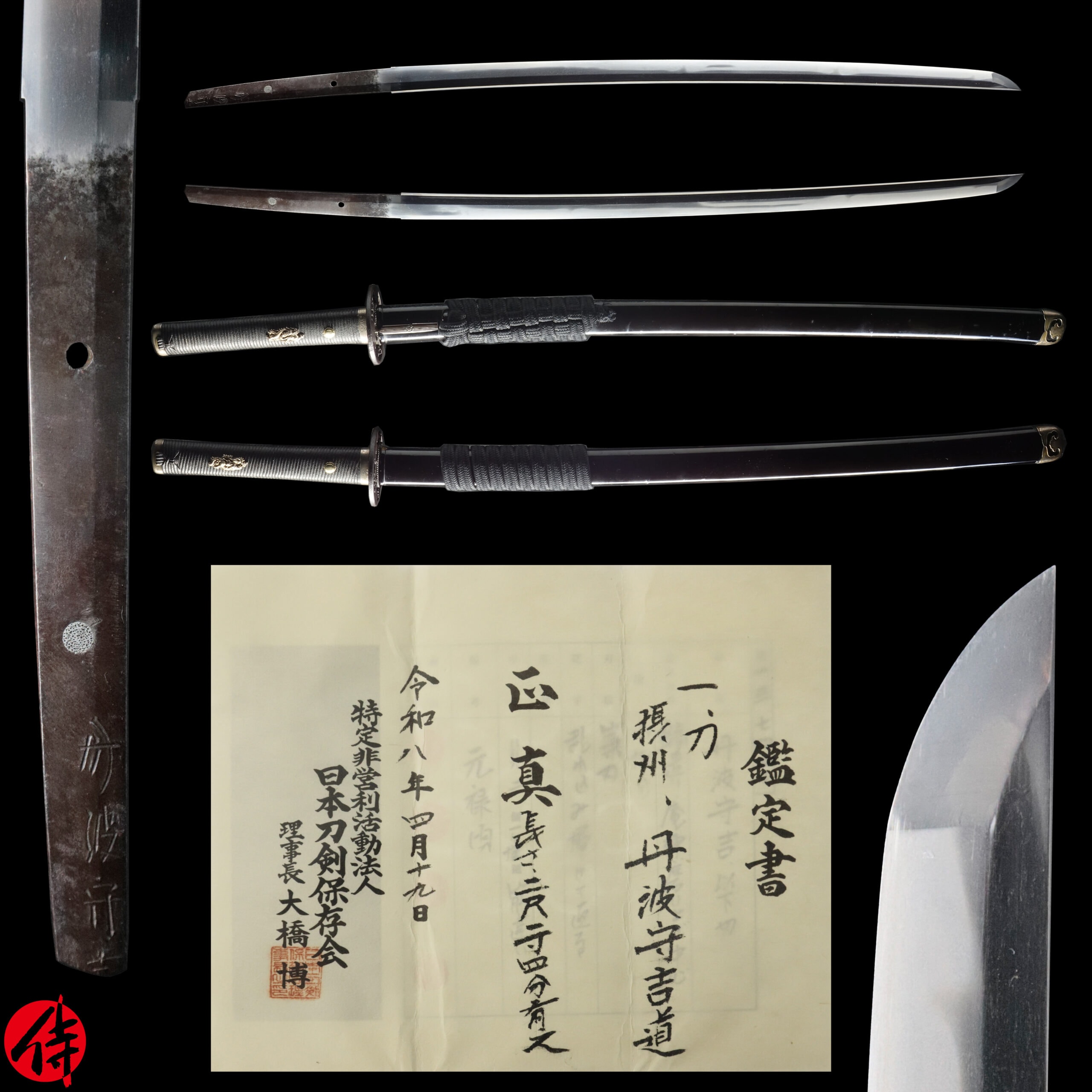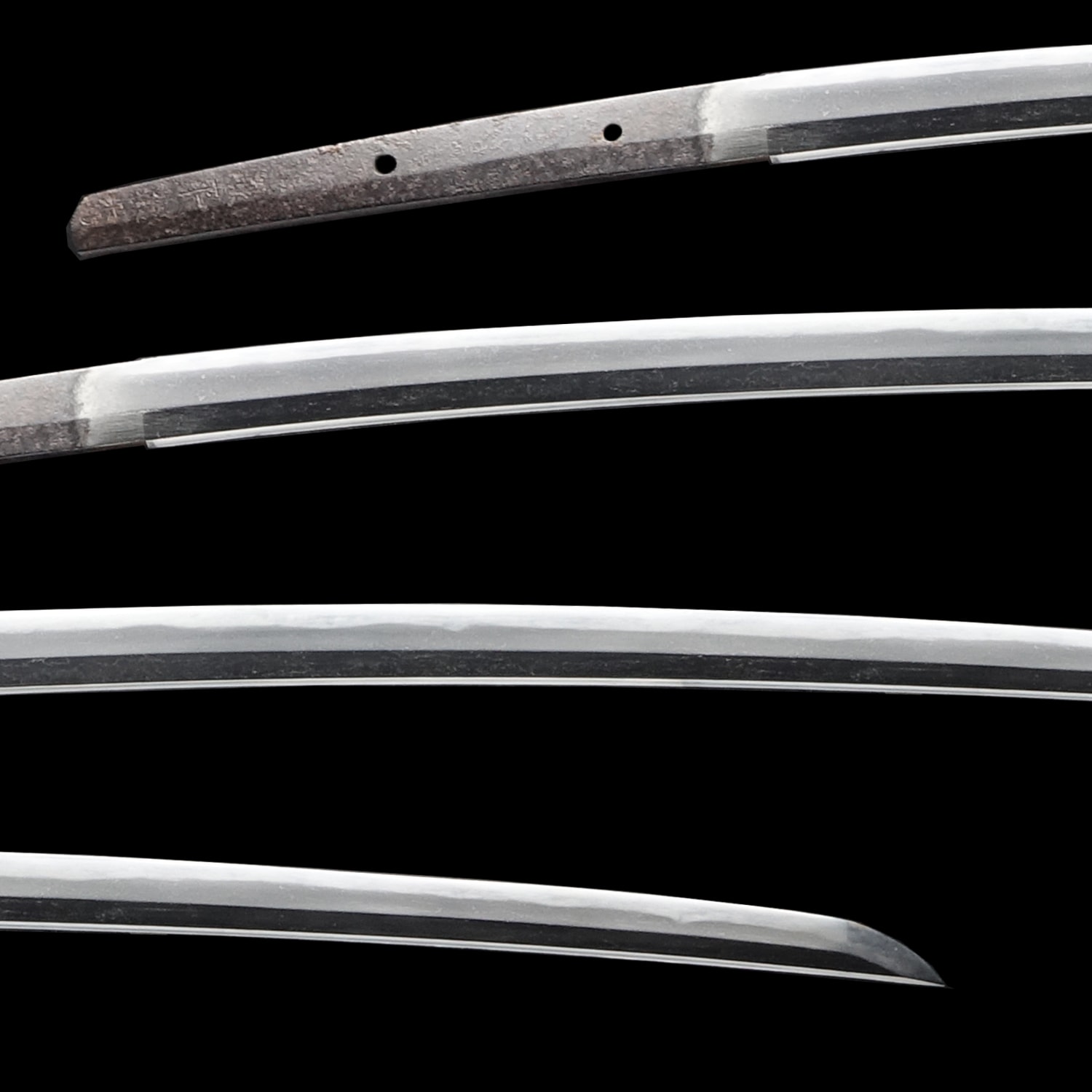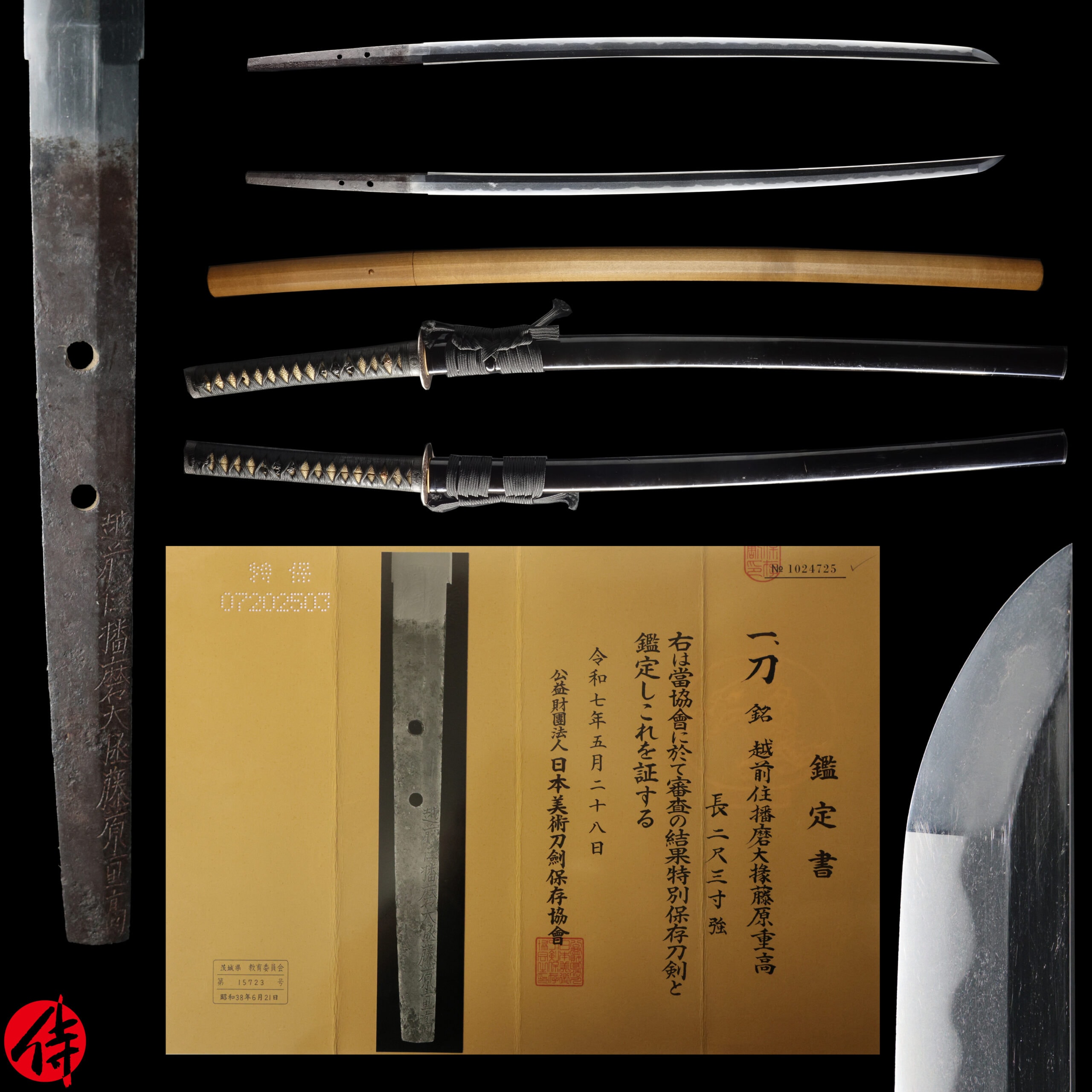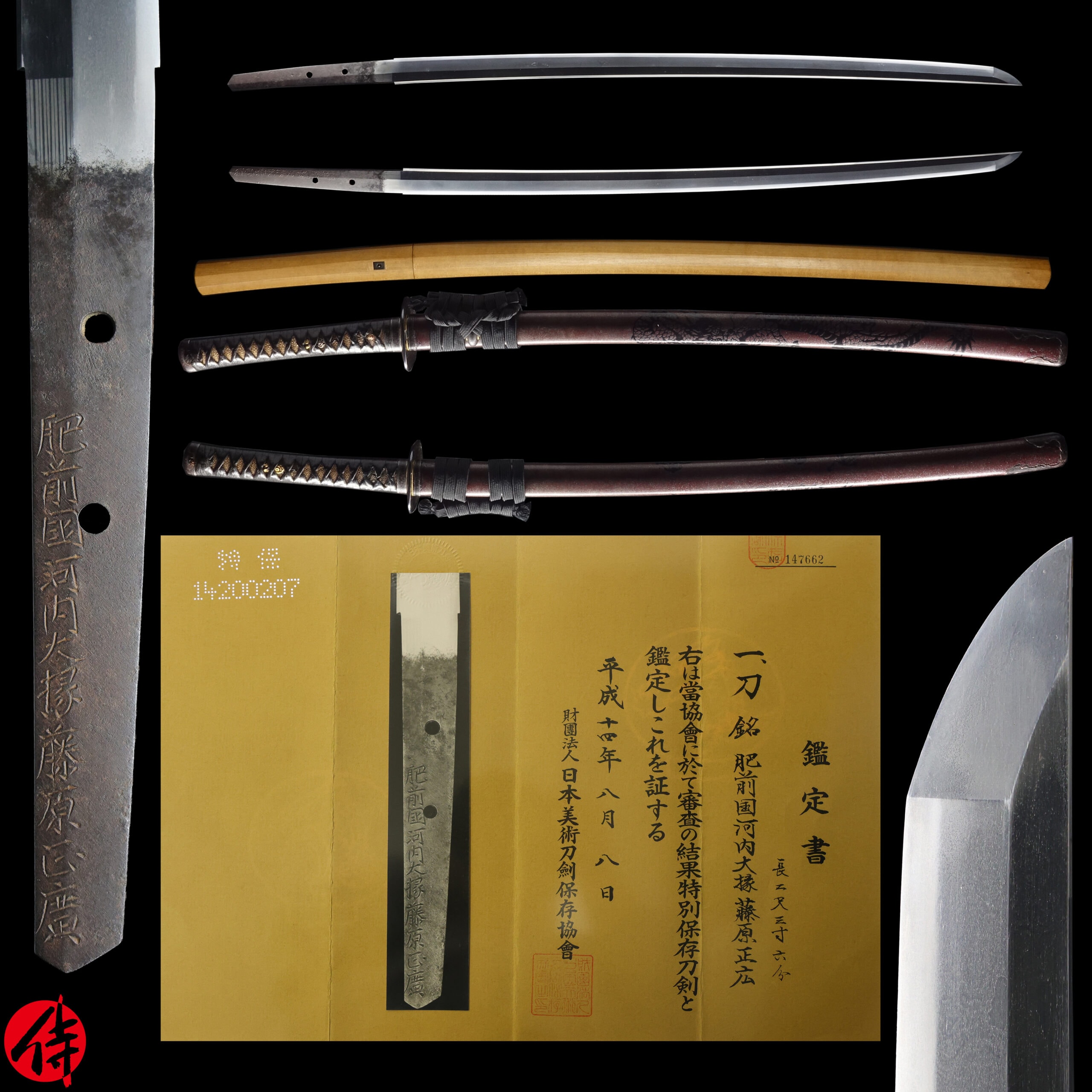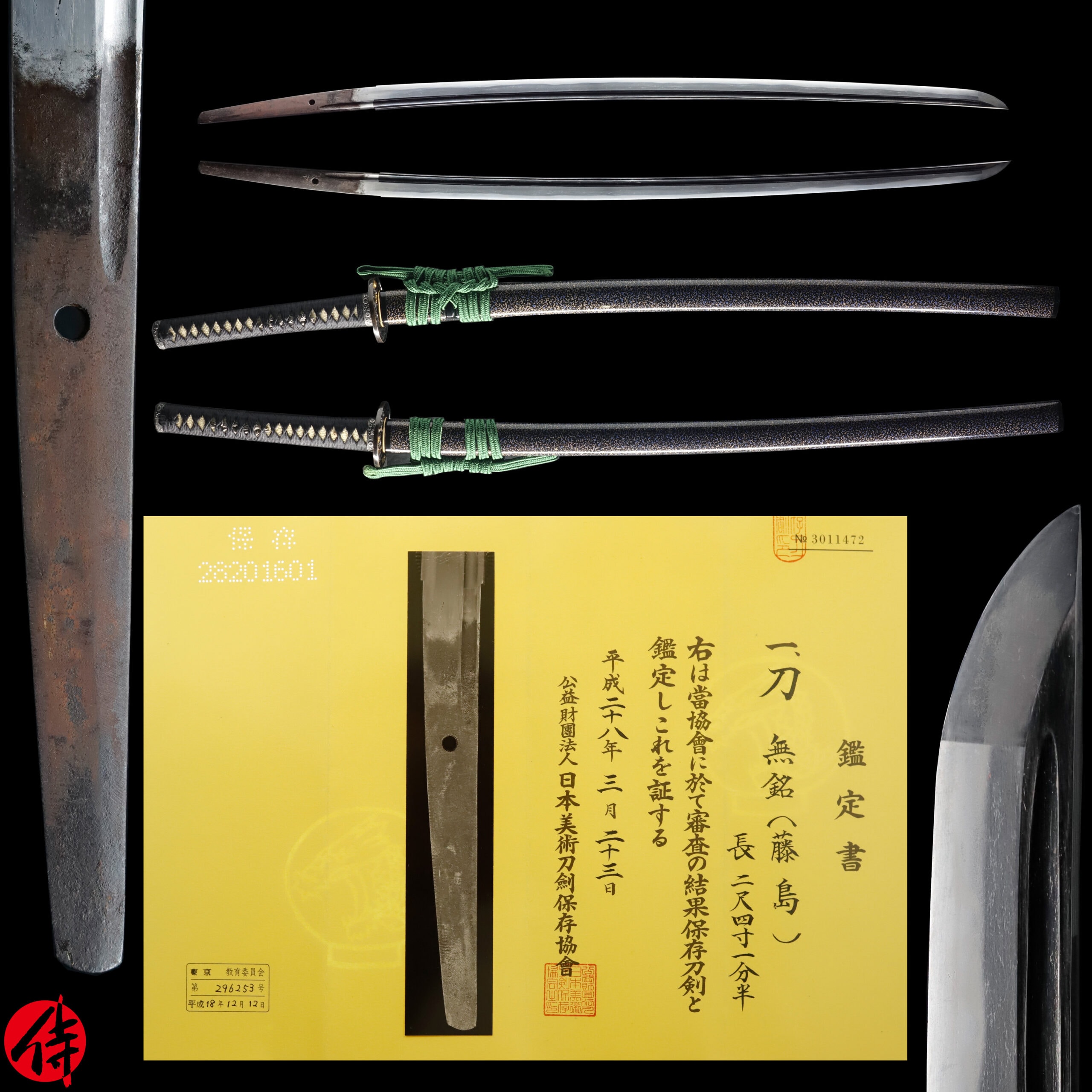
Antique Japanese Sword Katana attributed to Fujishima NBTHK Hozon Certificate
SOLD
Tracked across 81 dealers worldwide · price history · sold archive
Specifications
73.3 cm
1.2 cm
About the maker
Fujishima藤島
The Fujishima school was a group of swordsmiths based in Kaga Province. Documentary tradition transmits that they were disciples of Rai Kunitoshi, with Tomoshige regarded as the school's founder. Some sources alternatively place the lineage within the Sanekage line. While the school's activity is said to extend from the end of the Kamakura period well into the early modern era, the earliest firmly dated works bear *nengō* from the Ōei era, and the NBTHK has noted that no extant pieces can be confidently attributed to before the Nanbokuchō period. Fujishima works characteristically display a *jigane* with a dark, somewhat blackish tone, in which *ko-itame* mixed with *nagare-hada* produces a distinctly northern-provinces flavor. In *hamon*, the school shows considerable range: some blades present a fine *suguha* with *hotsure* and *hakikake* in the *bōshi*, evoking a Yamato-like sensibility, while others are tempered in *gunome-midare* incorporating *togariba*, *hako-gakatta* elements, and *yahazu-ba*, with well-formed *nie* and vigorous *sunagashi*. The latter mode, with its tendency toward connected undulations and prominent *ashi*, is recognized as especially representative of contemporaneous "Hokuriku-mono" -- the distinctive manner of the northern provinces. *Shirake-utsuri* may also appear. Designated works encompass *tachi*, *wakizashi*, and *naginata*, demonstrating the school's versatility across blade forms. The *naginata* in particular, with their *ubu-nakago* preserving full original tang proportions, provide important evidence for dating the group's activity. Pieces from the early Muromachi period onward exhibit elements that are at once Bizen-like and Mino-like, and it is this composite character -- drawing upon multiple traditions while maintaining a distinctive regional identity -- that defines the Fujishima group's particular scholarly interest.