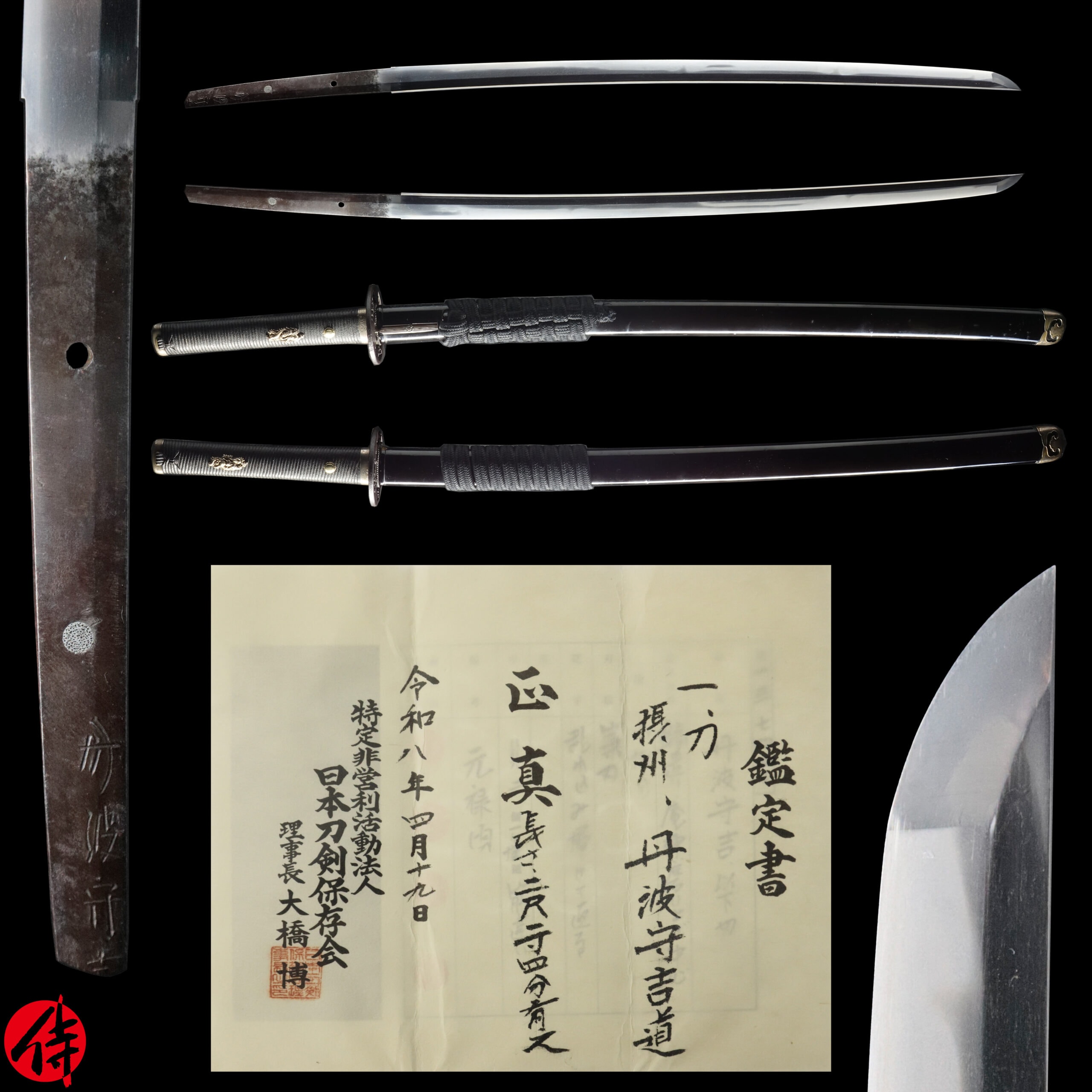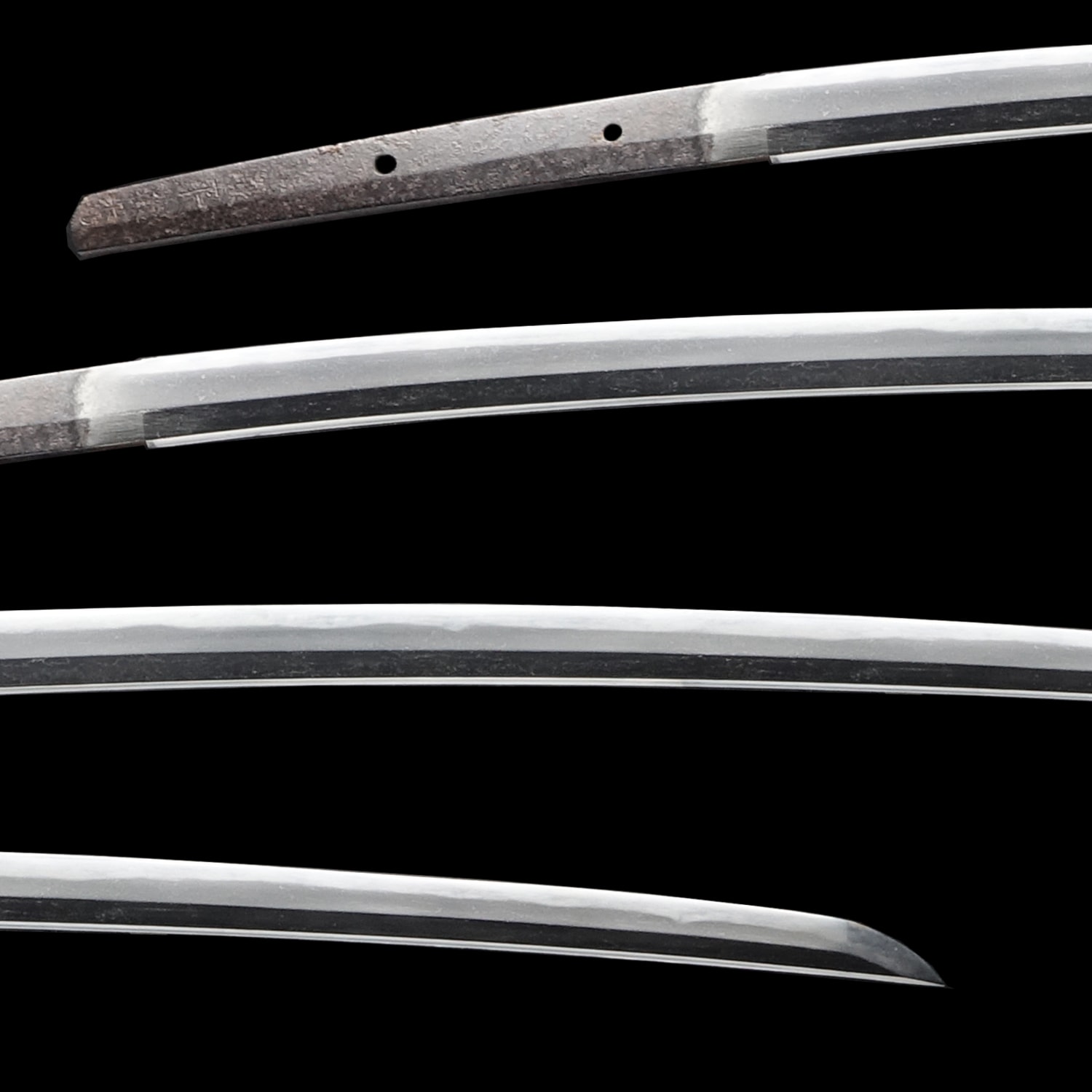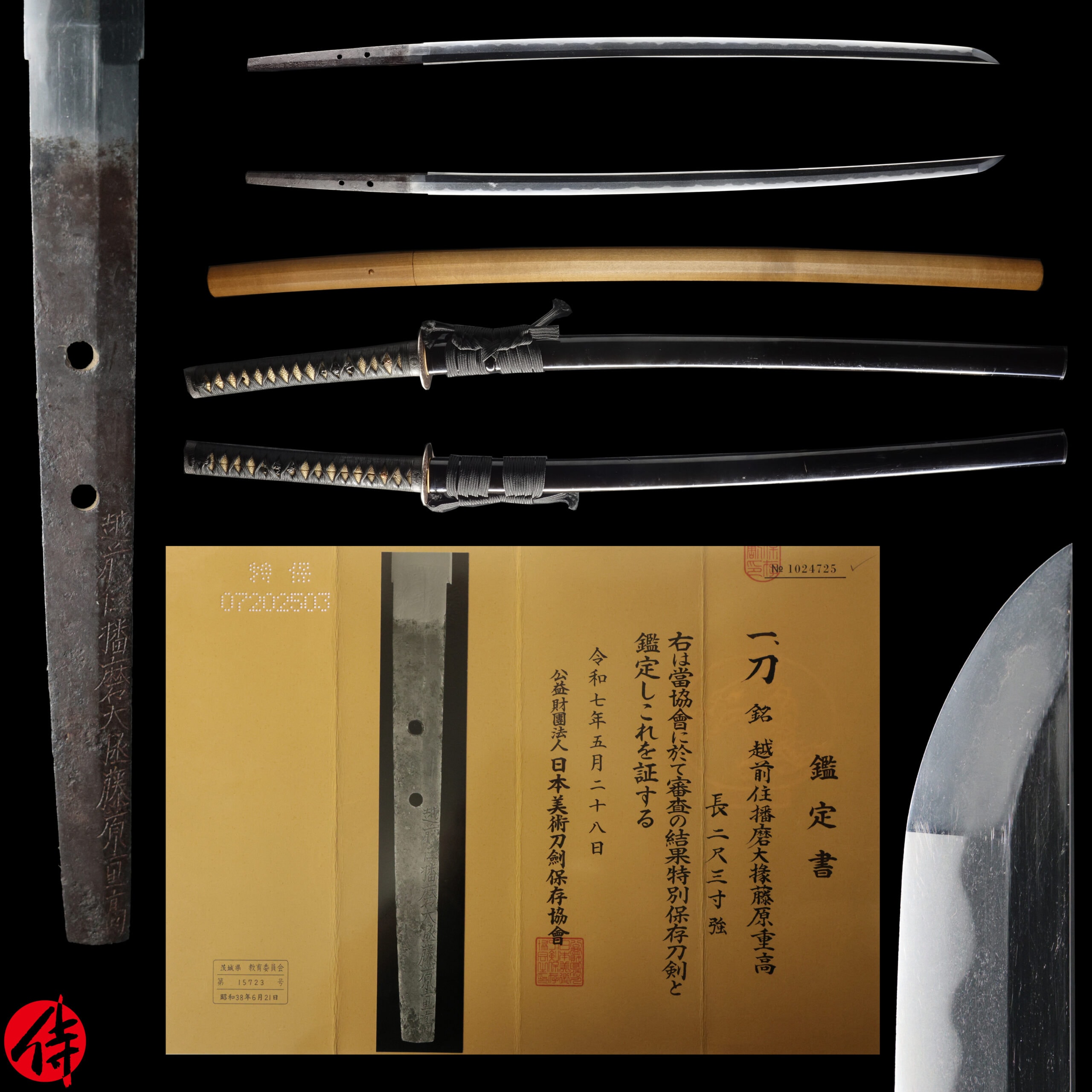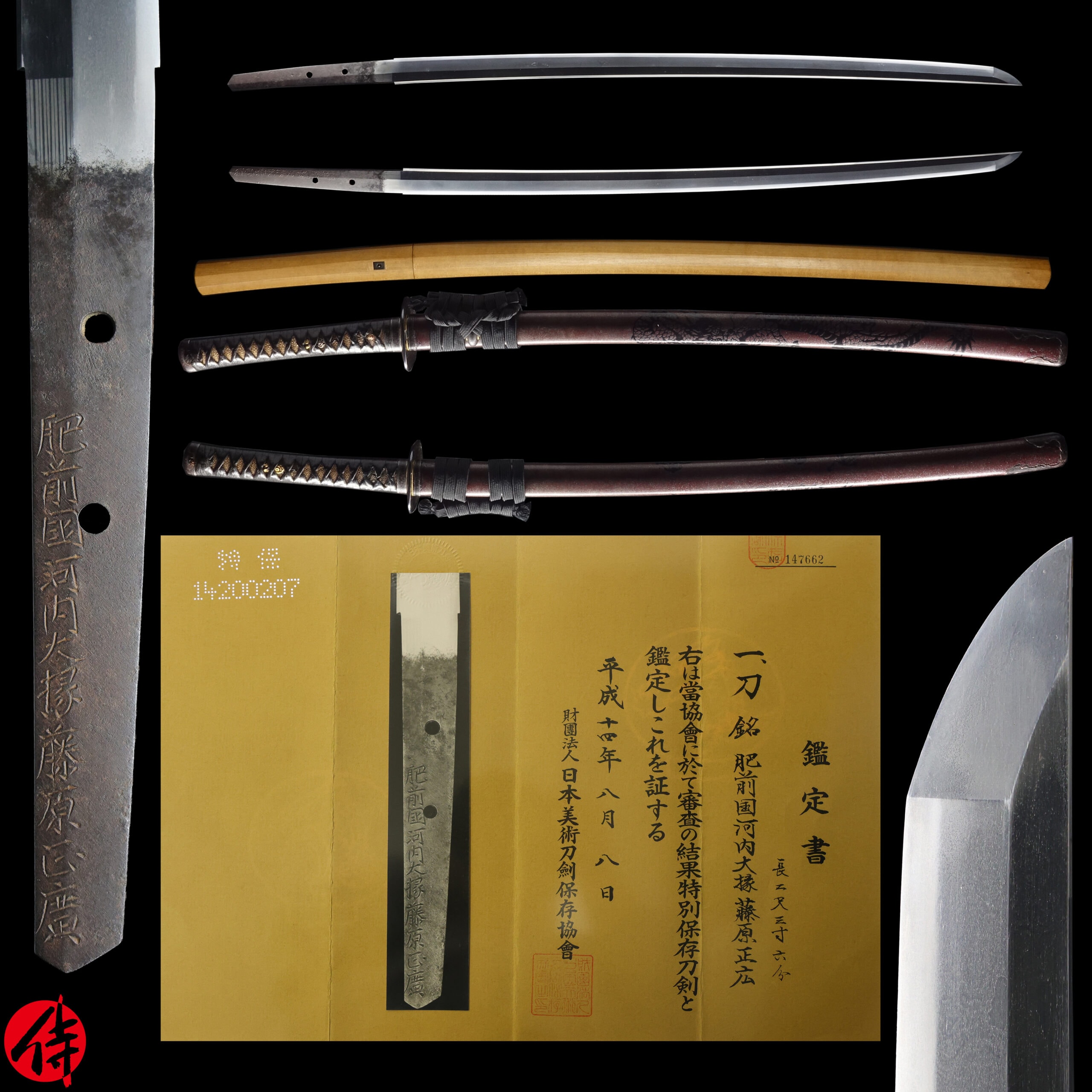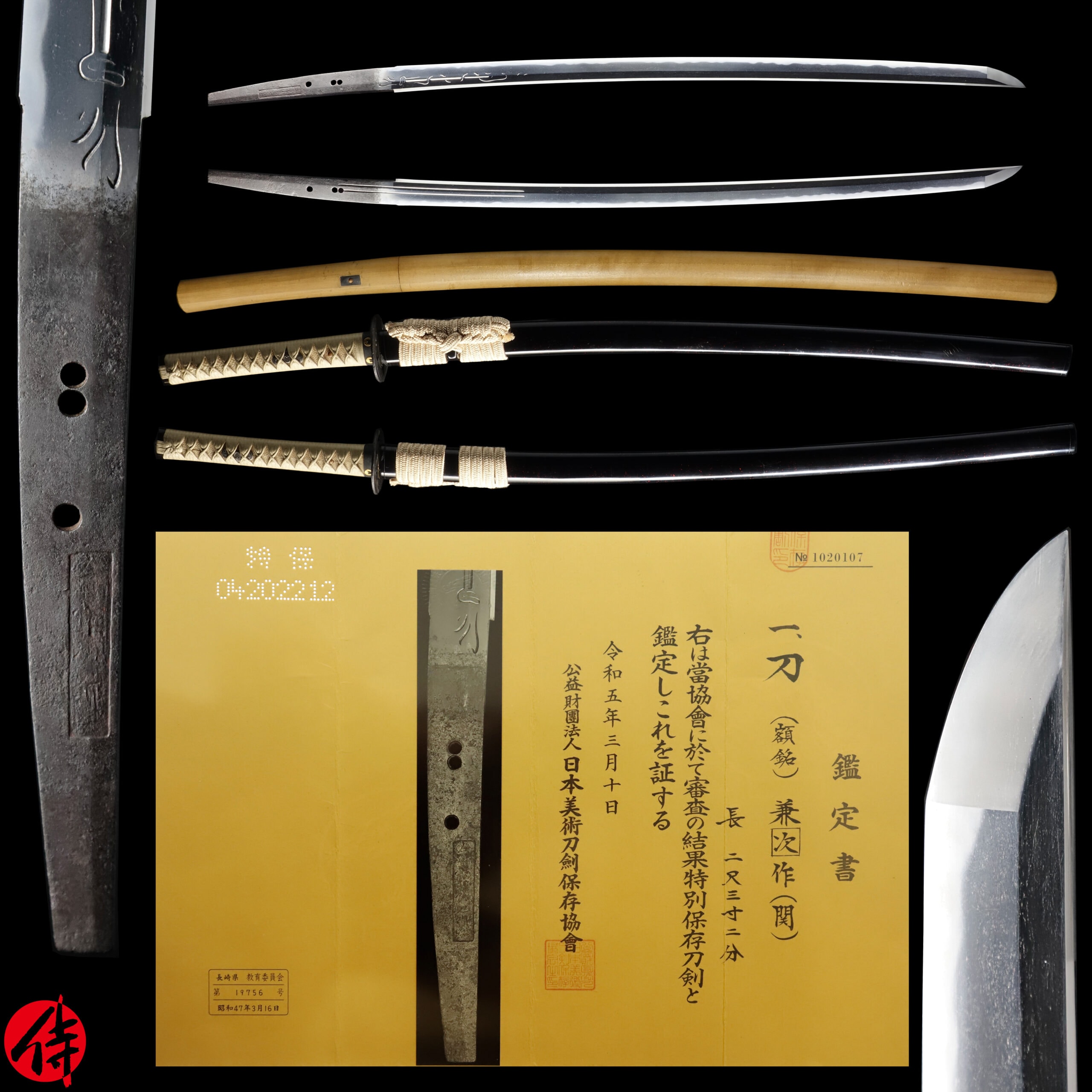
Antique Japanese Sword Katana Gaku Mei Kanetsugu NBTHK Tokubetsu Hozon Certificate
SOLD
Tracked across 81 dealers worldwide · price history · sold archive
Specifications
70.3 cm
1.2 cm
About the maker
Naoe Shizu Kanetsugu兼次
Kanetsugu is the first-generation smith of the Naoe Shizu lineage in Mino Province, traditionally identified as either a son or a disciple of Shizu Saburo Kaneuji. Kaneuji himself, counted among the celebrated Ten Disciples of Masamune (*Masamune jittetsu*), came to reside in the Shizu area of Mino and established a flourishing school there. Subsequently, his students Kanetomo, Kanetsugu, Kaneshige, Kanenobu, and others relocated to Naoe within the same province and forged swords in that locale; accordingly, the smiths of this group are collectively referred to as Naoe Shizu. In signed works, the form of the character *kane* closely resembles that used by Kaneuji, suggesting an intimate master-disciple relationship. Kanetsugu is assigned to the Kanno era (from 1350), and a dated wakizashi bearing an inscription of Kanno 1 survives as an exceptionally important chronological anchor. The workmanship of Kanetsugu operates within the Soshu tradition yet exhibits features particular to the Shizu lineage. The forging typically shows *itame-hada* mixed with *mokume* and *nagare-hada*, tending toward *hada-dachi*, with thick *ji-nie* and prominent *chikei*. The *hamon* is characteristically tempered in *ko-notare* mixed with *gunome* and *togariba*, frequently displaying a *saka*-tendency; *nie* adheres well, with *sunagashi* and *kinsuji* running through, and *uchi-noke* and *yubashiri* appearing to produce a powerful, compelling impression. The *boshi* is typically *notare-komi* or *midare-komi*, turning back with *hakikake* in a rounded return. Works attributed to Shizu proper show a manner closest to Masamune among the *jittetsu*, while Naoe Shizu pieces demonstrate a *nioiguchi* that is deep and bright, with fine *ko-nie* well adhering. Signed works by Kanetsugu are exceedingly rare, and reliable examples number only a small handful. Each constitutes not only valuable reference material for identifying both this smith and the broader Naoe Shizu group, but also provides an important foundation for the study of the Shizu lineage as a whole. The finest examples display excellent clarity in both *jitetsu* and *hamon*, with a commanding sense of spirit that fully upholds the legacy of the Soshu-den as transmitted through Mino.