NihontoWatch MonNihontoWatchBETA
MarketEncyclopedia
NihontoWatch Mon

NihontoWatchBETA

Market
Encyclopedia
Overview·Kantei·Designations·Work Types·Signatures·Lineage·School
OverviewKanteiDesignationsWork TypesSignaturesLineageSchool
  1. Schools
  2. Yokoya
  3. Yanagawa
  4. Toryusai
  5. Toshiyoshi

Toryusai Toshiyoshi

寿良

Jūyō
Vol. 48, No. 248 · Futatokoromono

Toryusai Toshiyoshi

寿良

15 ranked works

ProvinceMusashiEraBakumatsu-Meiji (b.1829, active 1865–1884)SchoolYokoya>Yanagawa>ToryusaiTraditionMachiboriGeneration1st genTeacherKiyotoshiSpecialtiestsuba, kozuka, fuchi-kashiraTypeTosogu MakerCodeKON013
15Jūyō Tōken

Overview

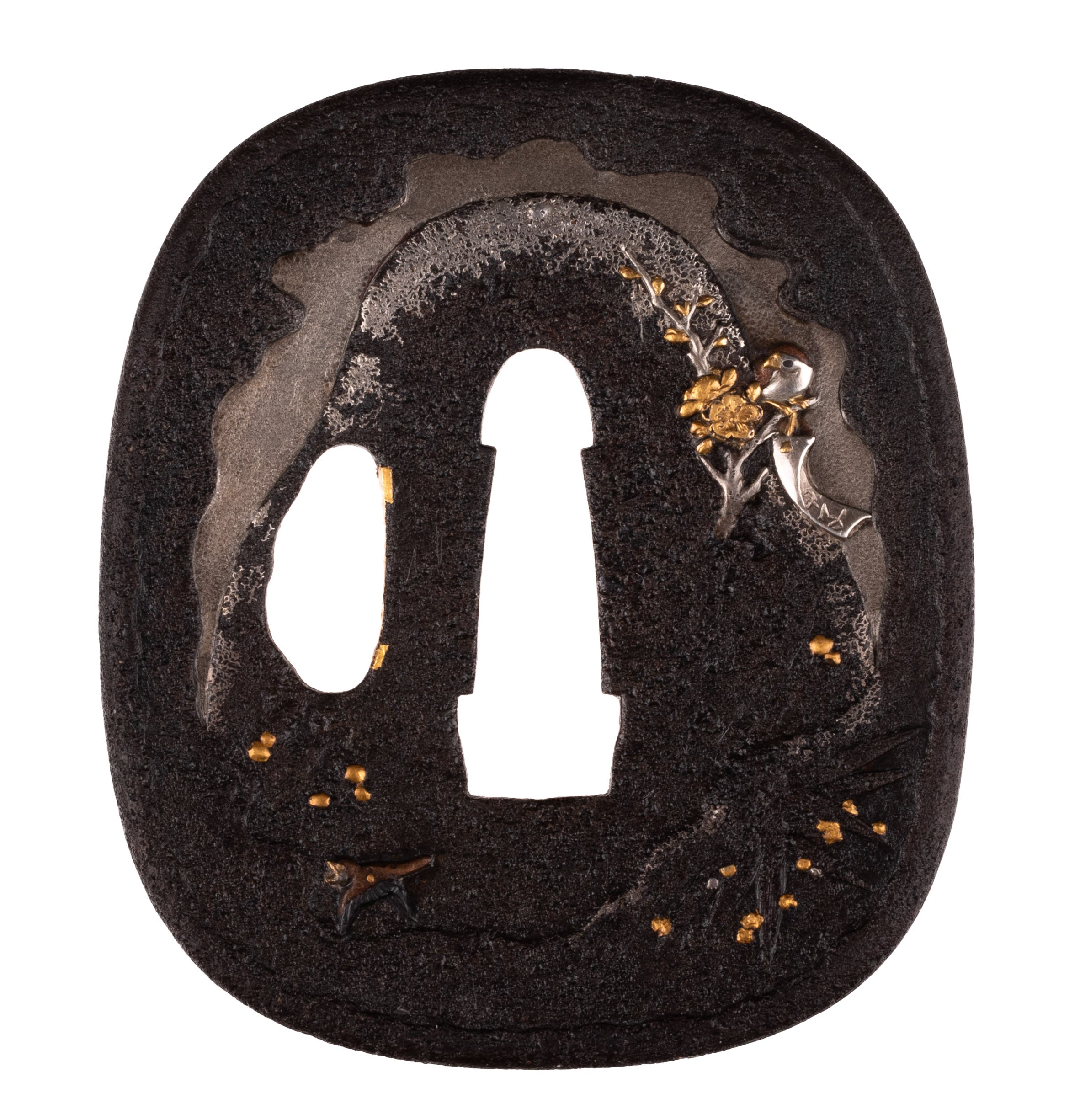
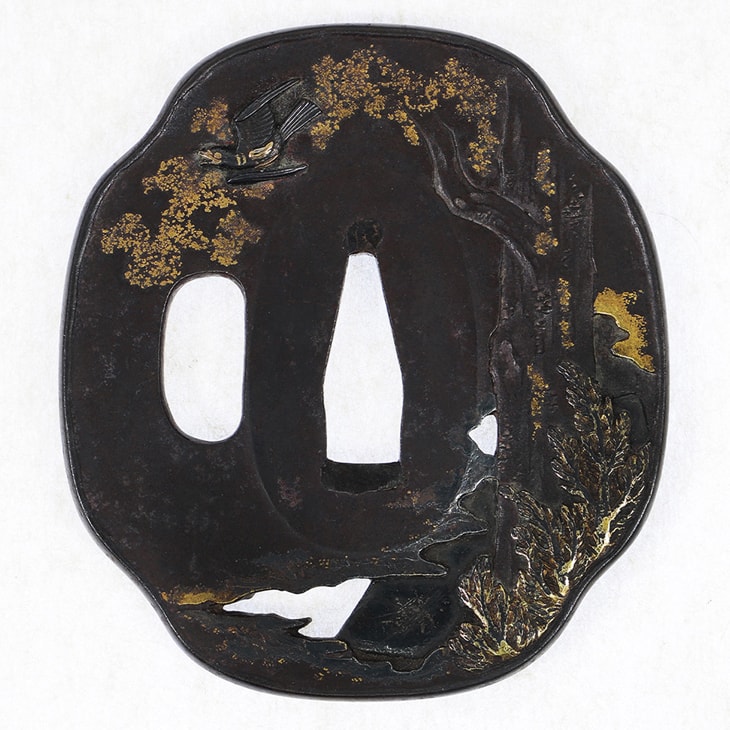
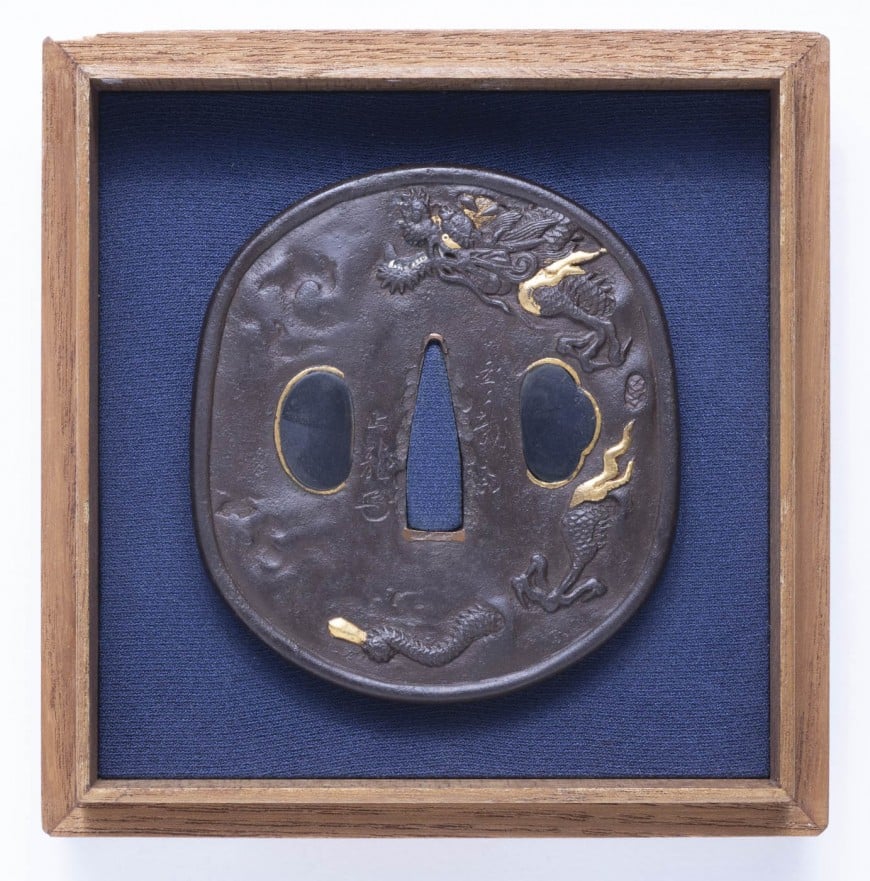
Shibahara (Fujiwara) Juro was born in Bunsei 12 (1829) and was commonly known as Kyutaro. He trained under Toryusai Kiyohisa, the distinguished head of the Toryusai lineage in , and emerged as the foremost talent among Kiyohisa's disciples. The has repeatedly characterized him as "an outstanding talent among the pupils of Toryusai Kiyohisa" and "a master craftsman second only to his teacher" --- assessments that appear with striking consistency across his designated works. Throughout his career he employed a succession of art names (go), including Shojo, Koso, Koso, Ryugansai, and Ryuminsai, signing variously as "Koso Juro," "Shibahara Koso Juro," and "So Jura," among other forms. Active from the closing years of the period into the early Meiji era, he faithfully carried forward what the describes as the "stylish, true " (Edomae) techniques characteristic of the Toryusai school --- a body of methods "rich in the taste and sensibilities of " that defined the lineage's identity.

Juro's technical range is distinguished by its command of multiple metalworking disciplines unified within single compositions. His preferred ground is (polished ), though he worked with equal authority in , iron, , and solid silver. His carving encompasses (high relief), nikubori (sculptural carving), , , and the characteristic of the Kiyohisa line, all enriched by layered polychrome in gold, , , , and silver. He employed -, -, (applied-metal work), and keshi- (matte gilding) with fluent assurance, frequently combining multiple inlay techniques within a single piece to achieve tonal depth and chromatic complexity. The observes that his chisel handling is "assured," producing a "supple, rounded carving" that constitutes "one of his characteristic strengths." A recurring hallmark is the neko-kaki ("cat-scratch" file marks) found on the reverse of his --- a feature "frequently encountered in this group." His pictorial subjects range from Buddhist guardians and Daoist immortals to literary figures such as Saigyo and Yamabe no Akahito, seasonal motifs distributed across coordinated suites, and themes drawn from the Twenty-four Filial Exemplars. In each case, the notes his ability to subordinate virtuosic technique to atmospheric effect, creating works that convey "a calm, restrained atmosphere" or "a sense of quiet loneliness" appropriate to the chosen subject.

Across his designated oeuvre, the 's evaluative language reveals an artist whose significance rests not merely on technical proficiency but on the capacity to sustain the aesthetic identity of his school at its highest level. His works are described as possessing "high completeness," demonstrating technique "displayed to its fullest," and exhibiting results that "compellingly confirm" his position as "the foremost metalworker among Kiyohisa's pupils." The recurring phrase "worthy of being called the most capable hand among the Toryusai-line disciples" establishes him as the principal inheritor of the lineage's artistic authority. His compositions are praised for their "generous advantage of open space," their "composed, steady atmosphere," and their capacity to harmonize diverse techniques into unified pictorial statements. That the consistently invokes his standing relative to his teacher --- praising him as second only to Kiyohisa himself --- situates Juro as the essential bridge between the Toryusai school's mature -period expression and its continuation into the Meiji era, a craftsman whose technical inheritance and aesthetic sensibility preserved the refined, taste-driven character of the lineage at the moment of its historical transition.
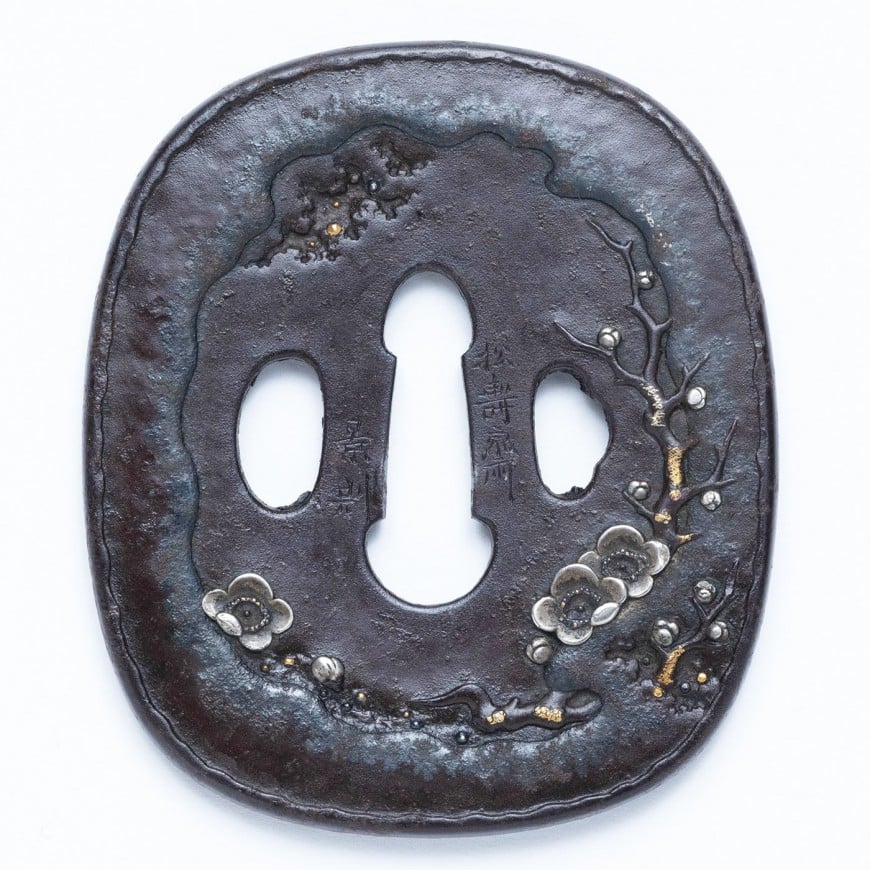
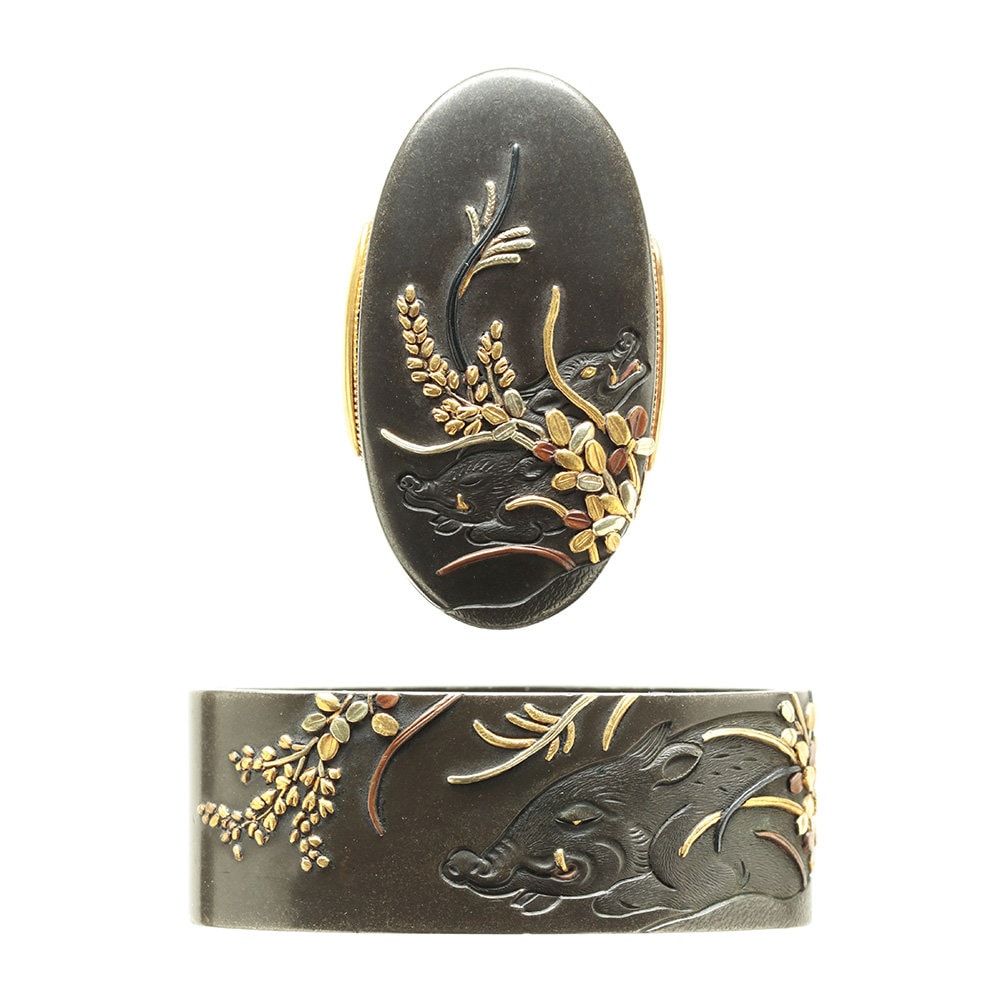
Kantei

3 descriptive axes: material (a full kinko palette, shakudo and shibuichi grounds prominent, with gold-foundation pieces) x technique (high relief and katabori with iro-e inlay, sukidashi-takabori, katakiri and engraved haiku) x themes (figural above all, Chinese sages and immortals, in his teacher Kiyotoshi's Edo-taste manner). Because he so closely continues Kiyotoshi, the corpus offers few personal separators from his master; the defensible ones are his powerful tiger and his graded shibuichi ground.

Shibahara (Fujiwara) Toshiyoshi, common name Kyutaro, born 1829, was the outstanding pupil of Toryusai Kiyotoshi and a faithful continuator of the Toryusai school, the witty -taste line of bakumatsu metalwork. The records call him a master second only to his teacher and the foremost of Kiyotoshi's pupils, and he worked from the late period into the early Meiji years, using the go Seijo, Koso, Koso and Ryugansai. He inherited his teacher's -taste manner so closely that the connoisseur's record describes his work above all as continuing the technique of Kiyotoshi; his own most distinctive notes are figural, a powerful high-relief tiger in the line of the tiger-carvers before him, and a refined tonal gradation worked into the ground.

Diagnostic discriminators

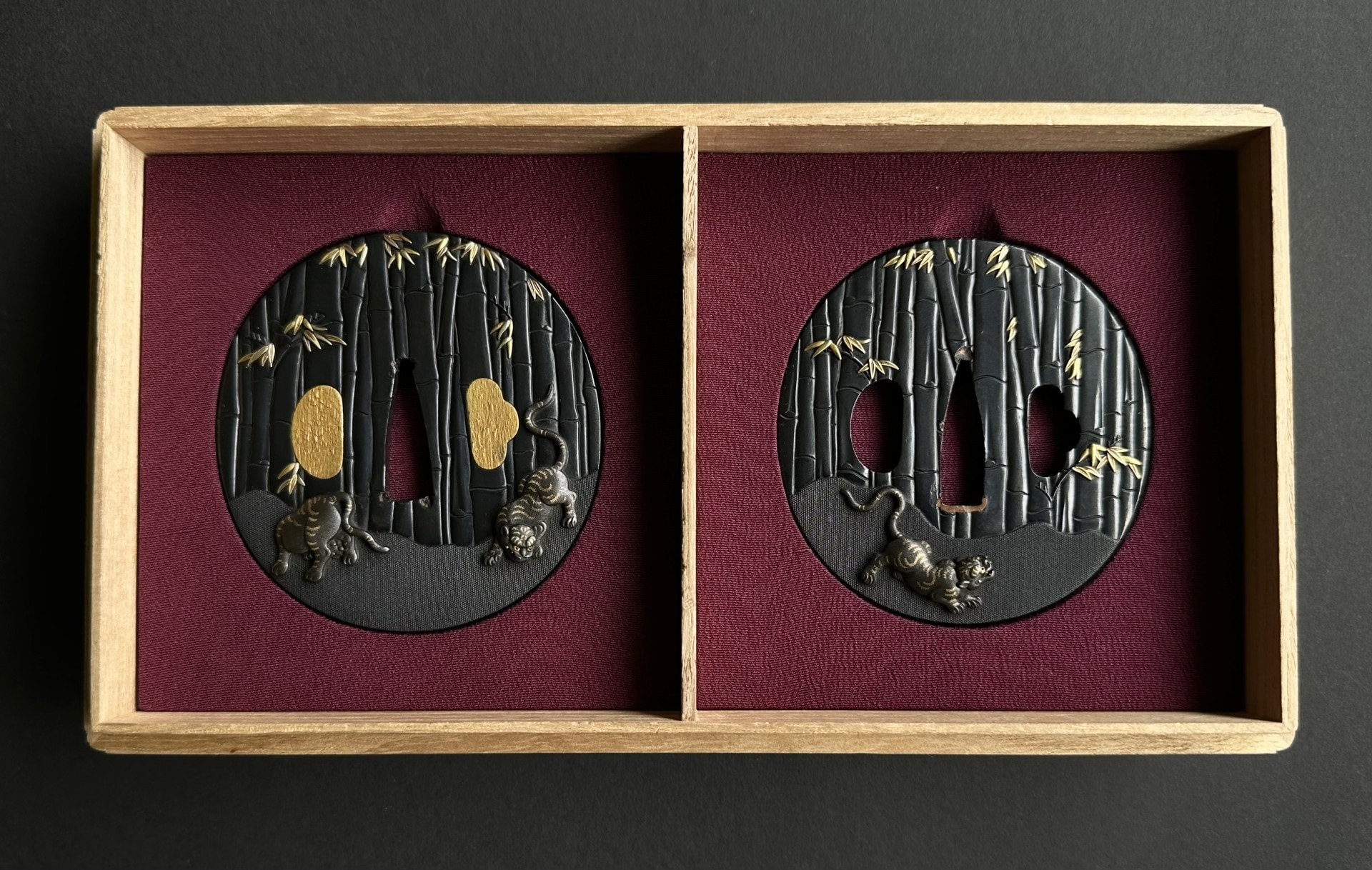
single-source but explicit: the setsumei names the tiger as a subject favoured by Tsuchiya Yasuchika of the Nara school and later attempted by Iwamoto Konkan, Taizan Motoyoshi and Murakami Jochiku, and calls Toshiyoshi's rain-and-tiger kozuka, with its sharp gaze and thick forelegs, a leading work full of force; the tiger appears on three of his pieces in this corpus

single-source but verbatim: on the Akahito-and-Saigyo three-piece set the empty shibuichi ground is given light and shade by a special technique, lending the kozuka a sense of desolate autumn and the kogai the breadth of Suruga Bay and the height of Fuji

Material (grounds)

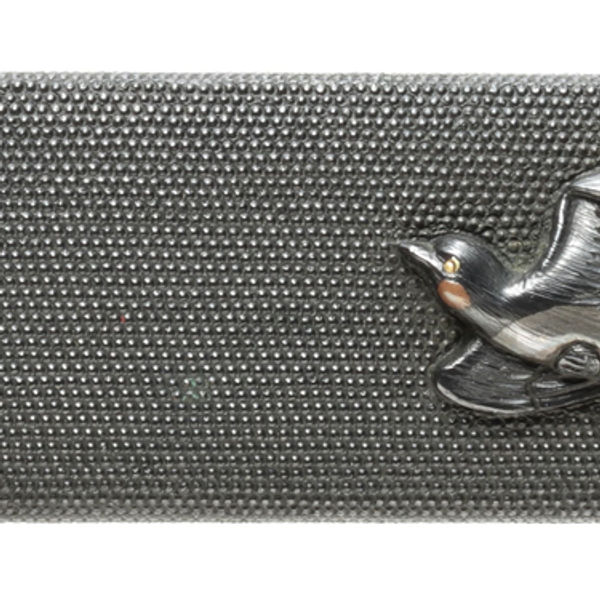
He commands the full soft-metal palette of , , and -grey , mostly polished () and sometimes ishime-textured; gold-foundation pieces in pure gold and silver appear among his finest commissions, and he carves iron in his teacher's manner.

Technique

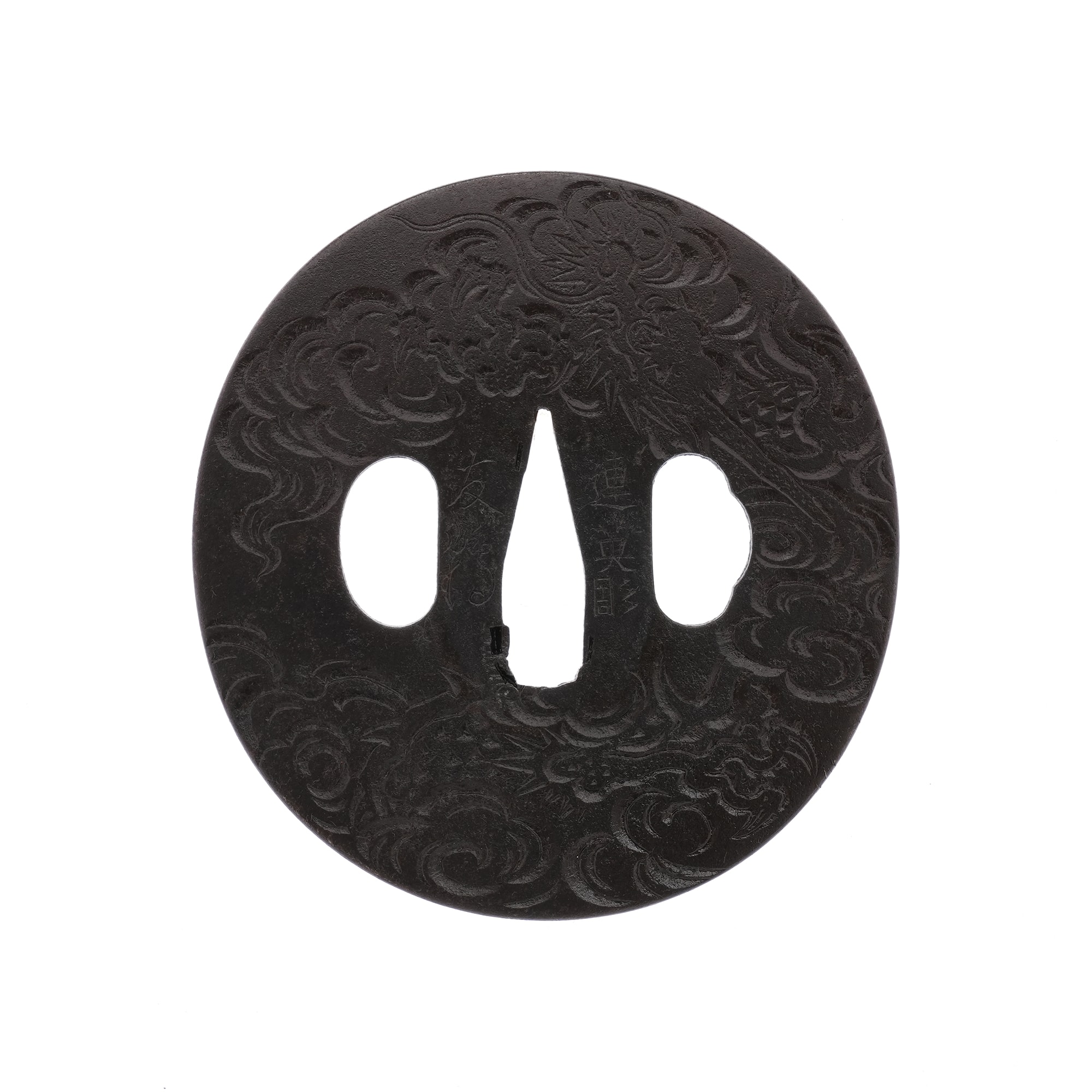
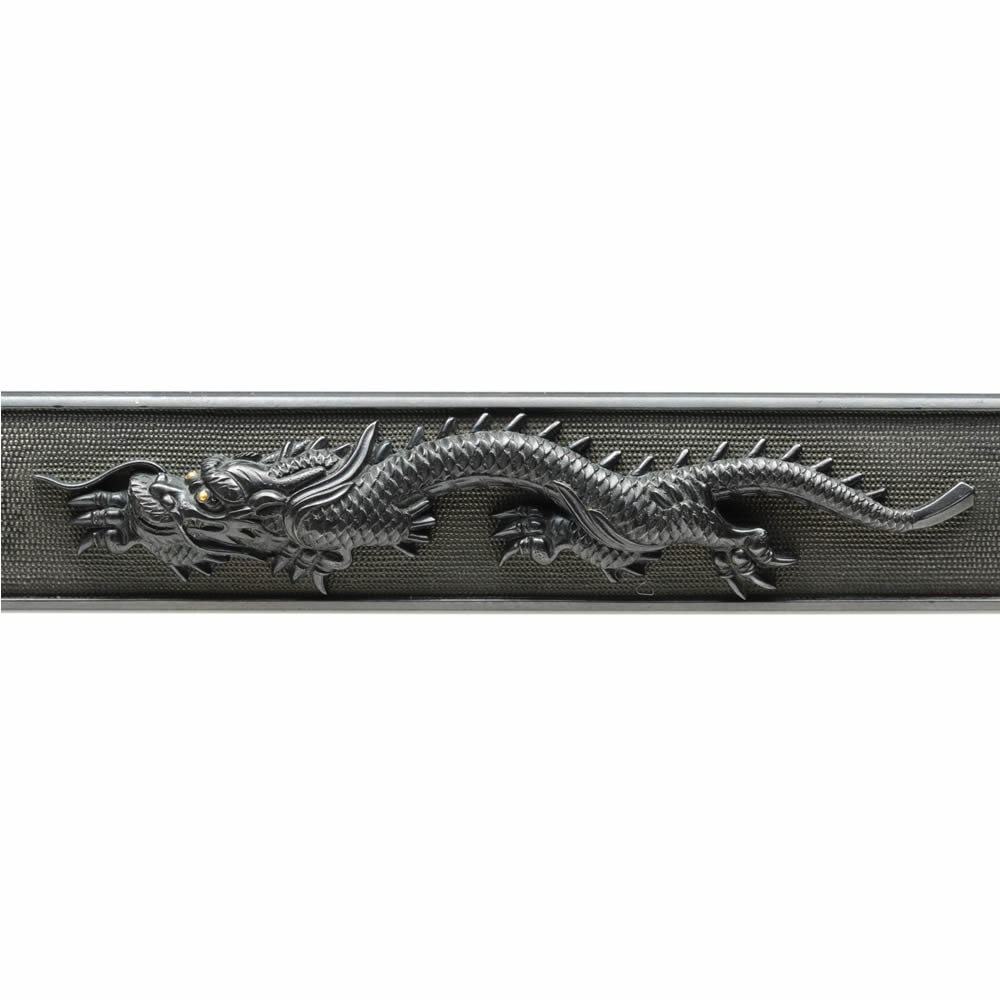
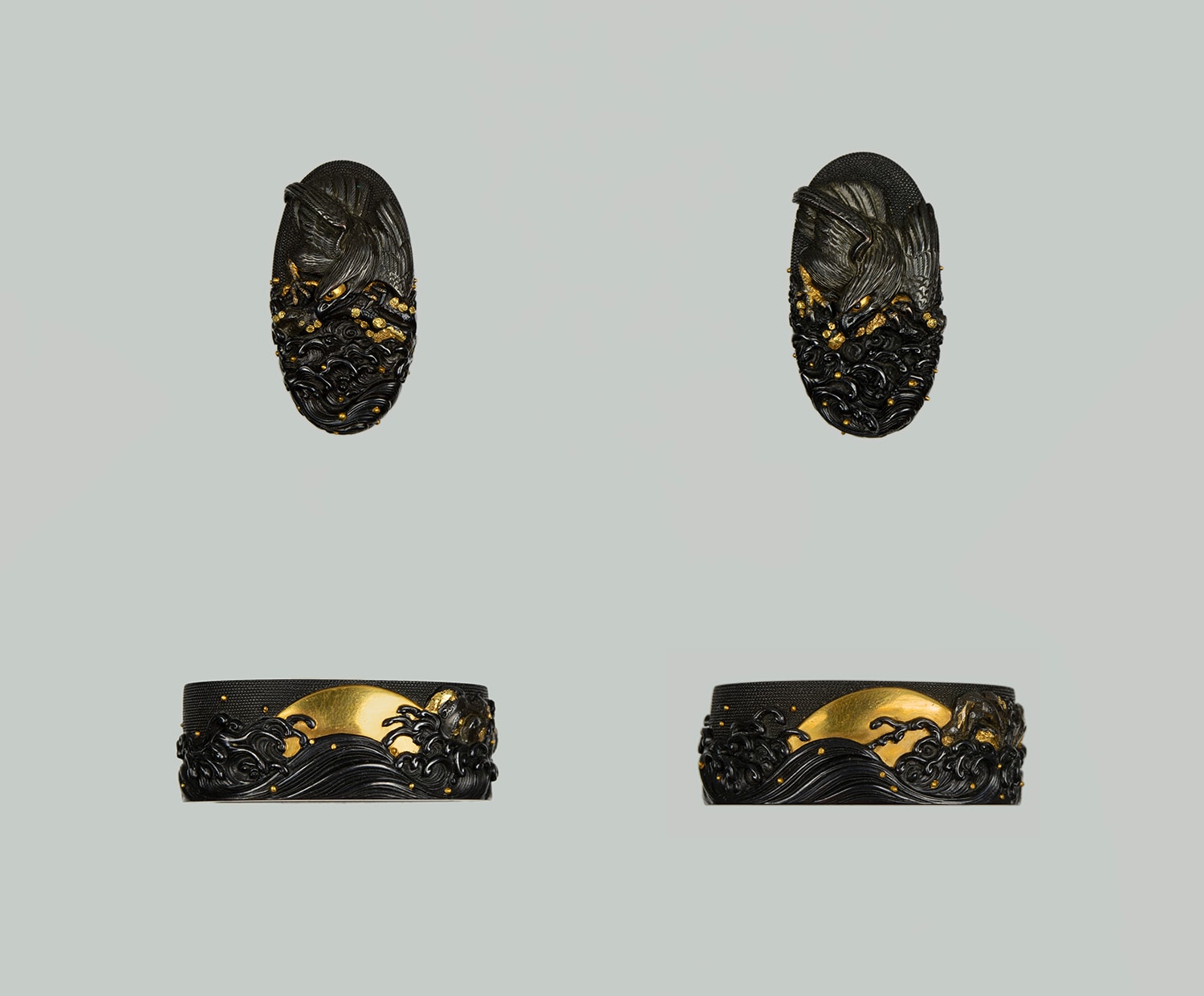
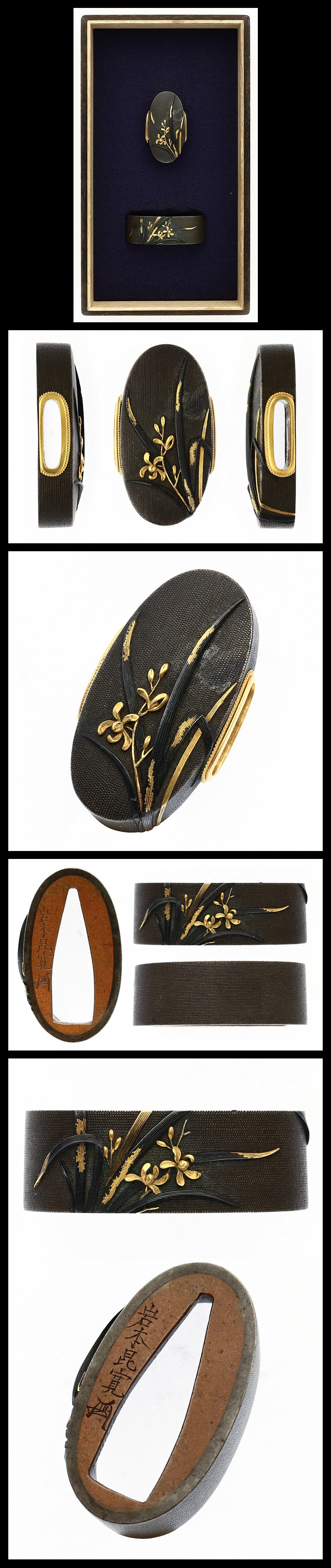
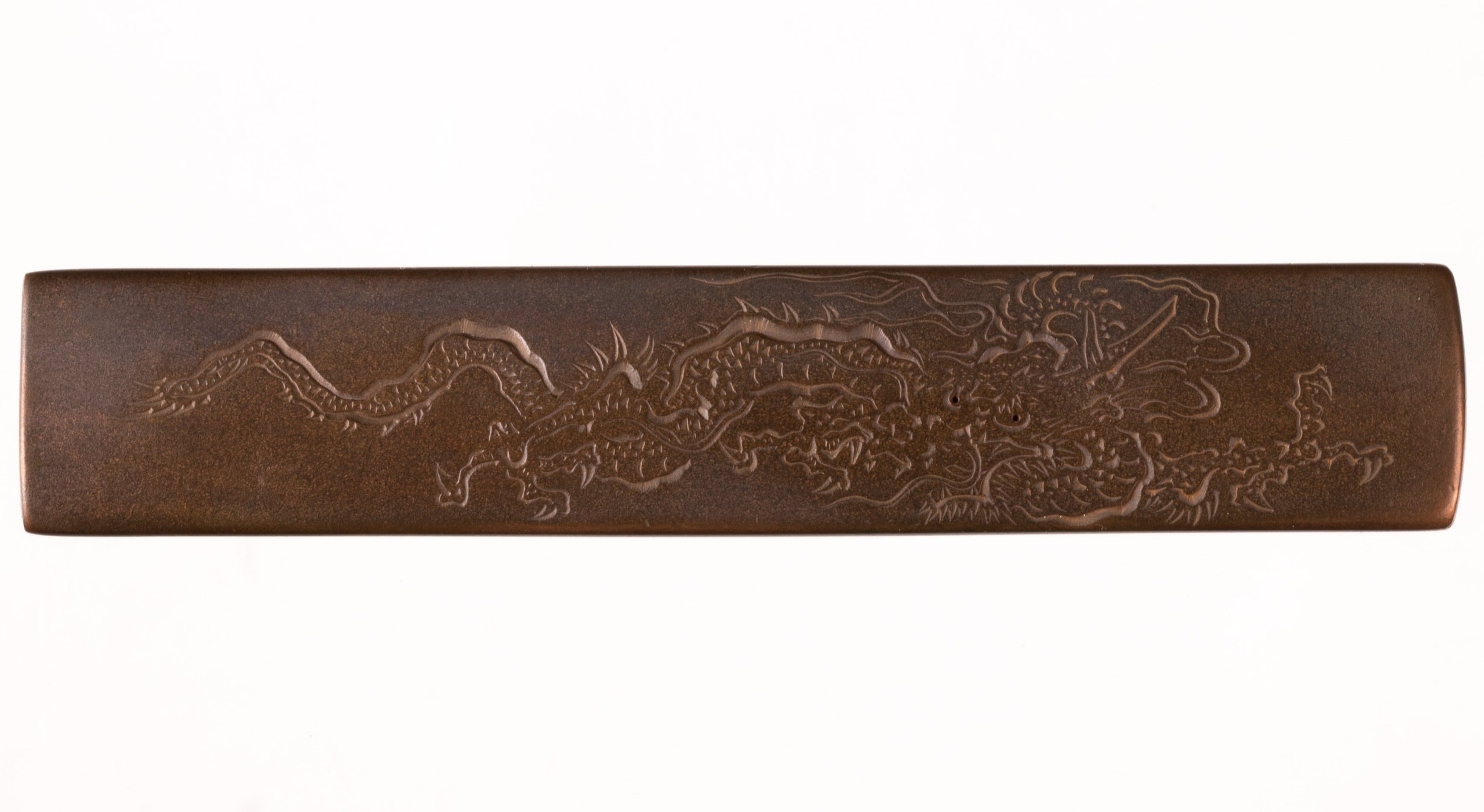
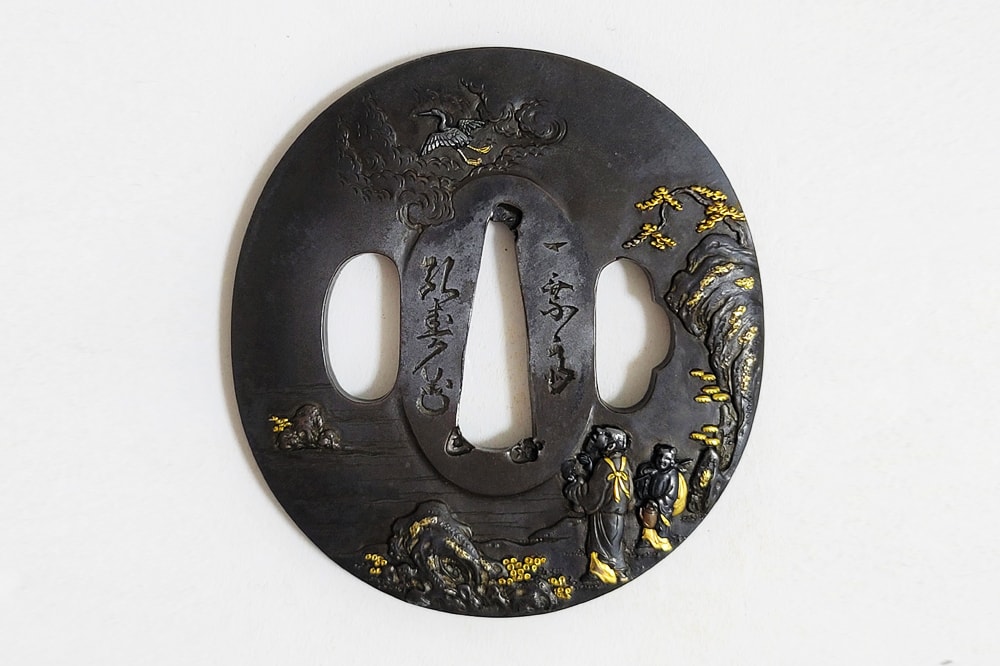
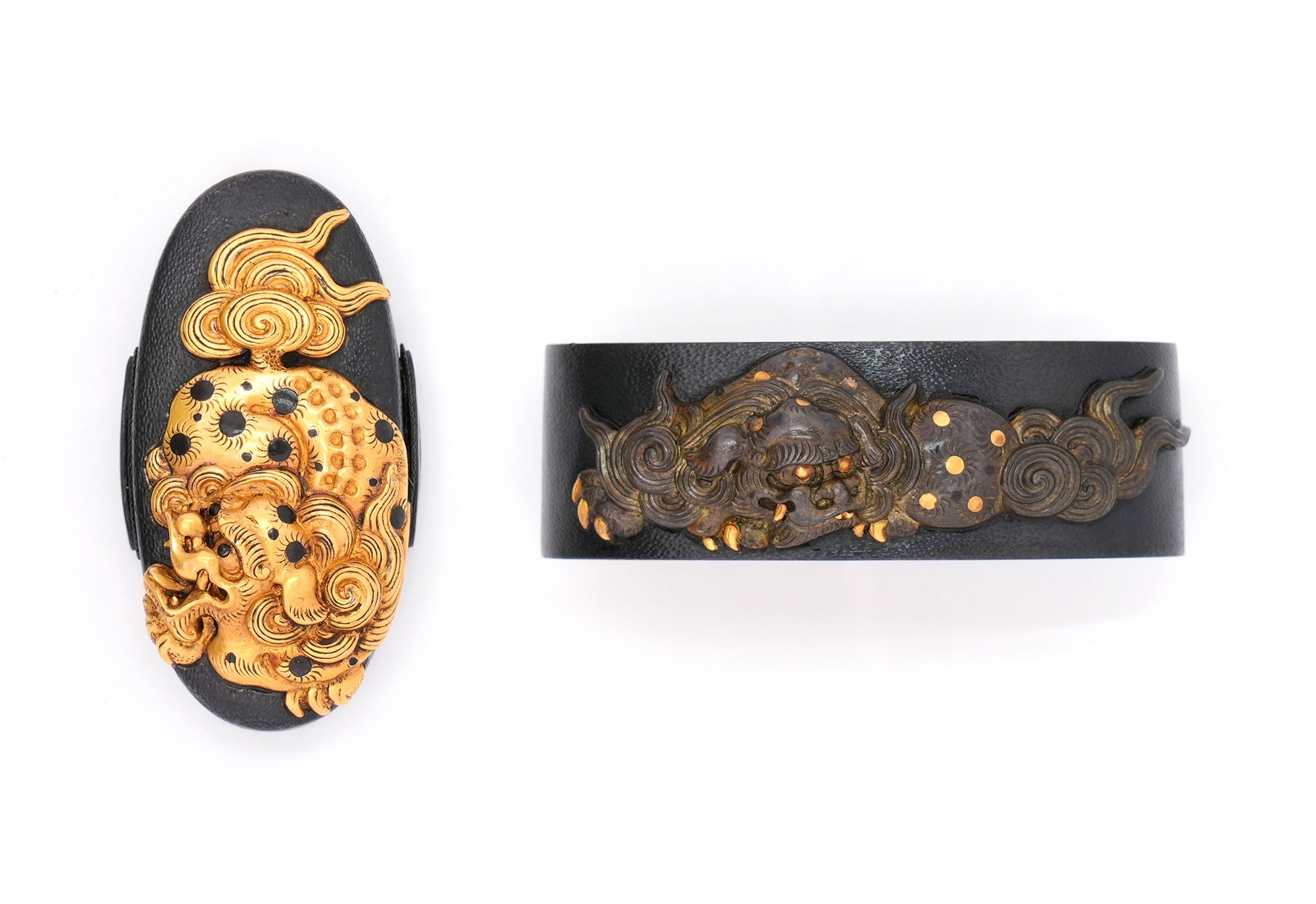
His hand is high relief and katabori enriched with gold, silver, and iro-e, inlay and applied ; he commands and katakiri-bori, and engraves haiku in fine hairline on the reverse, the cat-scratch file finish often seen in this school.

Themes (figural)

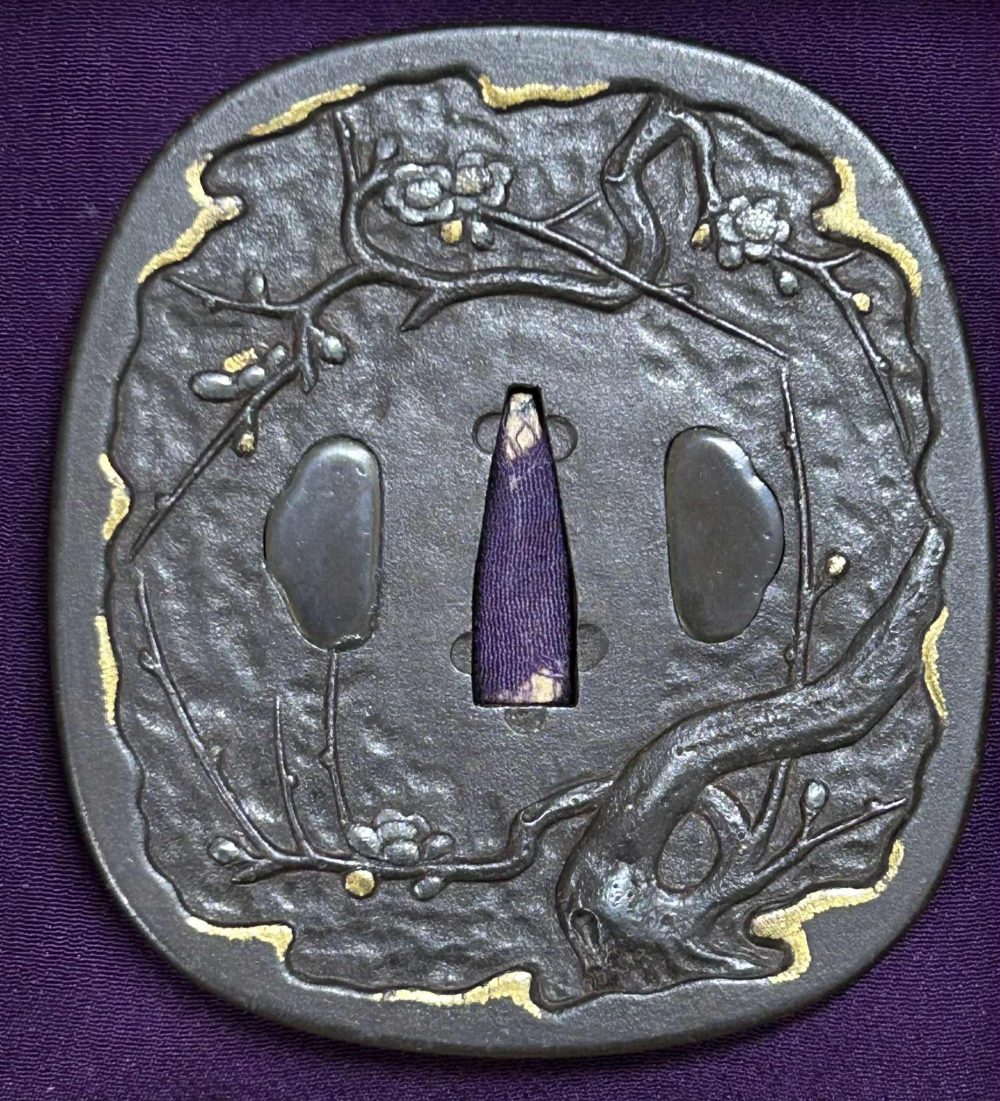
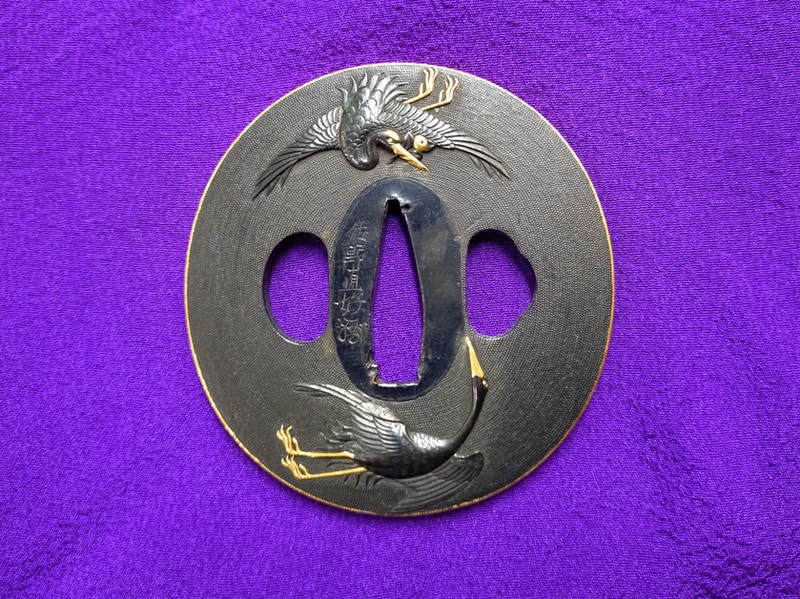
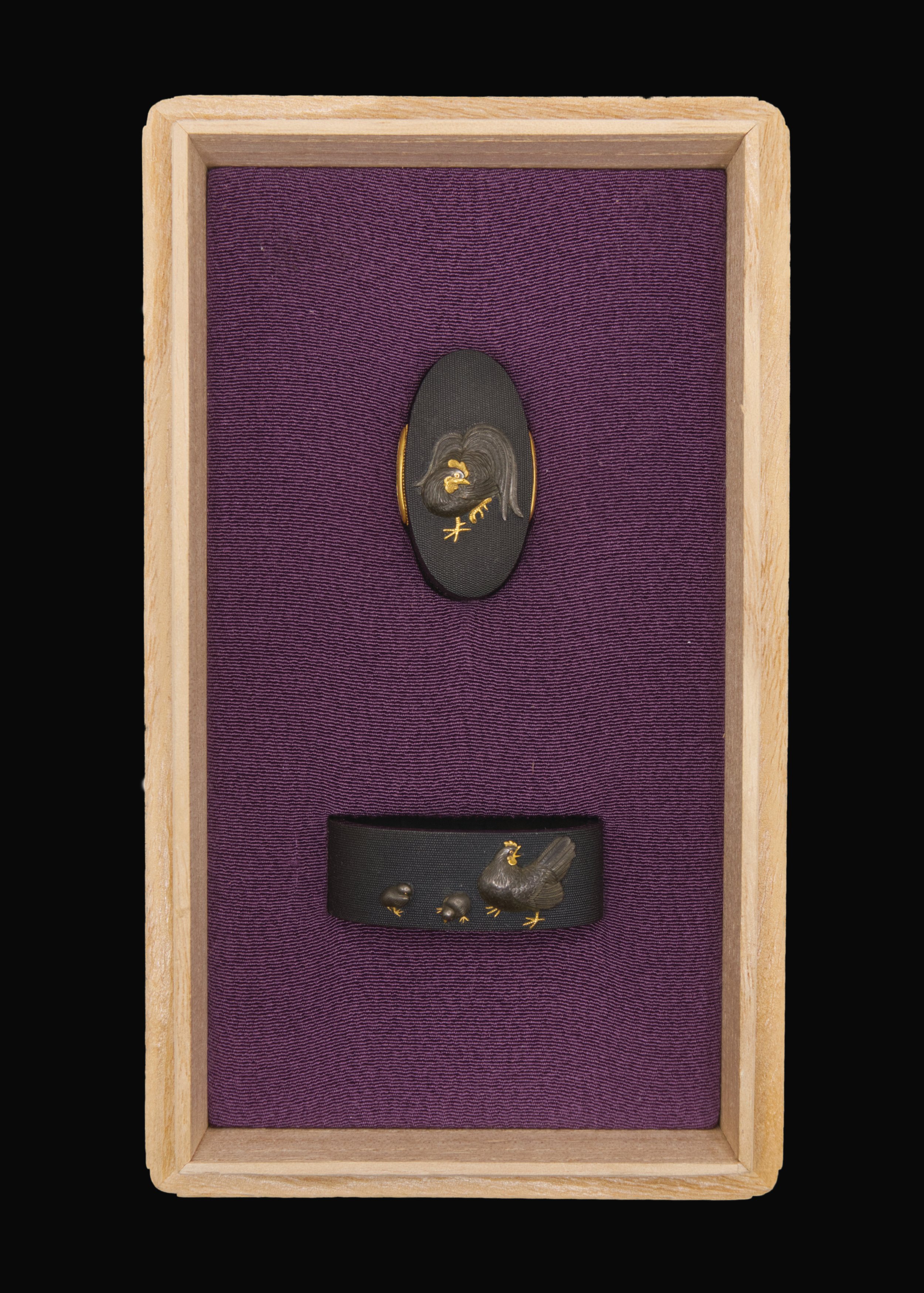
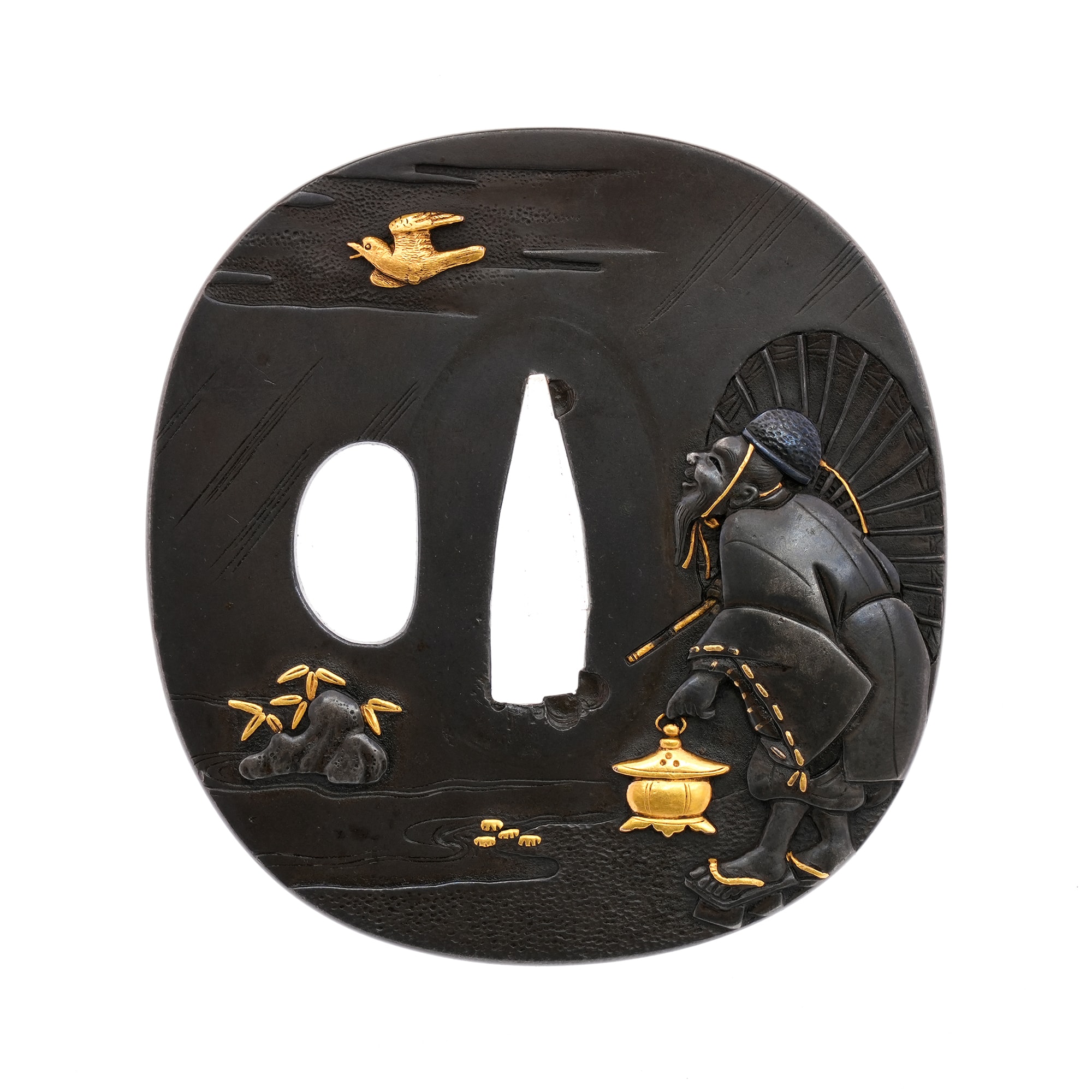
His subjects are figural above all, the Chinese sages and immortals his favoured matter handled in his teacher's gentle -taste manner: the toad-immortal Gama and Tekkai, Choka-ro of the three immortals, the longevity god Jurojin, the Twenty-Four Filial Exemplars, Wasei with crane and plum, and guardian Nio. The tiger, a subject of the carvers before him, is given a powerful high relief; geese, plum and pine round out his repertoire.

Sages, immortals and figures

Chinese immortals and sages above all, gently treated: Gama and Tekkai, Choka-ro, Wasei, the longevity god Jurojin, the filial exemplars, and Nio guardians.

Birds, plants and landscapeless firmly established

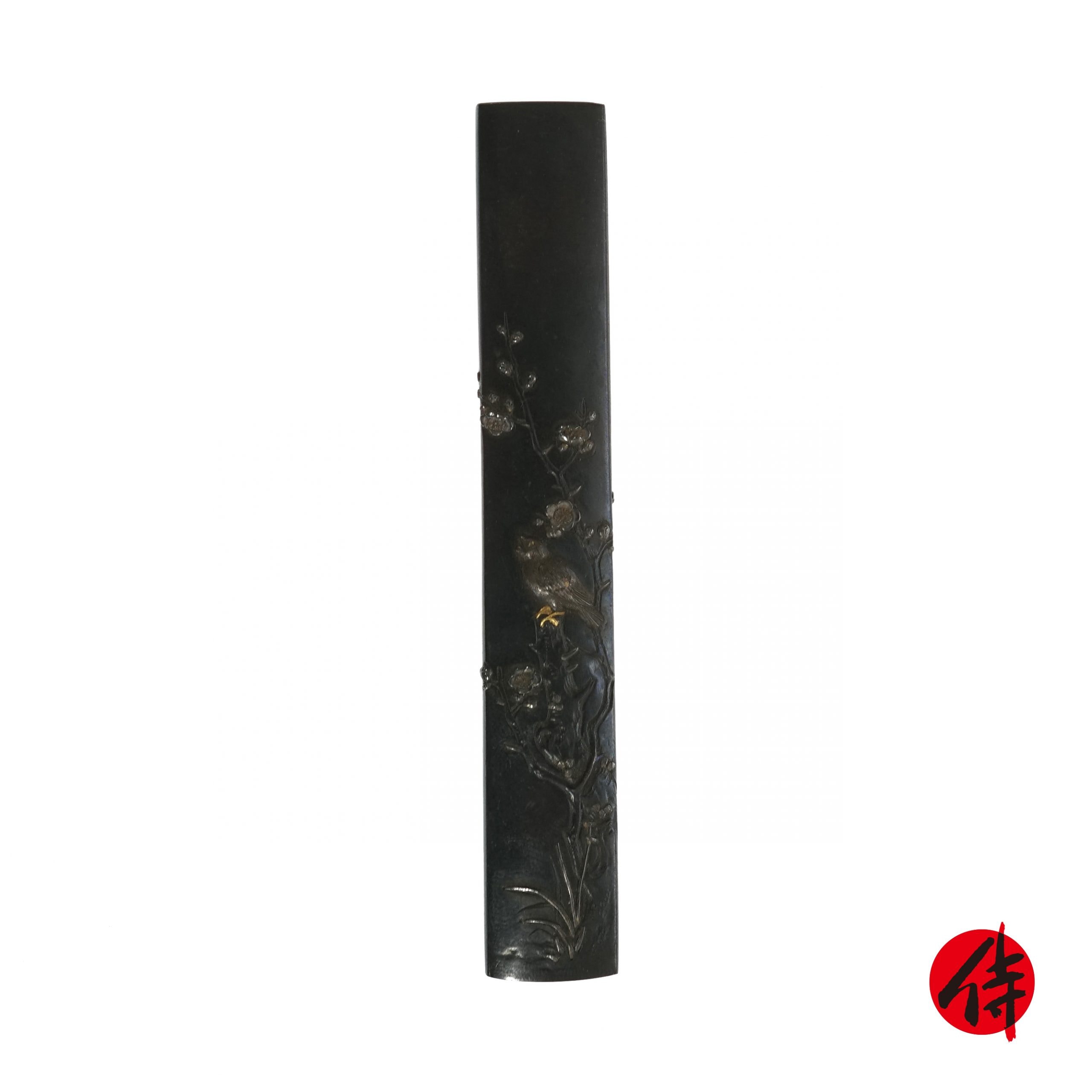
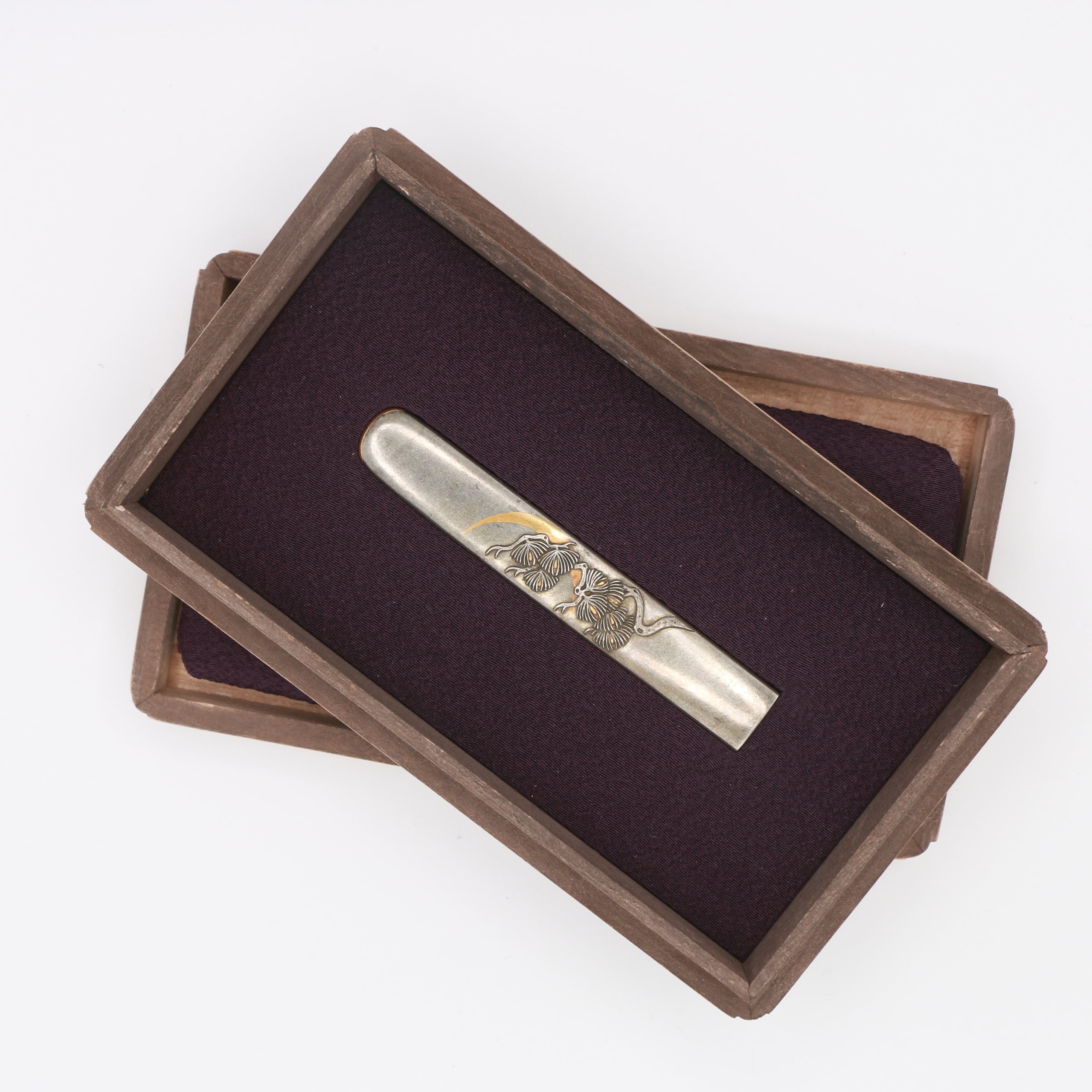
Geese, plum, cherry, bamboo, pine and landscape, with Mt , set as accompaniment to his figures or as quiet seasonal subjects on his ko-dogu.

松matsu
Full iconography

Signature chronology

Placement
Recorded signatures

Documentary note

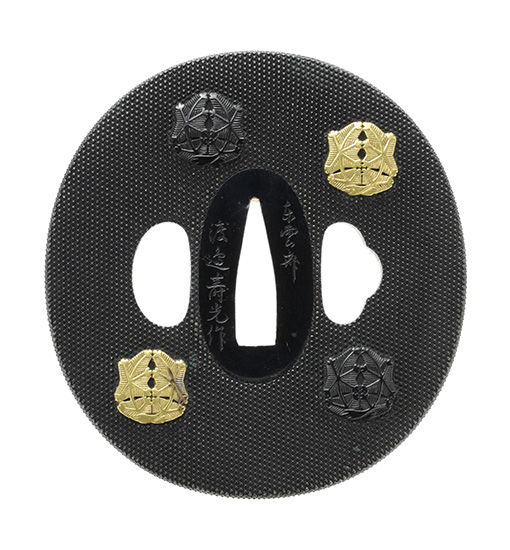
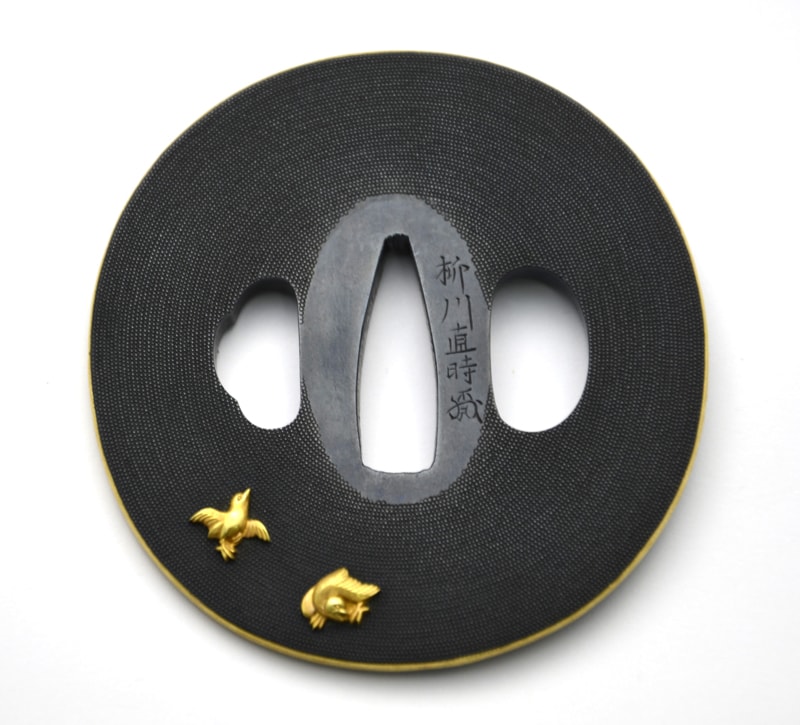
Toshiyoshi signs the two characters Toshiyoshi (寿良), most often with the go Koso prefixed (Koso Toshiyoshi) or abbreviated to So (So-Toshiyoshi), adding a or one of the made-marks 製/制/生/造之; carry the bare split Toshi- (寿・良) , and one bears the kana-mixed phonetic Toshiyoshi (とし良). His family name appears as Shibahara (柴原, also written 紫原) under the Fujiwara clan name, and the biography recites his further go Seijo, Koso and Ryugansai, which are not signatures in this group. Distinguish his pieces from the co-signers who appear with him: the -lacquerer Hashimoto Ichizo (Hashi-), the -maker Oishi Akichika of the Kono Haruaki line, and above all Koryusai Fukawa Kazunori, a separate metalwork artist whose 蛟龍斎 signature on shared is not Toshiyoshi's hand.

Scholarship

His manner faithfully continues the witty Edo-taste technique of his teacher Kiyotoshi.

His work belongs to the Toryusai school and is praised as the height of Edo-taste chic.

Designations

Kokuhō—
Jūyō Bunkazai—
Jūyō Bijutsuhin—
Gyobutsu—
Tokubetsu Jūyō—
Jūyō Tōken15

Elite Standing

0.10 across 15 designated works

Top 13% among makers

Work Types

Distribution across 15 ranked works

Other
640%
Tsuba
427%
Menuki
213%
Kozuka
213%
Mitokoromono
17%

Signatures

Signature types across 15 ranked works

Currently Available

Lineage

TeacherKiyotoshi
Toshiyoshi

Toryusai School

Other artisans of the Toryusai school

  1. 1.Kiyotoshi清寿40designated
  2. 2.Kiyoshige清重5designated
  3. 3.Yoshitsugu良次1 for sale4designated
  4. 4.Okada Setsuga岡田雪峨1designated
  5. 5.Toshinori寿矩1 for sale2designated

Toshiyoshi

Toshiyoshi(寿良) was a maker of Japanese sword fittings (tōsōgu) of the Toryusai school in Musashi province, active during the Bakumatsu-Meiji (b.1829, active 1865-1884) period.

The work follows the Machibori tradition.

Designated works by Toshiyoshi include 15 Jūyō.