NihontoWatch MonNihontoWatchBETA
MarketEncyclopedia
NihontoWatch Mon

NihontoWatchBETA

Market
Encyclopedia
Overview·Kantei·Designations·Work Types·Signatures·Lineage·School
OverviewKanteiDesignationsWork TypesSignaturesLineageSchool
  1. Schools
  2. Yokoya
  3. Yanagawa
  4. Toryusai
  5. Kiyoshige

Toryusai Kiyoshige

清重

Jūyō
Vol. 44, No. 184 · Tsuba

Toryusai Kiyoshige

清重

5 ranked works

ProvinceMusashiEraBakumatsu-Meiji (mid-late 19th century)SchoolYokoya>Yanagawa>ToryusaiTraditionMachiboriGeneration2nd gen (successor)TeacherKiyotoshiSpecialtiestsuba, inlayTypeTosogu MakerCodeKON019
5Jūyō Tōken

Overview

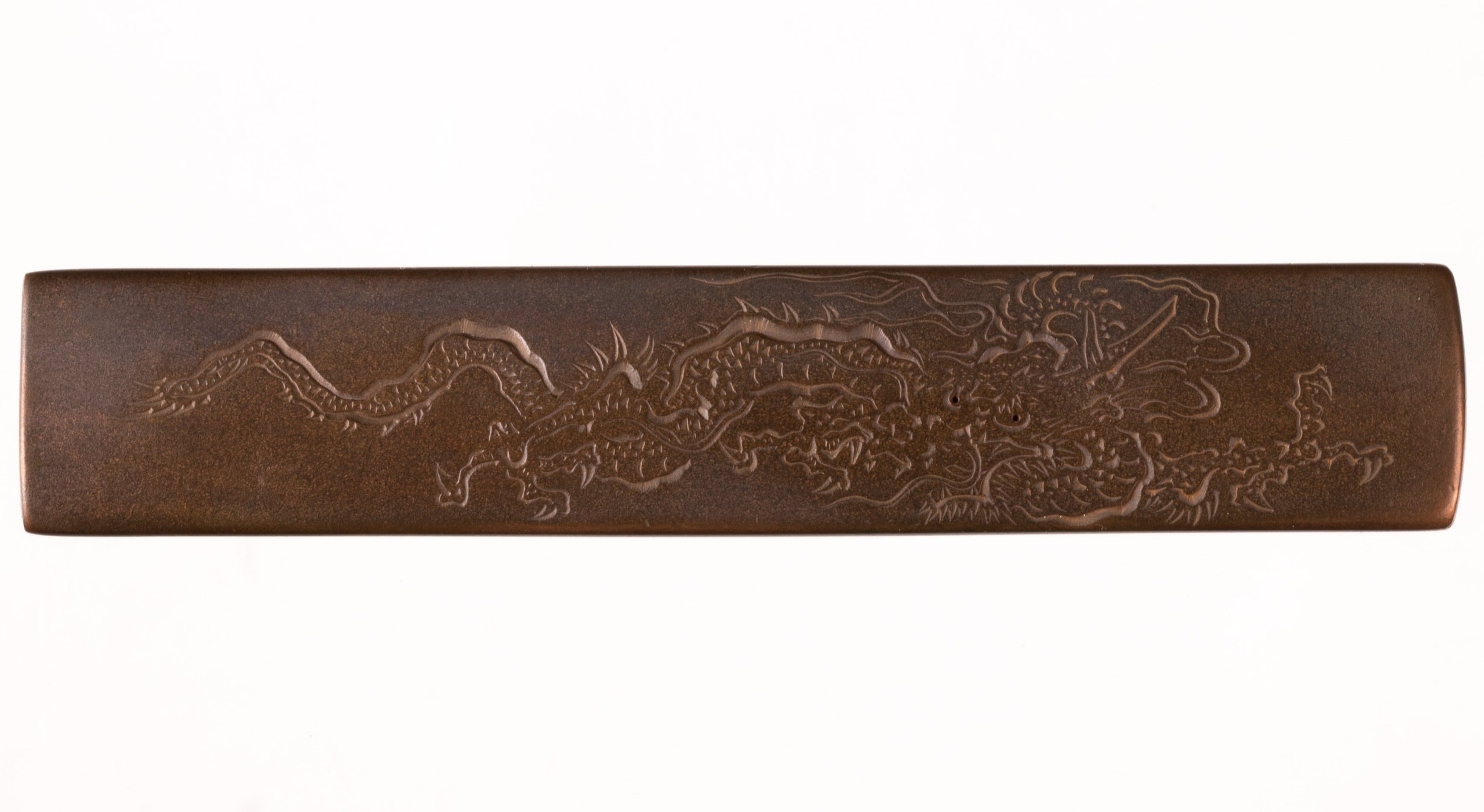
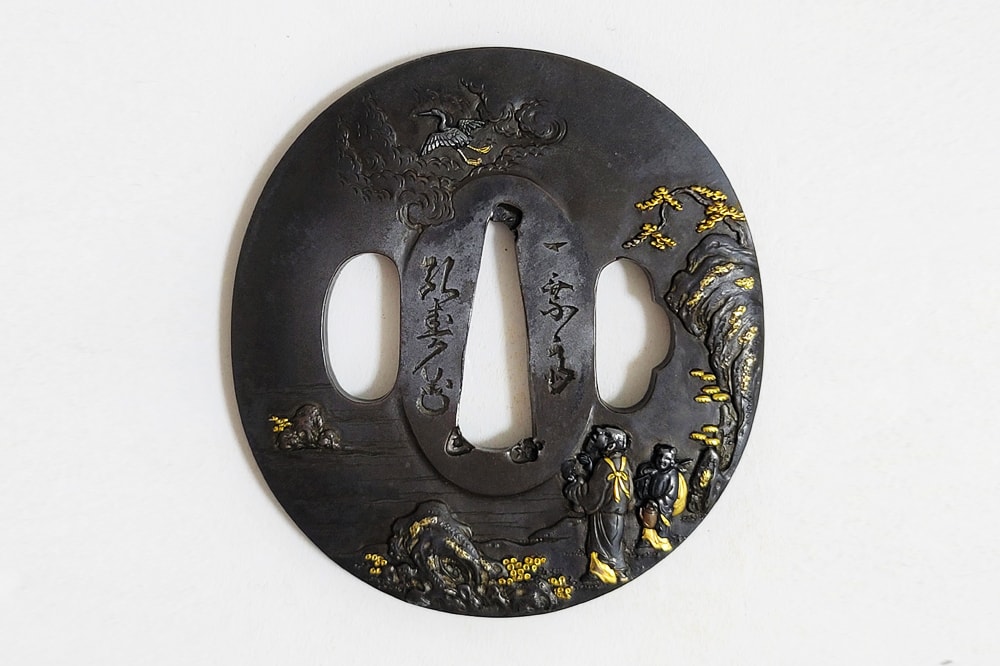
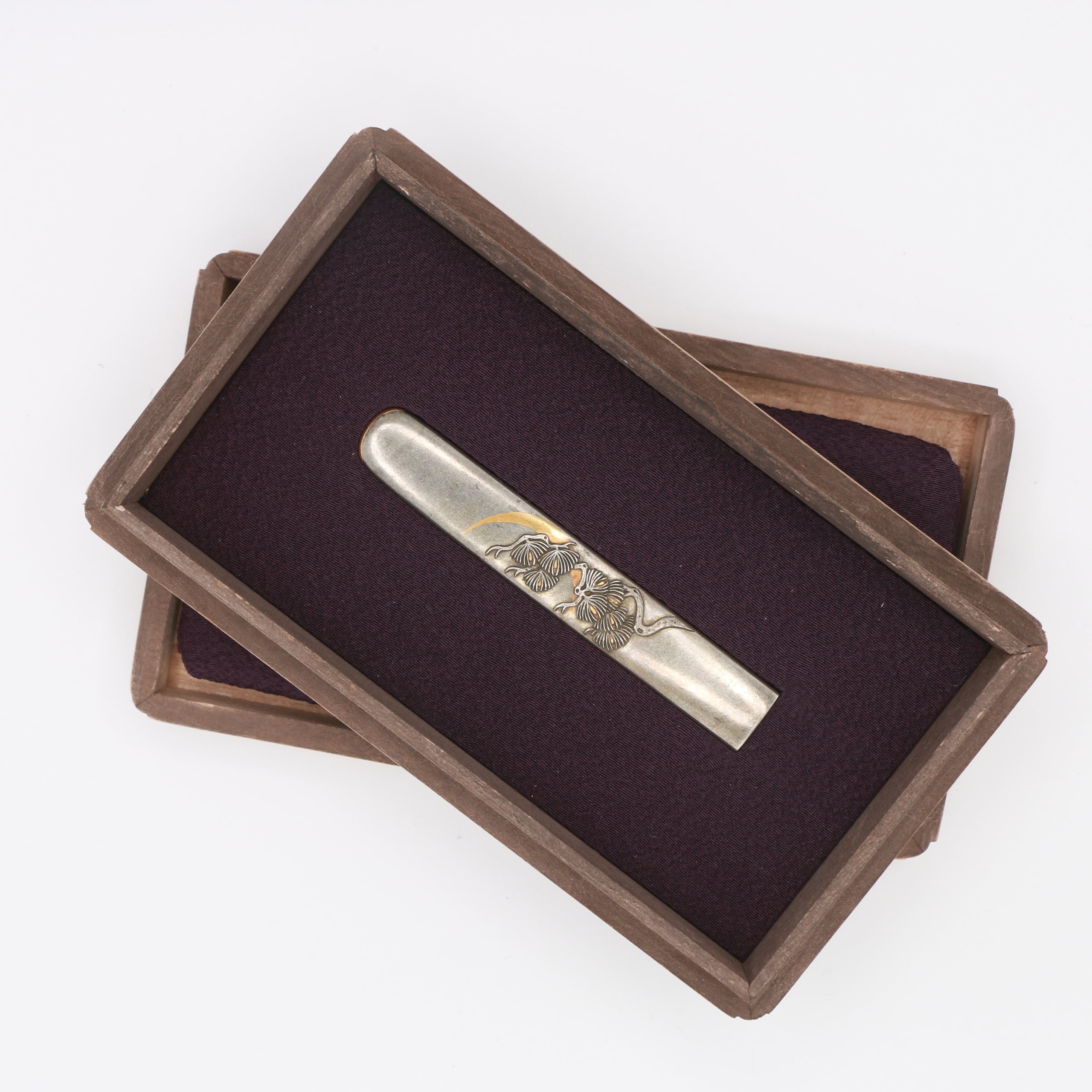
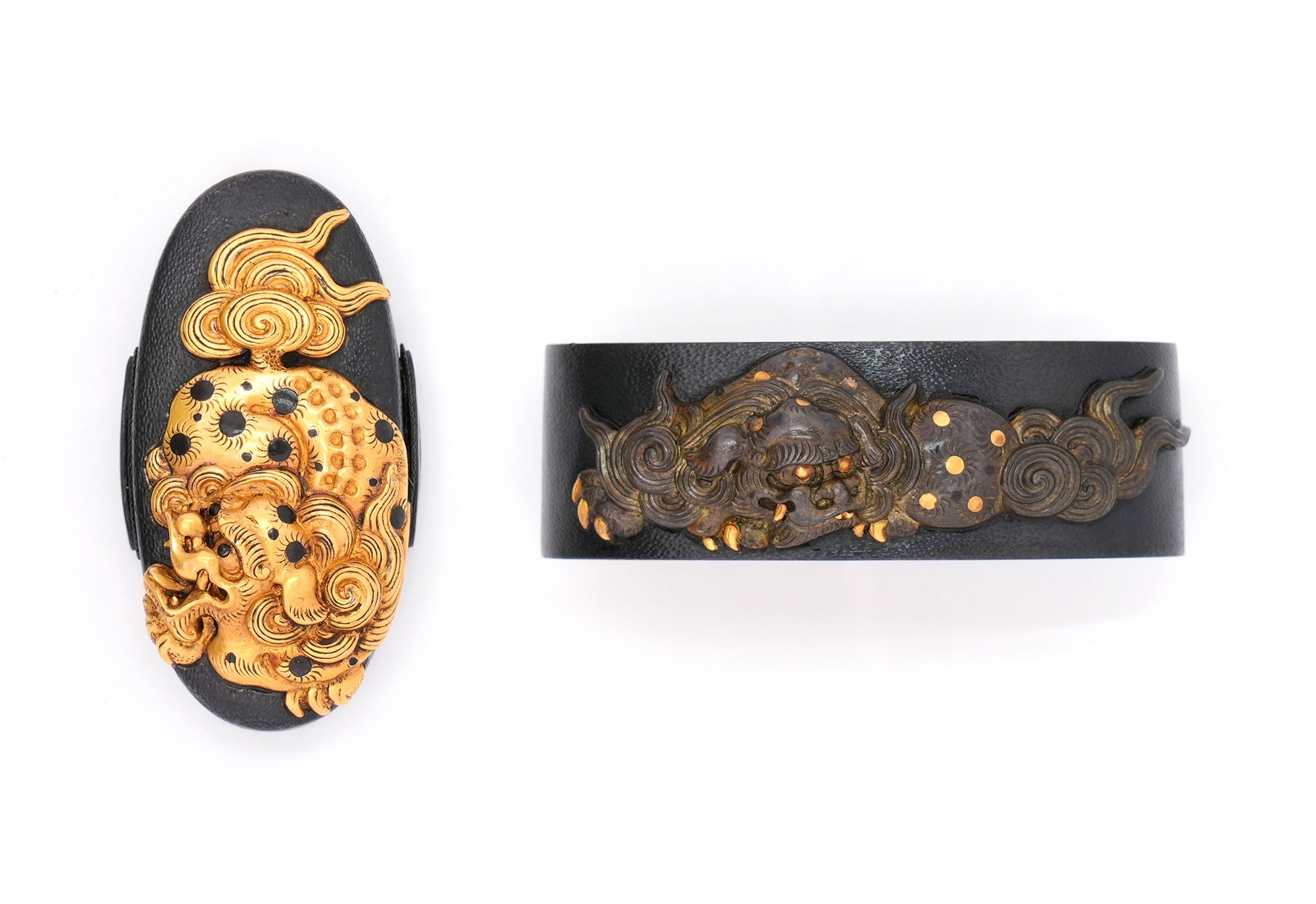
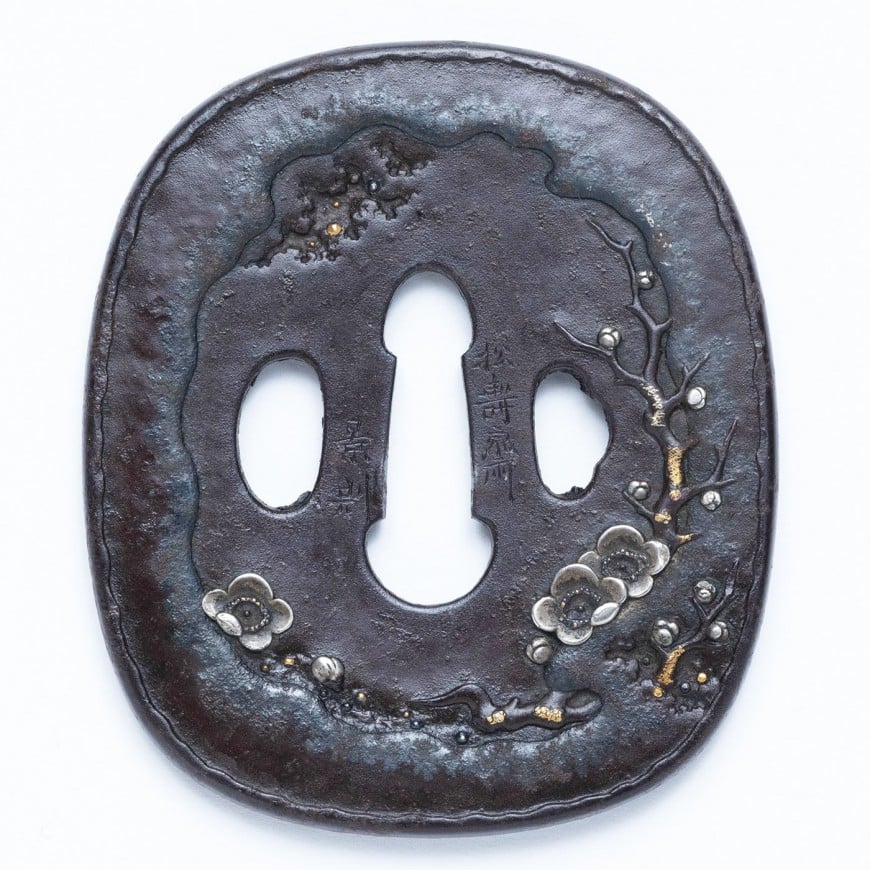
Kiyoshige was the adopted son of Tanaka Seijū, founder of the Tōryūsai lineage, and succeeded as the second generation of that name. His common name (tsūshō) was Minomatsu. While still young he was elevated to the Buddhist honorary rank of Hōkyō, and he was permitted the art name Seiu. Active during the late period, Kiyoshige occupied a central position within the Tōryūsai school, working alongside Katsumi — himself a gifted disciple of Seijū — with whom he executed collaborative pieces of the highest order. Together they represent the mature flowering of the Tōryūsai tradition as it had been transmitted from its founder.

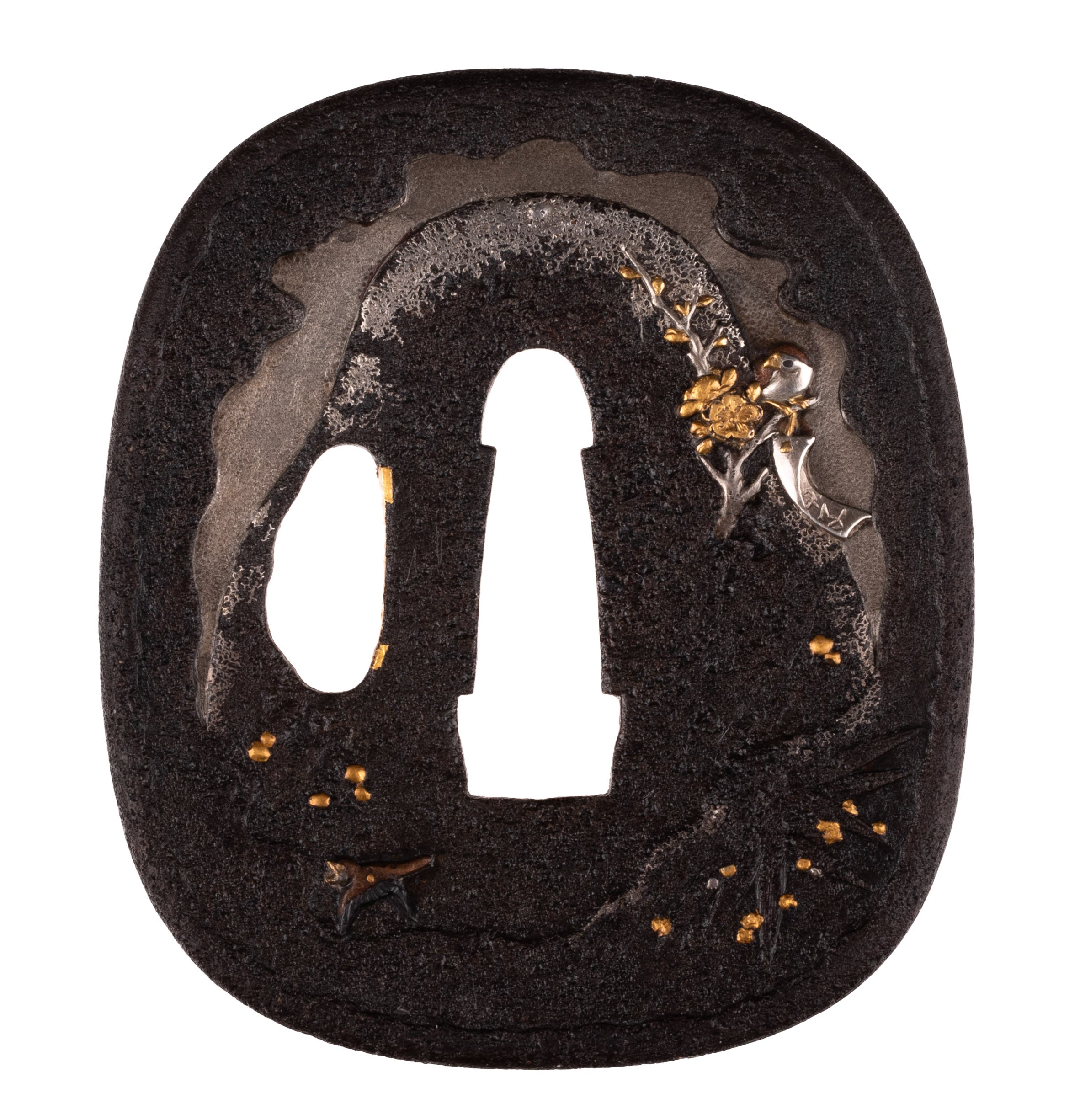
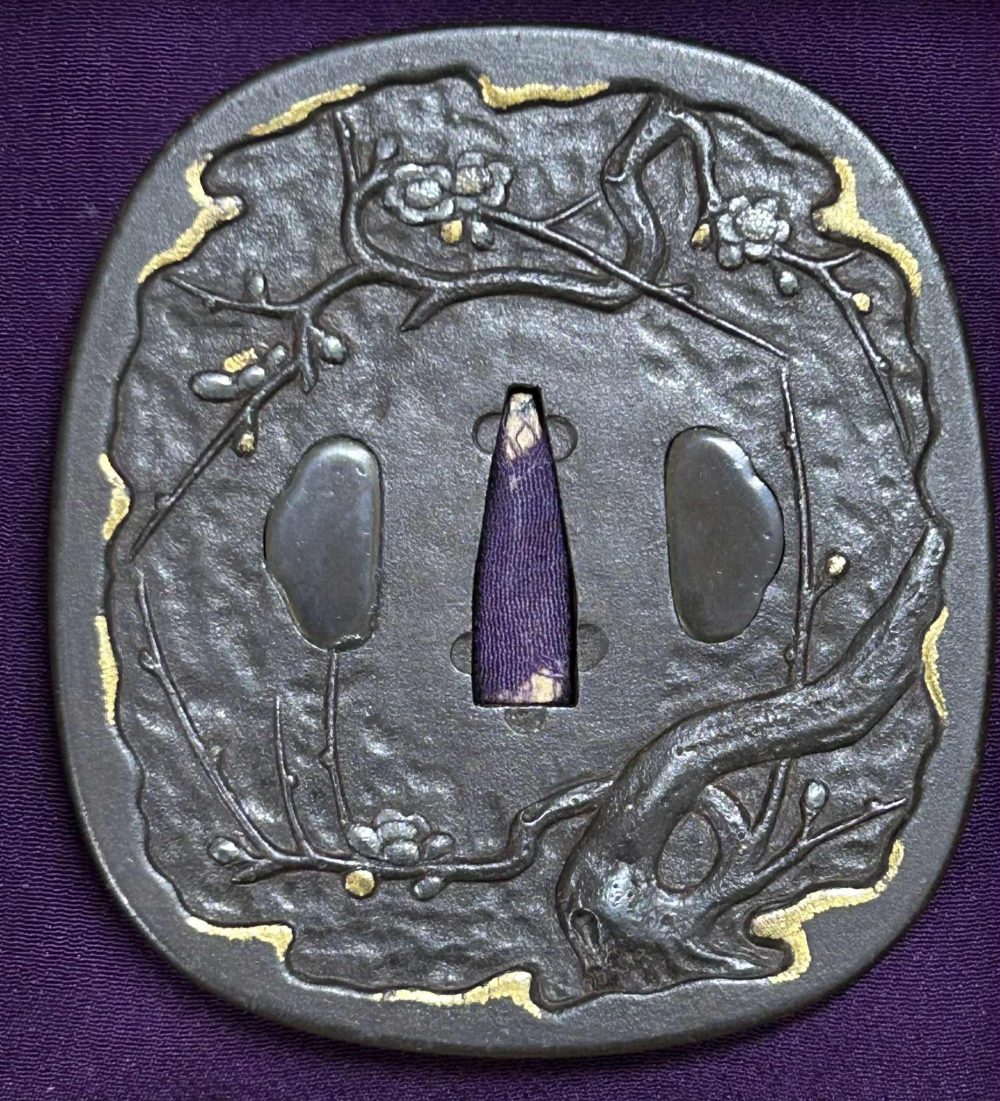
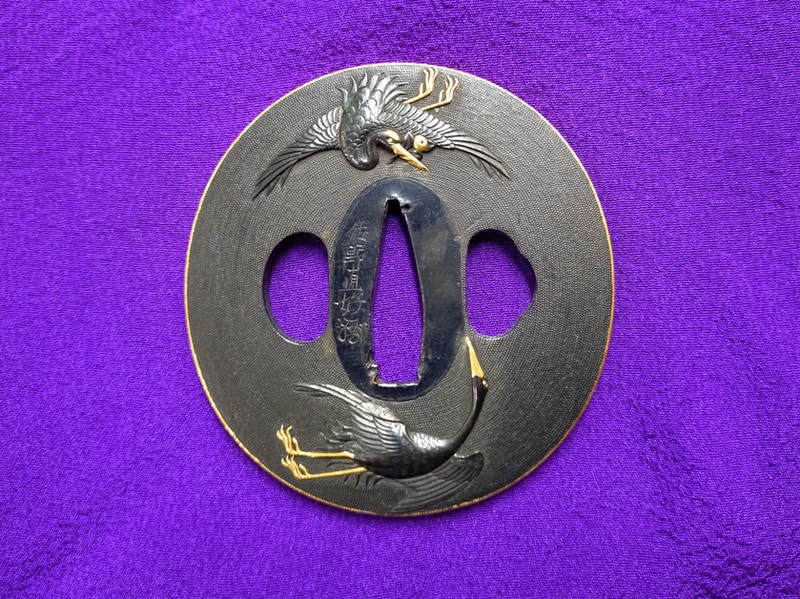
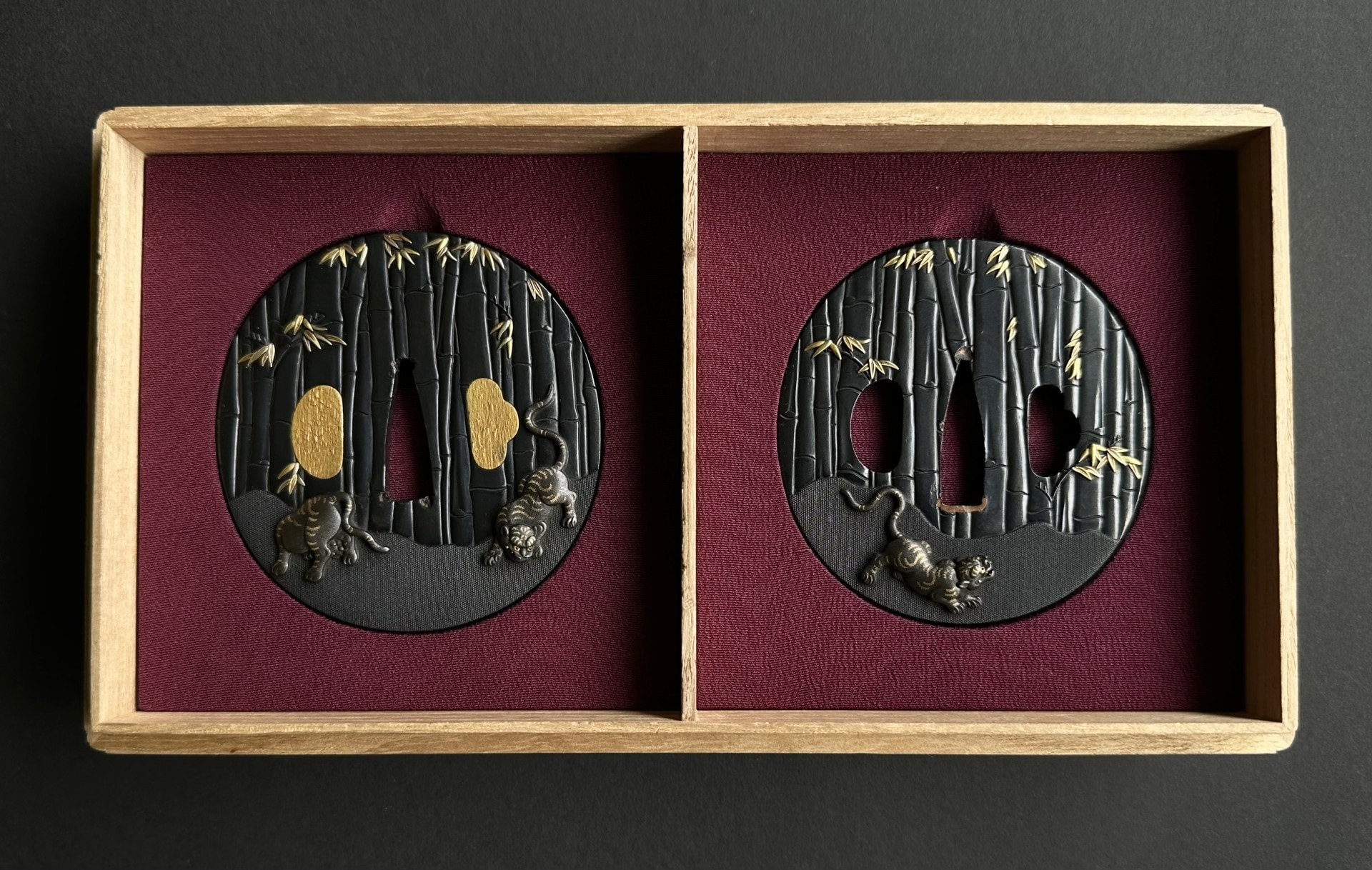
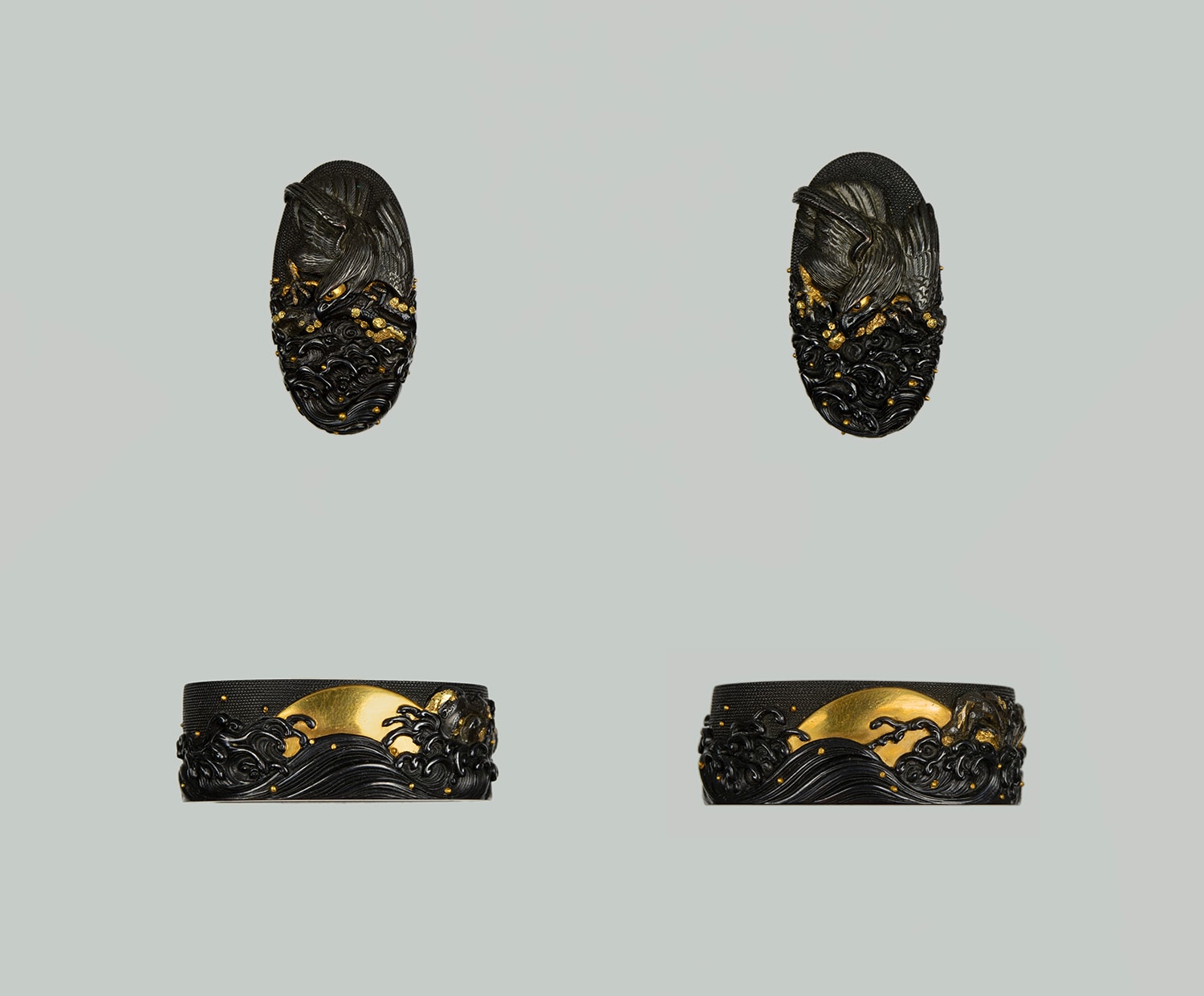
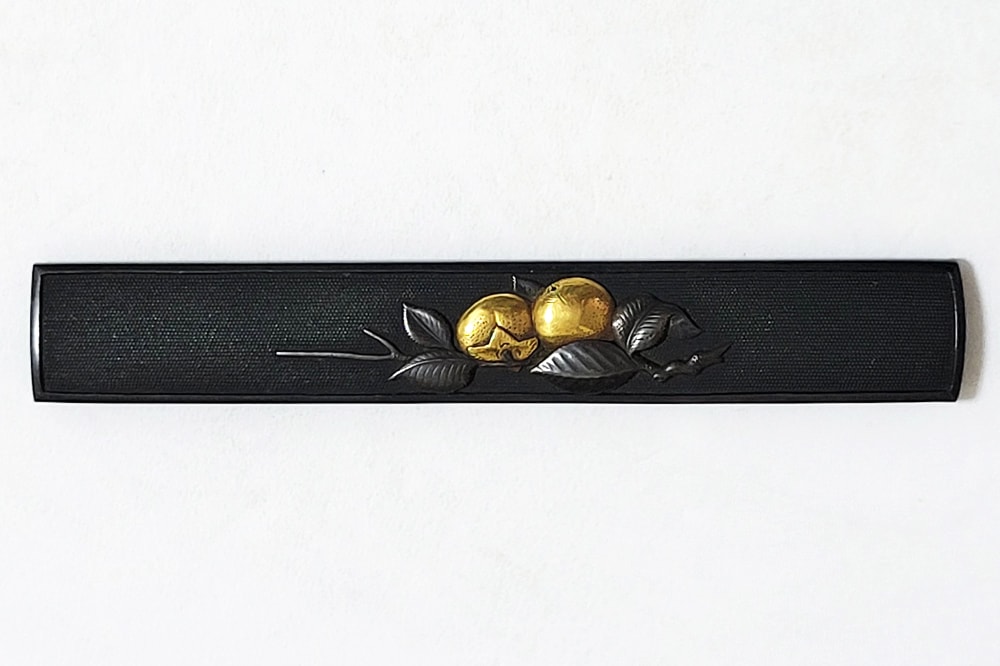
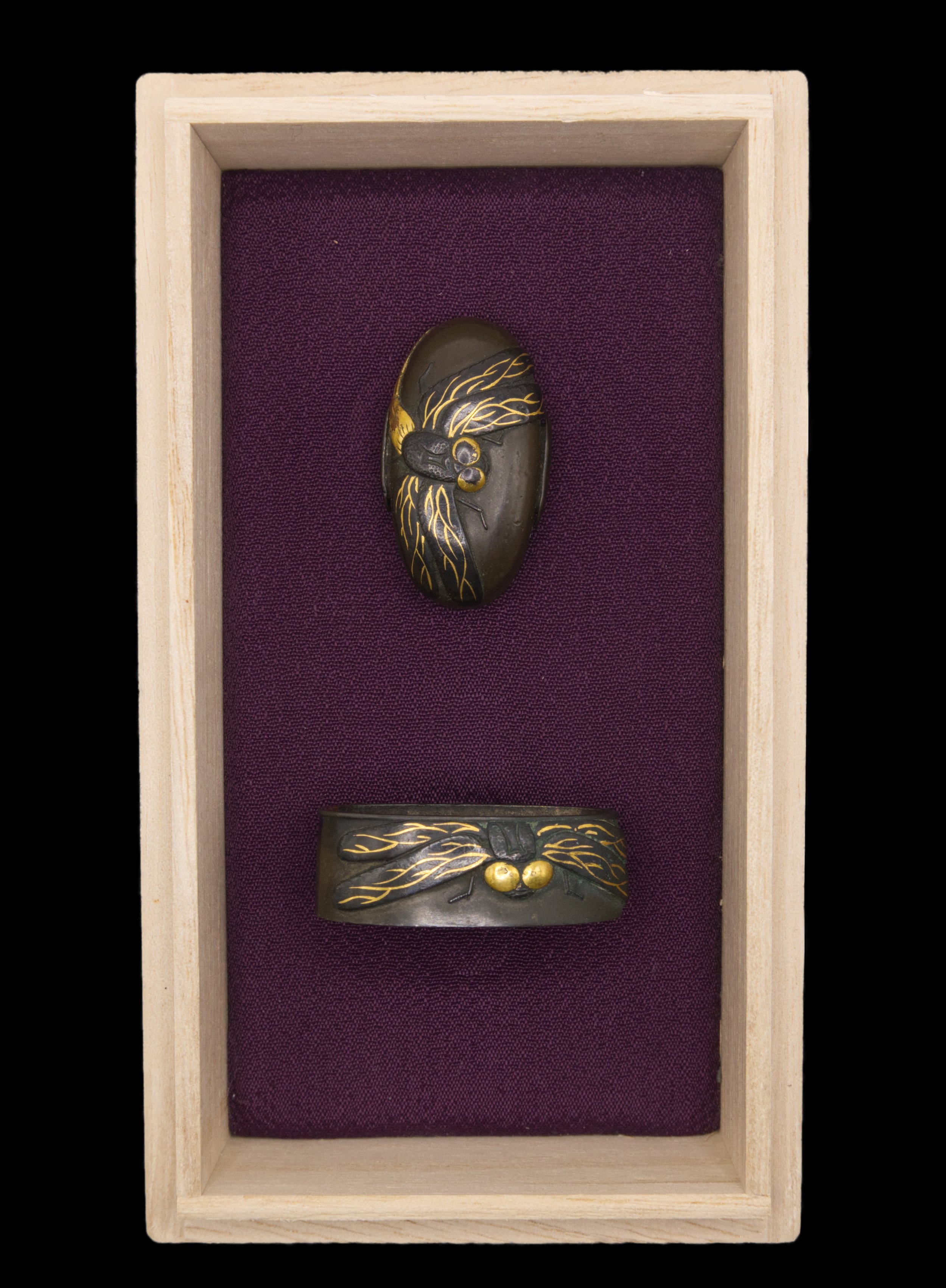
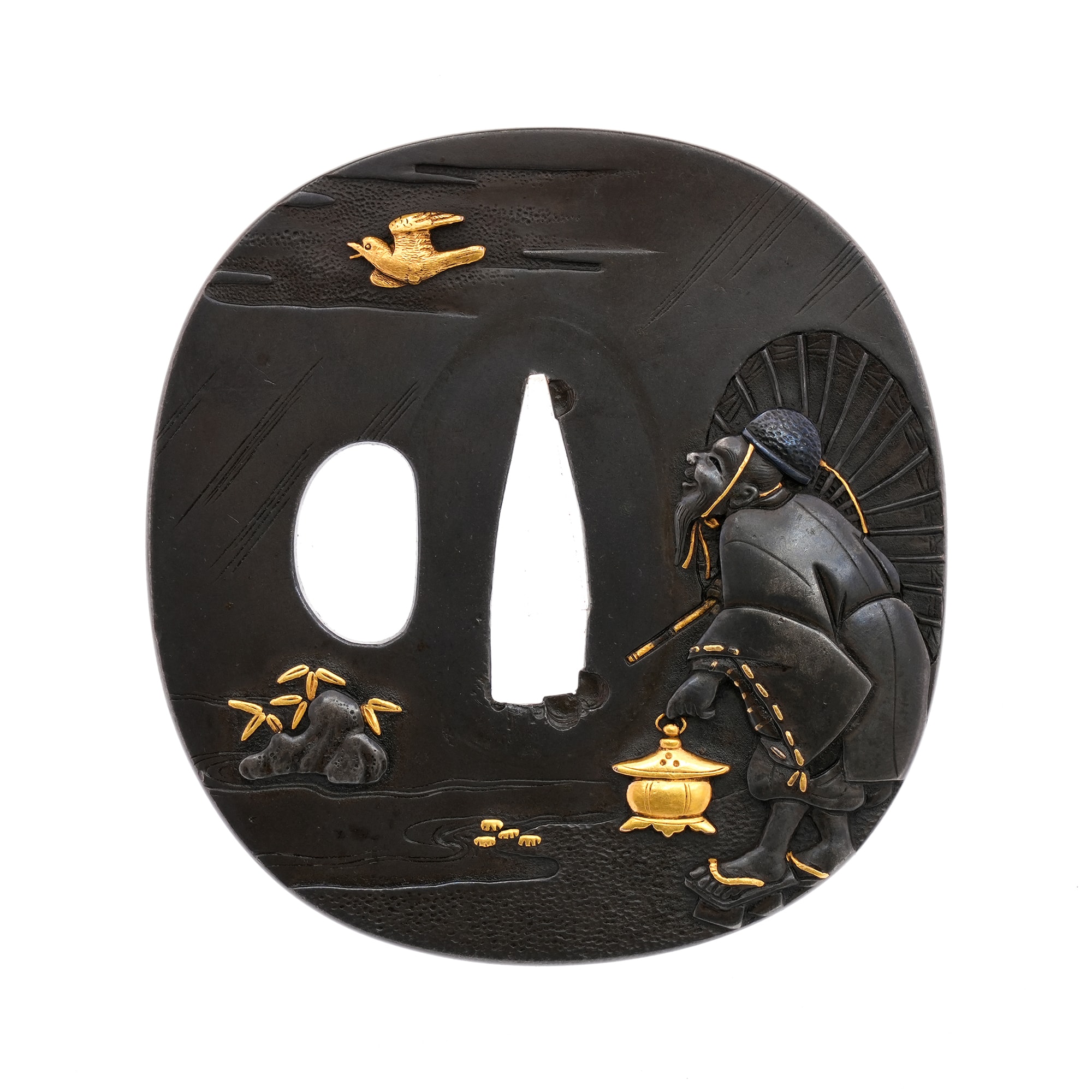
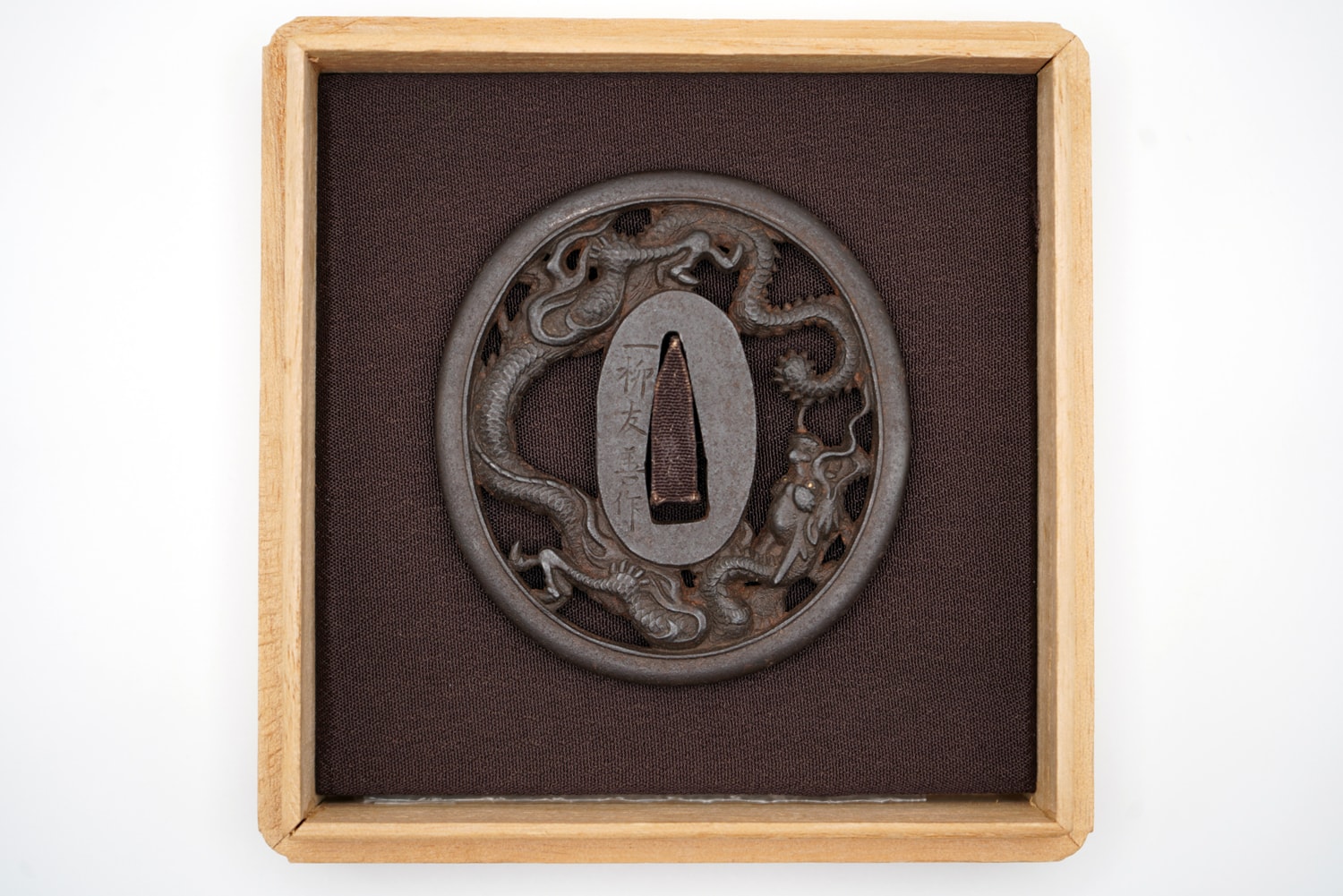
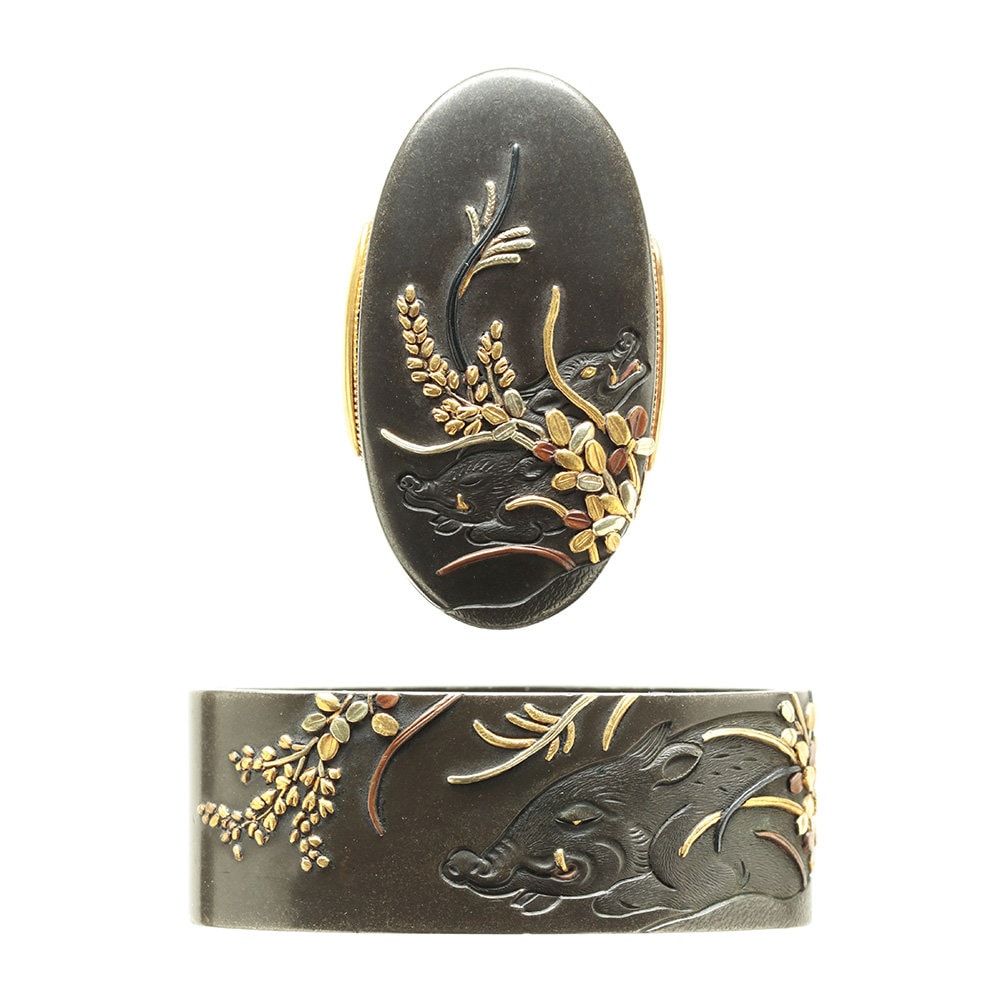
Kiyoshige's technical vocabulary was rooted in the school's signature command of with polychrome , yet he distinguished himself through an exceptional capacity for volumetric modeling. His yōbori carving, approaching fully sculptural , displays what the characterizes as outstanding "placement of flesh" () — a superior sense of mass and bodily modeling — while the chisel work is effective into every corner. In his , straightforward, forthright and the skillful use of various colored metals create strongly contrasted, animated pictorial fields, with spacious compositions making effective use of open ground and finely sprinkled . In composition, carving, and coloring alike, the workmanship is careful and precise throughout.

The judges Kiyoshige's finest works as attaining a level comparable even to that of his master. His solid-gold of Shō-Kannon Bosatsu, carved with such pronounced volume that the figure appears almost as , is singled out as a piece of exceptionally elevated character — the finest among his surviving oeuvre. His collaborative with Katsumi constitutes valuable material for the study of the Tōryūsai school, clearly demonstrating the firmly grounded, advanced technique of both makers. Given that extant works by Kiyoshige are few, each designated example carries particular weight as testimony to the technical and artistic achievements of the Tōryūsai line.
Kantei

3 descriptive axes: material (a full kinko palette, shakudo nanako and polished shibuichi grounds prominent, with gold-foundation menuki and iron tsuba in the school manner) x technique (high relief and katabori with iro-e inlay, sukidashi-takabori, the school nanako and gold colour) x themes (figural and auspicious, in his father-teacher Kiyotoshi's Edo-taste manner). Because he so closely continues Kiyotoshi, the corpus of five offers few personal stylistic separators from his master; the defensible discriminator is his own go Seiu, and his defining identity is documentary, the adopted son who carried on the line as its second head.

Kiyoshige, common name Minomatsu and go Seiu, was the adopted son of Tanaka Kiyotoshi, the founder of the Toryusai school of bakumatsu metalwork, and succeeded him as the second-generation head of that line; he was raised to the rank of Hokyo, and in his late styles himself the son of the Toryusai Hogen. The records call him a faithful continuator of his teacher's witty, fresh -taste manner, and praise his carving as reaching the level of his master, with figural subjects, auspicious birds and beasts, and the Chinese sages handled in the school idiom. His work is described as scarce, the surviving pieces few, so that he is met chiefly through a handful of fine , and matched fittings.

Diagnostic discriminators

his personal go, given in the setsumei as Seiu and prefixed to a Hokyo-rank signature on a dated Kaei-5 (1852) large-and-small tsuba; it is Kiyoshige's own name and does not occur among his teacher Kiyotoshi's go, so it separates his hand from the school

Material (grounds)

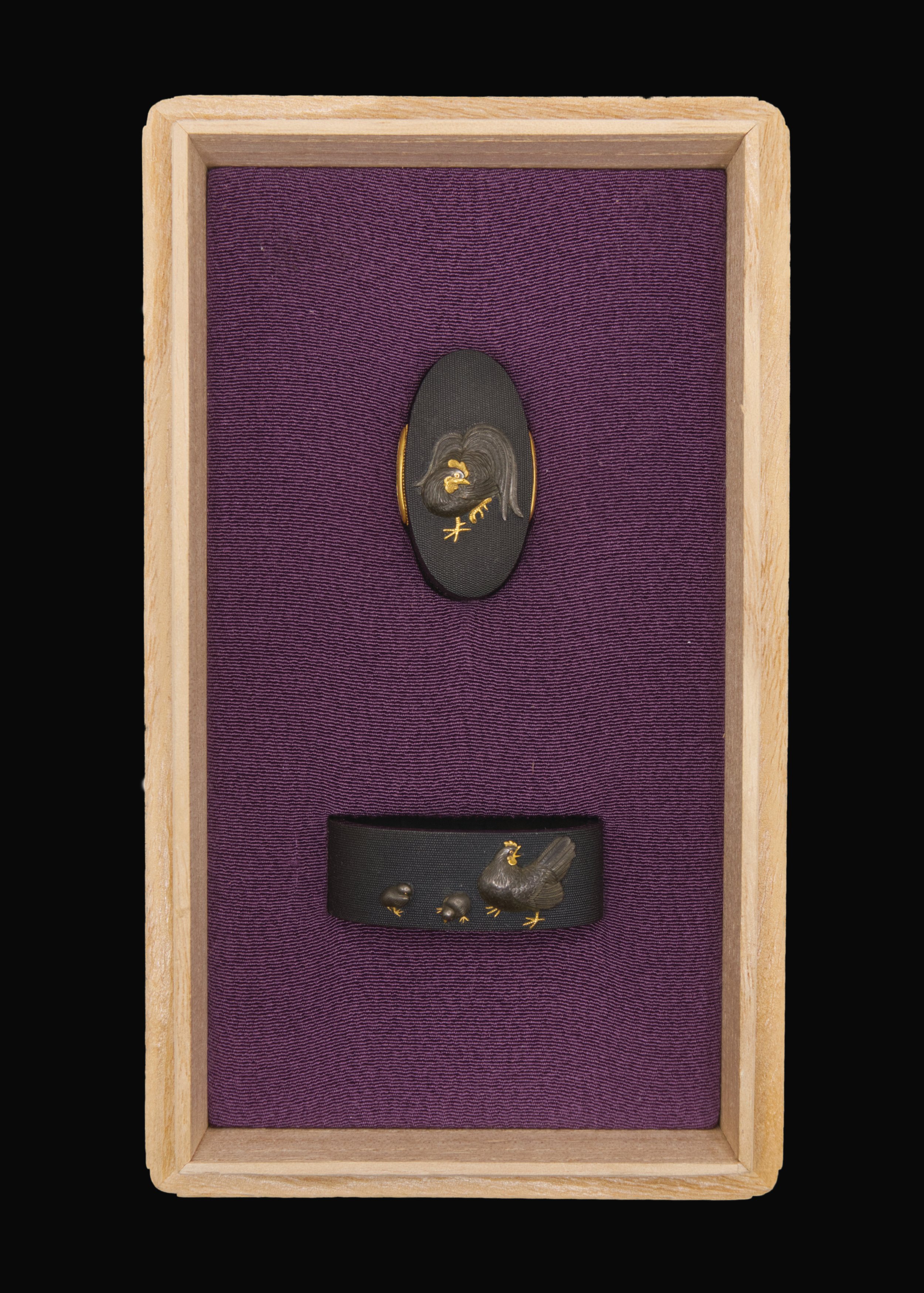
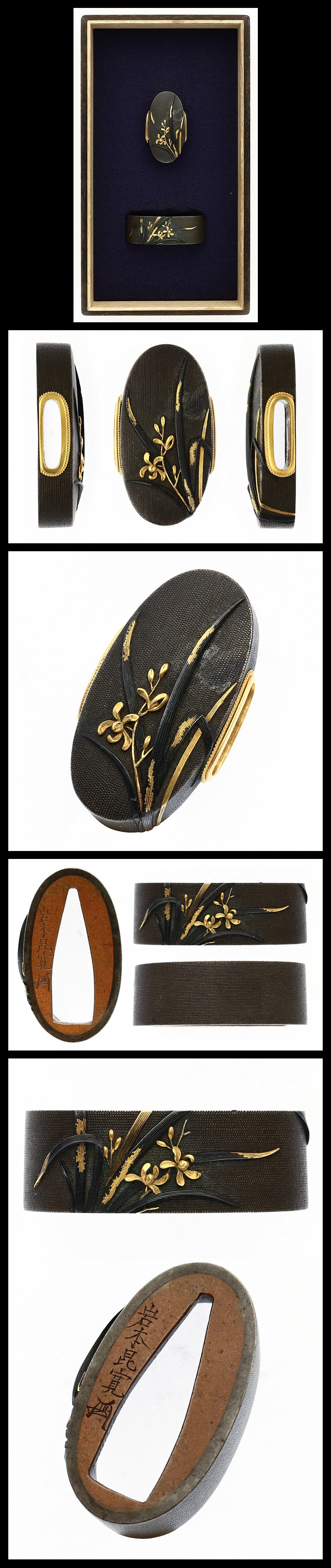
He commands the soft-metal palette of the Toryusai school, worked to and four-one polished to a migaki ground prominent among them, with , and ishime; gold-foundation pieces in pure gold appear among his finest , and like his teacher he carves iron .

Technique

His hand is high relief and katabori enriched with gold colour and inlay; he commands and -ai-bori, and the school , finely and evenly sown, is itself a named point of his work. The records single out his sure carving and assured colouring as reaching the level of his teacher.

Themes (figural and auspicious)

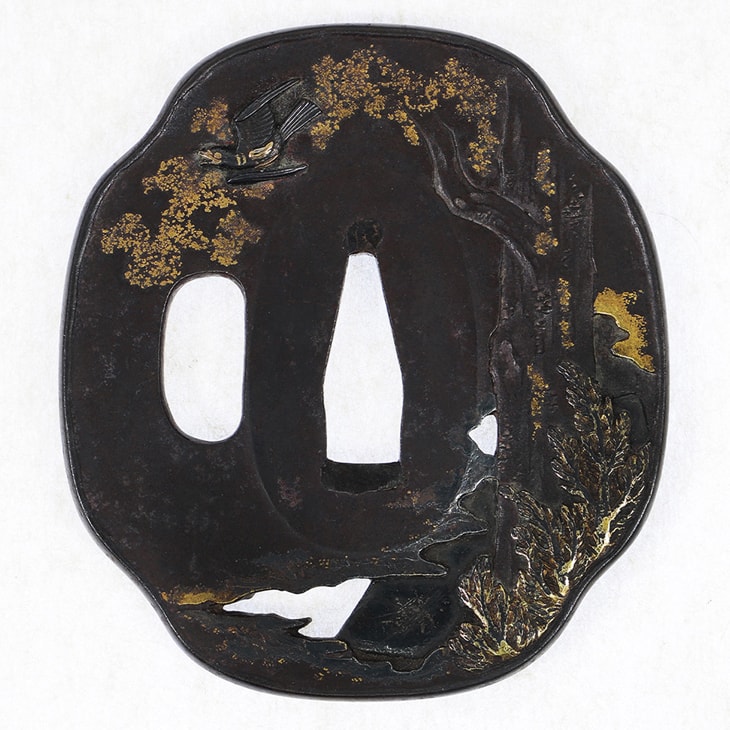
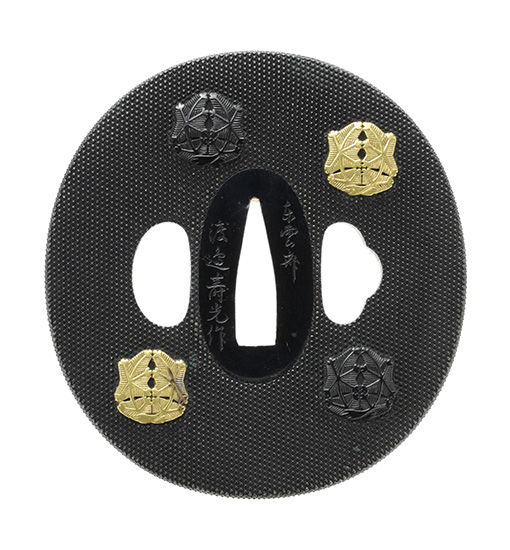
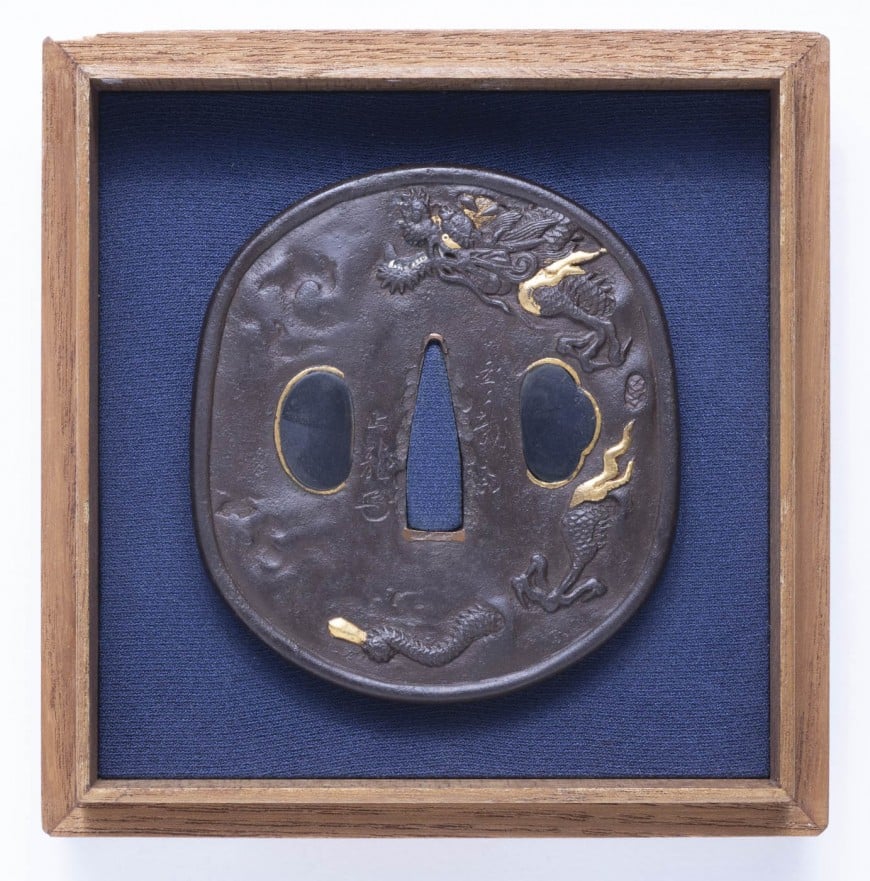
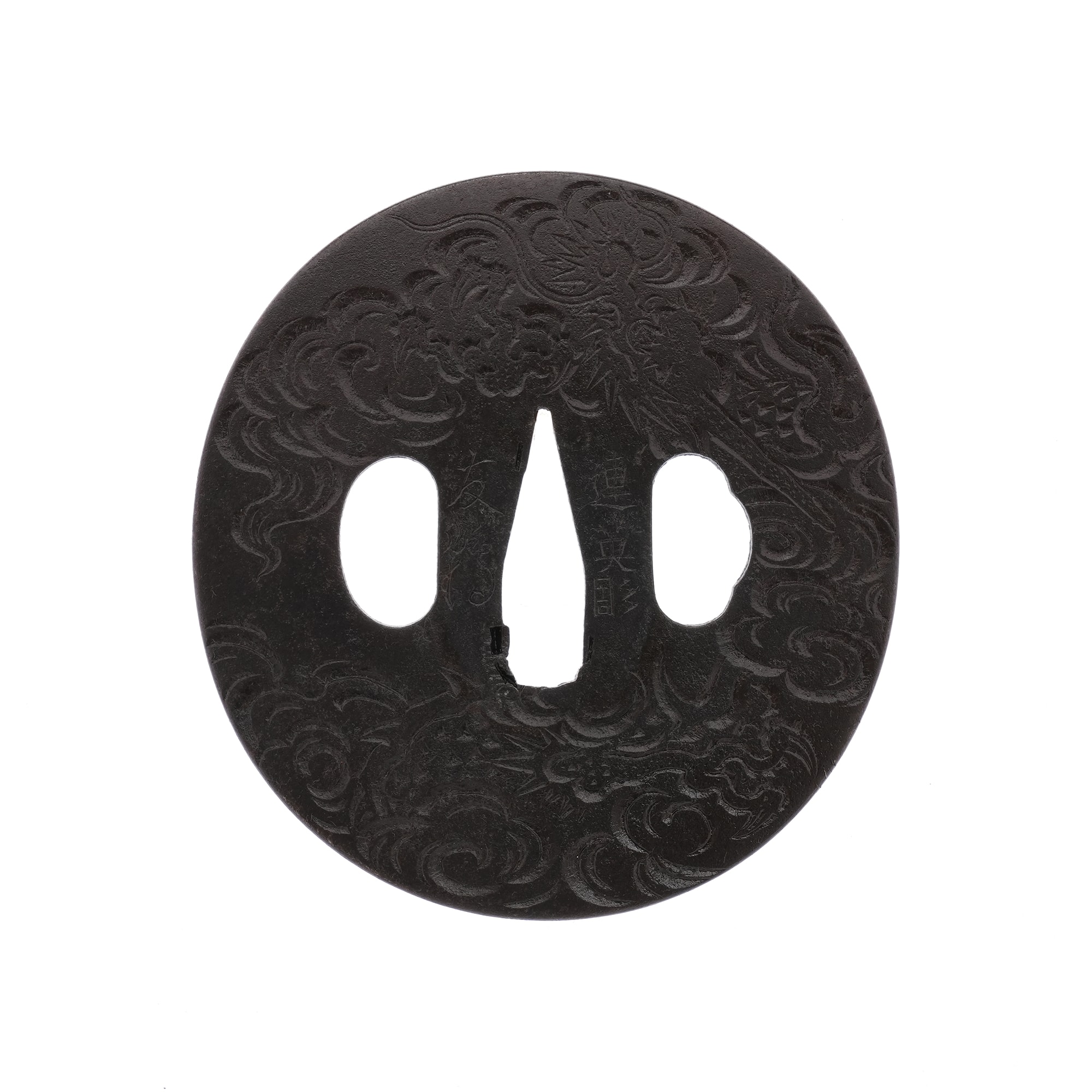
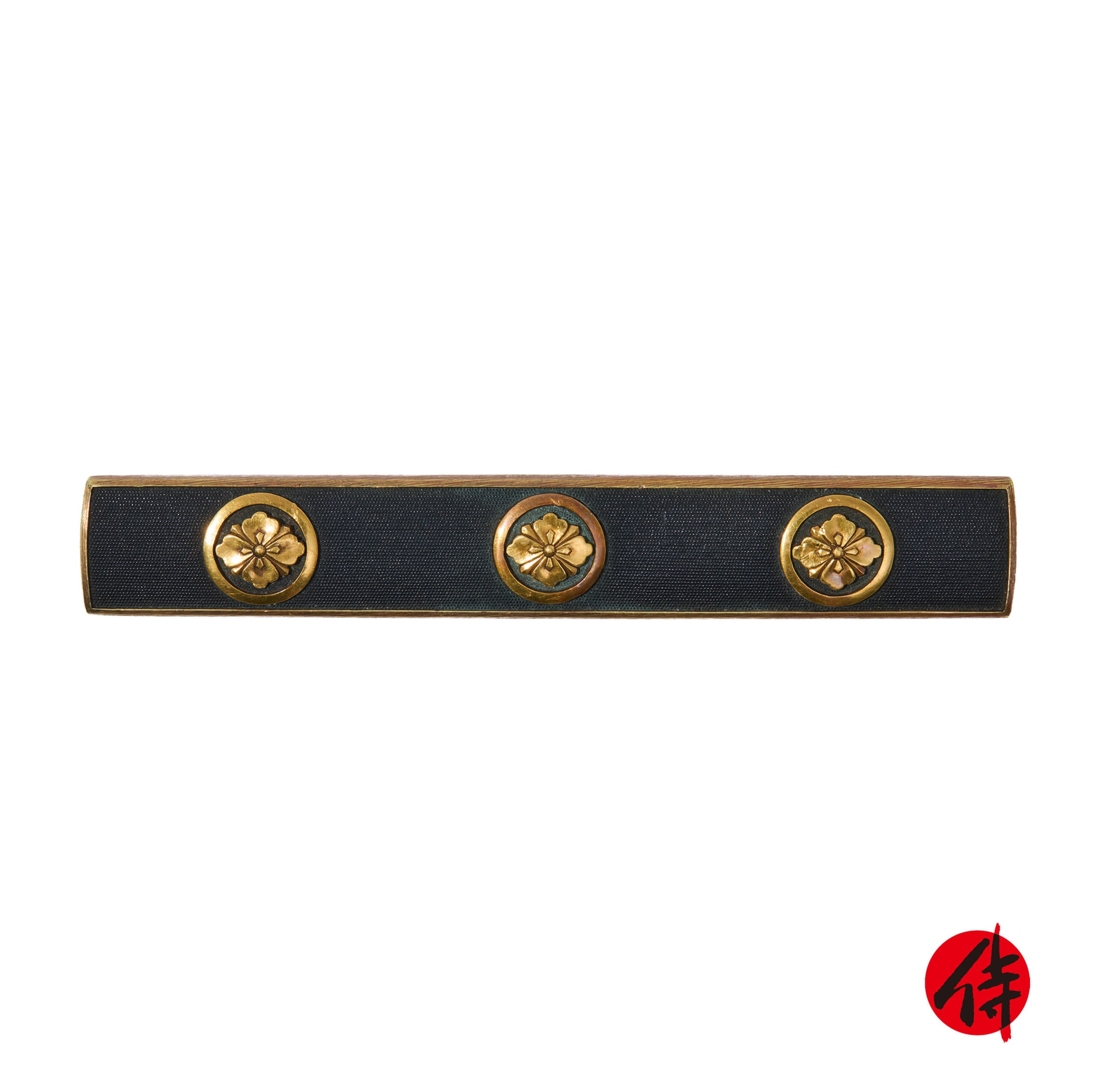
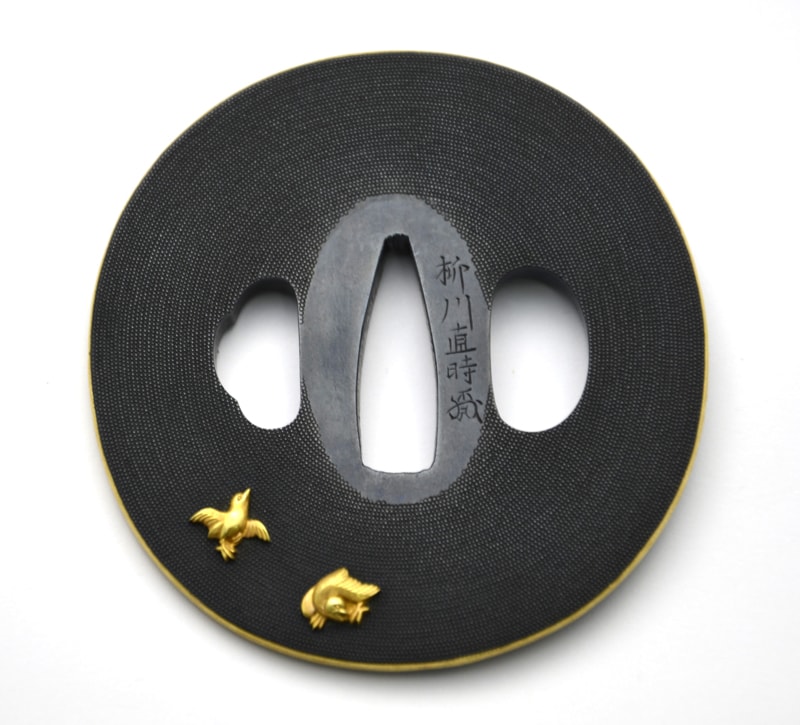
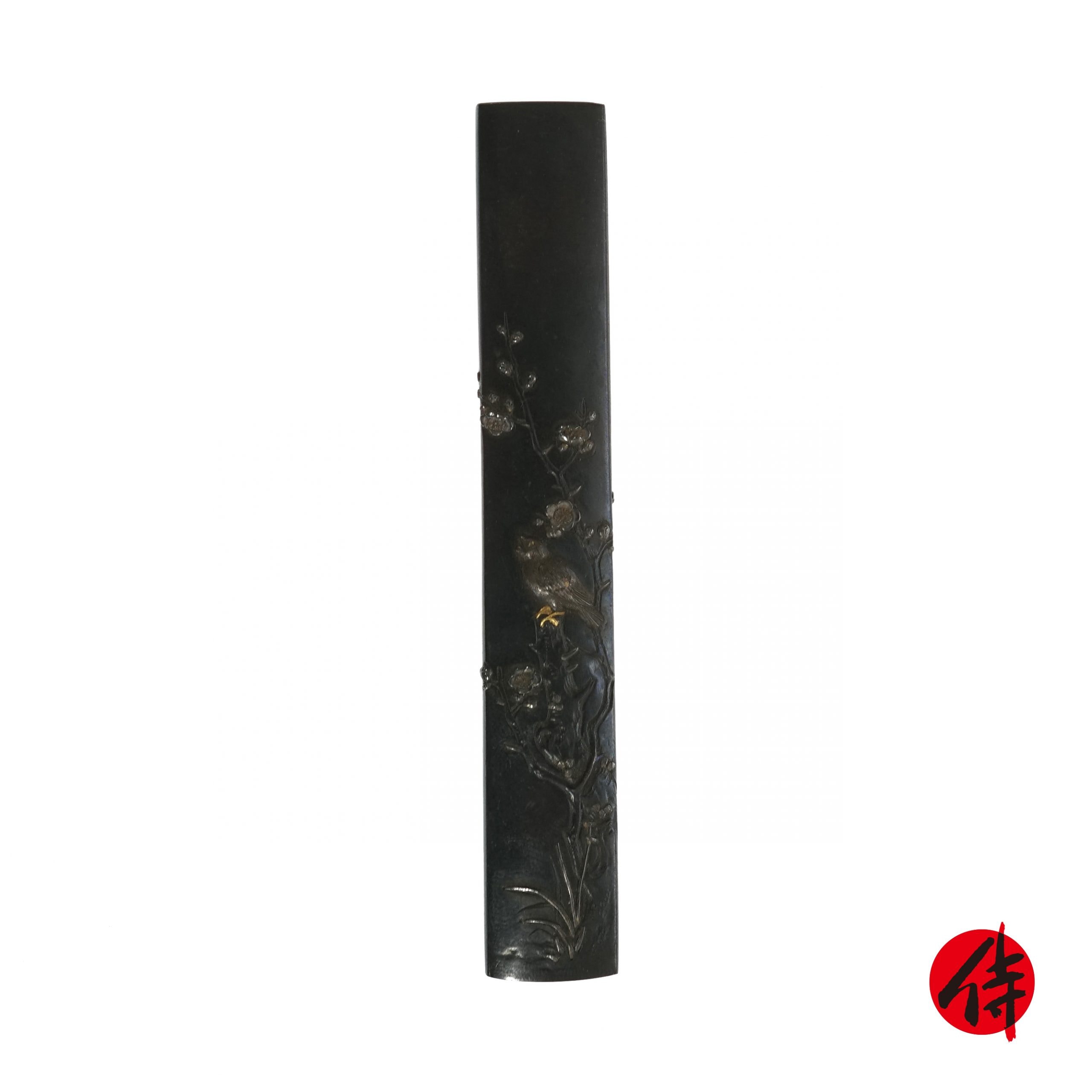
His subjects are figural and auspicious, treated in his teacher's -taste manner: the four numinous creatures and the two weather deities on a collaborative , the standing Sho-Kannon bodhisattva carved almost in the round, the pine-bamboo-plum of the Three Friends of Winter with frolicking parent-and-child horses, and the moon-and-geese and -and-shore landscapes of his fittings. Wisteria in and family crests round out the matched commissions.

Auspicious creatures, deities and sages

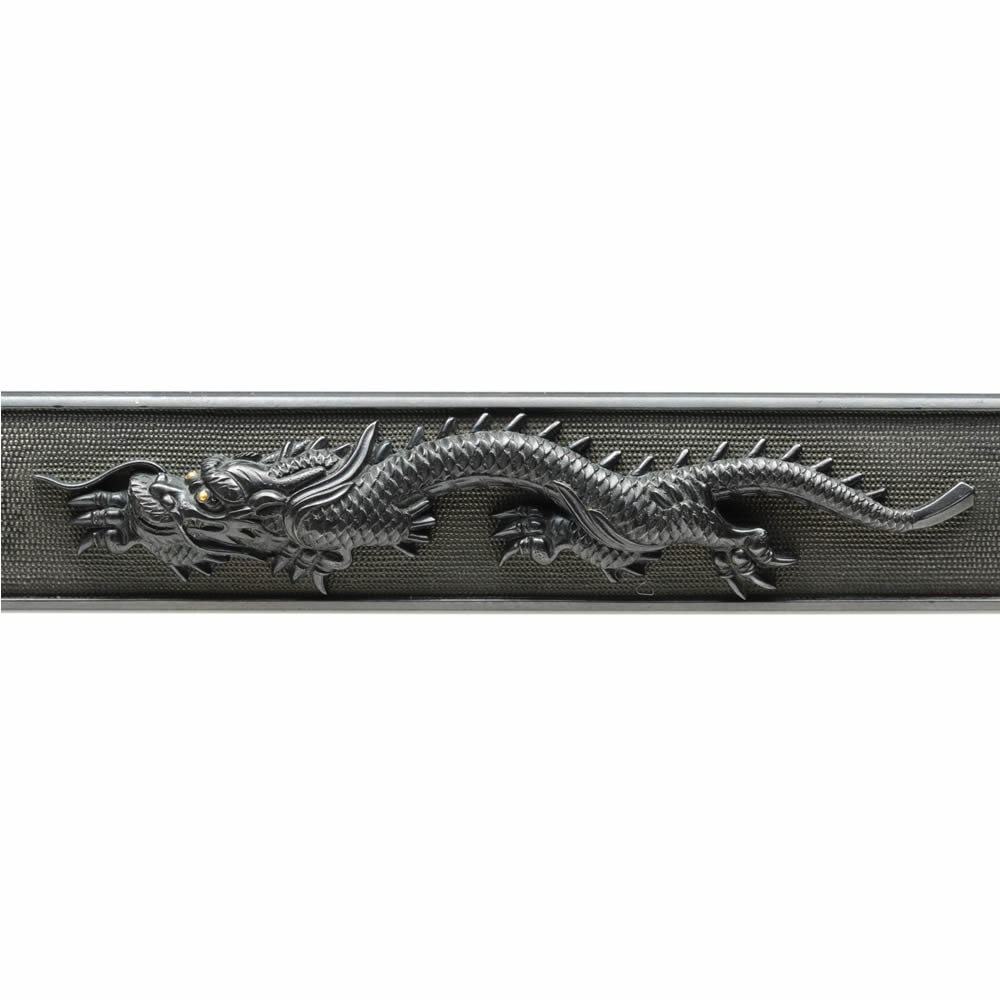
The auspicious and figural above all, in the school idiom: the qilin, phoenix and trailing-tail tortoise of the four numinous creatures, the two weather deities, and the standing Sho-Kannon bodhisattva given a powerful three-dimensional katabori.

麒麟kirin鳳凰ho-o亀kame
Birds, plants and landscapeless firmly established

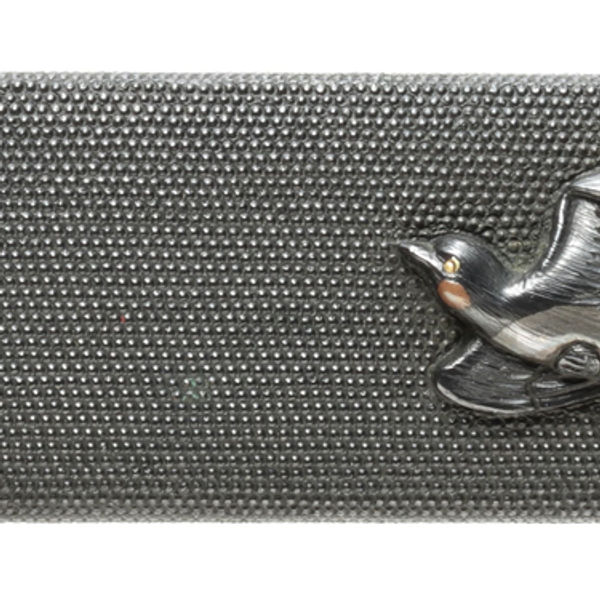
Pine, bamboo and plum of the Three Friends of Winter with frolicking horses, wild geese against the moon, wisteria in , and the broad landscape of and the eastern sea, set on his and matched fittings.

Full iconography

Signature chronology

Placement
Recorded signatures

Documentary note

Kiyoshige signs the two characters Kiyoshige (清重), most often with the Hokyo rank (Hokyo Kiyoshige, often Hokyo Kiyoshige ), under the school go Toryusai (東龍斎) or its variant Toryushi (東龍子), and under the clan names Fujiwara and Minamoto (Fujiwara Kiyoshige, Hokyo Minamoto Kiyoshige); his own go Seiu is prefixed on a dated piece (Seiu Hokyo Kiyoshige), and one late signature styles him the son of the Toryusai Hogen (Toryusai Hogen otoko). A year-marked signature reads Hotatsu-year Fujiwara Kiyoshige . His common name is Minomatsu. Distinguish his hand from the co-signers who appear with him and are not his work: Katsumi, the -house tenth head of Bushu , who carved the iron four-spirits half of a collaborative while Kiyoshige took the two deities; Ryu Seimin of the school, whose is used on one of his ; and Tokukosai Yasuharu, the -lacquerer of the large-and-small set.

Scholarship

He is the adopted son of the school founder Kiyotoshi who inherited and continued the Toryusai school as its second generation.

The signing manner of his menuki is said to convey the Kiyotoshi style well, and his surviving works are the rare white-plum of that hand.

Designations

Kokuhō—
Jūyō Bunkazai—
Jūyō Bijutsuhin—
Gyobutsu—
Tokubetsu Jūyō—
Jūyō Tōken5

Elite Standing

0.03 across 5 designated works

Top 28% among makers

Work Types

Distribution across 5 ranked works

Tsuba
240%
Other
240%
Menuki
120%

Signatures

Signature types across 5 ranked works

Currently Available

Lineage

TeacherKiyotoshi
Kiyoshige

Toryusai School

Other artisans of the Toryusai school

  1. 1.Kiyotoshi清寿40designated
  2. 2.Toshiyoshi寿良15designated
  3. 3.Yoshitsugu良次1 for sale4designated
  4. 4.Okada Setsuga岡田雪峨1designated
  5. 5.Toshinori寿矩1 for sale2designated

Kiyoshige

Kiyoshige(清重) was a maker of Japanese sword fittings (tōsōgu) of the Toryusai school in Musashi province, active during the Bakumatsu-Meiji (mid-late 19th century) period.

The work follows the Machibori tradition.

Designated works by Kiyoshige include 5 Jūyō.