3 descriptive axes: material (the soft-metal palette: shakudo, shibuichi, oborogin, suaka and solid gold, with brass and silver for the okimono, in ishime and polished migaki textures, and an iron-and-hammered-ground guard) x technique (minute high relief and rounded yobori, with colour-inlay and gold-and-silver inlay, and fine kebori) x themes (auspicious and naturalist subjects: dragon and cloud-dragon, the qilin and phoenix, butterfly, crane-and-reed, and the from-life insects of his masterwork). With only seven pieces his separators are few and low-n; the honest discriminators against ordinary Okayama Shoami are his thorough realism drawn from life and his later exhibition okimono.
Shoami Katsuyoshi, personal name Nakagawa Katsuyoshi, is one of the great metalwork artists of the Meiji era, the ninth-generation head of the Okayama Shoami Toshiro house and a retained craftsman of the -Ikeda domain. The records say he was born in 1832 at Tsuyama in Mimasaka, the third son of Nakagawa Katsutsugu, with the childhood name Junzo; he learned carving from his father from the age of thirteen, was adopted at eighteen into the Toshiro house of the Okayama Shoami and succeeded as ninth head, and in 1850 became a retained craftsman of the Ikeda domain. His manner began in the ordinary Shoami style but changed under the influence of Goto Ichijo, learned indirectly through his elder brother Katsuzane, who was Ichijo's pupil. When the sword-abolition edict of 1876 ended his fitting work, he turned in his later years to interior-decoration objects, going up to Kyoto and making vases, censers and exhibition okimono. He died in 1908 at seventy-seven. His hand is an extraordinarily realistic, minutely detailed high relief with colour inlay, the records praising it as thorough-going realism drawn from life; he signs the school-and-personal name Shoami Katsuyoshi with a , the go Sososha on his okimono, and the long -Okayama locative on his grandest guards.
Diagnostic discriminators
the setsumei of his fifty-year-old insect-medley dai-sho say he carved thorough-going from life, truly realistic, the multitude of insects minutely worked in shakudo on an oborogin ishime ground, and call it among the finest of his work; this drawn-from-life realism is named his defining gift but is explicitly worded shasei in only one of the seven records, so it is flagged low-n
after the 1876 sword-abolition edict ended his fitting work he went up to Kyoto and turned his carving to interior-decoration objects, chiefly vases, censers and incense boxes; the corpus carries two such pieces, his brass minogame (longevity-tortoise) okimono signed Sososha and his silver qilin-phoenix-tortoise-dragon censer of 1898 (a late masterwork by his own box-inscription), a category foreign to the ordinary Shoami fitting repertoire; the okimono term itself appears on one of the seven records, so it is flagged low-n
Material (grounds)
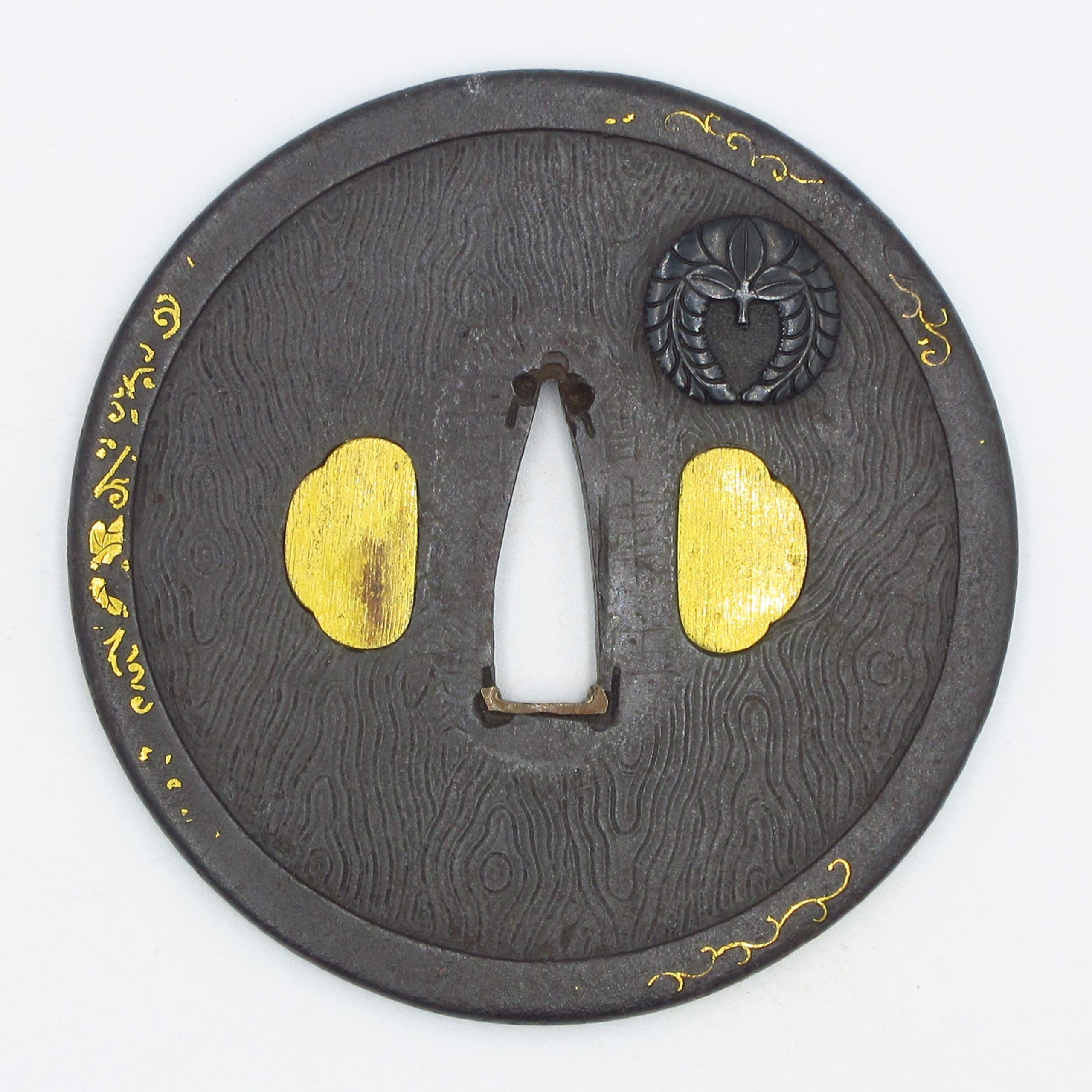
He works the soft-metal palette: above all, with , the -grey , and solid gold, often as polished or stippled ; brass and silver carry his exhibition okimono, and one guard is built on an iron ground partly worked in hammered texture.
Technique
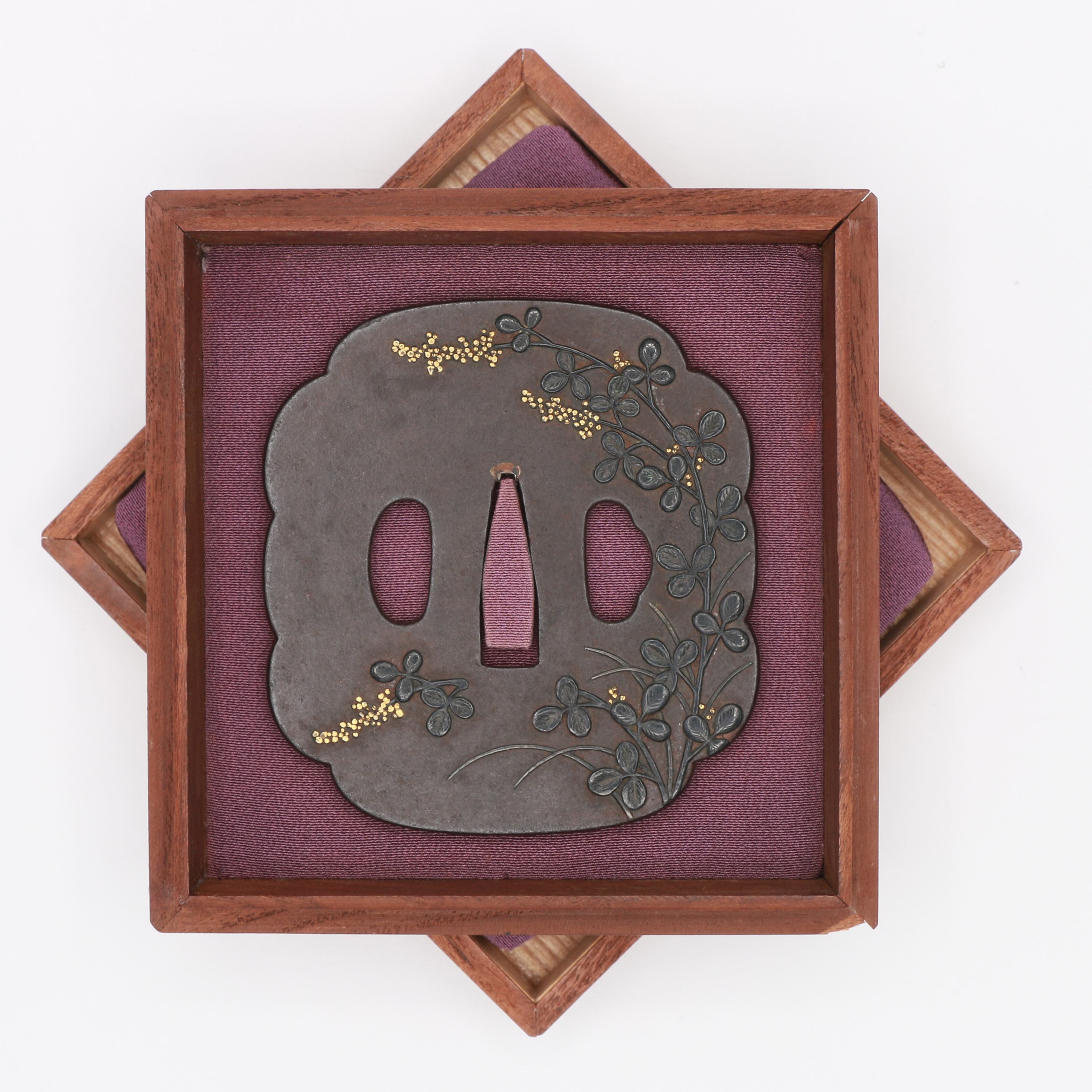
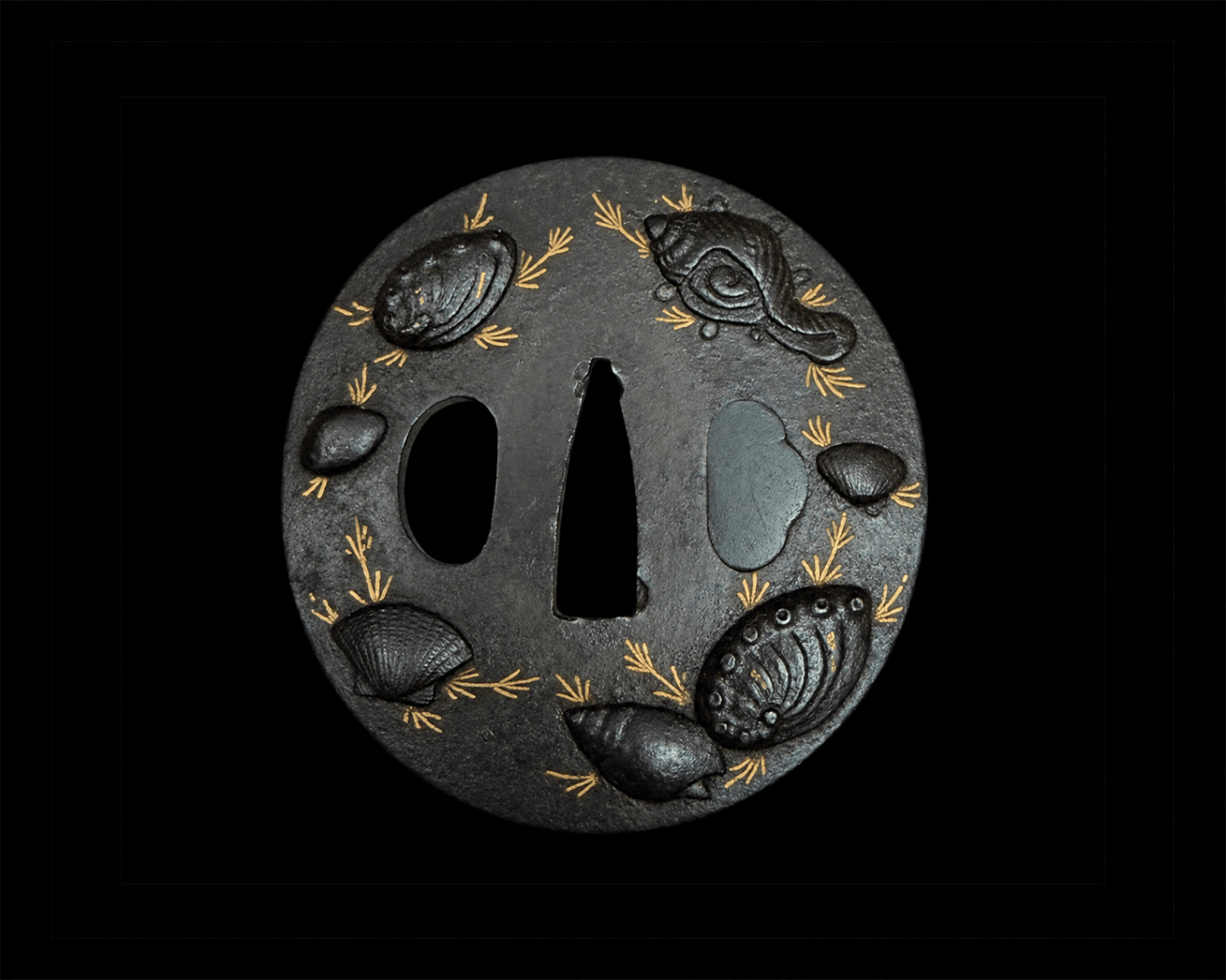
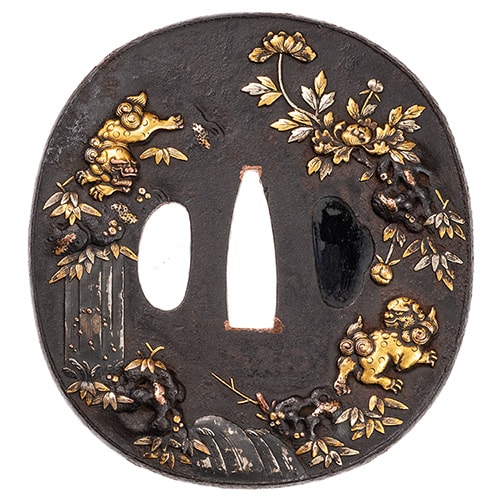
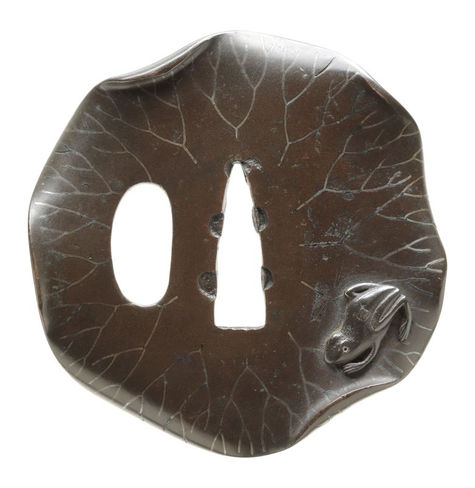
His hand is a minute, dense high relief, with rounded in-the-form yobori and -bori and , enriched with gold, silver, and colour inlay and flat inlay; over it he sets fine , including the gold-inlaid of his reed-and-crane guard, the carving praised as thorough and confident.
Themes
His subjects fall in two registers: auspicious and emblematic motifs (dragon and cloud-dragon, the trailing-cloud zuiun, the qilin, the qilin-phoenix-tortoise-dragon of his great censer, the longevity tortoise of his okimono, and the Buddhist guardian Jikokuten) and naturalist subjects drawn from life (the assembled insects of his masterwork dai-sho, the reed and standing crane of his poem-picture guard, the butterfly of his domain-crest mounting). The records single out his thorough realism.
Auspicious and emblematic motifs
The dragon and cloud-dragon and trailing zuiun cloud of his treasure-jewel mounting, the qilin, the qilin-phoenix-tortoise-dragon of his silver censer, and the Buddhist guardian Jikokuten with the cowering demon, carried in deep relief and colour inlay.
Naturalist subjects drawn from life
The assembled insects minutely carved on his fifty-year-old dai-sho, the reed and the standing crane of his Naniwa poem-picture guard, and the butterfly of his Ikeda-crest mounting, all observed with a realist eye.
鶴tsuru
Full iconography
Signature chronology
Placement
Recorded signatures
Documentary note
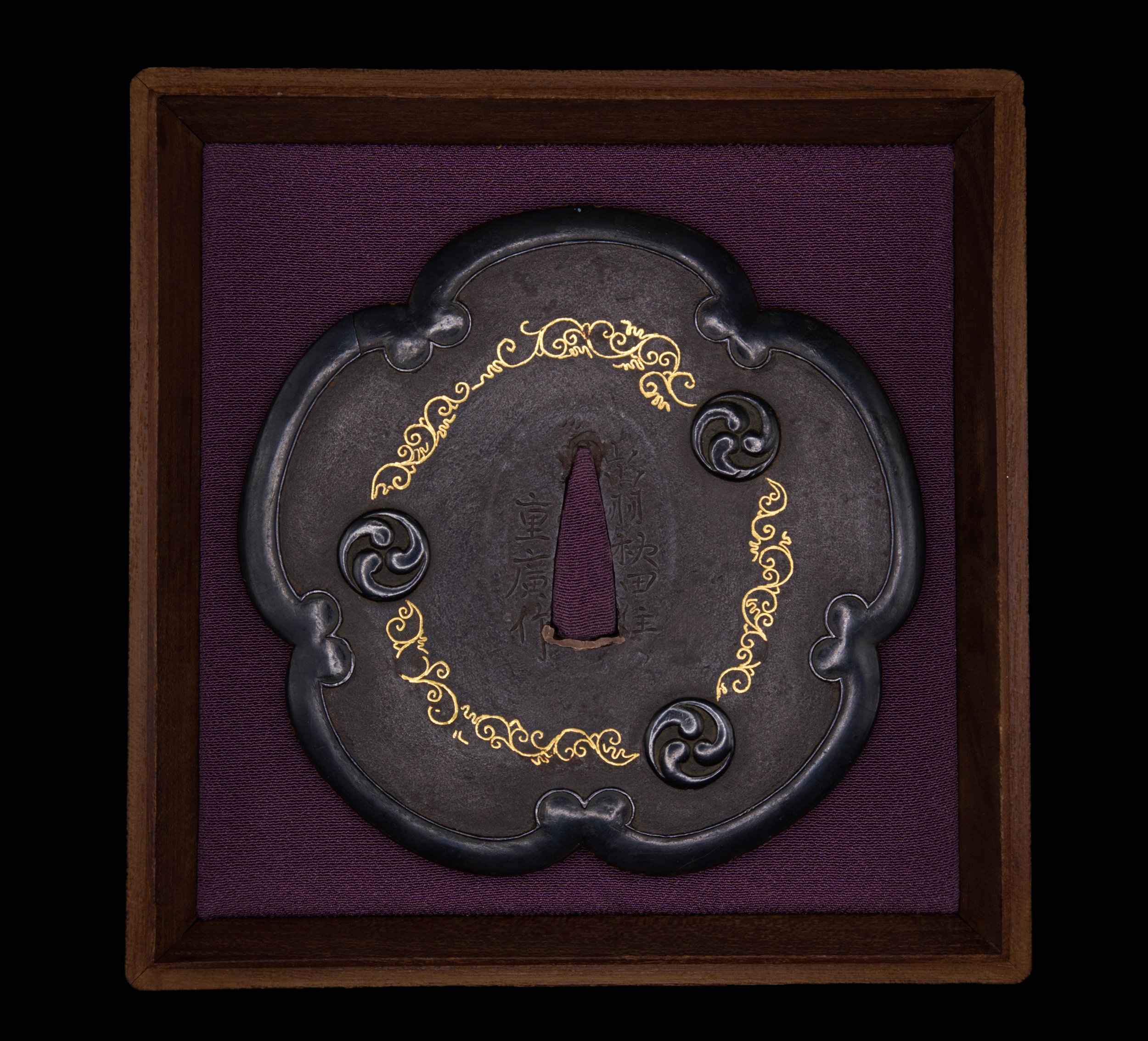
He signs the school-and-personal name Shoami Katsuyoshi with a , his dominant signature; the go Sososha prefixed to Katsuyoshi, sealed, on his exhibition okimono; and the bare Katsuyoshi, sealed, on his censer. His grandest guard, a dai-sho, carries on the larger plate the long locative Tobi Okafu, resident of Yanagawabe west of the castle, with the terminal name, dated the mid-winter of a kanoto-i year, and on the smaller plate a Shoami Katsuyoshi run (the record transcribes the latter as 組阿弥, an OCR misreading of 正阿弥, not a separate name). A late guard is age-dated seventy-three elder, Shoami, carved at (Kyoto). His one dated mounting reads Meiji 4 (1871), late spring, made this. His real family name Nakagawa and childhood name Junzo are given in the biographies and are never chiseled. The name is scoped to him by the consistent Shoami Katsuyoshi signature with , the Okayama-Shoami ninth-generation biography and the documented dates, since the Shoami line-name alone is not unique to him.
Scholarship
His mature change of manner is documented as the indirect influence of Goto Ichijo, learned through his elder brother Katsuzane, a pupil of Ichijo.
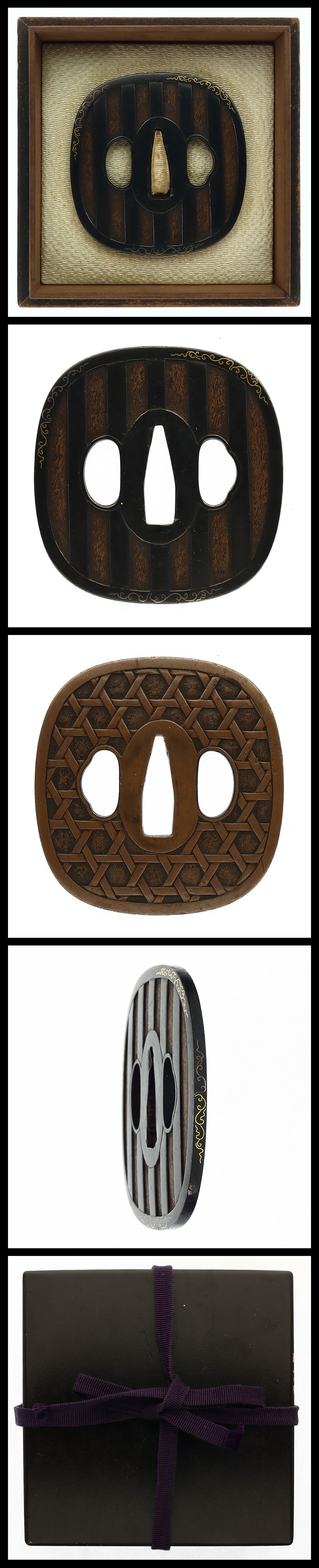
Shoami Katsuyoshi(正阿弥勝義) was a maker of Japanese sword fittings (tōsōgu) of the Shoami school in Mimasaka / Bizen (Okayama) province, active during the Meiji period.
The work follows the Iron-tsuba tradition.
Designated works by Shoami Katsuyoshi include 7 Jūyō.