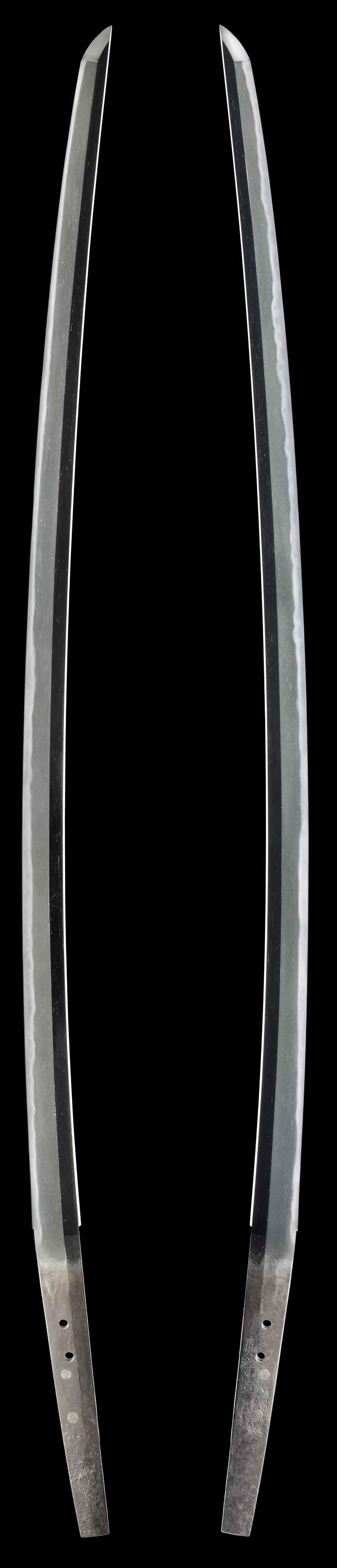
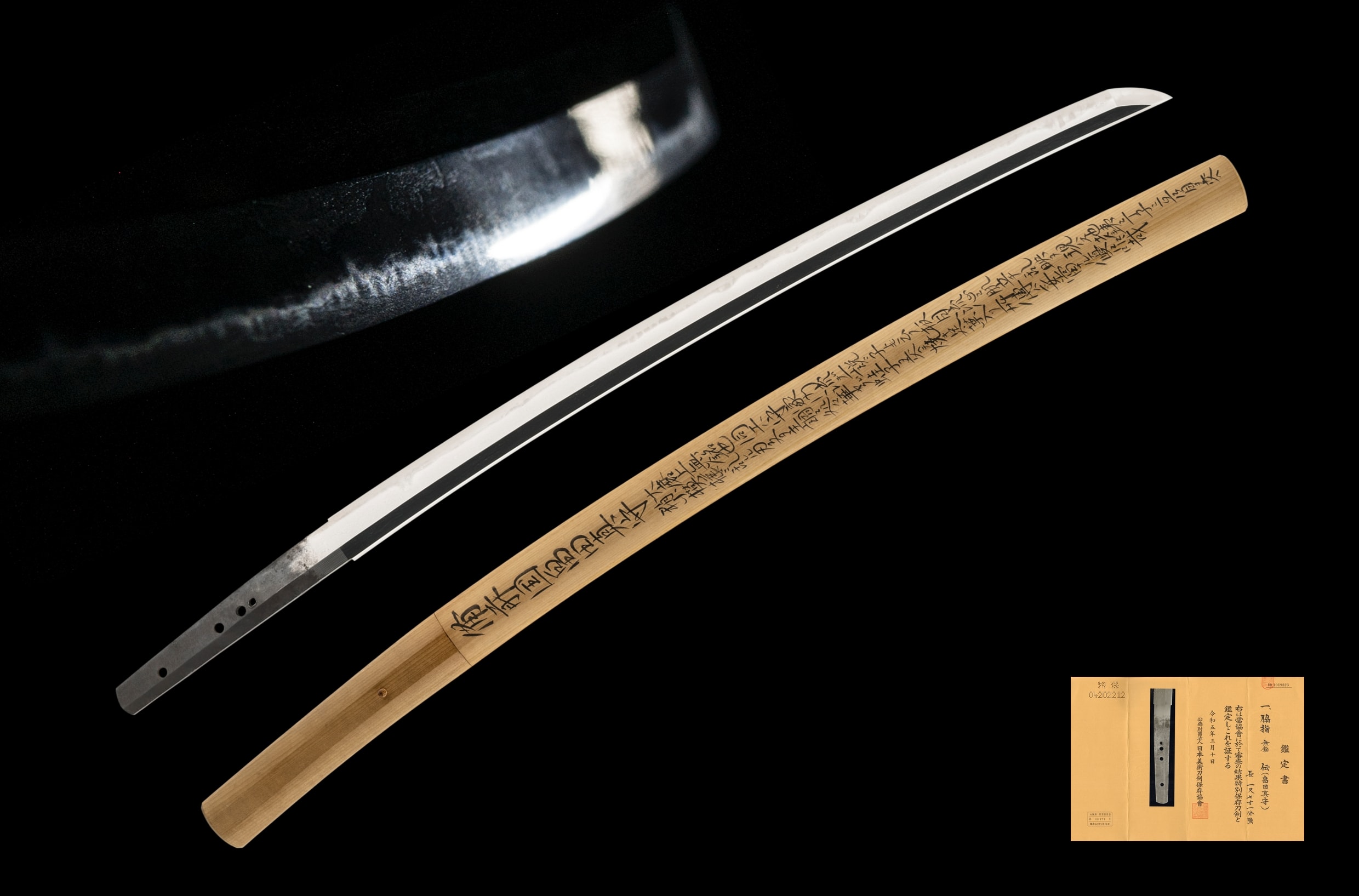
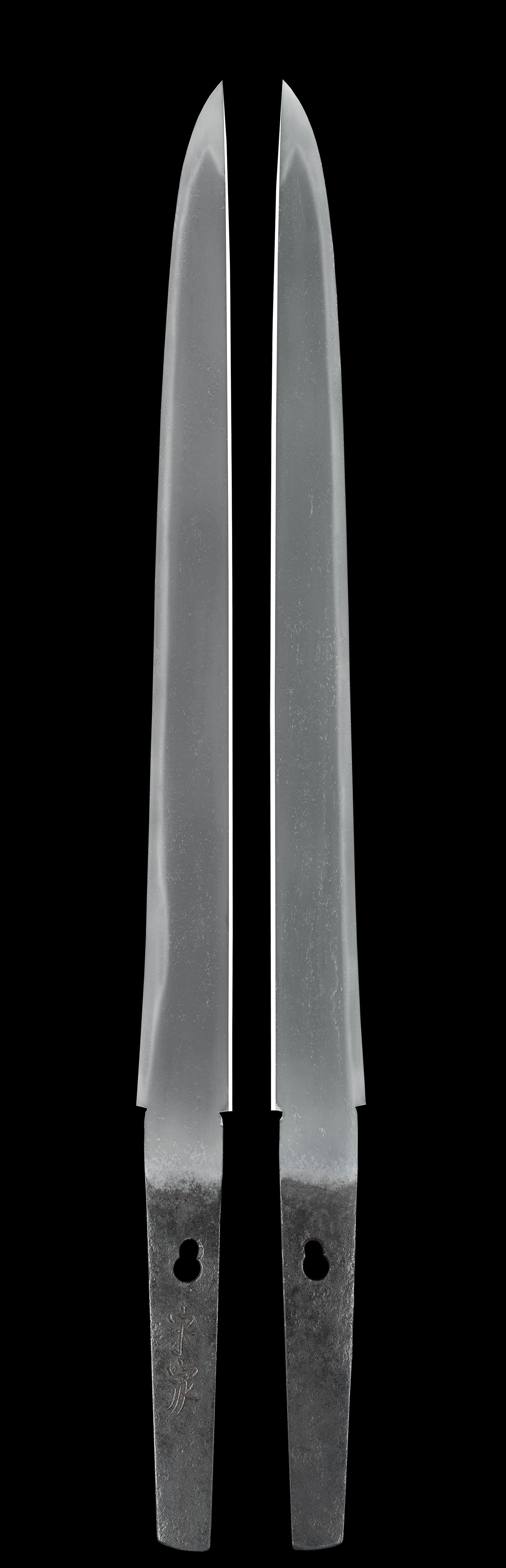
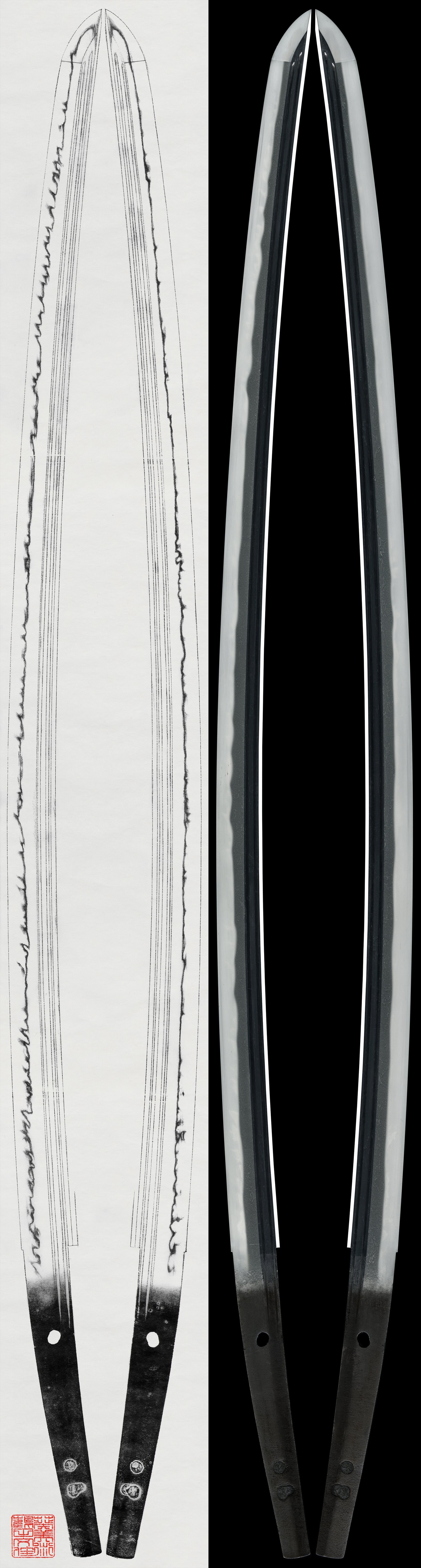
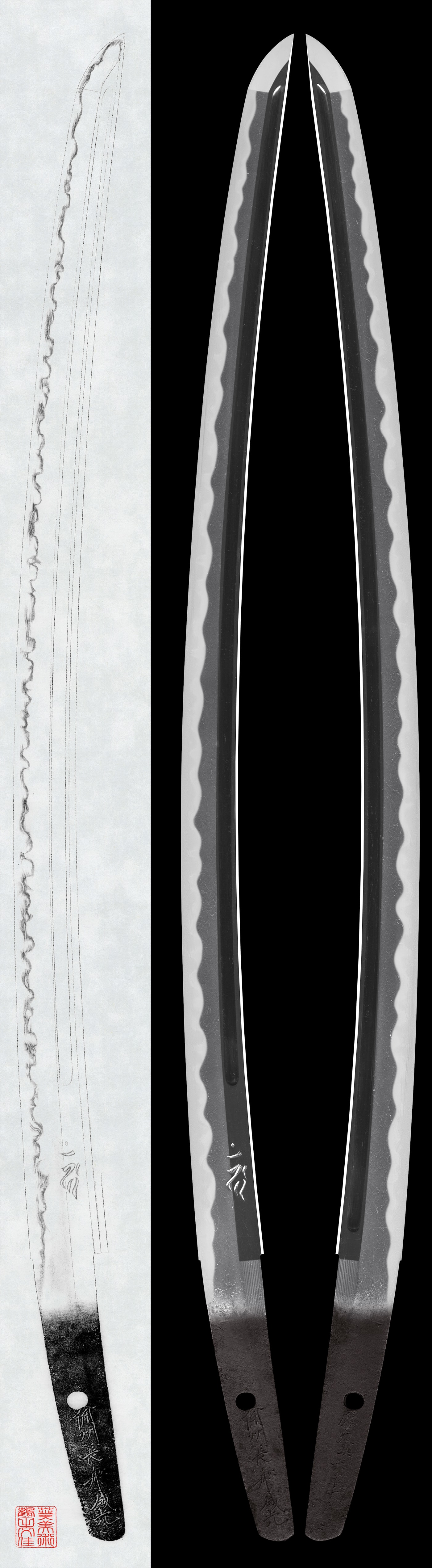
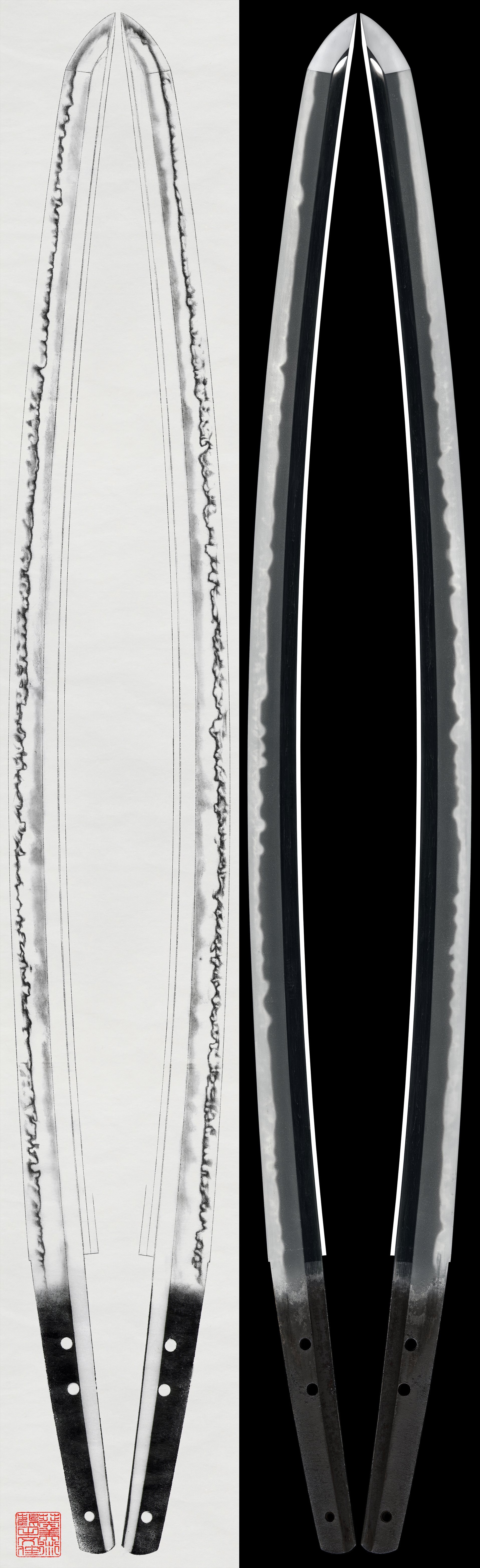
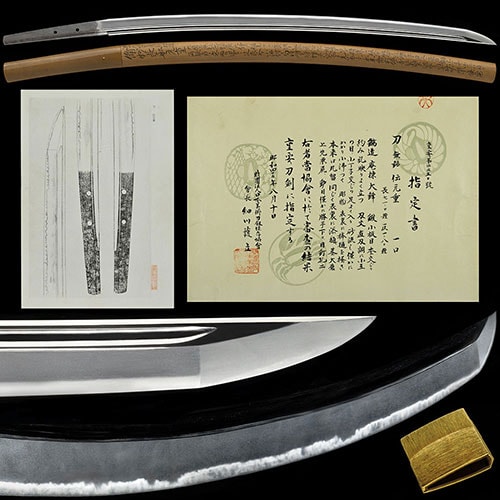
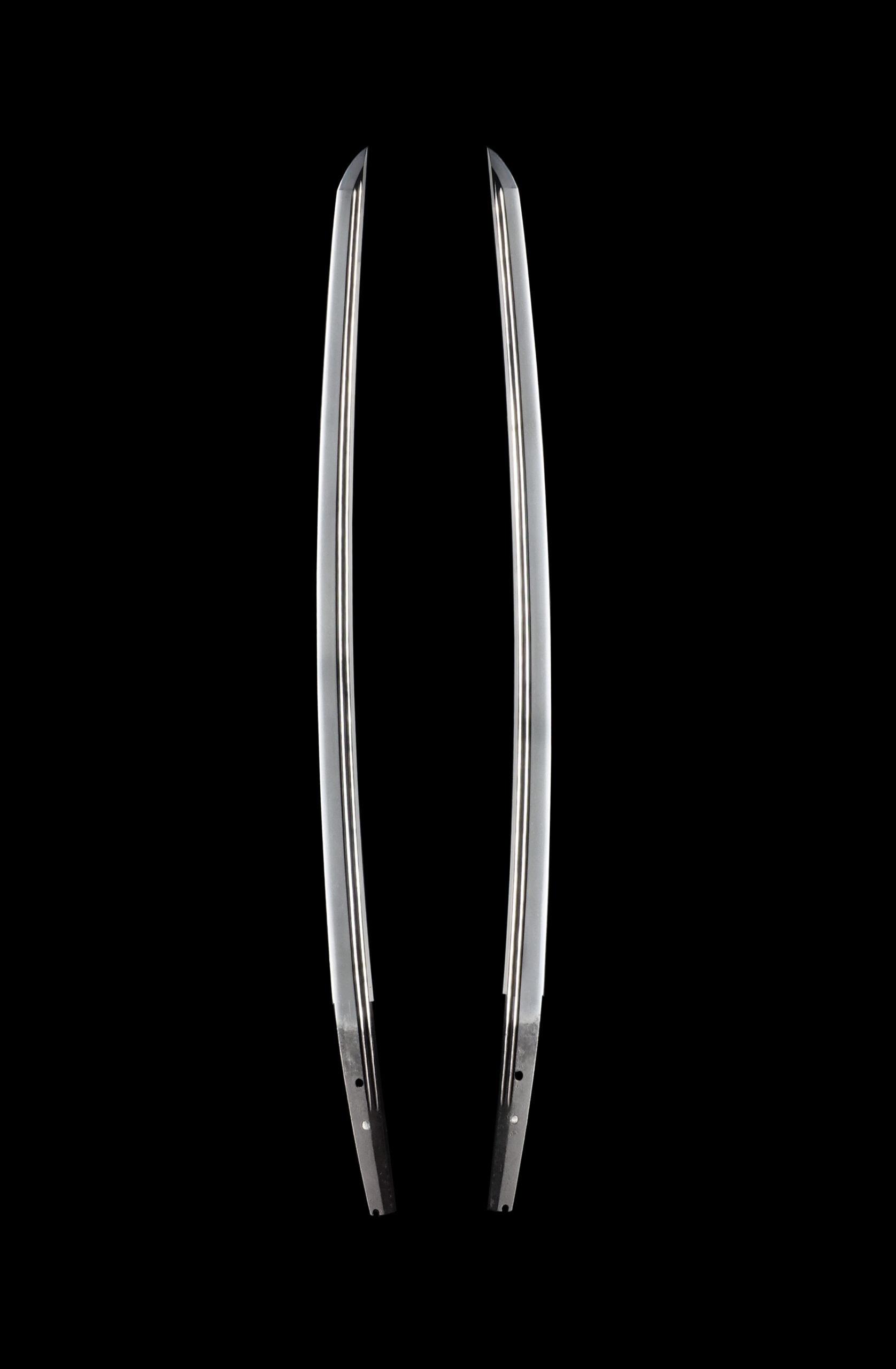
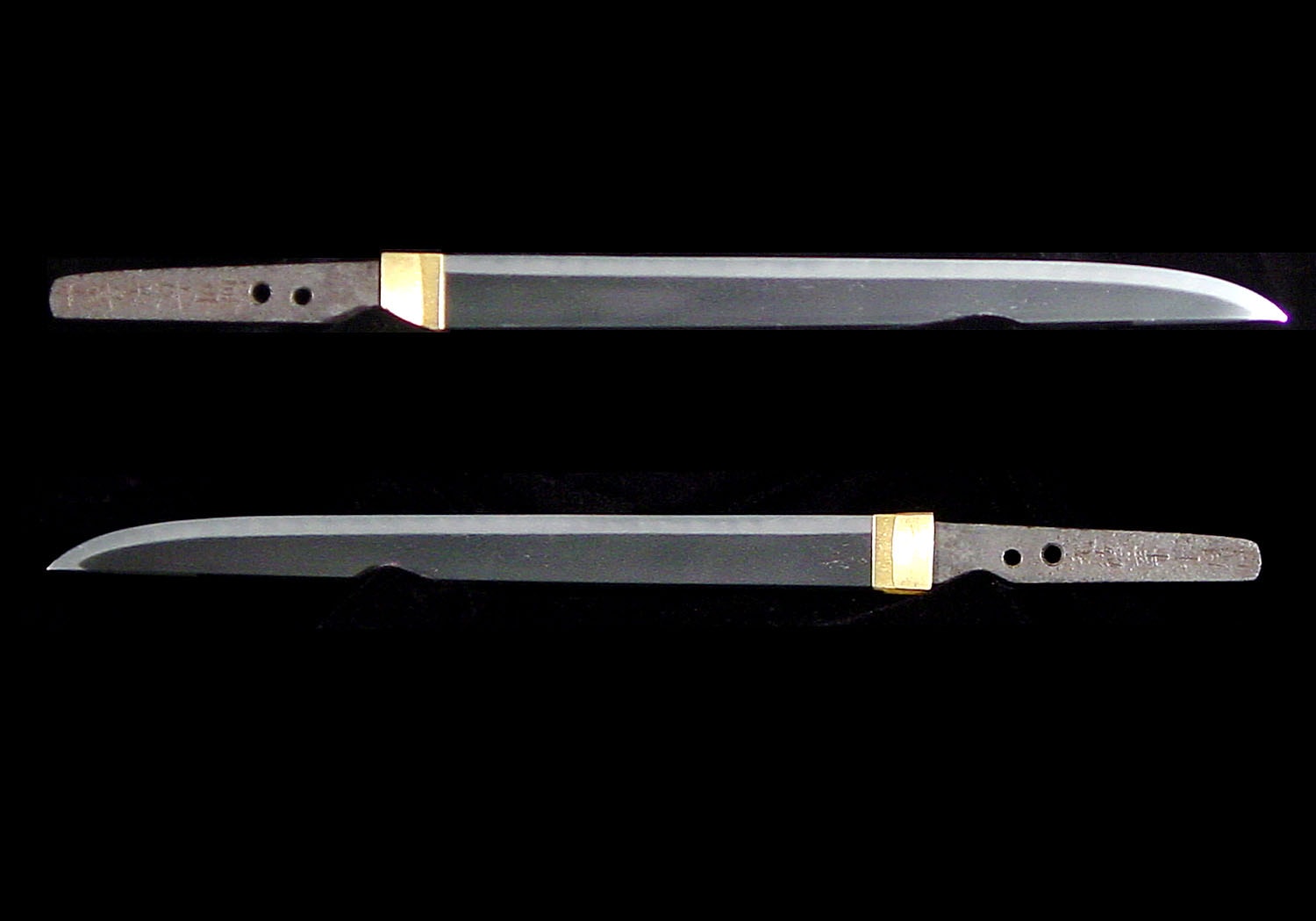
Morishige is traditionally transmitted as a swordsmith of the line within the school. According to the (smith directories), he is recorded as a son of the second-generation Moriie and as the father of Motoshige, with extant dated works bearing era names spanning from Einin and Kagen through Showa, Bunpo, and Gen'o — all corresponding to the closing phase of the period. Distinguishing a first and second generation Morishige is considered somewhat forced; in broad terms he should be regarded as a swordsmith of the late period. Smiths using the name succeeded the founder, and they continued working through the period under what reference works identify as the group, so called because the founder is said to have moved from in Yamashiro. In all cases, however, their signatures state "Bishu -ju" (resident of in Province), making it clear that their place of work remained . The -period generations are recorded from (1368–1375) through to the end of the period, with dated examples surviving from the Oei and Bunmei eras.
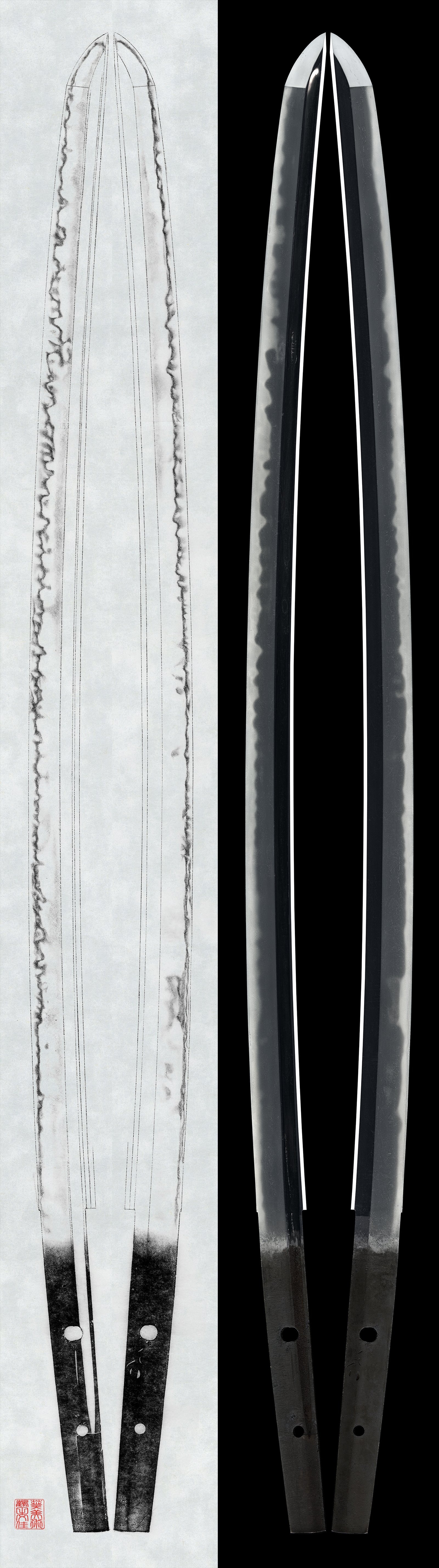
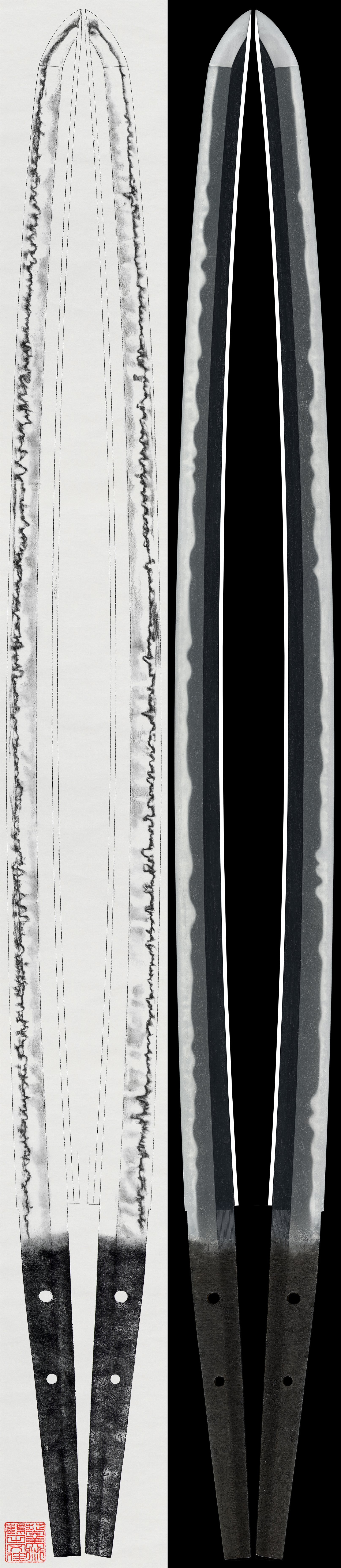
The -period works characteristically display — at times a dense mixed with — with standing out vividly in the . The is typically a basis mixed with , into which and enter; the tends toward tightness (), and adheres throughout. Some works exhibit reminiscent of Kagemitsu, revealing a pronounced character rather than a distinctly manner. Indeed, the presence of in the forging and the composition with intermingled share aspects in common with the style of the Nagamitsu group, suggesting that by this period the school had for the most part become assimilated into the tradition. Compared with Moriie, the workmanship tends to be subdued (sabishii), with a pronounced tendency. The -period generations, by contrast, are characterized by a more flamboyant, large-patterned , featuring mixed with , accompanied by , , and — works that at a glance can be mistaken for Oei- in their showy manner.
Extant signed works by Morishige are exceedingly few, and it has not been possible to exhaustively examine the full range of his workmanship across all generations. Those examples that survive, however, provide valuable source material for understanding the breadth of his working range and the historical relationship between the and lineages. Several bear date inscriptions that serve as important reference points for the study of this smith. The overall workmanship — from the clarity of the -iro to the well-applied and tight — demonstrates sound technical accomplishment, and the best examples are noted for being (well-preserved) in both and .