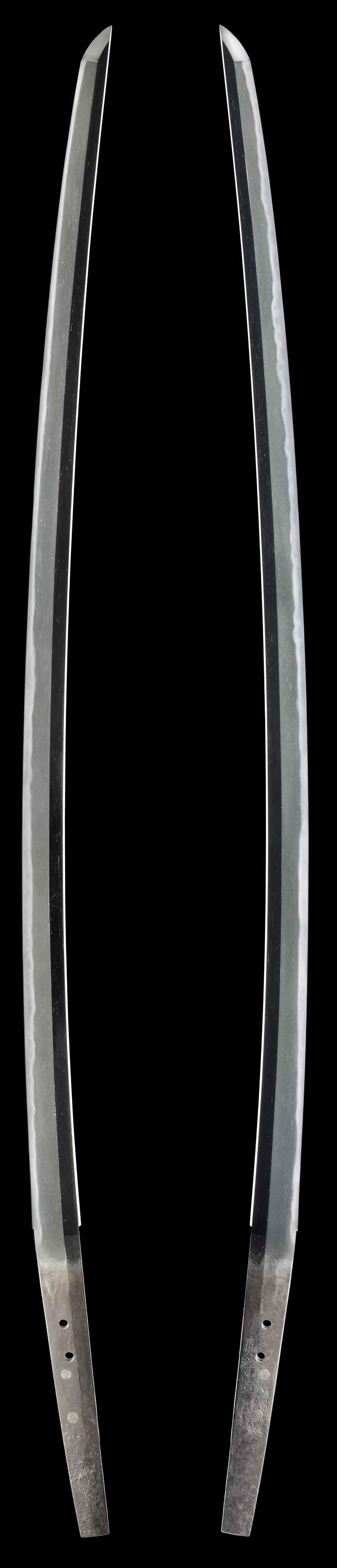
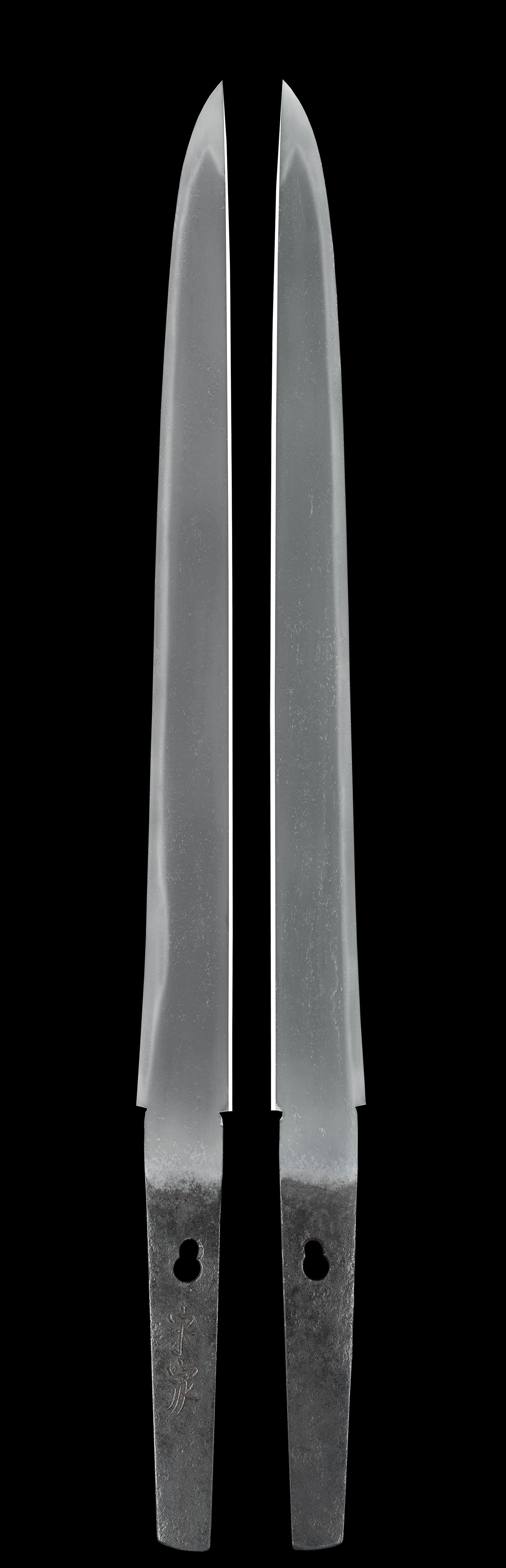
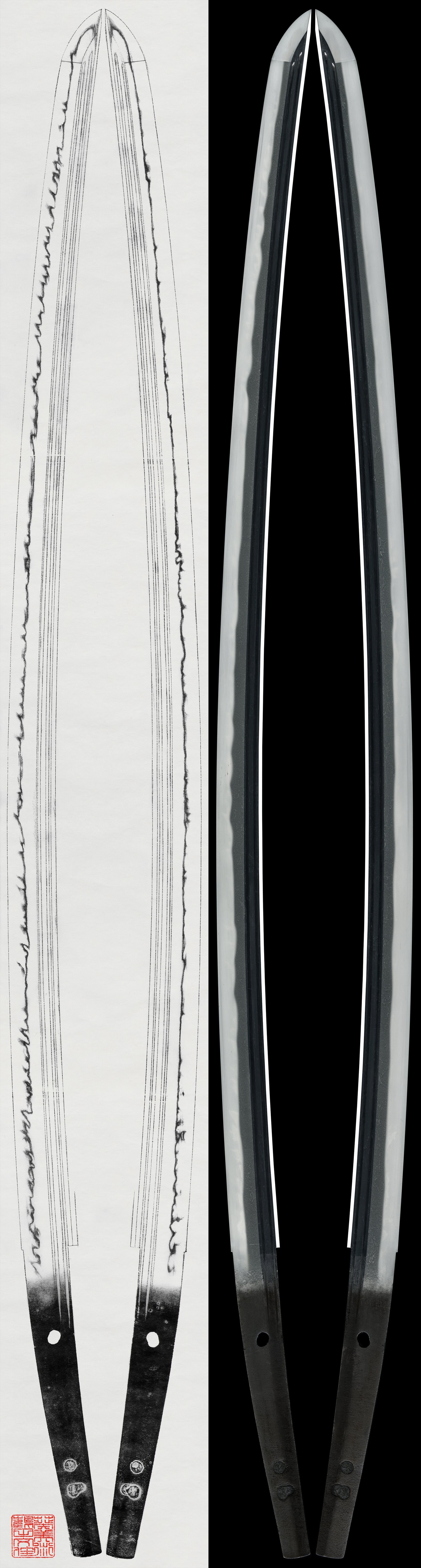
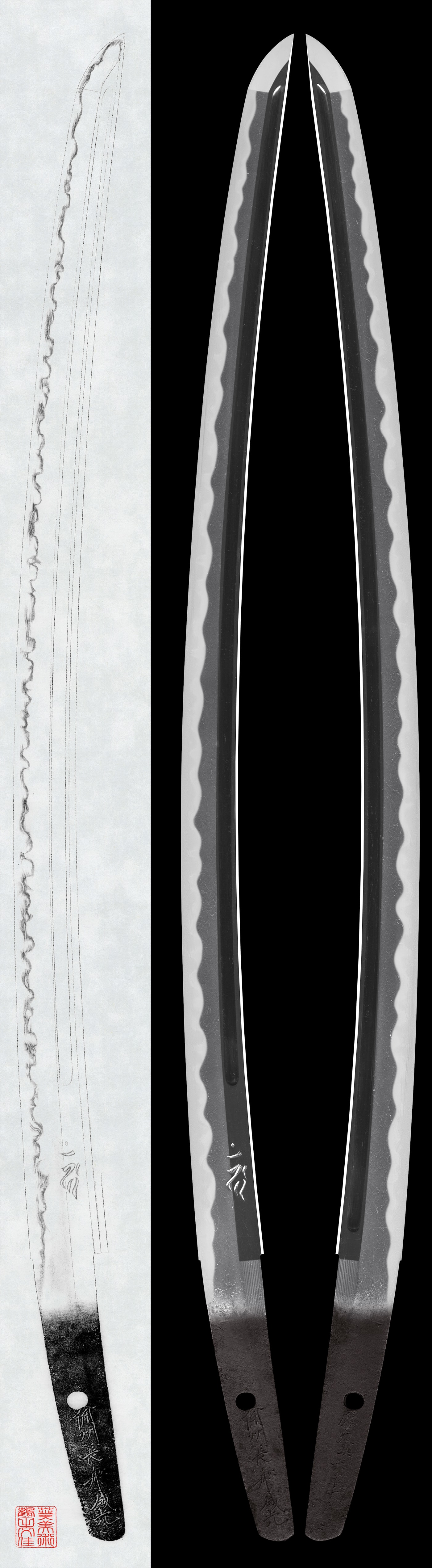
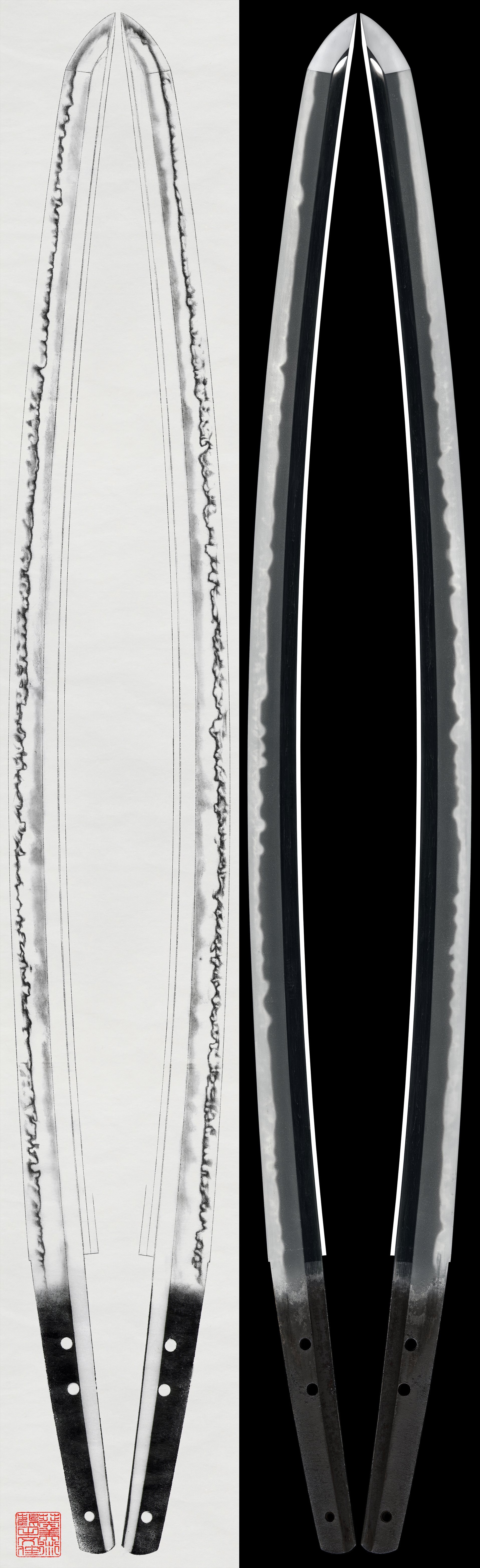
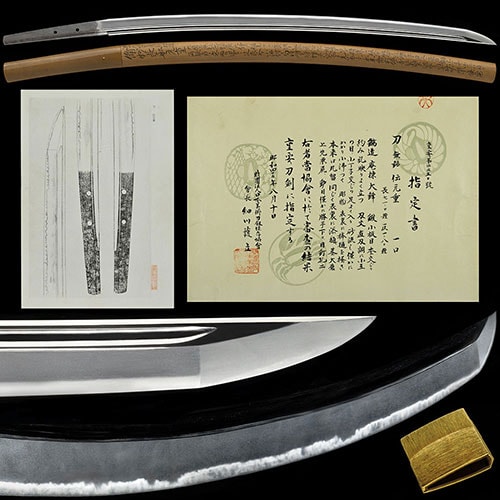
The oldest dated work bearing the name Moriie is a of Bun'ei 9 (1272), and around that date the published sources place the first master of the school of , a contemporary of Mitsutada in the middle period. He is called Moriie because he lived at , hard beside ; yet neither Moriie nor Sanemori and the rest of his school ever signed "-ju", while inscriptions such as " no -ju Moriie " survive, and from this the published record concludes that was most likely a small place-name within village itself. The set his line under Moritsune of the Fukuoka school.
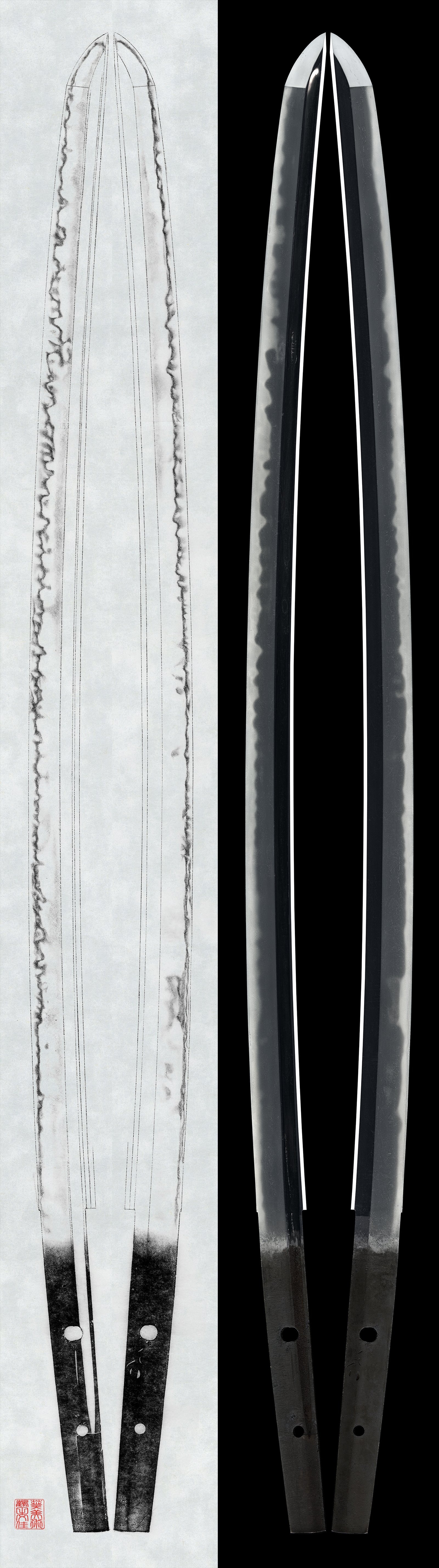
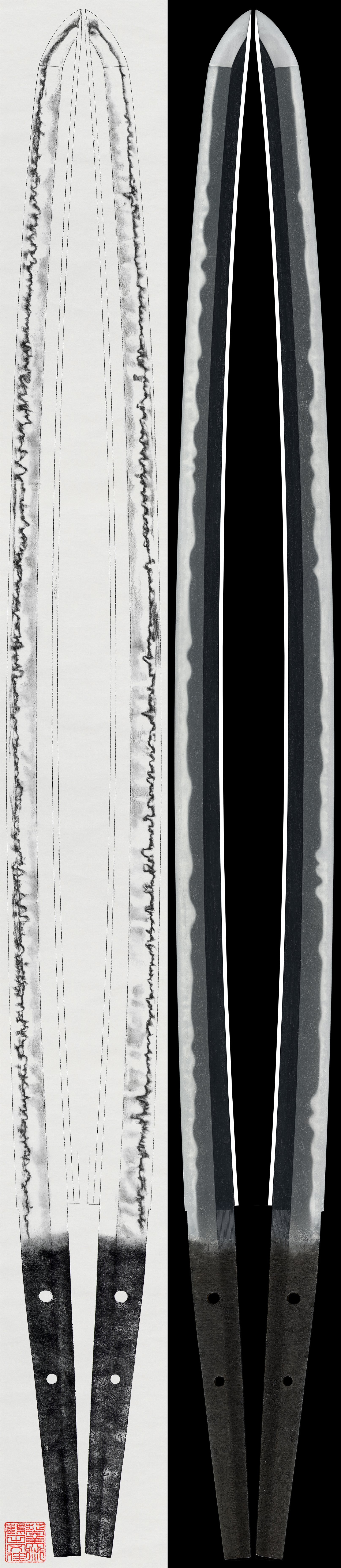
Across decades of designations the characterizes him in nearly the sentence each time: his workmanship broadly resembles that of the contemporary smiths, but generally "the tends to stand, and - is conspicuous in the tempered edge". The , the whose head swells like frog-spawn, is named "the most characteristic of Moriie and Mitsutada"; it persists among the juniors of the school and is only rarely seen in Mitsutada's son Nagamitsu. The appraisers read the trait at depth. On one where the is not especially overt in the itself, they note instead that the valleys of the turn -shaped toward the edge, and count that, with the standing forging, among the major points of his recognition. On unsigned blades the deciding point is the breaking into great clusters midway along the blade, where, the published record states, "lies the point of attribution to Moriie". Quality alone can carry the judgment: of an , unsigned the commentary writes flatly that work rising to this level of technique "could be no one but Moriie".
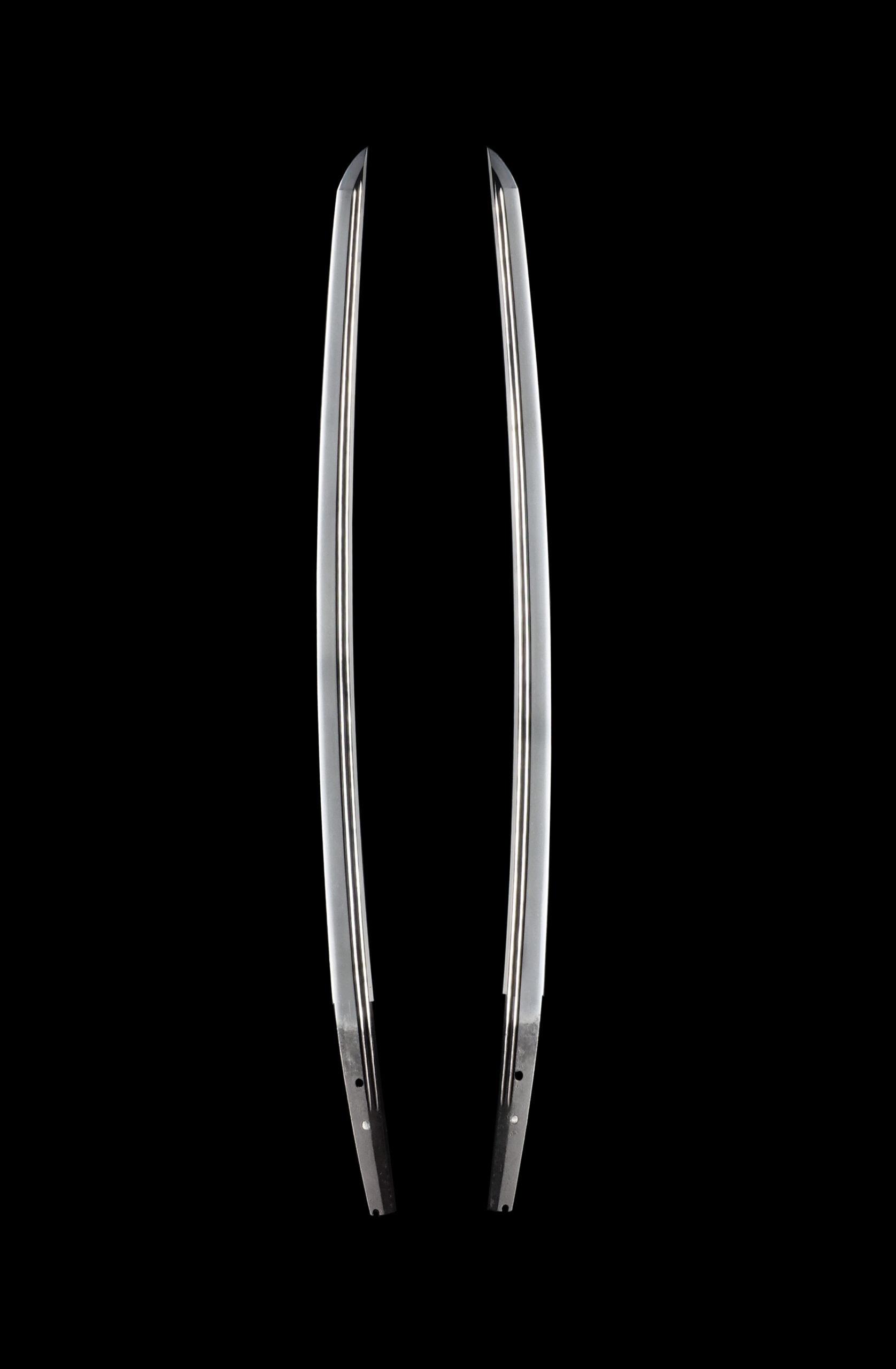
His carry high -zori, at the base and a ; several are long with thick , and the designations praise the dignity of the examples. The is that tends to stand, with , and over it a vivid rises; the notes return to that again and again. The temper at full power is a flamboyant mixing , and pointed elements with the , at times large as well; and enter well, the temper is -primary with , and run through, appear in places, and the is bright. The runs or settles toward . Of a signed whose stands vividly and whose deep- carries an exceptionally clear , the writes a finish that "must be called his masterpiece".
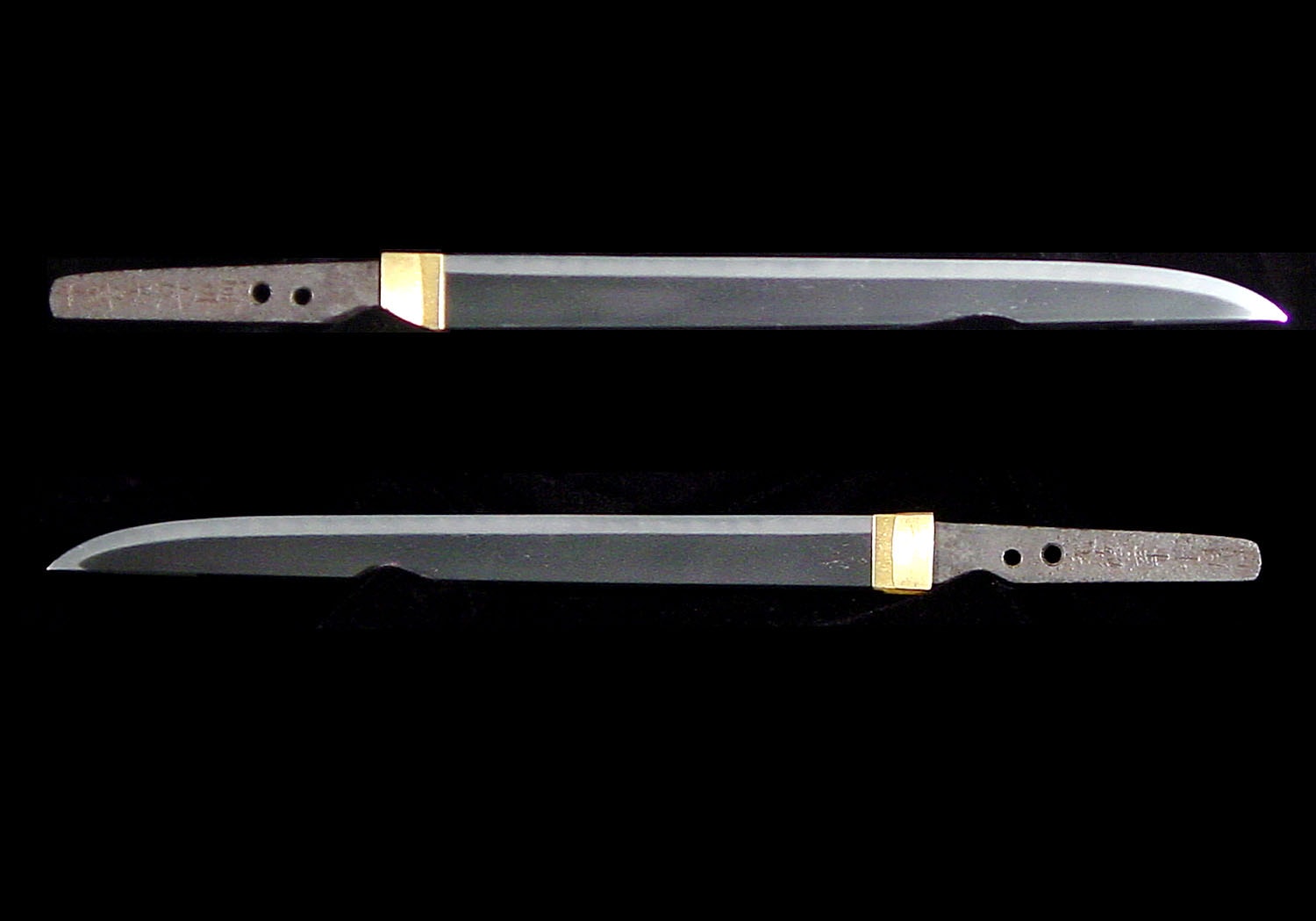
Beside that flamboyance the published sources recognize a second register, which they call his subdued class. A carries a base mixed with and over a standing with the finest , its tightening; a , a rare survivor in his name, shows tight and a narrow with -like and ; and one signed turns wholly small-patterned, its and set over a dense, tightly knit that the notes single out for praise. The large, boldly cut signature sits even over this quiet manner, and the so signed is judged a precious document for the relation between his and his workmanship. The generations behind the name are an open question, and the sources are candid about it. The standard view posits two, the first beside Mitsutada and the second beside Nagamitsu, yet the designations state that "a clear division between the first and second generations remains a subject for future research" and that "some advocate a single-smith theory". Honma went further, seeing at least three generations within the period alone and allowing that more than one hand may have cut the within a single workshop. Large characters on are traditionally read as the first generation, but the record warns that the generations cannot be divided by the size of the characters alone, and it notes that extant signed works of the first generation are comparatively few. Among the designated works gathered here twenty-two are signed against five unsigned, most with the large two-character ; on two blades a accompanies the signature, a point of documentary value with a parallel in a published in the Kozan .
His place in the school map is fixed by Mitsutada. The two worked in neighboring villages in the years, and the published sources say their manners show much in common; the differences they give are drawn from Moriie's own work, a that stands more often than the forging, and the a degree more insistent in the . That temper passed to the juniors of the line, and the school continued under Sanemori, who signed " no junin Umanojo Sanemori "; the Moriie name itself runs on into the , the latest dated examples reaching the Koan and Kentoku eras.
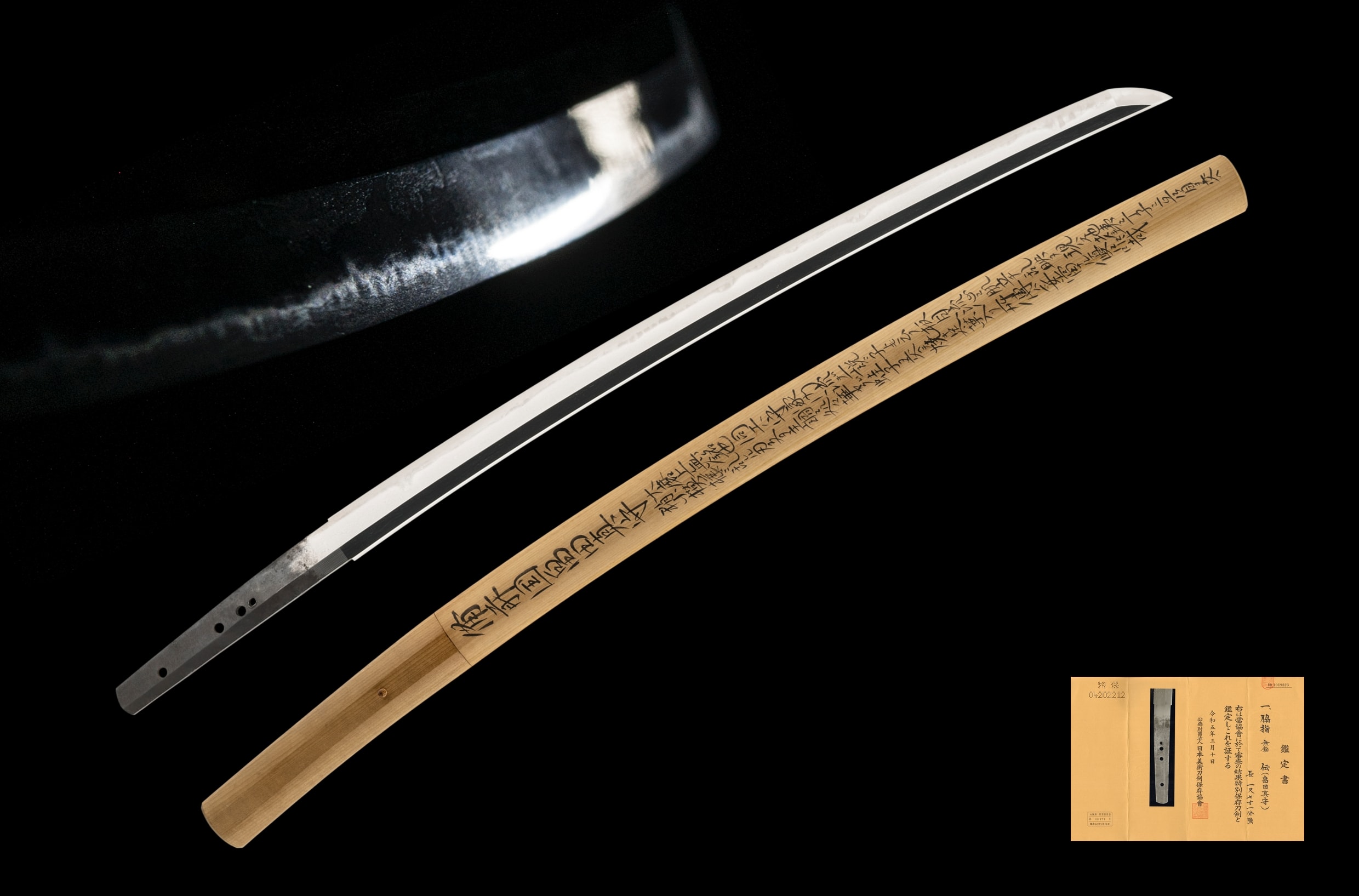
Fujishiro grades him Sai-jo , the top grade of his scale. Twenty-seven designated works stand on record: six Important Cultural Properties, five Bijutsuhin, and fifteen blades in the and tiers, three of them at the higher rank. The provenance recorded against nine of his blades runs through the great houses: the Tokugawa, among them Tokugawa Iesato and Tokugawa Kunijun, the Mitsui, the Hosokawa, the Uesugi, the Okudaira and the Imperial Family. Of recorded whereabouts, examples rest today with the Kyoto National Museum and the Eisei Bunko, and with the shrines Hie Jinja and Sumiyoshi Taisha; the Important Cultural Properties remain in such custody as cultural patrimony and do not trade. What a private collector may realistically encounter is the and tier, fifteen blades in all, held closely and appearing on the market only at long intervals; when one does appear it is most often a example, and a signed carrying the large two-character stands at the very top of what the name can offer.