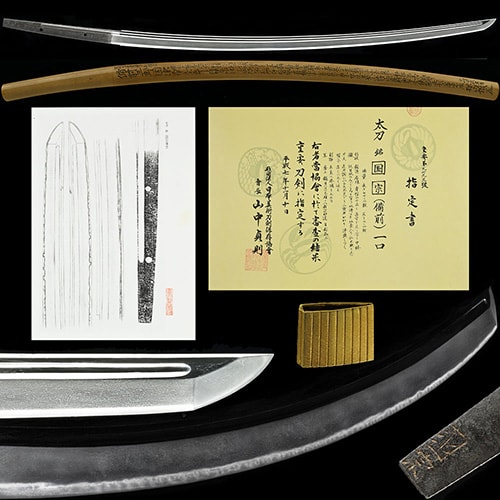
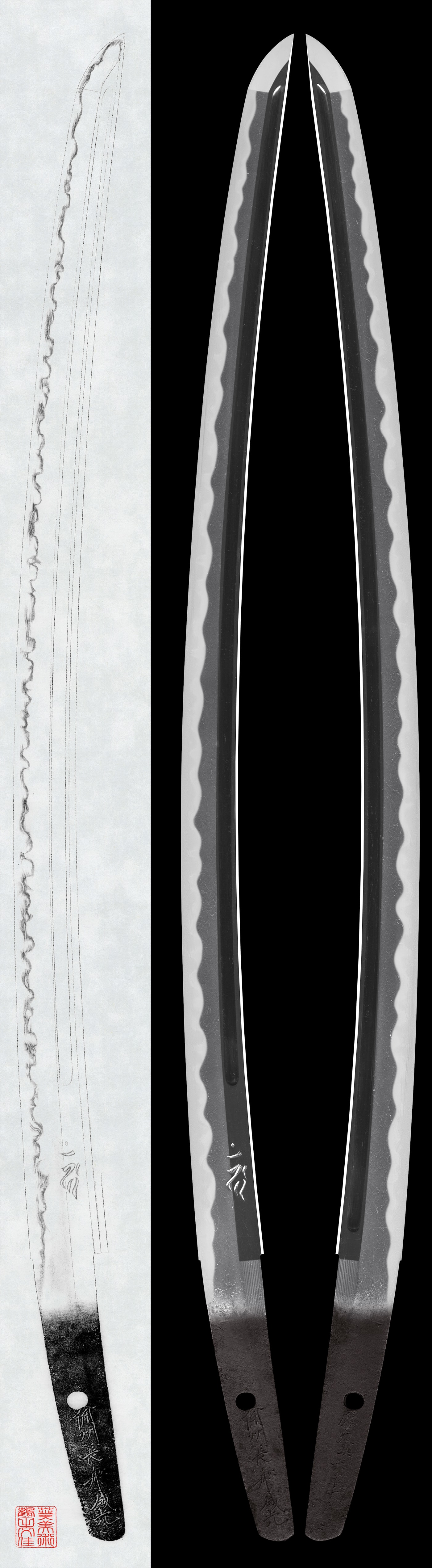
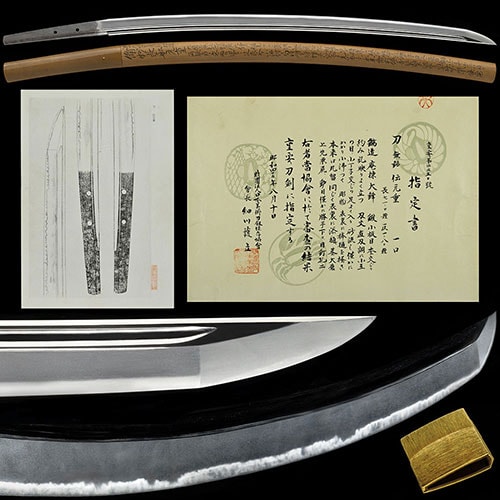
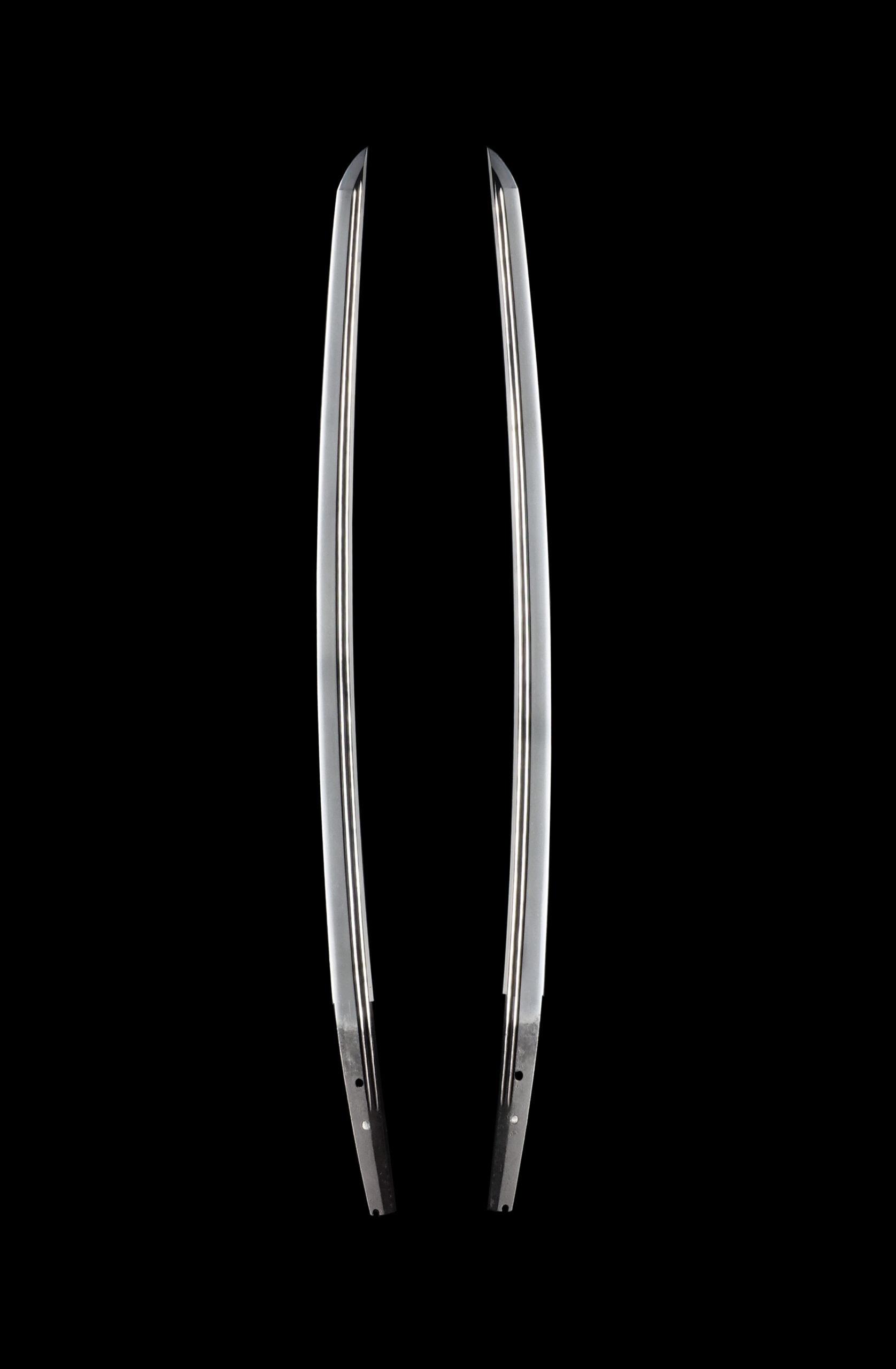
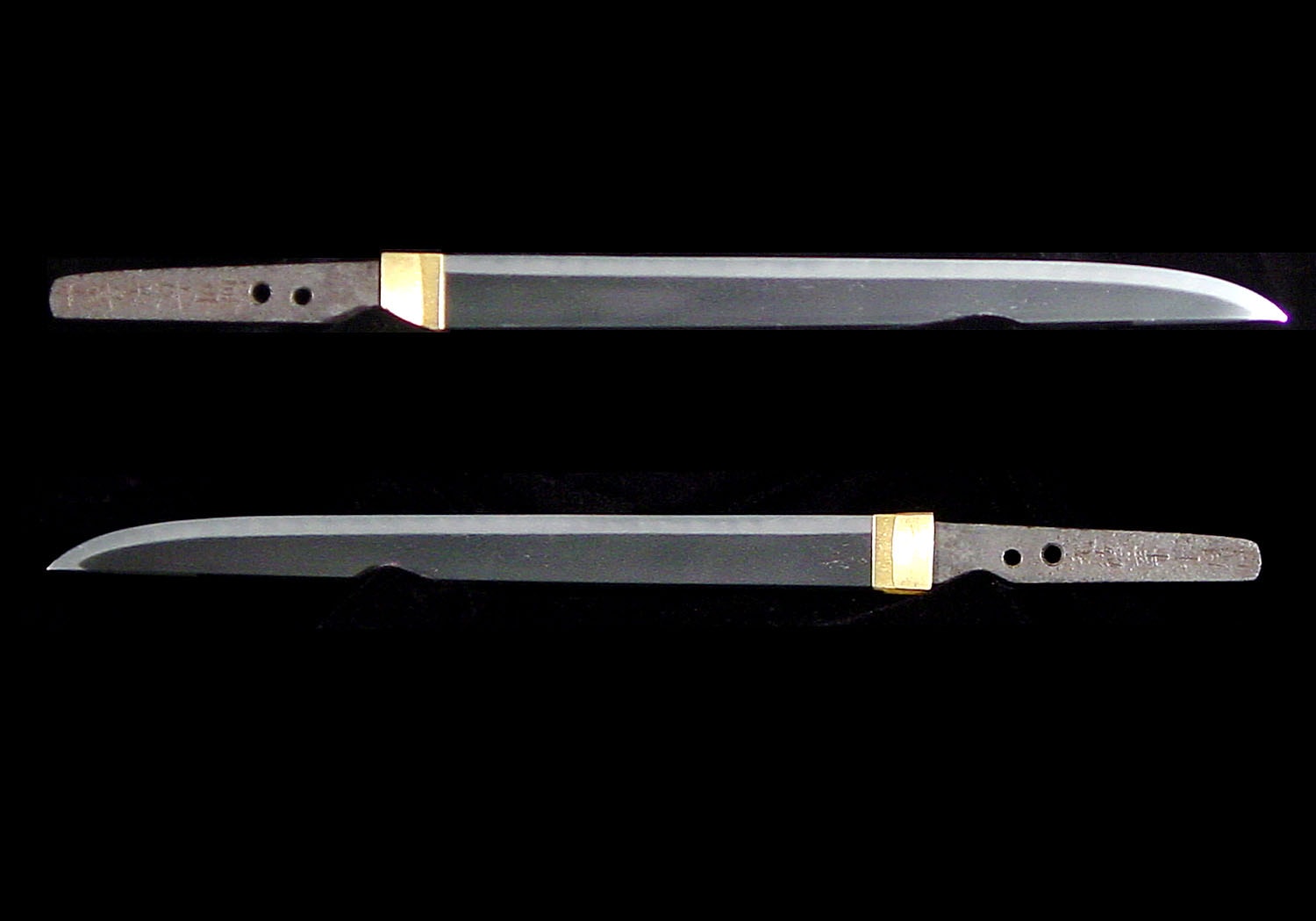
Nakahara Kunimune (中原国宗) is traditionally transmitted as a disciple of either the first or second generation Kunimune of the lineage. The Kunimune house resided at yet belonged to a line distinct from the group descending from Mitsutada; according to , the first-generation Kunimune was also known as " Saburo" and appears to have been active in nearly the period as Mitsutada and Morie. Regarding the appellation "Nakahara," one prevailing view holds it to be a place-name in Province, while another theory considers it the family surname of the Kunimune lineage; no settled conclusion has been reached. His active period is clearly established through dated inscriptions: extant works bear the dates Kagen 2 (1304), Kagen 4 (1306), Tokuji 3 (1308), and Enkyo 2 (1309), placing him firmly in the late period.
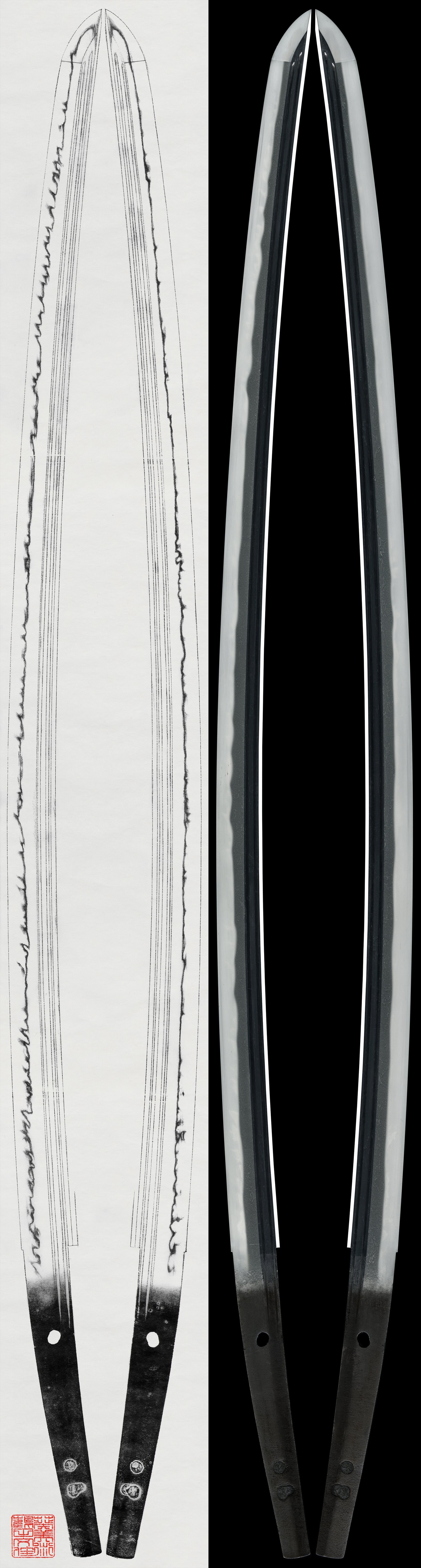
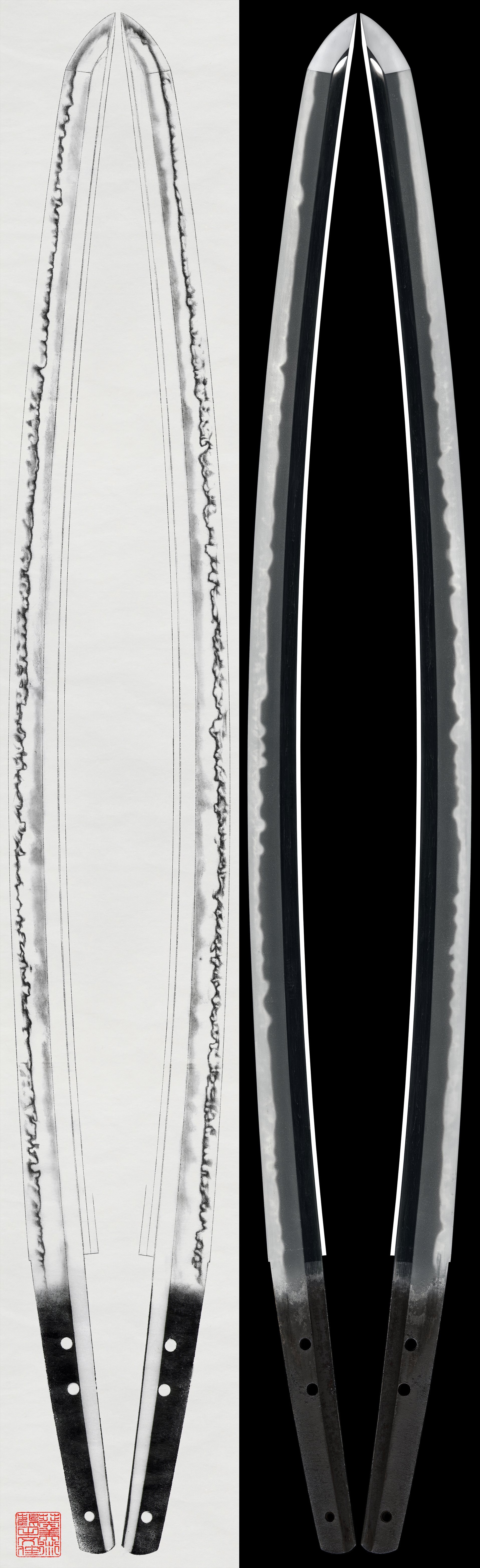
Nakahara Kunimune's forging characteristically employs a well-kneaded mixed with , upon which extremely fine adheres thickly, accompanied by delicate . A particularly striking feature of his work is the manner in which suji- and overlap to produce a stepped, -like effect — a phenomenon the considers especially noteworthy. In other works, the appears as a subdued, low mottled pattern in darker banded areas, with localized streak-like near the edge. The is consistently -based, at times with a slight admixture of in the lower half, with fine and entering well. The is bright with a tendency toward tightness, and adheres, while fine and appear in the best examples. The observes that his workmanship reveals a style from which an temperament — an -kishitsu — can be plainly sensed, and that at a glance his superior works call to mind the finest productions of Unsho.
The consistently praises both and as extremely — sound and well-preserved — across his surviving oeuvre, and his workmanship is assessed as demonstrating an excellent level of quality that reveals high technical skill. His dated inscriptions are repeatedly singled out as exceptionally valuable documentary material for understanding the breadth and scope of his working range. One was transmitted in the Satake family, lords of Kubota Domain in Akita, attesting to the esteem in which his work was held during the domain-administration period. All known works are described as constructed in a consistent vein, and together they establish Nakahara Kunimune as a smith of considerable accomplishment operating within, yet stylistically distinct from, the mainstream tradition.