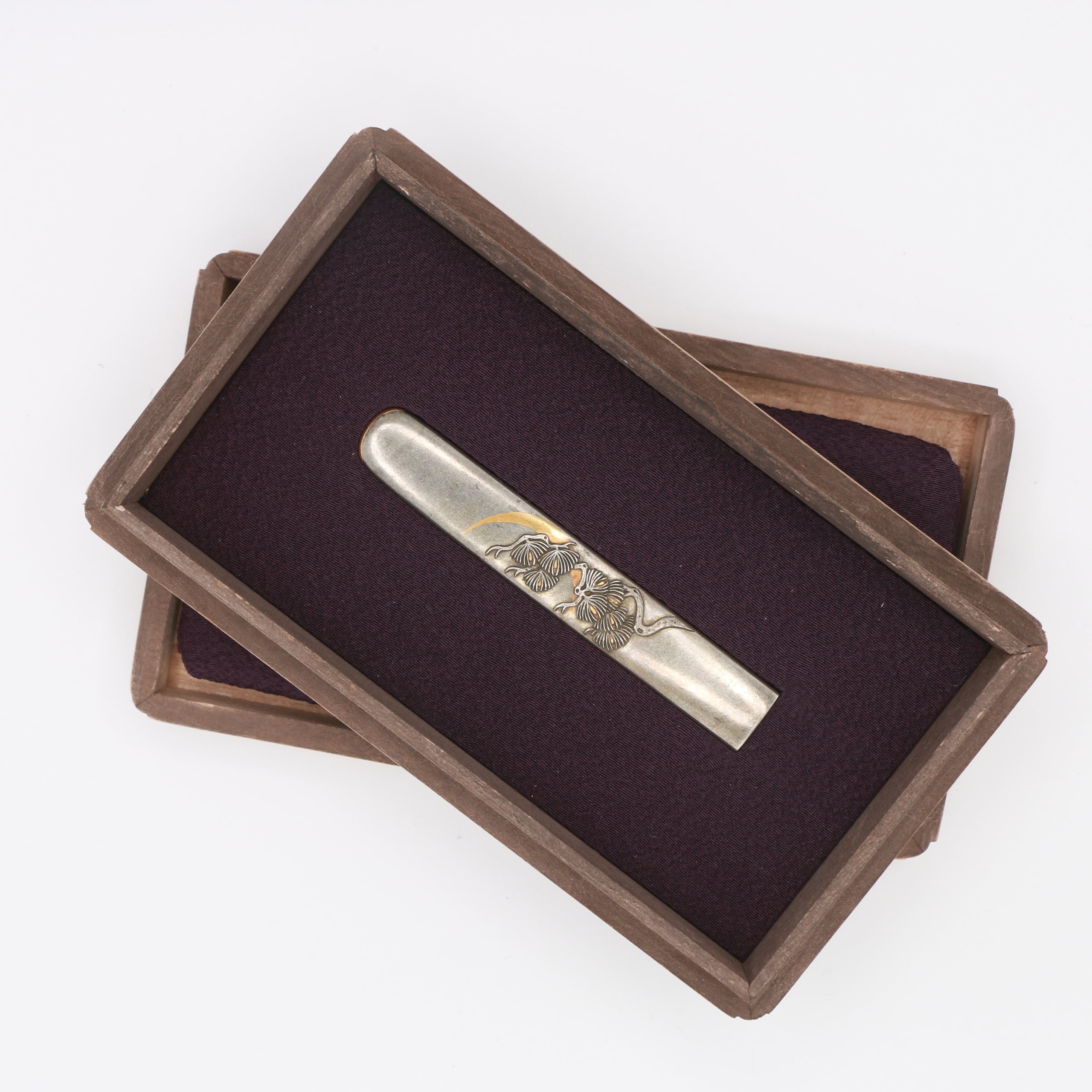
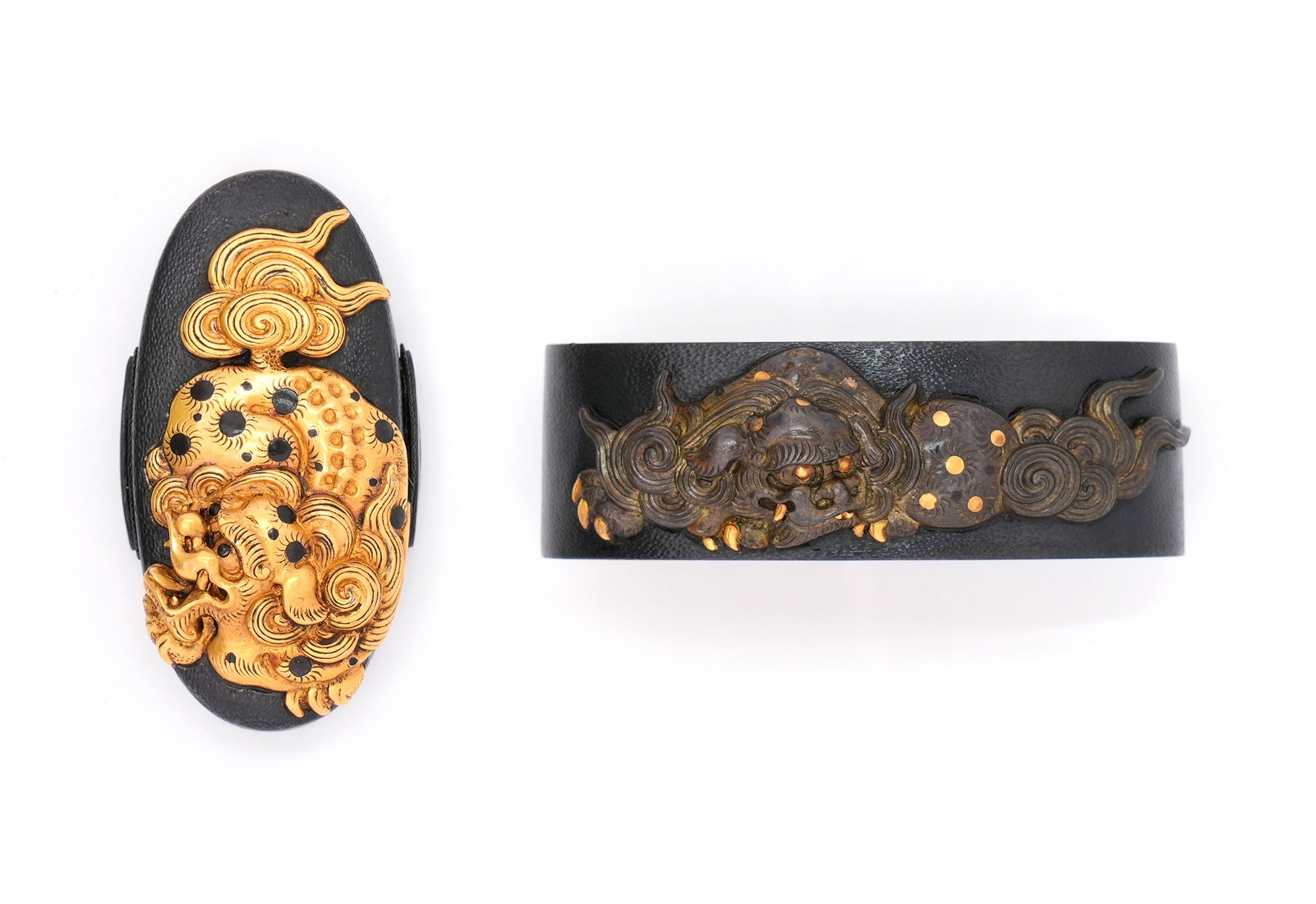
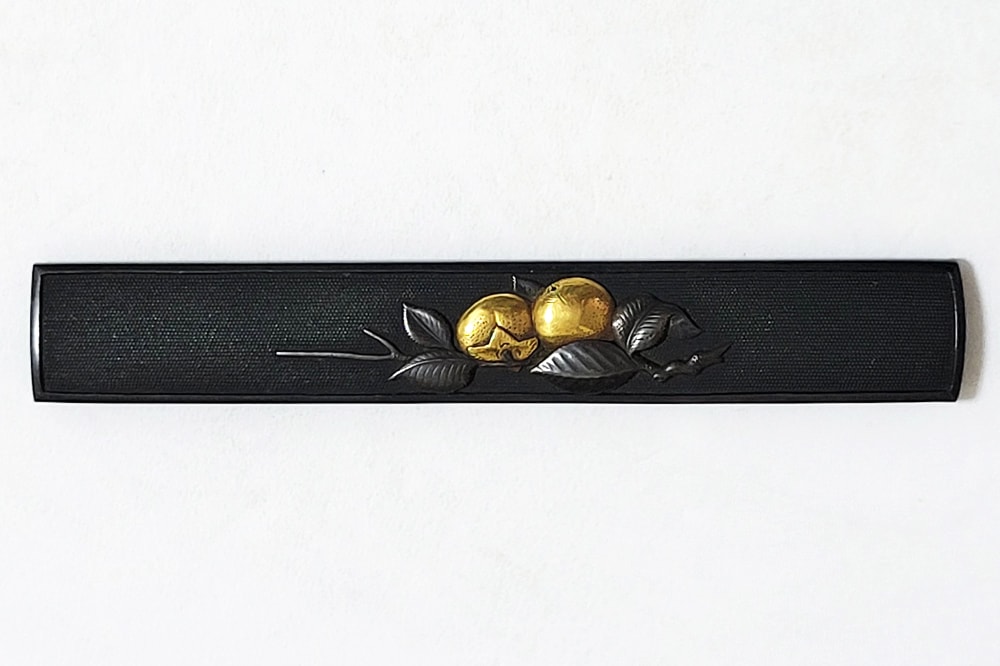
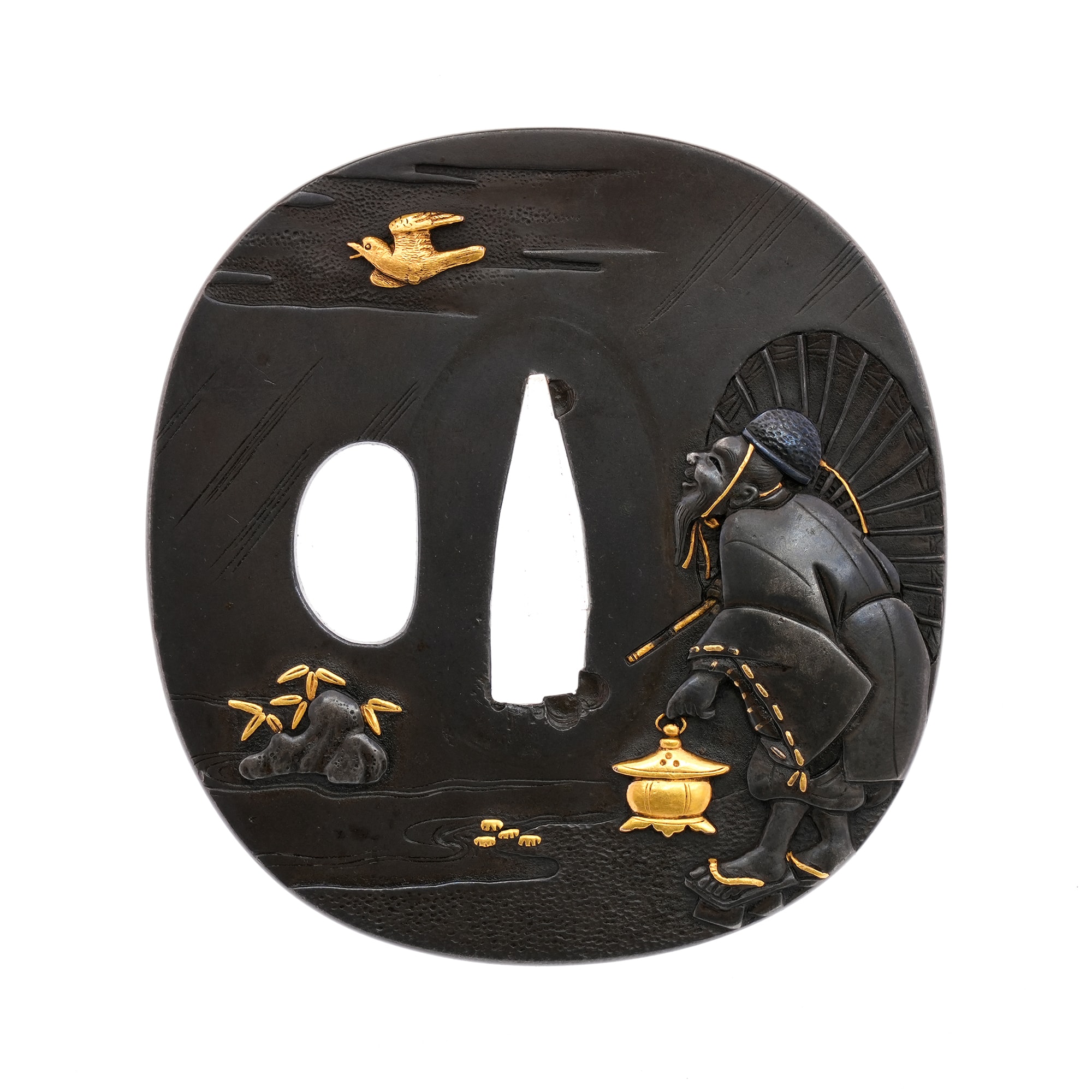
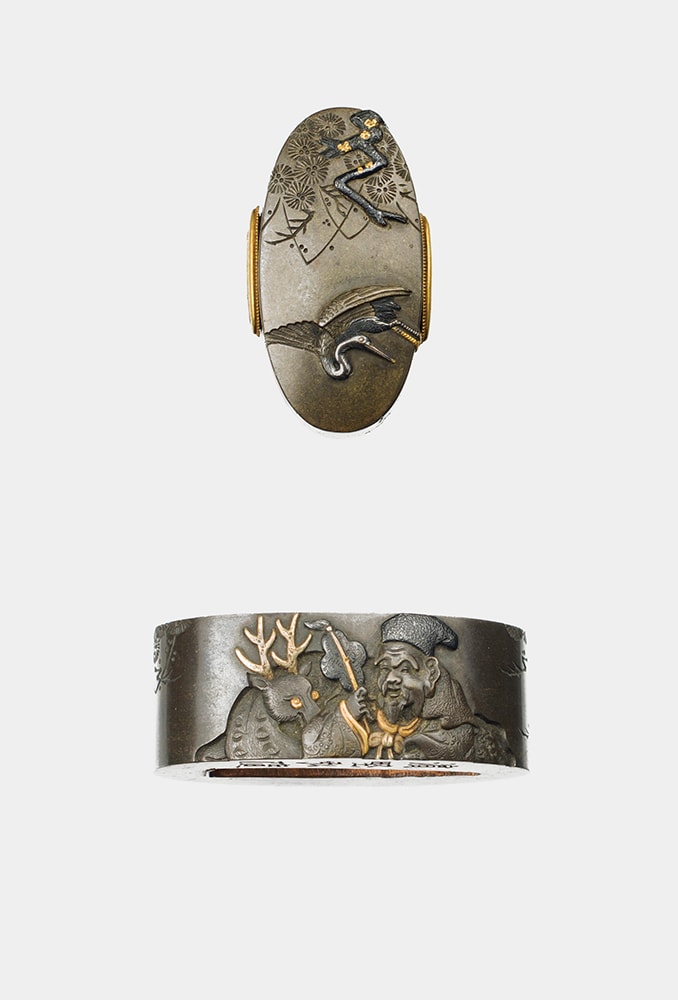
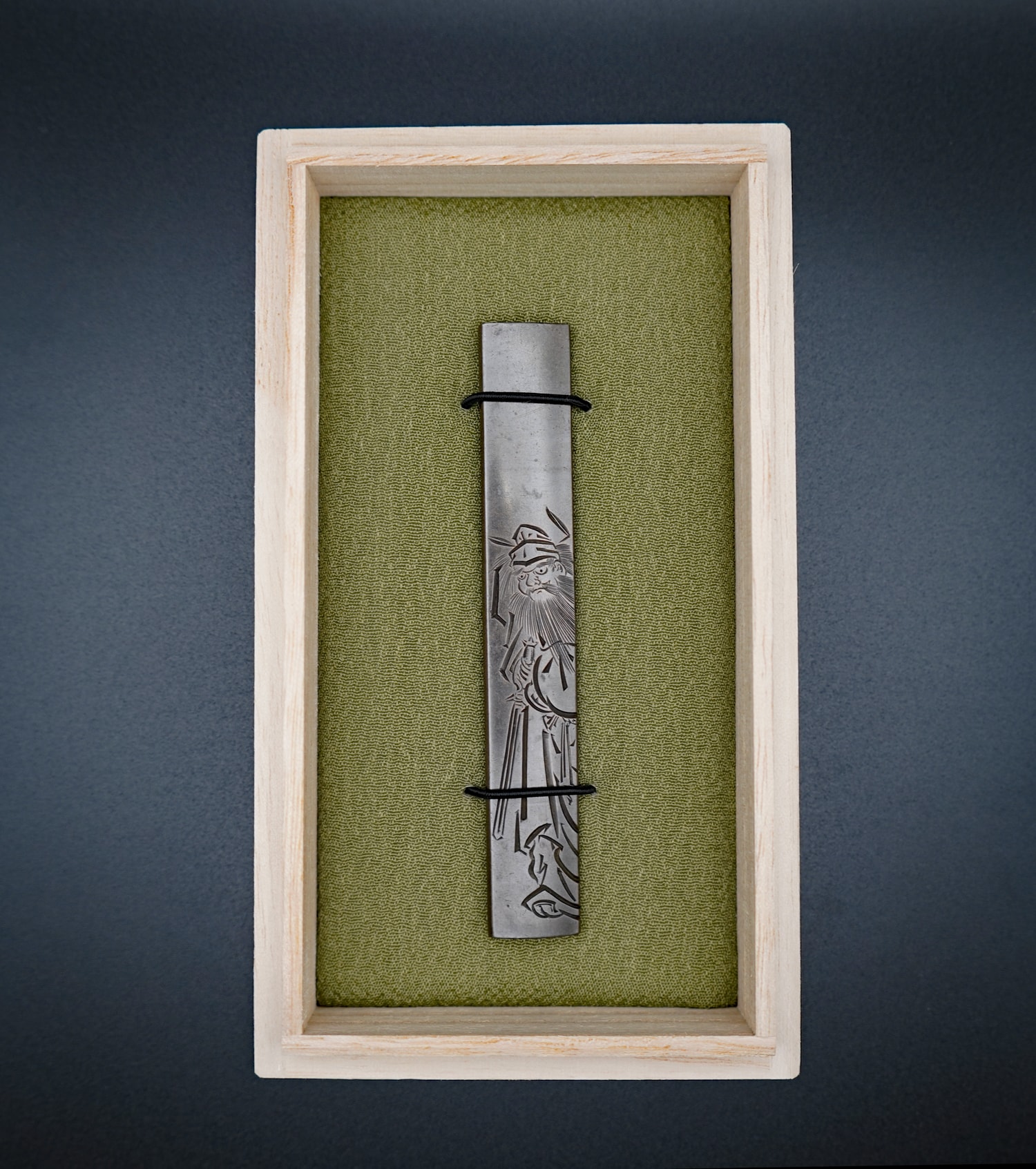
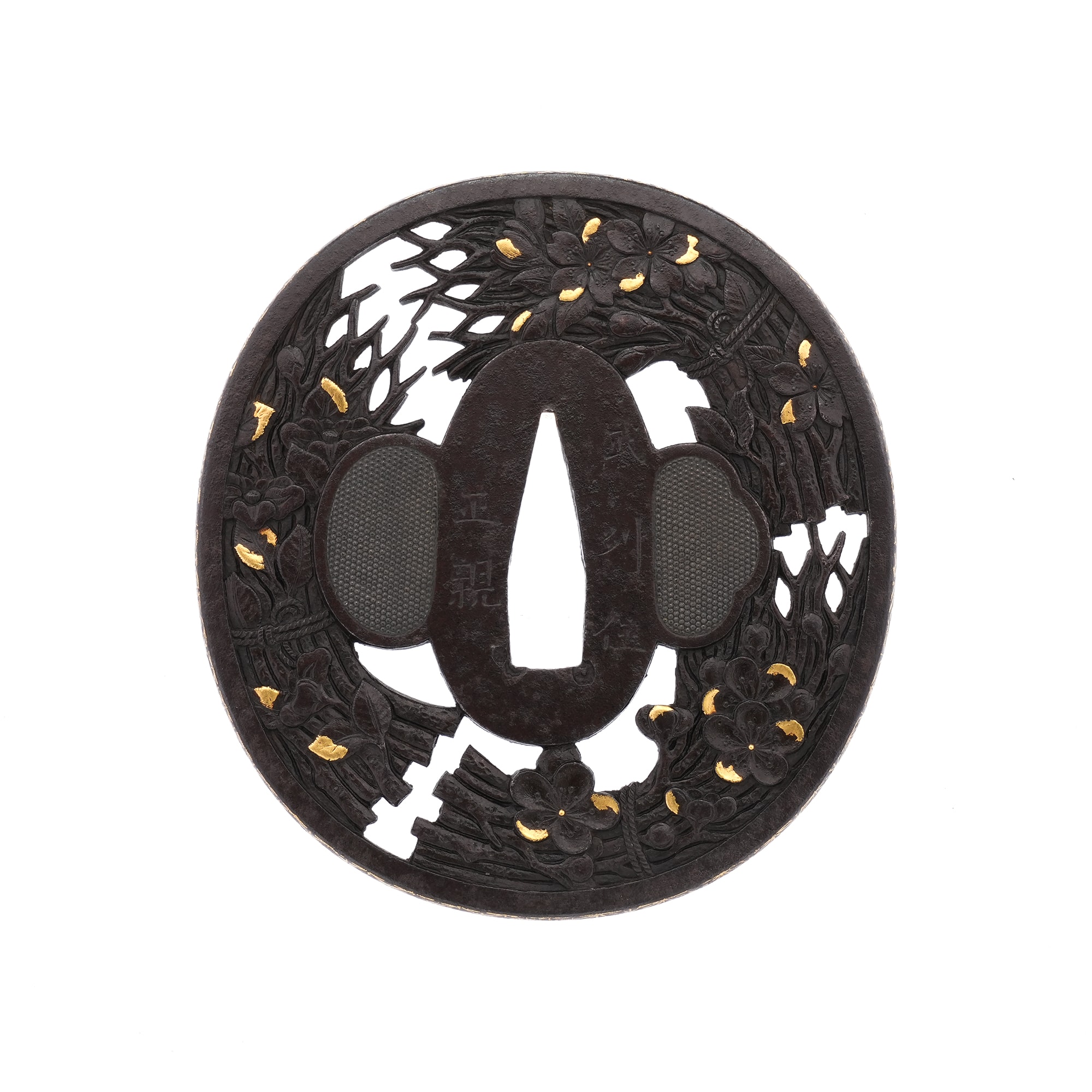
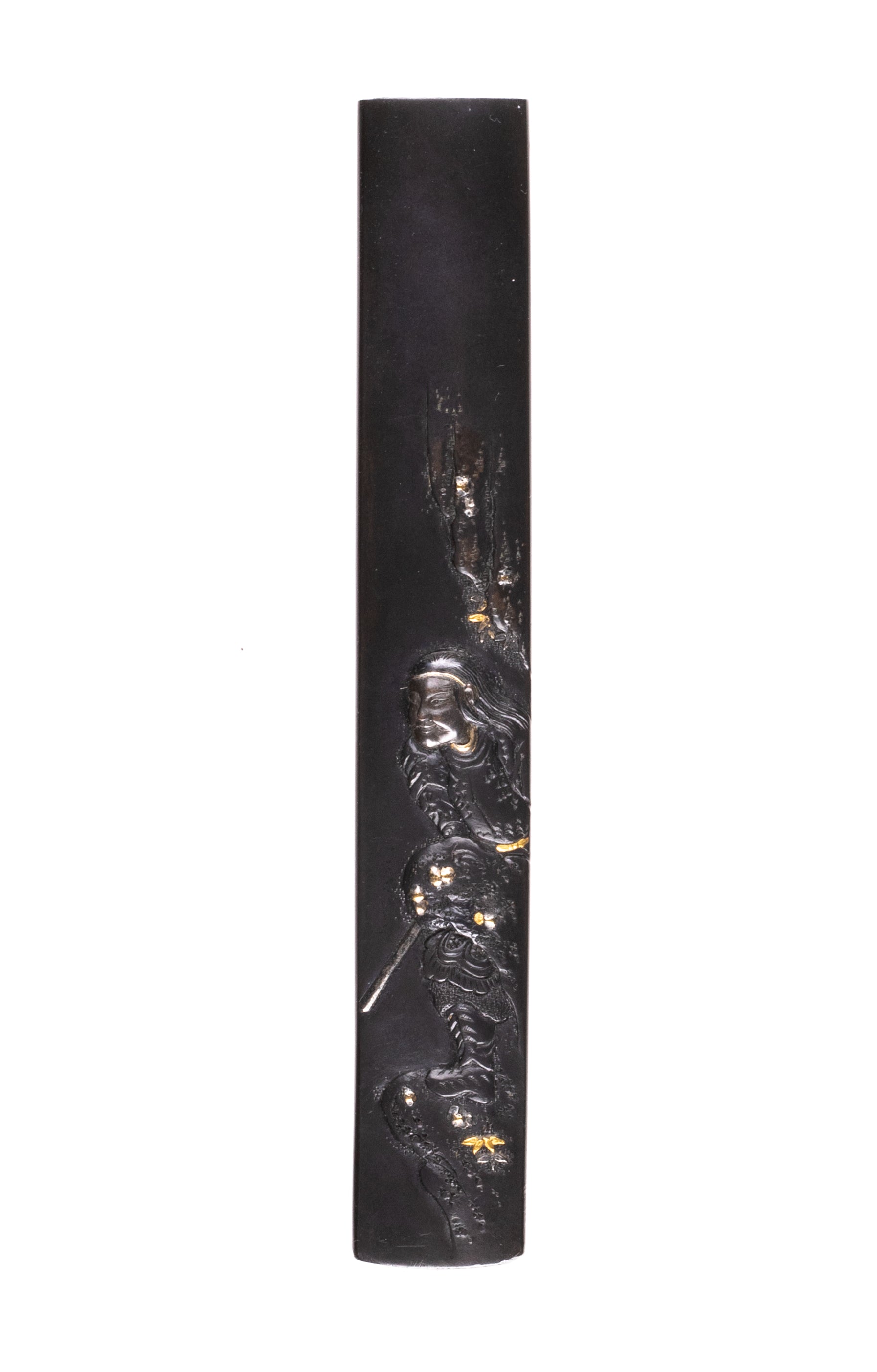
Sugiura Joi (1701-1761), known by the art name Issando, trained under Juei in the lineage of Nara Toshiharu and rose to become one of the celebrated "Three Masters of Nara" (Nara sansaku) alongside Toshihisa and Yasuchika. Born in Genroku 14, he also used the names Sen'emon and Eishun throughout his career. His place within this triumvirate secured his lasting reputation as one of the foremost independent metalworkers of the mid- period, working outside the patronage structures that governed the Goto house.
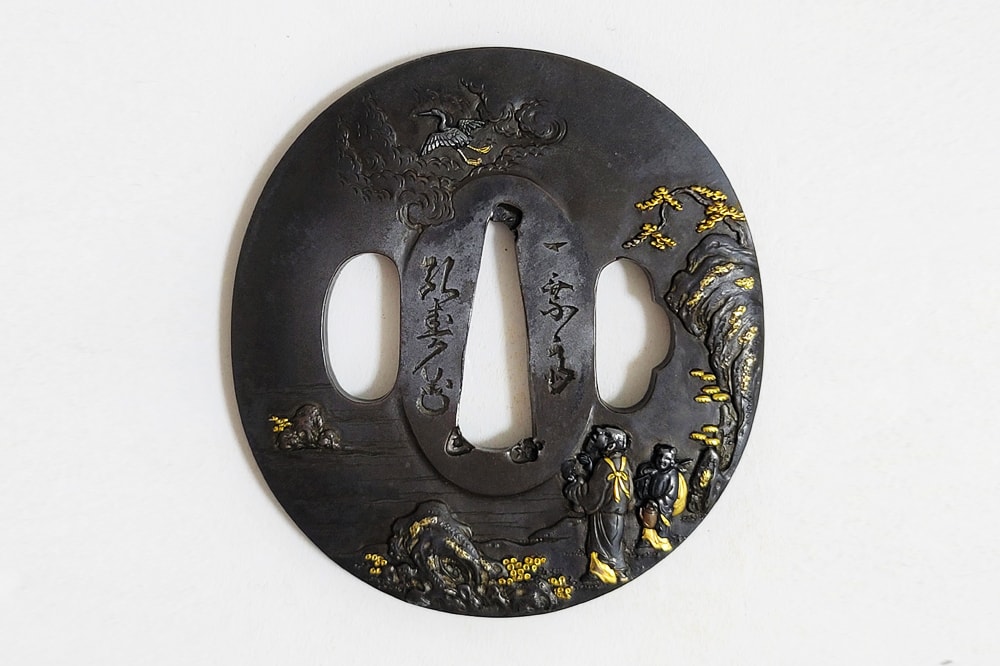
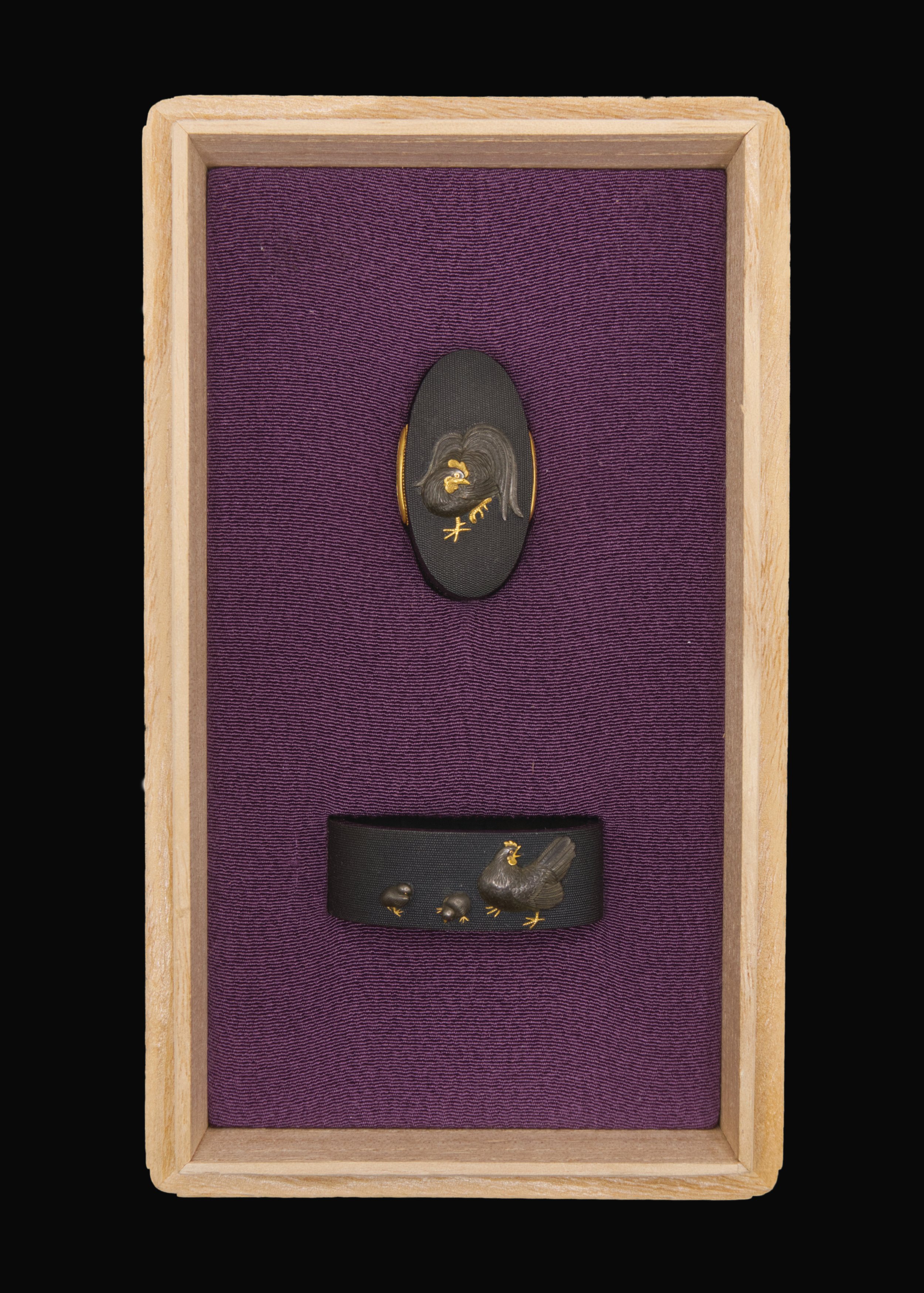
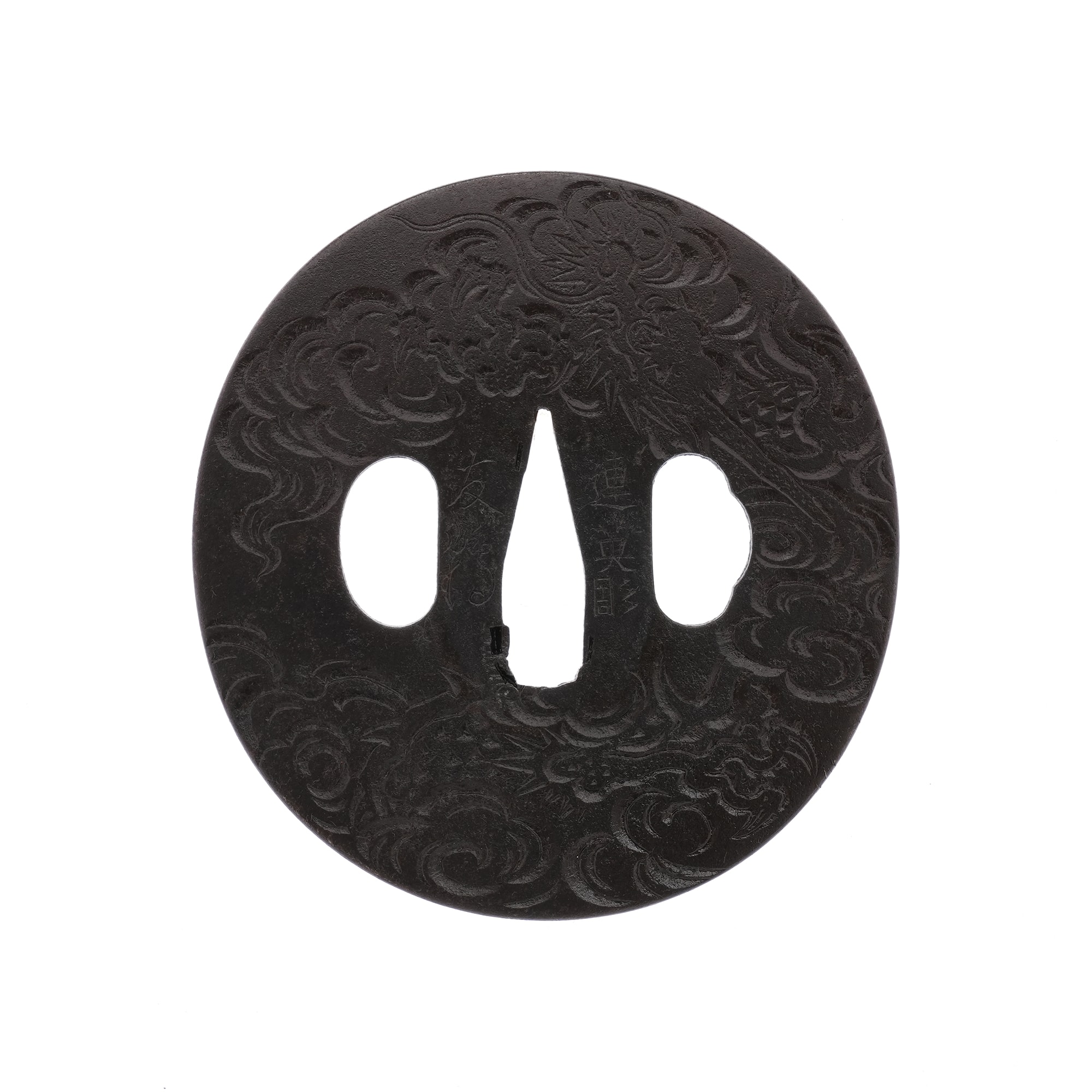
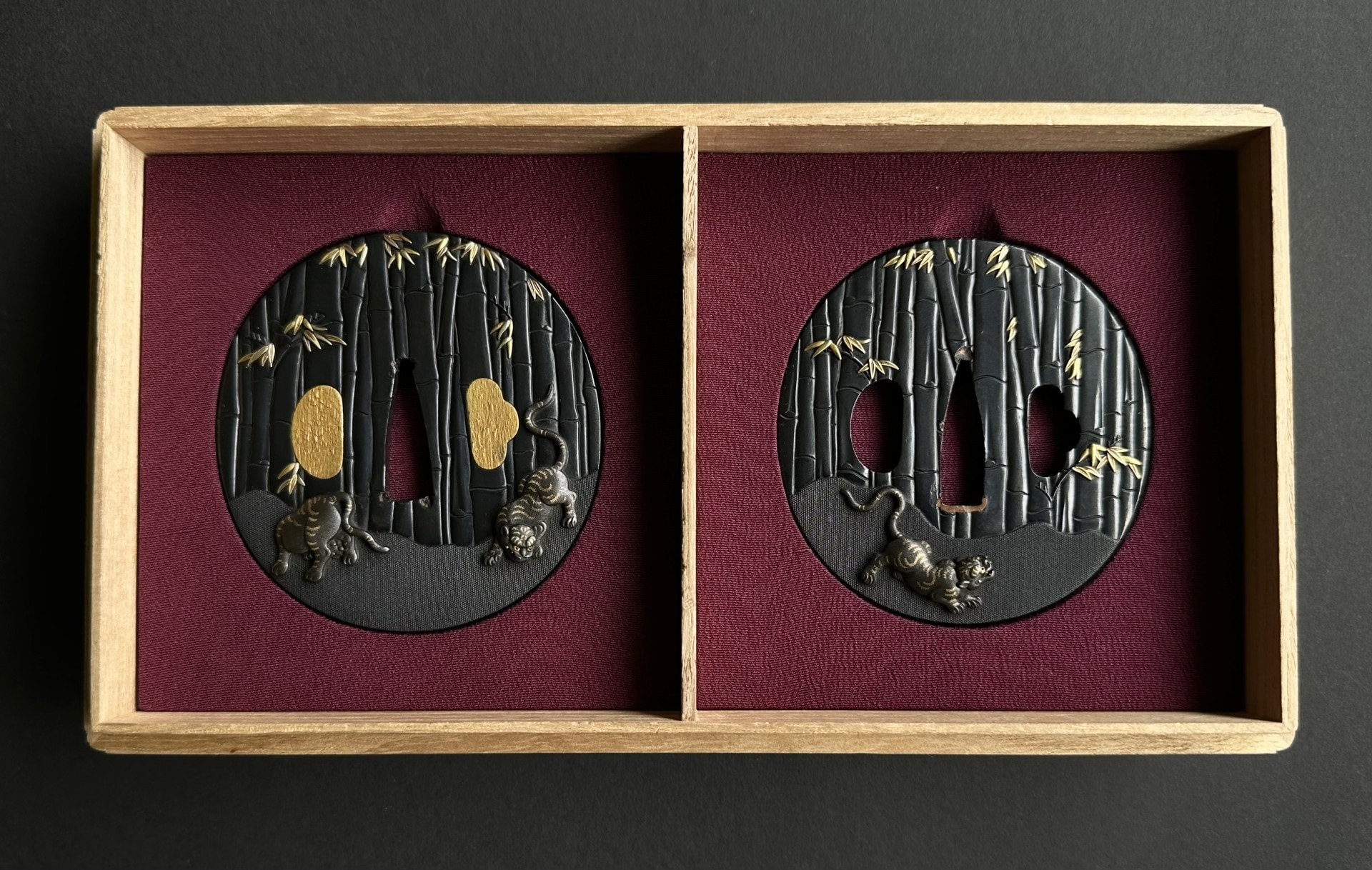
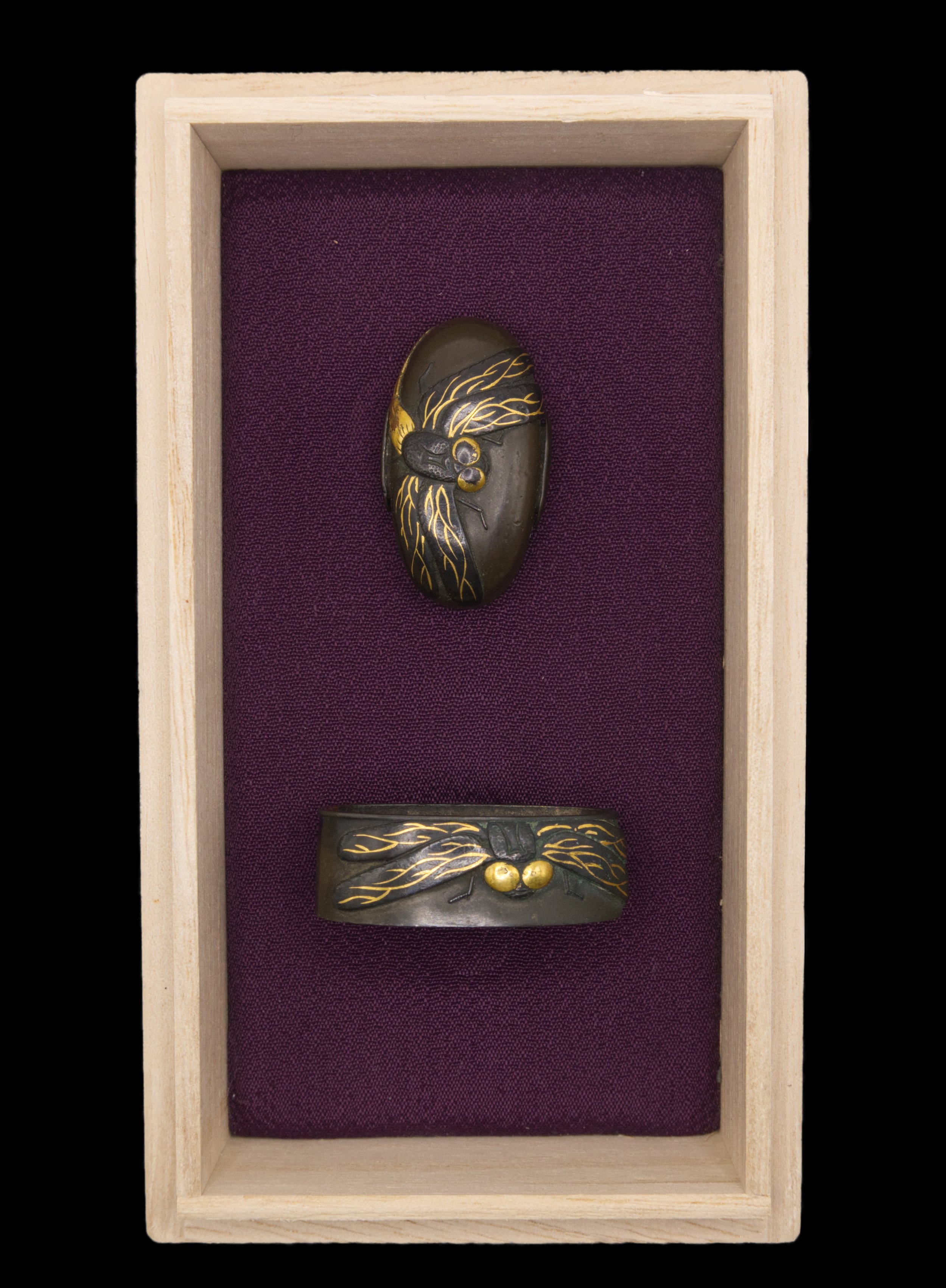
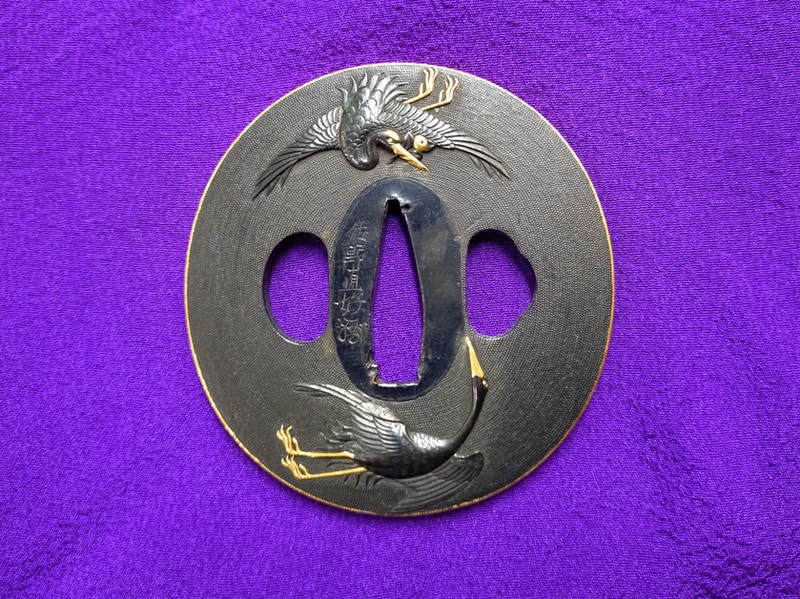
Joi is most closely identified with nikuaibori, a modulated relief-carving technique he developed into a personal specialty of unrivaled refinement. Through subtle variations in height and volume, he coaxed remarkably expressive surfaces from bare metal grounds, often completing entire compositions through chisel work alone, dispensing with (inlay) and (colored metal accents). His preferred format was the , where nikuaibori found its fullest expression on polished grounds. He also employed (fine line engraving) for textures such as fur and flowing water, and incisive for sharp geological forms. When he did turn to inlaid techniques, as in his sets on brass or plain copper () grounds, his (high relief) and displayed equal mastery, with precisely modulated gold and inlay enhancing the sculptural depth.
Joi's are recognized as extremely rare, making any authenticated example a significant survival. His most celebrated subject, the lion casting its cub into Chigiri Valley, exists in closely related versions across multiple designations and is published in the canonical reference no Hana. Whether rendering the anxious gaze of a parent lion or the lively expressions of Chinese boys at play, Joi's work is distinguished by its immediacy and the sheer expressive authority of his chisel.