NihontoWatch MonNihontoWatchBETA
MarketEncyclopedia
NihontoWatch Mon

NihontoWatchBETA

Market
Encyclopedia
Overview·Kantei·Dated Works·Designations·Blade Forms·Signatures·Lineage·School
OverviewKanteiDated WorksDesignationsBlade FormsSignaturesLineageSchool
  1. Schools
  2. Shimada
  3. Yoshisuke

Shimada Yoshisuke

義助

Jūyō
Vol. 19, No. 91 · Tantō

Shimada Yoshisuke

義助

4 ranked works

ProvinceSurugaEraKosho (1455–1457)PeriodMuromachiSchoolShimadaTraditionSoshu-denGeneration1stToko Taikan500(top 26%)TypeSwordsmithCodeYOS1672
4Jūyō Tōken

Overview

The oldest dated blade to survive under the name Yoshisuke is a inscribed Suruga no ju Yoshisuke , dated the eighth month of Eisho 2 (1505), and from that fixed point the early designated work of the Shimada group of Suruga Province can be read. Yoshisuke is the principal name of that group, a school the published sources place in Suruga and read as strongly marked by the forging of neighboring . The sword directories order the line with care, placing a first generation in the Kosho era, a second around Eisho and Daiei, and the name then continuing in succession down into the period, though the directories disagree among themselves, one of them assigning a Yoshisuke of Tensho to a fourth generation. The four blades on record here gather in the half-century from the Eisho through the Daiei and Tenbun eras, and the fixes their dates by the inscriptions cut into their tangs rather than by the directory chronology, so that the surviving signed and dated pieces become the anchor on which the early history of the name rests.

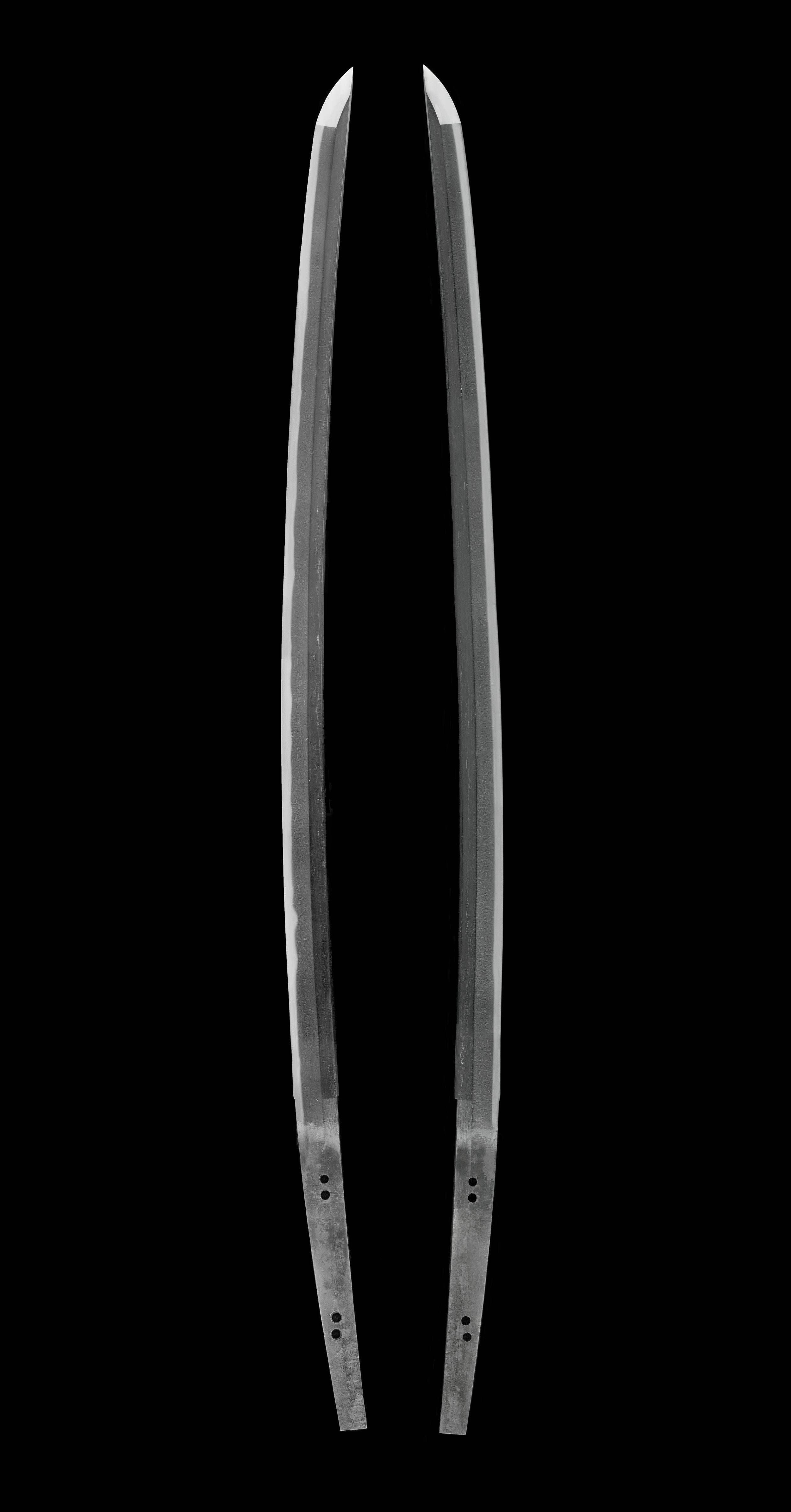
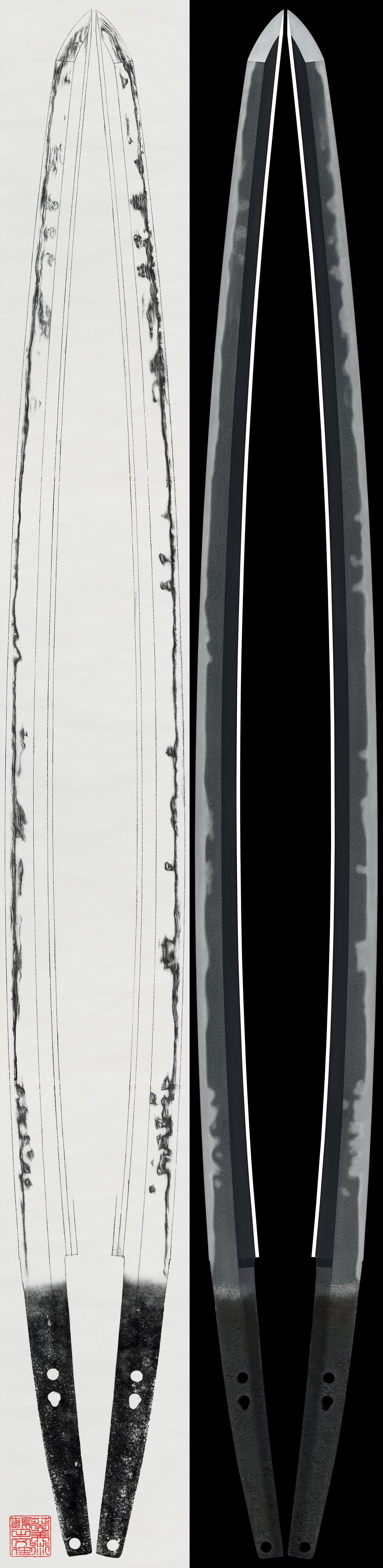
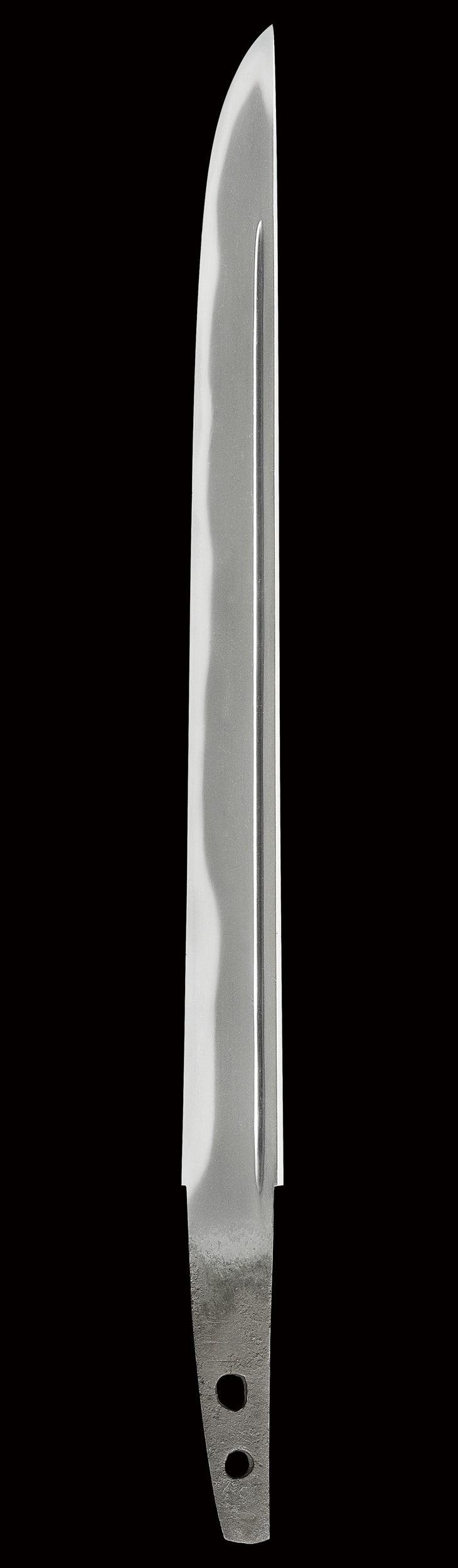
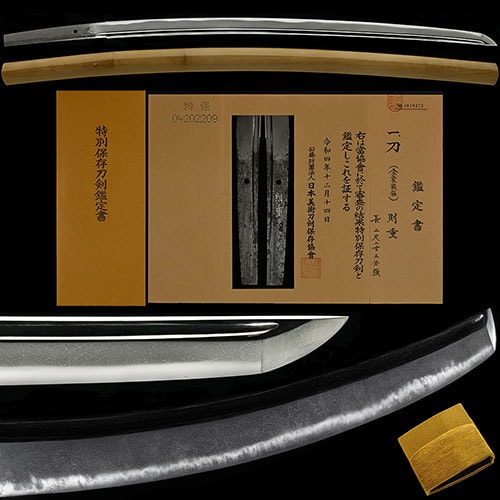
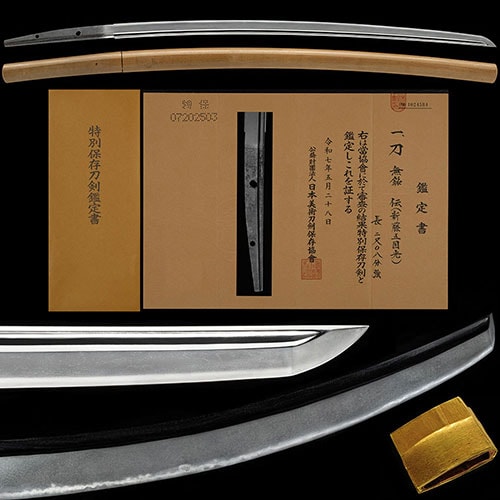
The hand that most distinguishes Yoshisuke is the one carried on the , where the inheritance the school is known for stands at its clearest. Of the Daiei the published sources write that Yoshisuke received strong influence from workmanship, judging it virtually certain, and the blade bears out the judgment. Over a flowing that stands open in , with adhering and entering, he tempers a mixed pattern that takes in , the kept somewhat tight with and running through it, the activity broken in places into a boxed look where discoloration sets the into . The runs , rounded at the tip with a long return and tempered deep down the in . The form is with , the curvature shallow and the point a large , and the surfaces are carried with skilled , a descending finished in with a relief at the waist of the and a on the . The published sources judge the workmanship of both and good and the carving skilled, and call the blade close in these respects to late work.

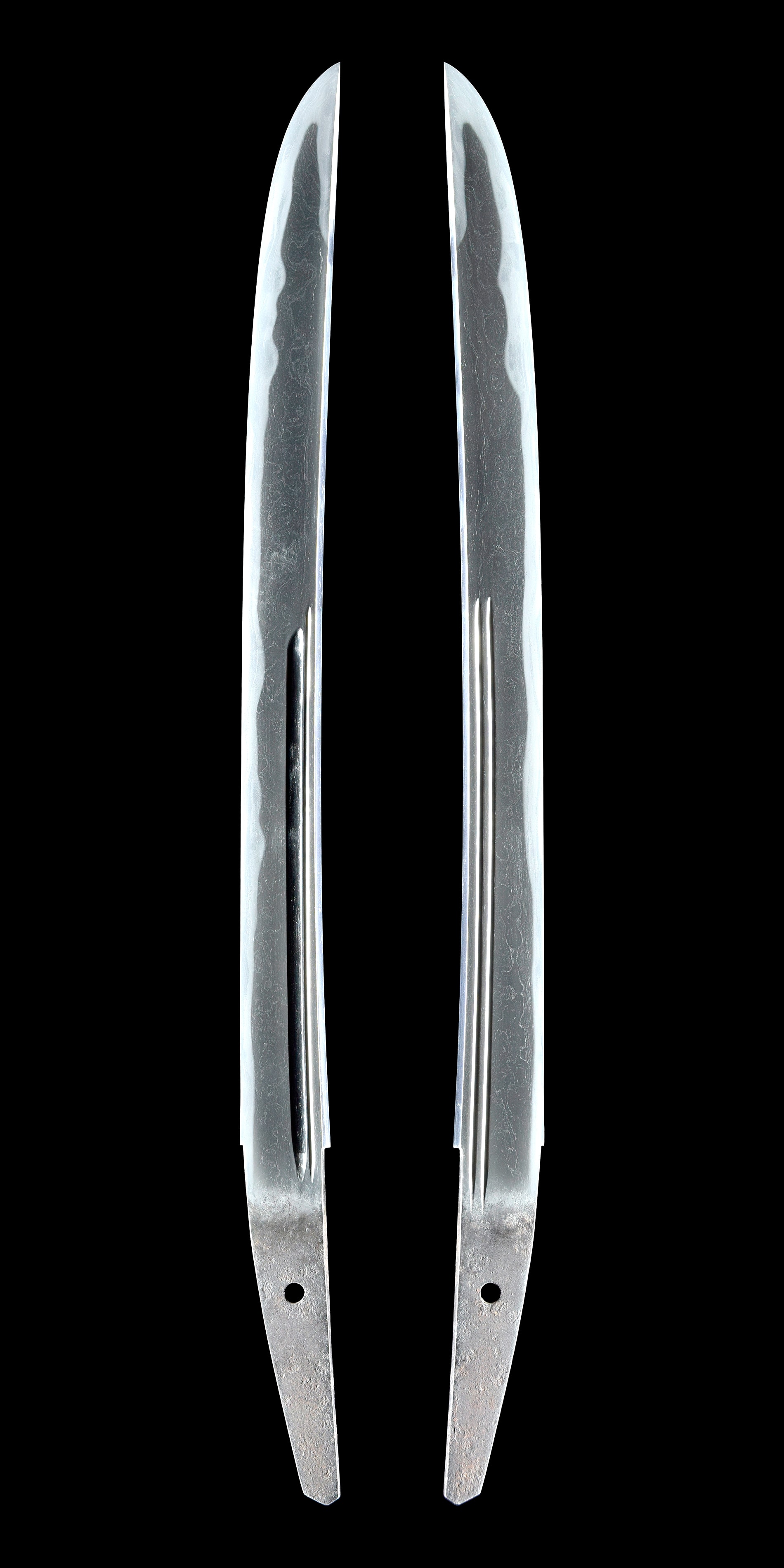
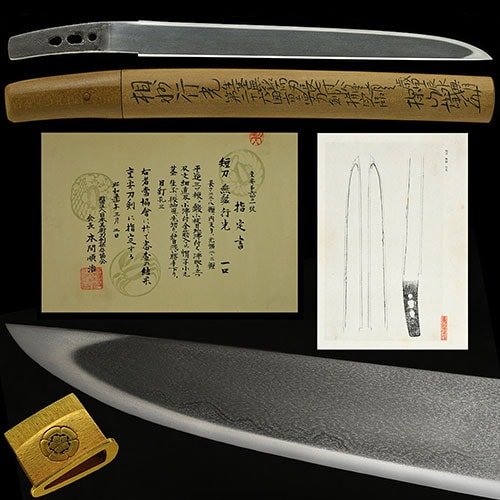
The quieter half of him lives on the and the , where the school's own steel is most plainly seen. The there is a tightly forged , areas of mixing in places and a tendency entering toward the , the tone turning somewhat whitish, with forming well. Over that he sets a shallow mixed with on the and a with on the , the Eisho carrying a large with a flavor; the runs deep and adhere well, streams through, and the frays into in places. The is to on most, becoming an on the Eisho piece. The carving carries through this register as well, a set within the and, on one , cut in openwork , with a and and a shobu- on the . Across these smaller blades the manner is consistent and self-evidently the school's, the whitish tight and the deep- temper running from one piece to the next.

The corpus reads, then, as two manners sorted by form rather than by date, the broad -leaning on the one side and the school's and hand on the other, and the dated tangs let the two be held against the directory chronology. Of the Eisho the published sources note that among extant works those bearing an Eisho date are the oldest, and of the Daiei that the date on its tang is extremely valuable, the early history of the Shimada Yoshisuke name being argued from these surviving inscriptions rather than from the generation count the directories propose. The openwork carving draws its own comment, the published sources calling the on the post-Tenbun an unusual thing to find, and the blade is judged good in and and a valuable reference piece. These are the notes the judges return to across the four blades, the dated inscription as the school's particular value and the carving as a mark of its skill.

Within the school Yoshisuke stands as its central name, the hand the published sources reach for when they describe the Shimada group, and the tie is the thread that runs through every designation. His own grounded distinctions are internal to that group, the open standing and the deep and the relief carving that set the close to late work on the one side, the tight whitish and the quiet that mark the on the other. No successor line can be drawn forward through any single hand here, the four signed blades being too thin a corpus for that, but the name itself continues through several generations of Shimada smiths down into the period, and the published sources value these early pieces precisely as material for the study of that descent, the Daiei and Eisho tangs called extremely valuable because the chronology of the early generations rests on them.

On the matter of acquirability the record is modest and clear. Yoshisuke holds no National Treasures and no Important Cultural Properties; the four blades on record are all , signed and dated where the tang allows, and none carries a recorded or a named institutional holder. They sit, that is, in the tradeable tier rather than in the patrimony that never moves, which makes a Shimada Yoshisuke a comparatively attainable thing among designated swords, less a landmark to be waited for than a well-made blade of good workmanship that comes to a collector from time to time. What recommends one is what the published sources recommend in them, the dated tang that anchors the school's chronology, the skilled and carving, and the late- character of the better , each piece valued as reference material for a group whose early history is read off these very blades. For the collector who wants a documented example of the Suruga school at the point where the influence is plainest, the early Shimada Yoshisuke is among the more approachable of the named hands.
Kantei

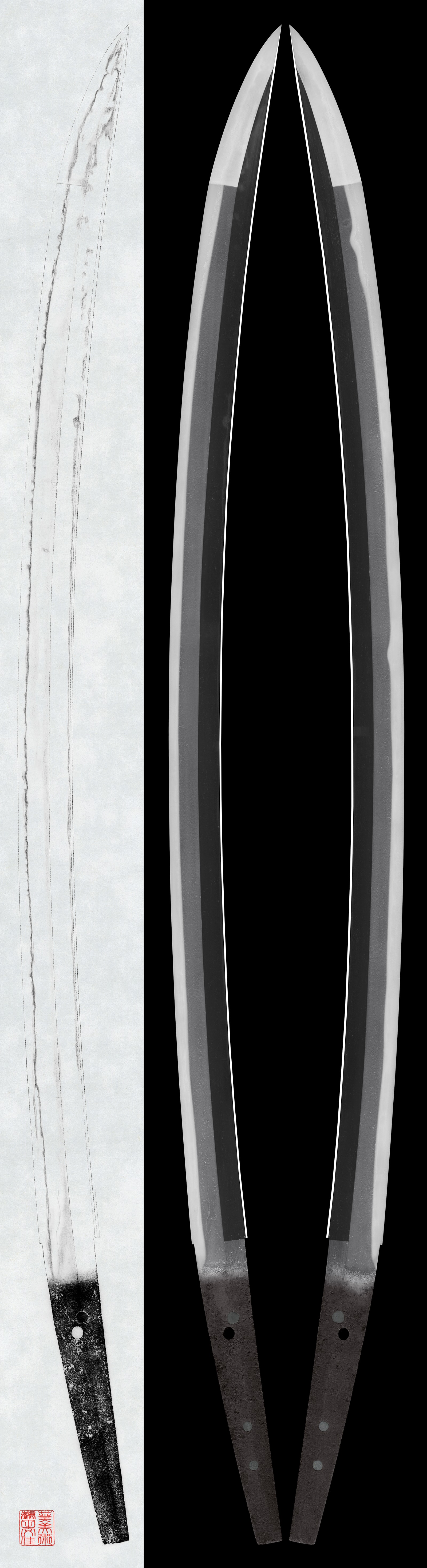
two Shimada manners read across the four early designated blades, sorted by form. The katana carries a Soshu-leaning hand: a flowing itame standing open with ji-nie and chikei, the temper mixing togariba with a tight nioiguchi and ko-nie, sunagashi running, the boshi midare-komi running long and deep, which the published sources call close to late Soshu work. The tanto and wakizashi carry the school's quieter hand: a tightly forged itame turning whitish, a shallow notare or large gunome with a chofu flavor in deep nioi and well-adhering nie, the boshi a ko-maru. Skilled horimono (kurikara, bonji, suken), some in openwork, run through both, and the dated tang inscriptions anchor the chronology.

Yoshisuke is the principal name of the Shimada group of Suruga Province, a school whose work the published sources read as strongly marked by the influence of () forging. The name runs across several generations, and the sword directories order it carefully: a first generation is placed in the Kosho era, a second around Eisho and Daiei, and the name then continues in succession down into the period. Among extant blades that retain a dated inscription, the oldest is a of Eisho 2, and the early designated works gather in the half-century from that date through the Daiei and Tenbun eras. Two manners are read across these blades. One is a -leaning hand carried on the , a flowing that stands open with and , the temper a mixed pattern taking in with and a running long and deep, the a with shallow curvature and a large and the surfaces carried with skilled , all of which the published sources judge close to late work. The other is the school's and hand, a tightly forged turning whitish, the temper a shallow or large with a chofu flavor in deep and well-adhering , running through and the a quiet , with , and cut into the blade, on one in openwork. The dated tang inscriptions are the school's particular value, the published record calling the surviving signed and dated pieces extremely valuable reference material for a group whose chronology rests on them.

Diagnostic discriminators

75% of his works

50% of his works

Observation by phase

The Soshu-leaning katana hand, a flowing standing itame with togariba and a long midare-komi boshi

the dated katana: the single longest blade of the four carries the Soshu-leaning manner at its fullest, the flowing standing itame, the togariba in the ha, the long deep midare-komi boshi and the relief kurikara and sanko-ken together, the features the published sources call close to late Soshu work

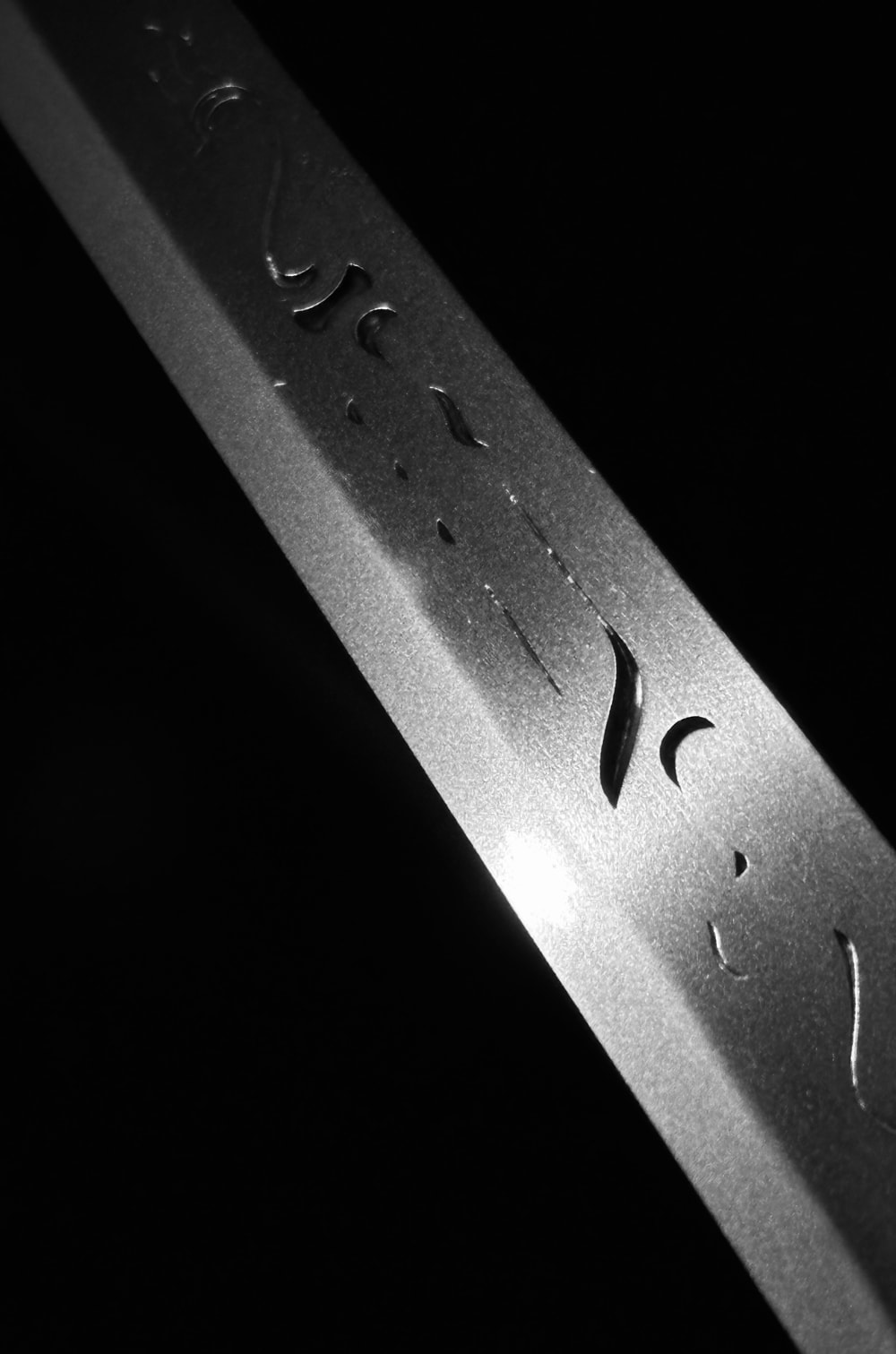
The manner the published sources read as close to late work, on the dated Daiei . The form is with , the shallow and the large (). The forging is a flowing that stands open (), adhering and entering. The temper is a mixed pattern taking in and related forms, the somewhat tight with , running and and entering, in places taking on a boxed look where discoloration boxes the . The runs , rounded at the tip with a long return, tempered deep and running down (). The surfaces are carried with skilled : a with the groove end descending, finished in , and at the waist a relief-carved on the and a on the . The is , , with file marks and a large three-character signature, the reverse dated. The published sources judge this good in both and and skilled in its carving, and close in these respects to late work, the Daiei date on the tang called extremely valuable.

Sugata 姿
Jigane 地鉄
Hamon 刃文
Bōshi 帽子

The school tanto and wakizashi hand, a tight whitish itame with notare and gunome in deep nioi to a ko-maru boshi

the tanto and wakizashi forms: across the three smaller blades the tight whitish itame, the notare or large gunome in deep nioi with well-adhering nie, and the ko-maru boshi are the school's recurring hand, set off from the broader Soshu-leaning katana

The quieter register, read on the and the . The form runs from a wide, slightly thick to a slender of proportion, both mitsu- or . The forging is a tightly forged , areas of mixing in places and a entering toward the , turning somewhat whitish in tone, with forming well. The temper is a shallow mixed with on the and a with on the , with a large carrying a chofu flavor on the Eisho ; the is deep and adhere well, runs through and the frays into in places. The is to on most, and an on the Eisho piece. The surfaces are carried with : a within the , on one piece in openwork (), and a with and a shobu- on the . The is with a two-character signature cut in a somewhat thick chisel, the Eisho carrying a seven-character signature and date. The published sources judge the workmanship of both and good and call these valuable reference material.

Sugata 姿
Jigane 地鉄
Hamon 刃文
Bōshi 帽子
Scholarship

The placement is argued from the dated blades against the directories: the sword directories assign a first generation to the Kosho era and a second to Eisho and Daiei, but the published sources note that among extant works those bearing an Eisho date are the oldest, fixing the early chronology of the name on the surviving tang inscriptions rather than on the directory count.

The directory disagreement is recorded: one entry assigns the Tensho Yoshisuke to a fourth generation while dating the first to Kosho and Eisho, and the published sources observe that the earliest of the extant dated works is the Daiei katana, judging the name to span several generations down to the shinshinto period.

Dated Works

Years he was demonstrably active, proven by signed-and-dated blades

Active period
1505–1526Editorial estimate: 1455–1526
2 of 4 designated works carry a date
15001530
  1. 1505
    永正二年Juyo session 23, item 127
  2. 1526
    大永六年Juyo session 12, item 189

Designations

Kokuhō—
Jūyō Bunkazai—
Jūyō Bijutsuhin—
Gyobutsu—
Tokubetsu Jūyō—
Jūyō Tōken4

Elite Standing

0.02 across 4 designated works

Top 28% among smiths

Blade Forms

Distribution across 4 ranked works

Signatures

Signature types across 4 ranked works

Currently Available

Lineage

Yoshisuke
Students (2)
  1. 1.Yoshisuke義助1 for sale7designated
  2. 2.Yoshisuke義助3designated

Shimada School

Other artisans of the Shimada school

  1. 1.Yoshisuke義助1 for sale7designated
  2. 2.Sukemune助宗1 for sale5designated
  3. 3.Yoshisuke義助3designated
  4. 4.Motosuke元助2designated
  5. 5.Sukemune助宗1designated
  6. 6.Sukemune助宗1designated
  7. 7.Yoshisuke義助2designated
  8. 8.Hirosuke廣助9designated

Yoshisuke

Yoshisuke(義助) was a Japanese swordsmith of the Shimada school in Suruga province, active during the Kosho (1455-1457) period.

The work follows the Soshu-den tradition.

Designated works by Yoshisuke include 4 Jūyō.