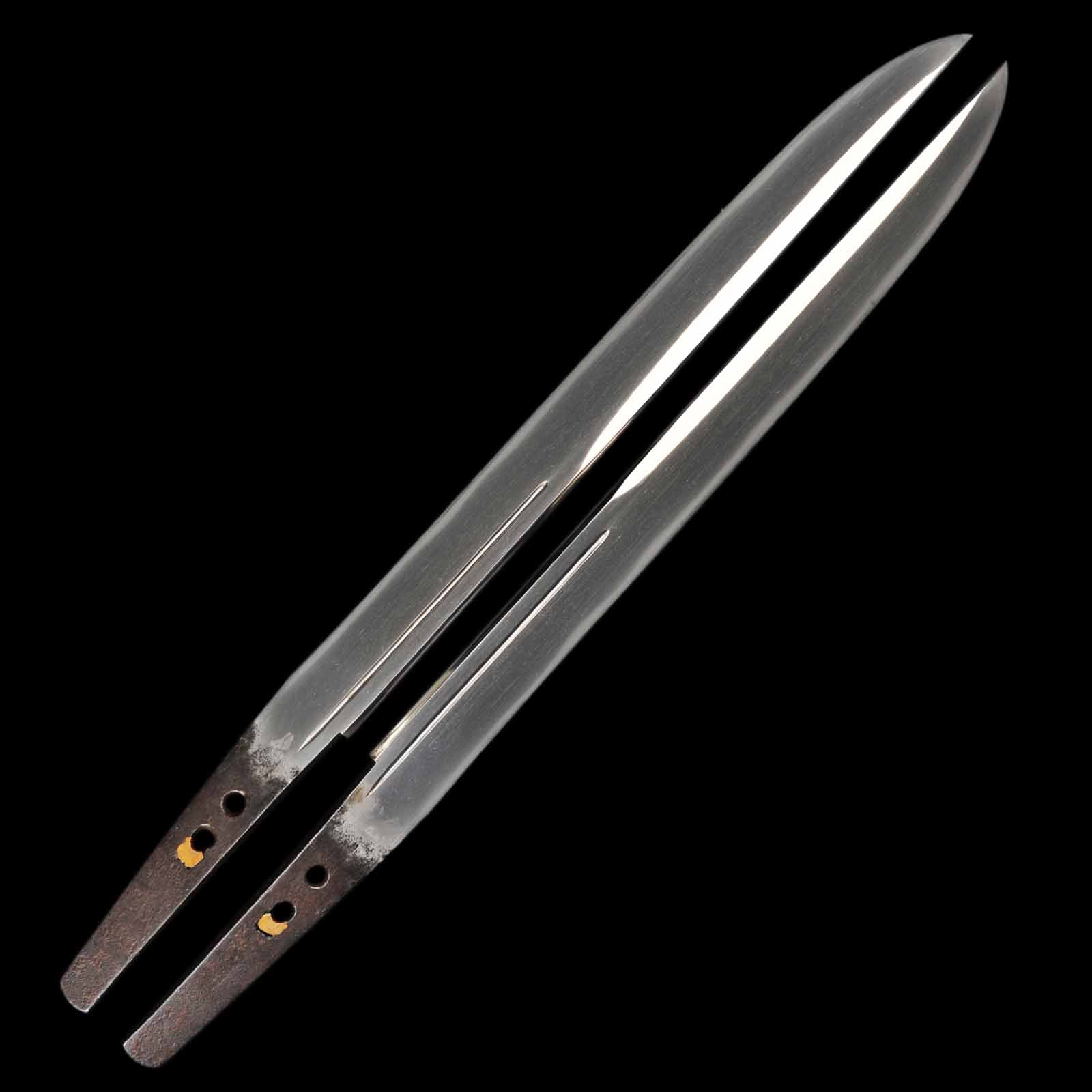
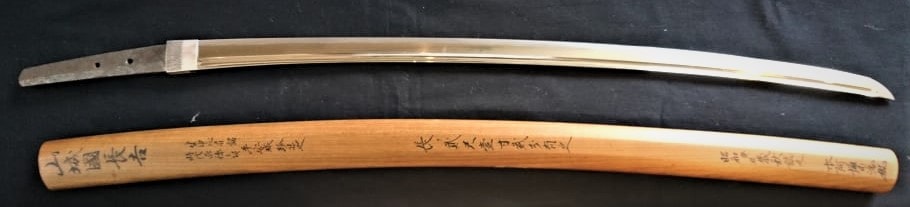
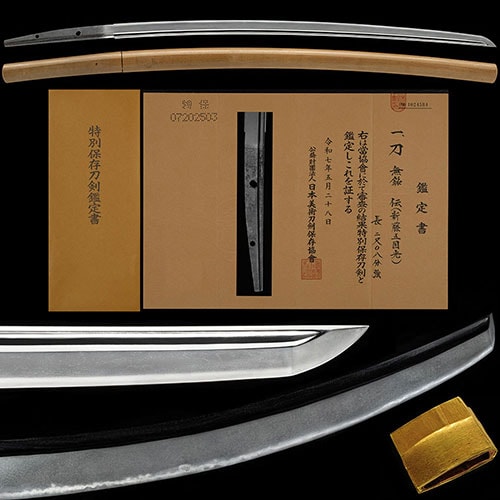
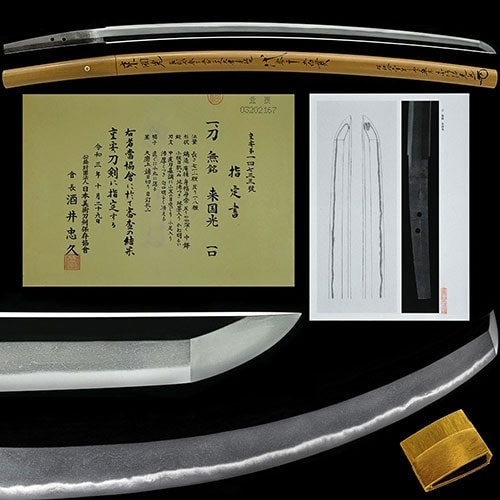
Yoshinori belongs to a lineage of swordsmiths established in Kyoto's district, continuing through successive generations from the period into the period. While sword reference works treat the name Yoshinori as having existed since the period, among extant signed works the earliest examples date to the early period, and those most commonly encountered are from the mid- period and later. Together with Heianjo Nagayoshi, Yoshinori stands as one of the two representative smiths of -period Kyo-mono (Kyoto-made works), succeeding the and Hasebe lineages that had defined Kyo-mono production during the period. The smith bore the surname Fuse, signing works as " Fuse Fujiwara Yoshinori," and is known to have forged blades away from the capital (desaku) in provinces such as Izumi, , and during the Bunmei and Eisho eras of the late period.
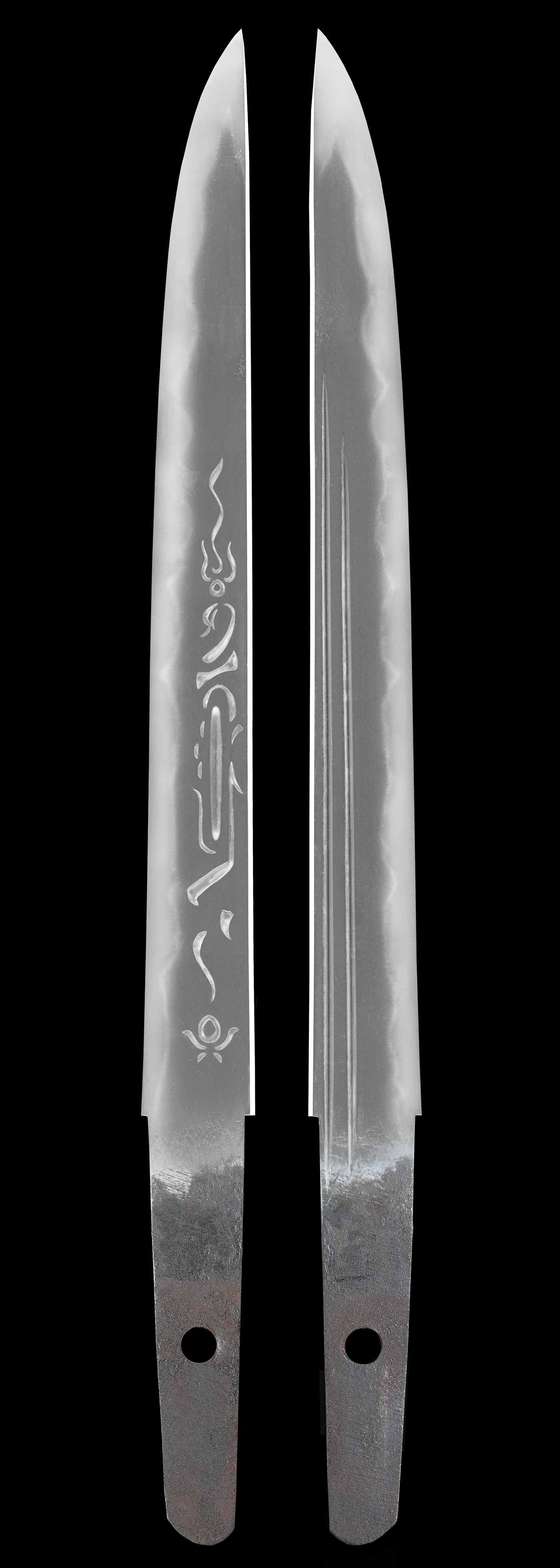
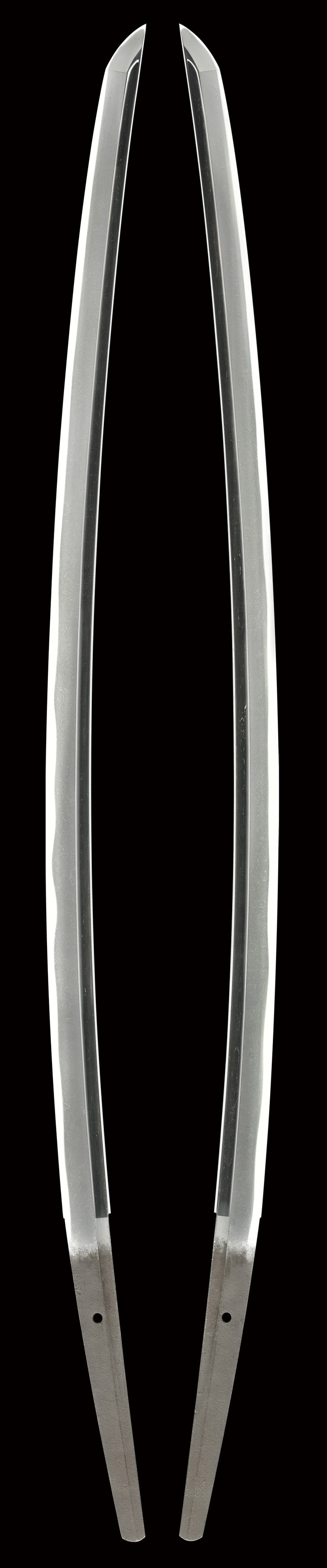
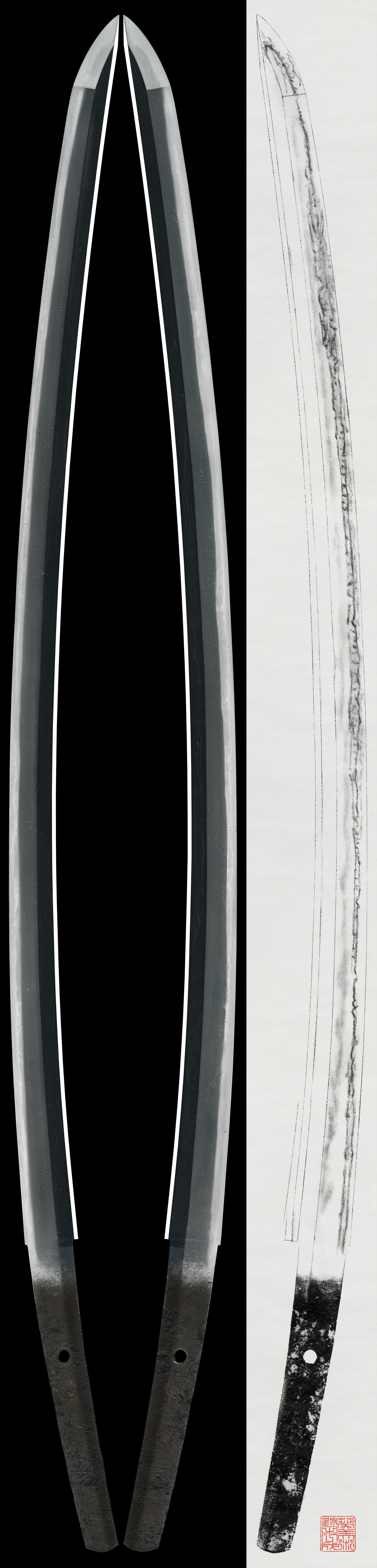
Yoshinori's oeuvre encompasses both and and . The forging is typically , densely worked with adhering, sometimes showing a tendency toward or . His most distinctive technical achievement is a flamboyant (full-temper) style built on a foundation of large intermixed with , , and , with abundant and creating spectacular variation across the blade surface. Within the tempered areas, adheres well, and activity such as and appears, while the is characteristically bright and clear. The is typically with deep , often tempered down () and continuing into . Carved work () of high quality frequently accompanies these blades, including , , , and .
Yoshinori's work is so brilliant that it can be difficult to discern any difference from late (sue-) production, a testament to the smith's mastery of the -influenced idiom within the Kyoto tradition. His finest pieces display an outstanding level of workmanship with exceptional (clear brilliance), and the variety of changes within the tempering is truly splendid. Works inscribed with provenance restrictions, such as the injunction "not to be passed to another hand," attest to the esteem in which individual commissions were held. As a smith who bridged successive eras of the period and whose desaku pieces extend the reach of Kyo-mono craftsmanship into the provinces, Yoshinori remains an essential figure for the study of Kyoto swordsmithing traditions.