NihontoWatch MonNihontoWatchBETA
MarketEncyclopedia
NihontoWatch Mon

NihontoWatchBETA

Market
Encyclopedia
Overview·Kantei·Designations·Work Types·Signatures·School
OverviewKanteiDesignationsWork TypesSignaturesSchool
  1. Schools
  2. Owari
  3. Yamakichi
  4. Yamakichibei

Yamakichi Yamakichibei

山吉兵衛

Jūyō
Vol. 7, No. 85 · Tsuba

Yamakichi Yamakichibei

山吉兵衛

10 ranked works

ProvinceOwariEraTensho-Keicho (c. 1575–1615)SchoolOwari>YamakichiTraditionIron-tsubaGeneration1st generationSpecialtiestsubaTypeTosogu MakerCodeITA006
10Jūyō Tōken

Overview

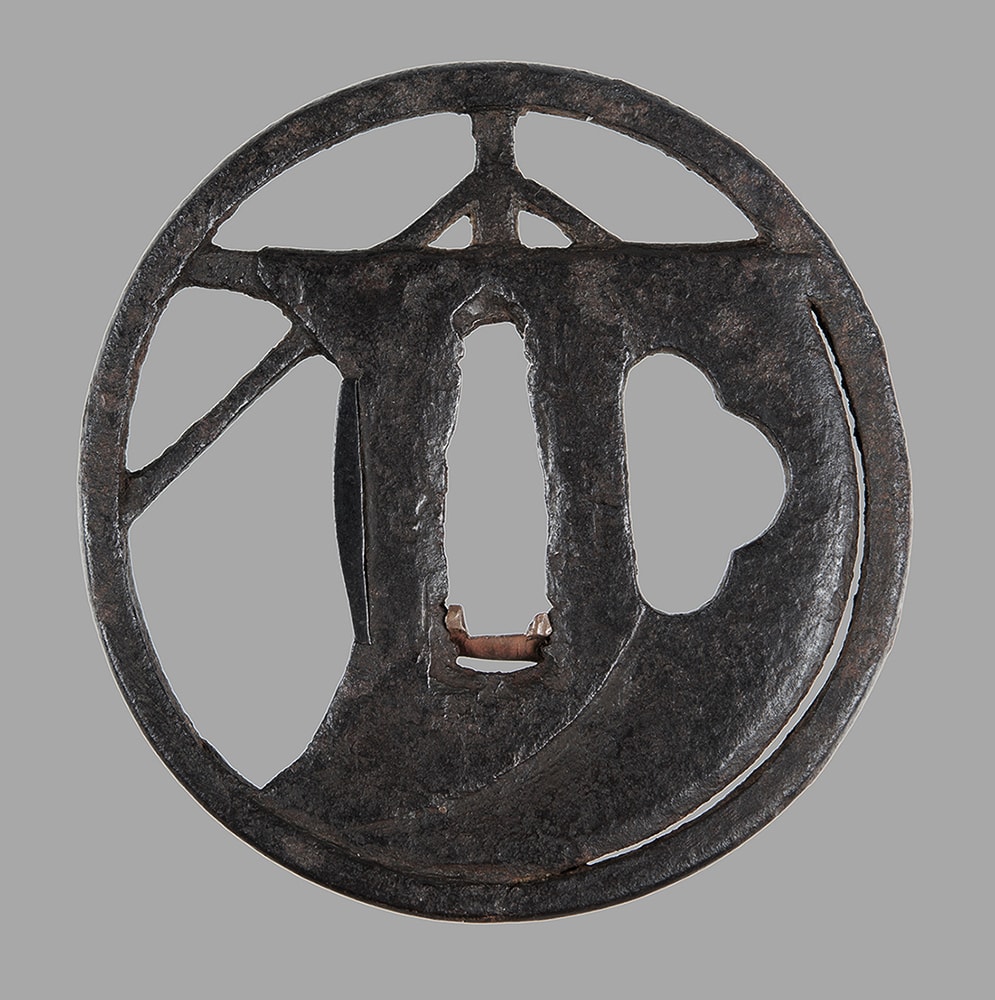
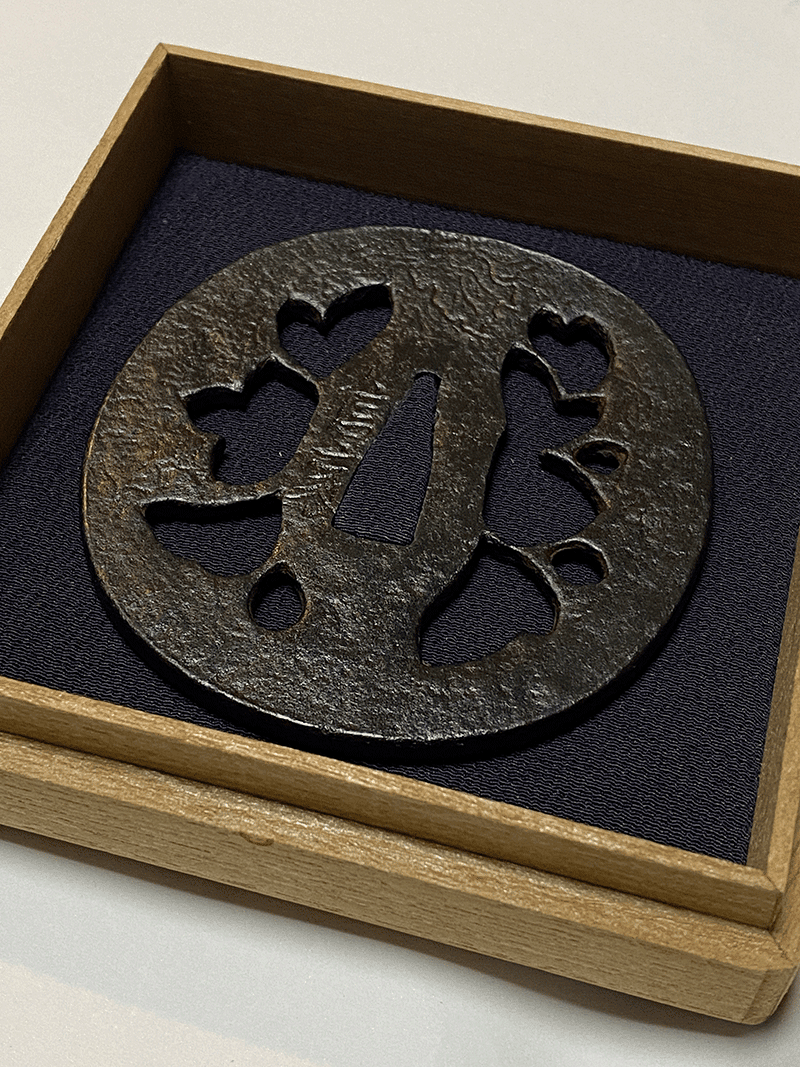
Yamakichibei — also recorded as Yamasaka Kichibee — is regarded, together with Hōan, as one of the representative tsubakō of Owari. He worked in the period, and while it has long been circulated that the first generation was a disciple of Nobuie, the notes that "there are no documents or firsthand examined works that substantiate a master–pupil relationship." Points held in common with Nobuie are in fact scarce; rather, there are many similarities with Hōan, giving a stronger sense of connection to that line. The name was inherited over several generations, distinguished by the calligraphic style of the chisel-cut signature: those signed in full as "Yamasaka Kichibee" are considered stylistically the earliest, while the third generation further adds a cherry-blossom seal alongside the provincial designation Bishū.

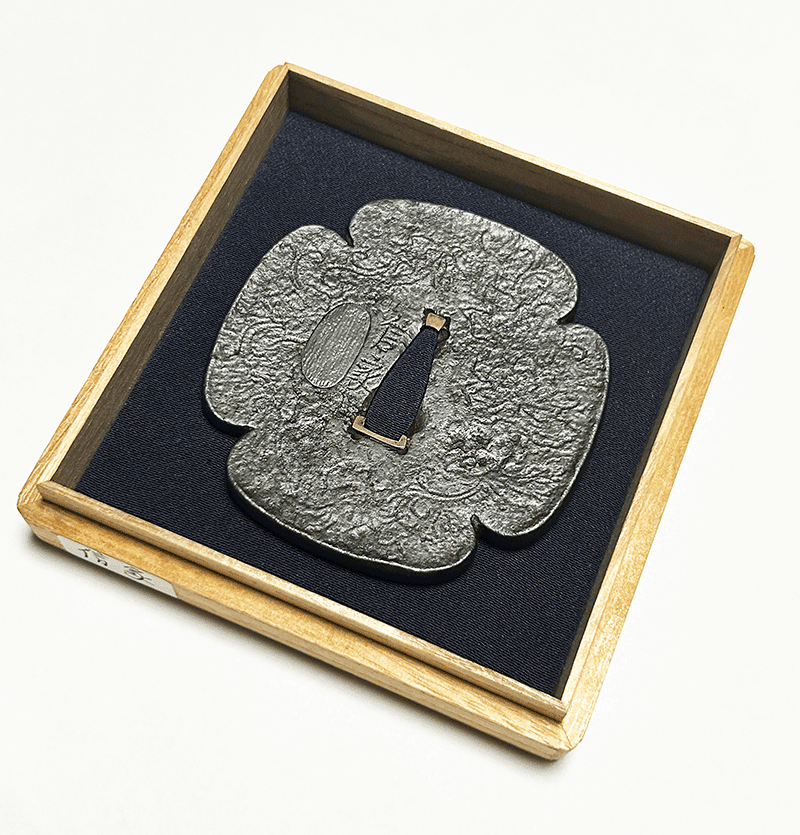
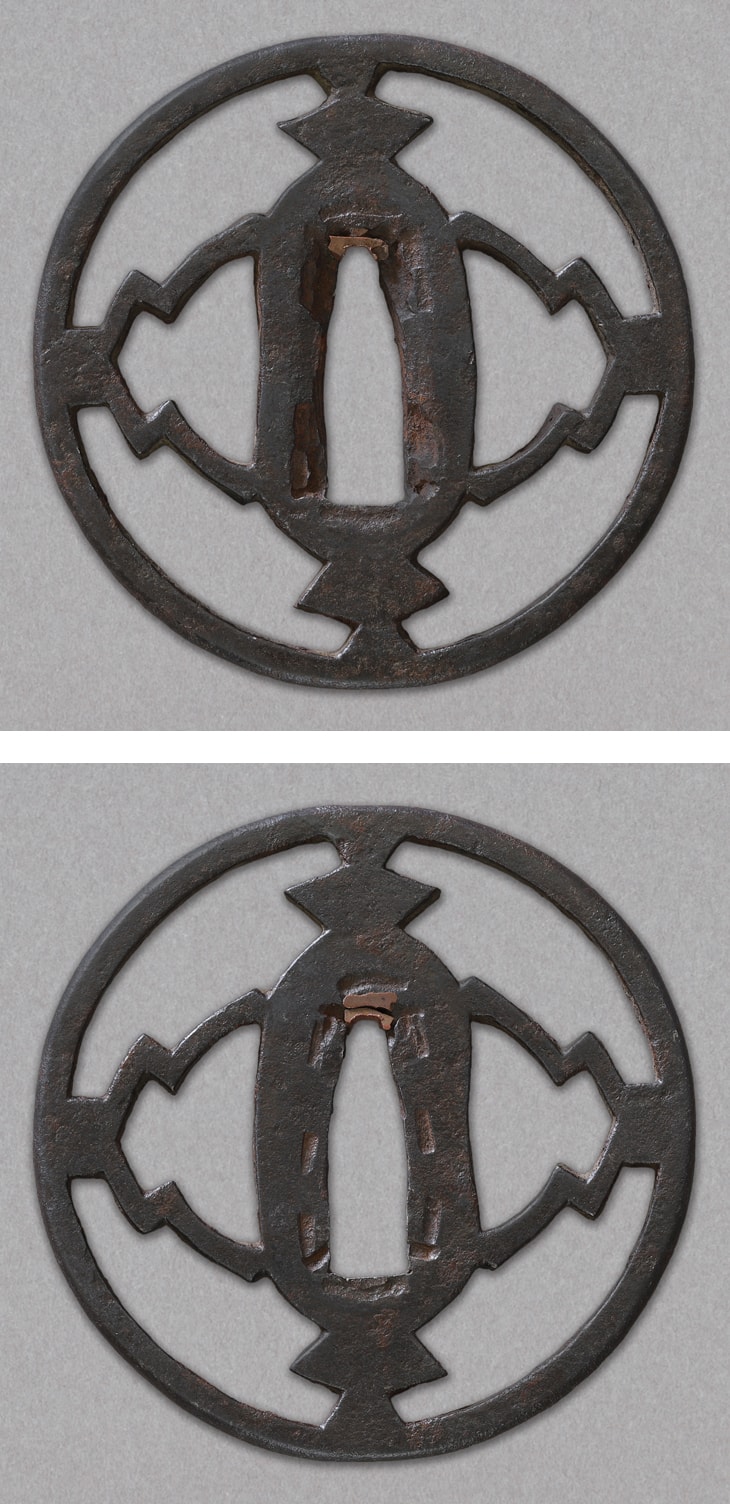
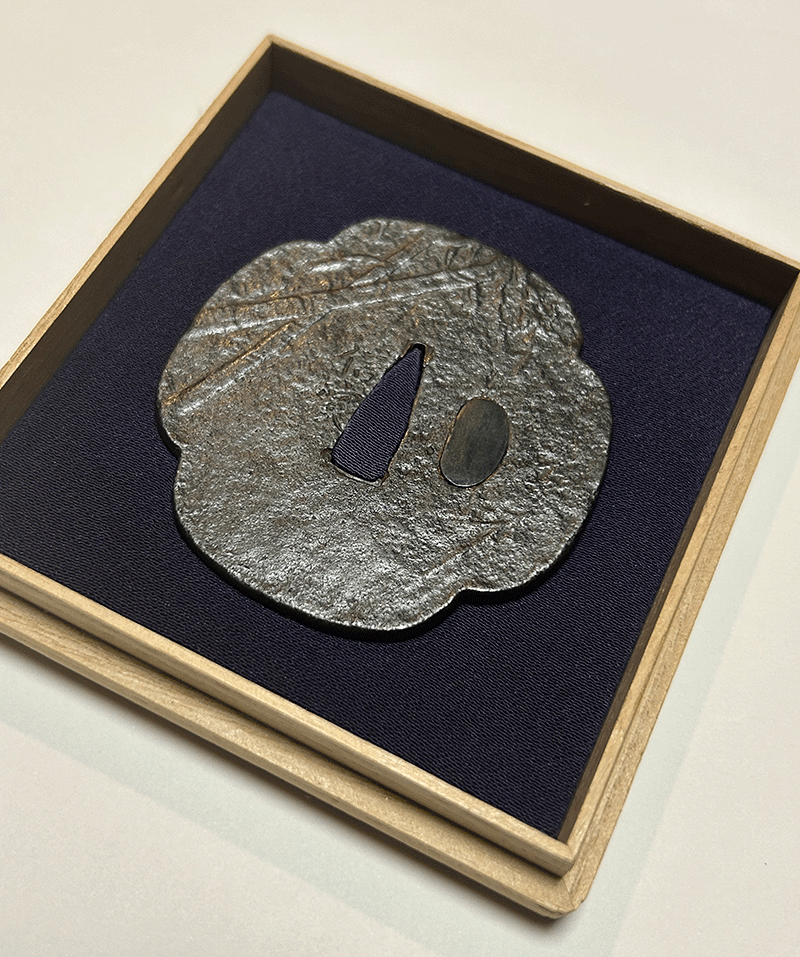
Yamakichibei's iron guards are characterized by commanding presence, excellent forging, and the prominent emergence of (iron bones) through -namashi (annealing), which imparts what the describes as an elegant taste while also evoking a sense of strength. The Amida-yasuri (radiating file marks) for which the school is celebrated represent "the very essence" of the second generation's art; it is said that "whether among earlier or later works, no one equals Yamakichibei in Amida-yasuri." The file marks appear as though cut in double lines, integrating with (hammered ground) and fire-finished surfaces to produce grounds whose appearance "changes with remarkable freedom and variety." Representative openwork designs include geese-and-sickle (gankama ), wheels, chrysanthemums, and fence motifs — all rendered with an unpretentious, rustic treatment. The robust (turned-back rim) further tightens the silhouette, and the densely set within it proclaim the beauty of iron .

The repeatedly identifies Yamakichibei's works as guards that "appear all the more striking when mounted on the - that were in vogue at the time," affirming their essential unity with -period martial culture. Across designated examples, evaluative language converges on a distinctive rustic charm and deep, subdued elegance — a beauty described as "solitary and aloof," residing within formidable workmanship, that "resonates with the spirit of bushidō." The interplay of powerful , richly nuanced hammering, and restrained openwork constitutes an aesthetic inherited from the earliest armorer's and swordsmith's guards, elevated to a level "fully worthy of demonstrating Yamakichibei's true value" within the Owari iron-plate tradition.

Kantei

3 descriptive axes: material (the forged, fire-finished iron plate, hammer-ground, throwing iron bones) x technique (bold device-openwork pierced sparely through the plate, the rim turned back or left standing, the unused hitsu lead-filled and recessed) x themes (everyday-implement and geometric silhouettes: wheel, geese-and-sickle, oar-and-scull, hatchet, chrysanthemum). For this first generation the one documentary separator the records give is the un-abbreviated 山坂吉兵 surname-signature, named the oldest hand and the mark of the Dai-shodai; the wheel and geese-and-sickle device-openwork are his representative subjects but, like the iron bones, hammered ground and fire-finish, are an Owari-tsuba foundation shared with Hoan, Nobuie and Kanayama, so they are kept as register and ground rather than as a unique separator.

The first-generation Yamakichibei (the Dai-) is, with Hoan, named one of the representative iron- makers of Owari, flourishing about the age as Nobuie and Kanayama from the end of into the period and said to have begun as armourers to the Oda house. The masters never cut the full four-character name: they signed only the -abbreviated surname 山坂吉兵 (Yamasaka, read as the oldest form), the abbreviated 山吉兵 (and 山吉兵へ), and on occasion 金山吉兵. The art is the forged iron plate itself: a hammered, fire-finished ground that throws up iron bones, on which bold everyday-implement and geometric devices, a wheel, geese-and-sickle, an oar-and-scull, a hatchet, are pierced as openwork. The name was carried for several generations, told apart not by the inherited signature but by the script of the cut characters; the records place this first generation around Genki (about 1570), giving the -abbreviated 山坂吉兵 surname-form as the stylistically oldest hand and the very mark of the Dai-, with the early student-of-Nobuie story given only as an unproven tradition. (The second-generation pieces whose forte is the radiating Amida file-ground are now held separately under ITA011.)

Diagnostic discriminators

unique vs the abbreviated 山吉兵 signature carried by the later generations

Material (the iron plate)

A well-forged iron plate, hammered () and fire-finished (), praised for a forging that throws up granular and lumpy iron bones across the face and rim and a settled patina that the records note carries a reddish cast; the plate is bold and on the heavier pieces thick and tight. On a number of the guards a radiating Amida file-ground (amida-yasuri) is cut into the plate.

Technique

Openwork () above all, the device pierced boldly and sparely through the plate, sometimes as a shadow-silhouette (kage-); the rim worked to a turned-back or left standing as a suki-nokoshi, and the unused filled with lead set a touch below the plate, the Owari- that the records single out as prized.

Themes (bold device-openwork)

Everyday-implement and geometric silhouettes pierced through the iron: the wheel, geese-and-sickle, an oar crossed with a scull, a hatchet, the chrysanthemum, and small openwork accents (the grommet-cord aperture, hedge motifs). The records call the wheel and the geese-and-sickle his representative designs, simple piercings that carry a seasonal or a Buddhist resonance, while noting that the wheel-openwork is a subject the Owari makers share.

Implement and geometric devices

The wheel and the geese-and-sickle above all, with the oar-and-scull, the hatchet and the chrysanthemum, pierced bold and sparing on the iron.

Full iconography

Signature chronology

Recorded signatures

Documentary note

The masters never cut the full four-character name. The corpus signatures are the -abbreviated surname 山坂吉兵 / 山坂吉兵へ (Yamasaka), the abbreviated 山吉兵 and 山吉兵へ, and 金山吉兵; the records read the へ as a short form of the 衛 character and say the surname-form 山坂吉兵へ is the stylistically oldest, the name then carried for several generations. Because the go is inherited it cannot by itself date a generation: the records tell the hands apart by the script of the cut signature, placing this first generation, the one that cuts the -abbreviated 山坂吉兵へ, around Genki (about 1570) and calling it the Dai-, with the later Sakura-Yamakichi third generation (a Bishu place-name and a cherry stamp, to Genroku) set further down the line. This profile is scoped to that first generation by the surname-signature and the archaic device-openwork; the 阿弥陀鑢 (Amida file-ground) pieces the records name the true forte of the second generation are now held separately under ITA011, so the file-ground is kept here only as an occasional ground (2 of these 10 guards) and not as a first-generation discriminator. The long-current story that the first generation studied under Nobuie is set down as a tradition no document or examined work has been able to confirm, the records finding the affinity rather with Hoan.

Scholarship

His iron is repeatedly read as carrying a rustic flavour (yashu) raised by the granular iron bones, set together with a deep refined charm (gami), the bold and simple openwork against the well-forged plate praised as in tune with the warrior spirit of an age of war.

Designations

Kokuhō—
Jūyō Bunkazai—
Jūyō Bijutsuhin—
Gyobutsu—
Tokubetsu Jūyō—
Jūyō Tōken10

Elite Standing

0.07 across 10 designated works

Top 19% among makers

Work Types

Distribution across 10 ranked works

Tsuba
990%
Other
110%

Signatures

Signature types across 10 ranked works

Currently Available

Yamakichi School

Other artisans of the Yamakichi school

  1. 1.Yamakichibei山吉兵衛3designated

Yamakichibei

Yamakichibei(山吉兵衛) was a maker of Japanese sword fittings (tōsōgu) of the Yamakichi school in Owari province, active during the Tensho-Keicho (c. 1575-1615) period.

The work follows the Iron-tsuba tradition.

Designated works by Yamakichibei include 10 Jūyō.