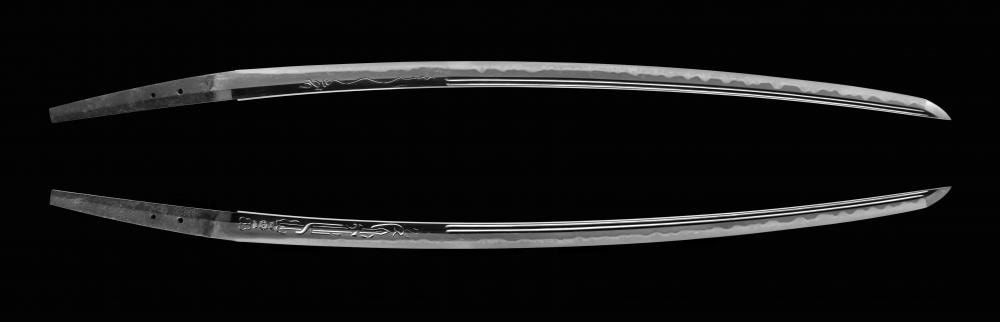
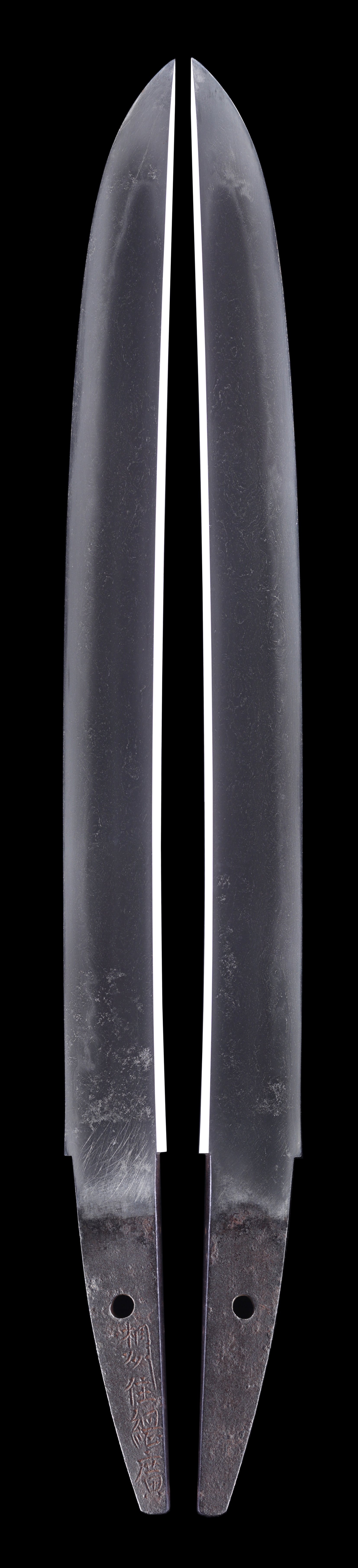
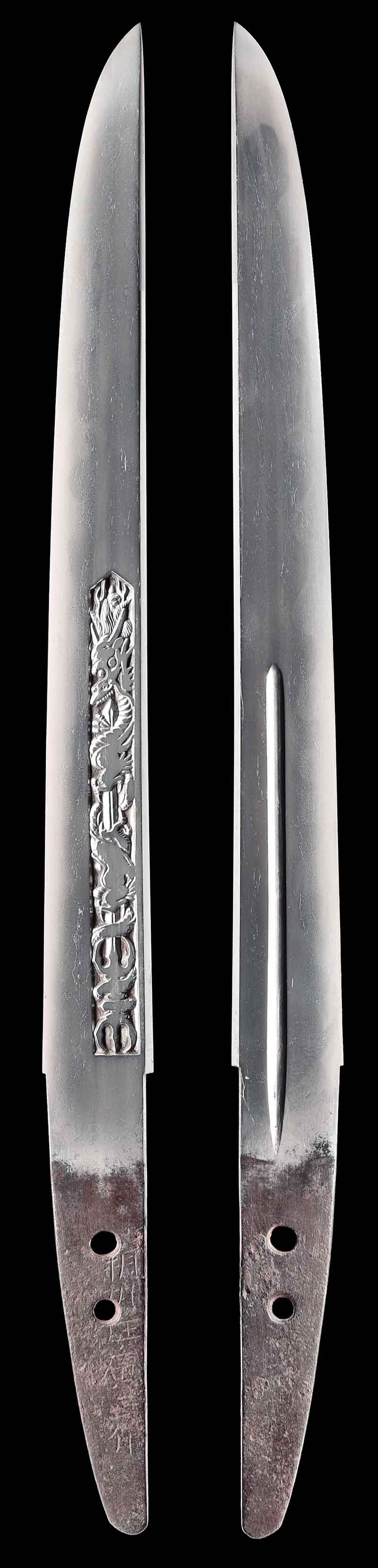
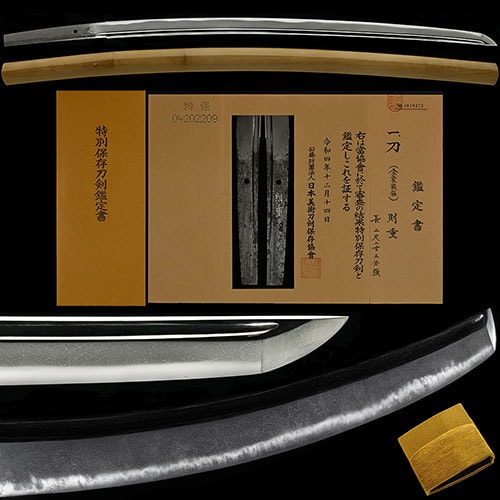
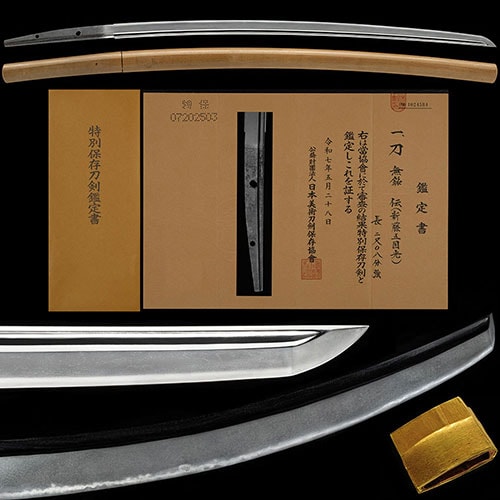
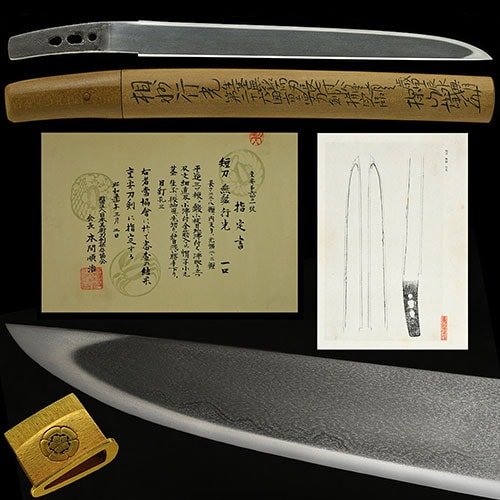
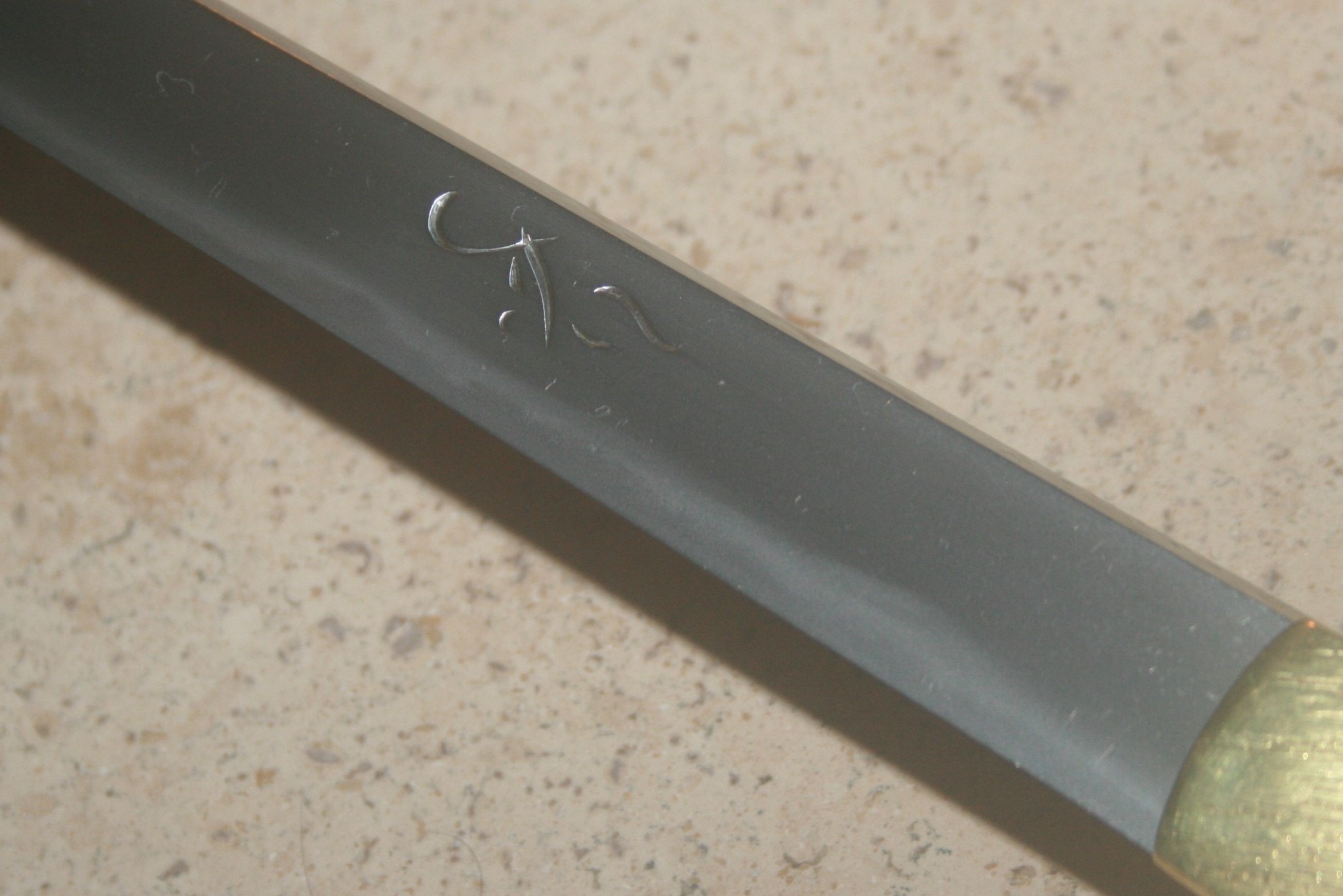
Tsunahiro (綱広) is the smith who closes the tradition. His earliest dated work falls in the Tenbun era (1532 to 1555), and the published sources take that as the foremost representative of the smiths of the period, the one who, in their words, "most faithfully preserved the Sōshū-den style and was most active during the Tenbun era". He is transmitted as a descendant of Hiromasa who first signed Masahiro and, summoned by Hōjō Ujitsuna to Odawara, received the character and changed his name accordingly. The name then became a lineage-name carried into the period, the second generation placed in Tenshō, the third in Keichō, so that "Tsunahiro" denotes a workshop sustained for generations under the Later Hōjō at Odawara rather than a single hand. He is signed and almost throughout, the five-character -jū Tsunahiro cut low on the toward the , the dated 1548 and the Tenbun 22 (1553) anchoring the to whom the later generations are referred.
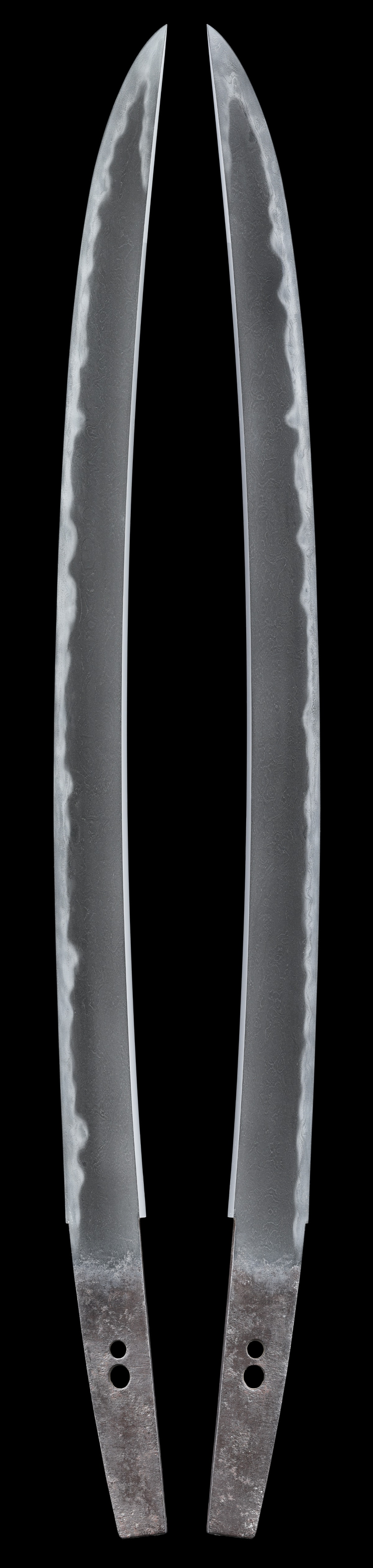
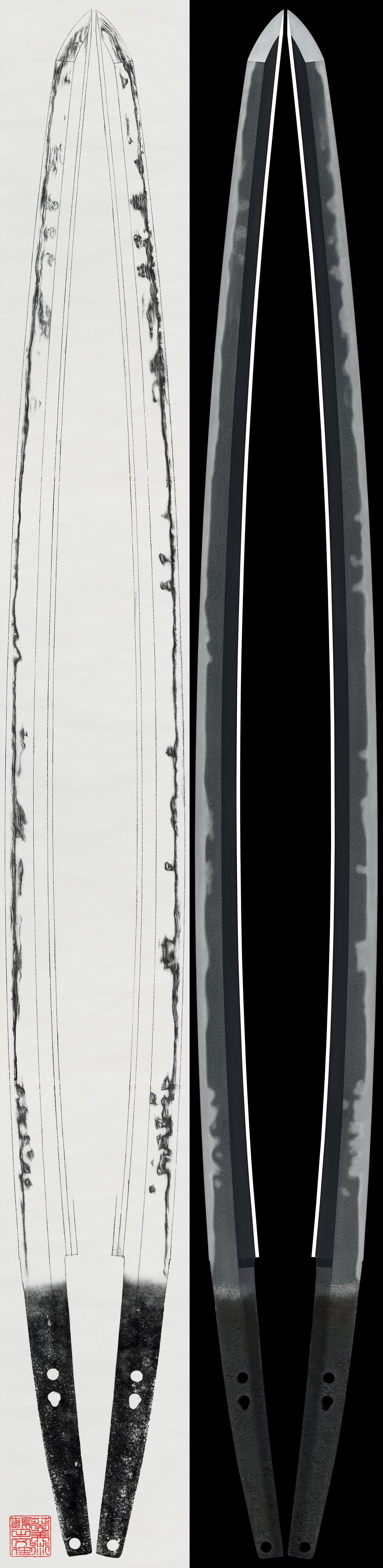
His characteristic hand is the late- built toward full temper. Over the he tempers a into which , the arrow-notch tooth, and are mixed, the widening as it rises toward the tip; attaches well with , and and are then carried across the until the whole becomes . The tooth, set into the and rising with it, is the structural tell the judges keep returning to when they call a blade typical of him. The full-temper is the manner the published sources name his forte, descending, they say, from Hiromitsu and Akihiro, "a skilled maker in the line following Hiromitsu and Akihiro, whose work contains much that is noteworthy in the style said to have been established by them". On one the shows crescent-shaped , which the judges name a distinctive feature of his hand.
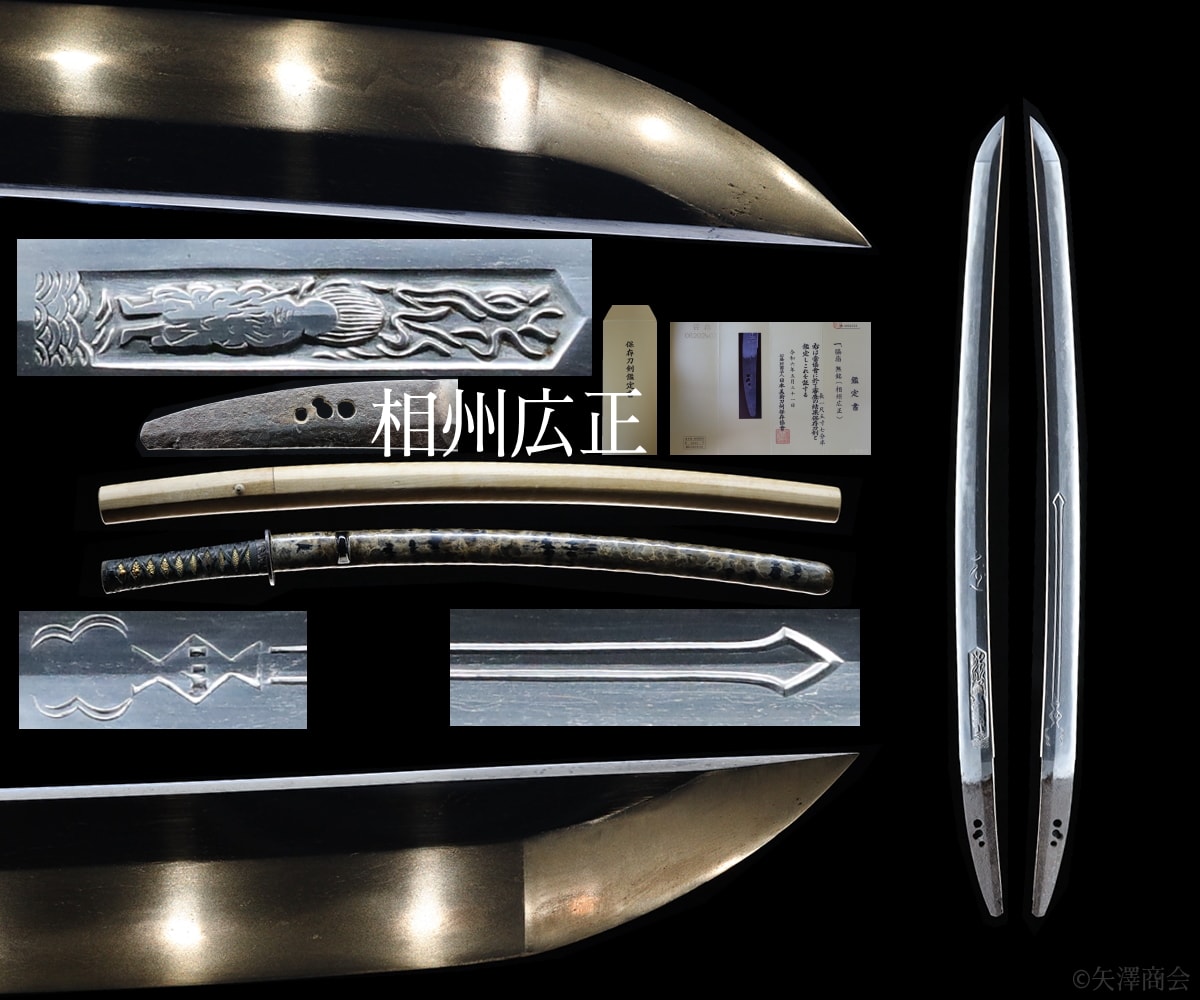
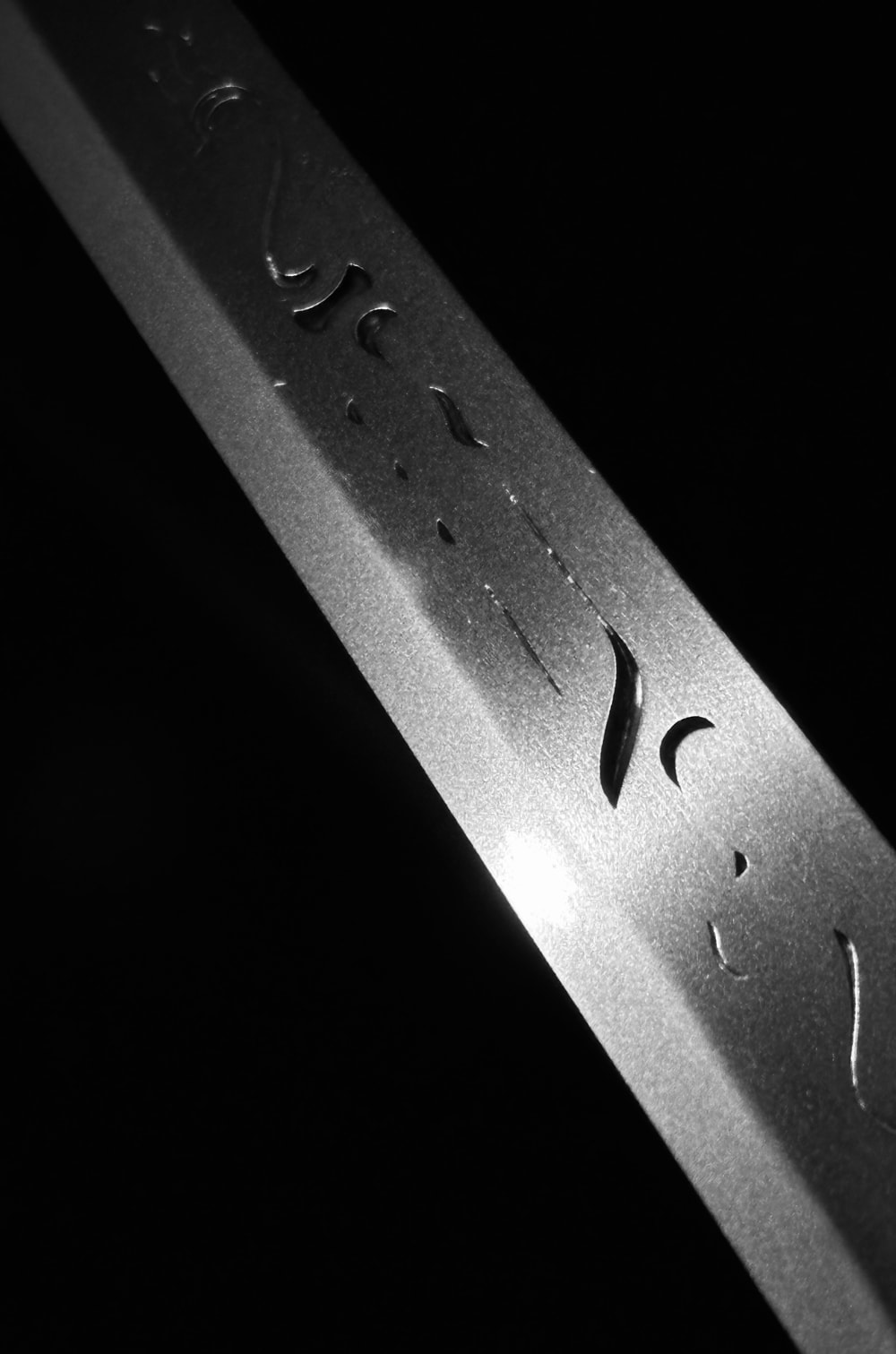
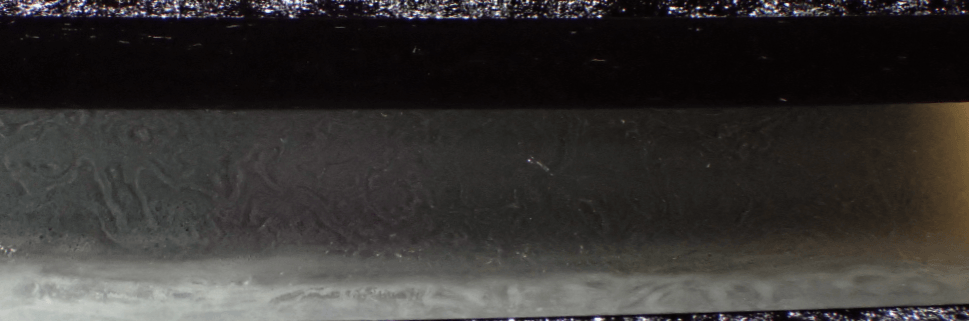
The behind this is read together with the temper, for the full temper depends on it. He forges an mixed with and that stands and runs, the grain open rather than tight, with well attached and entering, and against this open steel the and gather into . The standing grain is named on half his work and the flowing grain on a third, so the late- is itself part of the recognition, not merely a backdrop. The runs in to a or pointed return, often , with a long sometimes tempered down. The carving is a further marked tell, true and grass , set on a lotus pedestal, and incised invocations such as and Namu Myōhō Kyō, which the judges repeatedly call distinctive of late- work.
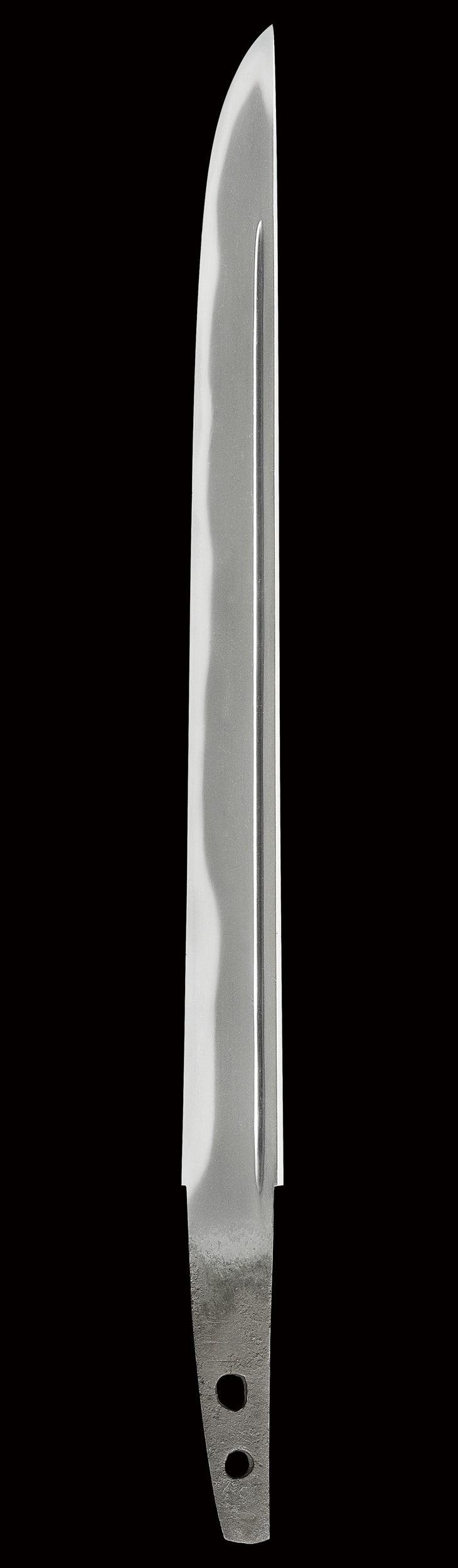
Against this flamboyant rule stands a documented exception. The dated 1548 leaves the range altogether for a -chō broken by with , the tight with , and the published sources call it an unusual work for him while noting that examples of the kind are occasionally met among his and . The generations are the other axis along which his work is read. The judges set out the accepted scheme, the first in Tenbun, the second in Tenshō, the third in Keichō, the fourth in 'ei and the fifth around Manji, and then appraise several undated blades by their overall bearing rather than by a date. A wide, with strongly developed is placed around Genki to Tenshō, and several are judged no earlier than the third generation, the judges leaving a closer determination to future study. The hand is continuous across these generations, the over a standing - , so that the later work is recognised as Tsunahiro by the inherited range rather than by any changed manner.
What sets him apart is read off his own grounded traits rather than by borrowing a comparison. The published sources do compare him to the masters whose he inherits, and the comparison cuts both ways: he is placed in the line of Hiromitsu and Akihiro, yet of his Important Art Object the judges note that the shape of its "differs from those associated with Hiromitsu and Akihiro", distinguishing his hand from the very smiths he descends from. His own tell is the tooth woven into a that widens to the tip and is overrun into , over a standing, -laced . Standing at the end of the line, he is the smith who, as the judges put it, adorns that tradition's final flourishing, his Tenbun the documented origin against which the later workshop is dated. The published sources name him within the Sue-Sōshū group as one who "is well known and highly skilled", his output large and many works surviving.
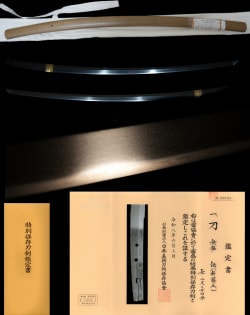
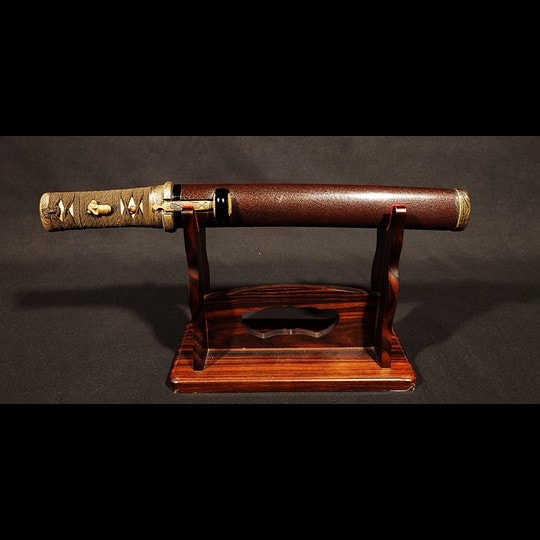
Tsunahiro is Jō in Fujishiro's grading, with a Tōkō Taikan valuation of four hundred man. The weight of designation behind his name is broad rather than rarefied: his standing rests on ten blades together with an Important Art Object and an early postwar Special-Preservation-tier , the higher tiers above not represented among his work. Among those ten the judges single out his pieces as representative, one a work in which "Tsunahiro's forte is fully displayed", another a representative blade of the period. The provenance recorded against his blades is distinguished and real: the dated Tenbun 22 bears the ownership inscription of Sakurai Daigaku, a senior retainer of the Later Hōjō house, and afterward passed to Ōkubo Ichiō, the Meiji connoisseur who became the first mayor of Tokyo; the 1548 carries a leather-covered iron mounting once cherished by Inukai Bokudō; and one of his blades descends through Akimoto Saemon Gorō Fujiwara Yoshihide and into the Imperial collection. Most designated blades, his included, are held rather than traded, but his are not beyond reach in the way a masterwork is: a Tsunahiro, signed and , comes to the collector of late- from time to time, with patience, and is among the most rewarding things that close of the tradition offers.