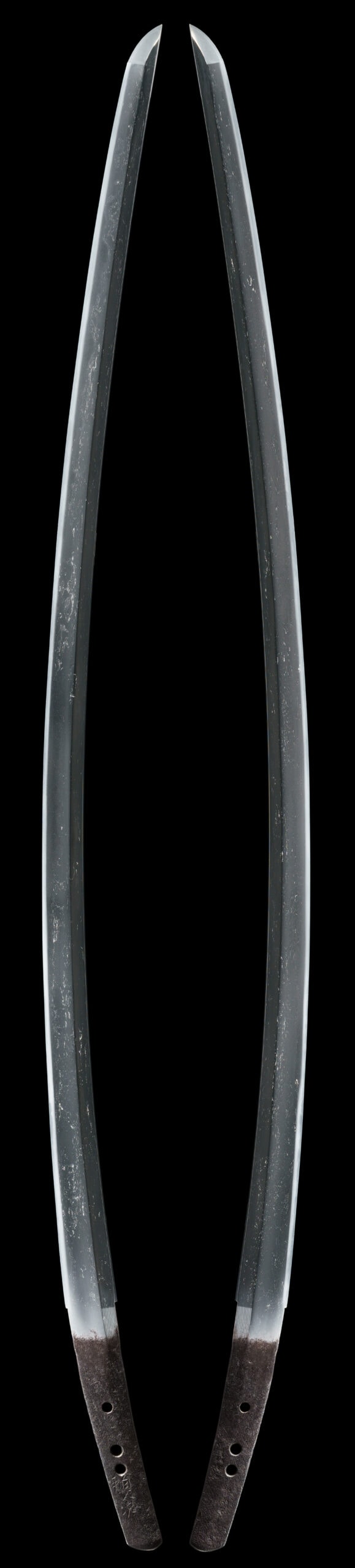
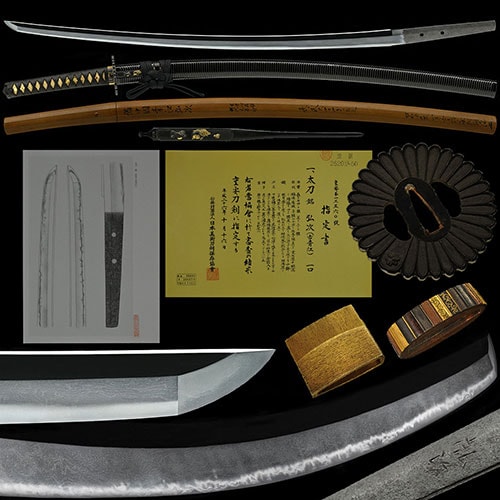
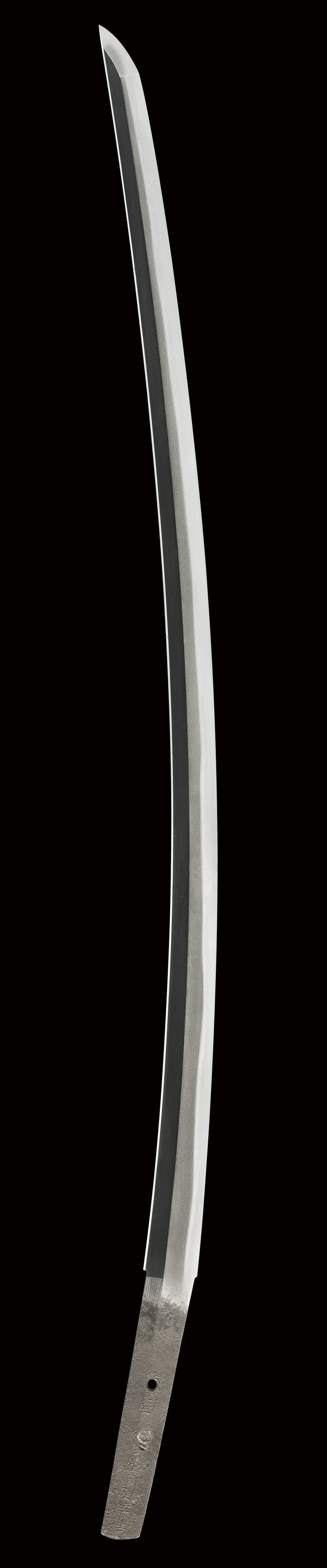
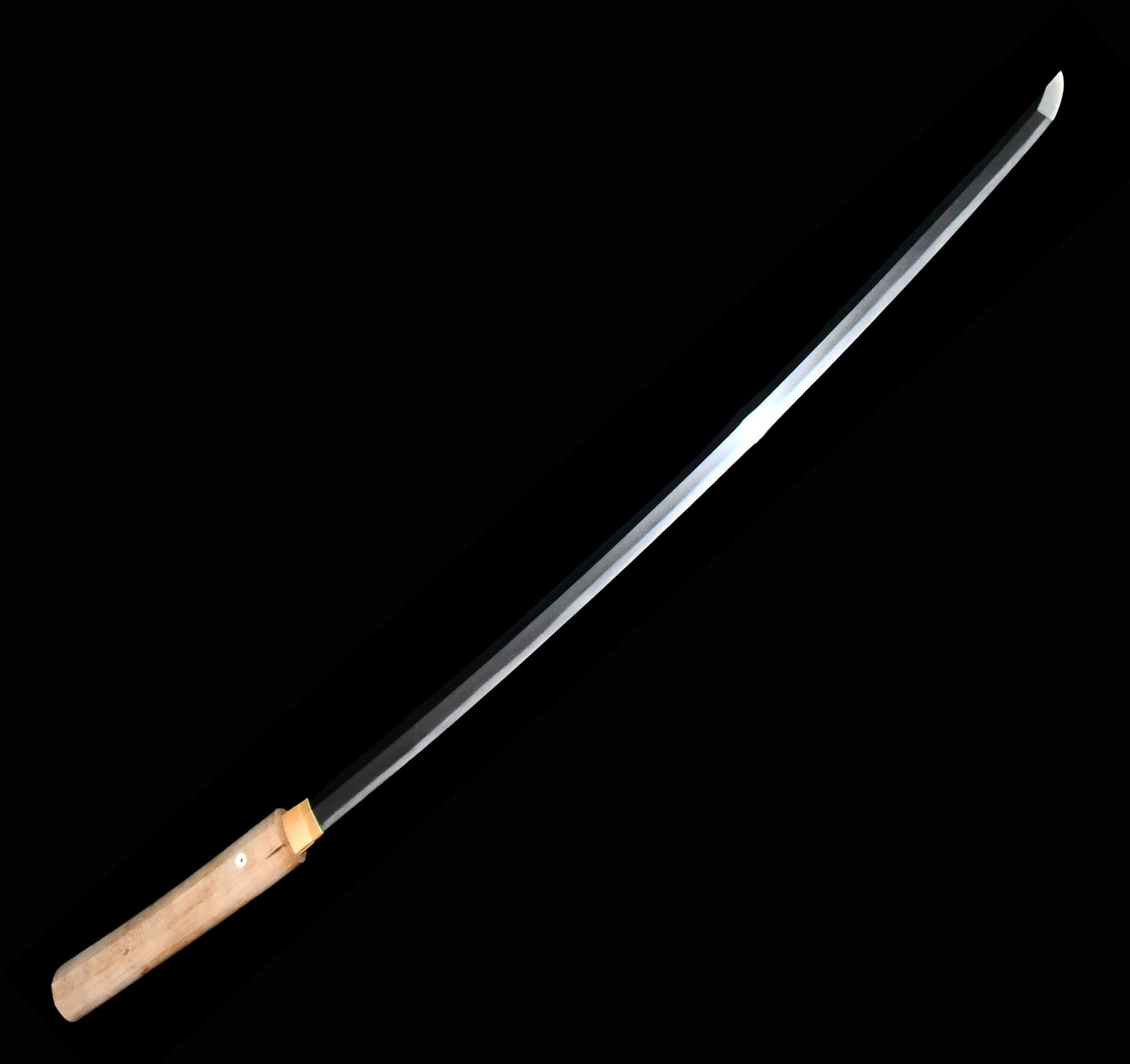
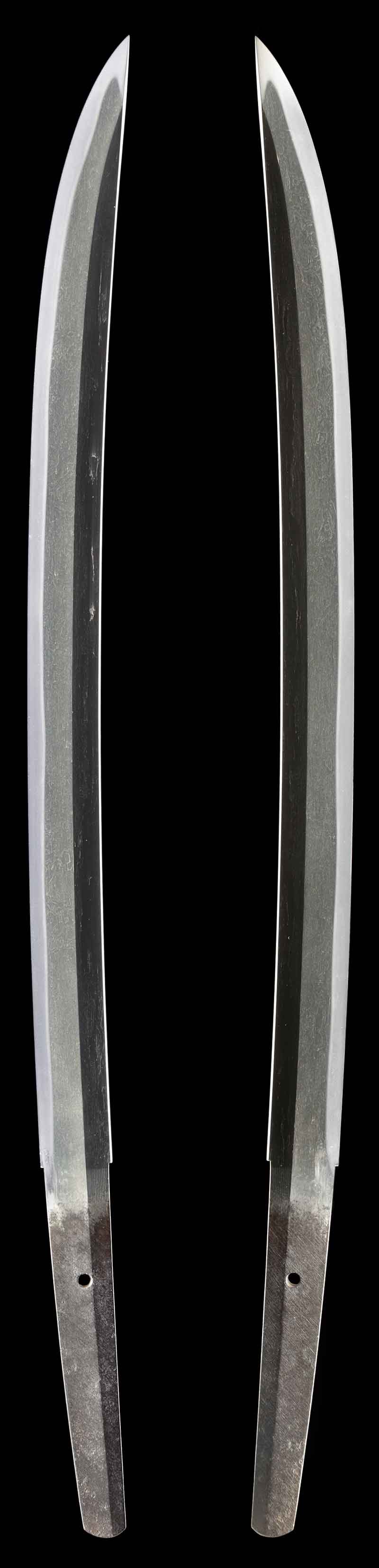
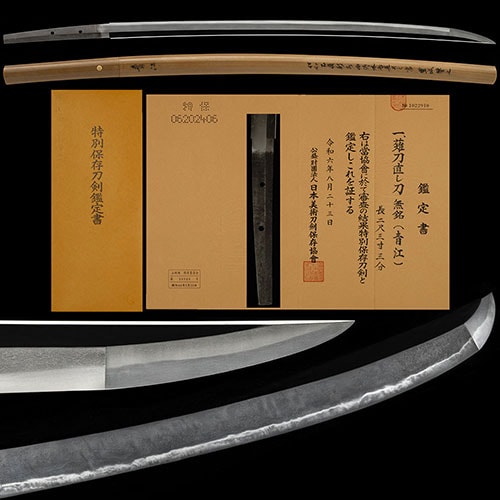
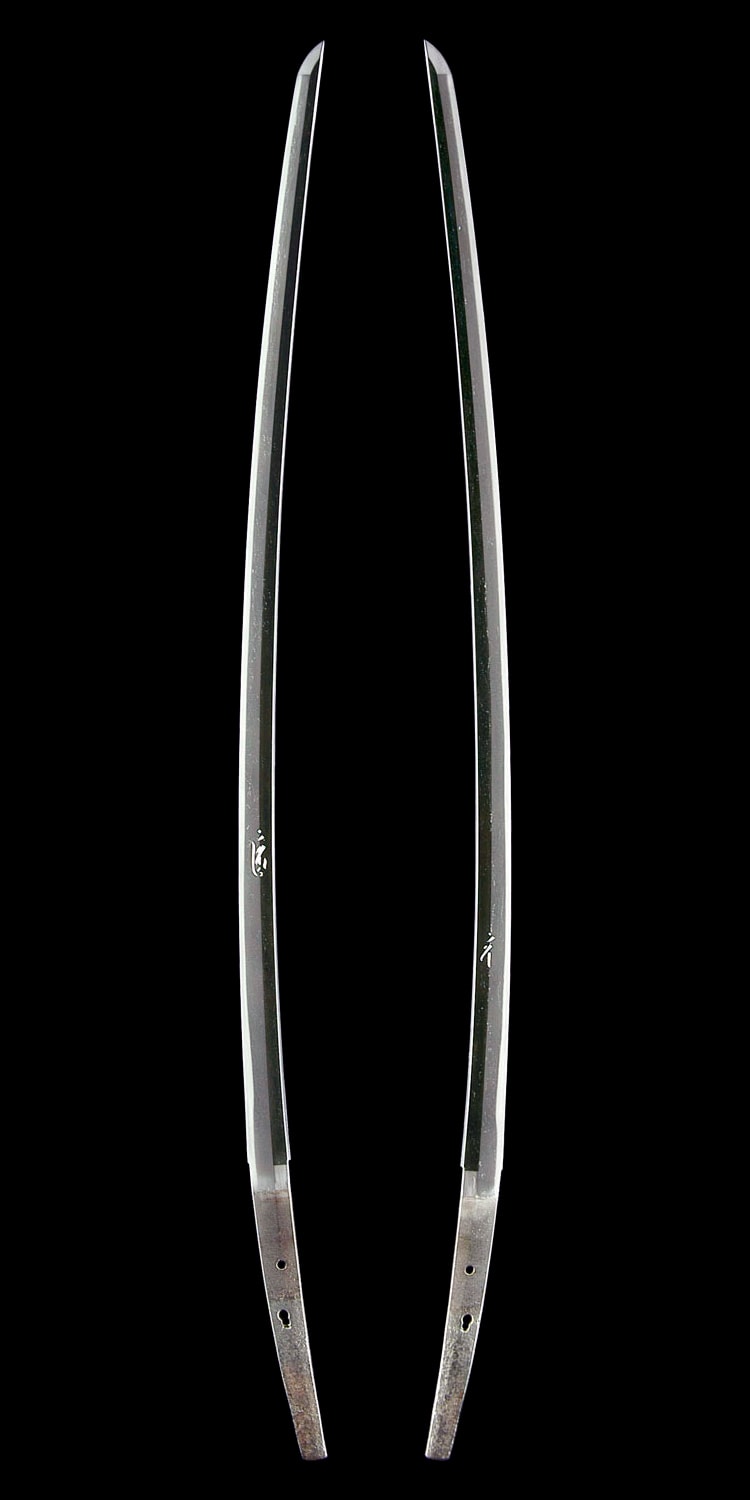
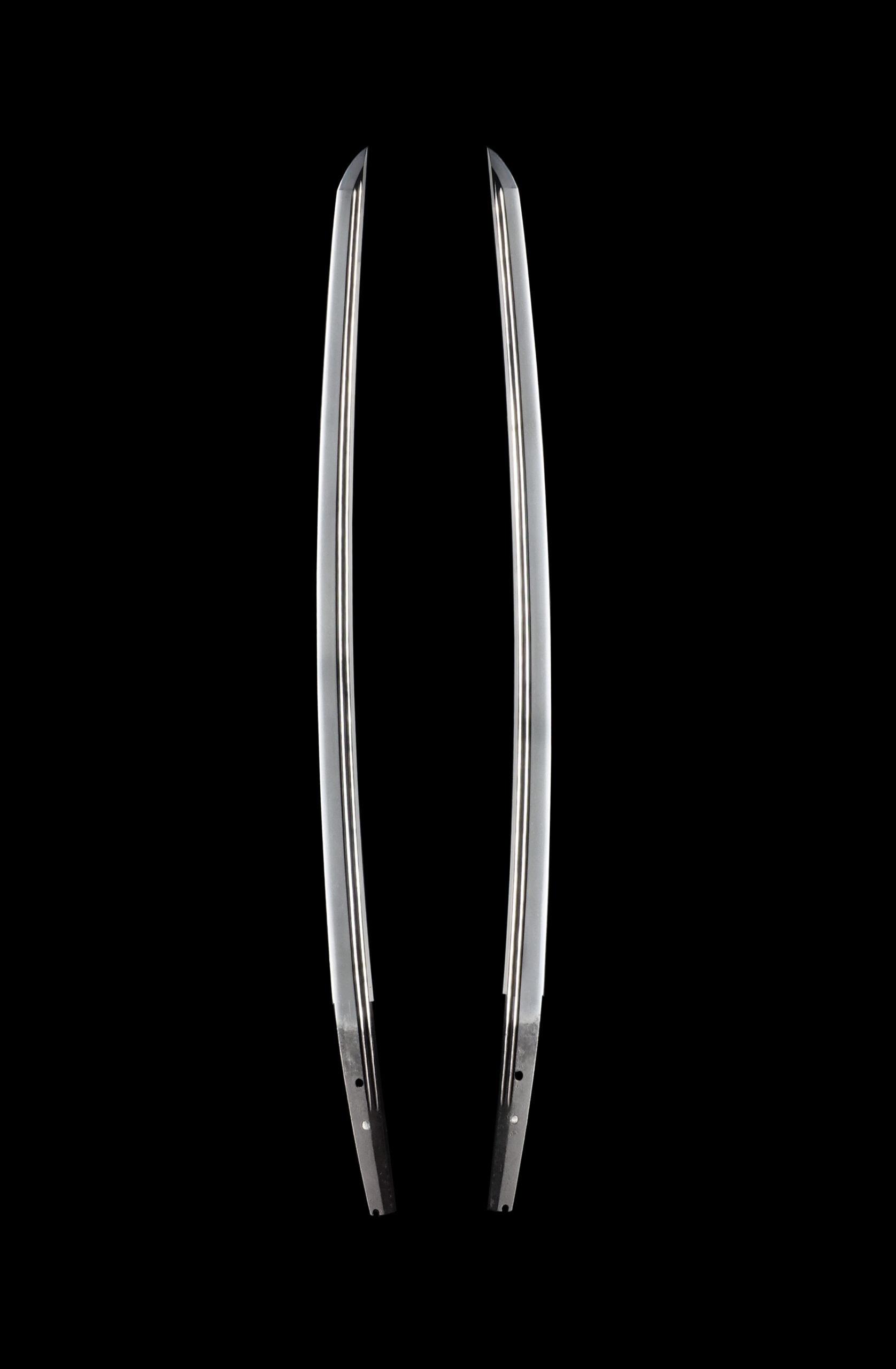
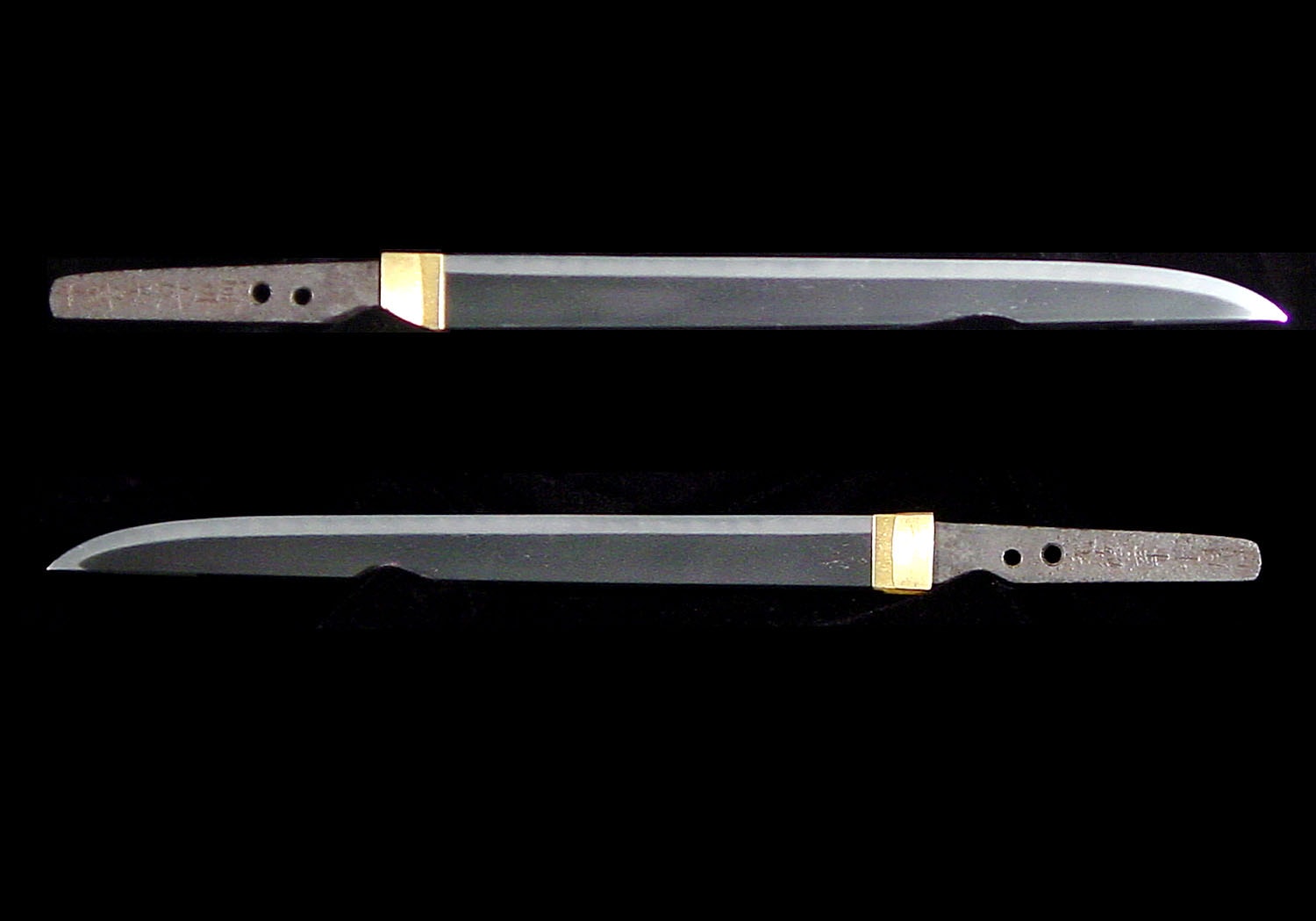
Tsugutada is a smith of Bicchu, placed by the published sources at the close of the period into the early , traditionally about the Joei years, and named variously a son of Tsugie or of Yasutsugu. His blades are all , and several survive , the original tang carrying a boldly cut, thick-chiseled two-character signature on the . Of one such piece a entry says plainly that it is "a large-scale work by Tsugutada". He belongs to the oldest stratum of the school, the Bicchu smiths who forged at Ko-i and Manju in the lower basin of the Takahashi River and whose work down to about the middle of the is set apart as , a manner the sources describe as resembling contemporary yet quieter and more astringent in flavor in the .
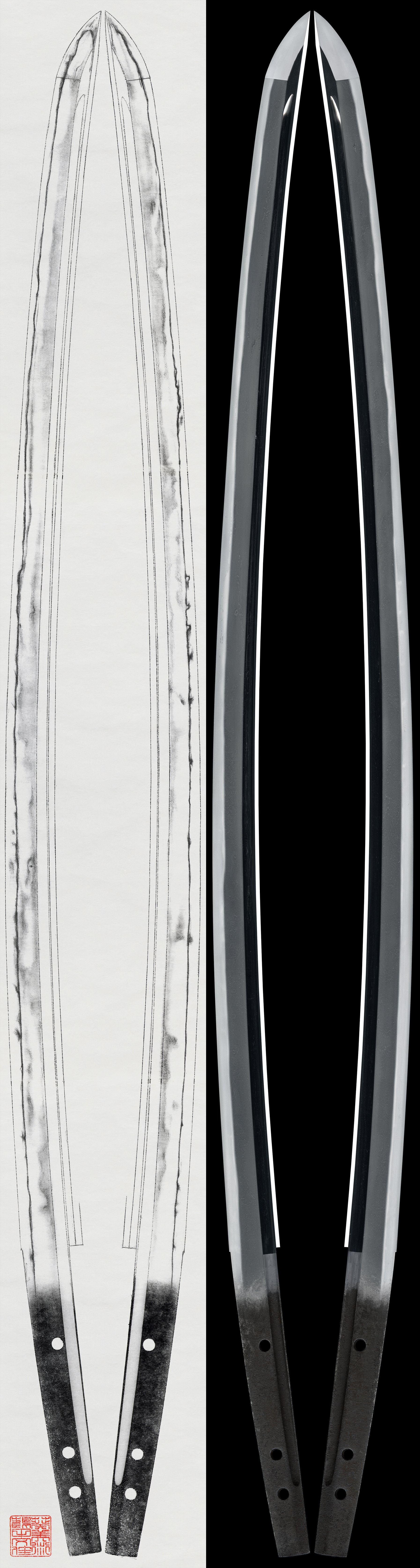
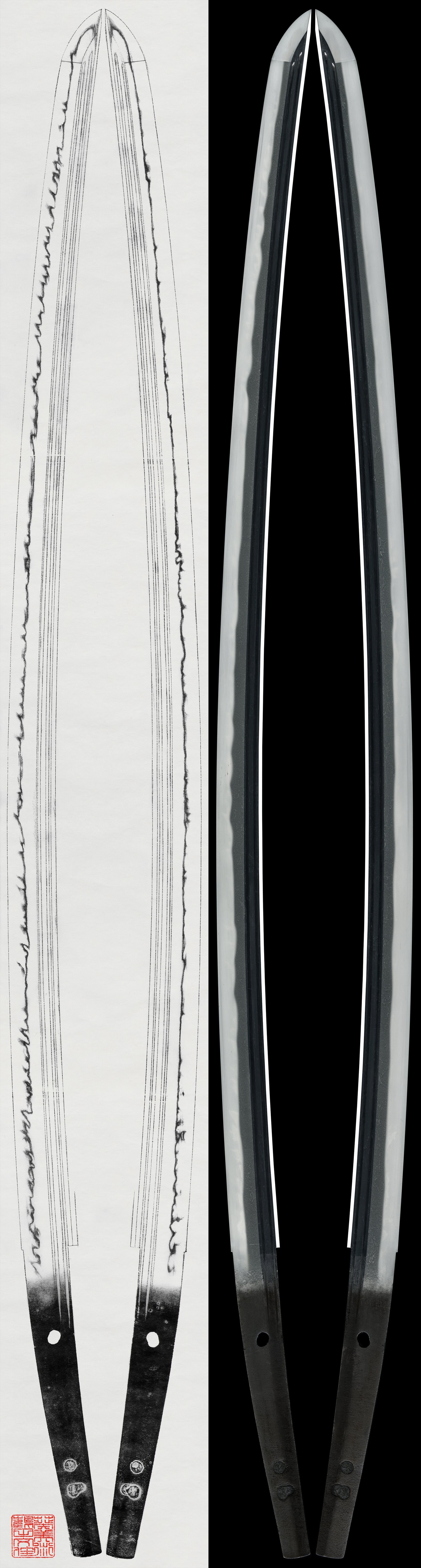
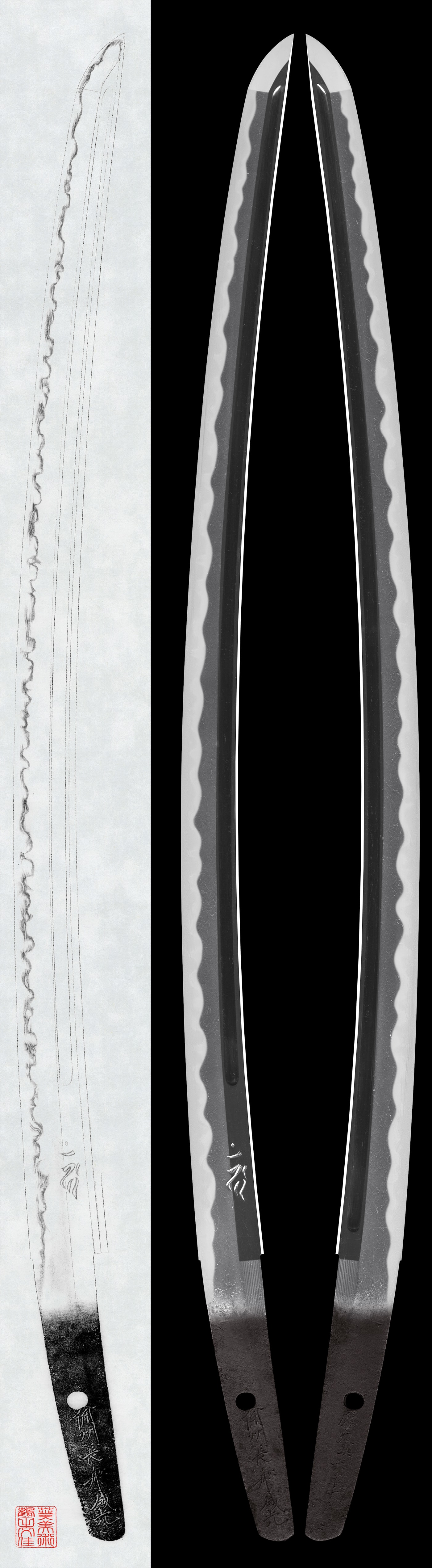
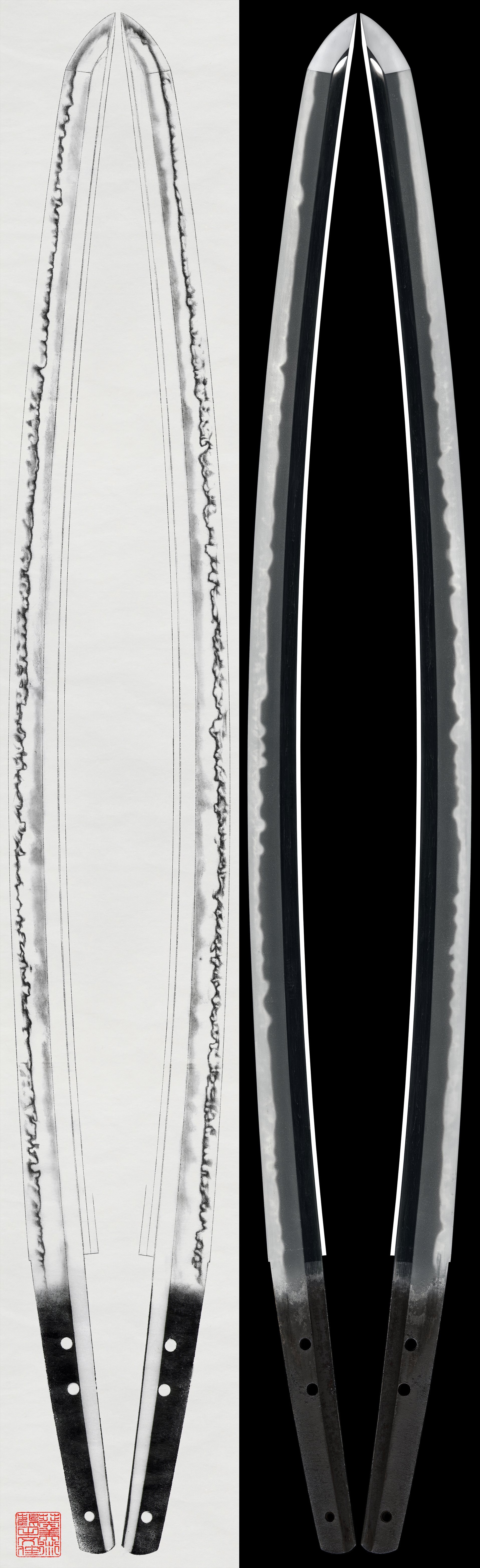
The tell of his hand is its restraint. Where the smiths of his age tempered brightly, his is a quiet, -toned line, the on his finer narrow, into which small , and at times enter with some height variation and running in. Over it the adheres well, and appear frequently, and , and gather along the . The inclines to the subdued the published sources name the character, the astringency that, set beside the livelier , gives his work its antique fragrance. The runs essentially straight to a small round, or scatters its and sweeps a little in at the tip.
The is the constant of his record. The forging is an mixed with that stands a little, running to the crisp, crepe-like that the sources hold a hallmark of the , the grain standing rather than packing flat as in . Across the lie the speckled and, on his finest blades, patches of the clear-band , with well set, entering, and a faint rising. On the Naruse-family the steel is at its most expressive: with in a texture, mixed in, thick , and a temper dropped above the in , above which a fine is the base, the lower half worked with , and , becoming around the middle, the somewhat deep and falling, again, toward .
His record divides, as the judges themselves draw it, into two faces of one hand. The first is the dignified signed , high in with strong and a compact point, the imposing period shape stated plainly, the temper comparatively calm over the speckled . The second is the austere, refined late manner, of which the published sources say his work has "a plain and somewhat rustic feeling" and that "a deep and astringent, quietly resonant workmanship seems to be his hallmark". The tang on every blade is filed in the of the convention, the signature set on the , and on one piece the sources note that its placement above the is unusual.
What sets Tsugutada apart from his neighbours is exactly that quietness. His faint and , his small clove and carried on a base, and his sinking give him the astringent, antique character the published sources read across his oeuvre, against the brighter clove-flower of . Within he stands among its representative early hands, a smith whose work is plain and rustic, the quiet root from which the school's later generations would grow. Several of his blades carry battle cuts and an arrow wound in the upper which, as one entry observes, speak of martial exploits in ages past.
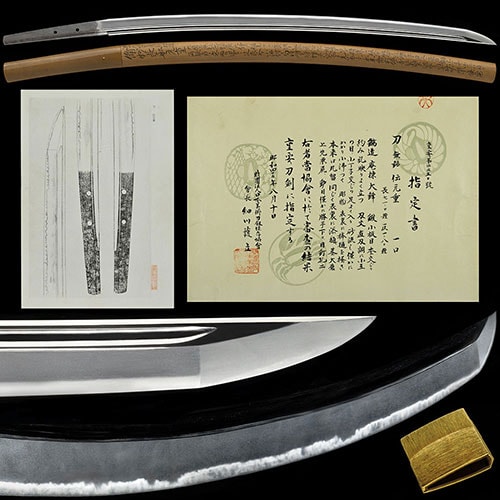
For the collector he is a rare early name. Fujishiro grades him Jo , and the Toko Taikan values his work among the higher figures. The defining fact is scarcity: the published sources state that "extant signed by Tsugutada number only two or three", and call him a comparatively lesser-known figure within , so that each , signed blade is a documentary source of exceptionally high value for the study of the smith. He has no National Treasures; his record runs through one Important Cultural Property, a single and a few , with his blades preserved in long-held collections and institutions grounded in their own provenance, the Naruse family among the houses, and pieces held at the Tokyo National Museum and the Mori Shusui Museum of Art. The published commentary calls the Naruse "a superior example in which Tsugutada's austere and deeply flavored style is well expressed". With so few signed examples on record and most of them held rather than traded, a signed Tsugutada comes to light only seldom, and a privately held example is a notable thing for a collector to encounter, a document of how the oldest Bicchu smiths worked their quiet, astringent steel.