NihontoWatch MonNihontoWatchBETA
MarketEncyclopedia
NihontoWatch Mon

NihontoWatchBETA

Market
Encyclopedia
Overview·Kantei·Designations·Provenance·Work Types·Signatures·Lineage·School
OverviewKanteiDesignationsProvenanceWork TypesSignaturesLineageSchool
  1. Schools
  2. Higo Kinko
  3. Hayashi
  4. Shigemitsu

Hayashi Shigemitsu

重光

Jūyō
Vol. 60, No. 152 · Tsuba

Hayashi Shigemitsu

重光

11 ranked works

ProvinceHigoEraMid Edo (1652–1729)SchoolHigo Kinko>HayashiTraditionHigoGeneration2ndTeacherMatashichiSpecialtiestsuba, inlay, iron-forgingTypeTosogu MakerCodeHAY002
11Jūyō Tōken

Kantei

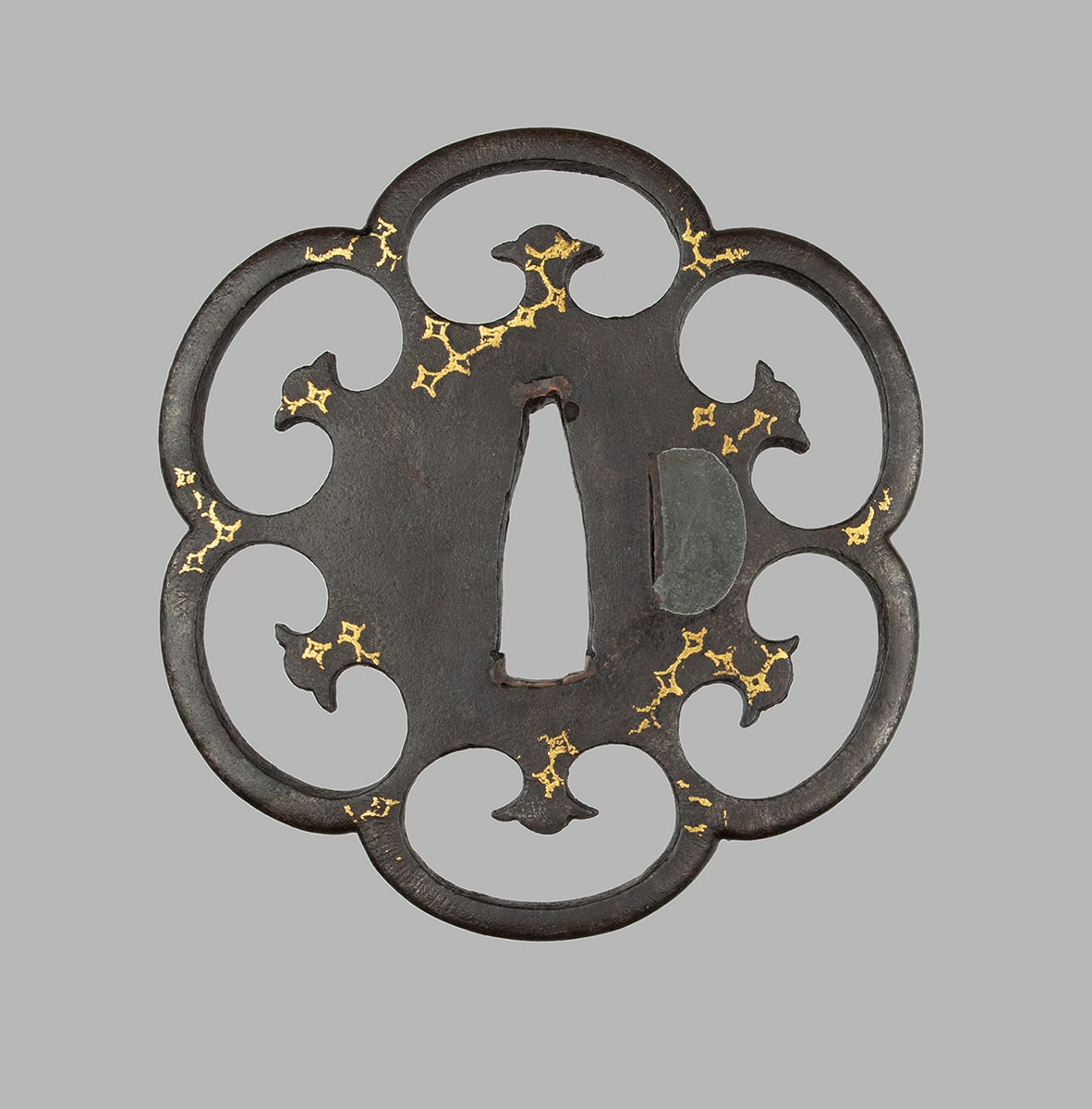
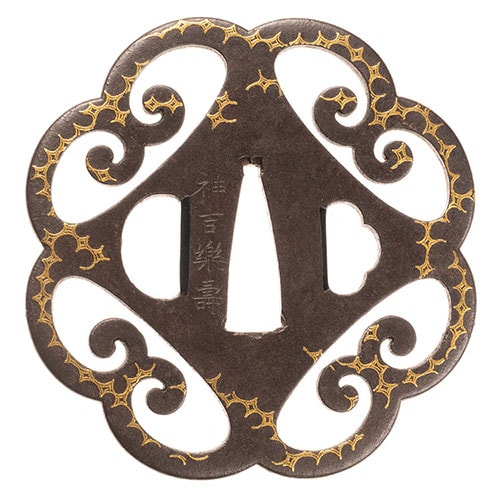
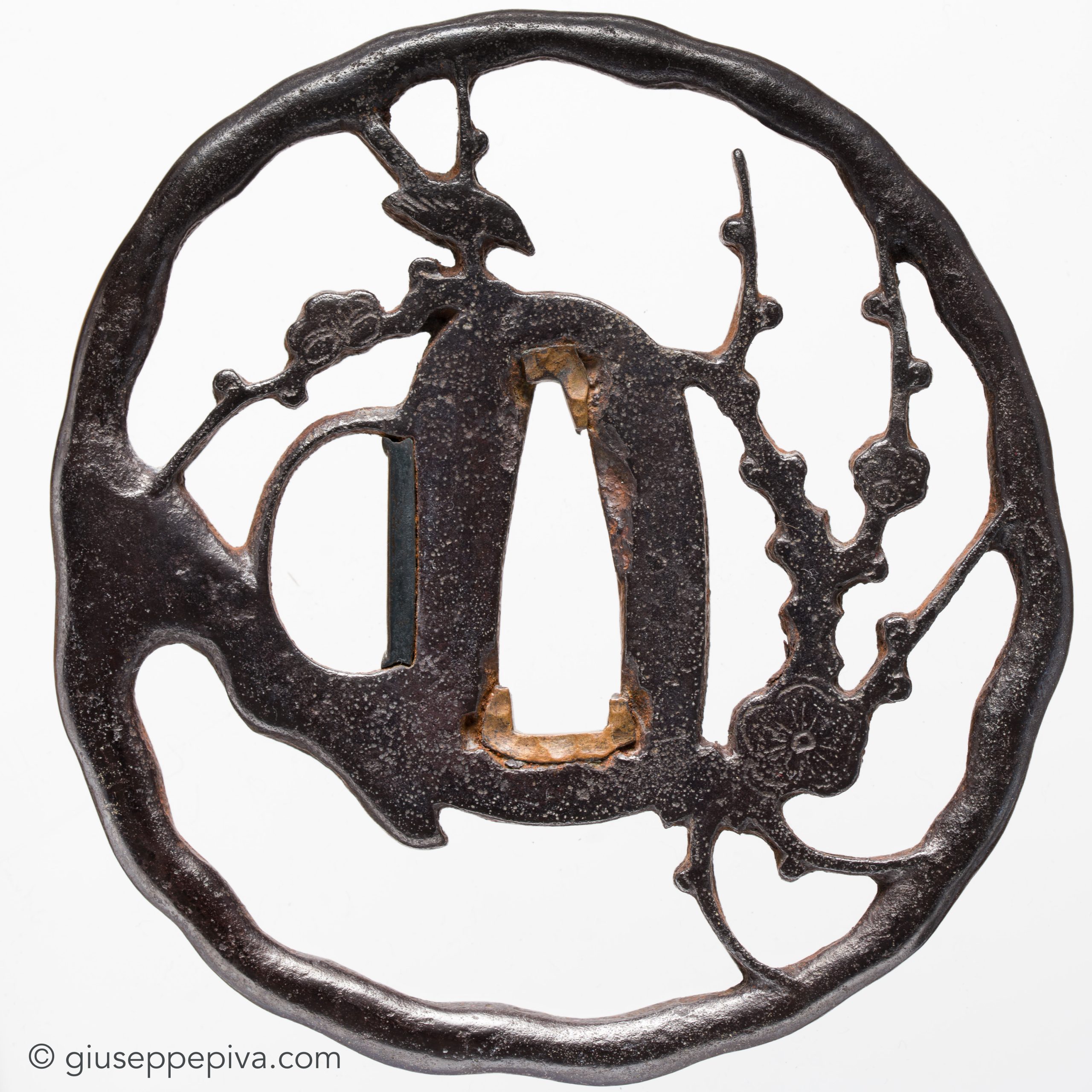
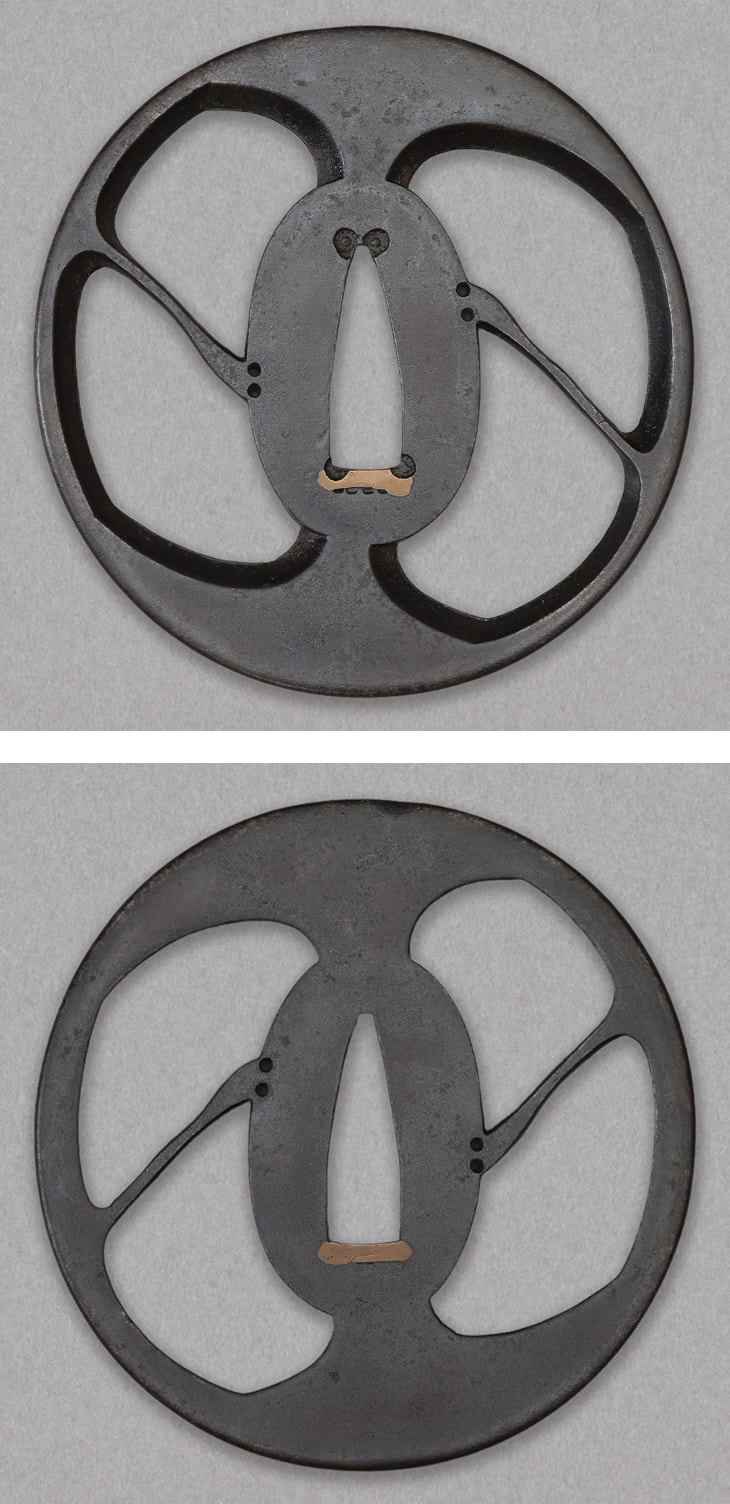
3 descriptive axes for an iron master: material (the well-forged iron plate with its purple and yokan Higo patina) x technique (ji-sukashi openwork finished with hairline engraving and the occasional cloth-inlay) x themes (his father's openwork designs: pine, plum, paulownia and crest devices). Because he is a faithful continuator of the founder's manner, the iron, the patina and the designs are all shared house foundations, not personal tells. The corpus gives him only two consistent points of difference from his father, both stated explicitly and repeatedly: the almost wholly polished flat field, and the finer, more delicate openwork.

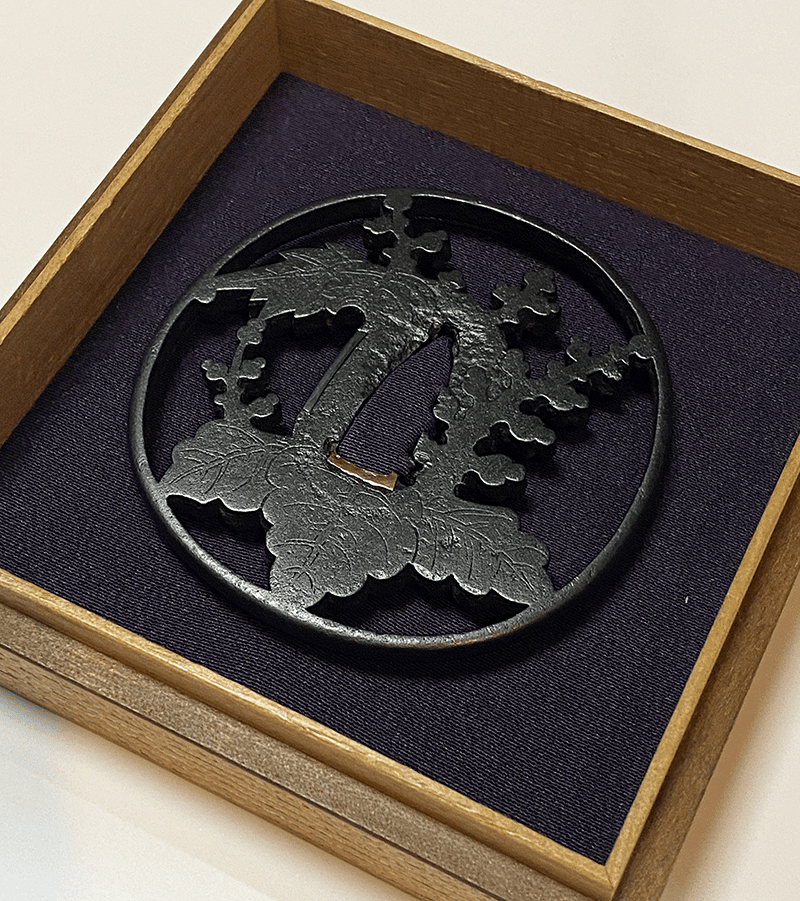
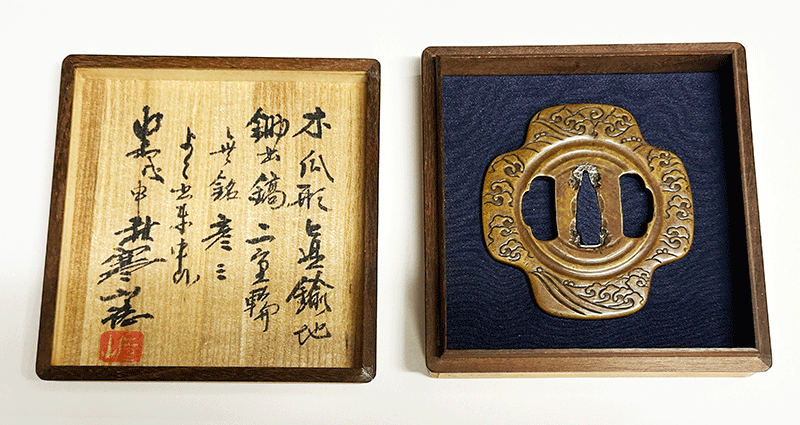
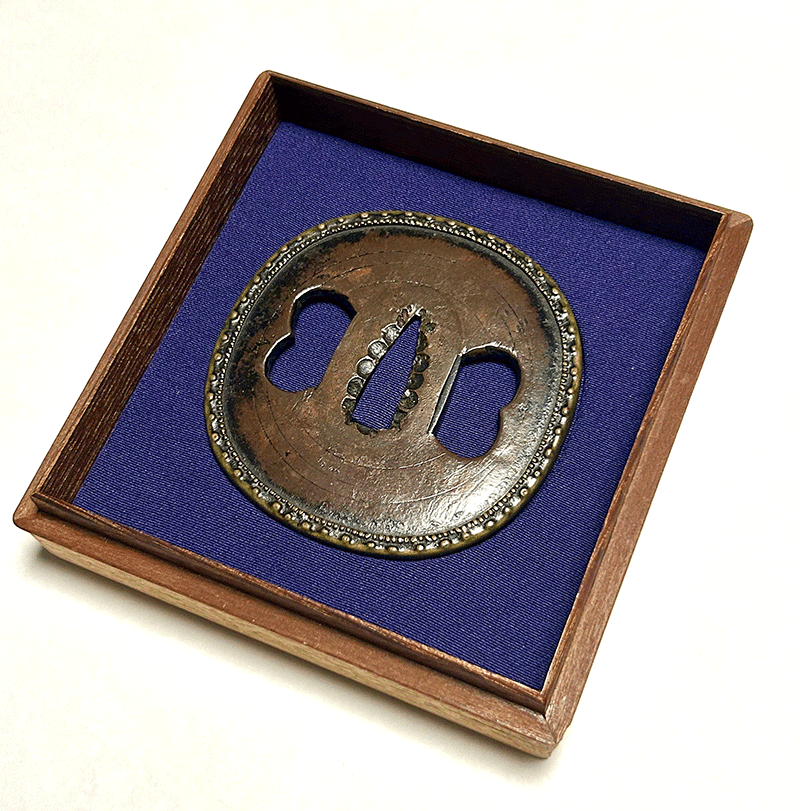
Hayashi Shigemitsu is the second-generation head of the Hayashi (Kasuga) line of iron , the eldest son and heir of the founder Matashichi. The make him consistent: common name Tohei (one record Tohachi), he succeeded his father in Hosokawa service on a five-man stipend, lived at Hisasue in Kasuga village and cut guards there. His art is the forged iron plate cut in openwork, taking up his father's designs (the distant-view pine, three-tier pine, eight-bridges, tossed-paulownia and buke- devices) on a well-forged ground that shows the lustrous purple and yokan-coloured patina the records prize in iron, finished with hairline engraving and the occasional fine cloth-inlay. The records repeatedly weigh him against the founder and name two consistent points of difference: his flat field is worked almost entirely to a polished ground, and his openwork is finer and more delicate, the whole a little gentler than his father's, which they call his own characteristic flavour. The -kinko record gives his dates as born 7 (1667), died Enkyo 1 (1744) aged 78, but the corpus repeatedly notes the dates are contradictory, so a single death date must not be asserted.

Diagnostic discriminators

the setsumei repeatedly name the almost completely polished flat field (heiji wa hobo kanzen na migaki-ji) as a point of difference from Matashichi, sometimes paired with a slightly wider rim; it is a generational tell separating the second-generation Shigemitsu from his own father, not a mark unique to a single piece

where Matashichi's openwork is bold, the records say the second generation's piercing is said to become finer and more delicate (sukashi mo sensai ni naru to iwareru), and on the soft-metal plate the cloth-inlay too becomes finer; the comparand is the founder, against whom this is the stated second point of difference

Material (the iron plate)

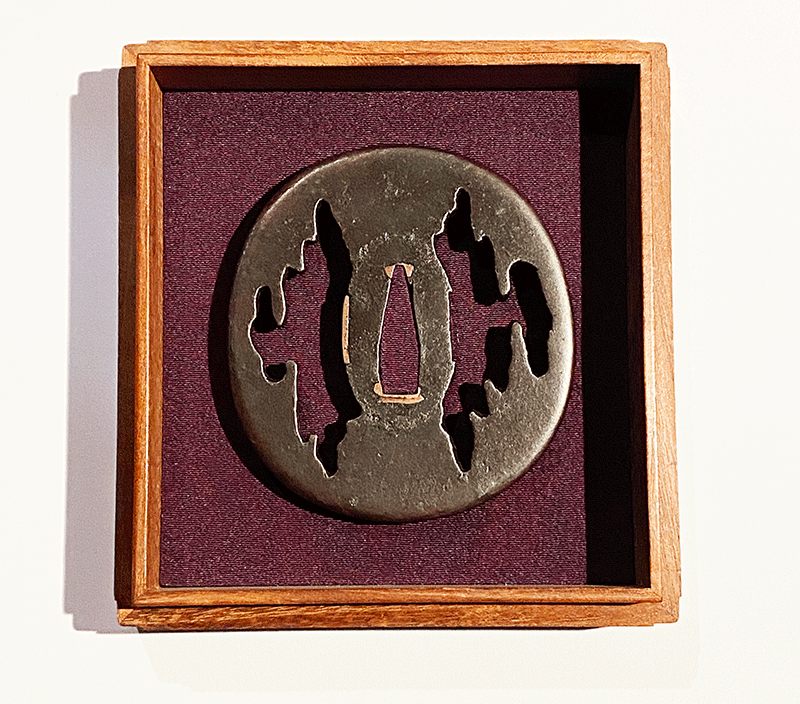
A well-forged iron plate, its forging repeatedly praised, worked to a polished ground that takes the lustrous purple patina the records call particular to iron, and on some pieces the moist yokan-colour the school prizes; the field is given a faint undulation read as quietly tasteful. A few of his guards are set on or plates rather than iron.

Technique

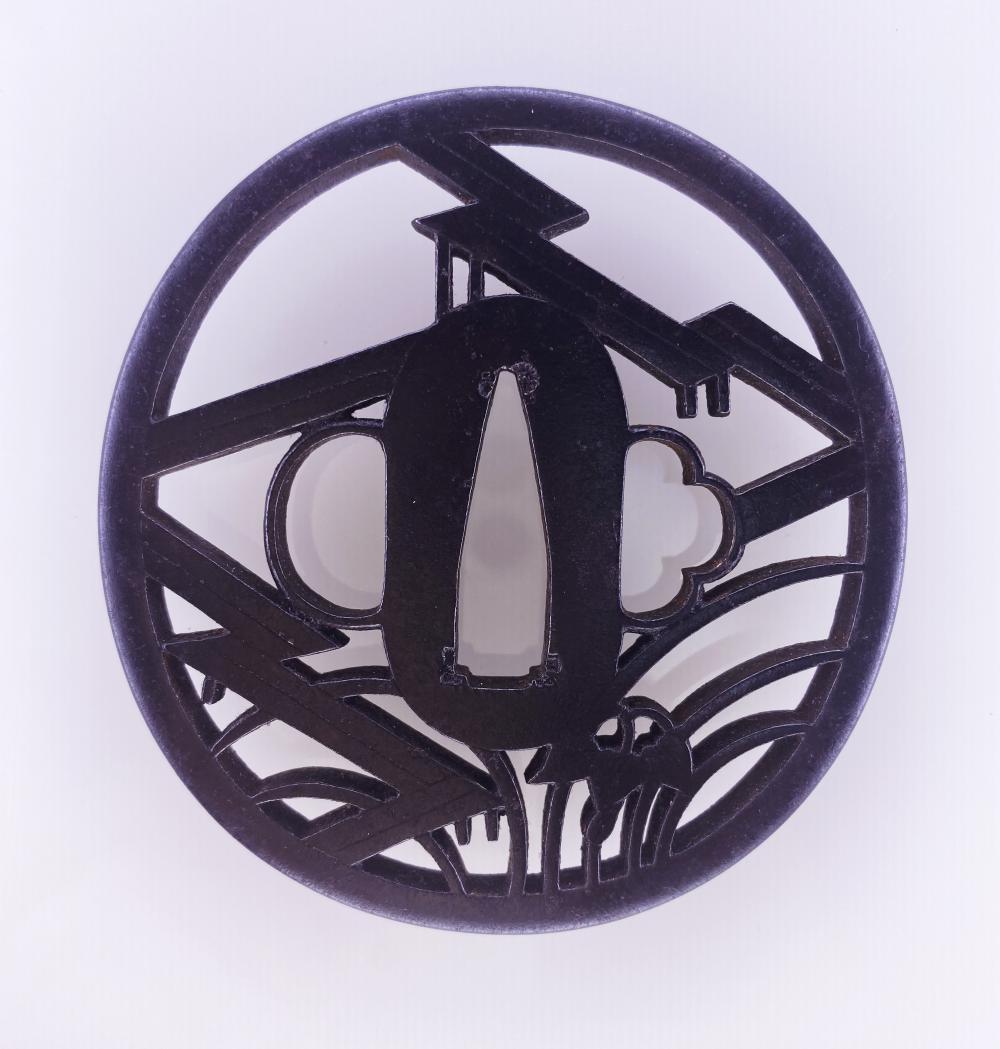
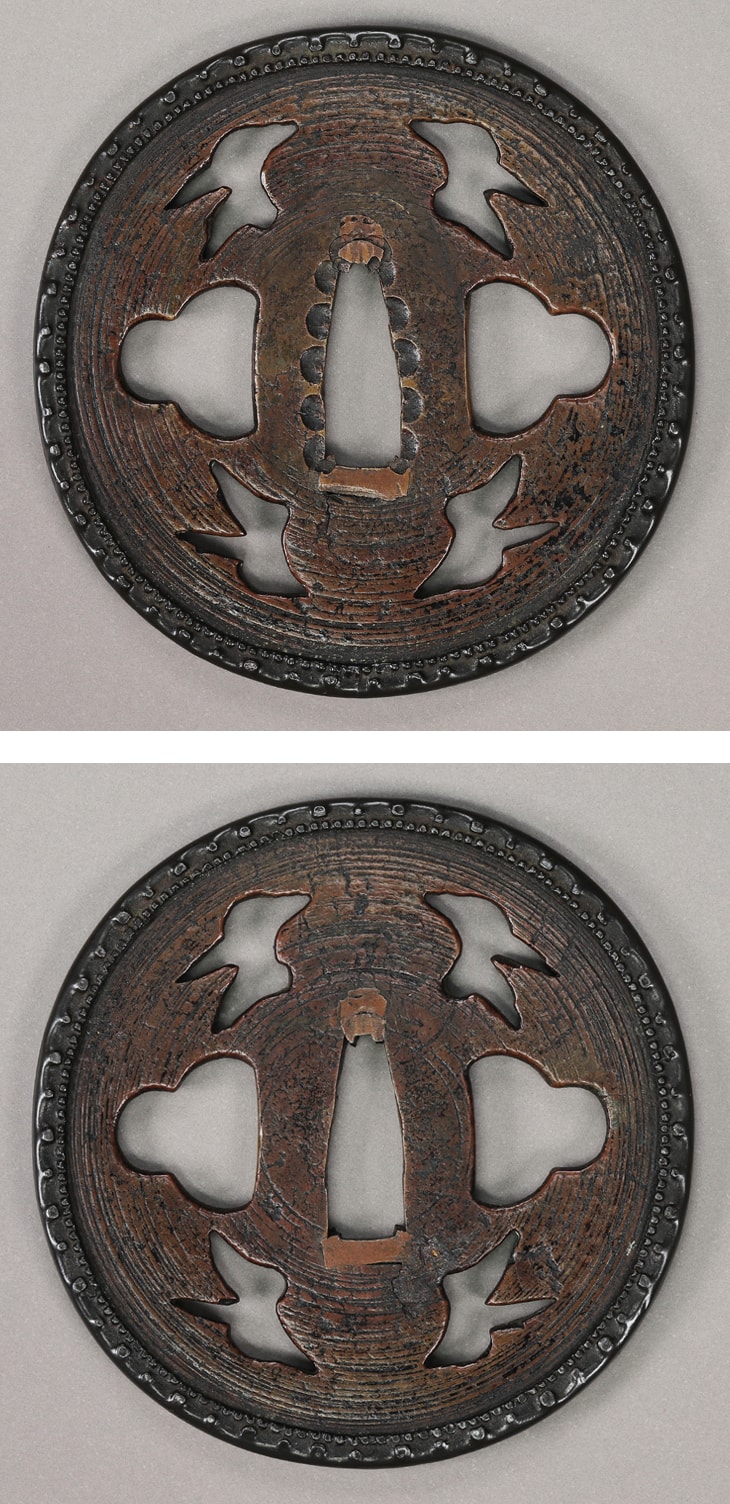
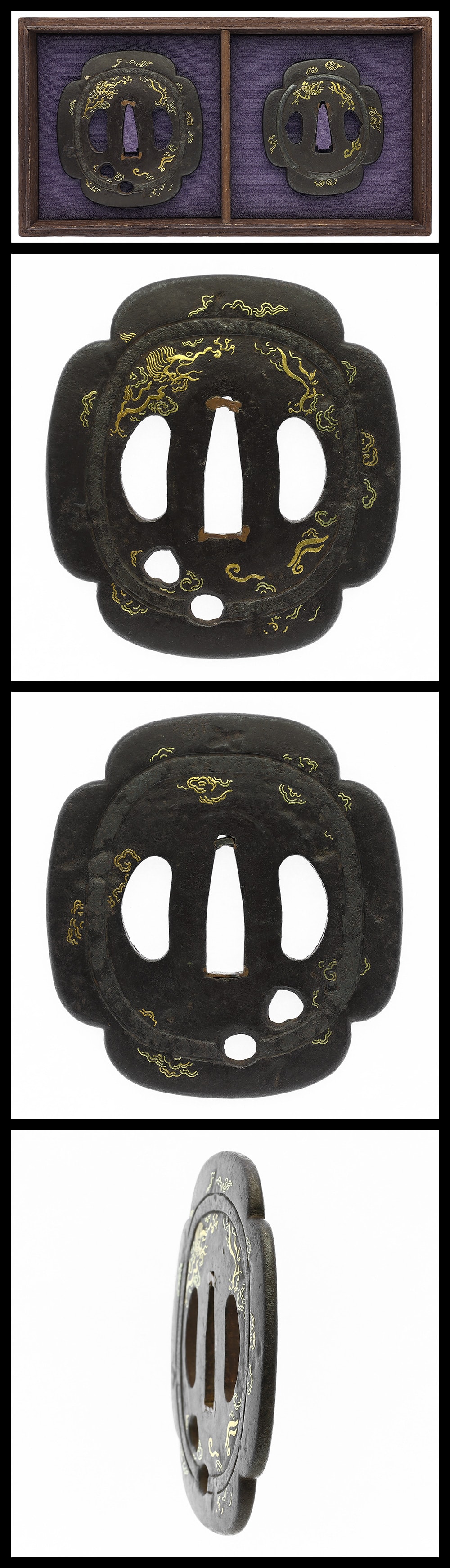
Ground openwork () above all, cut through the iron plate, the pierced devices finished with hairline engraving on the leaves and clouds; a few guards add a fine cloth (nunome) inlay of gold scroll, and one carries colour-inlay and a soft-metal device. The guard is taken to a round or squared rim with both , on varied vertical-round and quince-flower outlines.

Themes (openwork designs)

His designs are taken from the founder: the distant-view pine above all, with the three-tier pine, plum-tree and arabesque, all pierced through the iron and read as the set devices (okite-mono) of the Hayashi house. The records say each was inherited from Matashichi rather than invented anew.

Inherited Hayashi openwork designs

The distant-view and three-tier pine, the plum-tree and the arabesque, pierced in iron and finished with hairline engraving, the founder's repertoire carried on by his heir.

Full iconography

Signature chronology

Recorded signatures

Documentary note

Shigemitsu signs the three-character Hayashi Shigemitsu and the bare two-character Shigemitsu (a few of the latter -less name marks), but many accepted guards are unsigned and attributed by the iron, the inherited designs and the hand; the records repeatedly call signed work of his rare and valuable. With only some eleven pieces, the honest position is that almost everything that fixes a Shigemitsu guard fixes the Hayashi line, not Shigemitsu against any other Hayashi worker: the iron, the patina and the designs are the founder's, and the only consistent separators the corpus offers are generational, between the second generation and the first (the polished field and the finer openwork). The -kinko record gives born 7 (1667), died Enkyo 1 (1744) aged 78, but the repeatedly state the dates are contradictory; one record gives the common name as Tohachi where the others give Tohei. The attribution labels on the many unsigned pieces are not physical inscriptions.

Scholarship

The records read his guards as a little gentler in feel than the founder's, and call that softness his own characteristic flavour.

The records are said to name the rare signed pieces valuable for knowing the range (sakuiki) of his work, his iron and carving still found good on the inherited designs.

Designations

Kokuhō—
Jūyō Bunkazai—
Jūyō Bijutsuhin—
Gyobutsu—
Tokubetsu Jūyō—
Jūyō Tōken11

Elite Standing

0.08 across 11 designated works

Top 17% among makers

Provenance

3 documented provenances across certified works by Shigemitsu

Provenance Standing

2 works held in elite collections across 3 documented provenances

Top 70% among makers

Raw score: 1.94 / 10

Work Types

Distribution across 11 ranked works

Tsuba
873%
Other
327%

Signatures

Signature types across 11 ranked works

Currently Available

Lineage

TeacherMatashichi
Shigemitsu
Student
  1. 1.Tohachi藤八3 for sale

Hayashi School

Other artisans of the Hayashi school

  1. 1.Matashichi又七1 for sale51designated
  2. 2.Shigekatsu重勝1designated

Shigemitsu

Shigemitsu(重光) was a maker of Japanese sword fittings (tōsōgu) of the Hayashi school in Higo province, active during the Mid Edo (1652–1729) period.

The work follows the Higo tradition.

Designated works by Shigemitsu include 11 Jūyō.