NihontoWatch MonNihontoWatchBETA
MarketEncyclopedia
NihontoWatch Mon

NihontoWatchBETA

Market
Encyclopedia
Overview·Kantei·Designations·Work Types·Signatures·School
OverviewKanteiDesignationsWork TypesSignaturesSchool
  1. Schools
  2. Murakami
  3. Jochiku

Murakami Jochiku

如竹

Tokujū
Vol. 23, No. 44 · Tsuba

Murakami Jochiku

如竹

19 ranked works

SchoolMurakamiTraditionMachiboriTypeTosogu MakerCodeMUR001
1Tokubetsu Jūyō18Jūyō Tōken

Overview

Murakami Jochiku lived in Shiba, , active around the Tenmei era (1781--1789). His personal name was initially Nakanori, and he later also signed Mitsunori; he used the art name Kanshodo. He is said to have originally come from a background as an inlay craftsman specializing in stirrups (abumi), and later turned to the work of a metal-fitting artisan, apparently establishing himself without seeking a particular master. The details of his formal training are not clearly known. From the manner of his signatures, his oeuvre can be broadly divided into an early period -- when he signed with the Nakanori seal -- and a mature period under the name Jochiku. Some works bearing the Nakanori seal are recognized as youthful productions on the basis of their powerful manner and signature form.

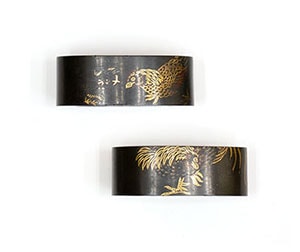
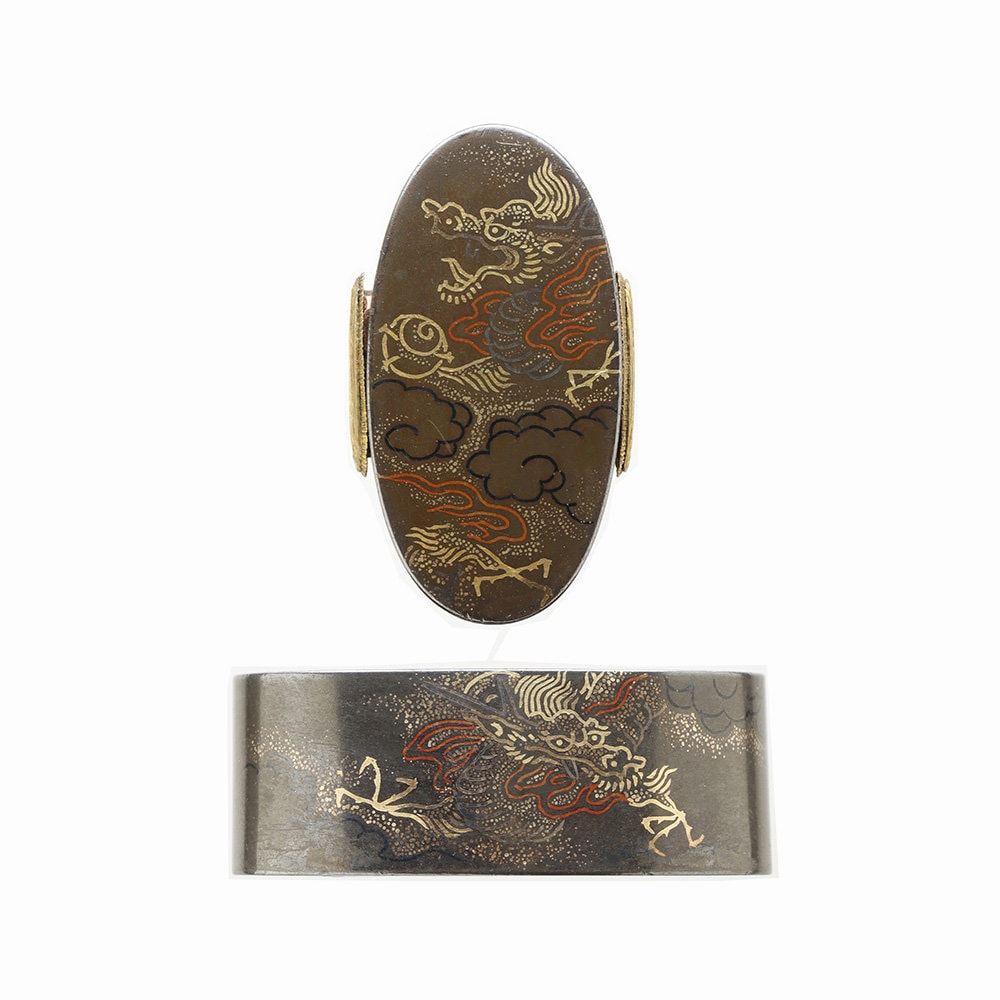
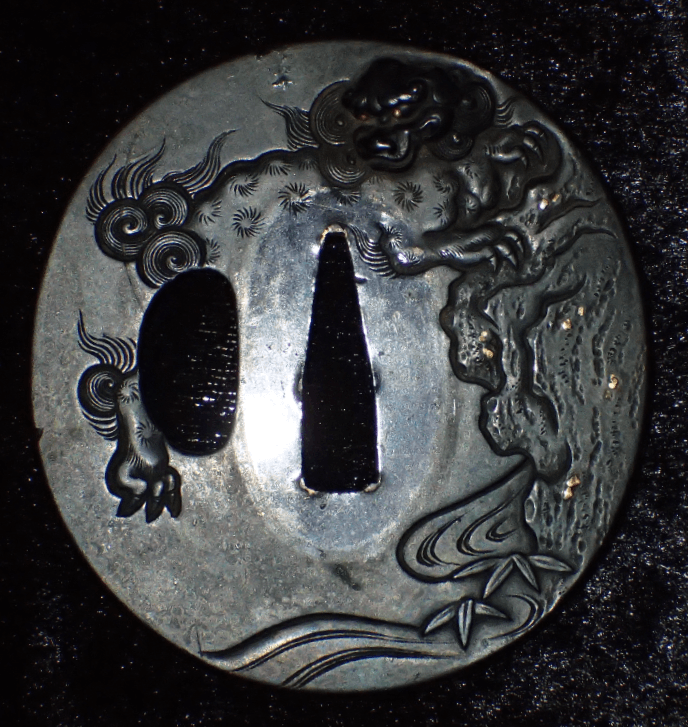
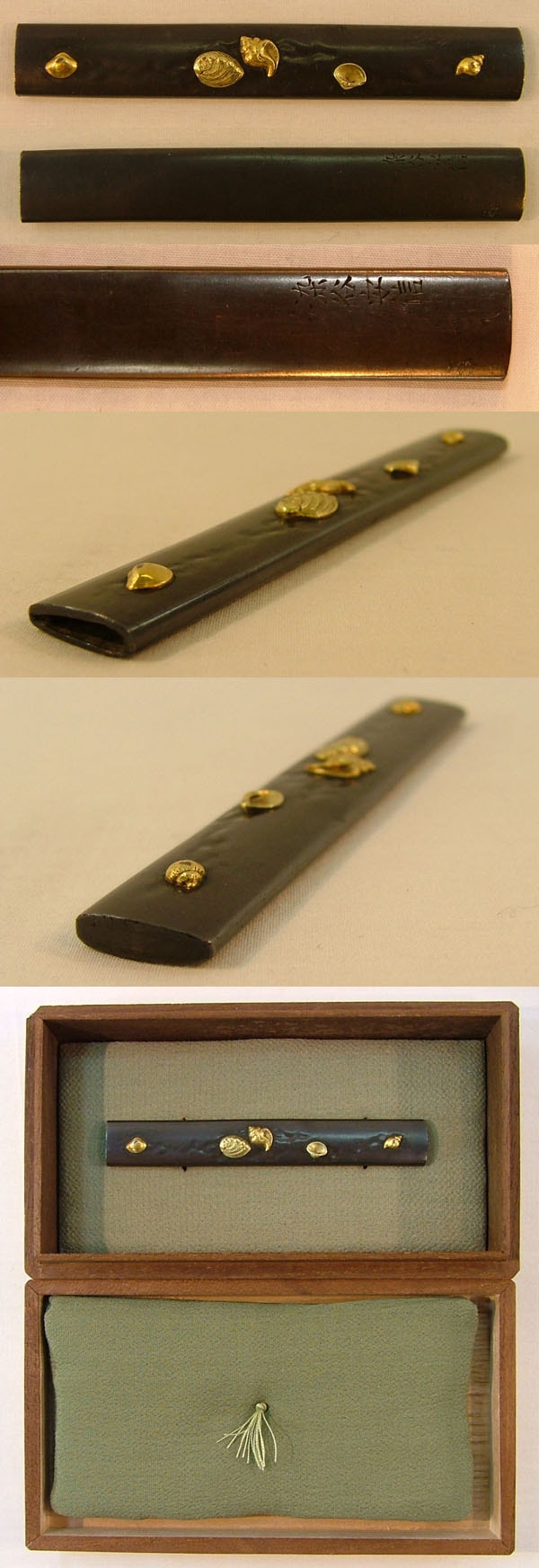
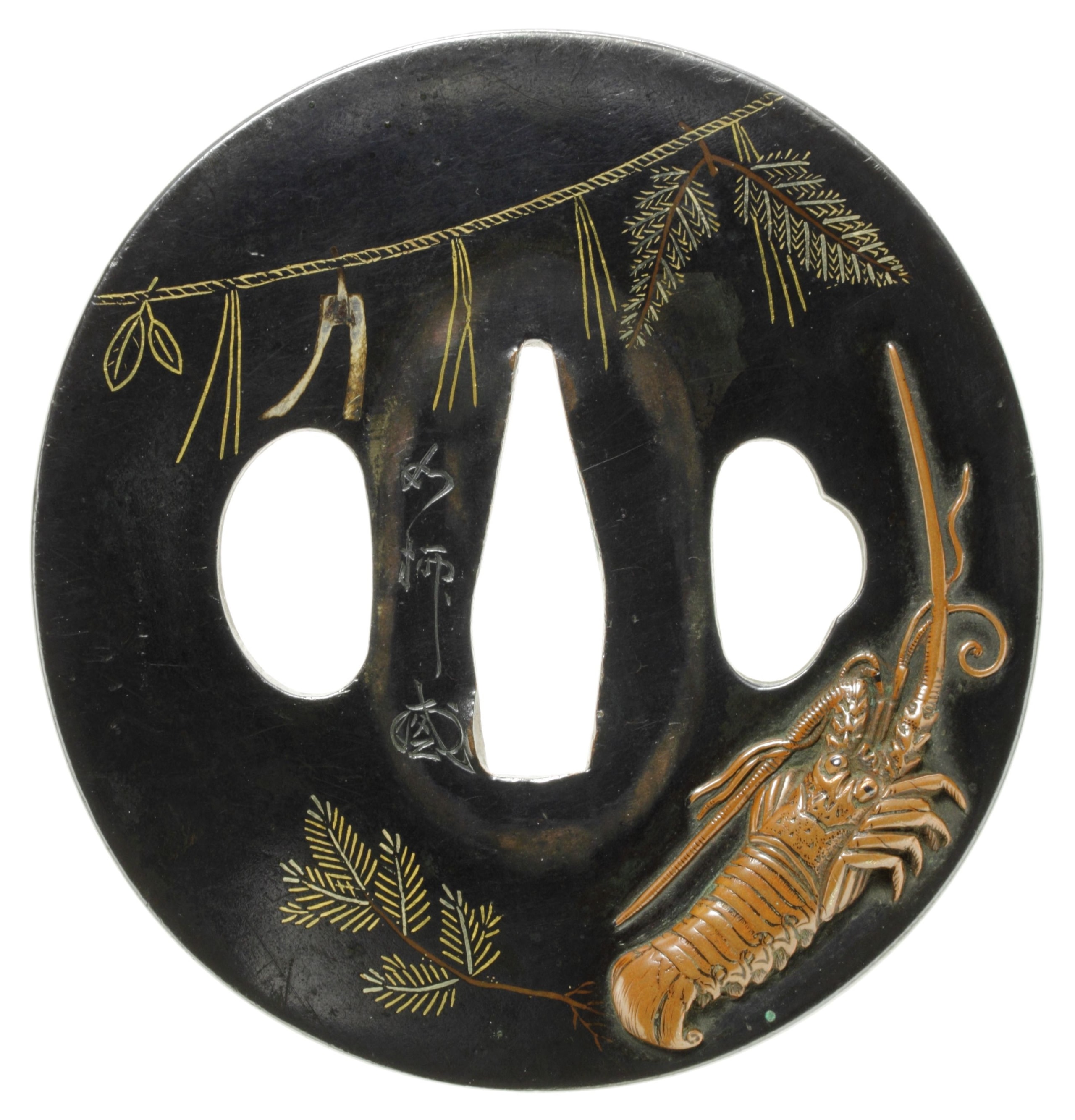
Jochiku's works show particular strength in the techniques of - (applied-motif inlay) and - (flat inlay). Many of his designs render, in large, boldly stylized compositions, subjects drawn from the natural world -- insects such as dragonflies, butterflies, and cicadas; fish such as sea bream, squid, whitebait, and shark; and animals such as cats and tigers -- expressed through high-relief inlay (takaniku-) with ample modeling. In parts of these compositions he heightened the coloristic effect by inserting materials such as mother-of-pearl (), coral, blue lacquer, and even glass, in a manner reminiscent of embedded ornaments in lacquerwork (umemono), thereby establishing a distinctive new approach. His favored ground is the - (crepe-textured stone-grain surface) in , though carefully executed works on are also known, and all such examples carry a correspondingly high dignity. His tiger depictions, among his recognized specialties, are powerfully expressed down to the rendering of fur through dense, delicate , with crystal or glass insets for the eyes imparting a keen, piercing gaze. The chiseling -- pursued with unwavering commitment to realism -- is consistently praised as superb, with applied with precision across gold, silver, , plain copper, and reddish copper (hi-irodo).

Across the designated corpus, the repeatedly characterizes Jochiku's manner as "extremely individualistic" and "intensely personal in character," noting that his commanding compositions "overwhelm other works" and that his true strengths allow "no rival craftsmen to surpass him" in the use of inlay. His rusu-moyo ("absence pattern") compositions -- in which the deity Ebisu is evoked solely through attributes such as the sea bream, fishing rod, and eyeless basket -- recur as a signature theme, often embellished with the auspicious character kotobuki inlaid around the rim, and judged to have been produced on commission for wealthy merchant households. In his forceful chiselwork, his pursuit of an overtly craft-oriented decorative beauty, and his innovative synthesis of metalworking with materials drawn from the lacquer and glass arts, Jochiku opened up and mastered a distinctive artistic realm entirely his own.
Kantei

3 descriptive axes: material (shakudo grounds above all, with his own chirimen-ishime crepe ground, plus shibuichi, suaka and brass) x technique (bold applied suemon and flush hira-zogan inlay, high relief, with shell and glass enrichment) x themes (large design-style fish and shellfish, insects, animals, the Ebisu-and-Daikoku absence-pattern, and Chinese figures, with the tiger his recurring set-piece). His load-bearing discriminators are his signature chirimen-ishime ground and his shell-and-glass decorative inlay, said to be beyond other hands. The seal-name Nakanori marks his early work.

Murakami Jochiku, of Shiba in and active around the Tenmei era (about 1781), is a strongly individual late- metalwork artist. The records say his given name was first Nakanori and that he later also signed Mitsunori, with the studio go Kanshodo. He is said to have begun as a stirrup-inlay craftsman and only later turned to soft-metal work, and the do not make his teacher clear, calling him essentially self-taught. His own manner is the large, bold, design-style applied relief () and flush inlay of fish and shellfish, insects and animals, set on a crepe-textured ishime ground he made his own and enriched with shell, coral, glass and lacquer for a decorative novelty the records say no other hand could follow.

Diagnostic discriminators

the crepe-textured ishime ground is repeatedly named his own forte and his distinctive ground (his chirimen-ishime); ordinary Edo kinko set their relief on plain nanako or smooth ishime, so this laborious crinkled field separates his pieces at a glance

he inlays shell (aogai), coral, glass and crystal into the metal as a lacquer-craft enrichment, and sets glass or crystal into the eyes of his animals; the records call his aogai inlay a forte no other hand could follow and a decorative novelty he established, a borrowing from mounting-lacquer technique rare among metalwork artists

Material (grounds)

above all, very often worked to his own -ishime crepe-stippled ground; he also uses , , and brass, and sets shell and glass into the field for colour.

Technique

His hand is the bold applied and flush - that the records name his forte, built up in high relief and coloured with iro-e; over it he sets shell, coral, glass and crystal, and on a few pieces works katakiri-bori line, the cat finish and a fine .

Themes (design-style subjects)

He treats fish and shellfish (sea bream, squid, shark, whitebait), insects (butterflies, dragonflies, cicadas) and animals (the cat) at large scale in a design-style manner; the auspicious Ebisu-and-Daikoku absence-pattern is a favoured commission, and among figures he carves Chinese heroes such as Guan Yu and Zhuge Liang. The tiger, often paired with bamboo, is his recurring set-piece.

Fish, insects and animals (design-style)

Fish and shellfish, butterflies and dragonflies and the cat, set large and boldly as decorative design, with the Ebisu-and-Daikoku absence-pattern a favoured auspicious commission.

Tiger and Chinese figures

The tiger, often with bamboo, given a powerful relief, with Chinese heroes such as Guan Yu and Zhuge Liang among his figure subjects.

Full iconography

Signature chronology

Recorded signatures

Documentary note

He signs the go Jochiku with a , alone or prefixed with the studio go Kanshodo and the literary names Buyo-ju and Buyo-sanjin (Buyo-ju Jochiku, Buyo-sanjin Kanshodo Jochiku). His first given name Nakanori is cut as a seal (in-, often a gold seal), and the records read the seal-Nakanori pieces as his early, pre-Jochiku work. The biography says he later also signed Mitsunori, but Mitsunori occurs in this corpus only in that recited biographical phrase, never inside an actual signature, so it is documentary, not an observed signature here. The do not name a teacher and treat him as essentially self-taught after his stirrup-inlay beginnings.

Scholarship

His manner is repeatedly called strongly individual, the large design-style applied inlay his own distinctive idiom.

Designations

Kokuhō—
Jūyō Bunkazai—
Jūyō Bijutsuhin—
Gyobutsu—
Tokubetsu Jūyō1
Jūyō Tōken18

Elite Standing

0.09 across 19 designated works

Top 15% among makers

Work Types

Distribution across 19 ranked works

Tsuba
737%
Other
421%
Fuchi-Kashira
421%
Kozuka
421%

Signatures

Signature types across 19 ranked works

Currently Available

Murakami School

Other artisans of the Murakami school

  1. 1.Masanori松英1 for sale1designated

Jochiku

Jochiku(如竹) was a maker of Japanese sword fittings (tōsōgu) of the Murakami school.

The work follows the Machibori tradition.

Designated works by Jochiku include 1 Tokubetsu Jūyō, 18 Jūyō.