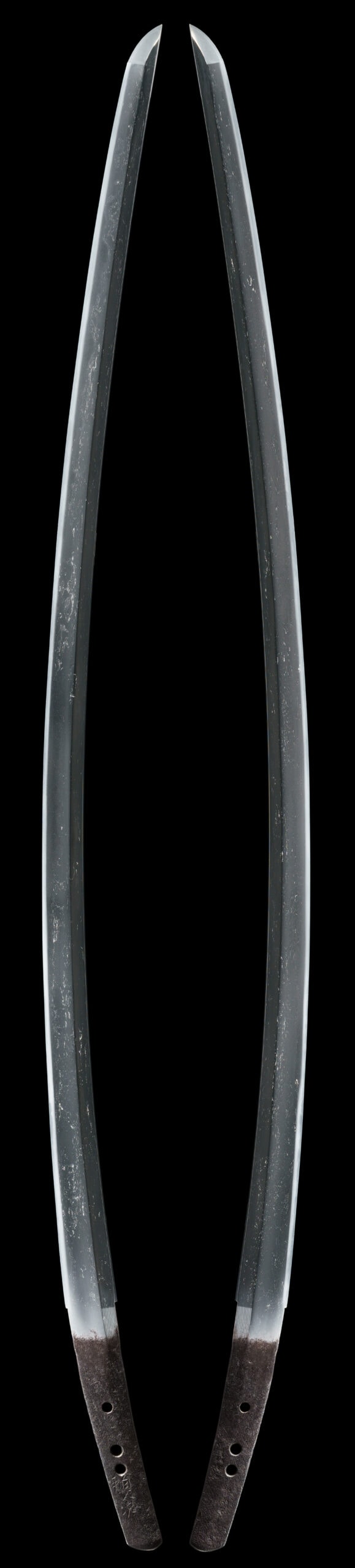
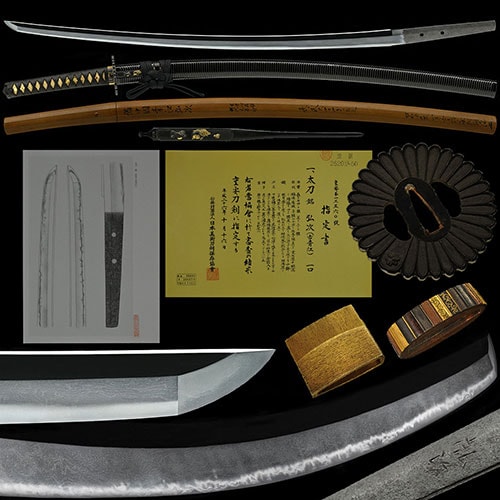
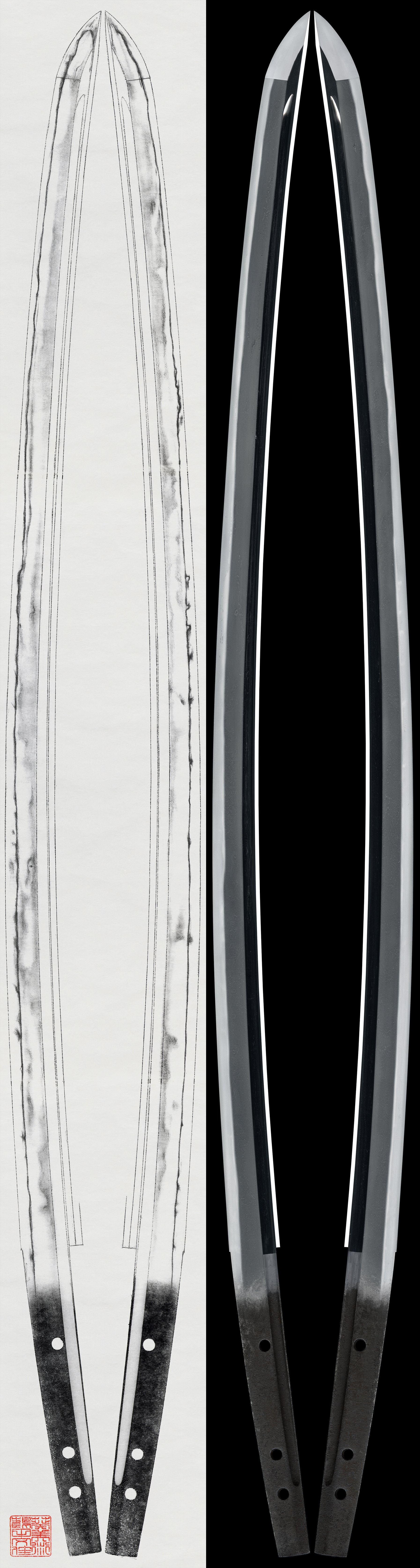
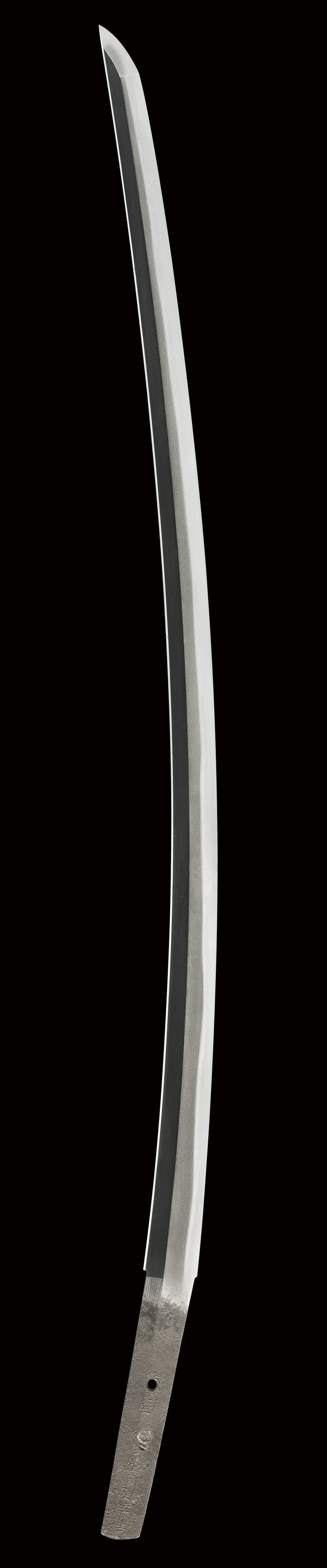
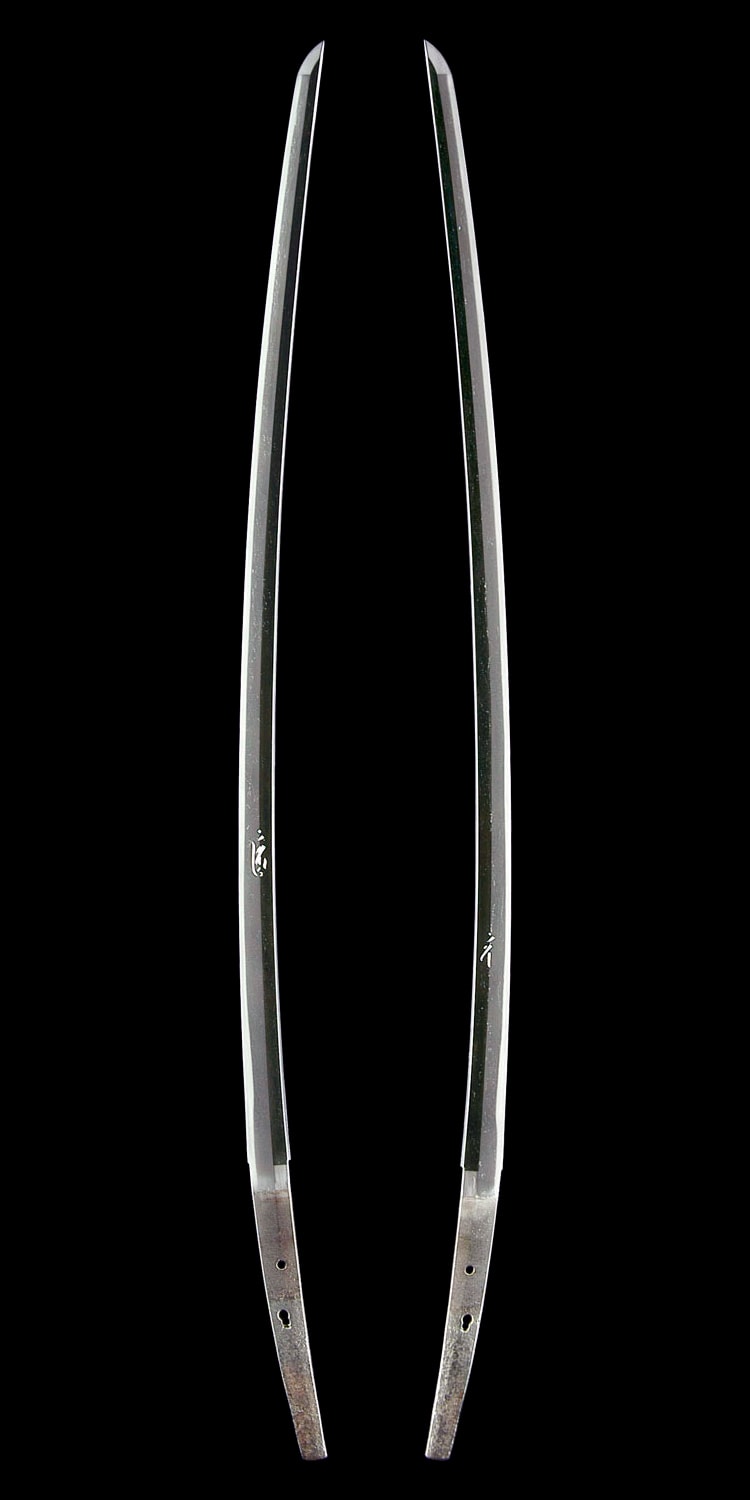
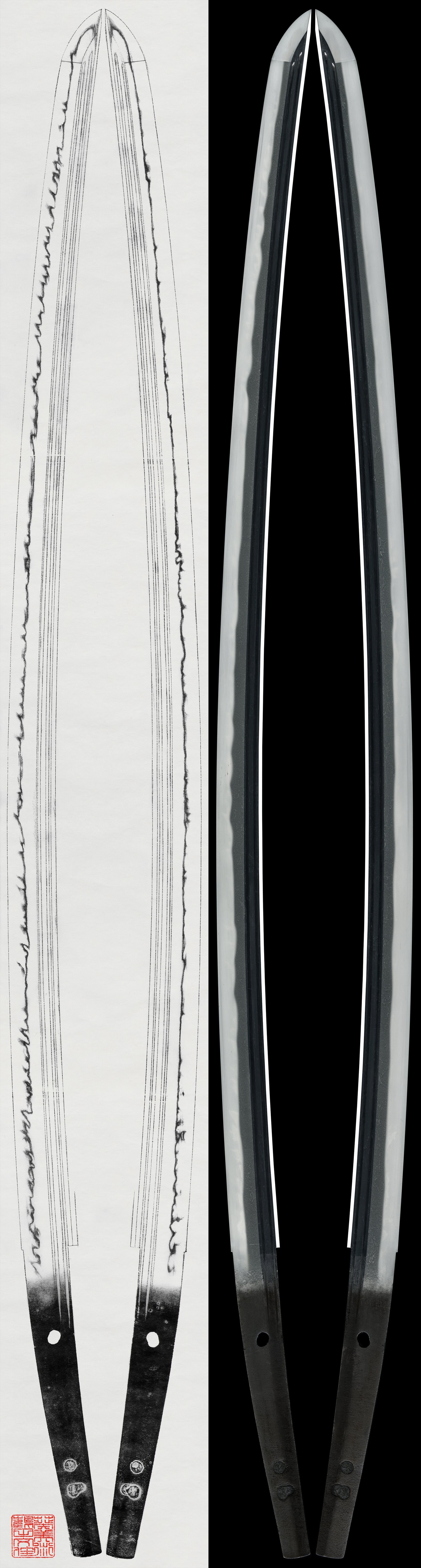
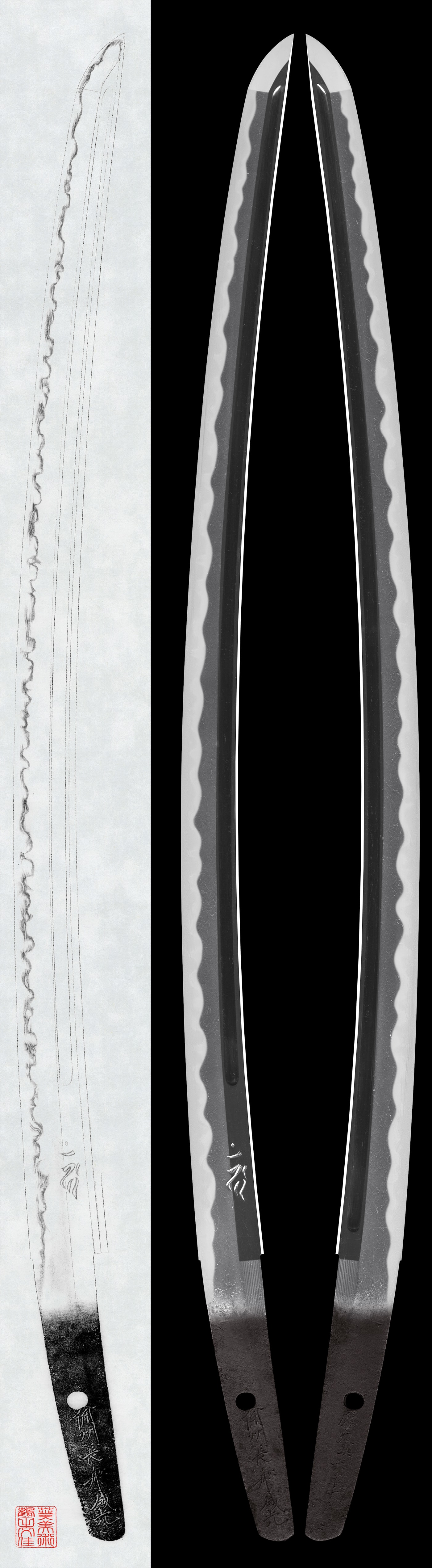
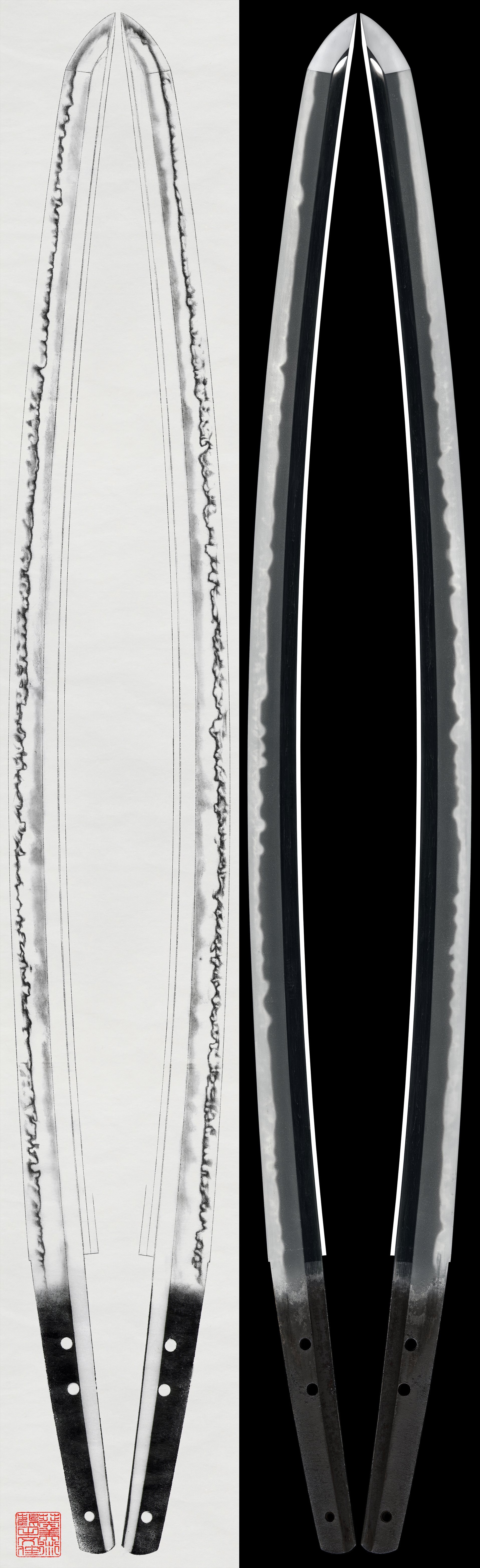
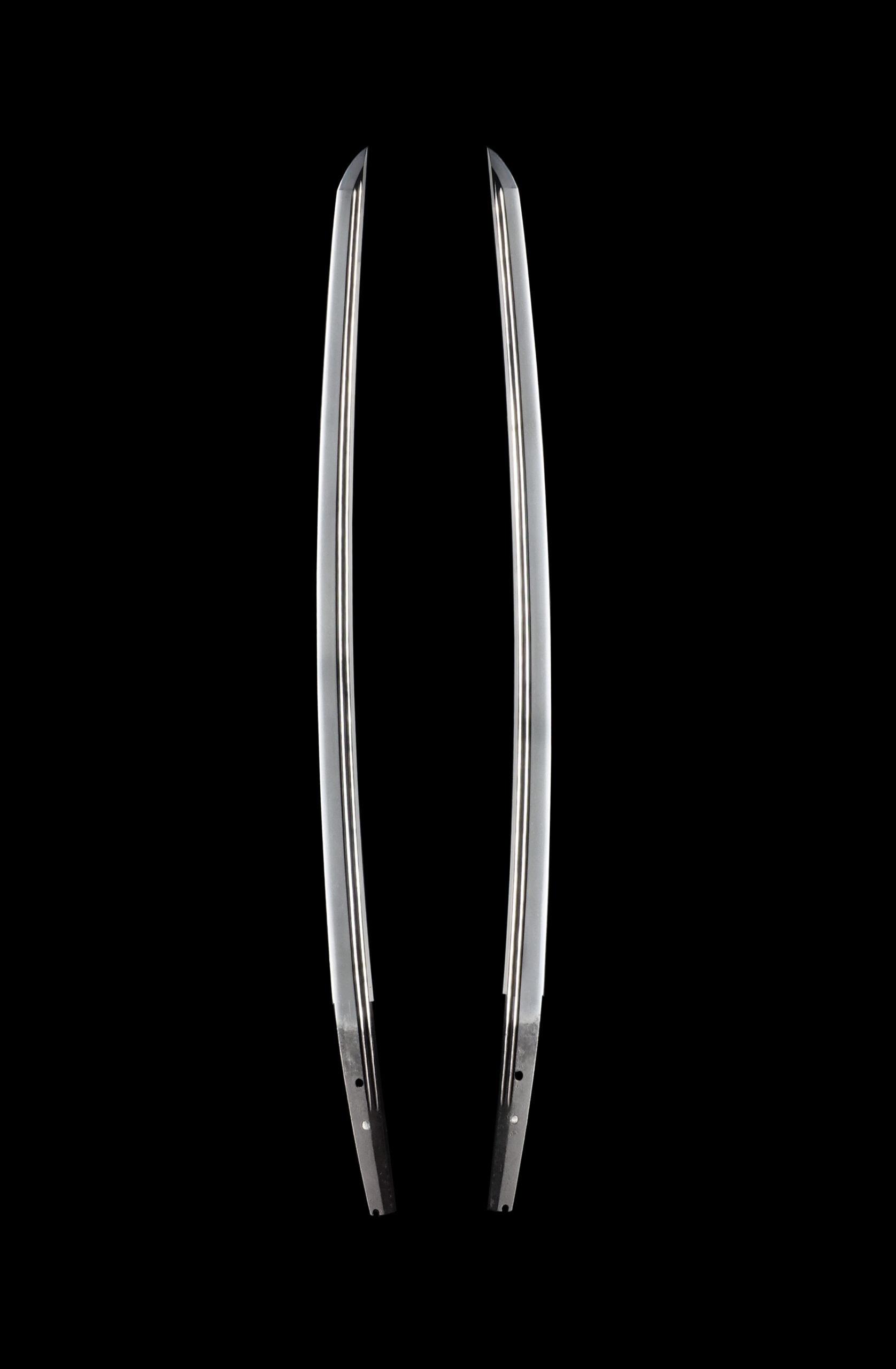
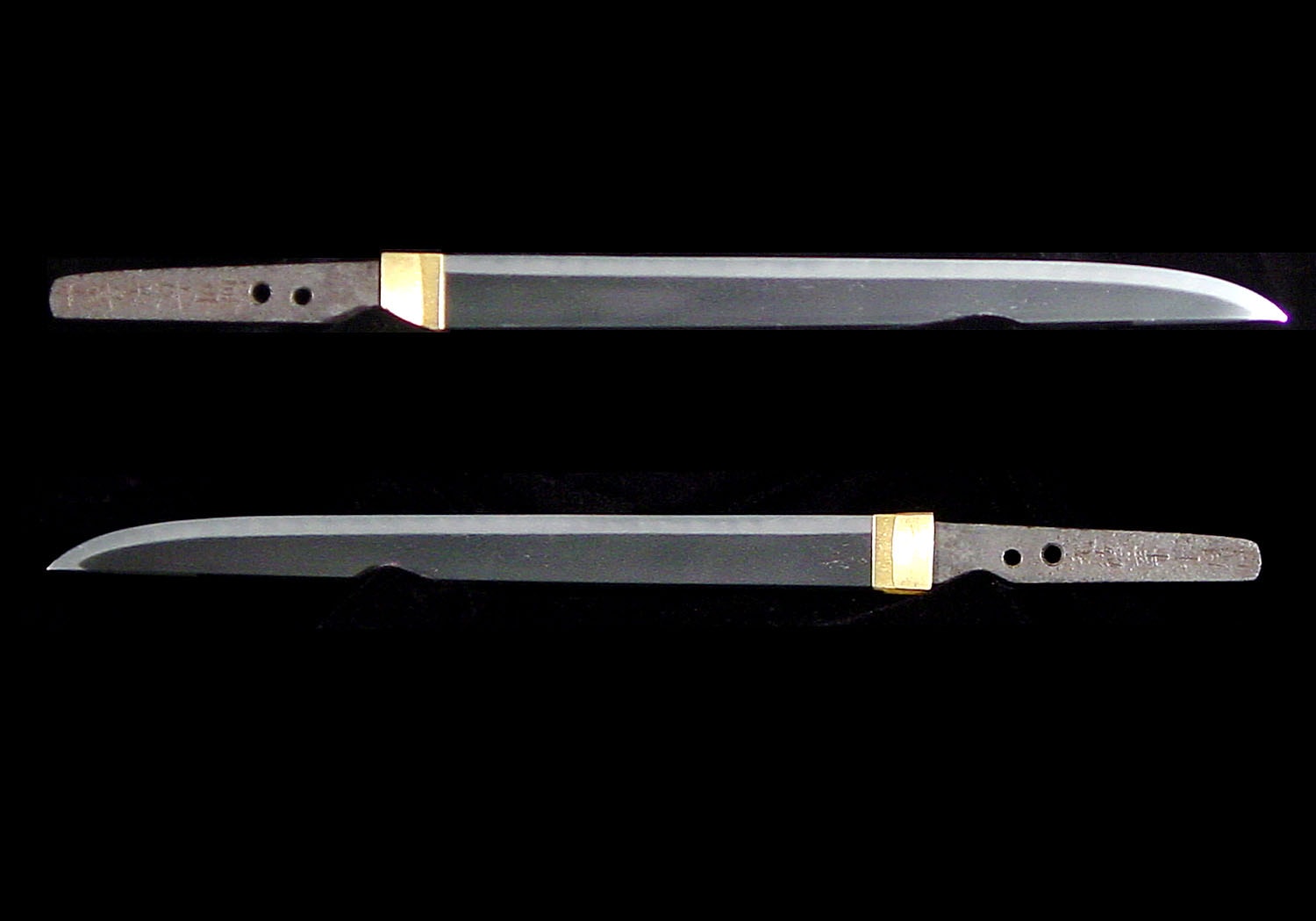
The name Moritsugu encompasses several distinct lineages of swordsmiths active across different provinces and eras. The most venerable is the line: Moritsugu is traditionally regarded as the son of Yasutsugu (also called Anji), who is held to be the founder of the school. From the period onward, the name was inherited through successive generations down into the period. Among extant signed works appraised as , the distinguishes two principal types of : a semi-cursive (gyosho) style with vigorous chisel strokes incorporating - (reverse chisel work), and an expansive, freely flowing cursive (sosho) style — the former appearing to date slightly earlier. A separate Moritsugu, though not prefixing his name with the character "," is placed within the Ukan school of Province on the basis of both his style and signature manner, with extant signed works exceedingly rare. In the era, a further Moritsugu emerged as a leading figure of the Fukuoka Ishido school in Province. After the death of his father Rihei, he studied under his cousin Koretsugu and, according to tradition, succeeded to the headship of the main family line when Koretsugu's heir Toshitsugu predeceased his father. He died in Genroku 14 (1701) at the age of sixty-nine.
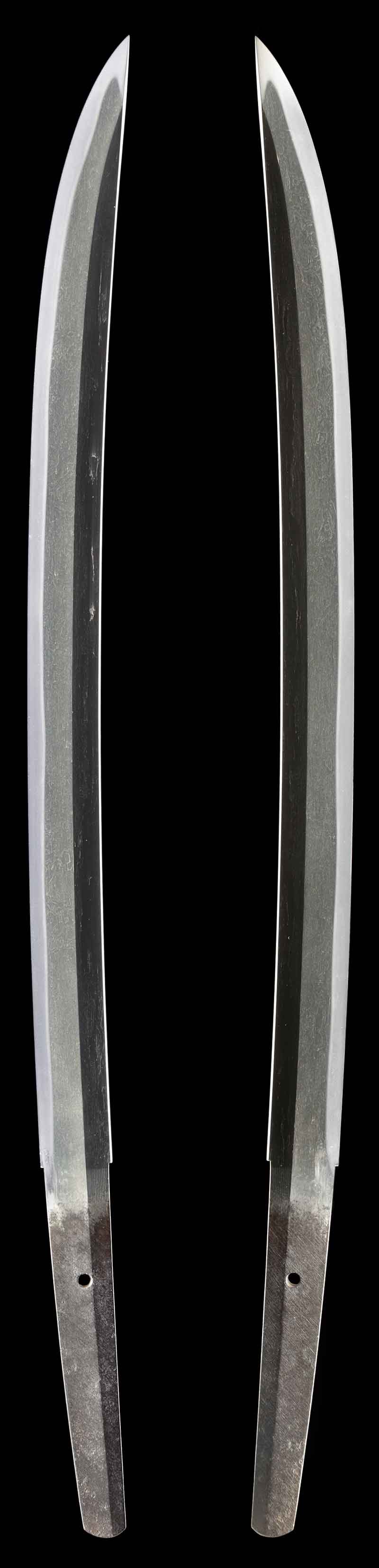
The lineage is distinguished by a forging of mixed with in which the grain stands finely, producing the characteristic (crepe-like texture) for which the school is celebrated. Dense adheres, thick enter conspicuously, and a faint mottled — ranging from to — rises in the ground. The is characteristically -based, into which , , and elements are mixed; the shows a (tightened tendency) with adhering, and fine and run through a bright . Later -period Moritsugu works trend toward , with two approaches evident: a traditional and a distinctive - not seen in earlier generations. The Moritsugu reveals the salient points of Ukan workmanship — a -dominant with , , and , and a showing a (subdued) tendency, resonating with the manner of works and the neighboring tradition. The Fukuoka Ishido Moritsugu, inheriting the influence of Koretsugu's study under Ishido Sakon Korekazu, displays a forging that tends toward nuances with clearly standing , and a brilliantly flamboyant that inclines toward (reverse-slanting tendency). The frequently climbs so broadly as to reach the , producing the distinctive forms popularly termed ika no atama (squid heads). Signatures are cut with thick chisel strokes in a large, distinctive hand blending , gyosho, and reisho elements, and supplementary inscriptions noting the use of Nanban-tetsu (imported iron) are not uncommon within this school.
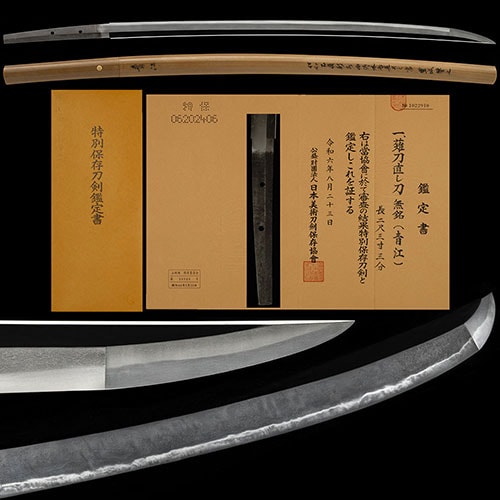
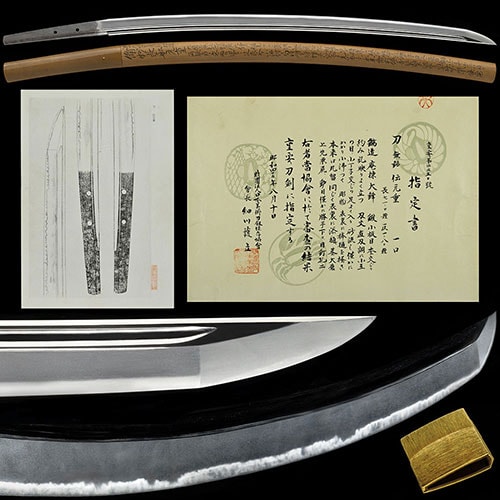
Across all lineages, the consistently recognizes works by Moritsugu as possessing high documentary value. The works are praised for combining grandeur with elegance and for demonstrating a high level of technique, with the bright -based producing a deep -ai (salt-like depth) described as superb. Extant examples from each period are acknowledged as exceedingly rare and precious, serving as indispensable material for the study of their respective schools. The Fukuoka Ishido Moritsugu's works are lauded for heightened brilliance and boldness, with his strengths displayed without reserve — broad , diverse intermingled elements, and a (sound and well-preserved) condition in both and that is particularly admirable. Whether in the archaic dignity of the , the subdued refinement of the Ukan school, or the flamboyant virtuosity of the Fukuoka Ishido, the name Moritsugu marks a legacy of accomplished craftsmanship spanning the full arc of Japanese sword history.