3 descriptive axes: material (a simply forged iron plate, and in several surviving pieces a soft refined-copper or yamagane ground, sometimes fire-finished and corroded) x technique (large sea-cucumber slit openwork cut left and right, finished sparely with hairline engraving, the rim squared or rounded, the plate plump and rounded) x themes (the namako-zukashi device above all, with a few isolated subjects such as the gourd-and-catfish and the gibbon-grasping-the-moon). Because every piece is unsigned and attributed by tradition, and his corpus is very small, the one load-bearing separator the records give is not a signature but the namako-zukashi design itself, the sea-cucumber openwork guard the setsumei call the design seen in Musashi's attributed work and trace through Ko-Shoami and Hirata Hikozo.
Miyamoto , the celebrated swordsman who founded the Niten-ichiryu school of fencing and wrote the Gorin-no-sho, made sword-guards and small fittings as a side-art (yogi) alongside his ink-painting, wood-carving and garden-making. Born in Harima about Tensho 12 (1584), he answered the Kumamoto lord Hosokawa Tadatoshi's invitation in 'ei 17 (1640) and settled in , dying in Shoho 2 (1645) at sixty-two. Every accepted piece here is unsigned and attributed (, Miyamoto ); he is not recorded as a signing maker. The records caution that of the several surviving guards bearing his favoured design, few can really be affirmed as his. The work the records most bind to his name is the iron (and sometimes refined-copper) namako-zukashi guard: a plump, simply forged plate, often a twin- or otafuku- outline, with a pair of large sea-cucumber slits pierced left and right, a bold, unfussy, martial design the trace through Ko-Shoami and Hirata Hikozo to . He is treated not as a professional metalworker but as a warrior-amateur whose few guards carry a powerful, austere dignity unlike a trained craftsman's polish.
Diagnostic discriminators
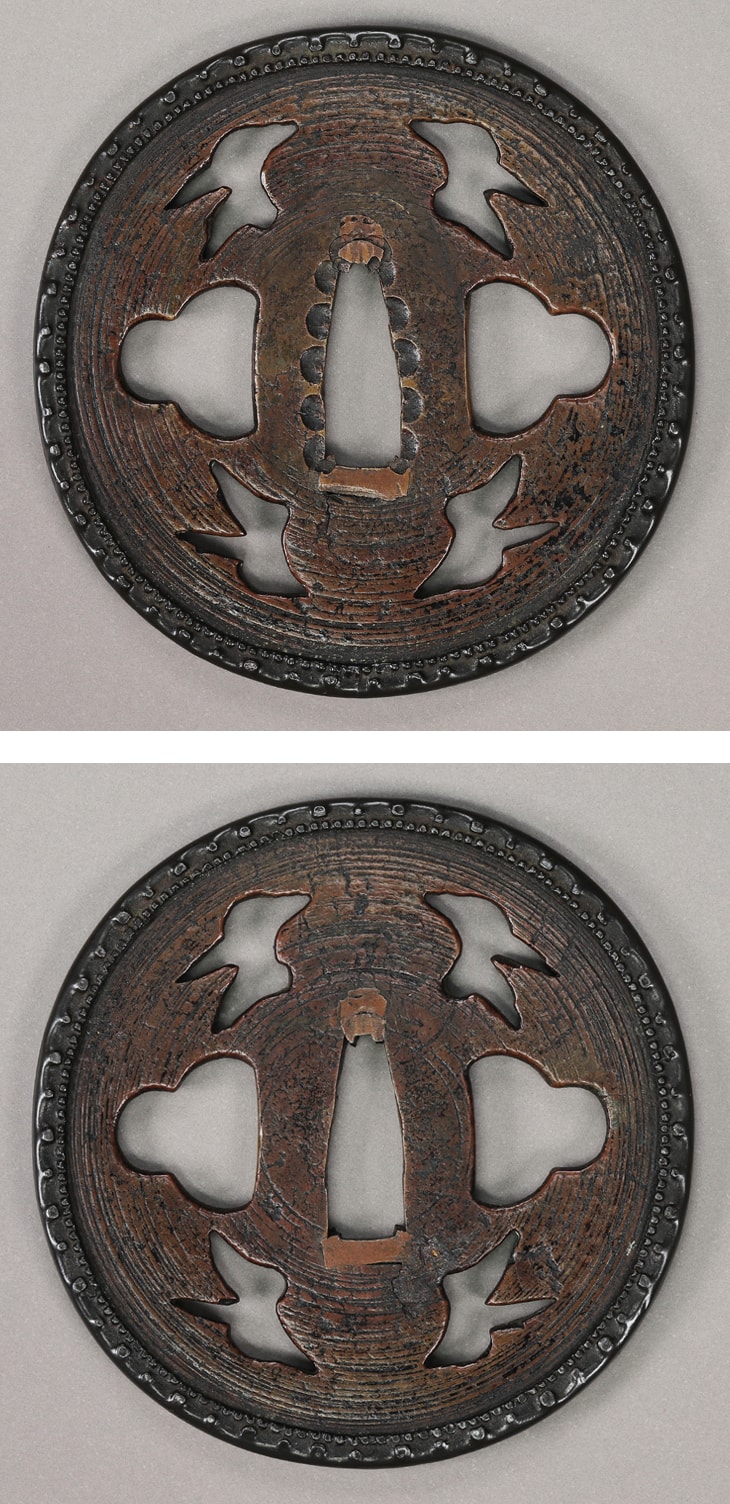
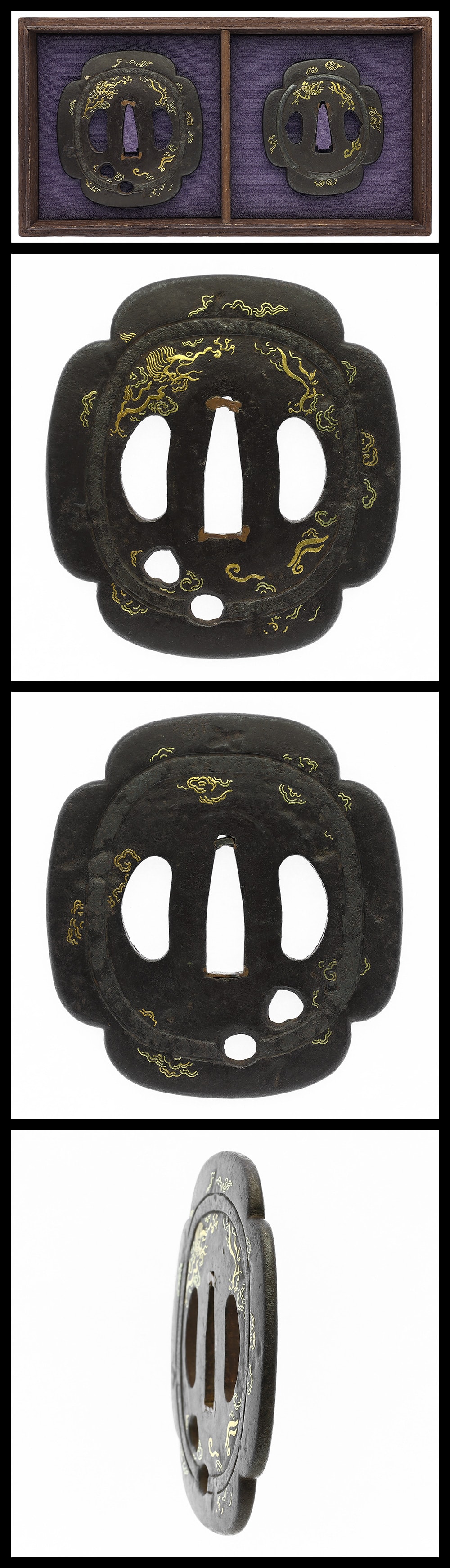
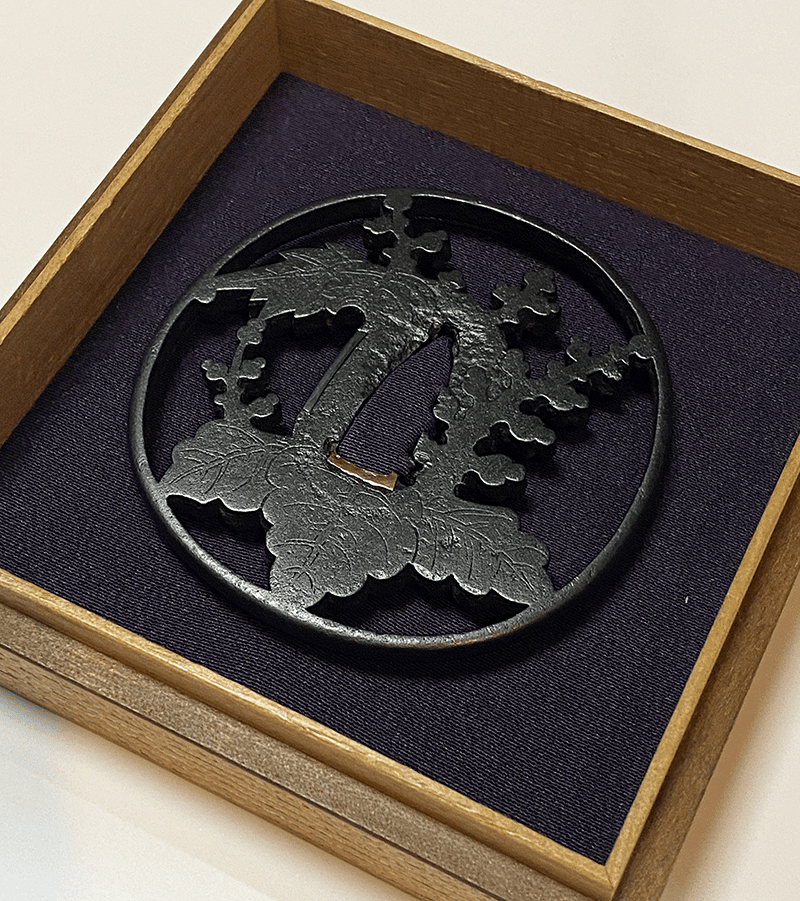
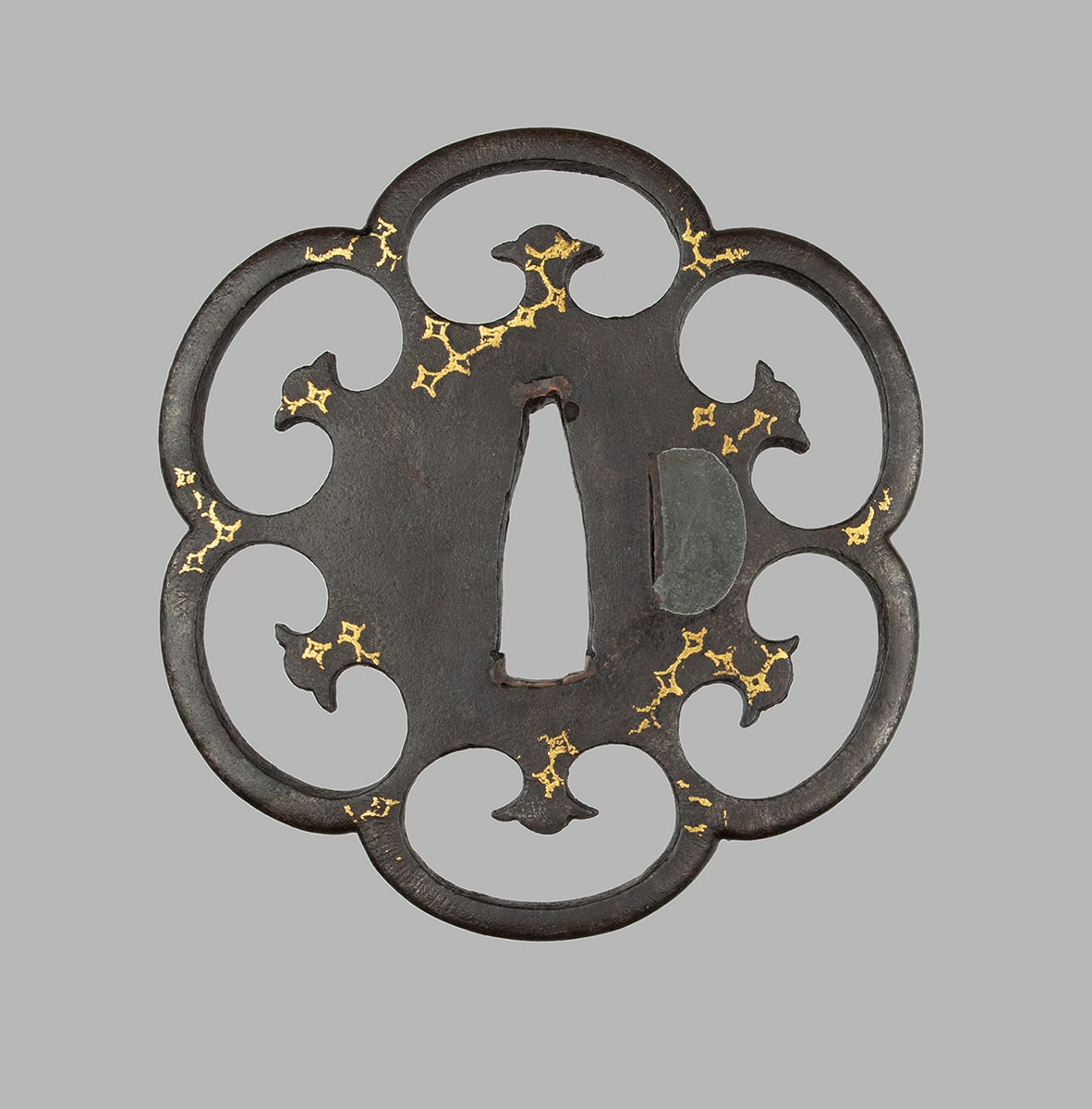
the sea-cucumber openwork is the design the records single out as the one seen in Musashi's attributed work, cut large to left and right on a twin-mokko or otafuku-mokko plate; the setsumei trace it through Ko-Shoami and Hirata Hikozo to Musashi, and explicitly warn that of the several surviving guards bearing it few can be affirmed as his. It is here a true distinguisher of the attributed Musashi guard, not of a signature, and rests on connoisseurship and tradition (den): the design appears on 3 of the 5 objects, the other 2 being a kurigata-and-sagari set and a gourd-and-catfish guard. Low-n: with only 5 pieces this is the sole load-bearing separator and the corpus is too small to part real from imitation by itself
Material (the plate)
The guards the records most bind to his name are an iron plate, and the note that besides the soft-metal examples the iron ones are the more numerous; the surviving designated pieces here, however, are mostly a soft refined-copper () or ground, in one case fire-finished and deliberately corroded (-kusarashi), and the small fittings are worked in . The forging is simple and the iron quality praised on the better pieces, with a plump, rounded body that the records set apart from an ordinary maker's work.
Technique
Large sea-cucumber slit openwork (namako-zukashi) cut left and right through the plate above all, with the design finished sparely by hairline engraving and on a few pieces relief; the plate is plump and rounded, the outline often a twin- or otafuku-, the rim squared or rounded. The read the carving as bold and unstudied rather than skilful, the hand of a warrior, not of a trained metalworker.
Themes (the namako device and a few subjects)
The sea-cucumber openwork is the design the records bind to his name; beyond it the corpus carries only a few isolated subjects, the gourd-and-catfish and the gibbon-grasping-the-moon among them, each appearing on a single piece, so the iconography is thin and the namako device carries the attribution.
The sea-cucumber openwork guardless firmly established
A pair of large sea-cucumber slits pierced left and right through a plump plate, the bold simple device the records trace through Ko-Shoami and Hirata Hikozo to .
Documentary note
Every piece in this corpus is unsigned and attributed (, Miyamoto ); he is not recorded as a signing maker, so there is no signature chronology and an empty transcribed record is the honest result, the attribution resting on the namako-zukashi design, the simple forging and the tradition carried with each piece. The records repeatedly hedge the attribution: of the several surviving guards bearing his favoured design few can really be affirmed his (sono utagai wo nashi-uru mono wa mare), and where a piece is accepted the say only that its tradition can be assented to ( wa shukou shi-uru). This profile is therefore scoped honestly to the guard tradition that travels under his name, not to a verified personal hand.
Scholarship
The guards traditionally given to him are said to be bold and martial rather than skilfully wrought, a warrior's powerful, austere taste said to carry an elegance unlike an ordinary craftsman's.
Designations
Kokuhō—
Jūyō Bunkazai—
Jūyō Bijutsuhin1
Gyobutsu—
Tokubetsu Jūyō—
Jūyō Tōken4
Elite Standing
0.00 across 5 designated works
Top 100% among makers
Provenance
1 documented provenance across certified works by Miyamoto Musashi
Provenance Standing
0 works held in elite collections across 1 documented provenances
Miyamoto Musashi(宮本武蔵) was a maker of Japanese sword fittings (tōsōgu) of the Higo Kinko school in Higo province, active during the Momoyama-Edo (1584-1645) period.
The work follows the Higo tradition.
Designated works by Miyamoto Musashi include 4 Jūyō.