NihontoWatch MonNihontoWatchBETA
MarketEncyclopedia
NihontoWatch Mon

NihontoWatchBETA

Market
Encyclopedia
Overview·Kantei·Designations·Work Types·Signatures·Lineage·School
OverviewKanteiDesignationsWork TypesSignaturesLineageSchool
  1. Schools
  2. Yokoya
  3. Yanagawa
  4. Ishiguro
  5. Masaaki

Ishiguro Masaaki

政明

Jūyō
Vol. 47, No. 233 · Menuki

Ishiguro Masaaki

政明

16 ranked works

ProvinceMusashiEraBunka-Kaei (born 1813, active to at least 1851)SchoolYokoya>Yanagawa>IshiguroTraditionMachiboriTeacherMasatsuneSpecialtiestsuba, menuki, fuchi-kashira, kozukaTypeTosogu MakerCodeISH006
16Jūyō Tōken

Overview

Ishiguro Masaaki (石黒政明) was a pupil of the first-generation Ishiguro Masatsune, the founder of the Ishiguro school, and lived at Matsushita-chō in Kanda, . He is said to have been born in Bunka 10 (1813) and to have entered the school during Masatsune's late years, leading to the conjecture that his practical instruction may have been received from either the second-generation Masatsune or from Ishiguro Masayoshi. He used the art names Mokuen-sai (木鵬斎) and Kibōsai (木鵬斎), and within the Ishiguro lineage he was regarded as a highly skilled artist, praised as forming a "twin pinnacle" alongside his fellow disciple Masayoshi. His works are comparatively few, yet among them many outstanding masterpieces are known. He was active from around the Ka'ei era into the Meiji period.

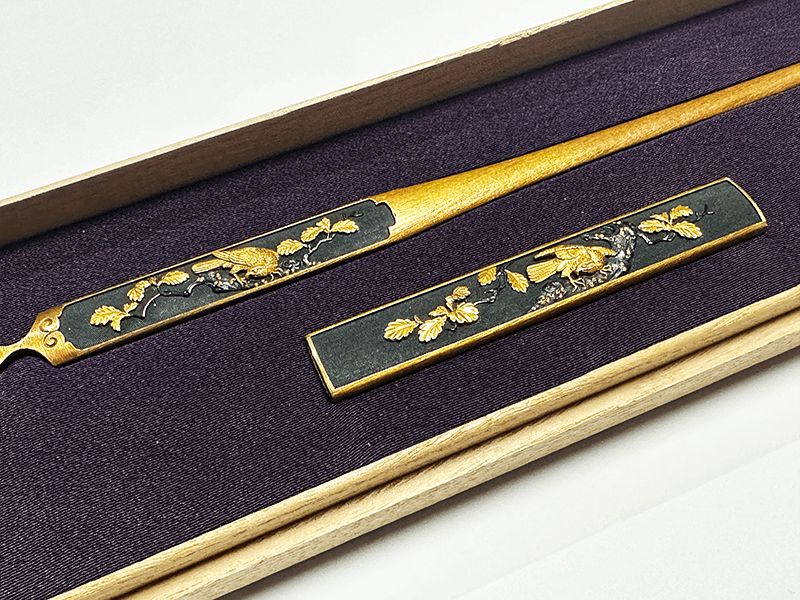
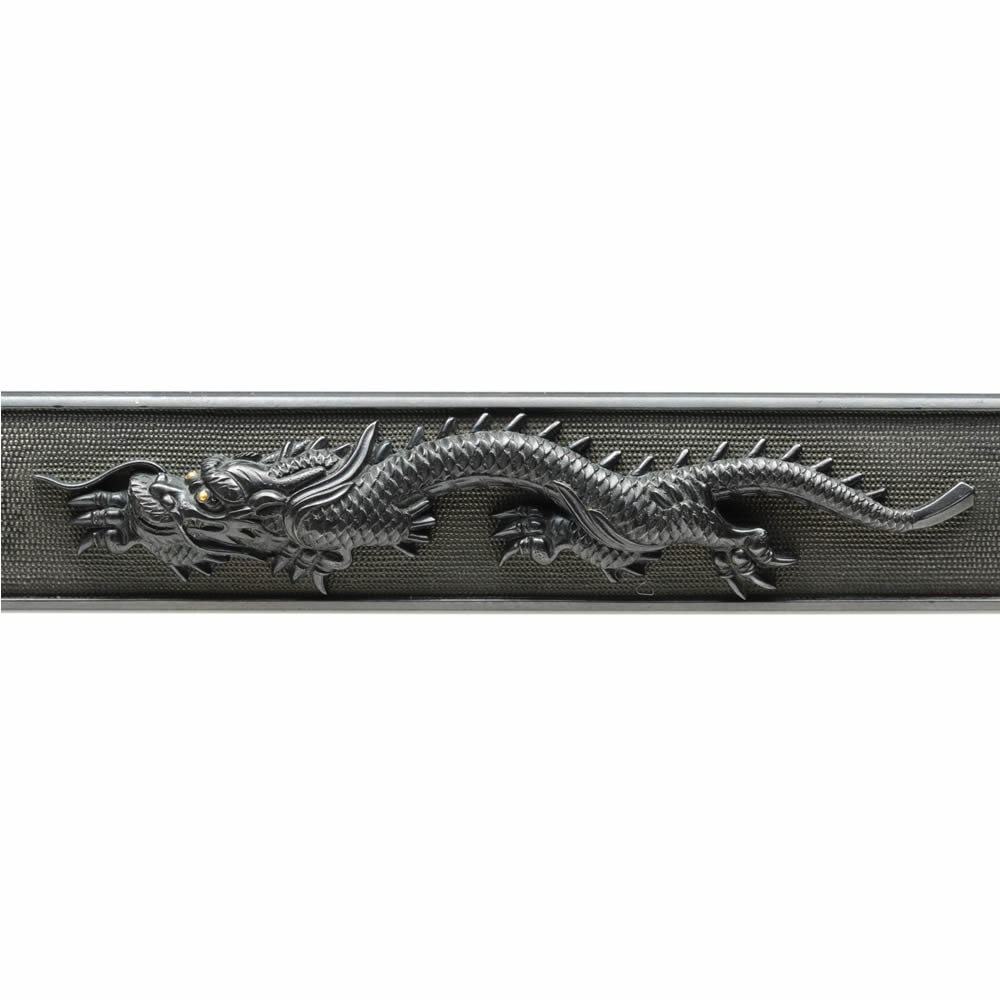
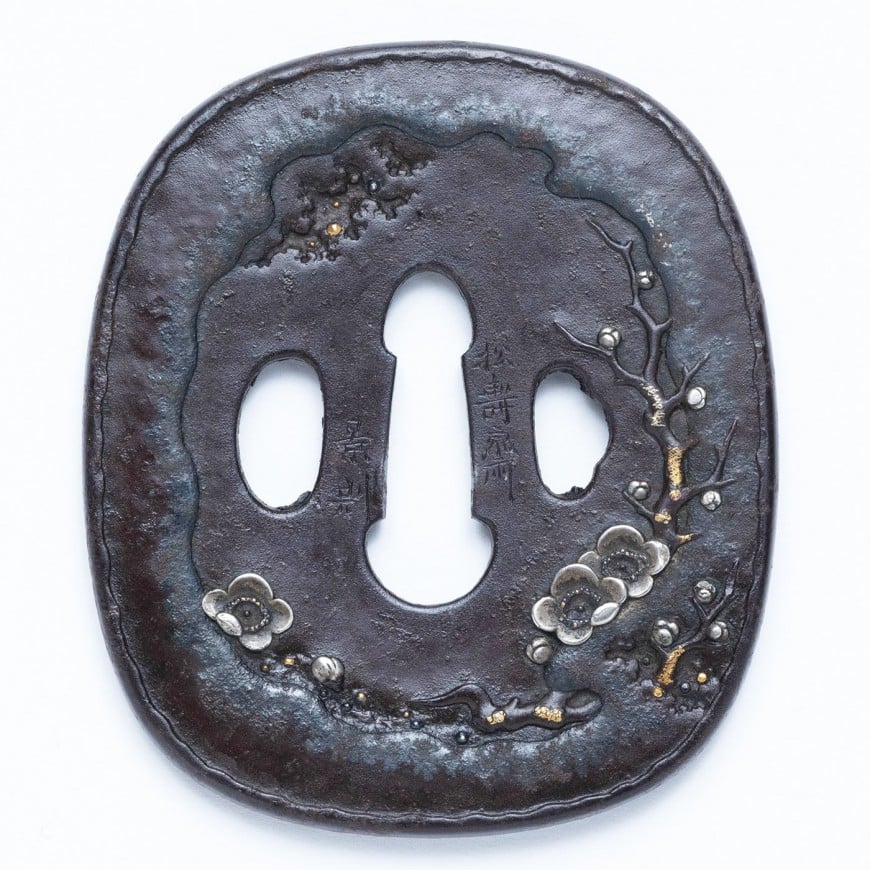
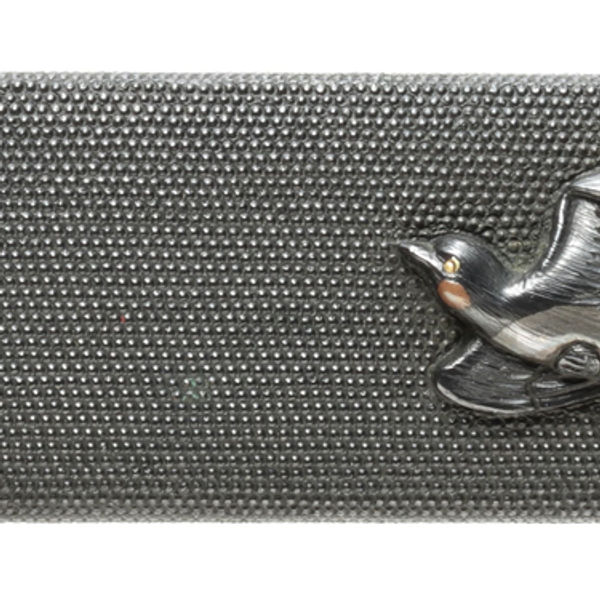
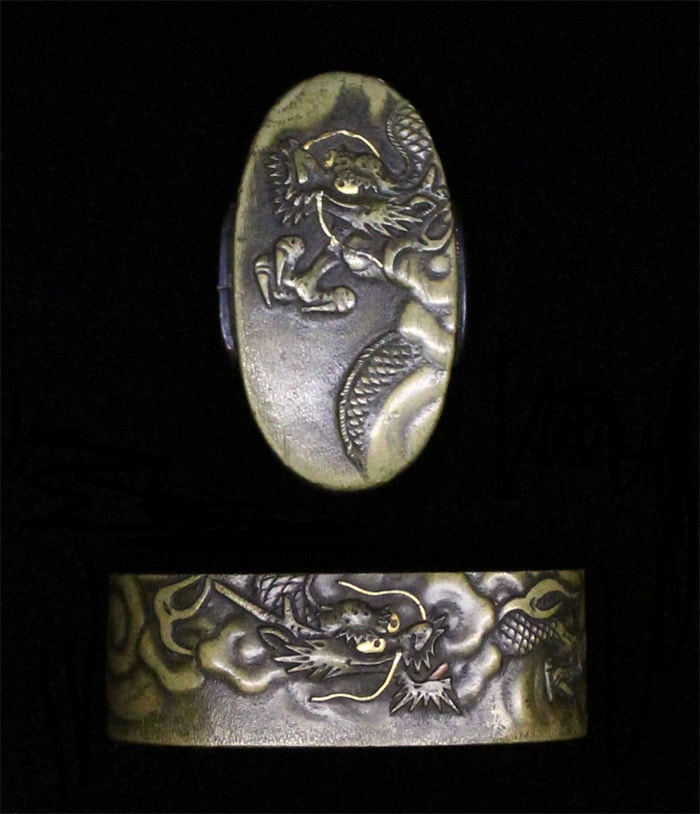
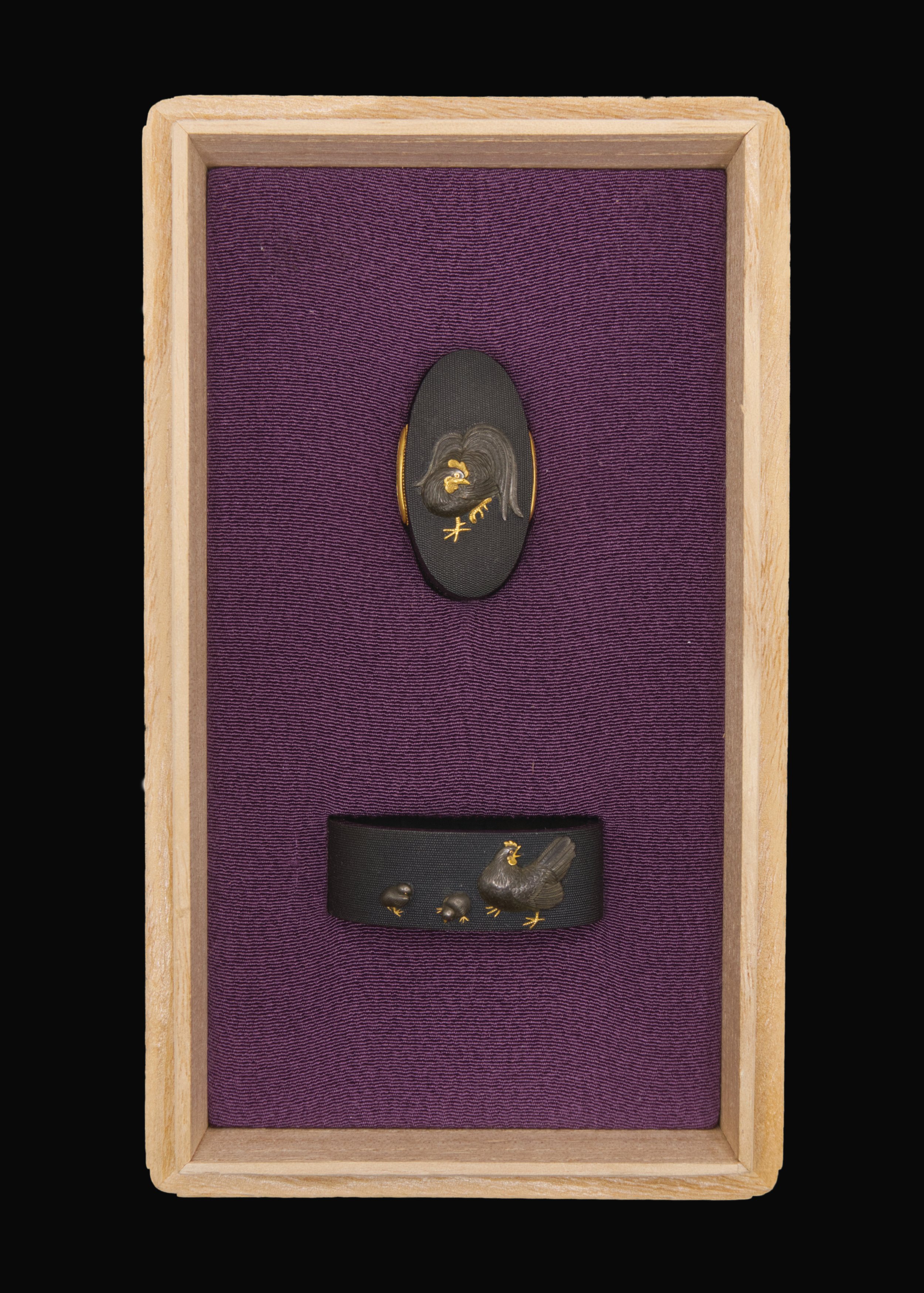
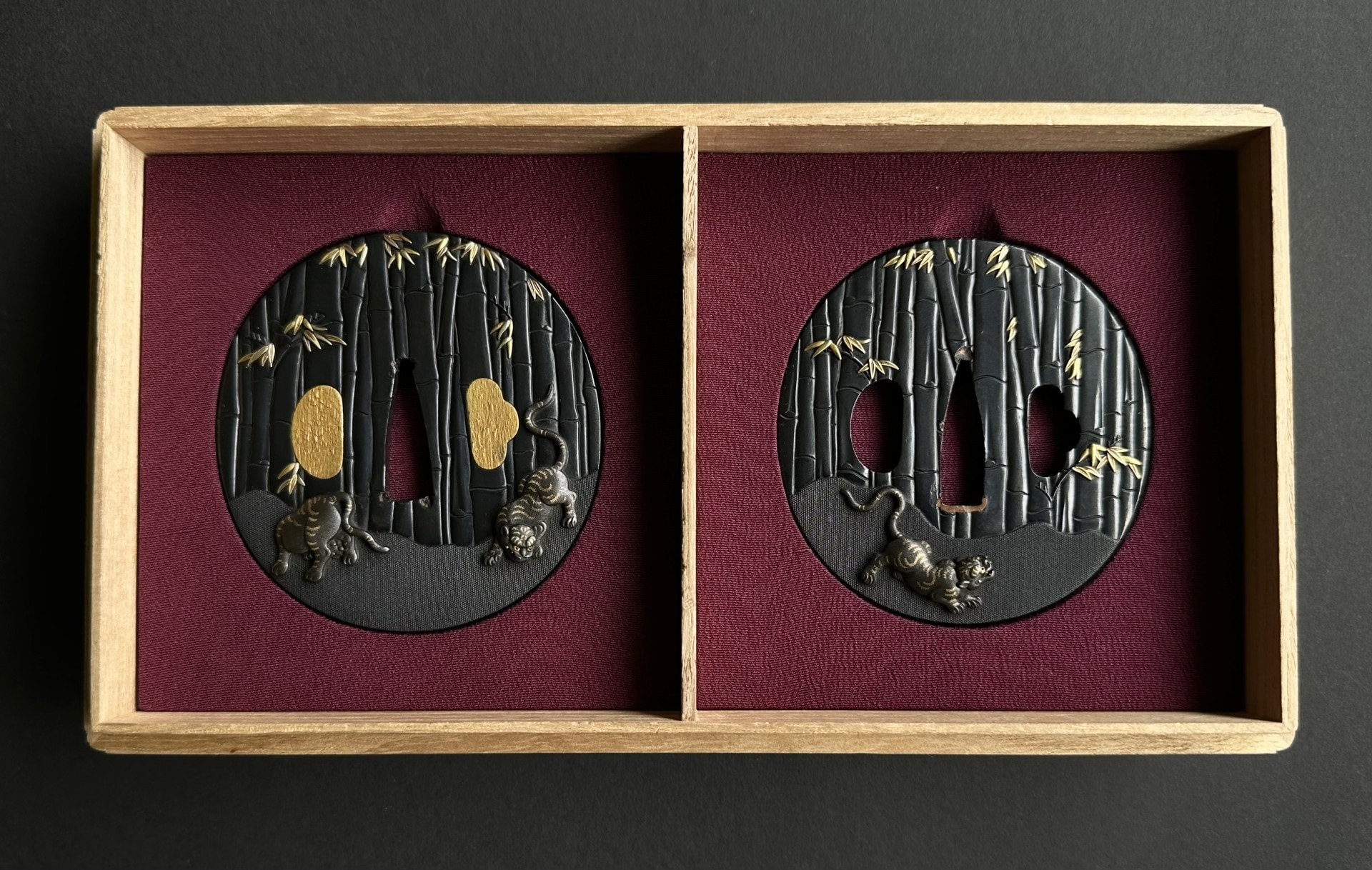
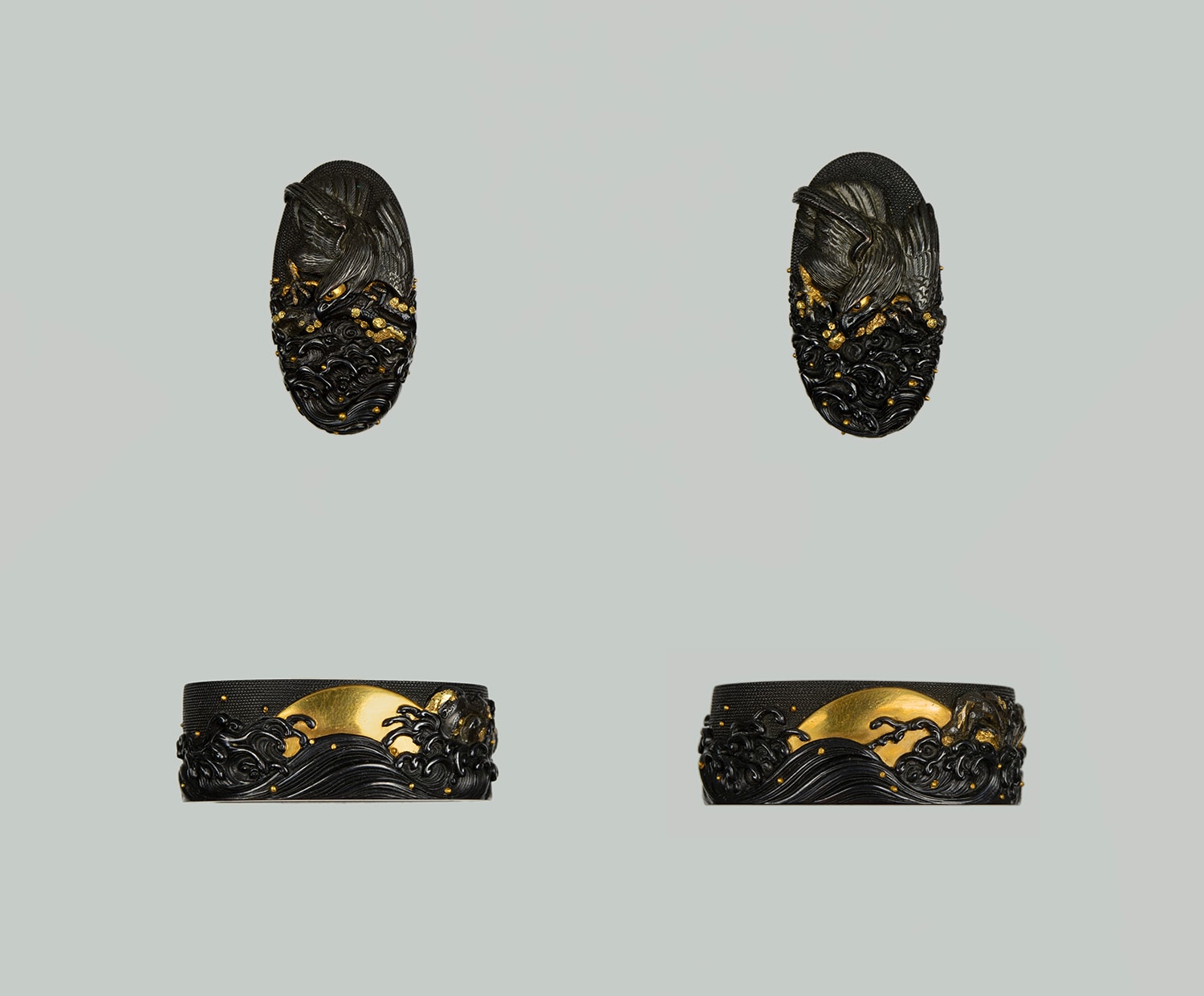
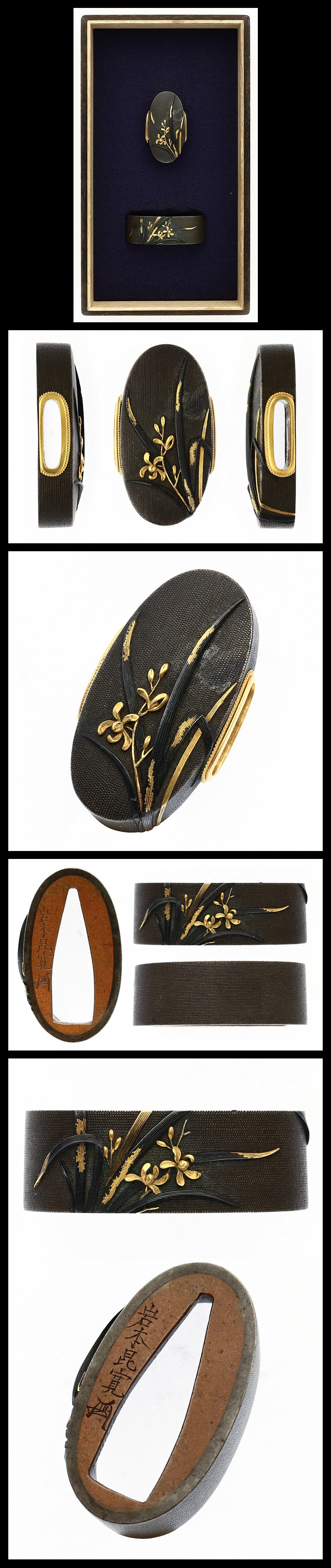
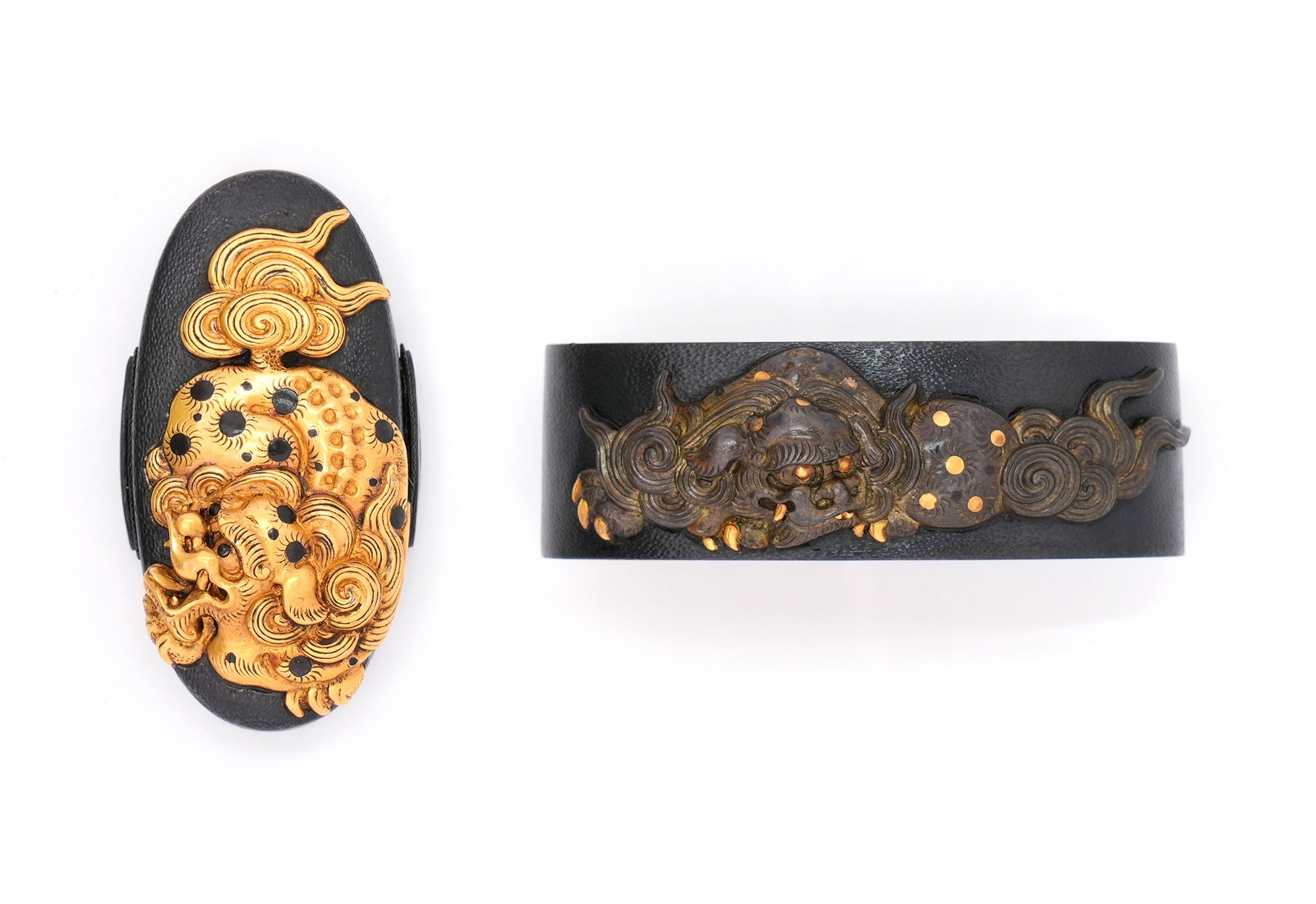
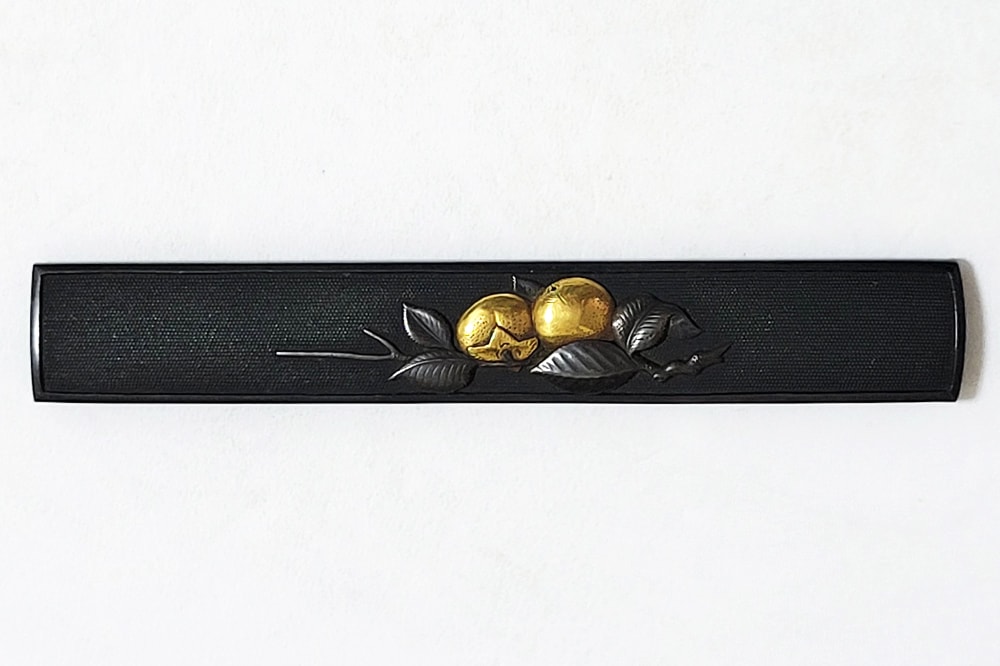
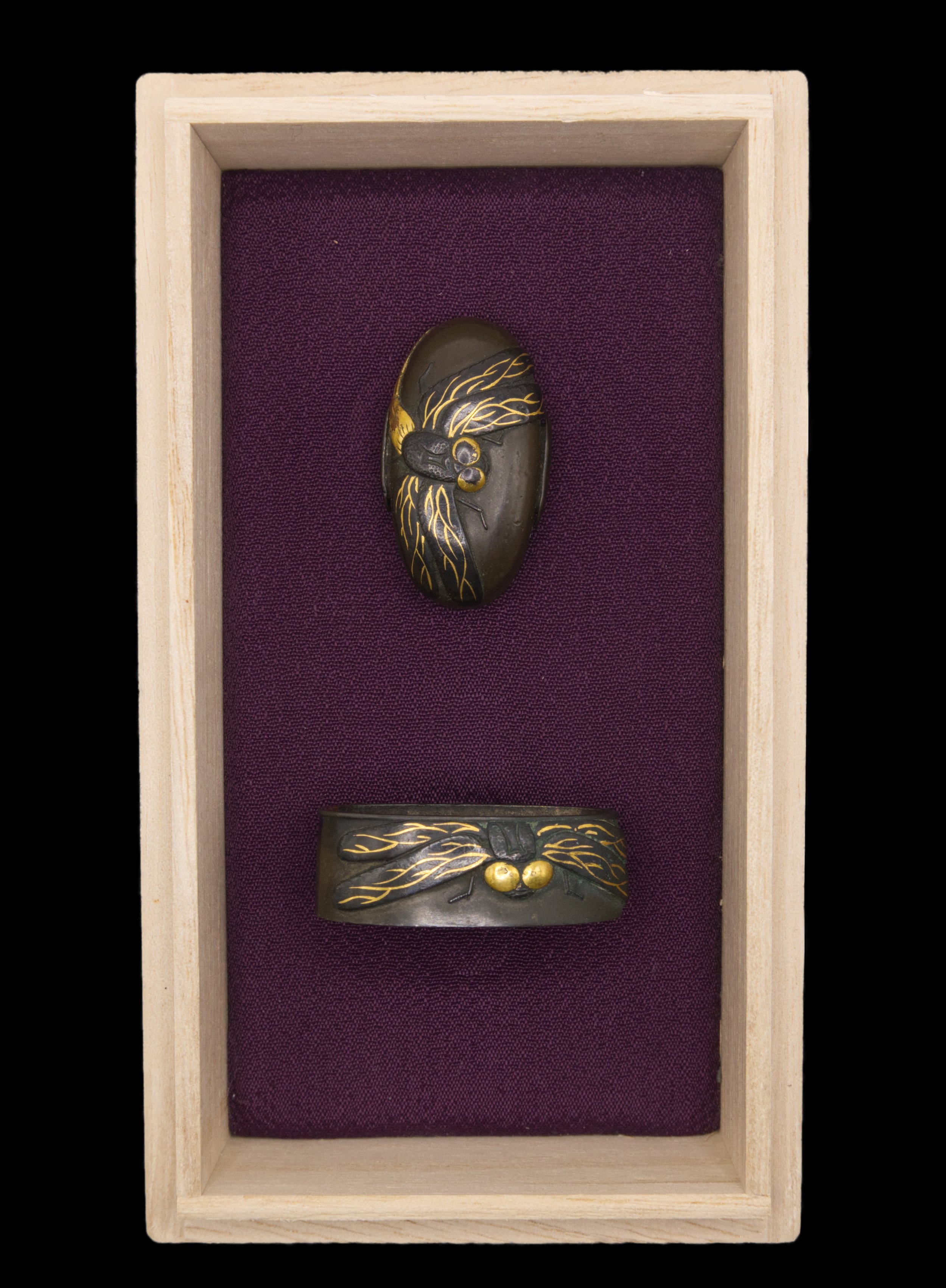
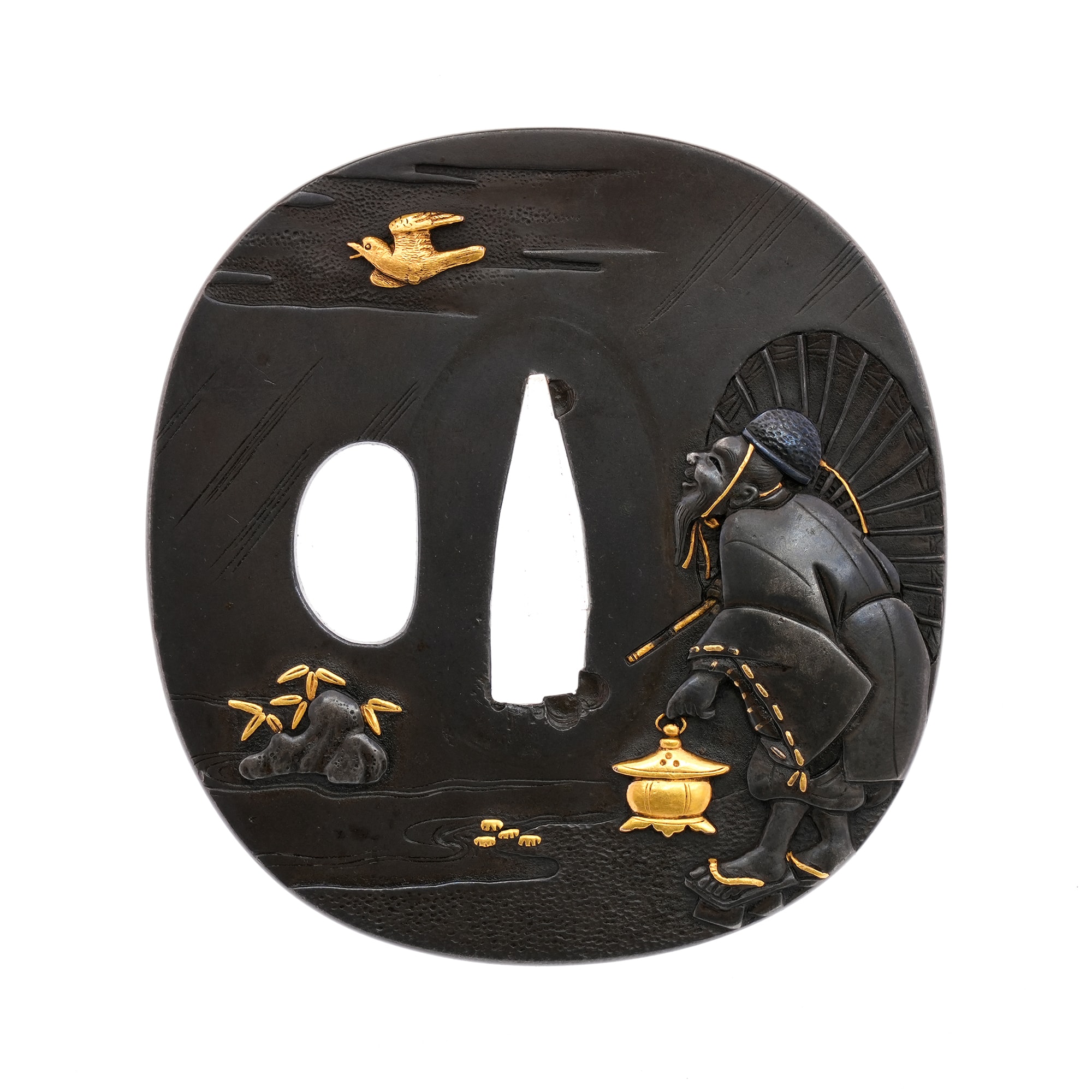
The stylistic character of the Ishiguro school gives direct expression to the tastes of its time, unfolding a lustrous, pictorial world rendered through meticulously executed and richly colored . Masaaki faithfully inherited the techniques of the first-generation Masatsune, and his depictions — thoroughly grounded in close observation from life — are striking. He worked predominantly on grounds finished with , upon which he executed high-relief carving combined with suemon-zōgan and polychrome using gold, silver, , , , and . The method of combining many varieties of colored metals in high relief and inlay is extraordinarily sumptuous, yet never lapses into vulgarity. When an ordinary craftsman attempts such density, the result tends to become overwrought; yet Masaaki displays consummate control, producing work so accomplished that it seems to allow not the slightest margin for fault. His chisel work is minute, his sense of color outstanding, and compositions that leave broad areas of open ground are filled with a lucid, pure vitality.

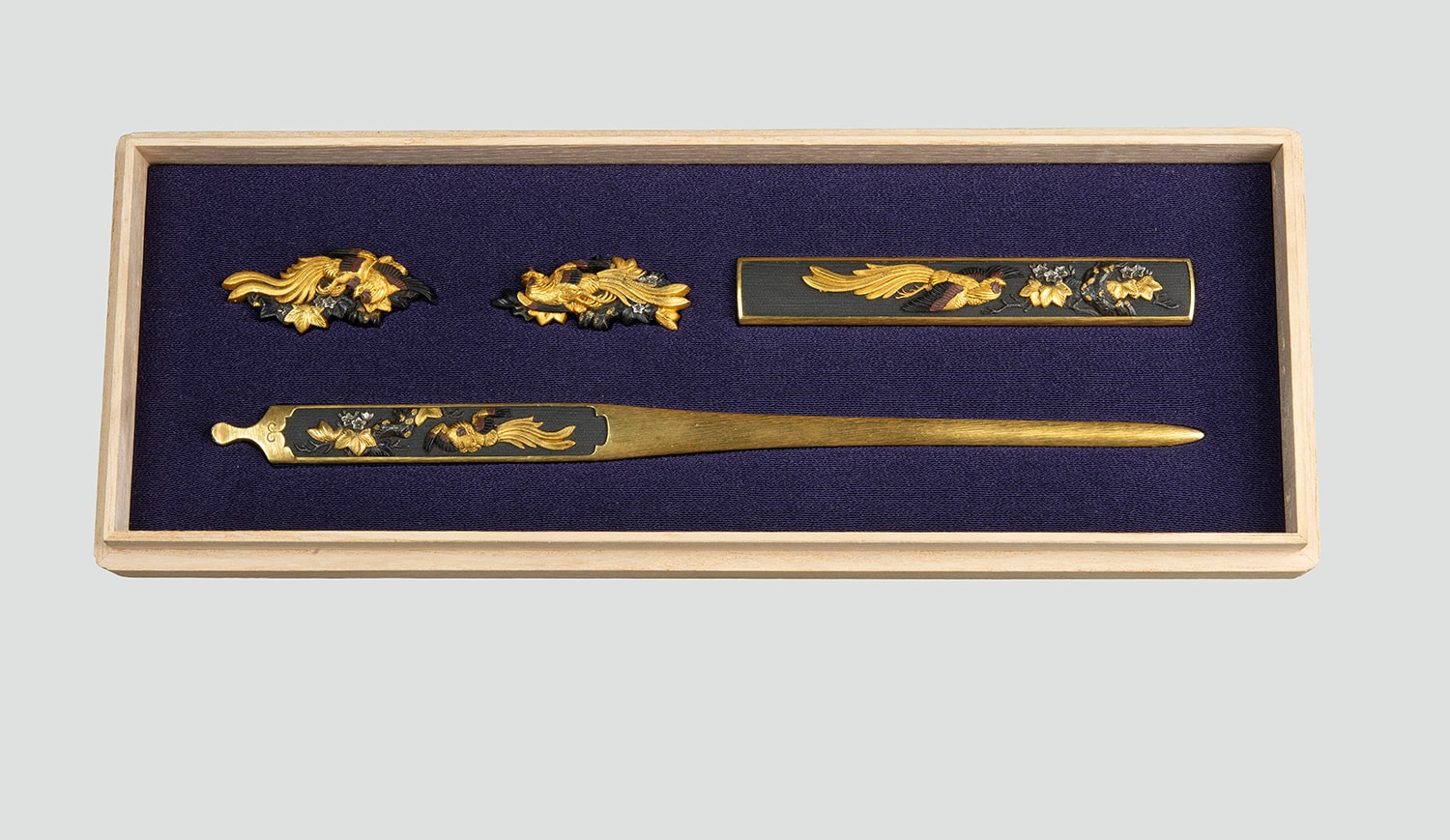
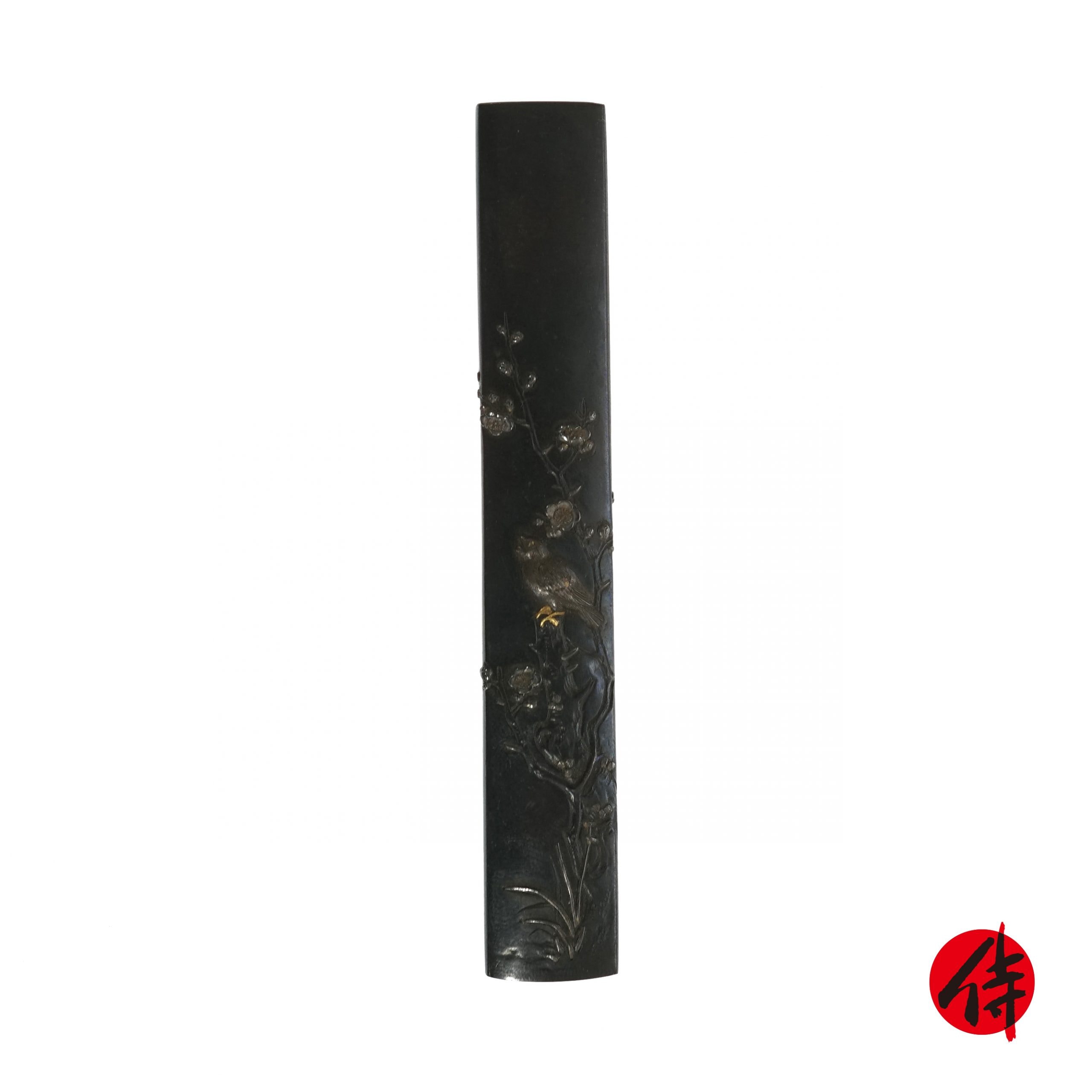
The Ishiguro school excelled in bird-and-flower subjects, and Masaaki was no exception. In particular, many of his finest works take pheasants and golden pheasants (kinkeichō) as their principal themes, alongside peacocks, hawks, bush warblers, and quail arranged with seasonal flowers in a naturalistic, sketch-like manner. His spacious compositional sense was inherited from his teacher Masatsune. Through the skillful deployment of multiple varieties of colored metals, the coloring effects are accomplished and the sense of sumptuousness heightened, producing a thoroughly brilliant impression. In both technique and design, his works display the essential character of the Ishiguro school brought to a refined culmination — and the distinctly more splendid application of among his peers may be said to represent Masaaki's individual character.
Kantei

3 descriptive axes: material (shakudo-nanako above all) x technique (dense high relief and applied suemon with rich iro-e) x themes (bird-and-flower realism). His load-bearing discriminators, within the shared house kacho ground, are the pheasant and golden-pheasant as his named personal subject, and a colour-work singled out as the most brilliant of his line.

Ishiguro Masaaki, a pupil of the first Ishiguro Masatsune, is with Masayoshi one of the two pillars of the Ishiguro school, an kinko born in 1813 and active to the Kaei-Meiji years, living in Kanda Matsushita-cho in . He carries the dense, vivid bird-and-flower realism of the house, worked in high relief and rich iro-e on -, and his particular forte within that house art is the pheasant and the golden pheasant, of which the records say he made many masterpieces. A metalwork artist who signs with the go Moku'ensai, his colour-work is named the most brilliant in his line.

Diagnostic discriminators

the golden pheasant appears in half the corpus and the pheasant in nearly as many, and the setsumei repeatedly single these out as the subject Masaaki most made his own ('he made many masterpieces of the pheasant and golden pheasant above all'); rated on the title-scoped 画題 census, not the boilerplate kacho keyword that recurs in every bio. The hawk, by contrast, is the house subject named for the founder Masatsune and for Masayoshi, so the pheasant pair distinguishes Masaaki within his own line

one setsumei states outright that 'among his school-mates, the application of an especially brilliant iro-e may be called Masaaki's individuality' (single-source, n=1, his exact named individuality); presented honestly as a one-record judgment, not a corpus-wide rate

Material (grounds)

worked in fine above all, with , and solid gold besides, and -grey with an ishime ground on occasion; copper-red is used as an effective colour accent among the colour-metals.

Technique

Dense, refined high relief and applied with rich gold, silver and colour-metal iro-e and inlay, the in ; his carving is praised as minute and his colour-work as the most brilliant of his line.

Themes (bird-and-flower)

Bird-and-flower above all: the pheasant and golden pheasant his named subject, with peacock among peony, the warbler with plum, the quail in autumn grasses, the sparrow, the hawk and raptor, and the phoenix with paulownia, rendered in a drawing-from-life manner with dense, colourful realism on orderly .

Bird-and-flower realism

The pheasant and golden pheasant above all, with peacock, the warbler with plum and the sparrow, set out in a drawing-from-life manner with dense, colourful realism.

Full iconography

Signature chronology

Placement
Recorded signatures

Documentary note

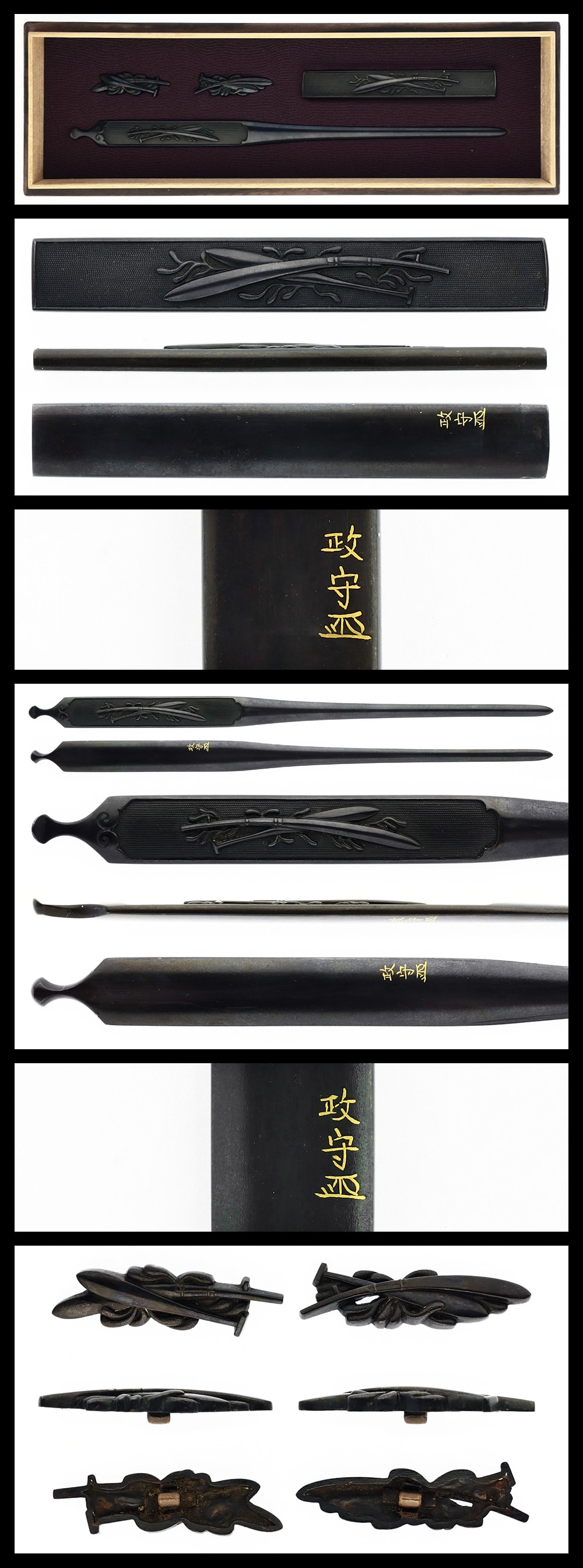
He signs Ishiguro Masaaki with a throughout, and on his finer signed sets prefixes the art-name go Moku'ensai (木鳶斎, transcribed in the records also as 木鳶斉 and the OCR misread 木蒼斎); the are cut as a split Ishiguro and Masaaki. Nearly all his work is signed. The records give his birth in 1813 (Bunka 10) and his activity to the Kaei-Meiji years; one notes that since he entered the school in the first Masatsune's late years, his effective instructor is thought to have been the second Masatsune or Masayoshi (this is the record's own inference, hedged). The 政 character he shares with his school-mates Masahide and Masahiro; he is told apart by his terminal 明 and the Moku'ensai go.

Scholarship

A late piece is praised as showing his true mastery, a peacock among a profusion of flowers carved with a density that, the record says, would turn vulgar in a lesser hand but in Masaaki stays refined and beautiful.

Designations

Kokuhō—
Jūyō Bunkazai—
Jūyō Bijutsuhin—
Gyobutsu—
Tokubetsu Jūyō—
Jūyō Tōken16

Elite Standing

0.11 across 16 designated works

Top 12% among makers

Work Types

Distribution across 16 ranked works

Other
850%
Tsuba
319%
Mitokoromono
319%
Fuchi-Kashira
16%
Menuki
16%

Signatures

Signature types across 16 ranked works

Currently Available

Lineage

TeacherMasatsune
Masaaki

Ishiguro School

Other artisans of the Ishiguro school

  1. 1.Masayoshi政美4 for sale30designated
  2. 2.Masatsune政常1 for sale17designated
  3. 3.Koreyoshi是美4designated
  4. 4.Koretsune是常2 for sale4designated
  5. 5.Mitsutsune光常1designated
  6. 6.Masatsune政恒1designated
  7. 7.Masaharu政春1designated
  8. 8.Masachika政近2designated

Masaaki

Masaaki(政明) was a maker of Japanese sword fittings (tōsōgu) of the Ishiguro school in Musashi province, active during the Bunka-Kaei (born 1813, active to at least 1851) period.

The work follows the Machibori tradition.

Designated works by Masaaki include 16 Jūyō.