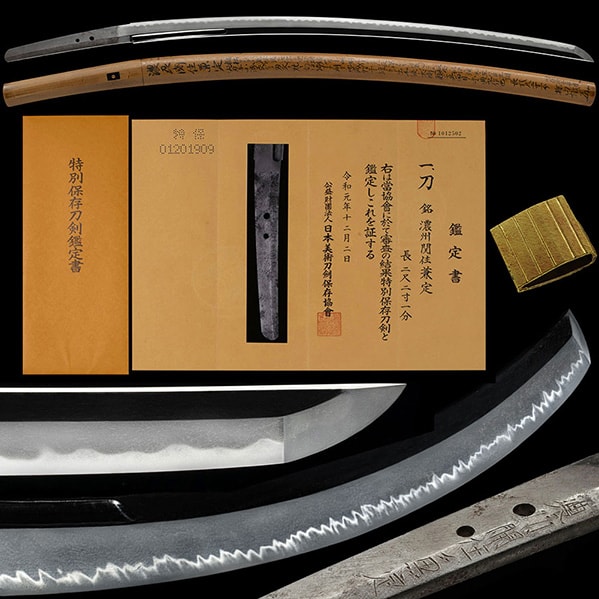
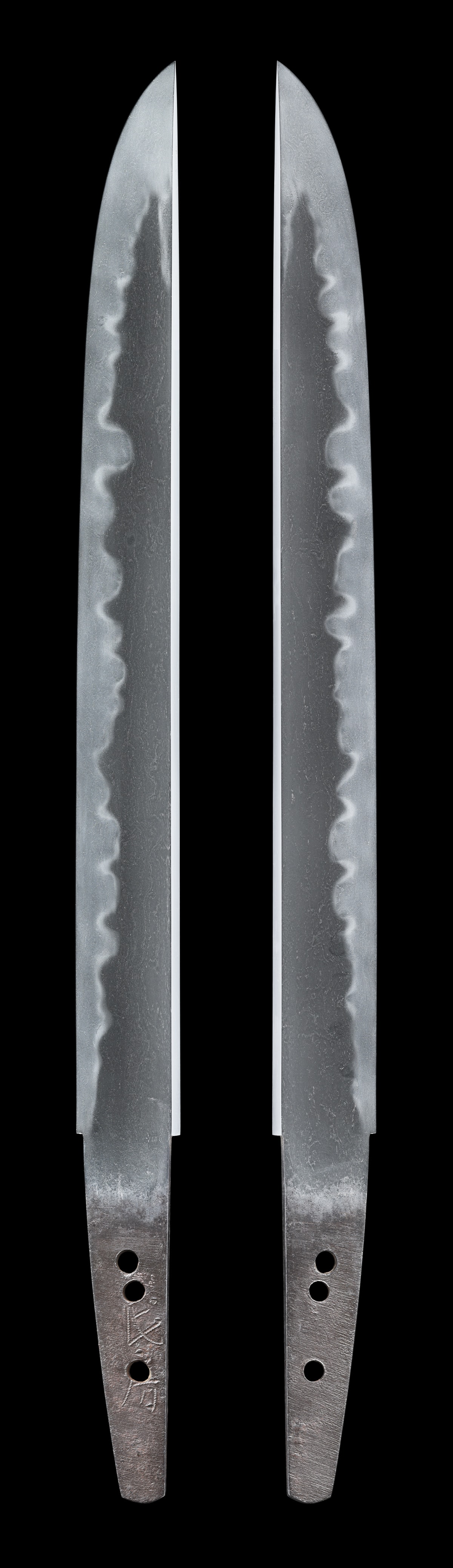
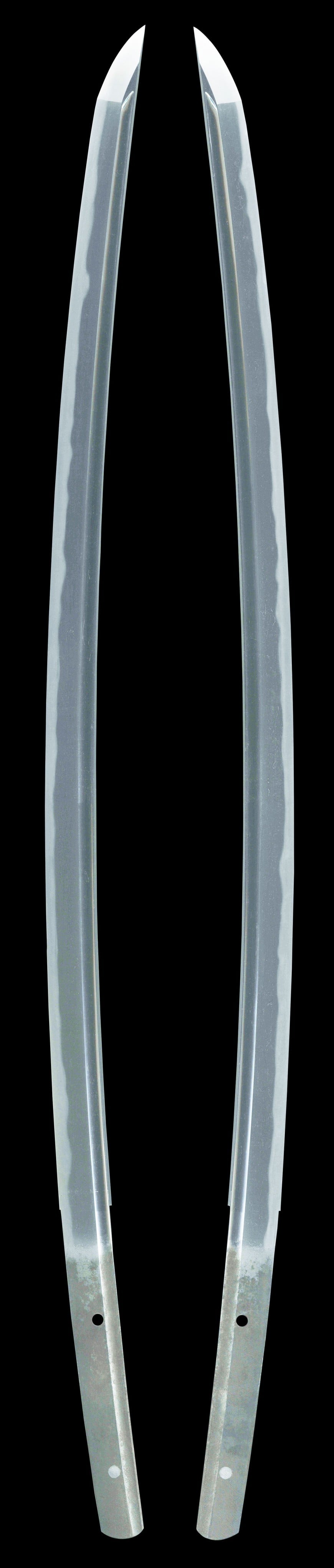
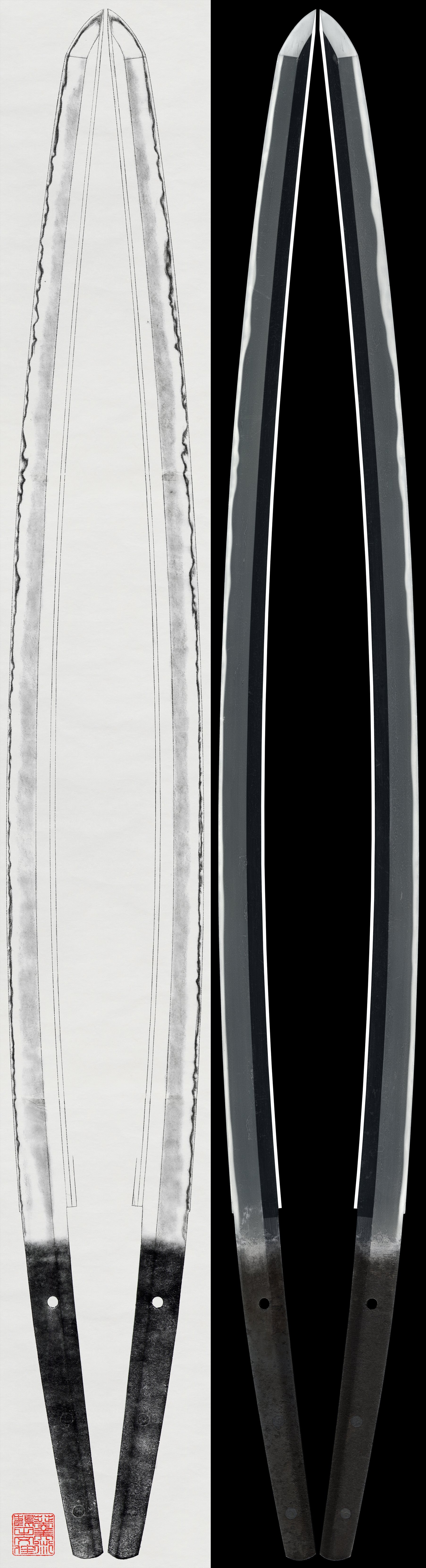
Kanemoto stands alongside Kanesada as one of the foremost representative smiths of the tradition in the late period. The family originally resided at Akasaka in province, and later generations of the line relocated to Seki; "Magoroku" was the hereditary common name (tsusho) used by successive generations. Although the name Kanemoto was borne by multiple generations continuing even into the period, it is the second generation — active around the Eisho era (1504–1521) — who is regarded as the most technically accomplished. In common parlance, it is specifically this smith who is singled out and admired under the appellation "Magoroku Kanemoto," or "Seki no Magoroku." Taking the smith who signs "Noshu Akasaka-ju Kanemoto" and whose dated works fall in the Meio era as the first generation, the second generation is credited with originating the pointed temper pattern known as , in which linked clusters of peaked forms appear in succession like a stand of cedars.
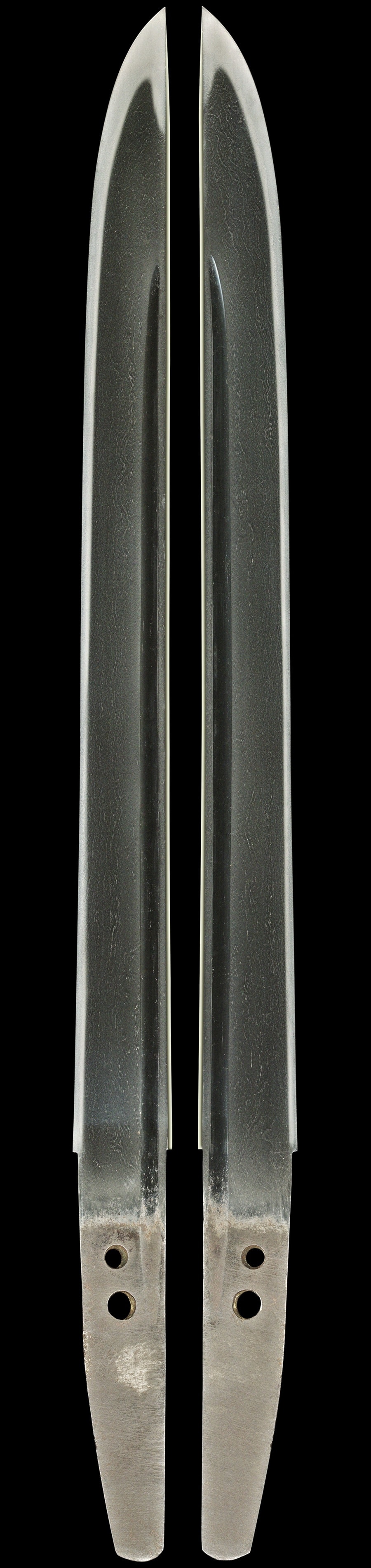
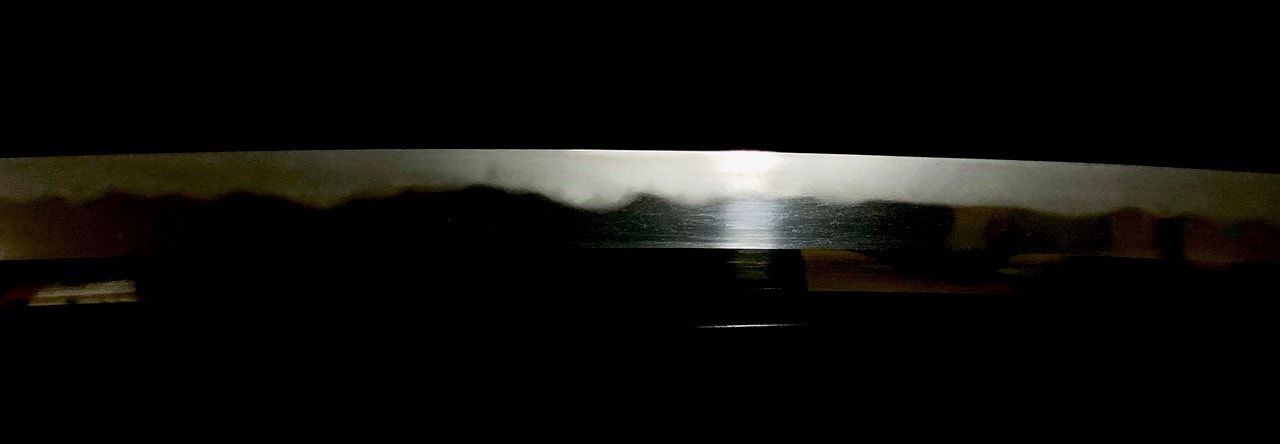
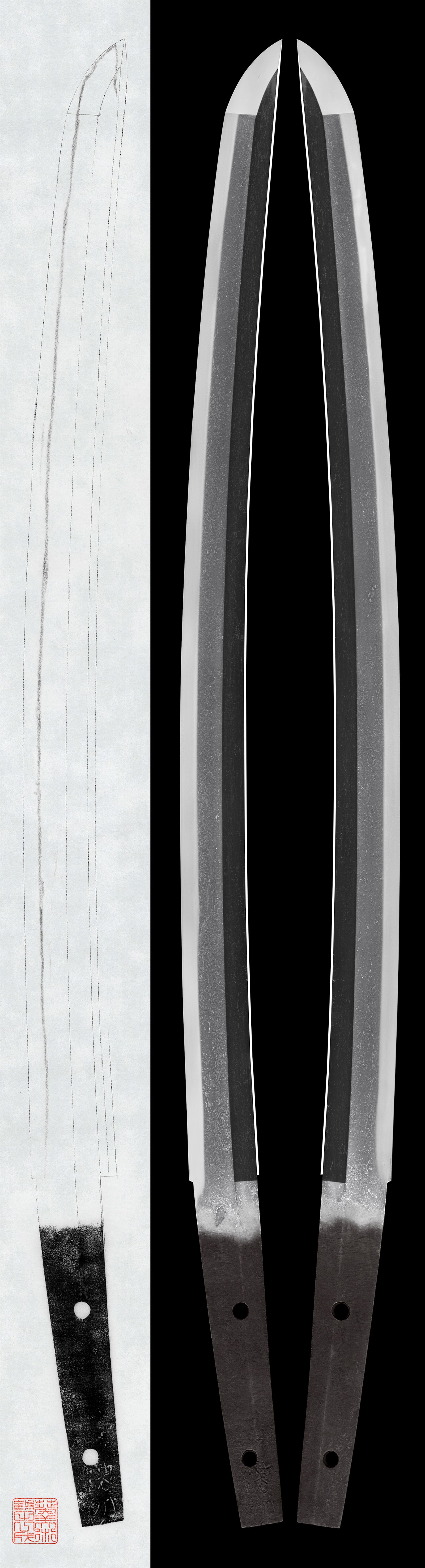
Across all generations, the Kanemoto line excelled at forging and tempering , yet a critical distinction separates the second generation from his successors. As the line descends, the pointed elements become increasingly acute, angular, and regularized into a uniform, standardized manner. By contrast, the second generation shows variation: the heads of the become rounded in places, and the work avoids monotony through diverse patterning — not only but also nihonsugi, yonhonsugi, and gohonsugi appear, with undulations in the temper line producing abundant change. This so-called gyoso manner of is richly varied and accompanied by a bright forging with finely adhering . The is characteristically mixed with , flowing with a slightly standing-grain tendency; adheres well and appears, while stands out — a hallmark of the school. The is predominantly -based with , and the tends toward tightness and clarity (), often accompanied by , , and . The typically runs in , frequently assuming a Jizo-like form with turnback. Beyond his celebrated , the second generation also produced works in — regarded as of Kyoto work — demonstrating a breadth of technical command that extended well beyond his signature idiom.
The second generation Kanemoto occupies a position of singular importance within the school. His ability to invest the with an expressive, cursive freedom — avoiding the rigid standardization of later generations — established a creative standard that defined the aesthetic ideal of the pattern. Dated inscriptions are scarce among his works, lending particular documentary value to those bearing . Works such as the Dai'ei 7 (1527) dated and the blade known as "Sasatsuyu Kanemoto" attest to both his historical significance and the esteem in which his production has long been held. Whether in bold and vigorous or in refined , both and consistently display a quality of workmanship that is exceptionally outstanding, fully manifesting the capability of this most celebrated of the Seki smiths.