NihontoWatch MonNihontoWatchBETA
MarketEncyclopedia
NihontoWatch Mon

NihontoWatchBETA

Market
Encyclopedia
Overview·Kantei·Designations·Provenance·Work Types·Signatures·Lineage·School
OverviewKanteiDesignationsProvenanceWork TypesSignaturesLineageSchool
  1. Schools
  2. Yokoya
  3. Iwamoto
  4. Konkan

Iwamoto Konkan

昆寛

Jūyō
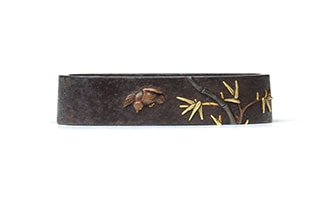
Vol. 67, No. 151 · Fuchi-Kashira

Iwamoto Konkan

昆寛

46 ranked works

ProvinceMusashiEra1743/1744–1801SchoolYokoya>IwamotoTraditionMachiboriGeneration5th/6th headTeacherRyokanSpecialtiestsuba, fuchi-kashira, menuki, kozuka, kogaiTypeTosogu MakerCodeIWA001
46Jūyō Tōken

Overview

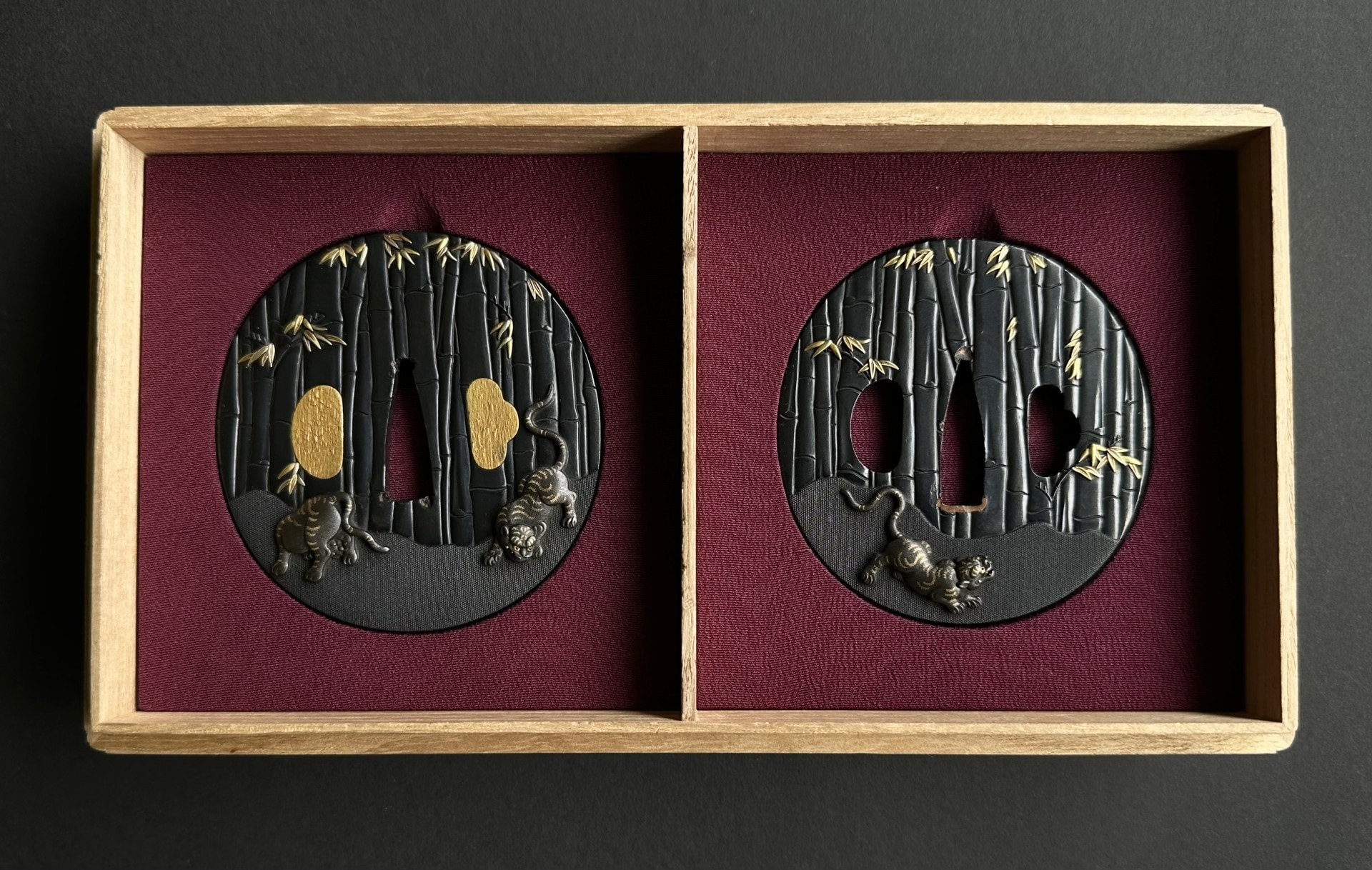
Iwamoto Konkan was born in in the first year of Enkyo (1744) under the family name Asai. He initially used the given name Ryo, later changing it to Konkan. Because the fifth-generation head Ryokan died young, Konkan — who had been a junior fellow disciple — succeeded as the sixth-generation head of the Iwamoto house. The Iwamoto lineage was originally of the Yokoya tradition; however, Konkan studied the carving methods of the Nara school, centering especially on the work of Yasuchika. By incorporating the strengths of both the Yokoya and Nara schools and bringing them to completion, he established an artistic manner that is distinctly Edomae — thoroughly stylish and quintessentially iki in the true sense. He also used the art name Hakuhotei and the studio name Shushodō.

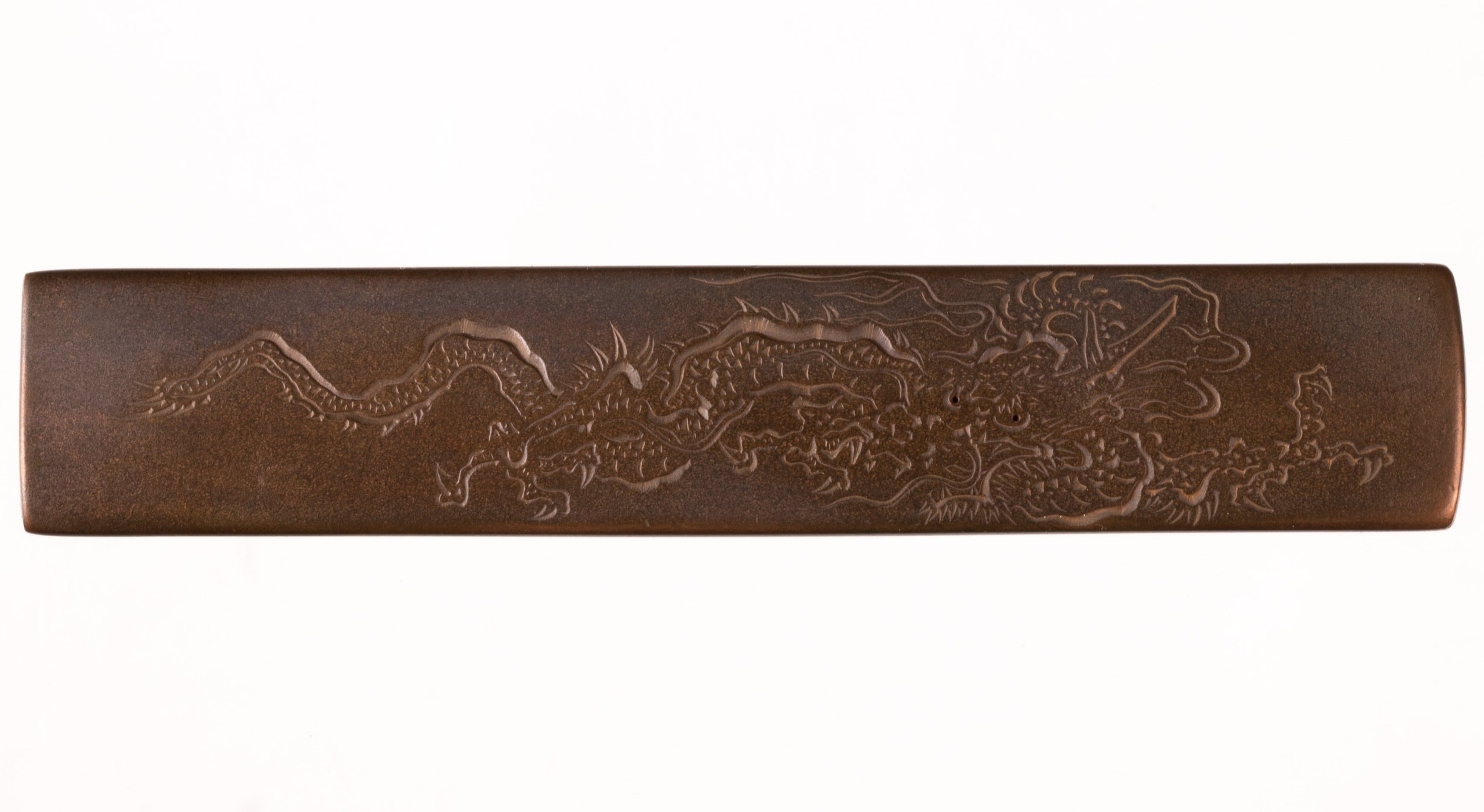
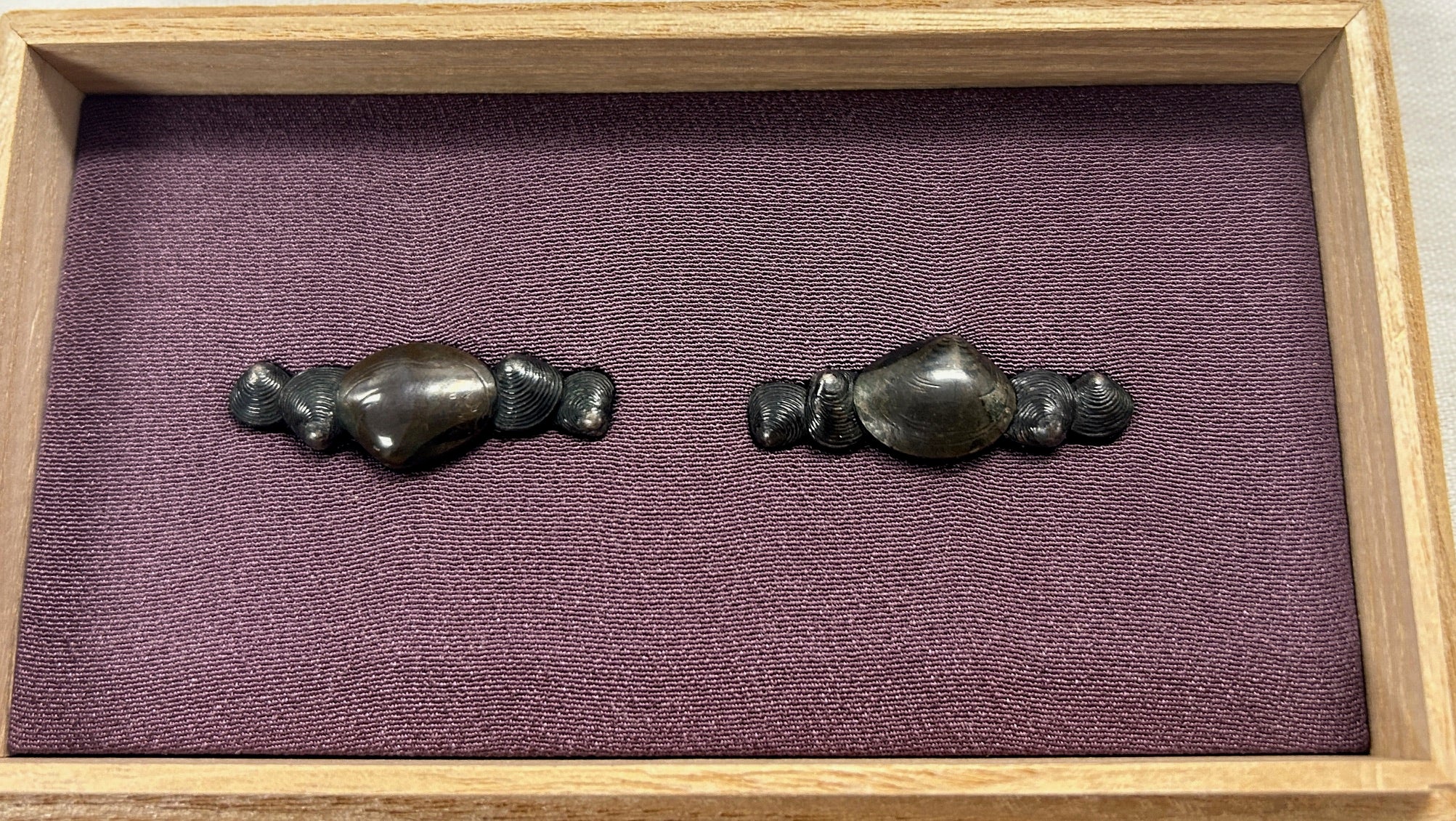
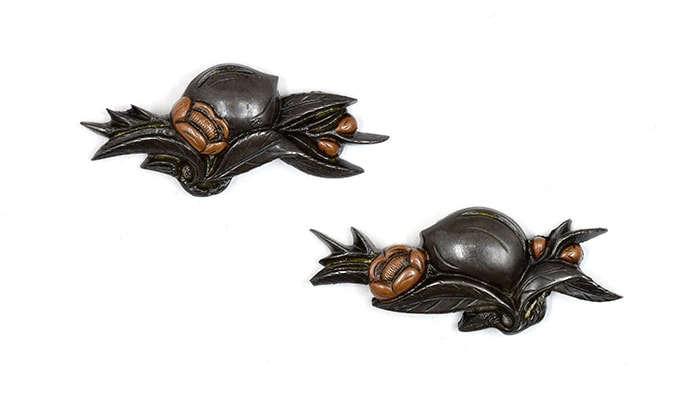
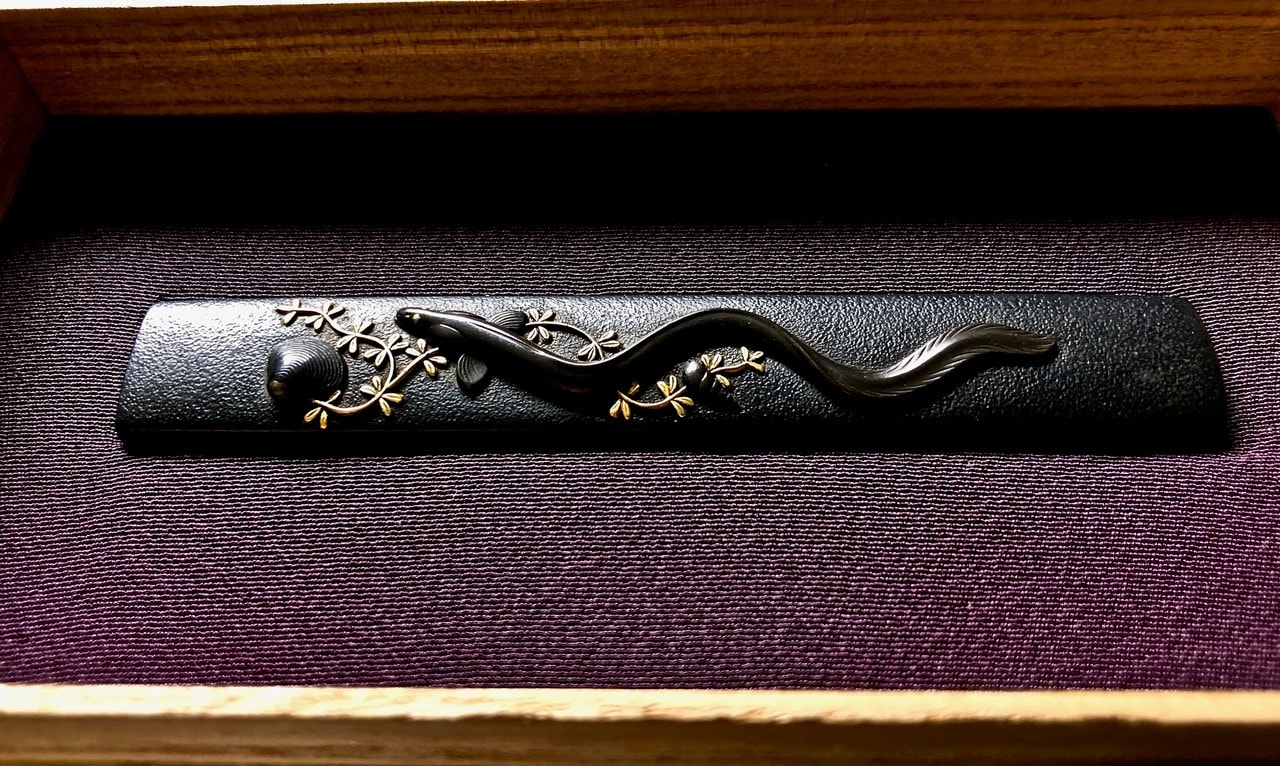
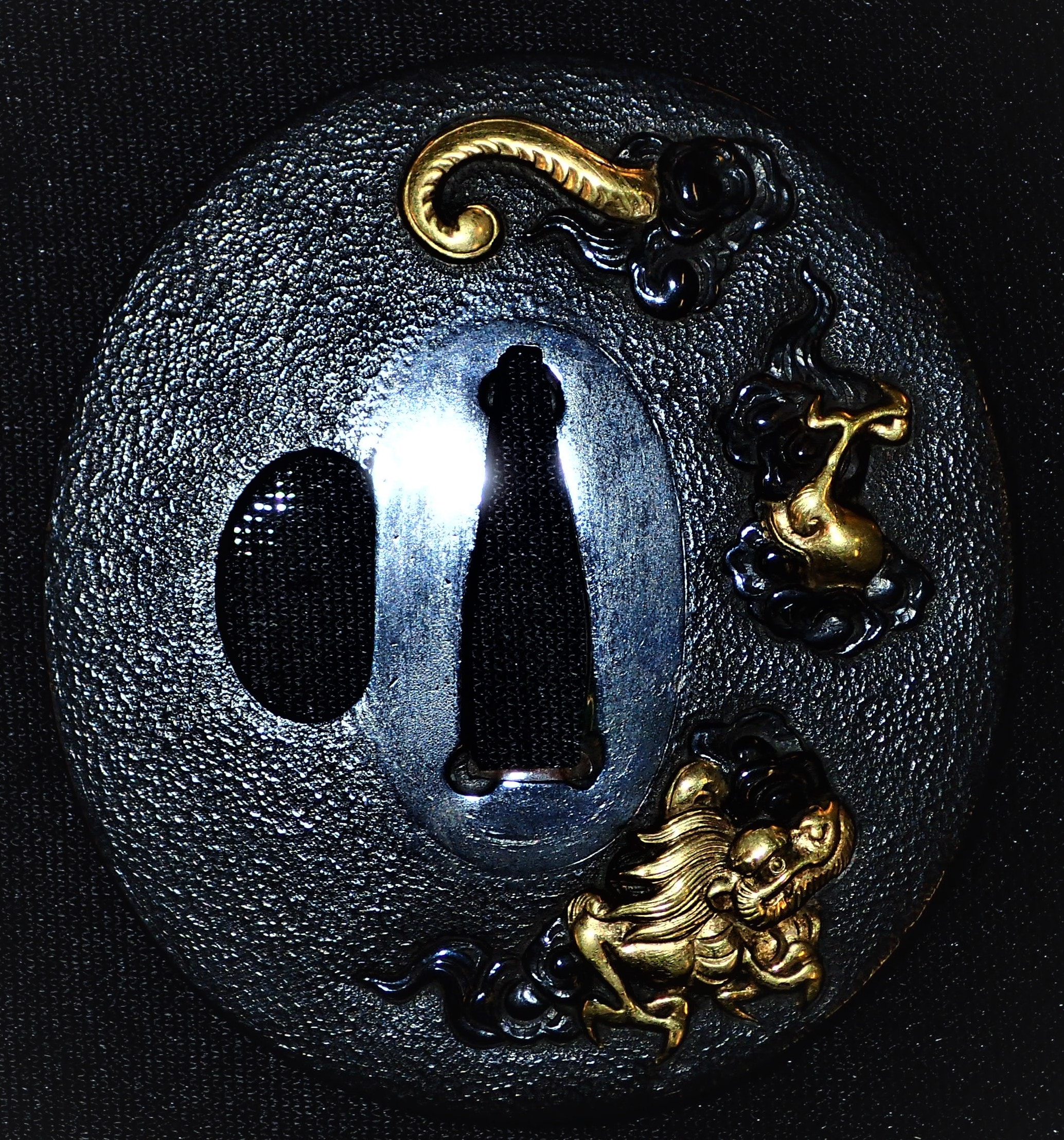
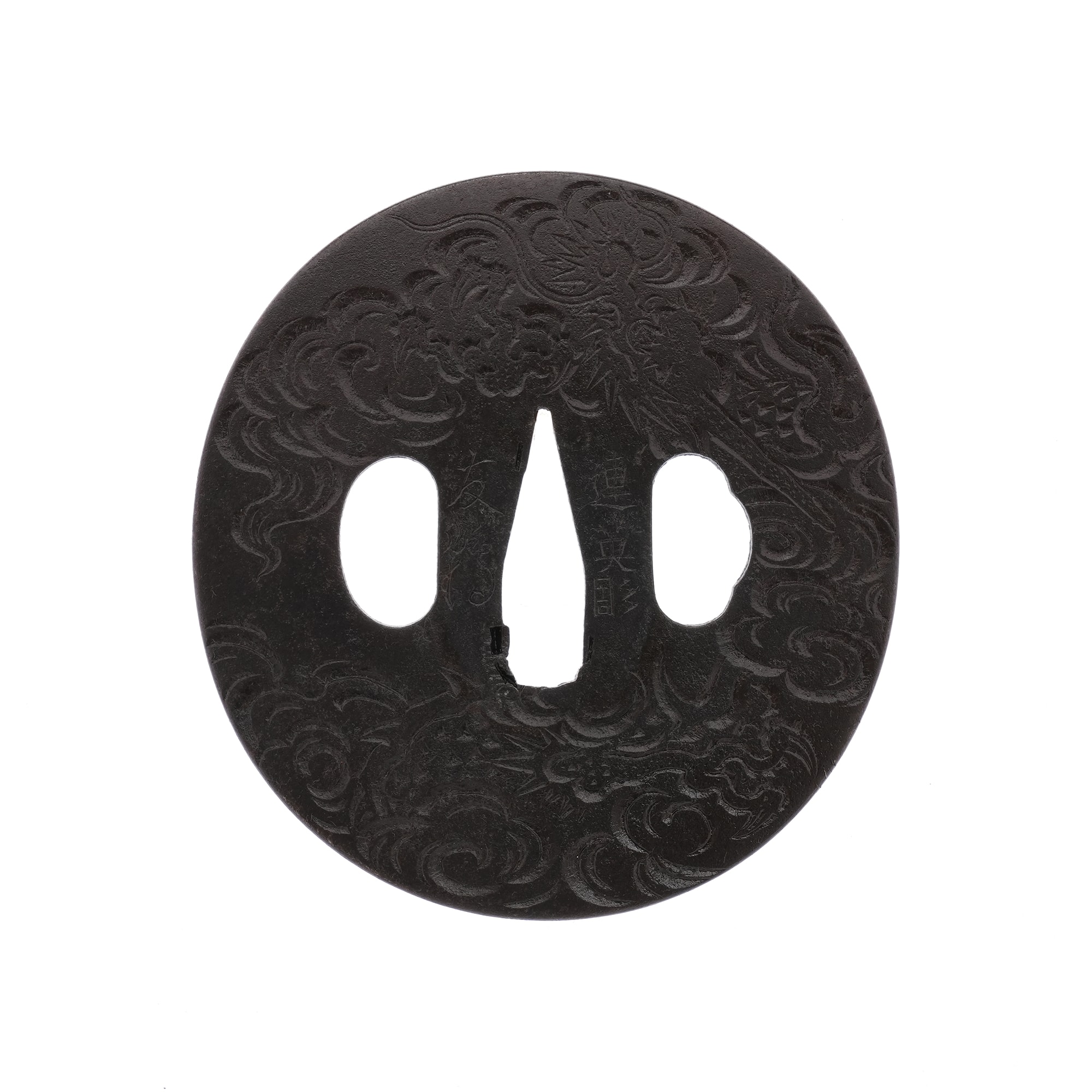
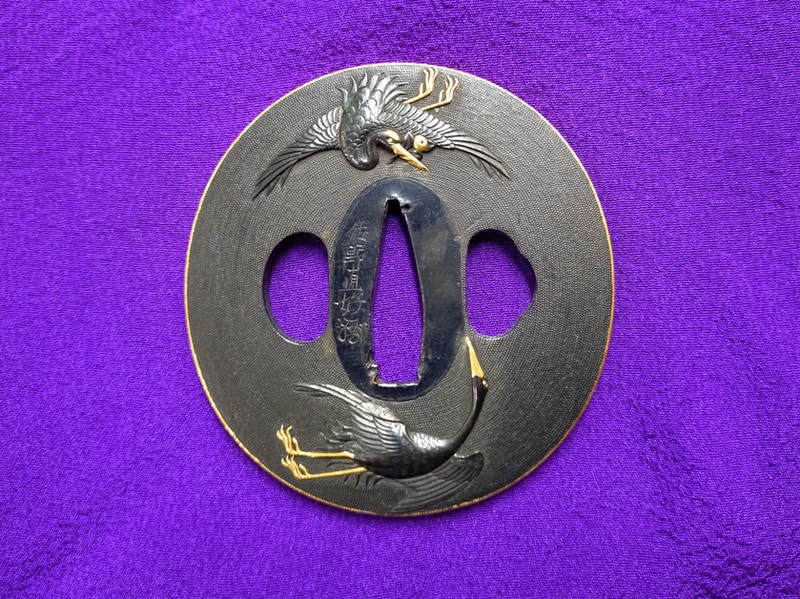
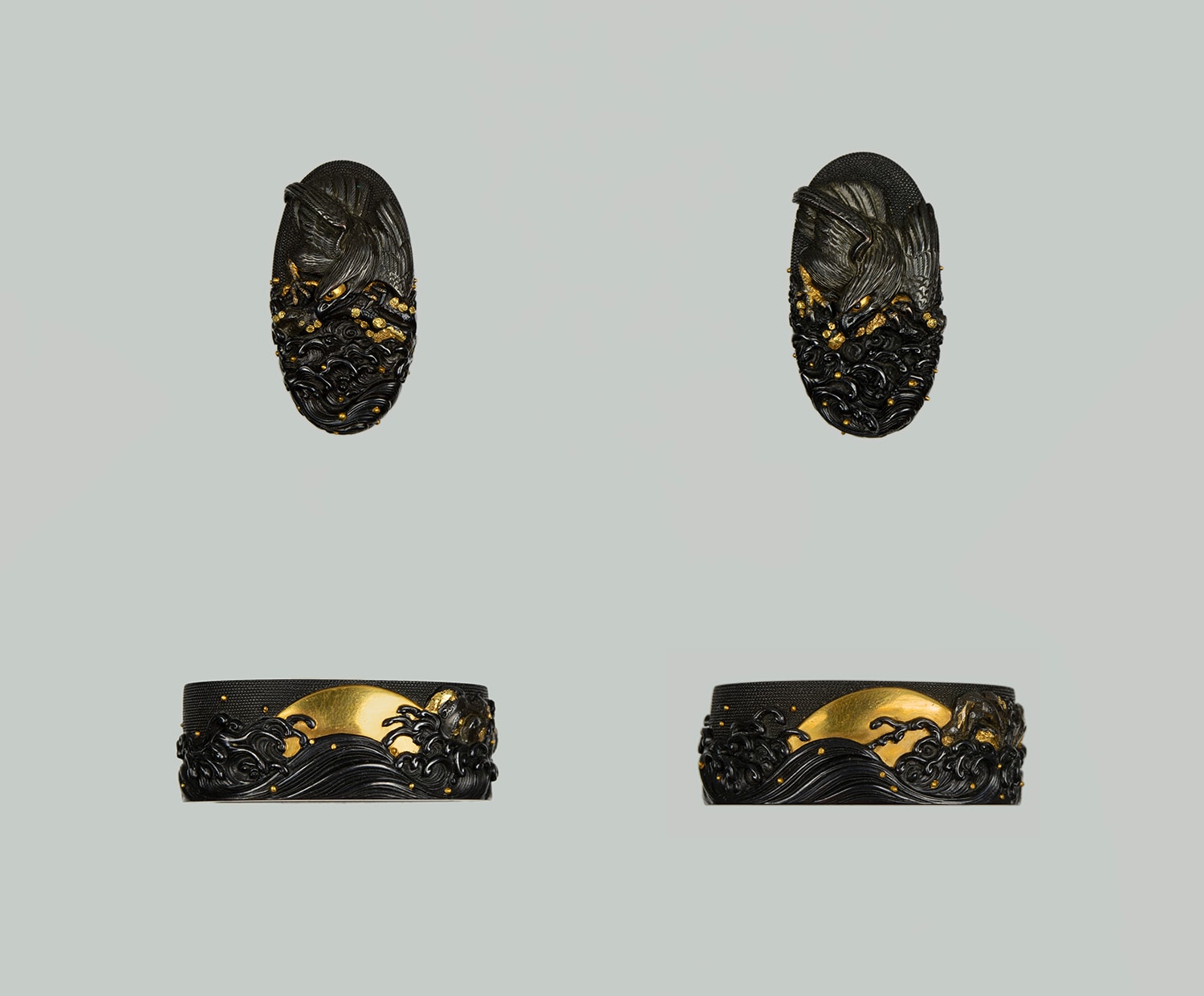
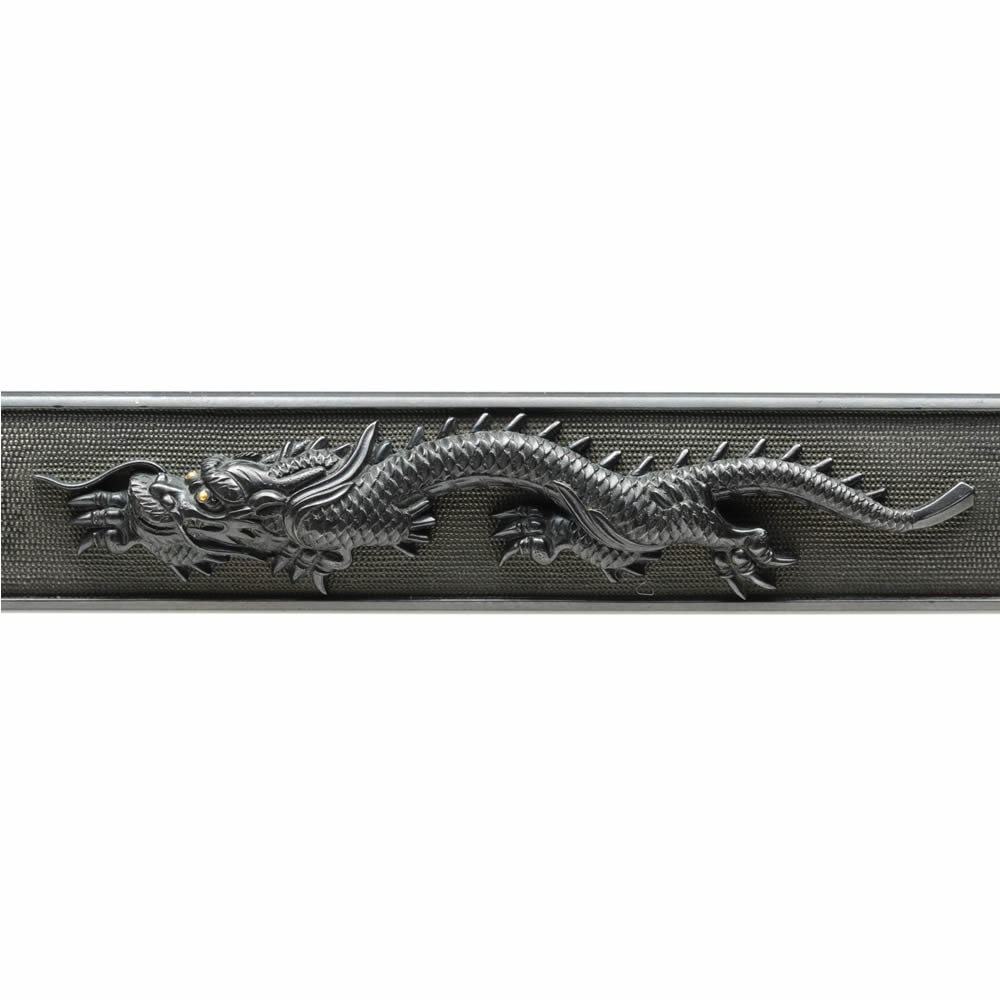
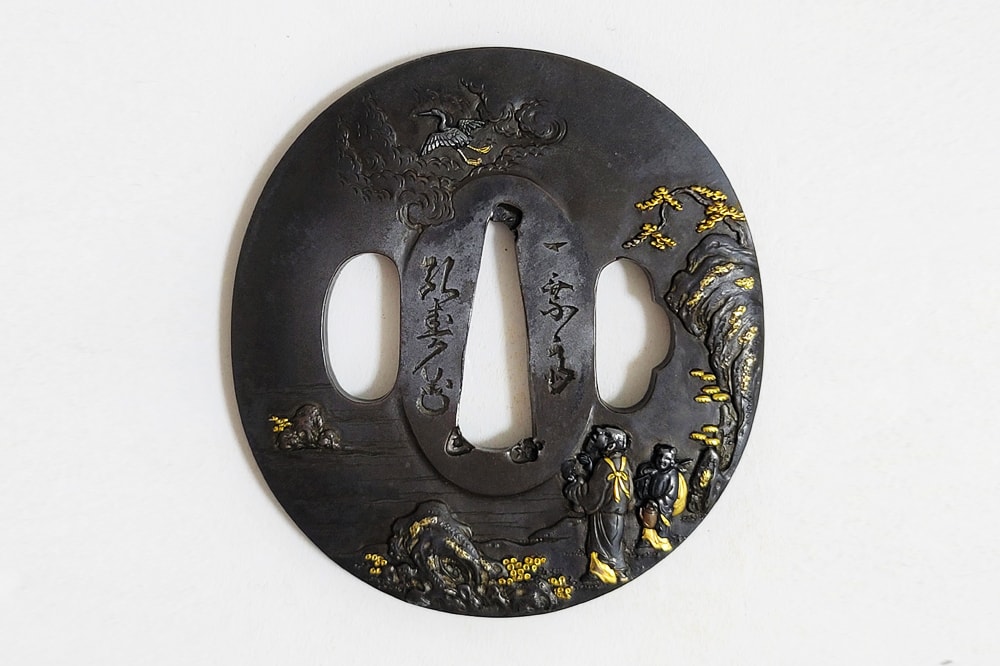
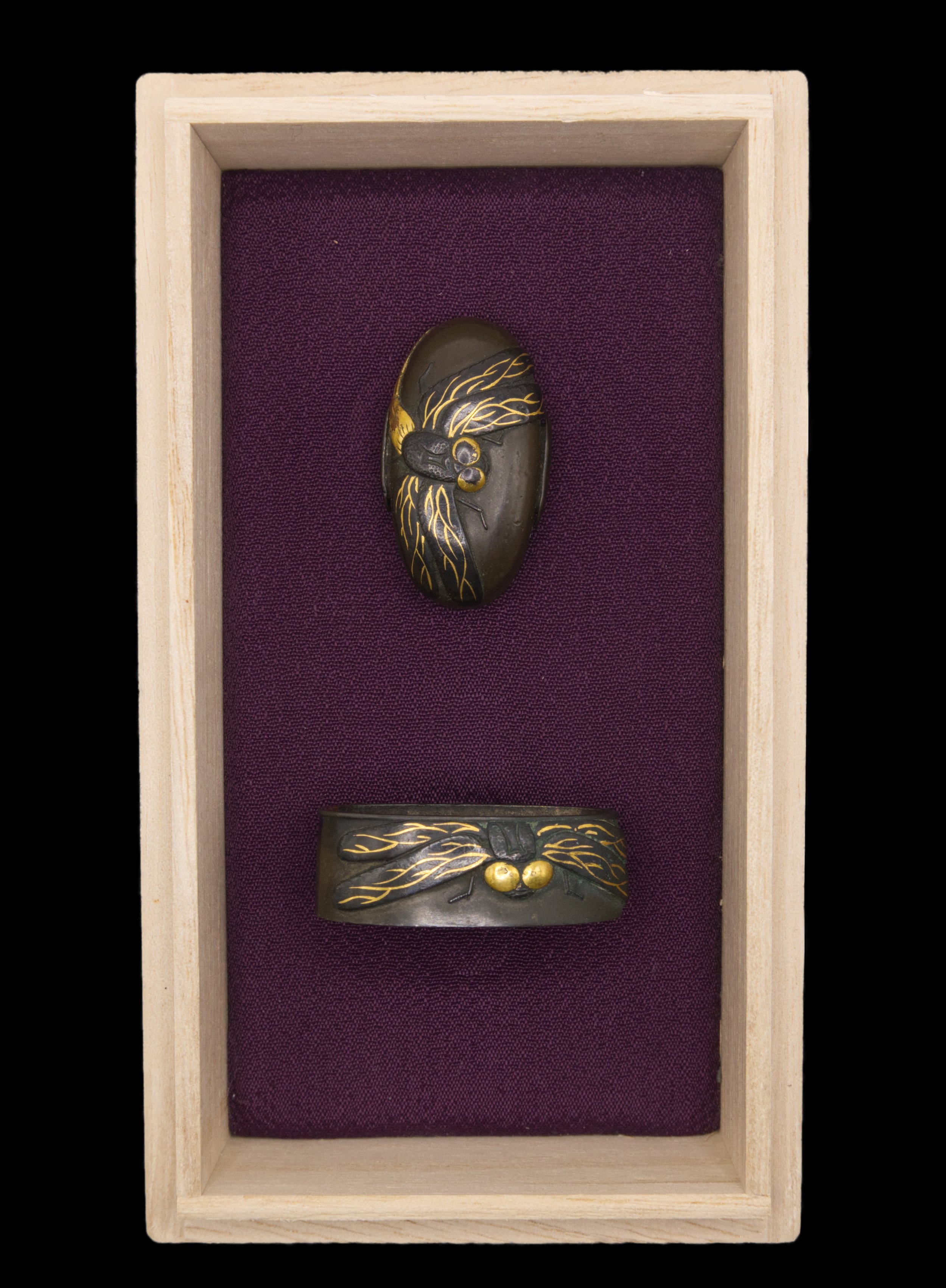
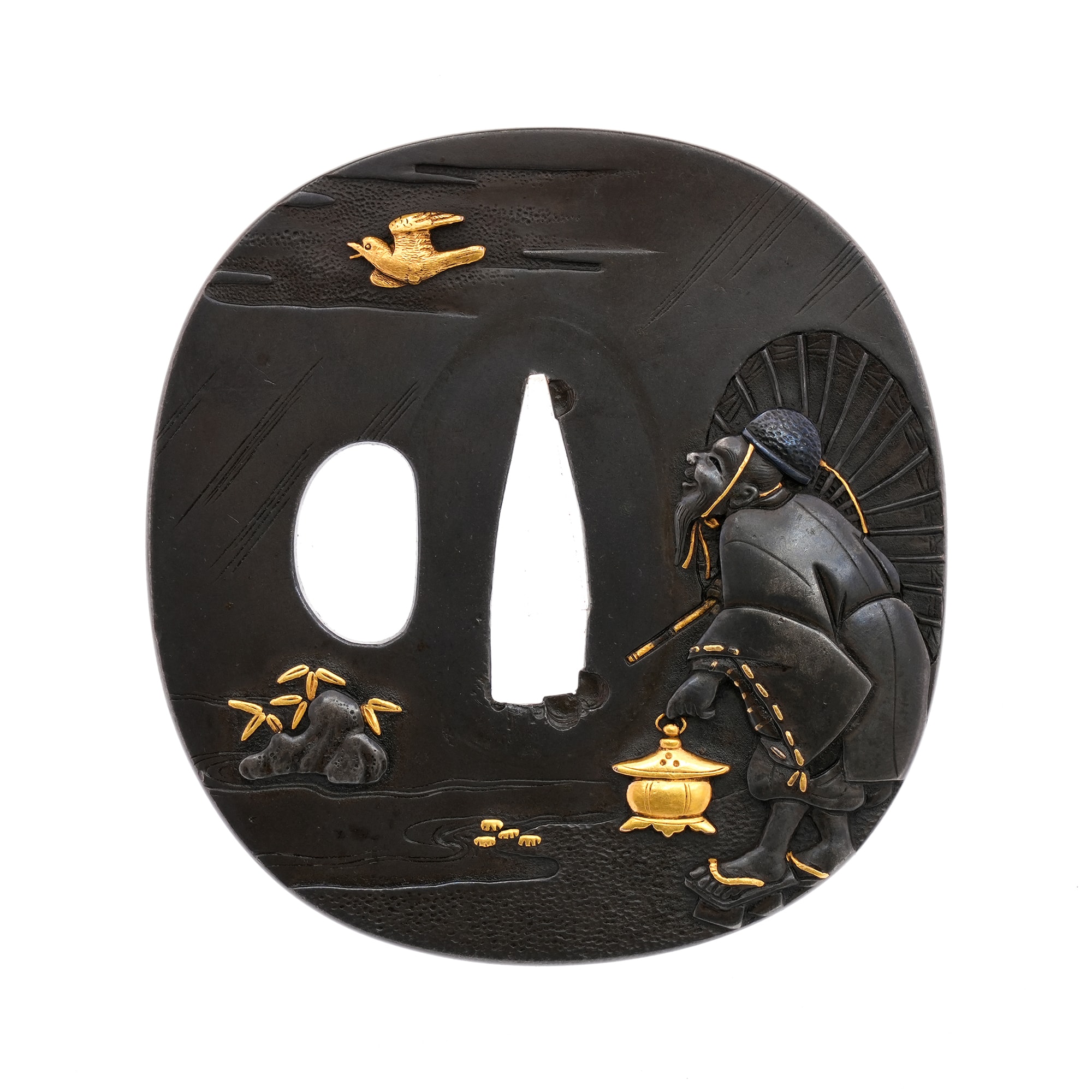
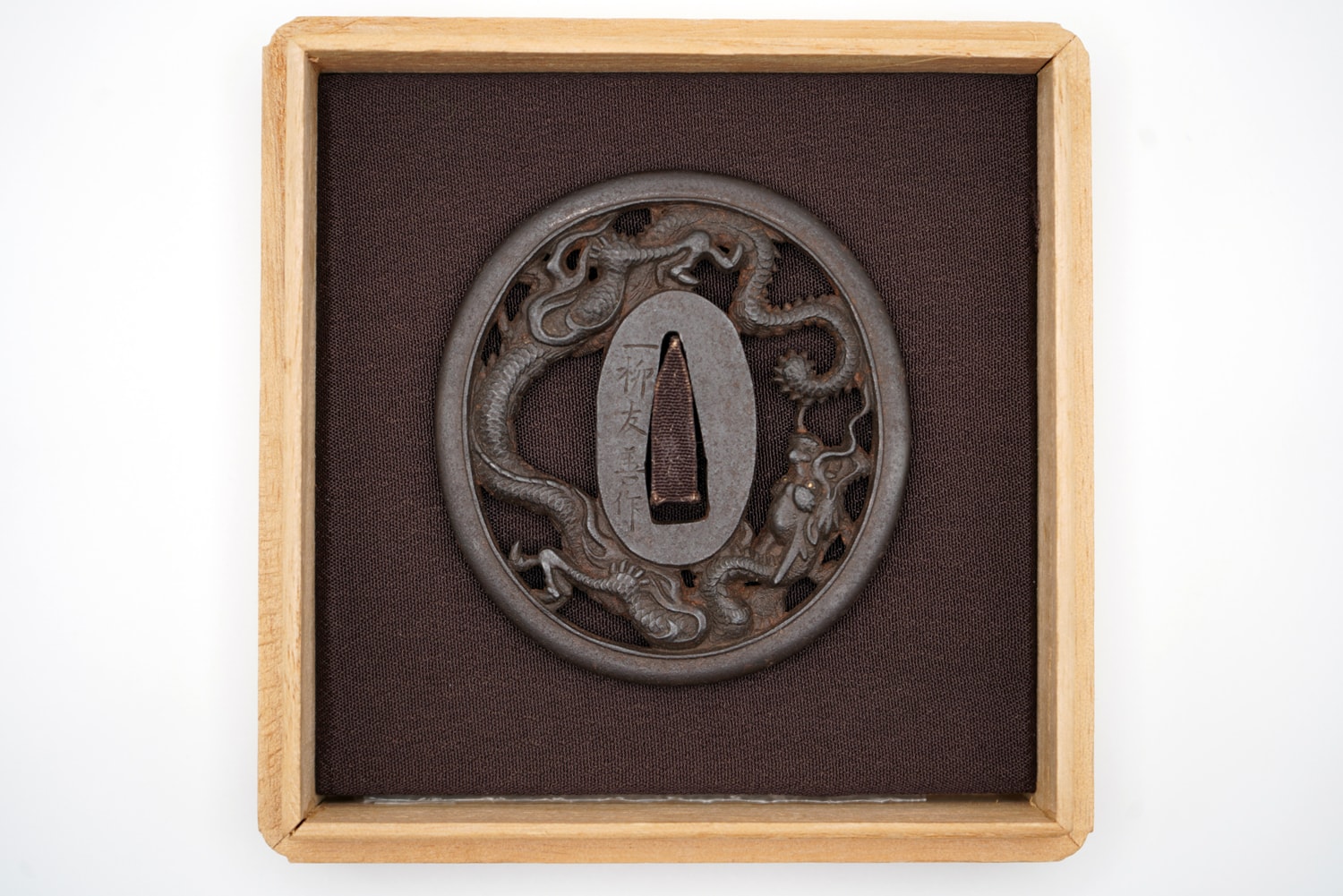
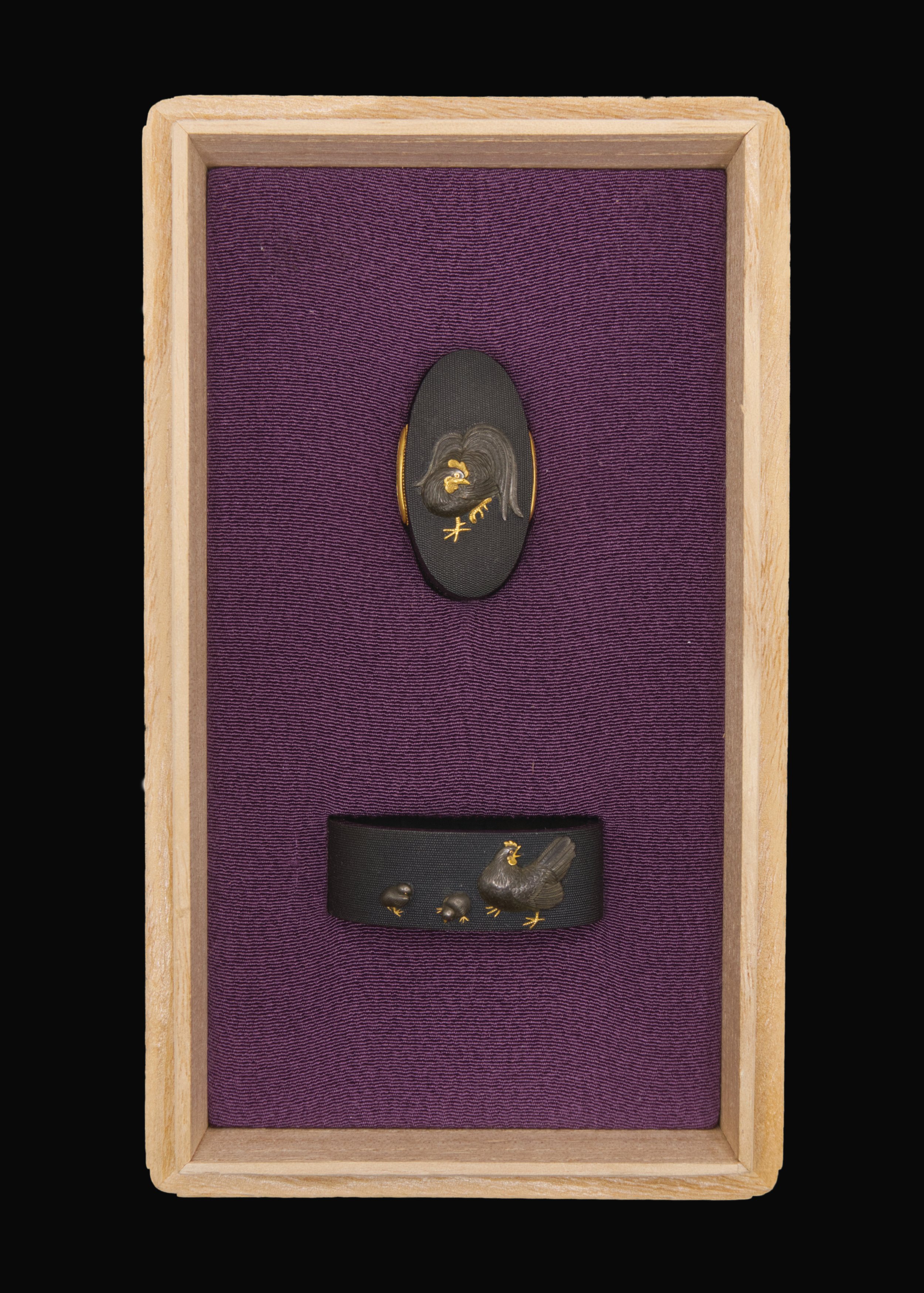
Konkan's technical range is remarkable for its breadth and consistency at the highest level. He worked with equal command across , , , brass (shinchū), and polished iron (tetsu ), employing grounds from precisely executed to - and . His signature method combines deeply emphatic with suemon-zōgan and polychrome metal inlay () in gold, silver, , , and copper, at times further enriched with shell and . His carving extends from bold high relief to the delicate precision of line work, , and openwork (), with triangular chisel marks (sankaku-) applied for forceful emphasis. Whether rendering the individual scales of a fish, the faint glow of a hazy moon through scattered fragments, or the flowing surface of a river, his chisel work achieves minute detail without sacrificing compositional dynamism. His favored subjects — birds, fish, dragons, and landscape scenes — are expressed with vivid life and a realism that conveys the sense of imminent motion.

Konkan stands as one of the foremost -period tōsōgu artists, a master whose synthesis of the Yokoya and Nara traditions produced something distinctly his own. His works demonstrate outstanding compositional power, a capacity to integrate generous open space with concentrated narrative, and an exceptional harmony of colored metals. From formally matched executed on commission to freely conceived naturalistic subjects, from the solemn majesty of a Dainichi Nyorai to the spirited immediacy of a cormorant-fishing scene, his oeuvre reveals broad-ranging technical ability united by a consistent artistic personality. The deep, emphatic carving, the careful advance planning in execution and overall conception, and the thoroughly urbane sensibility that characterizes his output together confirm Konkan's place among the leading practitioners of the naturalistic, sketch-from-life approach in late metalwork.
Kantei

3 descriptive axes: material (a broad palette, shakudo and shibuichi prominent) x technique (high relief, katakiri and inlay with iro-e) x themes (witty Edo subjects, fish his forte). His load-bearing discriminators are his private homage to Yasuchika and the triangular-tagane chisel of his hand.

Iwamoto Konkan (1744-1801), sixth master of the Iwamoto school, is one of the named masters of . Born Asai and adopted into the Iwamoto house under his teacher Ryokan, he forged a manner that takes in the strengths of the Yokoya and Nara schools, witty and sharp in the true taste. He privately revered Tsuchiya Yasuchika, signing homage pieces after him, and fish are named the subject he made his own. His designs are clever and refined, with a sure, sharp chisel; the triangular is named among his tells.

Diagnostic discriminators

the records say he privately revered Tsuchiya Yasuchika and cut signatures of homage after the master, a documented personal devotion

the triangular tagane recurs as a noted feature of his sharp, sure chisel work

Material (grounds)

A broad palette: above all, with -grey , crepe and grounds, iron, brass and besides.

Technique

High relief and applied with gold, silver and colour-metal iro-e and inlay, with hairline and the sharp katakiri of the Yokoya line, and a shell-blue inlay among his colours.

Themes (witty Edo subjects)

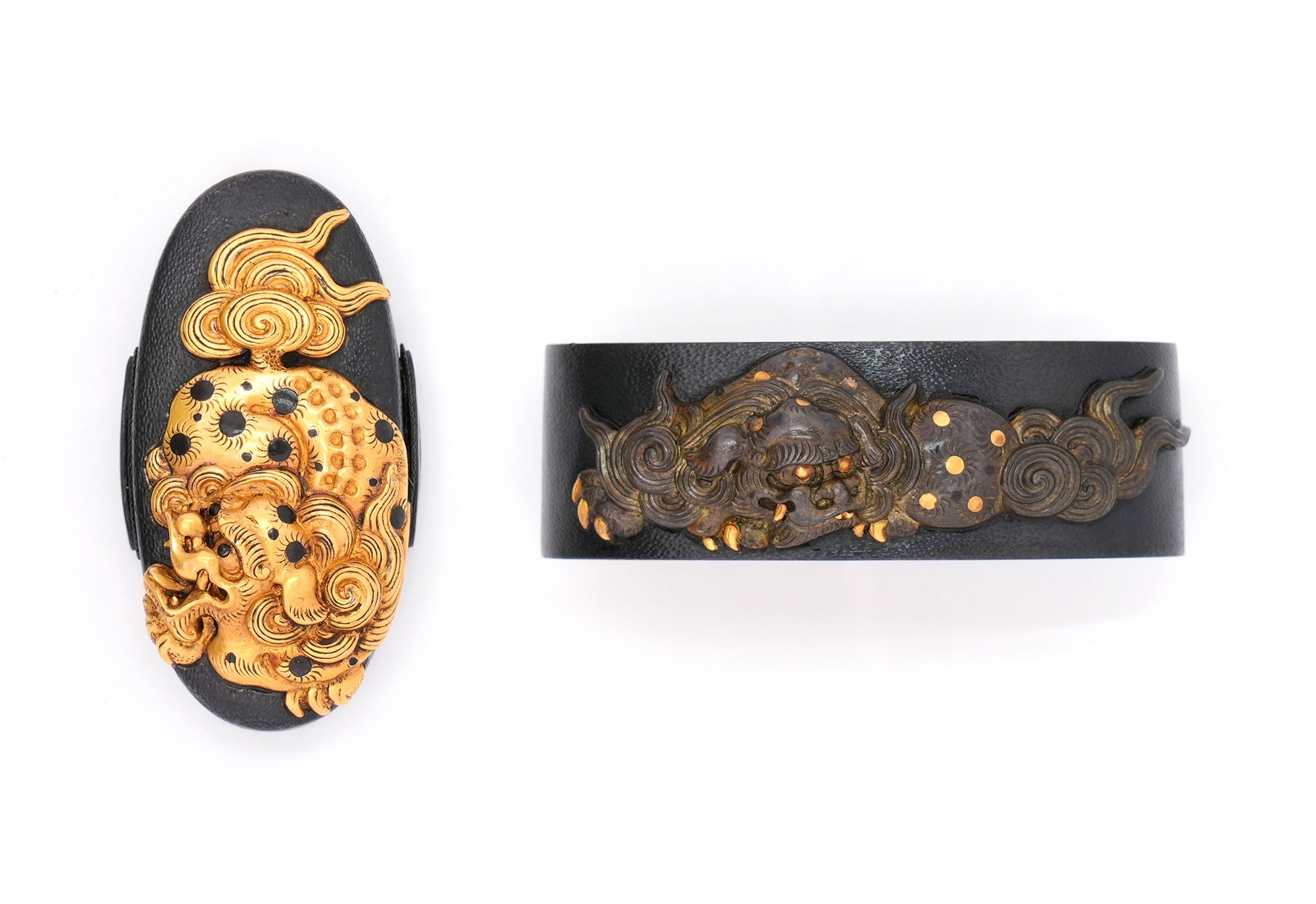
Fish his forte, with birds in a drawing-from-life manner, lions, and figures such as Daruma, Hotei, Jurojin and the Nio, treated with wit and refinement.

Fish, birds and figuresless firmly established

Fish above all, with birds drawn from life and figural subjects, the designs clever and refined.

Full iconography

Signature chronology

Placement
Recorded signatures

Documentary note

He signs Iwamoto Konkan with a , or Konkan alone, often as a split signature on the ; with the go Hakuhotei prefixed, or Shunshodo; and in his early work under his birth surname as Asai Konkan. His given name was first Ryoun (or Ryo), later changed to Konkan. The records differ on the generation number of his Ryokan teacher (a second versus a fifth Ryokan), an internal drift to read with care.

Scholarship

His manner was built by taking in the strengths of both the Yokoya and Nara schools.

Designations

Kokuhō—
Jūyō Bunkazai—
Jūyō Bijutsuhin—
Gyobutsu—
Tokubetsu Jūyō—
Jūyō Tōken46

Elite Standing

0.17 across 46 designated works

Top 6% among makers

Provenance

4 documented provenances across certified works by Konkan

Provenance Standing

0 works held in elite collections across 4 documented provenances

Top 54% among makers

Raw score: 1.98 / 10

Work Types

Distribution across 46 ranked works

Fuchi-Kashira
1635%
Tsuba
1328%
Menuki
817%
Other
613%
Kozuka
37%

Signatures

Signature types across 46 ranked works

Currently Available

Lineage

TeacherRyokan
Konkan

Iwamoto School

Other artisans of the Iwamoto school

  1. 1.Kanri寛利2 for sale3designated
  2. 2.Konju昆寿1 for sale2designated

Konkan

Konkan(昆寛) was a maker of Japanese sword fittings (tōsōgu) of the Iwamoto school in Musashi province, active during the 1743/1744-1801 period.

The work follows the Machibori tradition.

Designated works by Konkan include 46 Jūyō.