NihontoWatch MonNihontoWatchBETA
MarketEncyclopedia
NihontoWatch Mon

NihontoWatchBETA

Market
Encyclopedia
Overview·Kantei·Designations·Provenance·Work Types·Signatures·Lineage
OverviewKanteiDesignationsProvenanceWork TypesSignaturesLineage
  1. Schools
  2. Higo Kinko
  3. Hirata
  4. Hikozo

Hirata Hikozo

彦三

Tokujū
Vol. 21, No. 35 · Tsuba

Hirata Hikozo

彦三

50 ranked works

ProvinceHigoEraEarly Edo (1590–1635)SchoolHigo Kinko>HirataTraditionHigoGeneration1st genTeacherTrained in the Shōami tradition; received metalwork instruction from Hosokawa Sansai (Tadaoki)Specialtiestsuba, inlayTypeTosogu MakerCodeHIR012
1Jūyō Bijutsuhin
2Tokubetsu Jūyō47Jūyō Tōken

Overview

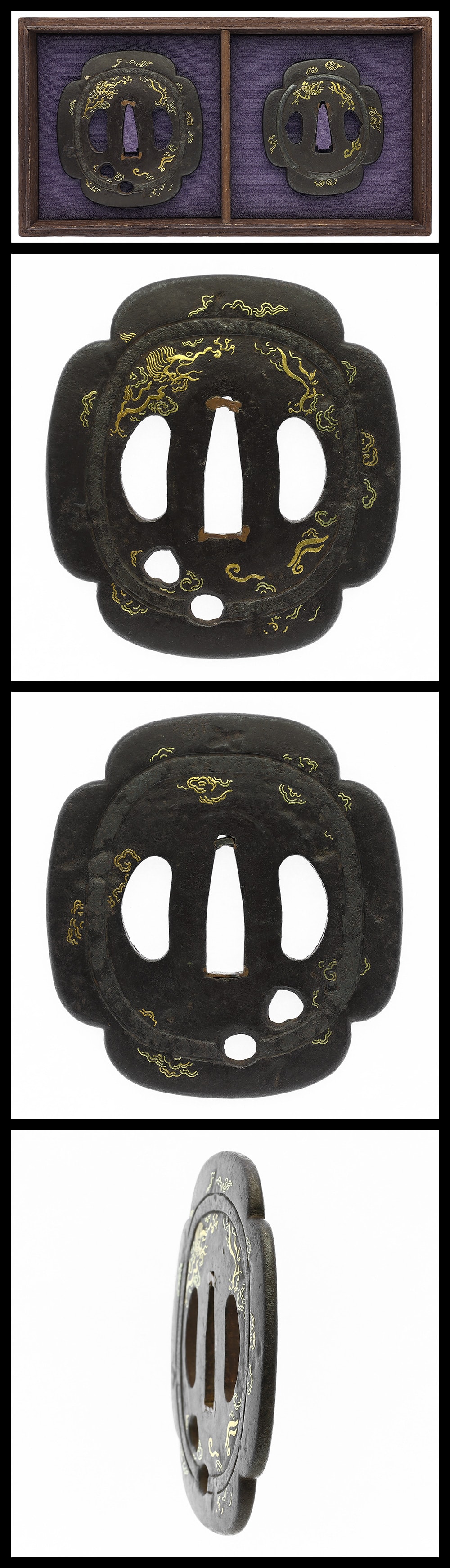
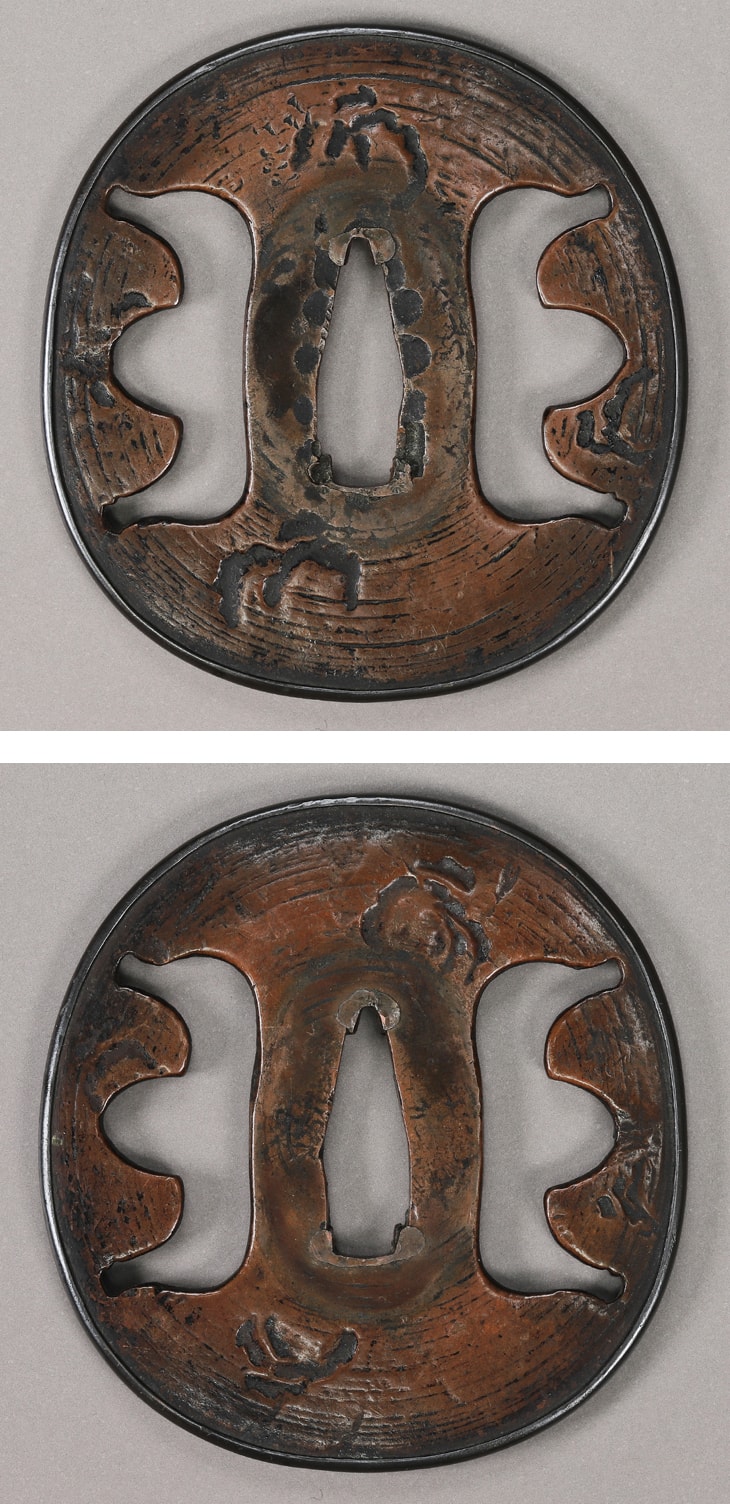
Hirata Hikozo, founder of the Hirata school of metalworkers, was a craftsman of Shoami lineage who served the celebrated warrior and tea master Hosokawa Sansai in Kyoto. When the Hosokawa domain was transferred, Hikozo accompanied his lord first to Tango and Kokura, and finally down to Kumamoto, where he died in 'ei 12 (1635). Under the guidance of Sansai — famed for his command of both martial and cultural refinement — Hikozo developed an aesthetic vision that merged outstanding practical function suited to the warrior's taste with a dignified, elevated artistic quality. From among his followers emerged Shimizu Jingo (his nephew) and Nishigaki Kanshiro; together with Hayashi Matahichi of the Owari lineage, these masters formed what came to be regarded as the four major schools of metalwork. It was Hikozo who established the artistic foundations upon which this entire tradition would rest.

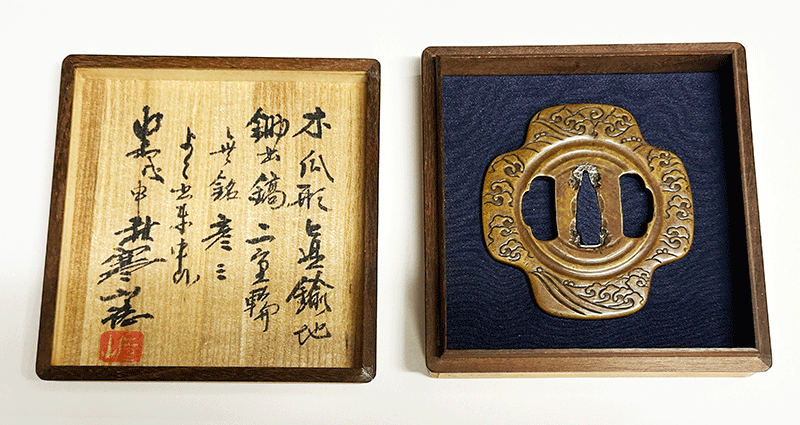
Technically, the Hirata school inherited much of the Shoami tradition. While iron-ground works are also encountered, Hikozo frequently employed such as , brass, and , producing the distinctive, richly toned coloration known as "Hikozo-gane." In addition to inlay — including gold keshikomi-, silver-wire inlay, and on rare occasions shippo- (cloisonne inlay) — he heightened decorative elegance by applying characteristic filing treatments such as Amida-yasuri and , thereby adding an abundance of refined and courtly taste. His invention of the Odawara rim technique became a hallmark of the school, executed in , brass, , or with a rope-pattern (nawame) finish of dense workmanship. His openwork favored kage- — shadow or negative silhouettes — rendered with gentle chamfering that contributes to a prevailing softness of impression. Traces of black lacquer often remain upon the ground, producing an exquisite modulation of tone that harmonizes with the underlying metal surface.

What distinguishes Hikozo within the broader tradition is the convergence of plainness and profundity in a single plate. The repeatedly identify in his work a "plain, sincere character" joined to "archaic elegance," a sensibility "removed from the mundane" that yields results described as "mysterious, esoteric, and subtly profound." His are praised for expressing the quiet, tranquil beauty of kanjaku and the refined elegance of — qualities rooted in the aesthetic of the Hosokawa school of tea. Through long years, the ground metal acquires a deeper flavor, and a quiet, dignified world is formed within the single plate. Whether working in bold o- openwork or restrained enso compositions, Hikozo's pieces are consistently recognized as possessing an ineffable atmosphere: a subdued, moist feeling of finish in which the high level of technique is fully apparent precisely because the design is so direct and spare.

Kantei

3 descriptive axes: material (copper and yamagane grounds) x technique (file-grounds and the Odawara rim, with cloisonne enamel inlay used sparingly) x themes (geometric and floral devices in the quiet tea taste). His load-bearing discriminator is the Odawara-fukurin rim he is credited with creating; the cloisonne enamel is his distinctive but rare mark.

Hirata Hikozo, the first of the name, is the founder of the Hirata school of , the line whose name stands for cloisonne enamel on the sword fitting (an enamel tradition the records trace back through Donin). Serving Hosokawa Sansai from Kyoto down to Kumamoto, he worked the Shoami tradition in the refined, quiet taste of the tea world. His art is twofold: the rim and file-ground work of the schools, of which the Odawara- rim is named his own creation, and the inlaid cloisonne enamel for which the Hirata name stands, used sparingly, the records noting that enamel pieces are in fact rare even in his own hand. Almost all his work is unsigned and attributed; a single signed plate is known.

Diagnostic discriminators

cloisonne enamel inlay is the Hirata speciality, but the setsumei stress it is rare even in his own hand (only one or two pieces); distinctive, not frequent (this corpus over-represents it)

the records credit the special Odawara-fukurin rim as his own creation and a point of his work

Material (grounds)

Copper and carry the enamel, with most often as the rim; the named Hikozo-gane copper alloy recurs, the whole worked in a quiet tea-aesthetic restraint.

Technique (enamel and file-grounds)

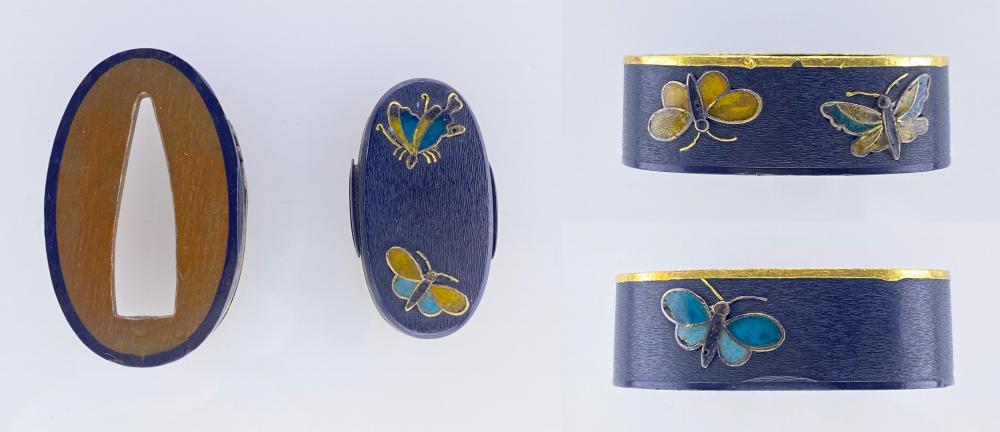
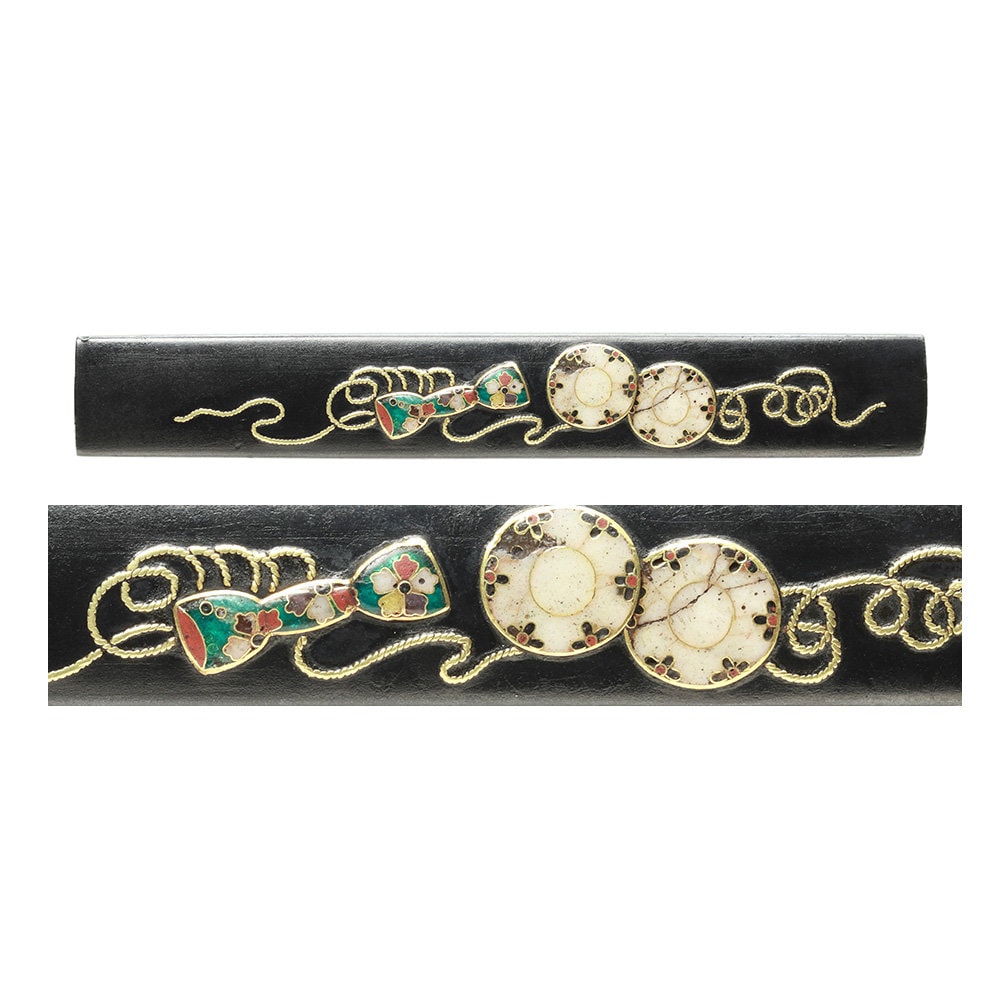
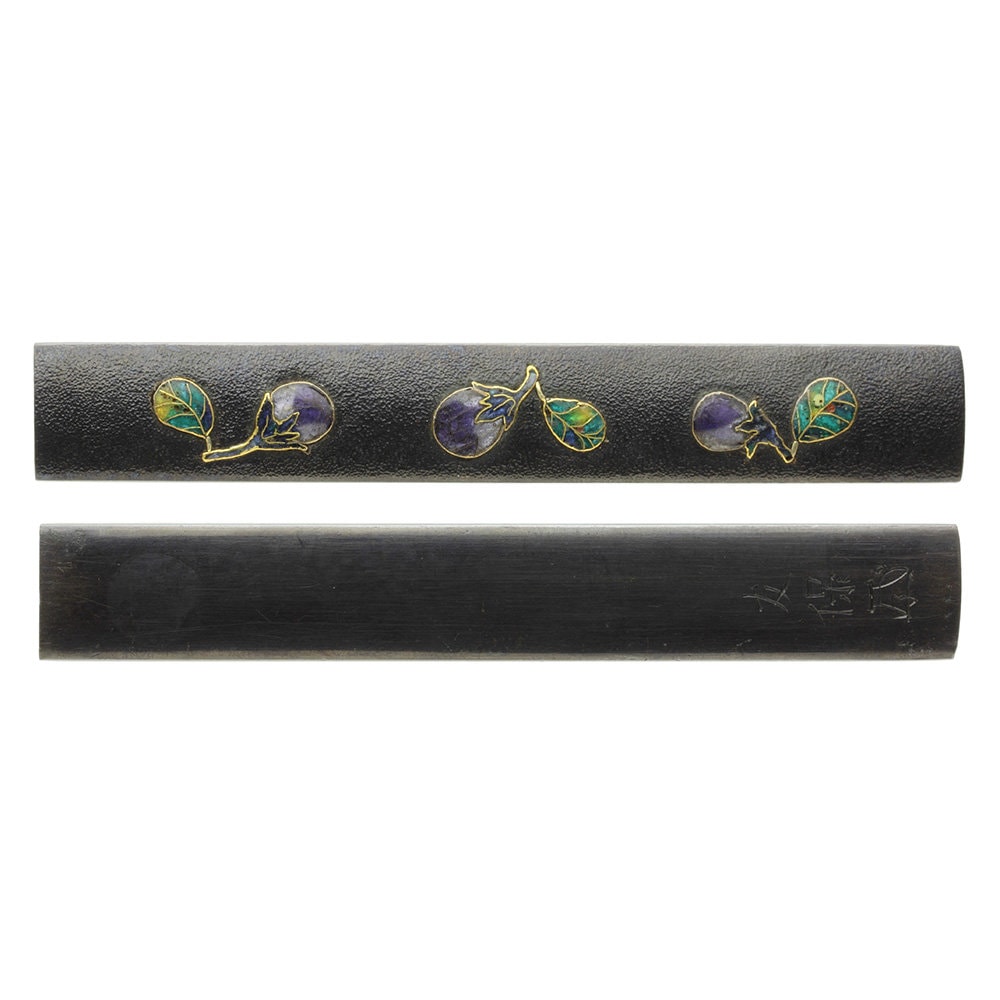
Cloisonne enamel inlay above all, set into the metal in pale-blue and green; with the rope-pattern and set inlays, and the file-grounds, the Amida-yasuri and , finishing the plate.

Themes (quiet devices)

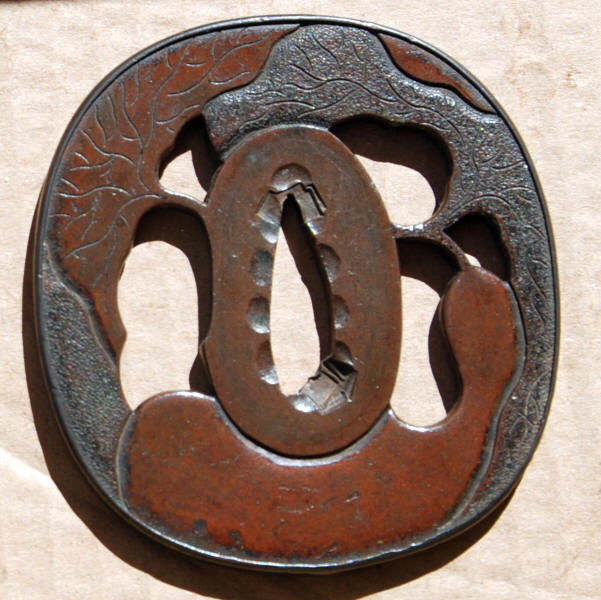
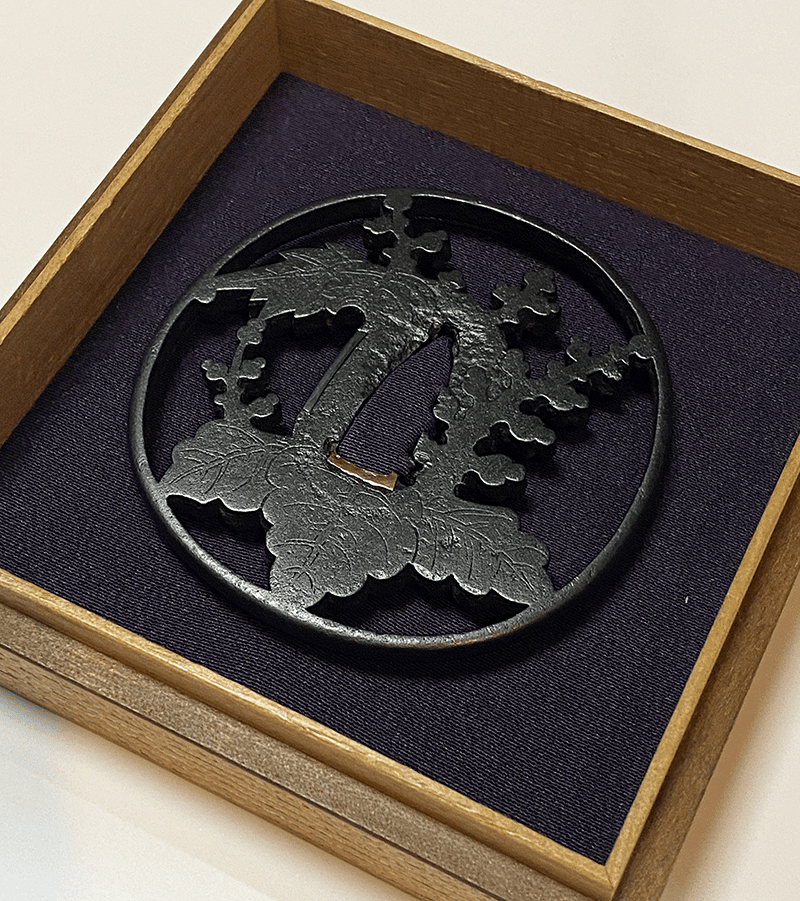
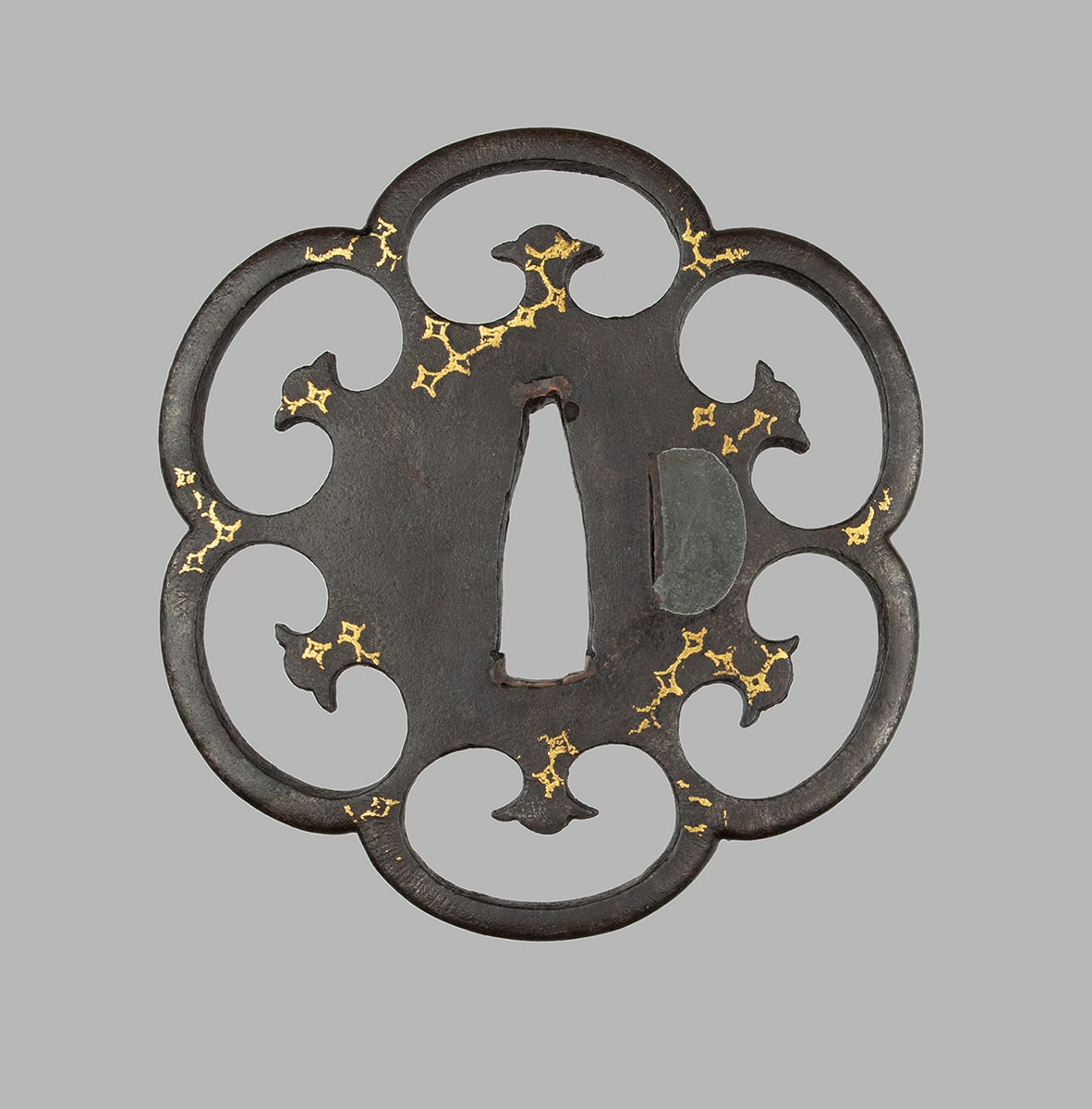
Geometric and floral devices in the quiet tea taste: arabesque, cherry and chrysanthemum, the enso circle, pine and umbrella openwork, sandbar and sea-cucumber piercings.

Floral and geometric devicesless firmly established

Arabesque, cherry and chrysanthemum, the enso circle and openwork pine and umbrella, in a restrained tea aesthetic.

Full iconography

Signature chronology

Placement

Documentary note

Almost all of Hikozo's work is , attributed ( Hikozo, or -Hikozo) within the Shoami-derived tradition; the records say the only signed example is a single iron plate inscribed Hiko / Hiko-san. The Hirata name continued in successive generations, so later homonyms exist, but this group is treated as the first master. A Nishigaki Kanshiro plate appears mis-grouped here and is not his.

Scholarship

His finish carries the quiet, austere taste of the Hosokawa tea world, an aesthetic of wabi.

Designations

Kokuhō—
Jūyō Bunkazai—
Jūyō Bijutsuhin1
Gyobutsu—
Tokubetsu Jūyō2
Jūyō Tōken47

Elite Standing

0.20 across 50 designated works

Top 5% among makers

Provenance

4 documented provenances across certified works by Hikozo

Provenance Standing

2 works held in elite collections across 4 documented provenances

Top 70% among makers

Raw score: 1.94 / 10

Work Types

Distribution across 50 ranked works

Tsuba
4082%
Other
918%

Signatures

Signature types across 50 ranked works

Currently Available

Lineage

Hikozo
Students (3)
  1. 1.Kanshiro勘四郎9 for sale31designated
  2. 2.Shozaburo小三郎
  3. 3.Kazuyuki一行

Hikozo

Hikozo(彦三) was a maker of Japanese sword fittings (tōsōgu) of the Hirata school in Higo province, active during the Early Edo (1590-1635) period.

The work follows the Higo tradition.

Designated works by Hikozo include 2 Tokubetsu Jūyō, 47 Jūyō.