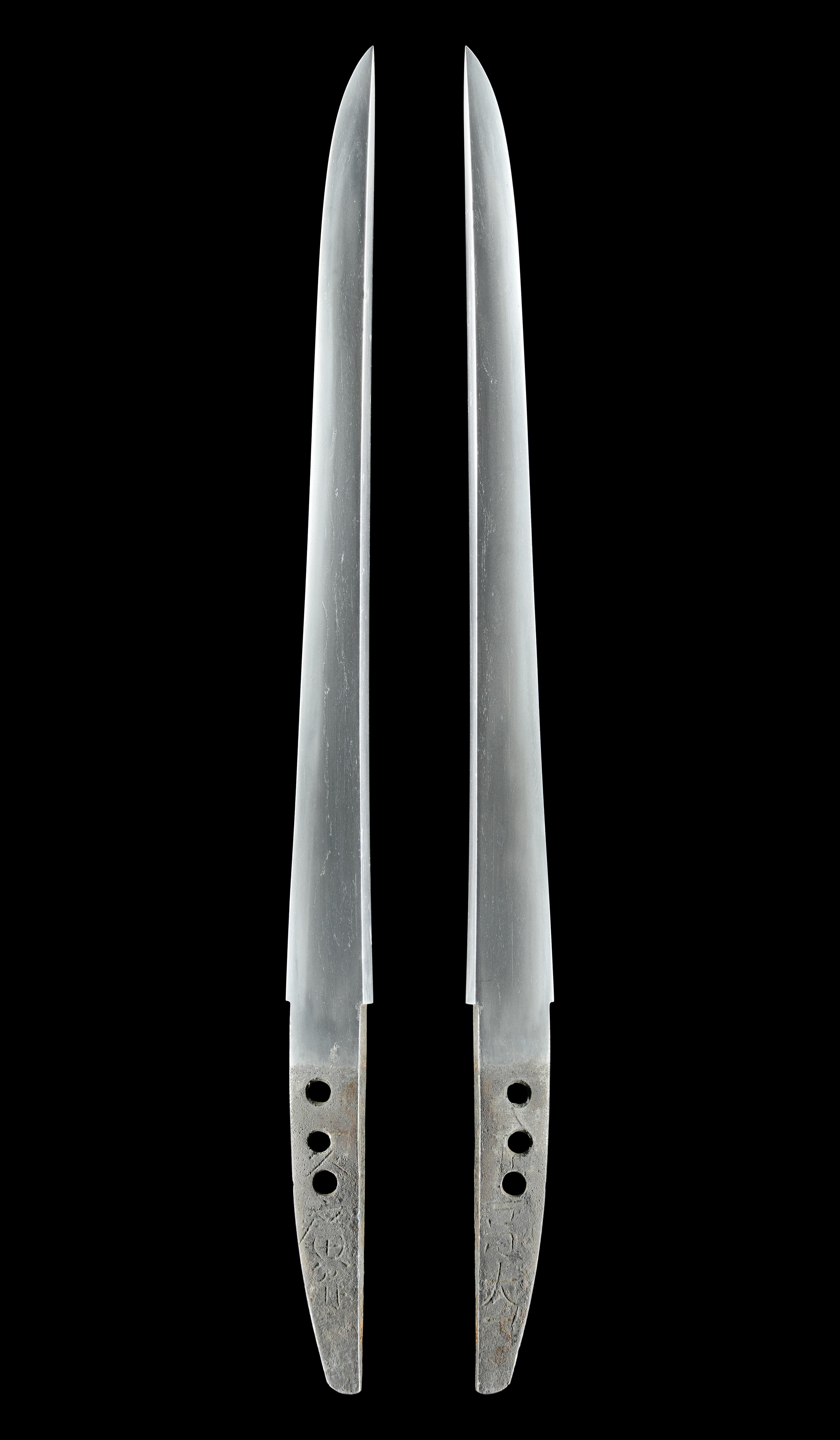
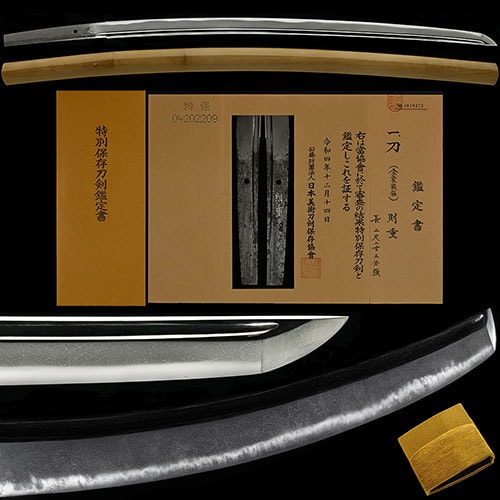
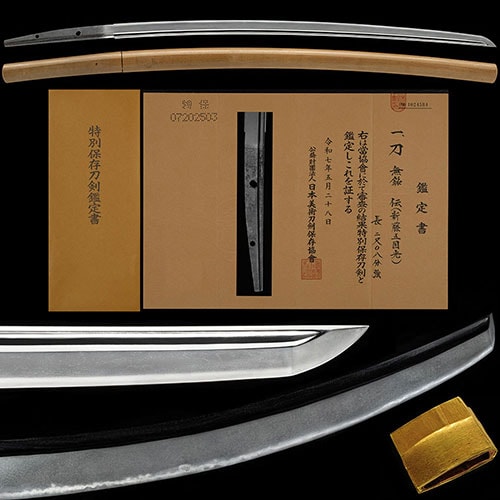
Fuyuhiro worked at Obama in Wakasa Province through the Tenbun and Eiroku eras of the late period, and the dated blade of Eiroku 11 (1568) fixes his activity firmly in the third quarter of the sixteenth century. He is the founder-figure of the Wakasa Fuyuhiro line, a provincial workshop carried into Wakasa by a smith trained in the tradition. The published sources record that he later studied under Tsunahiro of , koshu Tsunahiro no ni mananda, while a parallel account holds that he followed after Hirotsugu, Hirotsugu no nochi to tsutaete iru. Either way the descent is , and what reaches Wakasa with him is the late manner of the period, transplanted to a province better known for its harbor than its forges. All five of his designated blades carry the signature 冬広, cut in three characters on the toward the , and all are , so that his record on paper is unusually consistent.
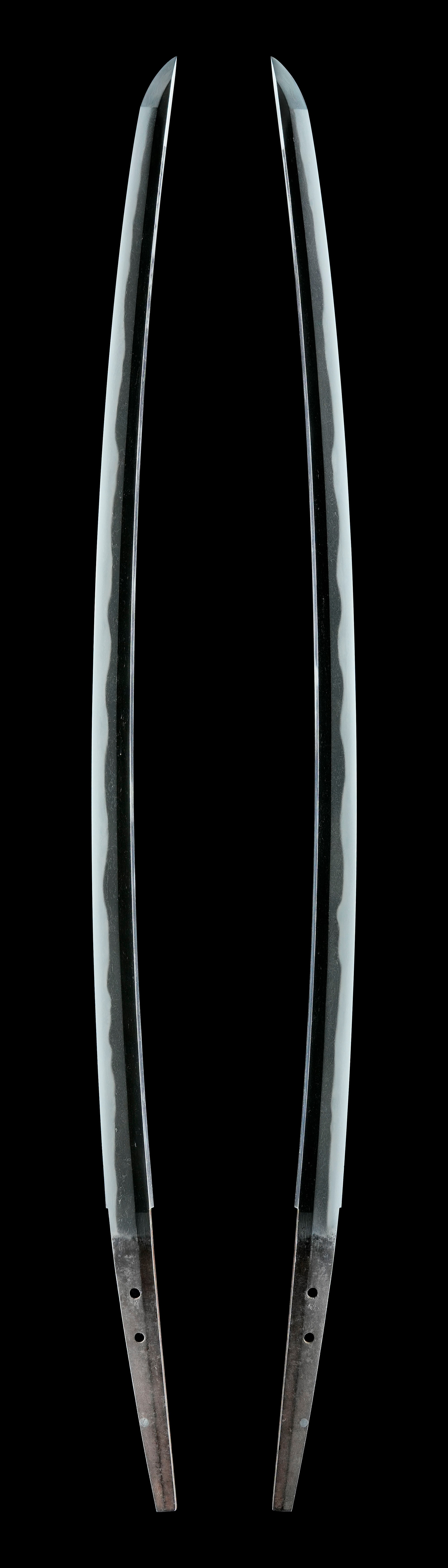
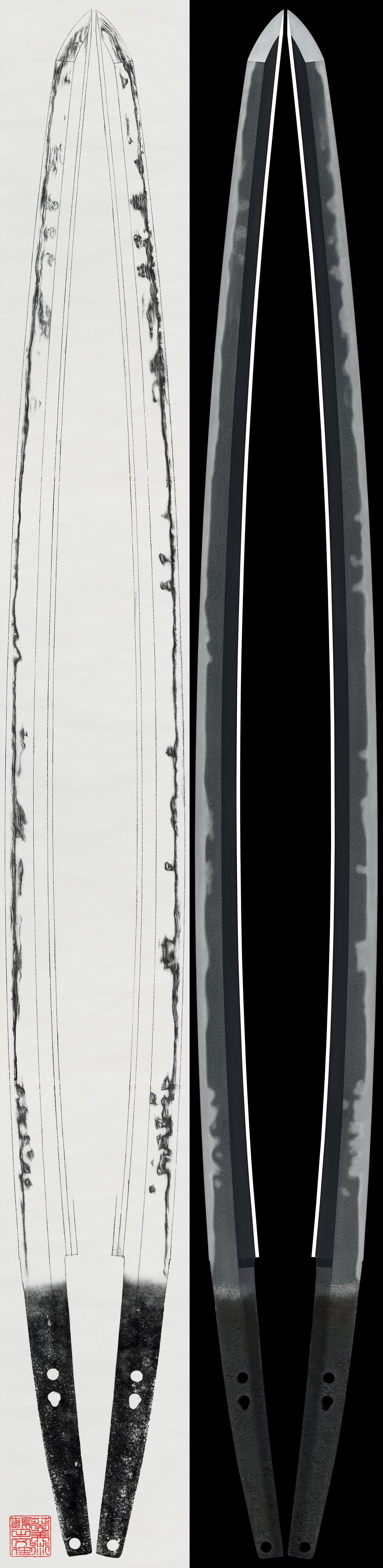
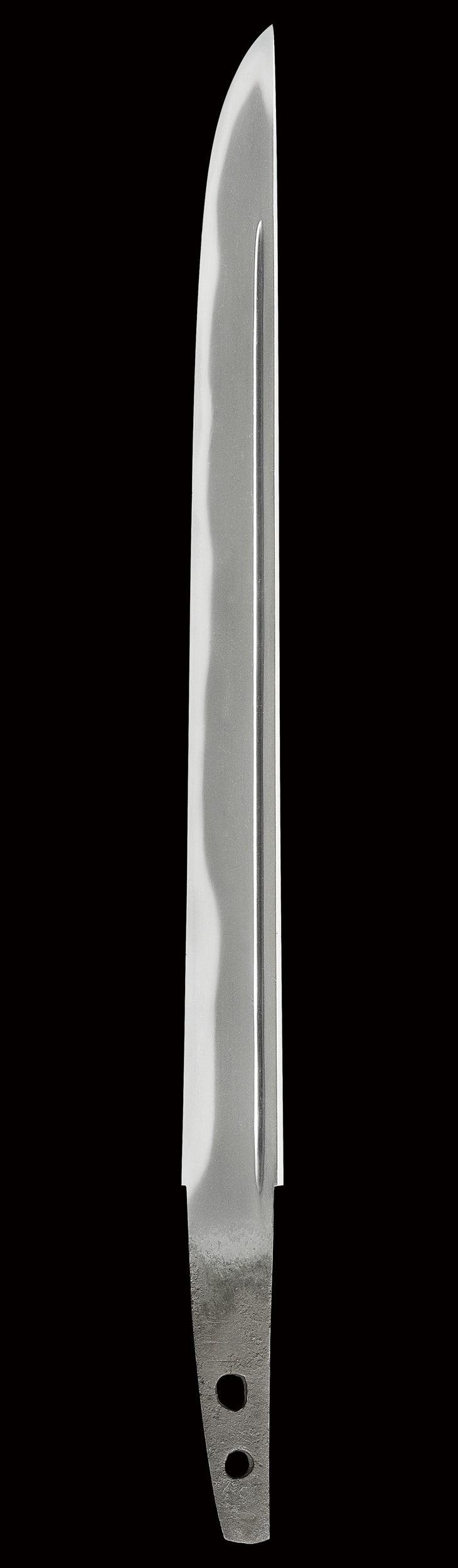
The hand that runs through that record is a standing, flowing . His is forged in that tends to , the grain rising and opening rather than sinking into a tight surface, and it is repeatedly described as flowing, , with gathering across it. This standing, -mixed is the first thing his blades share, and it carries through both of the manners the sources draw apart. Against that he tempers in two distinct registers. In the calmer of them the is a broad into which small are mixed, with and playing in the band and the drawn tight, , with . In the fuller register he opens the wide, a at times rising into an base with box-like forms, well filled with , threaded with and , and bright along the .
The two registers are exactly the duality the published sources name. His work, they write, includes pieces in the manner of late and others in a late flavor, sue- mono no mono to, no mono to ga ari, and he produced both -based workmanship and workmanship, and his skill is high. The side answers to the calm with its tight and quiet ; the -flavored side answers to the wide, -laden with its bright temper. The follows the temper beneath it. Over the it runs straight and turns back deeply, sometimes almost ; over the it goes and sweeps into , on one blade running out toward . The and are judged sound on blade after blade, and where his finest work is reached the sources call it outstanding among his oeuvre, one wide- with and named doaku-chu no kesshutsu no , and a broad of bright and imposing shape named doaku-chu no no ikkou.
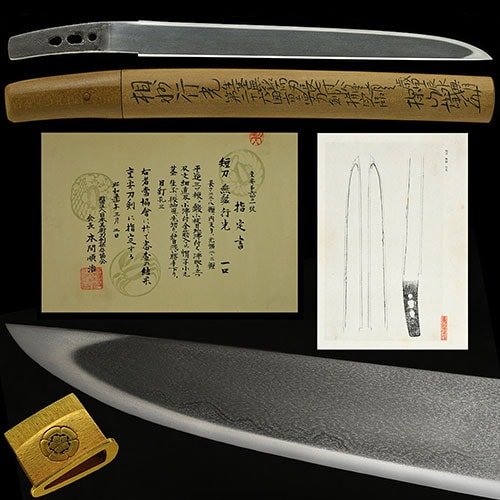
A third register is his carving. Fuyuhiro was adept at , and on his blades a -no- dragon runs the while and a pair of goma-bashi stand on the , with closed by on the dated piece. The published sources make a pointed judgment about these carvings: rather than being in a manner, they are closer to the work of Heianjo Nagayoshi and the like, mushiro Heianjo Nagayoshi nado no ni chikai, and they raise the possibility that some connection ran between the two hands. The remark places Fuyuhiro at a crossing of provincial traditions, his steel by descent but his chisel turned toward the Kyoto-tinged Heianjo workshop. His blades are with the three-character signature where they survive uncut, though one of the five has been shortened, its long original tang relieved to with the signature recut toward the .
The most discussed problem around his name is geographic. The published commentary records that, at nearly the time, blades survive bearing residence signatures for Wakasa, Hoki, Izumo, and , and that whether these are the work of one man or several remains open, kore-ra ga donin ka ina ka kento no yochi ga aru. The dated of Eiroku 11 is signed Bicchu no oite Matsuyama and was made at Matsuyama in , yet the workmanship in both and is good and of a piece with the Wakasa blades, which is precisely why the question is hard to close. The does not resolve it; it groups the multi-province pieces under the name and flags the doubt. His place in the lineage is correspondingly that of a head: a -trained provincial who carried the late manner into Wakasa and gave his name to a line whose reach, on the evidence of the signatures, ran along the San'in and San' coasts. What sets his own blades apart within that group is grounded in their own description, the standing - and the bright - , not in any borrowed comparison.
The connoisseurship around Fuyuhiro is the connoisseurship of a skilled provincial master rather than a celebrated one. The reference texts place him at Jo- in Fujishiro's ranking and at four hundred points in the Toko Taikan, the assessment of a competent and collectible smith well below the first rank of the age. He holds no National Treasures and no Important Cultural Properties; his designated record is five blades, all at the level, and none has yet risen to . None of the five carries a recorded , so no provenance attaches to his name in this corpus, and the holders on record are private collectors rather than museums or shrines. For a collector this makes him quietly attainable in a way the great and names are not. A signed, Fuyuhiro of the manner, or one of the broad bright with his and intact, is the kind of late- work that comes to market from time to time and rewards a patient eye, a healthy and capably made blade by the founder of the Wakasa Fuyuhiro line, carrying late steel and a Kyoto-leaning chisel into a single provincial hand.