NihontoWatch MonNihontoWatchBETA
MarketEncyclopedia
NihontoWatch Mon

NihontoWatchBETA

Market
Encyclopedia
Overview·Kantei·Designations·Work Types·Signatures·Lineage
OverviewKanteiDesignationsWork TypesSignaturesLineage
  1. Schools
  2. Owari
  3. Hoan
  4. Hoan

Hoan

法安

Jūyō
Vol. 51, No. 225 · Tsuba

Hoan

法安

5 ranked works

ProvinceOwariEraTensho-Keicho (c. 1573–1614)SchoolOwari>HoanTraditionIron-tsubaGeneration1st generationSpecialtiestsubaTypeTosogu MakerCodeITA007
5Jūyō Tōken

Overview

Hoan was an arms-smith (bugu-kaji) of Kiyosu in Owari Province, whose personal name was Kawaguchi Saburomon. He served as a retained craftsman to the Asano family, residing first at Fuchu in Province and later in Wakayama in Province, and died on the twentieth day of the fifth month of Keicho 18 (1613); his posthumous Buddhist name was Honpoin Soan Nisshin Koji. The family burial ground remains at Kokuzen- Temple in Hiroshima, where his son-in-law Hisatsugu and others relocated during the Genna era in connection with the Asano clan's transfer of fief. Hoan is grouped with Yamakichi and Nobuie as the foremost Owari makers: the three share certain common stylistic features, though in comparison with Nobuie, Hoan's work tends to be somewhat more technical in execution, and compared with Yamakichi, it appears a step more polished and sophisticated.

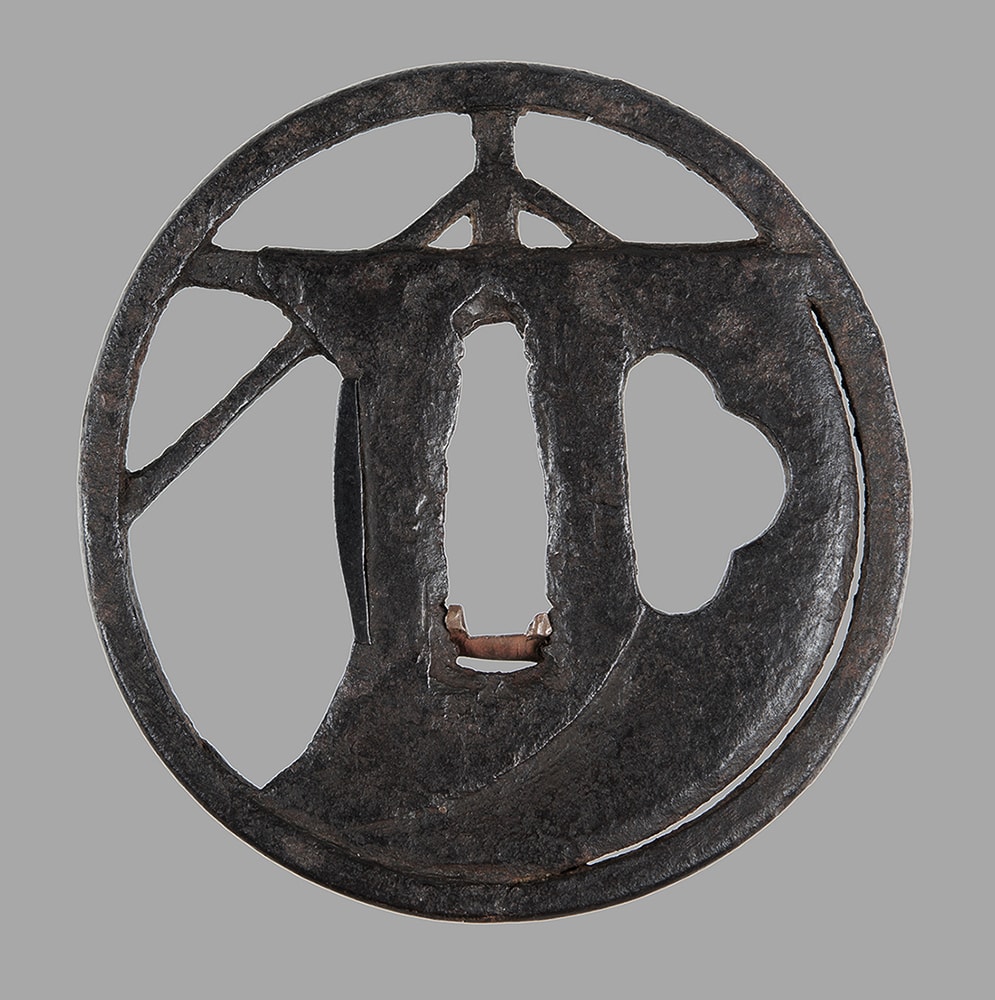
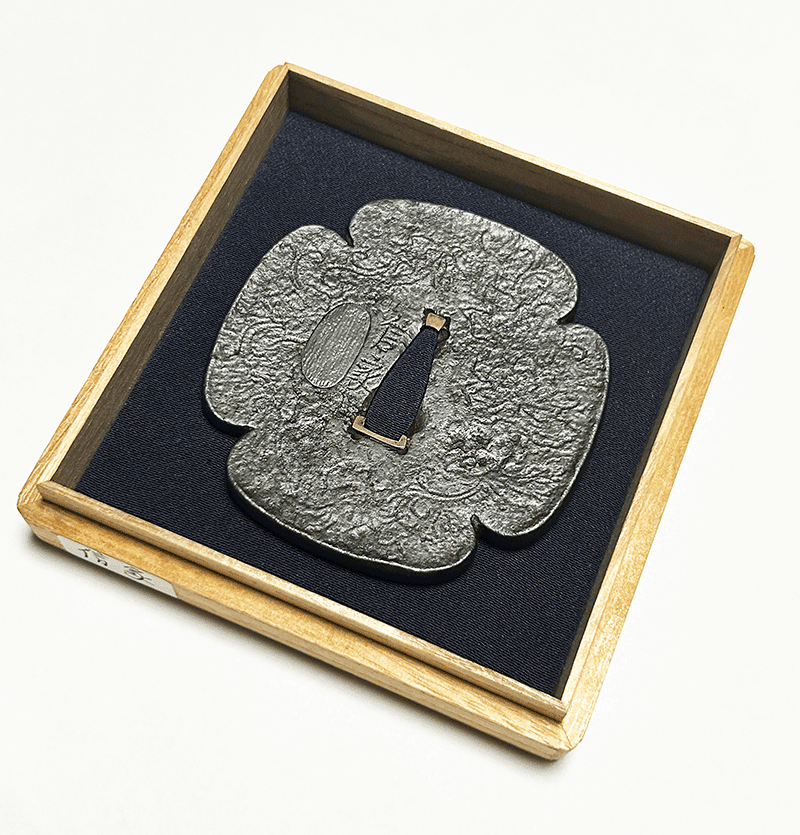
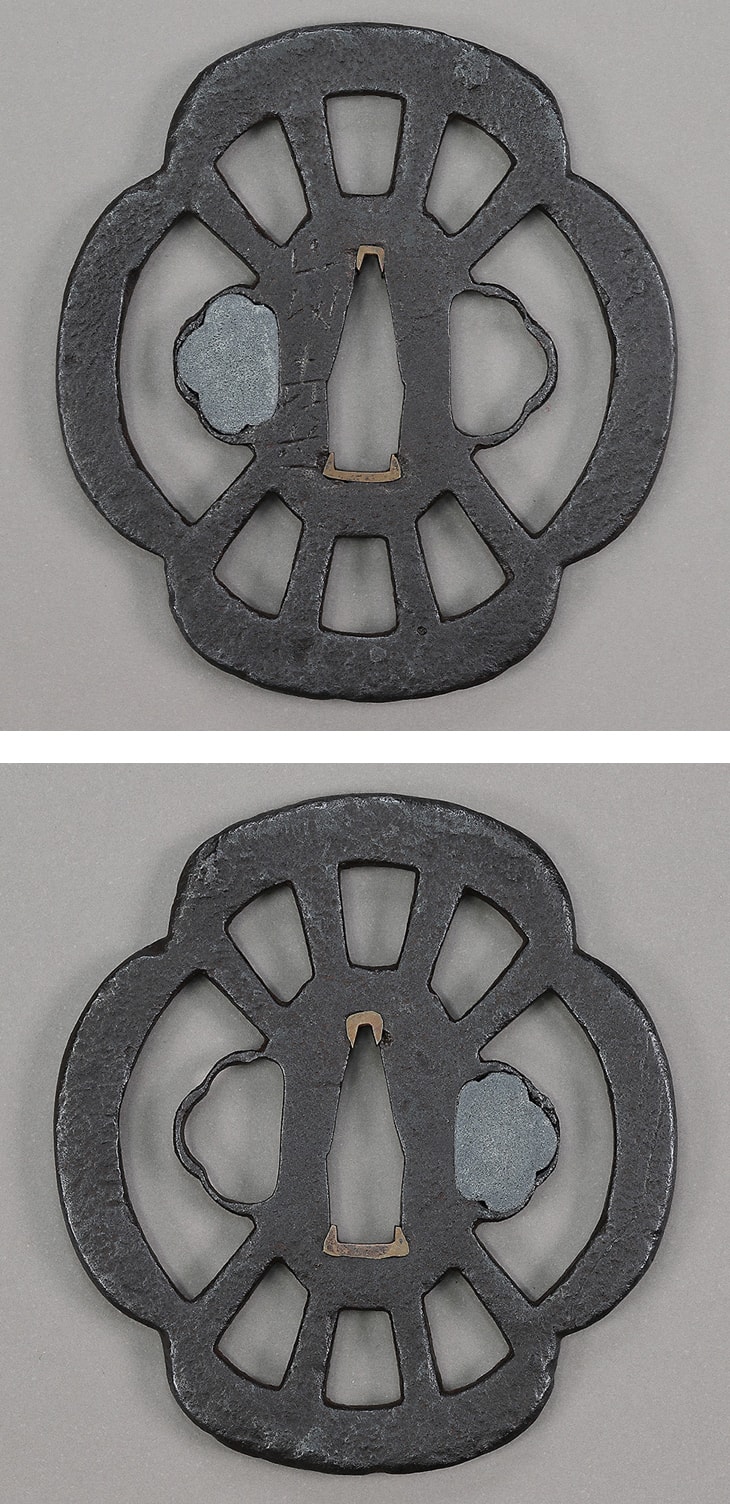
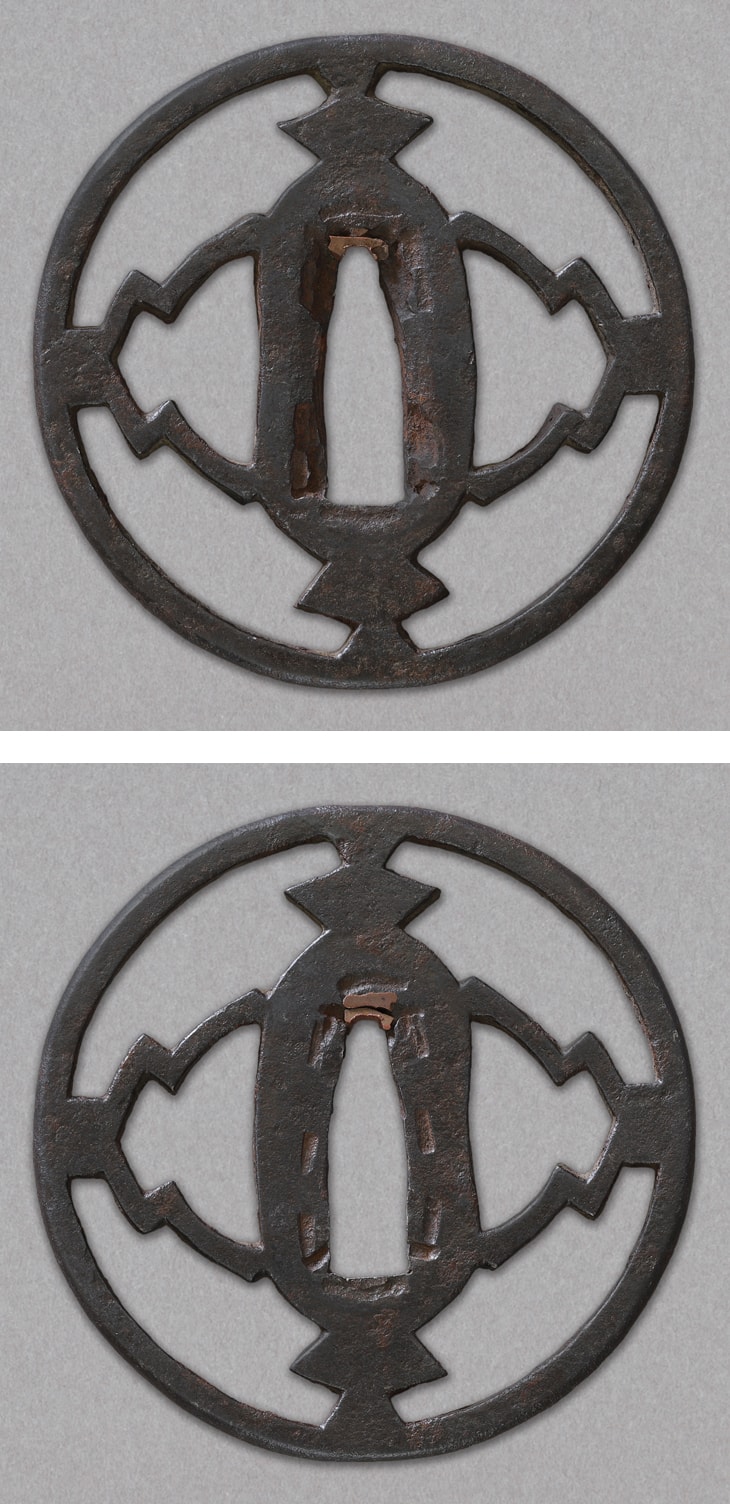
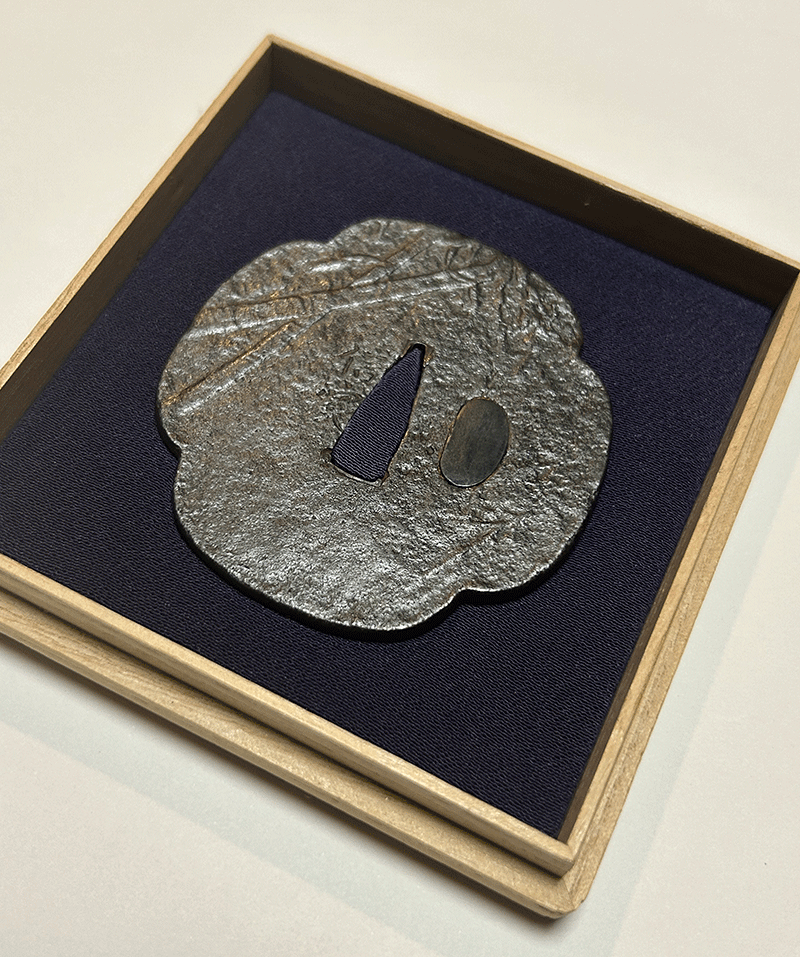
Hoan's plate iron is famed for its toughness, to the extent that it was known by the sobriquet uwabami-gane ("great-serpent iron"). The iron of his is consistently described as exceptionally fine, possessing a dense, ("viscous") quality, with - emerging in places with a lively appearance. His specialty technique of -kusarashi produces abstruse and subtle variations over the flat ground, deepening the work's elegant flavor. Amida-yasuri filing is employed with striking effect, and in his celebrated kuruma- (wheel openwork) compositions, the iron bones () are revealed prominently, imparting a bold and vigorous character. The balance between pierced openwork and surface treatment is especially intriguing, with both composition and carving described as outstanding.

The has praised Hoan's for their distinctive gloss and moist luster, their notable sense of weight, and the richly varied rims that become visual landscapes in their own right. Within a single , the examiners observe, "a world uniquely characteristic of Hoan is vividly realized." His ability to exploit a seemingly straightforward carving method to produce works of solemn dignity and refined charm -- uniting the beauty and strength of well-forged iron with kusarashi- surface effects -- secures Hoan's place among the most esteemed makers of the period, an artisan whose iron plate work remains unsurpassed in the Owari tradition.

Kantei

3 descriptive axes: material (the forged iron plate, hammered and fire-finished, throwing iron bones, sometimes filed to a radiating Amida ground) x technique (bold device-openwork pierced through the plate, the rim turned or left standing, and above all the yakite-kusarashi fire-and-corrode finish that raises the field in texture) x themes (the wheel-openwork above all, with name-invocation text plates and a long-eared hare). His two load-bearing separators from the Owari field are the famed uwabami-tetsu iron the records name his alone and the yakite-kusarashi finish they name his forte; the wheel-openwork, iron bones and hammered ground are an Owari-tsuba foundation shared with Yamayoshi, Nobuie and Kanayama, so they are kept as register and ground, not as a unique separator.

Hoan of Owari is, with Yamayoshi (Yamakichibei) and Nobuie, named one of the representative iron- makers of Owari, flourishing from the end of into the age. The records give him a full biography: an armour-and-weapon smith of Kiyosu in Owari province whose given name was Kawaguchi Saburoemon, retained by the Asano house, living in turn at Fuchu in and Wakayama in , and dying on the twentieth day of the fifth month of Keicho 18 (1613). His art is the forged iron plate itself, on which bold openwork is pierced and the surface worked to a moody texture: his iron is so famed for its toughness that it carries the nickname uwabami-tetsu (giant-serpent iron), and his forte is the -kusarashi finish, the plate fired and then deliberately corroded to raise the design in living texture. The records pair him most closely with Yamayoshi over the shared wheel-openwork, calling him a touch more technical than Nobuie and a degree more polished than Yamayoshi. The go Hoan was carried across generations and the records recite the single Kiyosu biography for the name without numbering the generations, so the bare 法安 signature cannot by itself date a hand.

Diagnostic discriminators

unique vs the iron of the other Owari makers (Yamayoshi, Nobuie, Kanayama)

the records repeatedly call the yakite-kusarashi (fire-and-corrode) finish the technique Hoan is good at (得意とする), the field fired and corroded to raise the name-invocation, the hare and the moody surface; written 腐らし on 3 guards and くさらし手 / くさらかし on a fourth, it is present on 4 of the 5 here, but this discriminator cites only the 3 that carry the literal 腐らし form. Unlike the wheel-openwork it is not shared with Yamayoshi or Nobuie in the corpus, so it stands as a genuine separator

Material (the iron plate)

A well-forged iron plate, hammered () and fire-finished, the records praising a ground so tough it earned the nickname uwabami-tetsu (giant-serpent iron); the plate throws up iron bones and on the heavier guards carries weight and tension, and on a number of pieces a radiating Amida file-ground (amida-yasuri) is cut into the field.

Technique

Openwork () pierced boldly through the plate, the rim worked to a squared, rounded or left-standing form; above all the -kusarashi finish, the surface fired and then deliberately corroded so a relief design (a name-invocation, a hare) is raised in moody, animated texture, the technique the records name his forte. A little hairline engraving and on occasion a fine gold inlay accent the field.

Themes (openwork devices)

The wheel-openwork above all, the device the records call the ground of his high name and the subject he shares with Yamayoshi; alongside it pierced text plates carrying a six-character name-invocation and a seven-character title-invocation, and a long-eared hare raised in the corroded ground.

Openwork devices and invocations

The wheel pierced bold and sparing on the iron, with name-invocation and title text plates and a long-eared hare.

Full iconography

Signature chronology

Recorded signatures

Documentary note

Every piece in the corpus signs the bare two characters Hoan, cut as 銘 法安 / 名 法安 with no and no locative form. The go Hoan was carried across the generations, and the records do not number them: the detailed biography they recite for the name (a Kiyosu armour-and-weapon smith named Kawaguchi Saburoemon, retained by the Asano house, living at Fuchu in and Wakayama in , dead in Keicho 18 = 1613, posthumous name Honpoin Soan Nisshin, the family later moved to Hiroshima by his son-in-law Hisatsugu when the Asano were transferred, the graves at Kokuzenji) is attached to 法安 without a generation number. So the bare 法安 signature cannot by itself date a hand; this profile is scoped to the name as the records present it, by the famed uwabami-tetsu iron and the -kusarashi finish they call his forte. The amida-yasuri file-ground appears here as an occasional ground (2 of these 5 guards), not as a separator.

Scholarship

His iron is praised for a tough, established quality that won it the nickname uwabami-tetsu, the corroded ground worked to a moist, lustrous animation the records call a world peculiar to Hoan.

Designations

Kokuhō—
Jūyō Bunkazai—
Jūyō Bijutsuhin—
Gyobutsu—
Tokubetsu Jūyō—
Jūyō Tōken5

Elite Standing

0.03 across 5 designated works

Top 28% among makers

Work Types

Distribution across 5 ranked works

Tsuba
480%
Other
120%

Signatures

Signature types across 5 ranked works

Currently Available

Lineage

Hoan
Students (2)
  1. 1.Hisatsugu久次2 for sale
  2. 2.Kanenobu兼信

Hoan

Hoan(法安) was a maker of Japanese sword fittings (tōsōgu) of the Hoan school in Owari province, active during the Tensho-Keicho (c. 1573-1614) period.

The work follows the Iron-tsuba tradition.

Designated works by Hoan include 5 Jūyō.